
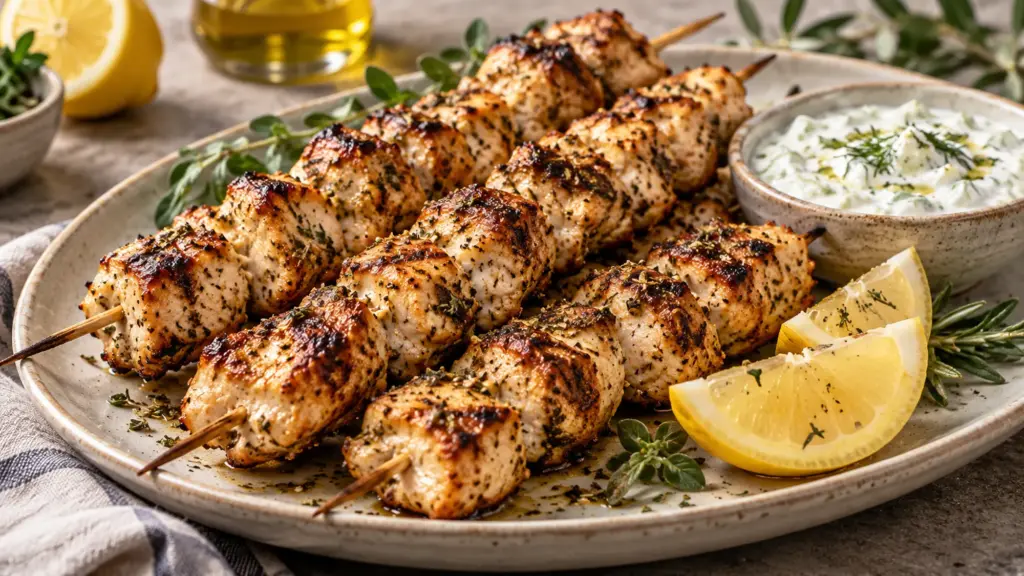
Skewers can look beautifully browned while a larger piece of chicken still needs time in the center. Chicken souvlaki works better when the pieces are cut evenly before they ever meet the marinade. Lemon, garlic and herbs bring the flavor, while thoughtful sizing makes the grilling easier to manage.
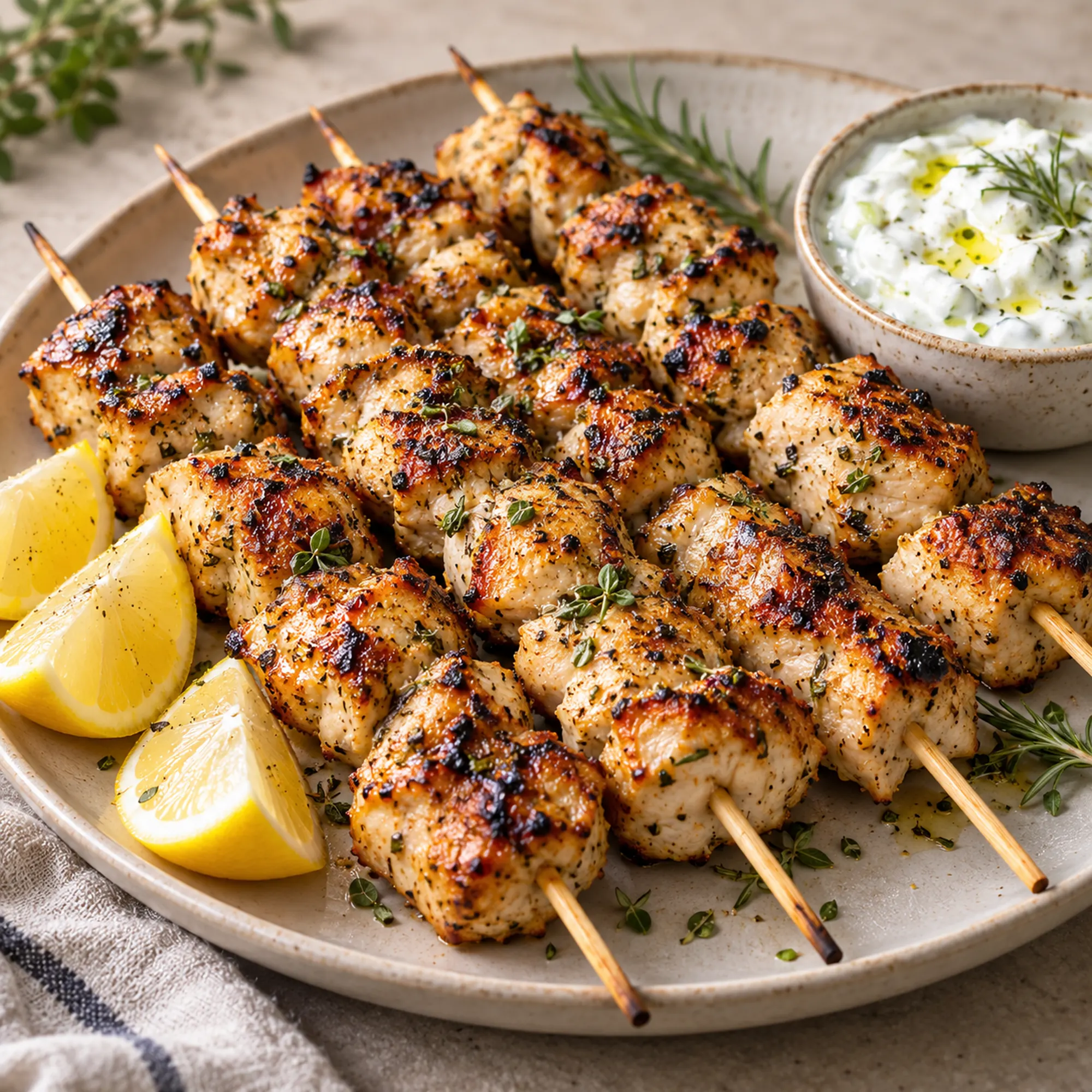
For chicken souvlaki, marinate evenly cut breast pieces in the refrigerator, thread them onto skewers and grill until browned on all sides and safely cooked through.
I like serving the skewers with the extras in separate bowls. A little cucumber, tomato and tzatziki lets everyone build a plate or pita without burying the chicken under a mound of toppings. The golden edges and herb-speckled surface deserve to stay visible for at least the first few bites.
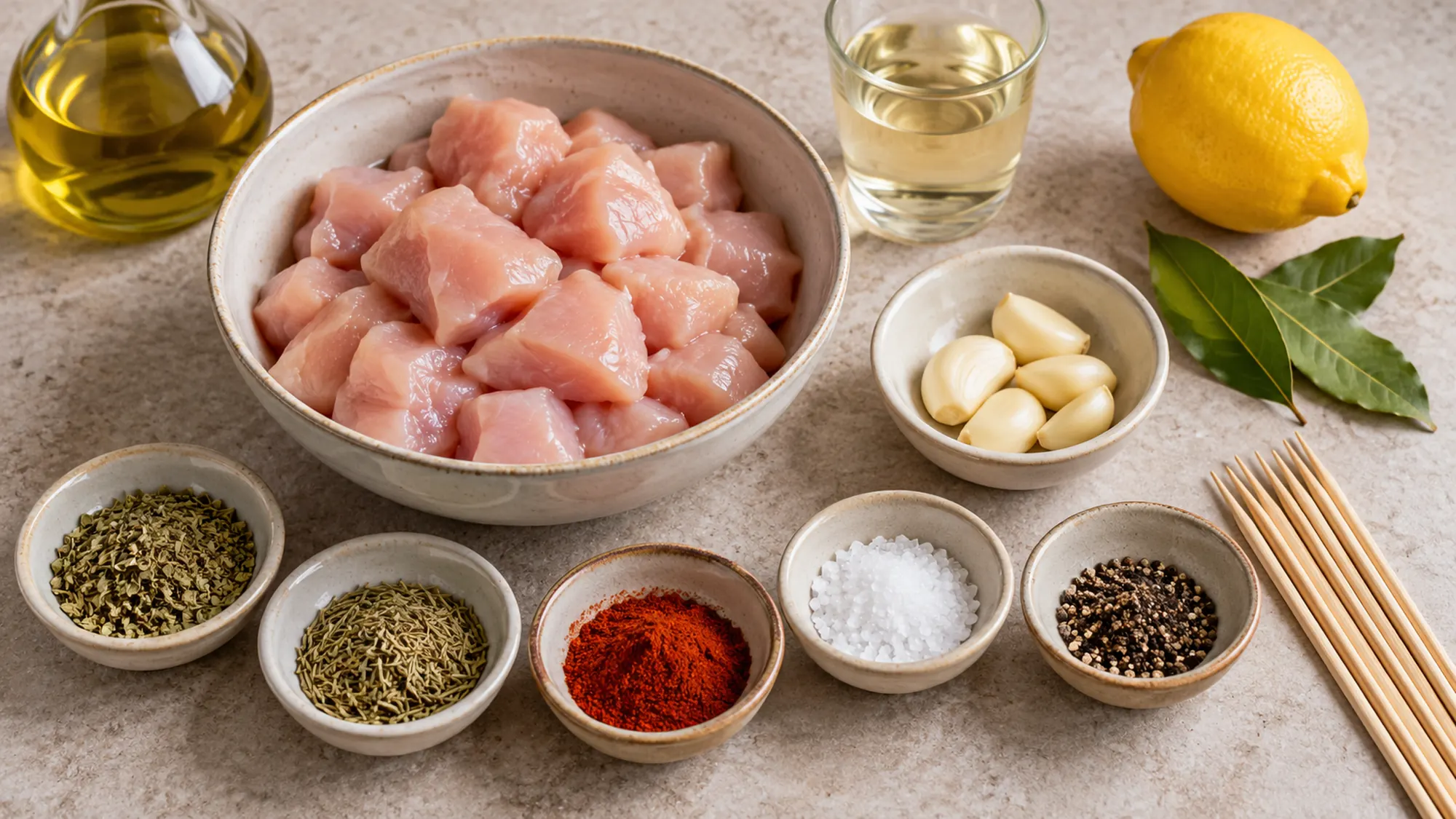
Serving Chicken Souvlaki
Allow two of the twelve skewers per person for six servings. Remove the chicken from the sticks before filling a pita, and let hot skewers cool enough to handle safely. Flatbread, sauce and vegetables are optional additions rather than ingredients included in the chicken estimate.
A fresh salad provides a useful contrast to the grilled meat. Tastiva’s chickpea cucumber salad is one option when you want a more substantial side. Plain rice also works, particularly if serving the chicken on plates rather than making wraps.
- Keep a clean serving platter ready before the skewers finish.
- Offer lemon wedges separately so people can adjust the sharpness.
- Serve tzatziki in a small bowl rather than coating all the chicken in advance.
| Serving style | Practical detail |
|---|---|
| Pita wrap | Remove the skewers first |
| Rice plate | Add a crisp vegetable side |
| Salad bowl | Keep dressing modest initially |
Keep the chicken and accompaniments separate until serving so the grilled texture remains distinct.

Chicken Souvlaki Variations
The marinade is adapted from The Mediterranean Dish’s chicken souvlaki, including garlic, oregano, rosemary, paprika, lemon and wine. This version discards leftover raw-chicken marinade rather than brushing it onto the skewers during grilling. It also checks the chicken reaches its full safety temperature before leaving the heat.
I would use a grill pan on an ordinary evening rather than postpone the recipe until an outdoor barbecue feels practical. Either approach needs room between skewers. Work in batches if necessary, and adjust the heat when the outside colors faster than the center cooks.
- Boneless thighs are a possible alternative, but their cooking time and nutrition differ from breast.
- Keep the chicken pieces similar in thickness, not just roughly similar in weight.
- If using wooden skewers, soak them first and keep exposed ends away from direct flame.
- Dried herbs belong in the measured marinade; extra fresh herbs are an optional finishing choice.
- For an alcohol-free version, choose a suitable wine-free marinade rather than assuming grilling removes every trace of alcohol.
Adapt the equipment to your kitchen while keeping the pieces even and the grill uncrowded.
Nutrition and Safe Cooking
Chicken breast supplies protein, while olive oil contributes much of the added fat in the marinade. Vegetables and a starch can round out the meal according to appetite. A grilled preparation is not automatically low in sodium or calories; the amount of marinade and the extras still matter.
The estimate conservatively includes all measured marinade ingredients and the grill oil, although some marinade is discarded. That is not a measured absorption rate. Pita, tzatziki and optional vegetables are excluded, and the wine’s energy is retained in the calculation rather than assuming complete alcohol evaporation.
- Marinate covered chicken in the refrigerator, not on the counter.
- Discard marinade that has touched raw chicken; do not use it as an uncooked table sauce.
- Check several of the thickest pieces reach 165°F (74°C).
- Use clean tongs or wash them after handling raw skewers, and refrigerate leftovers promptly.
Even pieces help cooking, but a thermometer and clean utensils provide the important safety checks.
Bottom Line
Chicken souvlaki is a simple dish with a few details worth respecting. Cut the breast evenly, give the marinade time in the refrigerator and turn the skewers so all sides meet the heat. Serve the chicken with cool, crisp accompaniments and let everyone choose a wrap or plate without complicating the cooking itself.
Lemon, garlic and herbs provide the flavor; even sizing and careful grilling protect the texture.
Chicken Souvlaki Recipe

Ingredients
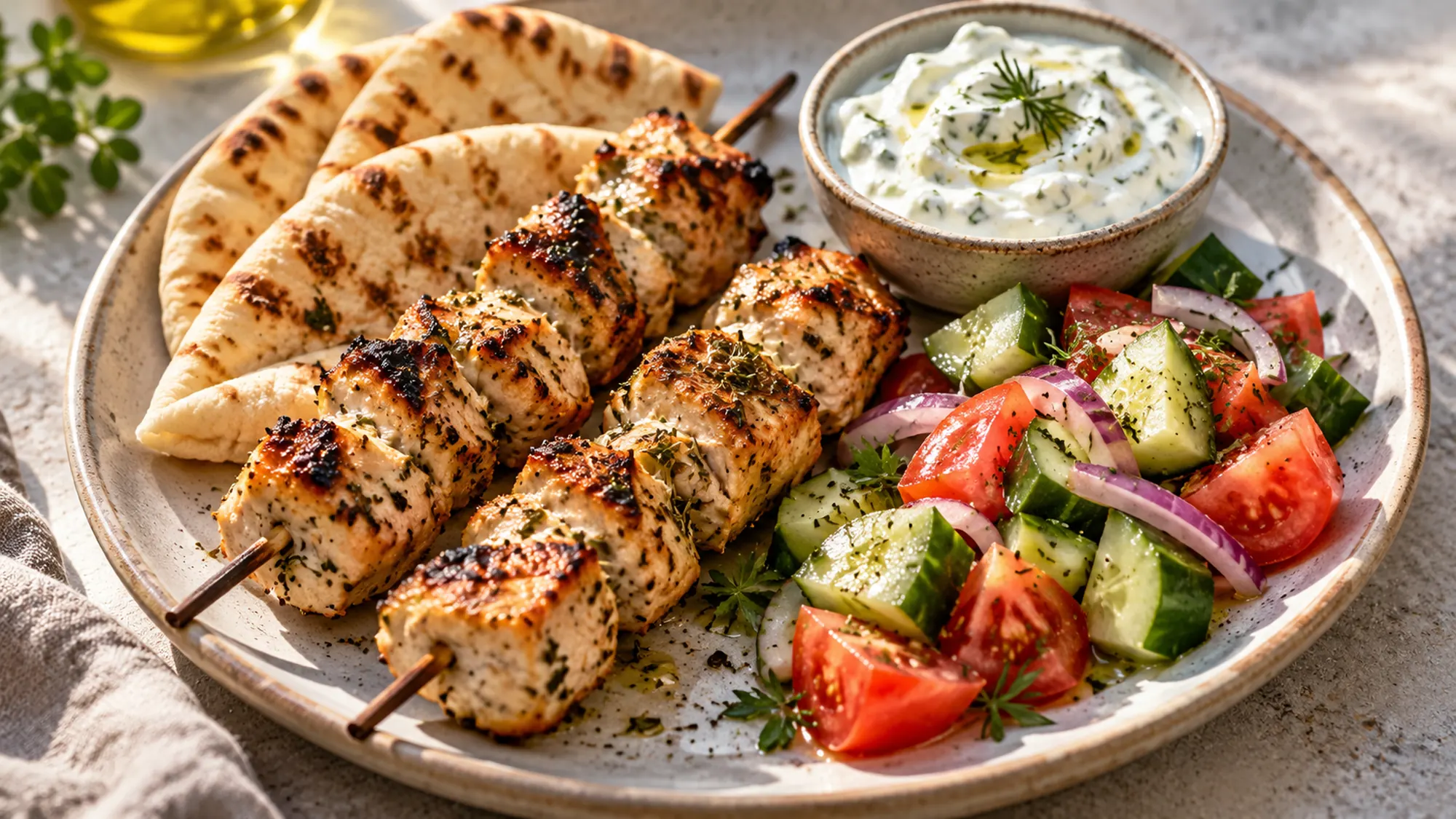
- 1134 g boneless skinless chicken breasts cut into 3 cm pieces
- 30 g garlic
- 6 g dried oregano
- 1 g dried rosemary
- 2 g sweet paprika
- 5 g fine salt
- 2 g black pepper
- 65 ml olive oil 60 ml marinade, 5 ml grill
- 60 ml dry white wine
- 30 ml lemon juice
- 2 dried bay leaves
- pita, tzatziki, tomato and cucumber optional serving additions, excluded from estimates
Equipment
- 1 grill or grill pan
- 1 12 skewers
- 1 Nonreactive mixing bowl
- 1 Instant-read thermometer
Instructions
- Blend the garlic, oregano, rosemary, paprika, salt, pepper, 60 ml olive oil, wine and lemon juice into a loose marinade. Put the chicken in a nonreactive bowl, add the bay leaves and marinade, cover and refrigerate for 2 hours.
- If using wooden skewers, soak them in water for at least 30 minutes. Lift the chicken from the marinade and thread evenly onto 12 skewers. Discard the bay leaves and remaining raw-chicken marinade; do not use it as a finishing sauce.
- Heat a grill or grill pan over medium-high heat and brush with the remaining 5 ml oil. Cook the skewers in batches if needed, turning to brown all sides, about 10–15 minutes depending on piece size and heat. Check several thick pieces reach 165°F (74°C); do not rely on grill marks.
- Transfer to a clean platter and rest briefly. Serve two skewers per person with optional pita, tzatziki and vegetables. This adaptation cooks fully to 165°F on the grill and does not baste with raw marinade. All marinade ingredients are conservatively included in the estimate even though some are discarded.
Nutrition
Video
Notes
Tried this recipe?
Let us know how it turned out!Hi, I’m Laura, the voice behind Tastiva. I’ve always believed that eating well should feel enjoyable, comforting, and realistic—not like another complicated rule to follow. I love creating recipes that fit into everyday life, sharing simple nutrition ideas, and finding small ways to make meals feel a little better without losing the pleasure of good food.