
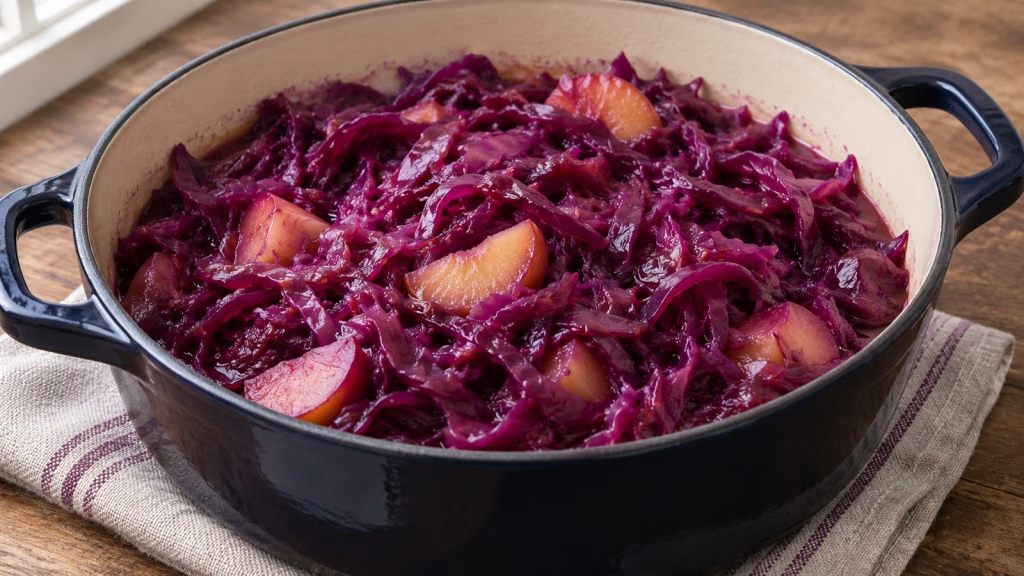
Braised red cabbage is the side dish to put on while you make the rest of dinner. Thinly sliced cabbage softens with onion, apple, a little vinegar and just enough liquid to keep the pan moist. The finished bowl is sweet-tart and tender, with enough color to wake up a plate of potatoes, beans or roast chicken.
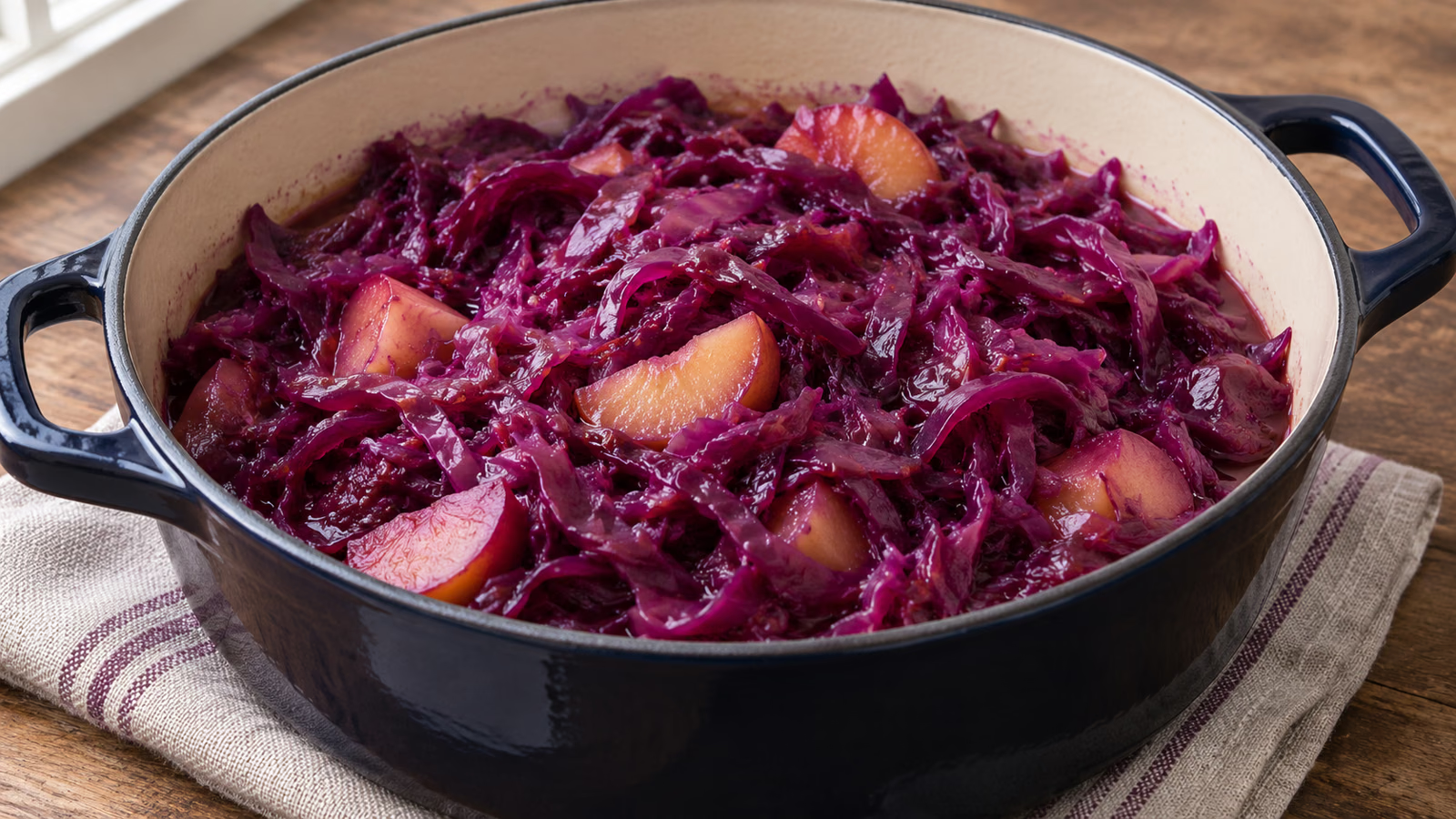
Keep the lid on for tenderness, then lift it at the end if the cabbage needs a little less liquid.
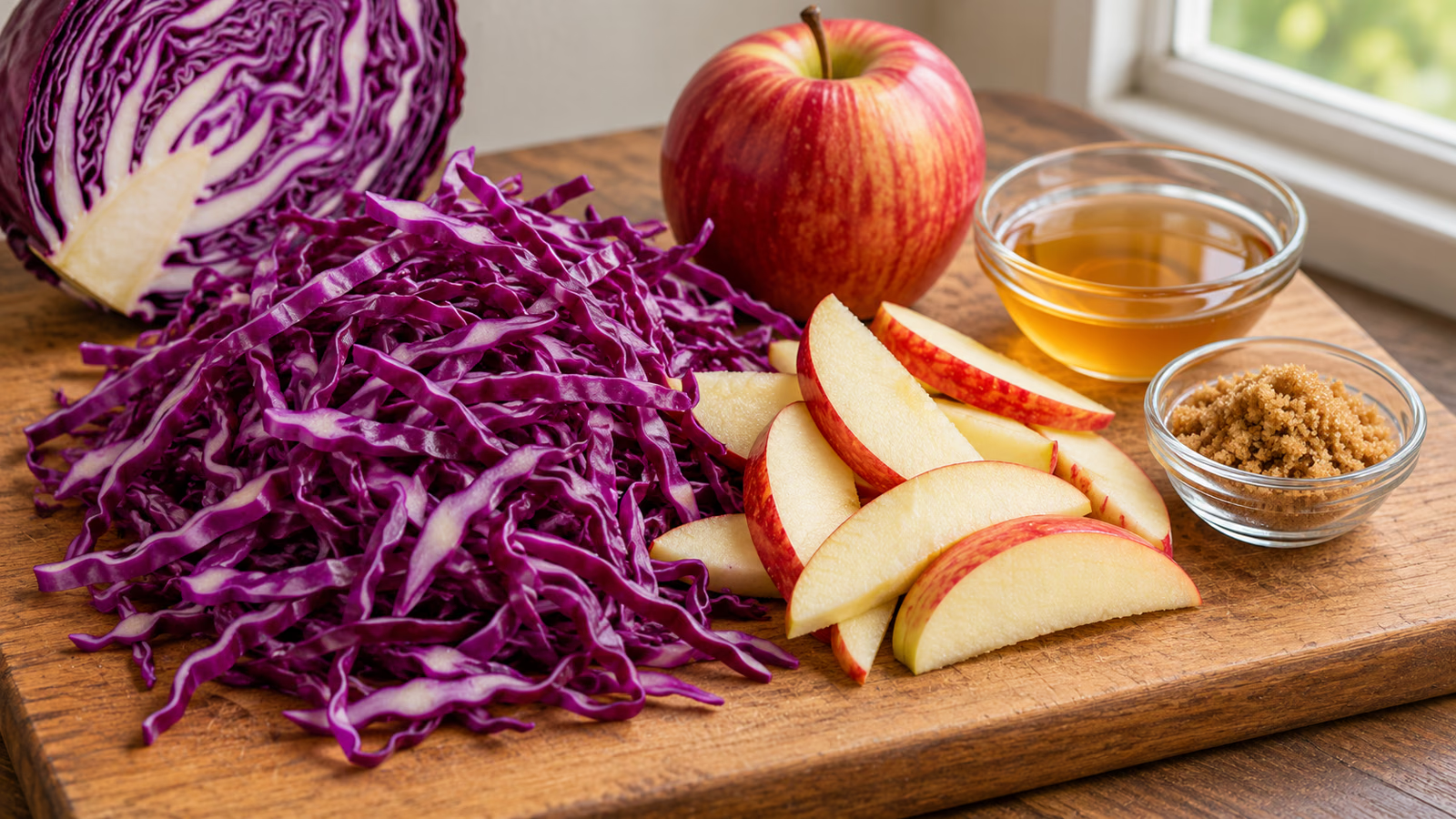
A small cabbage goes a long way
Start by removing damaged outer leaves, then quarter the cabbage and cut away the dense core. Slice the leaves thinly across their length. A sharp knife is perfectly adequate; there is no need to bring out a mandoline unless you prefer it and can use its guard comfortably.
Weigh the trimmed cabbage rather than guessing from the size of the head. A tightly packed small cabbage can contain more than expected, and doubling the amount without changing the pan creates uneven cooking. Save any extra raw cabbage for another meal instead of forcing it into an already full pot.
Choose an apple that has some tartness and holds together when cooked. Peel it if you prefer a smoother texture, or leave the skin on for a little more definition. Small pieces blend into the cabbage, while larger wedges remain noticeable. This recipe uses thin slices because they distribute easily through the pan.
Build a balanced braising liquid
The onion softens first in a little oil, giving the dish a savory base before the cabbage goes in. Keep the heat moderate and stir occasionally. Golden edges are fine, but deeply browned onion changes the flavor and is not necessary for this lighter, fruit-forward version.
Vinegar provides brightness, apple supplies some sweetness and a small amount of brown sugar rounds out the sharpness. Start with the measured amounts rather than adding extra sugar immediately. The flavor becomes more concentrated as the liquid reduces, and the apple contributes more as it softens.
Water is sufficient for the braise. Stock can be used, but it adds its own salt and flavor, so taste before seasoning. The vegetables do not need to swim. A covered pan traps steam, which helps the cabbage soften without turning the dish into soup or washing away its character.
Let the texture tell you when it is ready
Use a heavy saucepan or casserole with a lid that fits well. At first the cabbage may look like an enormous pile. Turn it carefully with tongs as it begins to wilt, bringing the bottom leaves upward and allowing the top ones to meet the heat.
After the initial wilt, reduce the heat and let the cabbage cook gently. Check occasionally that the bottom is still moist. If the pan sounds like it is frying sharply rather than simmering softly, add a small splash of water and lower the heat. Scrape gently, not aggressively, so the apple does not turn entirely to paste.
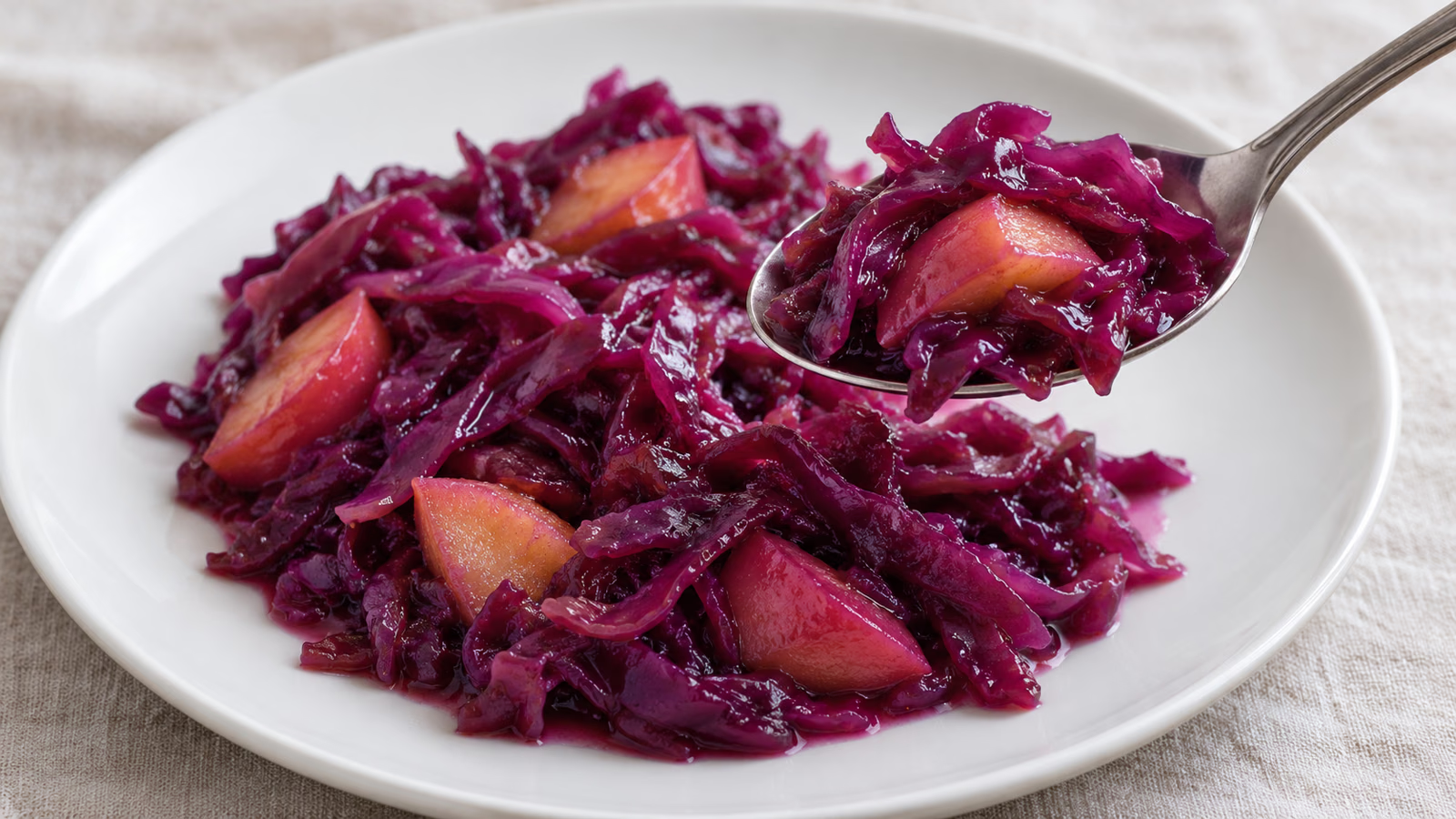
The finished cabbage should be easy to bite but not disintegrating. Some people prefer a little resistance; others like a very soft braise. Begin checking at the earlier time in the card and continue as needed. If it is tender but watery, uncover the pan and simmer briefly, watching closely as the liquid disappears.
Make it work with the rest of dinner
This is a useful contrast to rich foods, but it does not need a roast to justify its place on the table. Try it beside lentils, mashed potatoes, baked tofu or a simple fried egg. A spoonful also brings color and acidity to a grain bowl with a creamy dressing.
Taste the cabbage again just before serving. If it is too sharp, a small extra pinch of sugar can help; if it tastes flat, a splash of vinegar may be more useful than more salt. Add either gradually and stir through before tasting again. The aim is balance, not an obviously sugary vegetable.
The cabbage can be prepared ahead and reheated gently with a splash of water. Its texture will soften further, so stop the first cooking stage a little earlier if you know it will spend more time on the stove. Cool leftovers promptly in shallow containers and refrigerate rather than leaving the covered pot on the counter. Freeze portions if you need longer storage, allowing room in the container for expansion.
| Preparation | Cooking | Yield |
|---|---|---|
| 15 minutes | About 45 minutes | 6 servings |
Braised Red Cabbage Recipe

Ingredients
- 750 g red cabbage trimmed, cored and thinly sliced
- 1 onion thinly sliced
- 1 tart apple cored and thinly sliced
- 1 tablespoon olive oil
- 3 tablespoons apple cider vinegar
- 1 tablespoon brown sugar
- 120 ml water plus extra as needed
- 1/2 teaspoon salt
- 1/4 teaspoon black pepper
Equipment
- 1 Large lidded saucepan
Instructions
- Warm oil in a large lidded saucepan over medium heat. Soften onion for 5 minutes, stirring.
- Add cabbage and apple. Turn gently for 3–5 minutes until the cabbage starts to wilt.
- Add vinegar, sugar, water, salt and pepper. Cover, reduce heat and simmer gently for 35–45 minutes, stirring occasionally and adding a splash of water if dry.
- When tender, uncover briefly to reduce excess liquid. Taste and adjust seasoning before serving.
Notes
Tried this recipe?
Let us know how it turned out!For a savory centerpiece to build a meal around, try Tastiva’s spinach feta frittata.
Sources
Hi, I’m Laura, the voice behind Tastiva. I’ve always believed that eating well should feel enjoyable, comforting, and realistic—not like another complicated rule to follow. I love creating recipes that fit into everyday life, sharing simple nutrition ideas, and finding small ways to make meals feel a little better without losing the pleasure of good food.