
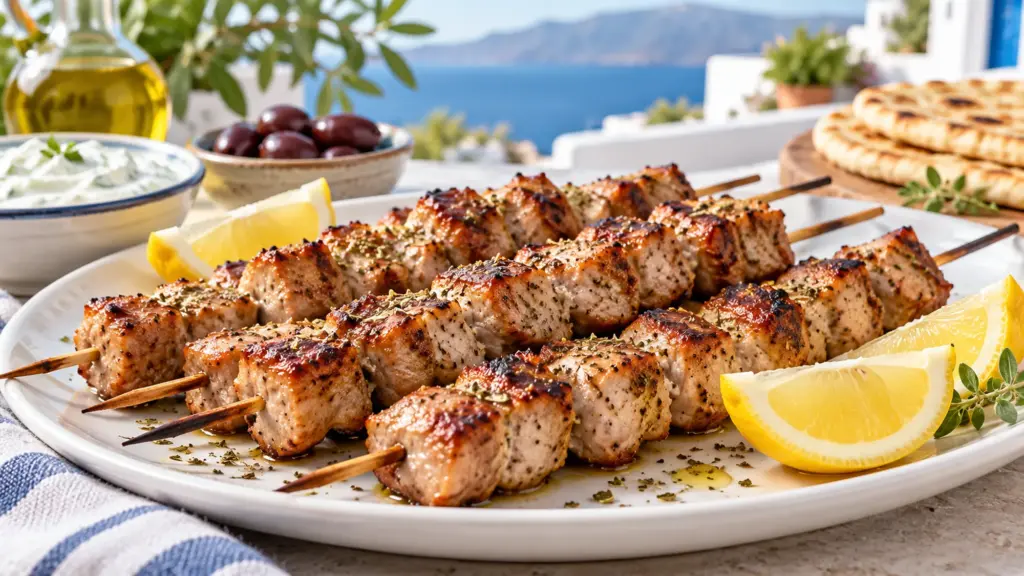
A plate of pork souvlaki can make dinner feel generous without a complicated sauce. Small pork cubes take on garlic, oregano and thyme, then brown on a hot grill or grill pan. The marinade needs time in the refrigerator, but the final cooking is brief enough to leave attention for a salad and warm bread.
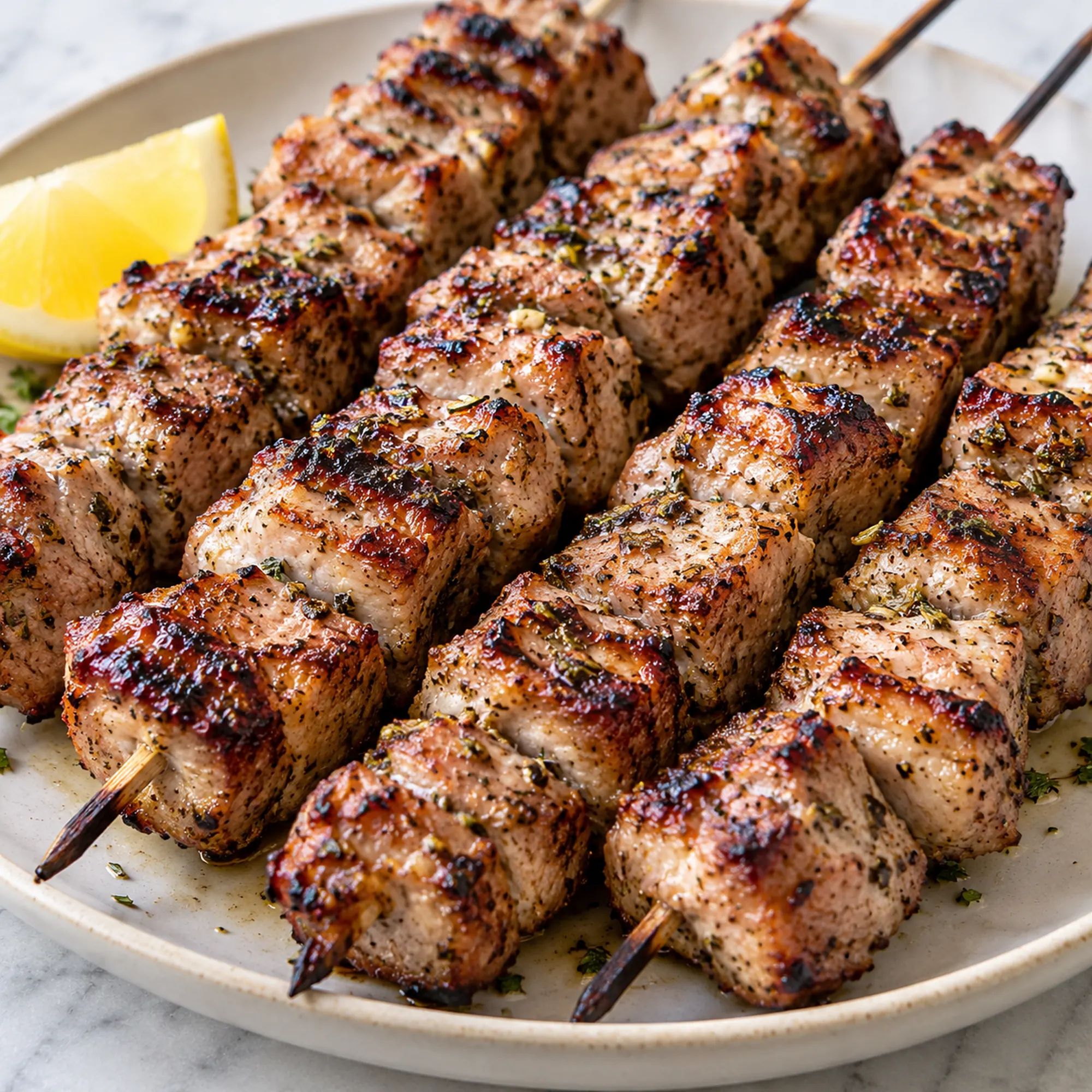
This pork souvlaki uses evenly cut pork shoulder, a vinegar-and-herb marinade and uncrowded skewers; cook to temperature, then give the meat its rest.
I prefer small, evenly sized cubes to oversized pieces with a dark outside and a slow-cooking center. Shoulder has useful fat for this style, but tough connective seams should be trimmed away. It is a quick-grilled skewer, not a long braise that will soften every stubborn piece of connective tissue.
Serving Pork Souvlaki
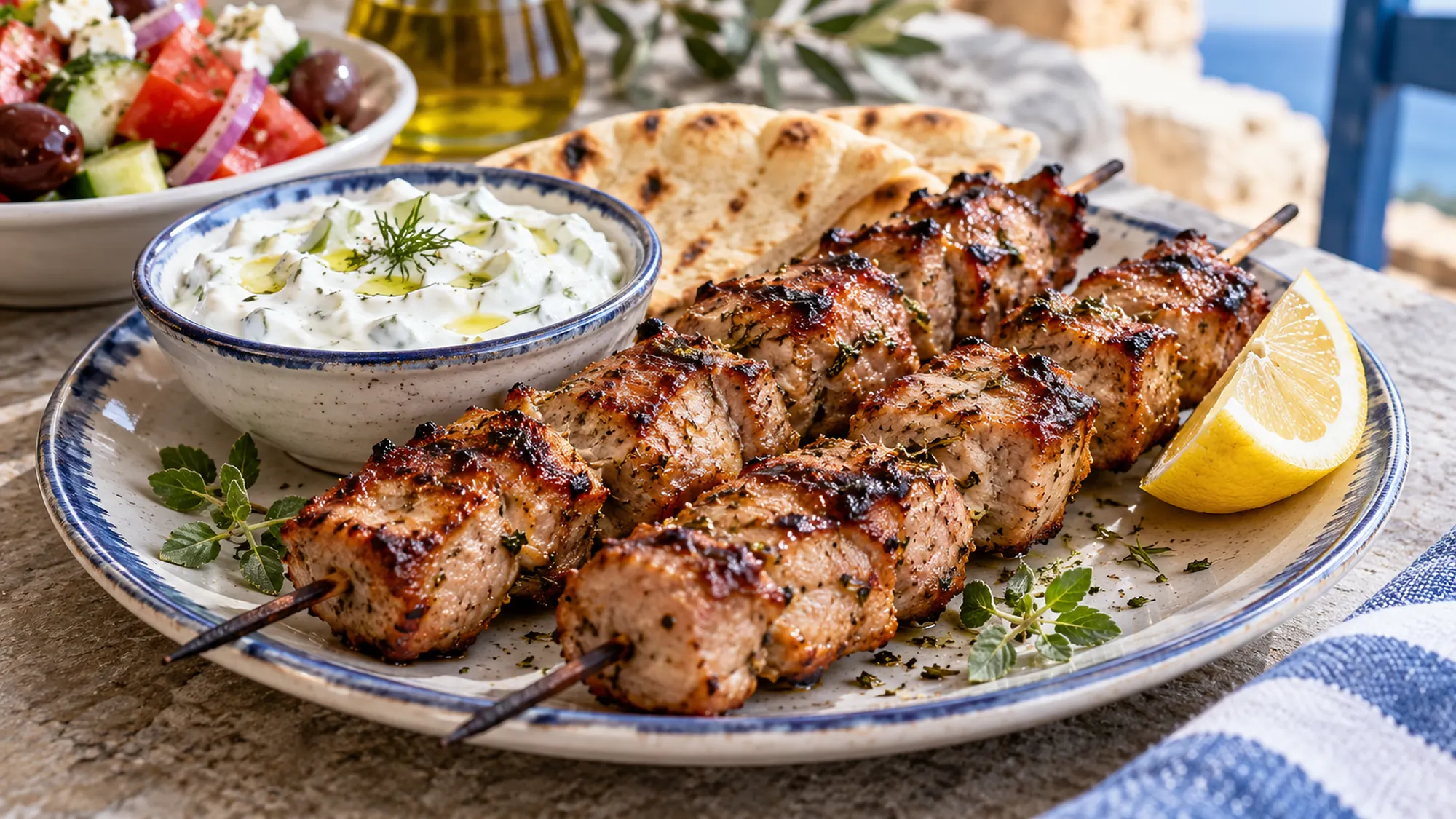
Plan on two skewers per person, with the rest of the plate shaped by appetite and available sides. Pita, lemon and tzatziki are familiar options, but they are additions rather than ingredients in the pork itself. Slide the meat off carefully before filling bread so the skewer never becomes part of the bite.
Tastiva’s chickpea cucumber salad brings cool crunch and a more substantial vegetable-side option. Sliced tomato and cucumber with a simple dressing also work. Keep any chilled yogurt sauce refrigerated until the meal is ready.
- Offer lemon wedges separately so people can choose how bright they want the pork.
- Warm pita shortly before serving rather than letting it dry out on the table.
- Use clean tongs for the finished skewers and keep a plate ready for the resting time.
| Accompaniment | What it brings |
|---|---|
| Pita | A soft wrap for the pork |
| Tzatziki | Cool, tangy contrast |
| Tomato and cucumber | Juiciness and crunch |
The pork can stay simply seasoned when the table offers a few fresh, contrasting sides.
Pork Souvlaki Variations
The marinade follows the vinegar, garlic and herb direction in Akis Petretzikis’s pork souvlaki. His demonstration uses a mixture of pork cuts; this version specifies shoulder throughout. That choice makes trimming and even cutting especially important, and cooking time can differ from the video.
I would keep the skewers all pork rather than alternating vegetables between the cubes. Onion and pepper pieces cook at different rates and can prevent the meat from sitting evenly against a grill pan. Cook vegetables separately if you want them, then bring everything together on the serving platter.
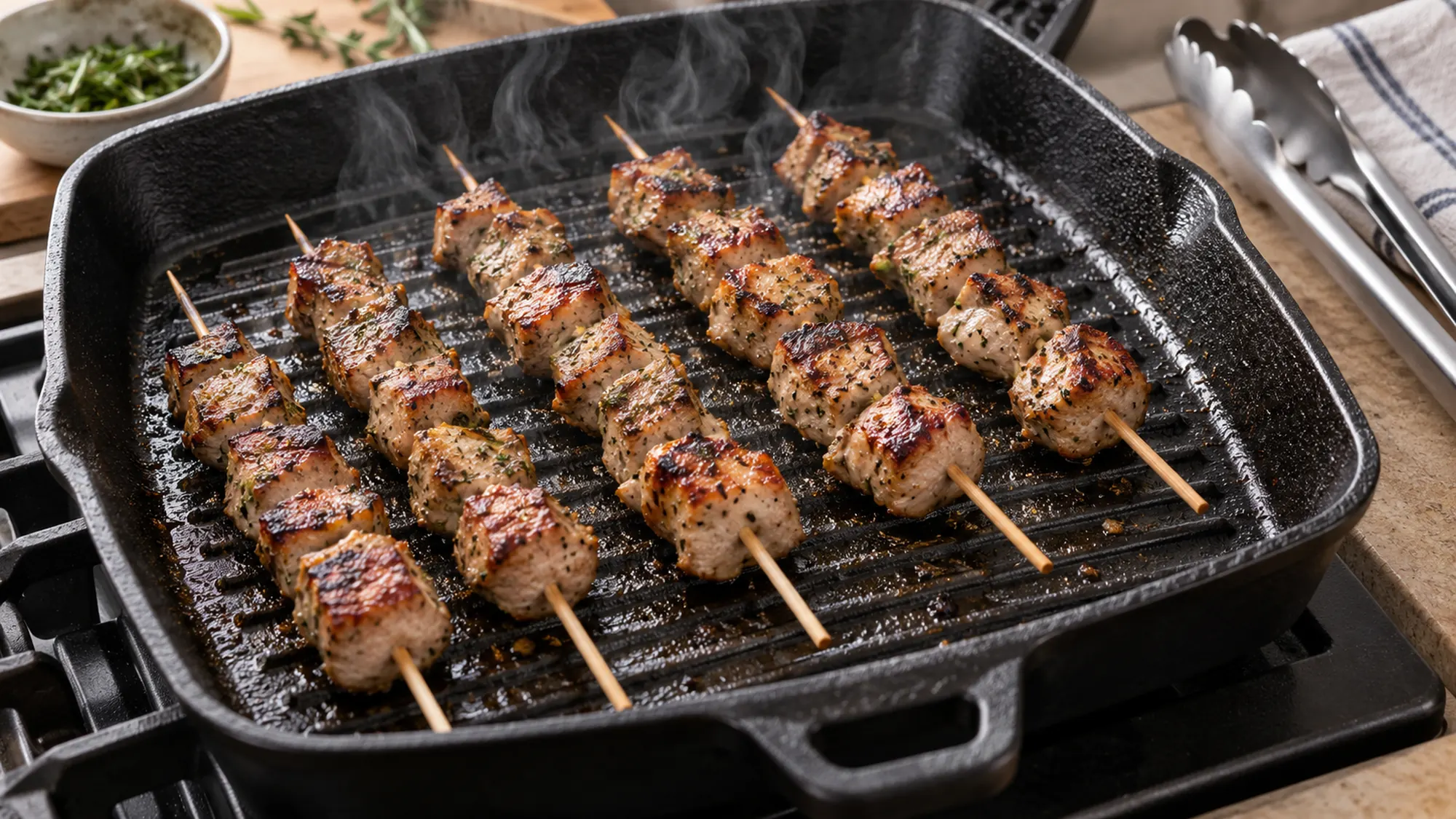
- A grill pan is useful when an outdoor grill is not available; work in batches so the pork browns rather than steams.
- The small amount of sugar helps browning, so watch the heat and turn the skewers before the surface burns.
- Do not pack the cubes tightly. Small spaces help heat reach their sides.
- If using wooden skewers, follow their preparation instructions and keep exposed ends away from direct flame.
- Changing to a much leaner cut can shorten the cooking window and changes the nutrition estimate.
Keep the cubes even, leave them a little space and adjust the heat before browning becomes burning.
Nutrition and Safe Cooking
Pork supplies protein, with an estimated 38 grams in a two-skewer portion. Shoulder also contains fat, even after visible tough pieces are trimmed. A salad can add variety and texture, but it does not change the composition of the meat or make every serving arrangement nutritionally identical.
The estimate includes all of the measured marinade and oil, even though some is discarded or left on the grill. It is therefore a conservative calculation rather than a measurement of absorbed marinade. Bread, dips and lemon accompaniments are excluded, and meat trimming will affect the final values.
- Marinate in the refrigerator, not on the counter, and discard marinade that has touched raw pork.
- Check several large cubes reach at least 145°F (63°C), then rest the pork for three minutes.
- Do not judge safety from grill marks alone; their color reflects the hot surface, not the center.
- Refrigerate leftovers promptly and reheat thoroughly before serving again.
The thermometer and three-minute rest matter more than a fixed number of minutes on the grill.
Bottom Line
Pork souvlaki is about a few well-managed details: a fragrant marinade, neatly cut meat and enough space for the heat to work. Trim the shoulder thoughtfully, turn the skewers as they brown and let the cooked pork rest. Add fresh sides and a little bread if you like, and the meal can remain relaxed without becoming careless.
Even cubes, controlled heat and a proper rest give these herb-scented skewers their best chance.
Pork Souvlaki Recipe

Ingredients
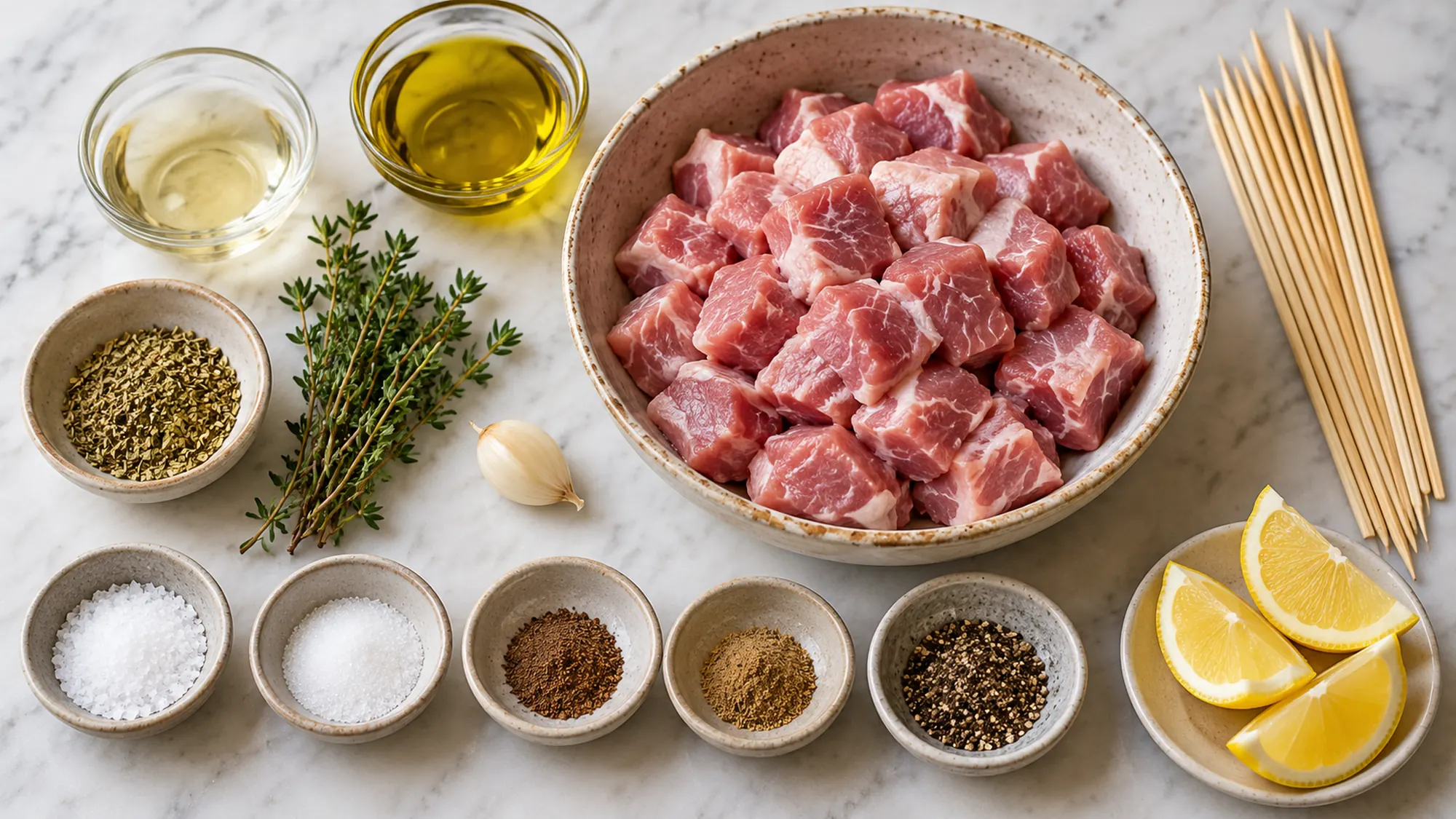
- 1000 g boneless pork shoulder trimmed and cut into 3/4-inch (2 cm) cubes
- 40 ml white wine vinegar
- 30 ml olive oil 15 ml marinade, 15 ml for grilling
- 3 g garlic minced
- 3 g fresh thyme leaves
- 3 g dried oregano
- 4 g granulated sugar
- 0.5 g ground allspice
- 0.7 g ground cumin
- 2 g black pepper
- 12 g fine salt
- lemon, pita and tzatziki optional, for serving
Equipment
- 1 grill or grill pan
- 1 10 skewers
- 1 Mixing bowl
- 1 Instant-read thermometer
Instructions
- Trim the pork shoulder of tough connective tissue and cut into even 2 cm cubes. Combine the vinegar, 15 ml olive oil, minced garlic, thyme, oregano, sugar, allspice, cumin, pepper and salt. Toss with the pork, cover and refrigerate for 3–4 hours.
- If using wooden skewers, prepare them according to their package directions and keep exposed ends away from direct heat. Thread the pork onto 10 skewers, leaving small spaces rather than packing the cubes tightly. Discard the remaining raw marinade.
- Heat a grill pan or grill to medium-high. Brush with the remaining 15 ml oil. Cook the skewers in uncrowded batches, turning regularly, for about 8–12 minutes, adjusting heat to avoid burning the small amount of sugar.
- Check several of the largest pieces: pork must reach at least 145°F (63°C), followed by a 3-minute rest. Cook longer if needed; the clock is only a guide. Transfer with clean utensils.
- Serve two skewers per portion, with optional lemon, pita or tzatziki. This version uses shoulder throughout instead of the mixed rump and neck cuts in the accompanying video. Estimates include the entire marinade as a conservative upper calculation.
Nutrition
Video
Notes
Tried this recipe?
Let us know how it turned out!Hi, I’m Laura, the voice behind Tastiva. I’ve always believed that eating well should feel enjoyable, comforting, and realistic—not like another complicated rule to follow. I love creating recipes that fit into everyday life, sharing simple nutrition ideas, and finding small ways to make meals feel a little better without losing the pleasure of good food.