
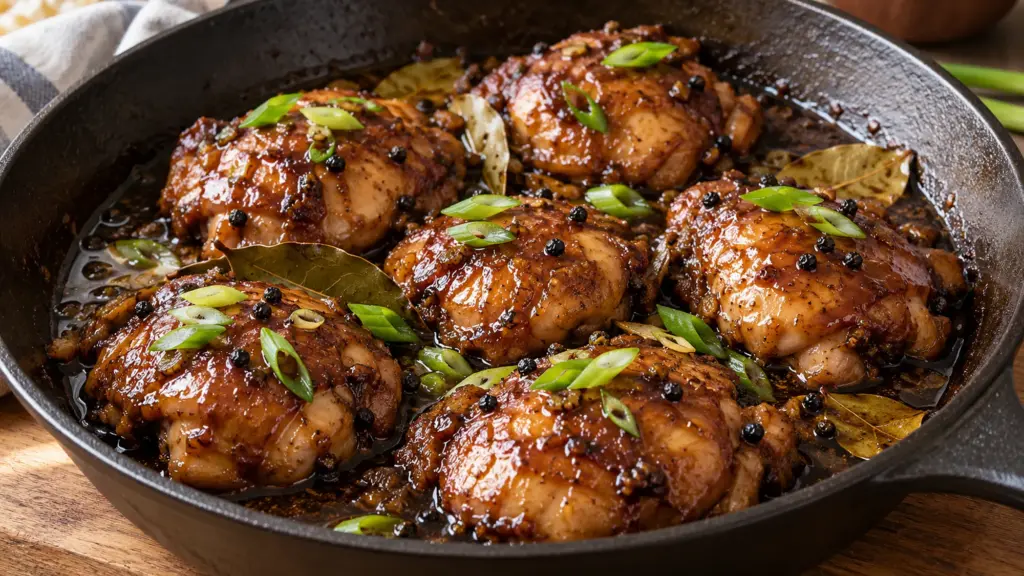
The sauce may look thin for most of the cooking, then suddenly begin to cling to the chicken. That is the moment to pay attention with chicken adobo. Vinegar, soy sauce, garlic and peppercorns become a concentrated glaze around tender thighs, with onion and a little brown sugar rounding out the sharp edges.
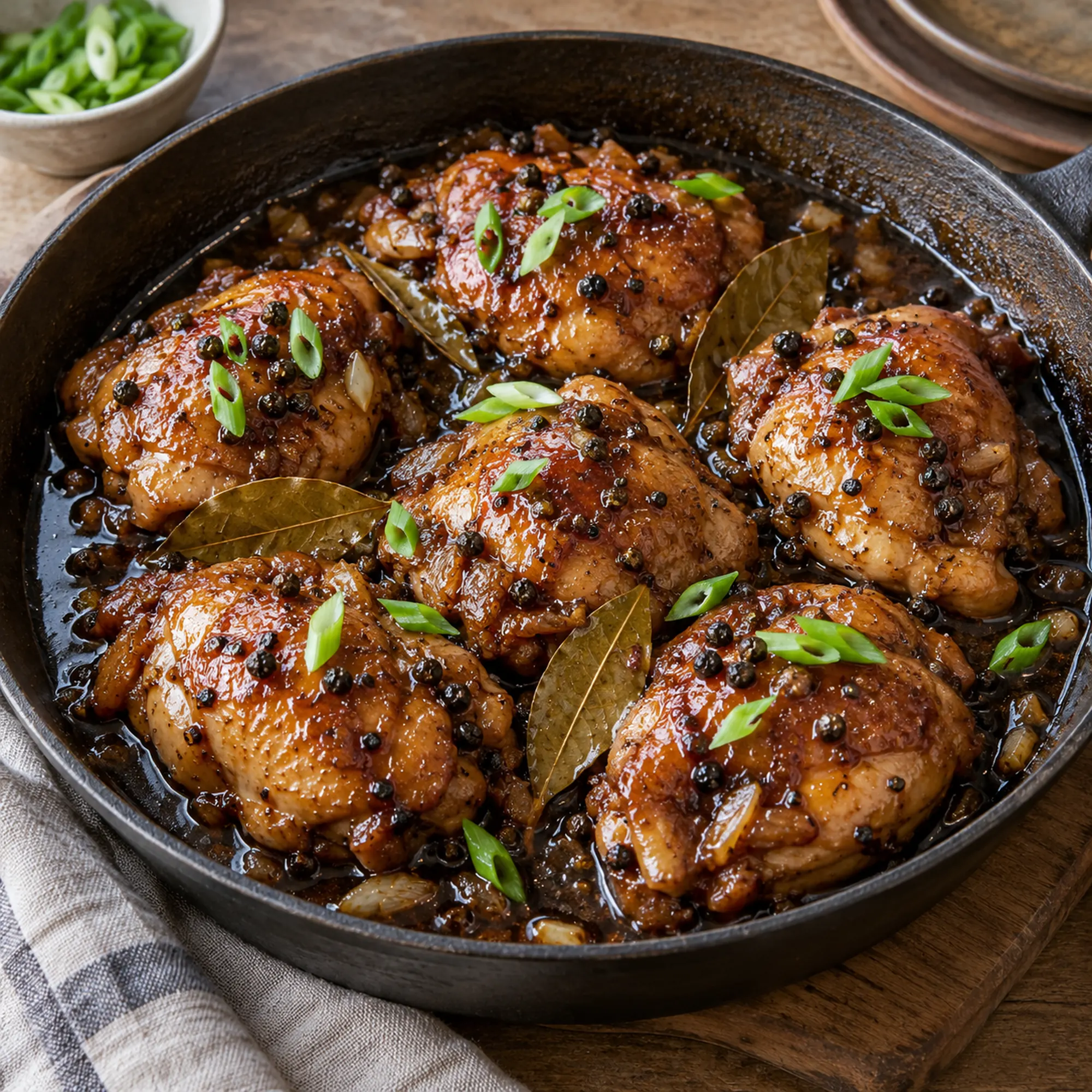
This chicken adobo simmers boneless thighs in a garlic-vinegar sauce, then reduces the liquid until it coats the meat; finish the glaze separately if the chicken is ready first.
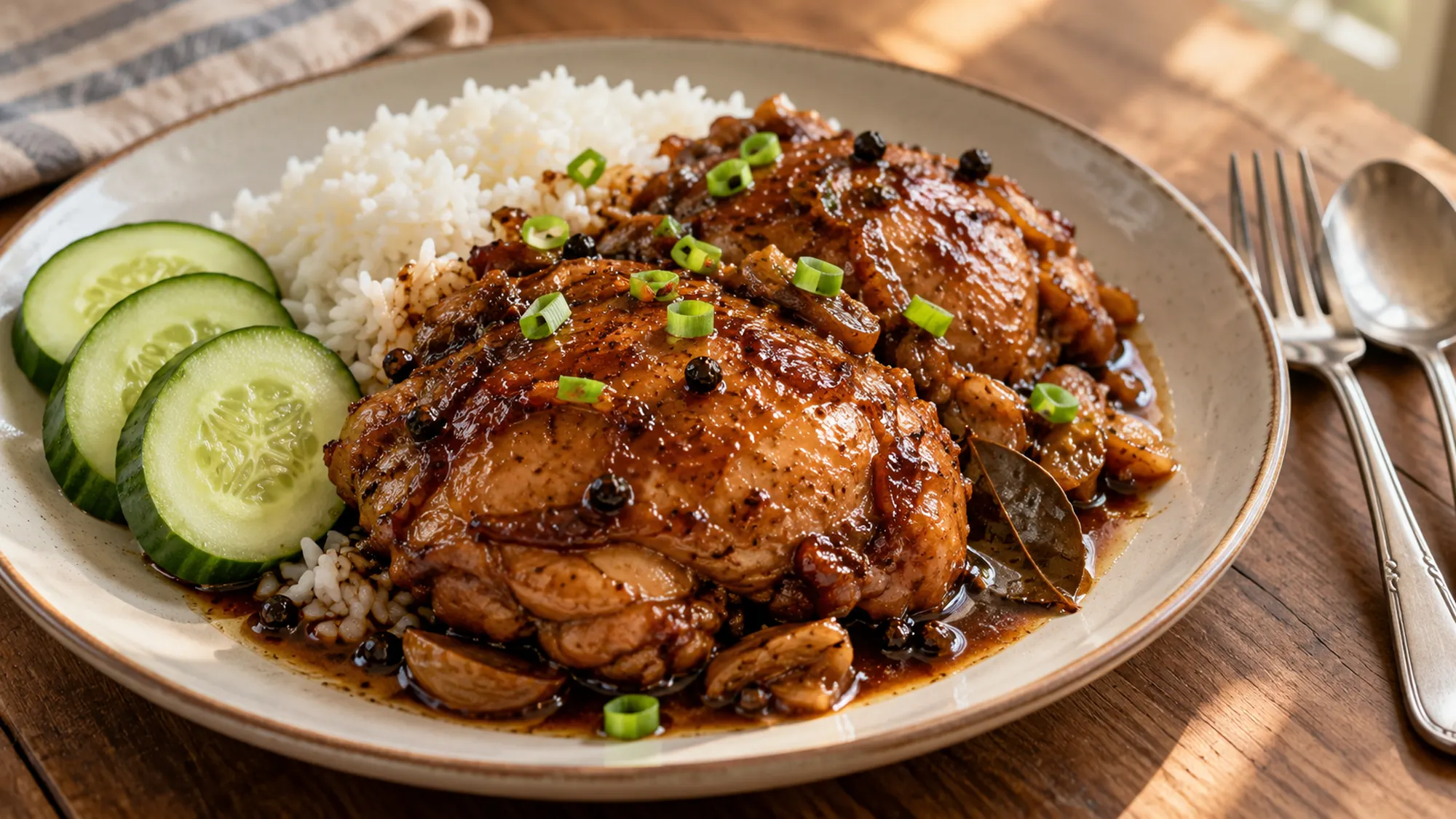
I like a spoonful of sauce over plain rice rather than pouring every drop onto the plate at once. It is concentrated enough to season several bites, and everyone can add more. The dark color comes from the soy-based glaze, not a requirement to burn the surface of the chicken.
Serving Chicken Adobo
Divide the chicken among four plates and offer rice separately. A neutral starch gives the salty, tangy sauce somewhere useful to go. Tastiva’s rice cooking guide helps with a simple pot of fluffy grains, without adding another assertive seasoning to the meal.
For contrast, choose sliced cucumber, steamed greens or lightly dressed cabbage. The meal already has vinegar and soy in the main dish, so a strongly seasoned side can compete rather than complement. A few sliced scallions are an optional fresh finish, not a substitute for a vegetable side.
- Remove the bay leaves before putting the serving dish on the table.
- Offer a spoon for the sauce as well as tongs for the thighs.
- Taste the rice and chicken together before deciding the plate needs more seasoning.
| Side | Useful contrast |
|---|---|
| Plain rice | Absorbs concentrated sauce |
| Sliced cucumber | Cool crunch |
| Steamed greens | A mild vegetable component |
Keep the accompaniments quiet enough that the garlic-vinegar sauce can remain the main flavor.
Chicken Adobo Variations
This version follows the boneless-thigh method in RecipeTin Eats’ Filipino chicken adobo. The accompanying video demonstrates the same brief marinating, browning and uncovered simmer. Reduced-sodium soy sauce is specified here, but the finished sauce is still strong after reduction.
I would choose thighs rather than replace them casually with breast. The two cuts respond differently to this simmering time, and the thigh texture suits the glossy sauce. If the liquid is taking longer to reduce than expected, use the appearance of the sauce and the chicken temperature as separate checks.
- Use ordinary light-style or all-purpose soy sauce, not dark soy sauce, which is a different product.
- The recipe specifies distilled white vinegar at 5% acidity. Other vinegars change both flavor and sharpness.
- Whole peppercorns give occasional stronger bites; coarse cracked pepper is a possible variation with a different distribution of heat.
- A wider pan evaporates liquid faster than a narrow pot, so the final reduction time is not fixed.
- Avoid adding extra sugar before the sauce has reduced; its sweetness becomes more concentrated too.
Adjust the final sauce consistency with time and pan heat, not by automatically adding more seasoning.
Nutrition and Safe Cooking
Chicken contributes protein, while the sauce brings much of the sodium and added sugar in the dish. Reduced-sodium soy sauce is a useful ingredient choice, but it does not turn a concentrated soy glaze into a low-sodium meal. Portioning the sauce deliberately is more informative than relying on the recipe’s name.
The nutrition estimate includes all the measured sauce and oil, even though some sauce may remain in the pan or serving dish. Rice and optional garnishes are excluded. Different soy brands, chicken trimming and the amount of sauce actually eaten will change the result.
- Keep the chicken refrigerated while it marinates, and treat the reserved marinade as raw until it has been thoroughly cooked.
- Check the thighs reach at least 165°F (74°C) in their thickest parts.
- Use a clean plate for cooked chicken rather than the plate used after its first brief sear.
- Refrigerate leftovers promptly in shallow containers and reheat thoroughly before serving.
The marinade needs proper cooking, and the chicken needs a temperature check even when the glaze looks finished.
Bottom Line
Chicken adobo is a good dish for learning to watch a sauce rather than simply obey a timer. The liquid should reduce to a coating while the thighs remain tender. Keep the rice plain, the sides fresh and the serving spoon handy, and the concentrated garlic-vinegar flavor can do most of the work at the table.
Tender thighs and a glossy, carefully reduced sauce are the two parts to finish thoughtfully.
Chicken Adobo Recipe

Ingredients
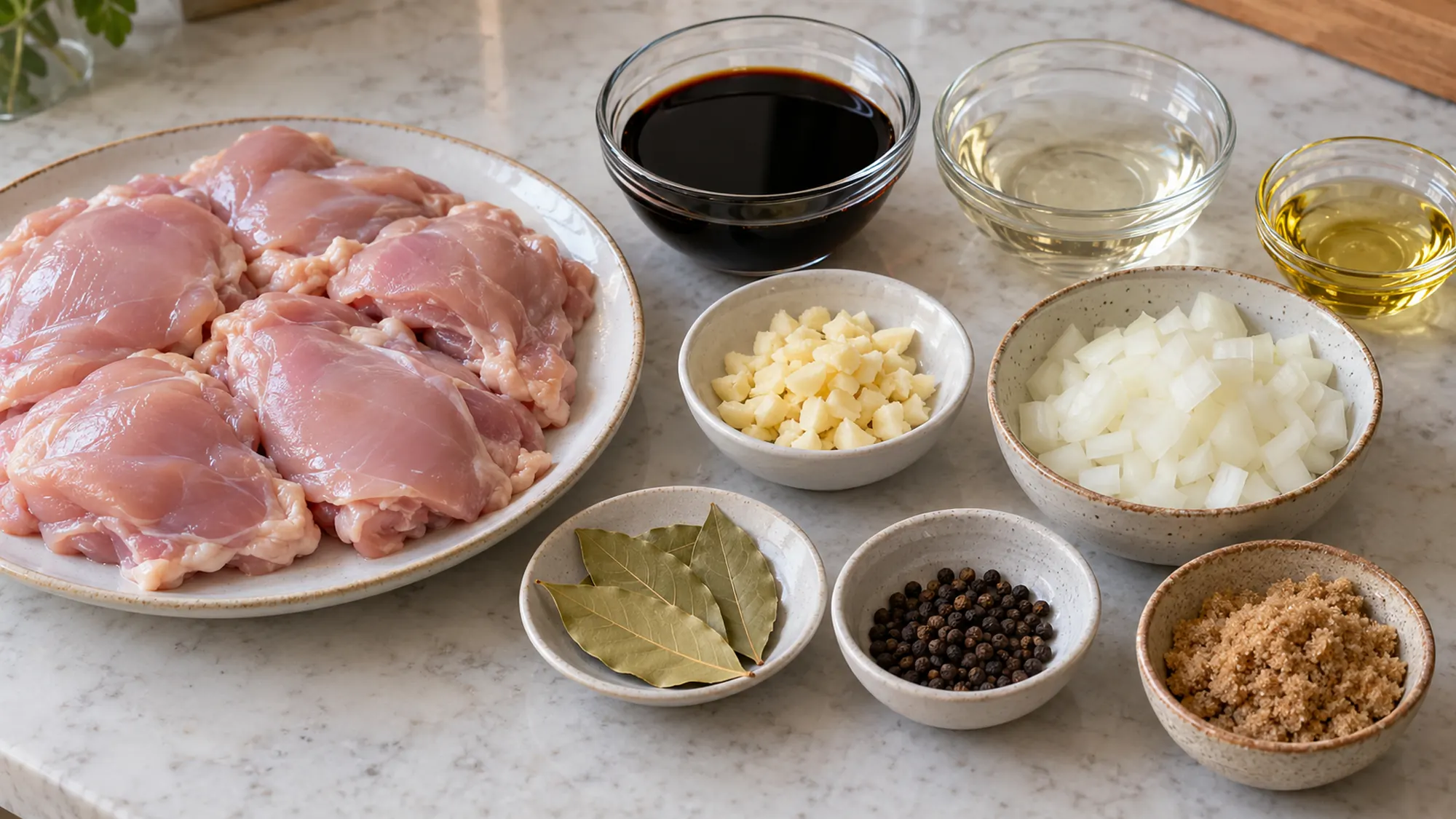
- 750 g boneless skinless chicken thighs about 6 pieces
- 18 g garlic minced, divided
- 85 ml reduced-sodium soy sauce
- 110 ml distilled white vinegar 5% acidity
- 3 dried bay leaves
- 30 ml sunflower oil divided
- 150 g onion diced
- 375 ml water
- 25 g brown sugar
- 6 g whole black peppercorns
- scallions and cooked rice optional serving additions, excluded from estimates
Equipment
- 1 Wide skillet with lid
- 1 Nonreactive mixing bowl
- 1 Instant-read thermometer
Instructions
- Combine the chicken with half the minced garlic, soy sauce, vinegar and bay leaves in a nonreactive bowl. Cover and refrigerate for at least 20 minutes. Lift the chicken out, reserving the marinade for cooking.
- Heat 15 ml oil in a wide skillet over medium-high heat. Brown the chicken briefly on both sides, about 1–2 minutes per side, then transfer to a plate; it will finish cooking in the sauce.
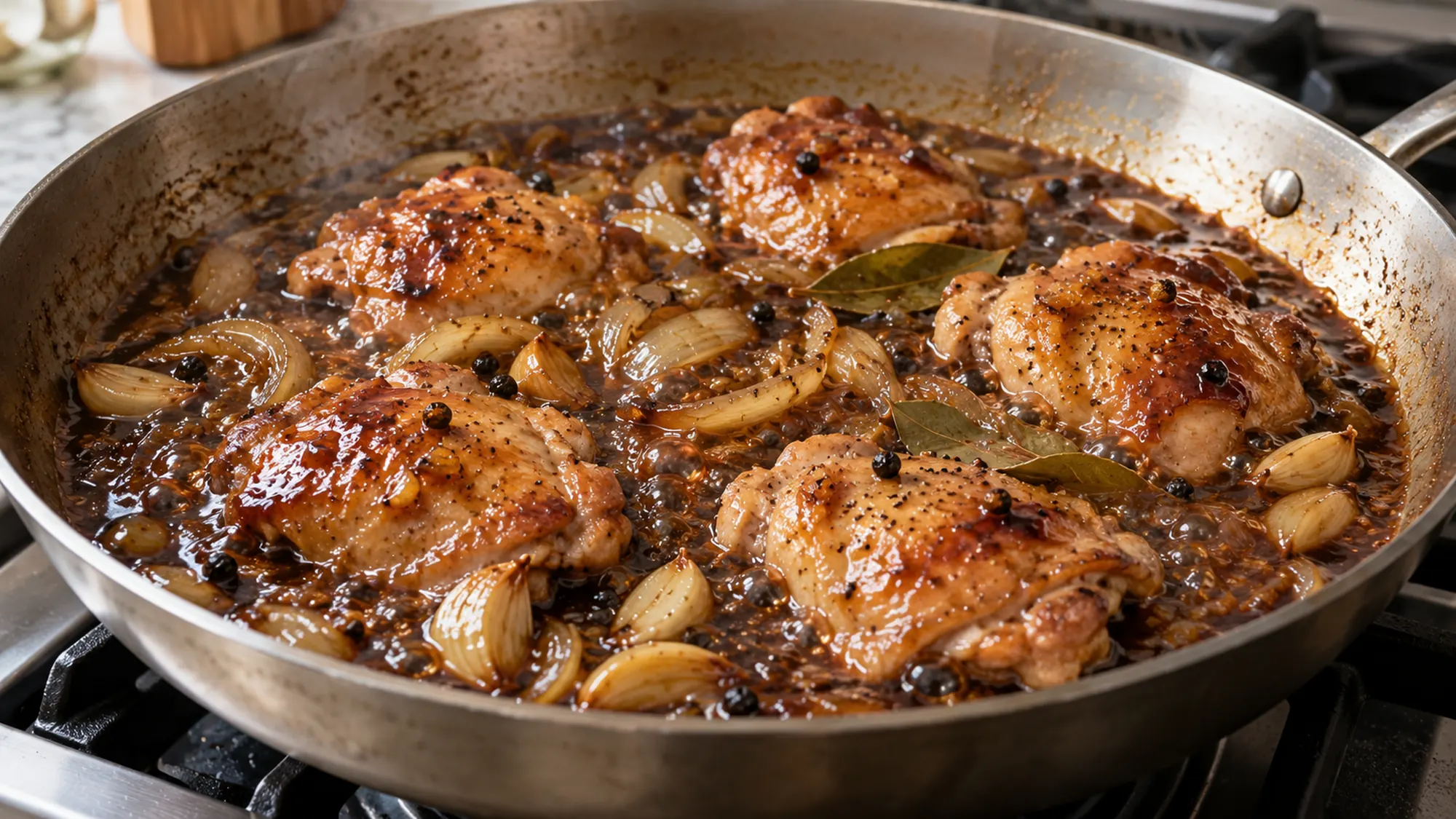
- Add the remaining oil, onion and garlic to the skillet. Cook for about 2 minutes. Add the reserved raw-chicken marinade, water, sugar and peppercorns, bring to a full boil, then simmer for 5 minutes.
- Return the chicken and its juices. Simmer uncovered for about 20–25 minutes, turning once, until the thighs reach at least 165°F (74°C) and the sauce becomes glossy. If the chicken is done before the sauce thickens, remove it to a clean plate and reduce the sauce separately, then return it to coat.
- Remove the bay leaves before serving. Divide into four portions with optional scallions or rice. The reduced-sodium soy sauce is a variation; the sauce is still concentrated, so spoon it on to taste.
Nutrition
Video
Notes
Tried this recipe?
Let us know how it turned out!Hi, I’m Laura, the voice behind Tastiva. I’ve always believed that eating well should feel enjoyable, comforting, and realistic—not like another complicated rule to follow. I love creating recipes that fit into everyday life, sharing simple nutrition ideas, and finding small ways to make meals feel a little better without losing the pleasure of good food.