
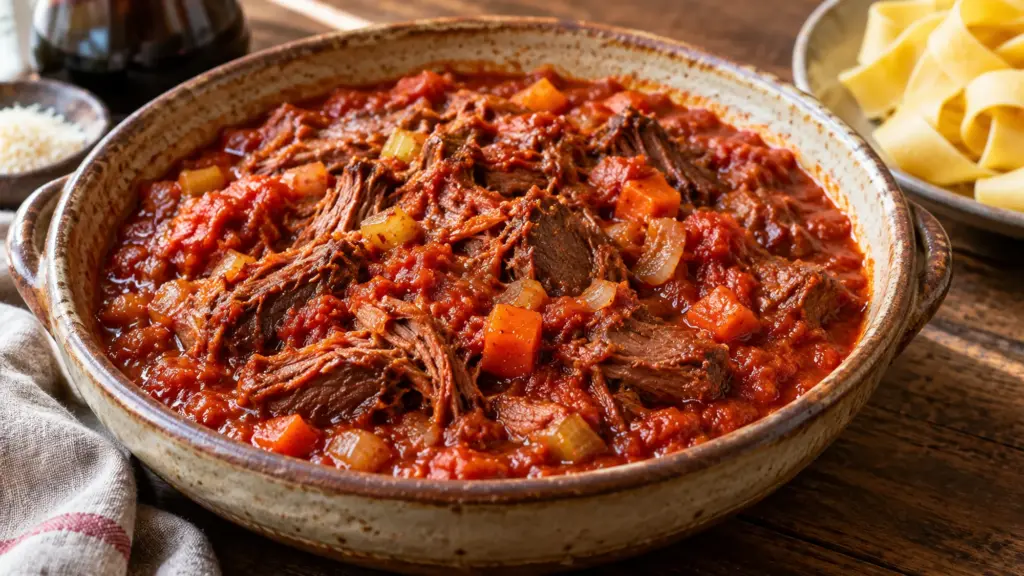
A fork should do the work when beef ragu is ready. If the chuck still needs a determined pull, it needs more gentle cooking, not a sharper knife. The reward for waiting is meat that separates into soft strands and becomes part of the tomato sauce rather than sitting in firm cubes above it.
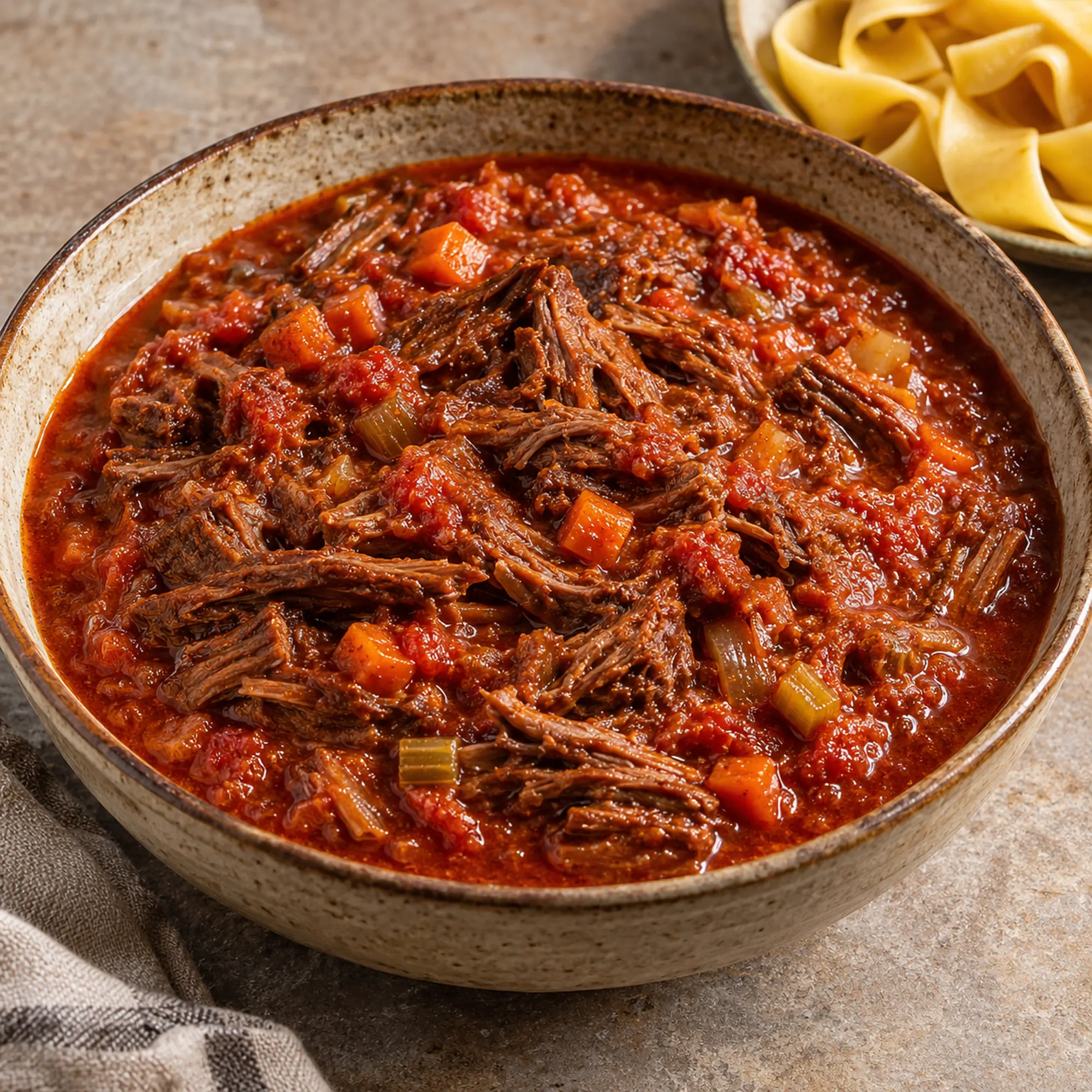
Beef ragu becomes a thick, shredded sauce when browned chuck is slowly braised until fork-tender, pulled apart and simmered uncovered to concentrate the liquid.
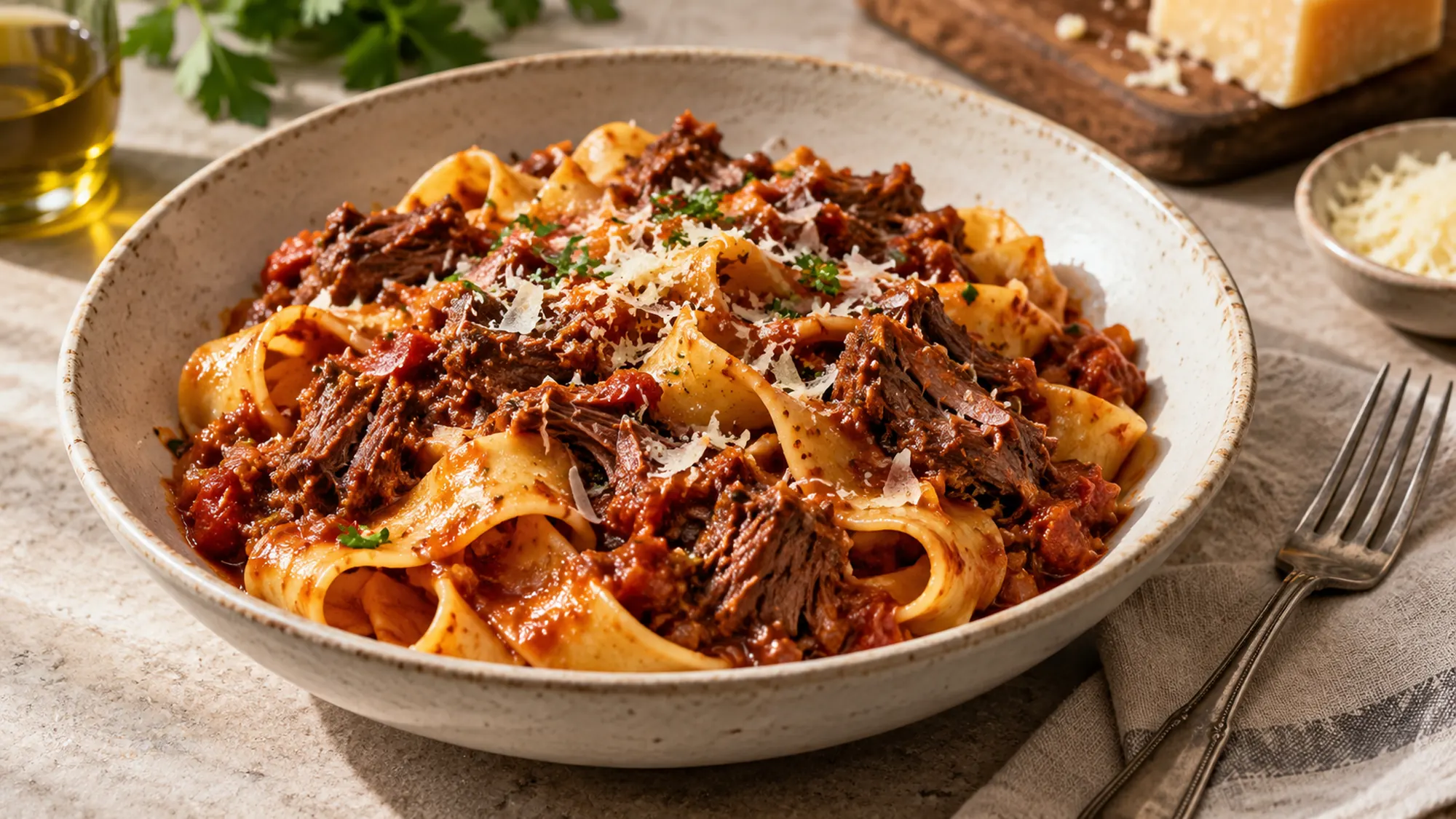
I like wide pasta with this sauce because the strands of beef have somewhere to settle. But the recipe below makes the ragu itself, leaving you free to cook only the pasta you need for that meal. That is more practical than combining a large pot of sauce with every noodle at once.
Serving Beef Ragu
Allow one eighth of the sauce for each serving, then choose your own pasta portion. Pappardelle, tagliatelle or another broad ribbon works well. Rigatoni is a useful alternative when short pasta is easier to find; its ridges and hollow center offer places for the thick sauce to collect.
For a softer base, try Tastiva’s mashed potatoes. Either way, a simple green vegetable or lightly dressed salad keeps the meal from becoming entirely soft and rich. Parmesan and parsley are optional finishes, not ingredients hidden inside the sauce estimate.
- Warm only the sauce you need while the pasta cooks.
- Reserve a little pasta water before draining, then use it gradually to help the sauce coat the noodles.
- Toss the pasta with the ragu rather than leaving a mound of sauce on top.
| Serving choice | Useful detail |
|---|---|
| Wide pasta | Catches shredded beef |
| Rigatoni | Holds sauce in ridges and tubes |
| Mashed potatoes | A soft alternative to pasta |
Cook the starch for the meal at hand and keep the remaining ragu separate.
Beef Ragu Variations
The approach is adapted from RecipeTin Eats’ shredded beef ragu. This version uses unsalted beef stock in place of the wine, water and bouillon combination. The essential sequence remains browning, slow covered braising, shredding and a final uncovered reduction.
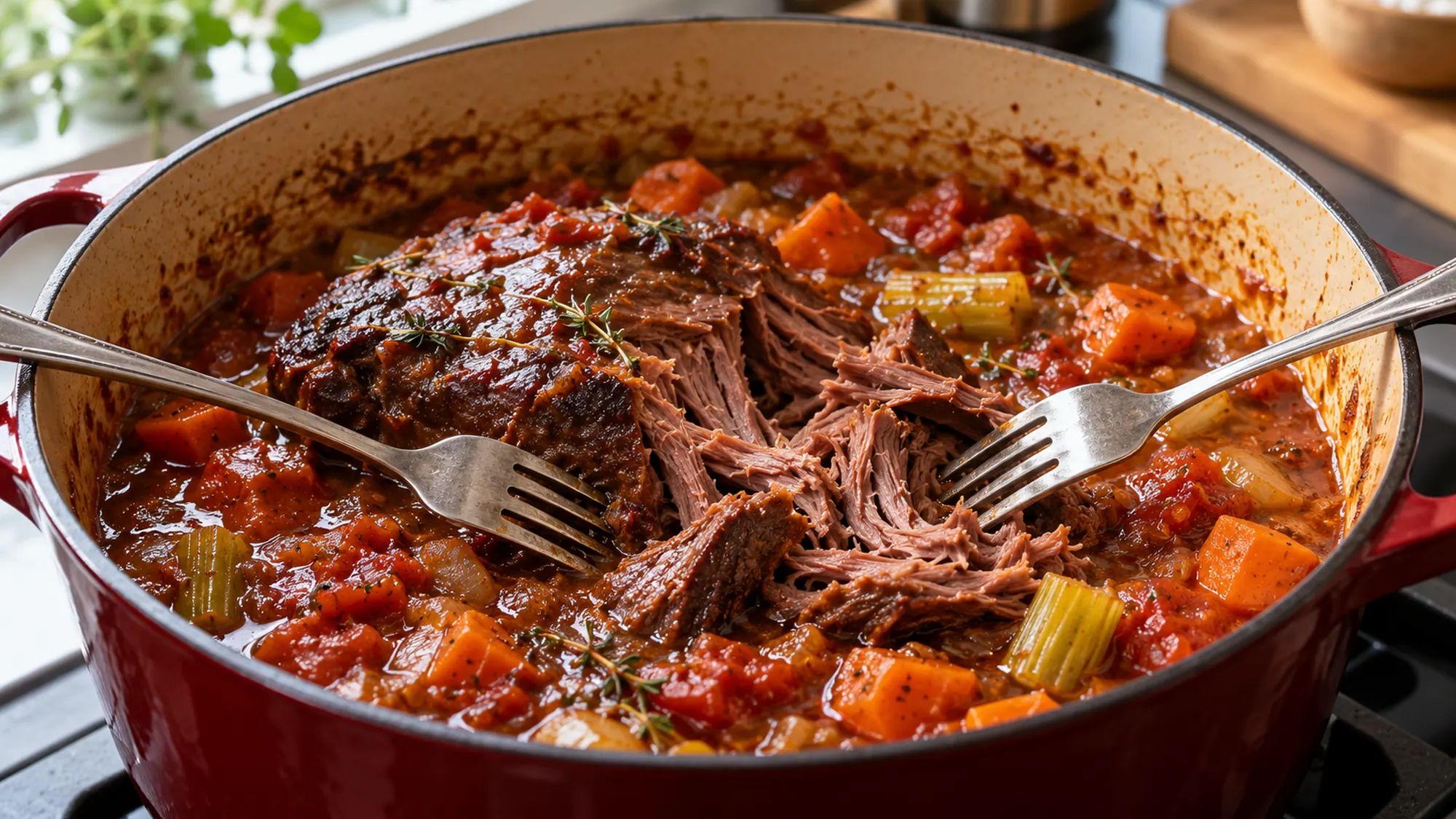
I would choose chuck rather than spend more on a quick-cooking steak for this pot. The recipe depends on a cut suited to a long braise. Equally sized pieces are helpful, but the final test is tenderness: meat that is ready will separate easily when pressed and pulled with two forks.
- Keep the bubbling gentle; a vigorous boil can reduce the liquid before the meat becomes tender.
- Check the pot occasionally and add a little water if the sauce is drying around the edges.
- Remove the bay leaves before shredding and serving.
- If the beef is tender but the sauce is loose, finish the reduction uncovered after shredding.
- Taste only after the sauce has concentrated before deciding whether it needs more salt.
Let tenderness determine the braising time, then let sauce consistency determine the final reduction.
Nutrition and Safe Cooking
Beef contributes protein, while the amount of fat depends on the cut and its trimming. Onion, carrot, celery and tomato are part of the sauce, but a separate vegetable side still adds variety to the meal. The word slow-cooked describes the method, not a guarantee that every serving is light.
The nutrition estimate divides the entire sauce into eight portions and includes all the measured oil and stock. Pasta, cheese and optional parsley are excluded. A particularly fatty piece of chuck, extra salt or a larger portion will change the result, so use the figures as a guide rather than an exact measurement of your plate.
- Keep raw-beef utensils and plates separate from the cooked sauce.
- Use clean forks to shred the finished meat.
- Divide leftovers into shallow containers and refrigerate promptly rather than leaving the full heavy pot to cool on the counter.
- Reheat leftover sauce thoroughly to 165°F (74°C), stirring so the center heats evenly.
Portion the sauce separately from its accompaniments, and cool a large batch in smaller containers.
Bottom Line
Beef ragu is less about constant attention than knowing what to watch. Brown the meat, keep the braise gentle and wait for the fork-tender stage before shredding. The final uncovered simmer gives the sauce enough body to cling to pasta, while keeping the sauce separate makes the remaining portions easier to use for another meal.
Tender shreds and a well-reduced sauce are the signs that the long simmer has done its job.
Beef Ragu Recipe

Ingredients
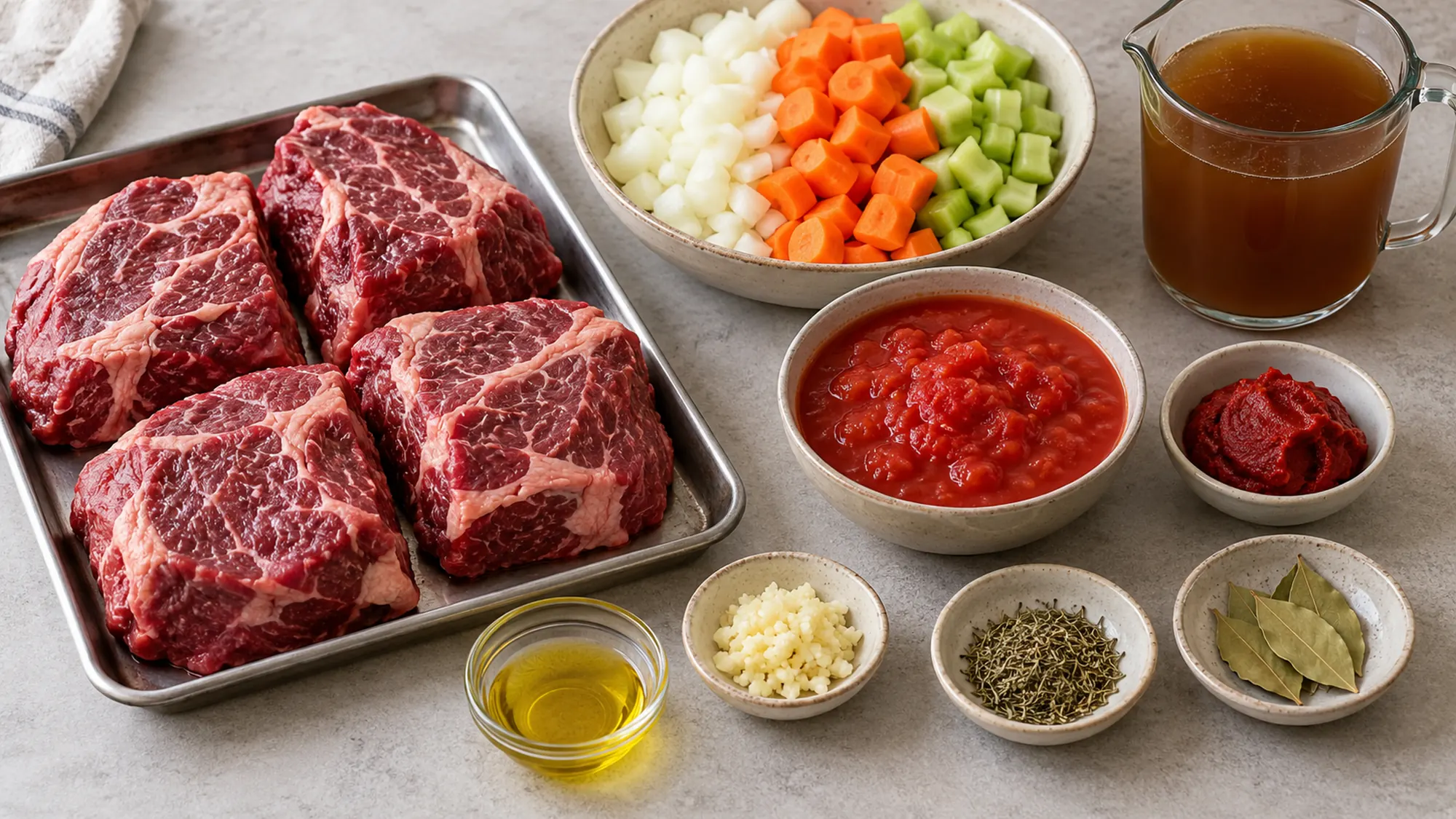
- 1250 g beef chuck cut into 4 large pieces
- 7.5 g fine salt
- 1 g black pepper
- 45 ml olive oil divided
- 9 g garlic minced
- 150 g onion finely diced
- 150 g carrot finely diced
- 100 g celery finely diced
- 800 g canned crushed tomatoes
- 45 g tomato paste
- 600 ml unsalted beef stock
- 1 g dried thyme
- 3 dried bay leaves
- pasta, Parmesan and parsley optional serving additions, excluded from estimates
Equipment
- 1 Heavy pot with lid
- 1 Two forks
- 1 Knife and cutting board
Instructions
- Pat the beef dry and season with the measured salt and pepper. Heat 15 ml oil in a heavy pot over medium-high heat. Brown the beef on all sides, in batches if necessary, then set aside.
- Lower the heat to medium-low and add the remaining oil, onion and garlic. Cook for 2 minutes, then add carrot and celery and cook for about 5 minutes, stirring. Add tomato paste, crushed tomatoes, stock, thyme and bay leaves.
- Return the beef and its juices. Bring to a gentle simmer, cover and cook over low heat for about 2–2½ hours, checking occasionally and adding a little water if the pot is drying. Continue until the beef separates easily with a fork; tougher pieces may take longer.
- Remove the beef to a clean plate and shred with two forks. Return it to the sauce, remove bay leaves and simmer uncovered for about 30 minutes until thick enough to coat pasta. Taste before adding optional extra seasoning.
- Divide the sauce into eight portions. To serve with pasta, warm the needed sauce and toss with cooked pasta plus a little reserved pasta water. Pasta, Parmesan and parsley are optional and excluded from the sauce estimates. Unsalted stock replaces the source’s wine, water and bouillon combination.
Nutrition
Video
Notes
Tried this recipe?
Let us know how it turned out!Hi, I’m Laura, the voice behind Tastiva. I’ve always believed that eating well should feel enjoyable, comforting, and realistic—not like another complicated rule to follow. I love creating recipes that fit into everyday life, sharing simple nutrition ideas, and finding small ways to make meals feel a little better without losing the pleasure of good food.