
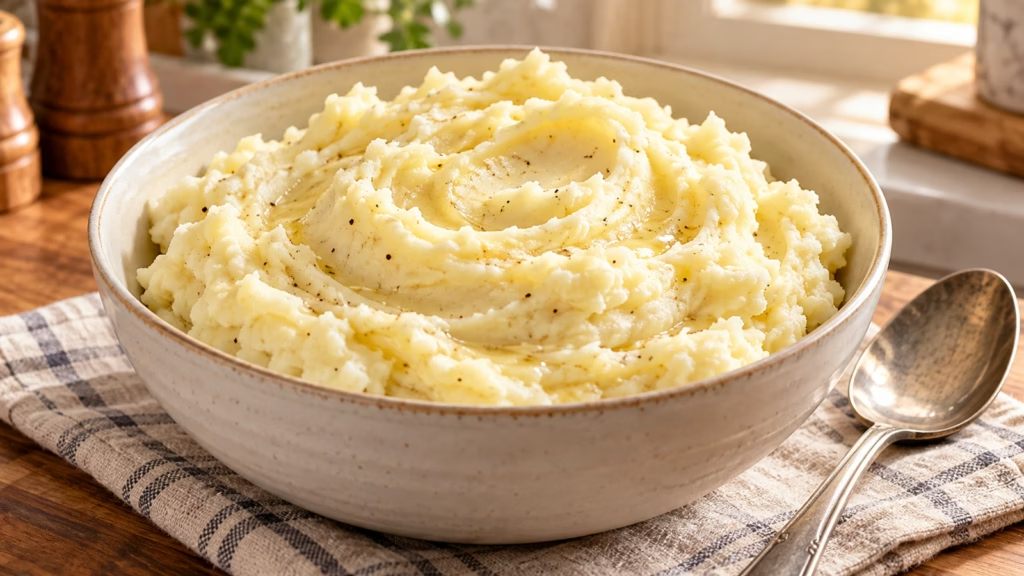
Learning how to make mashed potatoes is mostly learning when to stop: stop simmering when the centers are tender, stop adding milk when the mash is soft enough, and stop mixing before it turns sticky. This version uses russet potatoes, butter and warm whole milk for a bowl that feels generous without needing a long ingredient list.
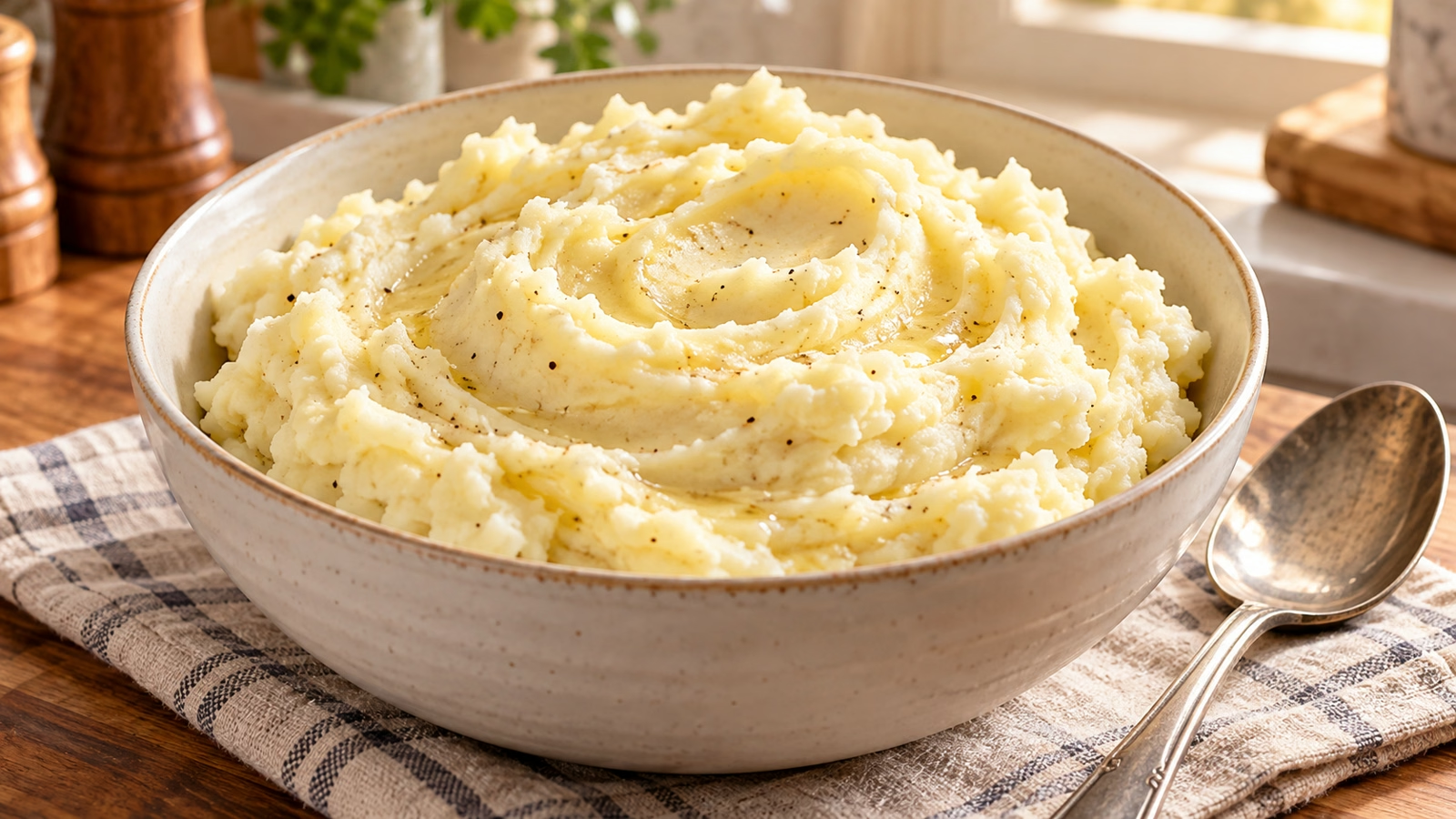
I want mashed potatoes that make room for a spoonful of gravy but still taste good on their own. Tender potatoes and a light hand do more for that bowl than an extra minute of beating ever will.
Choose a potato that wants to fall apart
Russets are the starting point here. Their cooked flesh breaks down readily, so you can get a soft mash without working it for ages. Yukon Gold potatoes make a creamier, slightly denser result and are a reasonable alternative. Small waxy salad potatoes can be mashed, but they are not my first choice for this particular texture.
The recipe calls for 1 kg of peeled potatoes, so buy a little more than that before peeling. Cut them into roughly 1½-inch pieces rather than a mixture of tiny scraps and large wedges. Those similar-sized pieces let you judge the whole pot more fairly when you check for tenderness.
Unsalted butter keeps the seasoning under your control. Whole milk adds enough richness to soften the potatoes without turning this into a cream-heavy purée. Set out the butter while the pot heats, and warm the milk gently near the end of cooking. Neither needs to be bubbling.
Cook through, then let the water go
Start the potato pieces in cold water that covers them by about an inch. Bring the pot up to a boil, then lower the heat to a steady simmer. The potatoes should move a little, not crash into one another. I leave this cooking water unsalted and add a measured amount to the finished mash, which makes the seasoning easier to repeat.
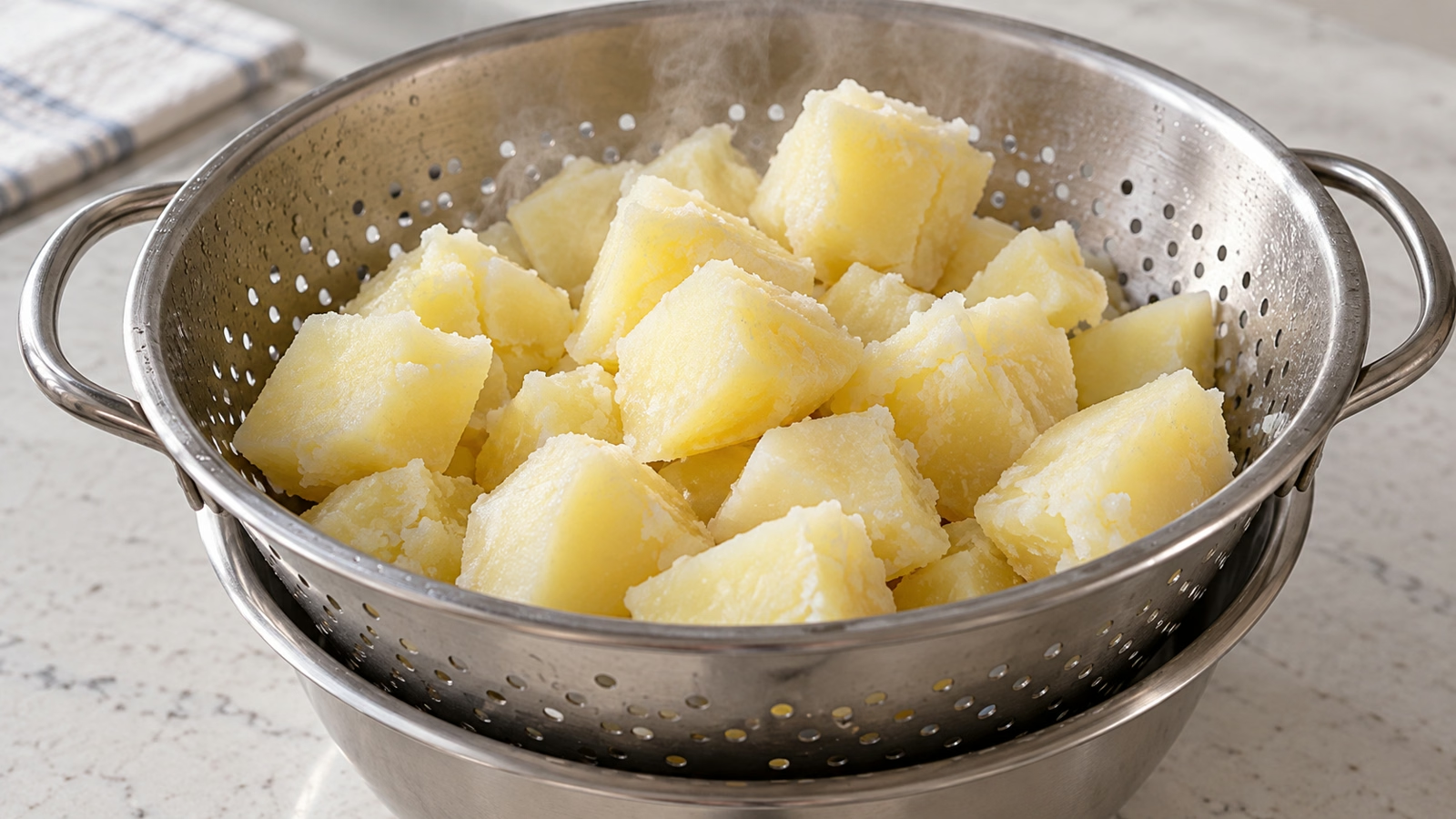
Begin checking after about 15 minutes of simmering. A fork should enter the center of a large piece without a firm little core resisting it. Depending on the cut and the potato, the pot may need closer to 20 minutes. A soft outside does not tell you whether the middle is ready.
Drain thoroughly, then return the potatoes to the empty warm pot over low heat for about a minute. Gently shake the pot and let visible moisture evaporate without browning the bottom. The pieces should look drier before you mash them. Milk belongs in this bowl; a puddle of cooking water does not.
Mash gently and add the milk in stages
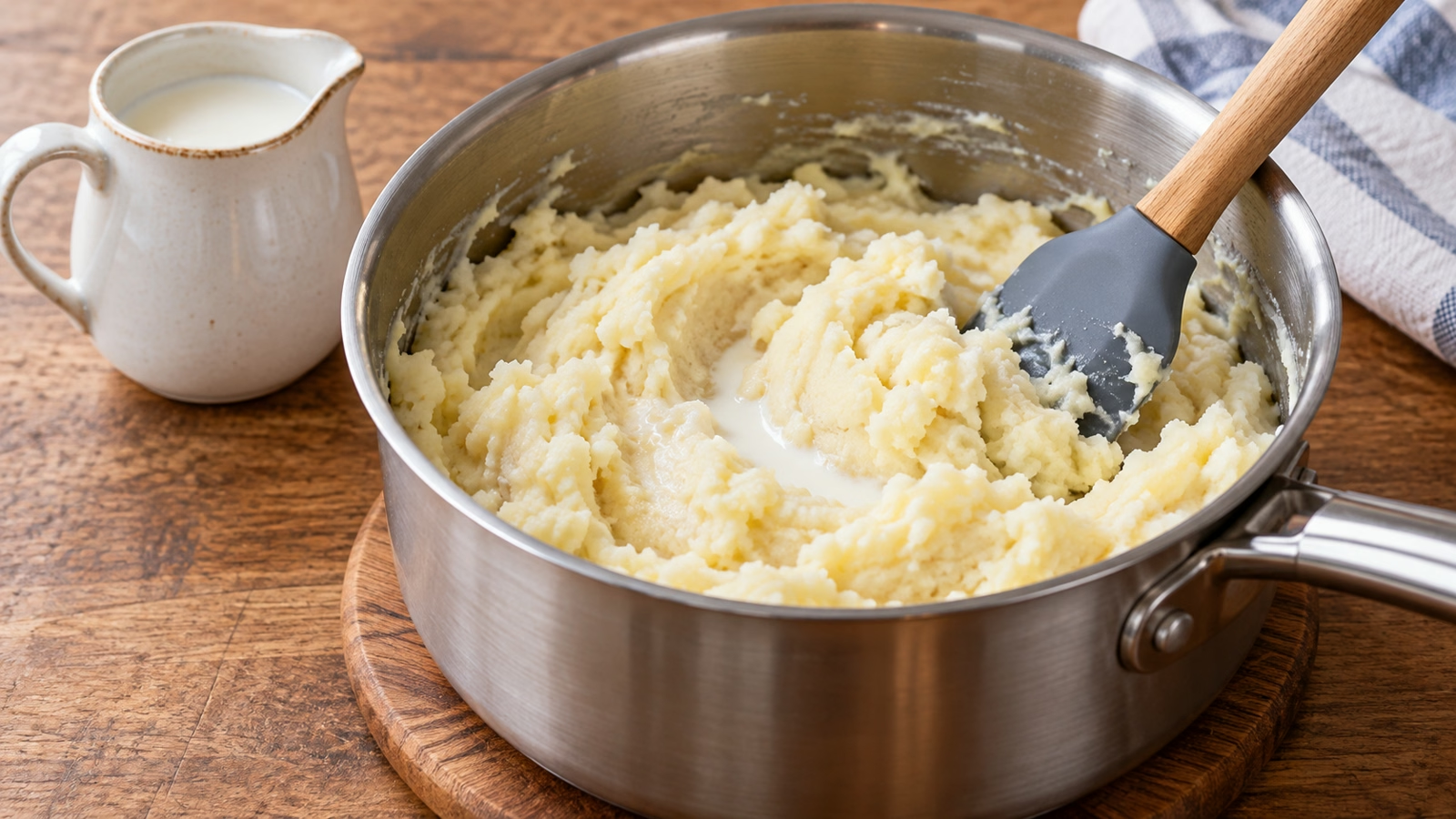
Take the pot off the heat. Use a hand masher for a little texture or a ricer for a more even finish. Mash while the potatoes are hot, fold in the softened butter, then add most of the warm milk. Finish with the remaining milk only as needed; potatoes do not all absorb liquid in exactly the same way.
Aim for soft mounds that settle slightly when you scoop them. If the mash holds stiff, dry-looking ridges, fold in another tablespoon of warm milk. If it already looks loose, leave the rest in the jug. Avoid a blender or food processor: vigorous cutting can release enough starch to make potatoes unpleasantly gluey.
- A few soft lumps: perfectly welcome in a hand-mashed bowl. Do not keep beating just to erase every one.
- Hard little lumps: usually mean the potatoes needed more cooking. More milk will not soften an undercooked center.
- Sticky mash: stop working it. Extra mixing cannot restore the original fluffy texture.
Serve now, or reheat with a little patience
Taste after adding the measured salt and pepper, then adjust if needed. For a fresh finish, add snipped chives at the table. The plain version is useful beside roast vegetables, sausages or a saucy main such as marry me chicken. Keep any extra butter or gravy separate so everyone can choose their own amount.
Refrigerate leftovers in shallow covered containers within two hours, or within one hour when the temperature is above 90°F. Keep them at 40°F or below and use within three to four days. Do not leave a large warm pot on the counter waiting for it to become completely cold.
Reheat a portion in the microwave or a saucepan, adding a small splash of milk and stirring gently between heating intervals. Check that the center reaches 165°F. Chilled potatoes become firmer, so judge the final consistency after they are hot rather than pouring in lots of milk at the beginning.
Mashed Potatoes Recipe

Ingredients
- 1 kg russet potatoes peeled weight, about 2 1/4 lb; buy extra to allow for peeling
- 5 tablespoons unsalted butter 70 g, softened
- 3/4 cup whole milk 180 ml, warmed; add gradually, plus a little more only if needed
- 3/4 teaspoon fine salt 4.5 g; adjust to taste
- 1/4 teaspoon ground black pepper about 0.5 g
Equipment
- 1 large saucepan or pot
- 1 Colander
- 1 potato masher or ricer
- 1 small saucepan or microwave-safe jug
Instructions
- Cut the peeled potatoes into roughly 1 1/2-inch pieces. Place in a large pot and cover with cold unsalted water by about 1 inch. Bring to a boil, then reduce to a steady simmer. Cook for 15–20 minutes from simmering, until a fork enters the center of a large piece with no firm resistance.
- Meanwhile, warm the milk in a small pan over low heat or in short microwave intervals. It should be warm, not boiling. Keep the butter softened and ready.
- Drain the potatoes well. Return them to the empty pot over low heat for about 1 minute, gently shaking the pan so excess moisture evaporates without browning. Remove from the heat.
- Mash the hot potatoes with a hand masher, or pass through a ricer into the pot. Gently fold in the butter. Add about two-thirds of the warm milk, then fold in the rest as needed to make soft mounds. Avoid a food processor or blender and stop mixing once combined.
- Fold in the salt and pepper, taste and adjust if needed. If the potatoes seem too stiff, add extra warm milk a tablespoon at a time. Serve promptly.
Nutrition
Video
Notes
Tried this recipe?
Let us know how it turned out!Sources
- Idaho Potato Commission: potato preparation and mashing
- Idaho Potato Commission: warm ingredients and mixing
- Serious Eats: potato starch and texture
- Preppy Kitchen: mashed potato demonstration
- USDA: handling leftovers safely
- USDA: reheating leftovers
Hi, I’m Laura, the voice behind Tastiva. I’ve always believed that eating well should feel enjoyable, comforting, and realistic—not like another complicated rule to follow. I love creating recipes that fit into everyday life, sharing simple nutrition ideas, and finding small ways to make meals feel a little better without losing the pleasure of good food.