
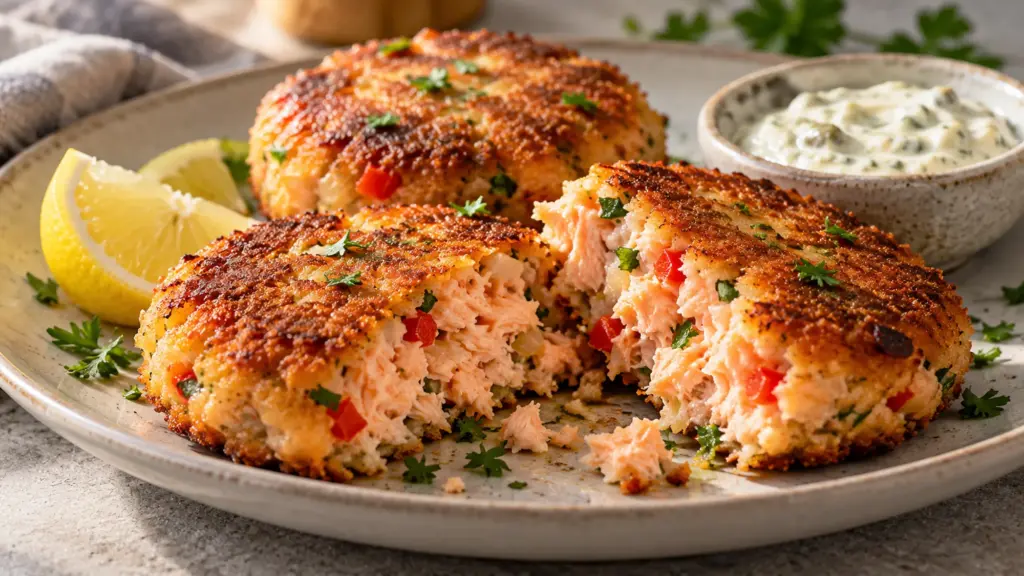
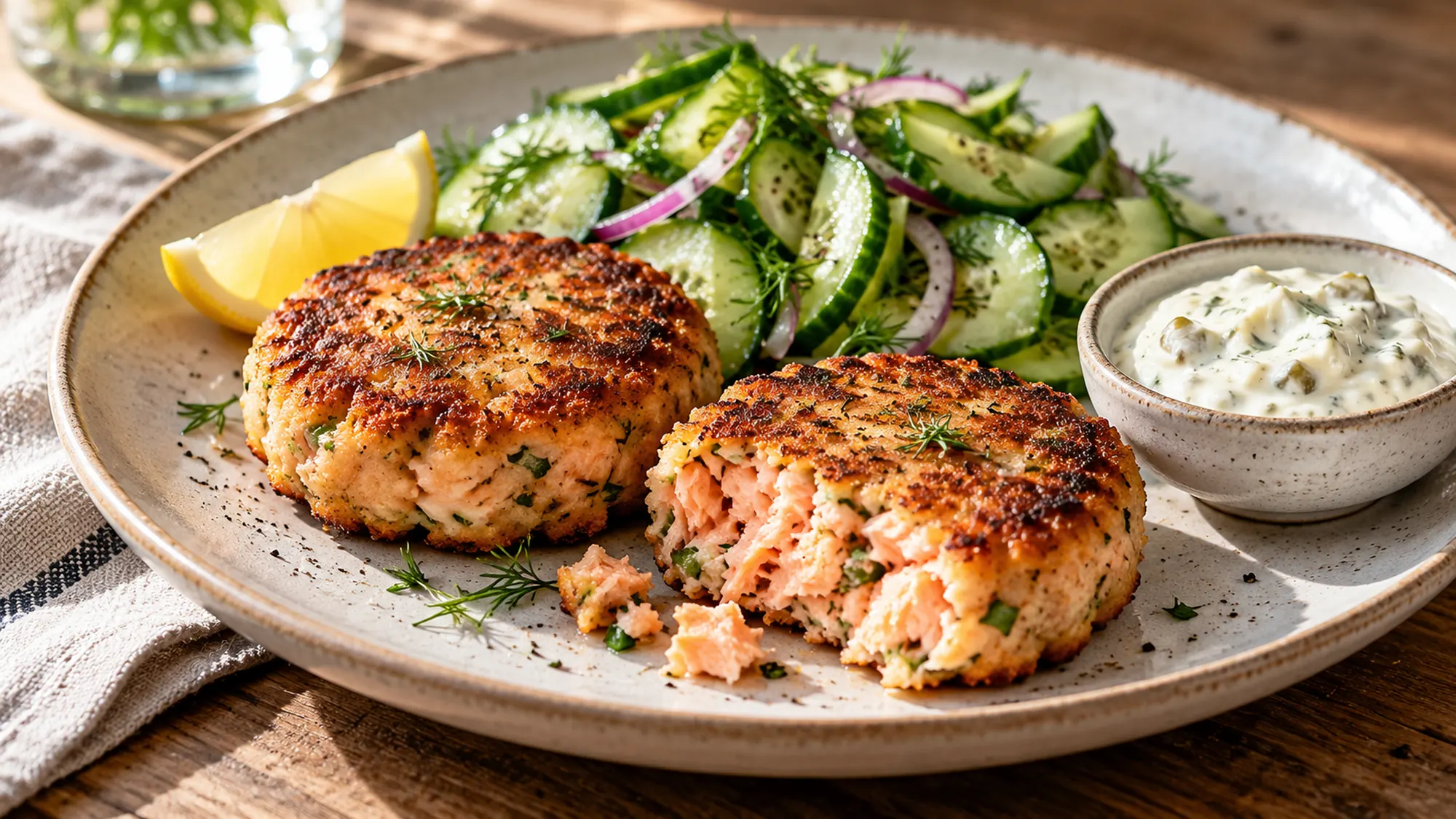
A good salmon patty should still look like salmon when you break it open. These salmon patties begin with a freshly cooked fillet, then bring the flakes together with softened vegetables, panko and eggs. The outside gets a golden crust in the skillet while the center keeps its distinct, tender pieces of fish.
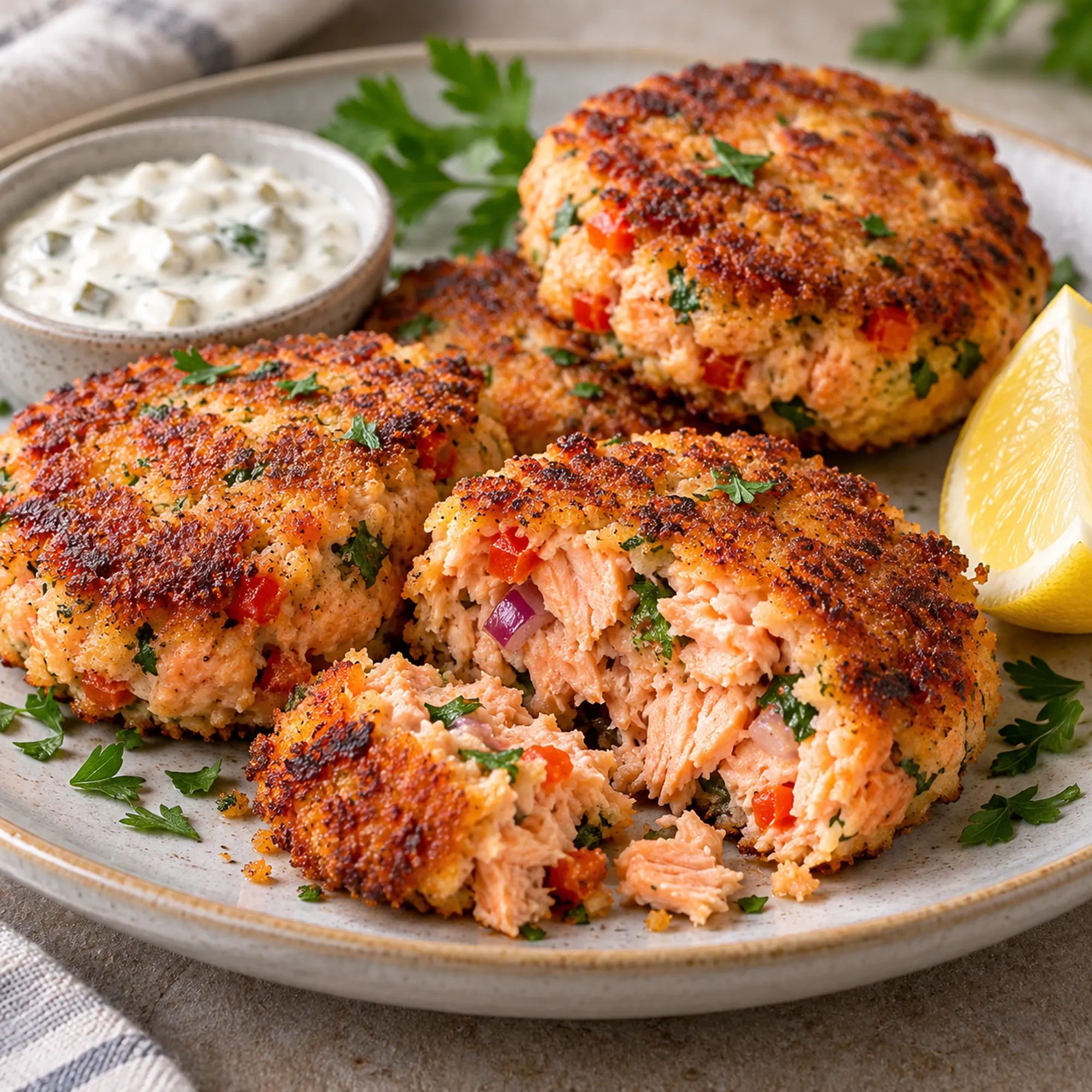
For salmon patties with flaky centers, cool the cooked fish enough to handle, mix gently with the binders and shape small, evenly thick patties before pan-frying.
I like a patty that needs a fork rather than behaving like a tightly packed burger. Keeping some larger flakes gives the inside a more interesting texture. There is no prize for stirring until the salmon becomes a paste, especially after taking the time to cook a fresh fillet for the mixture.
Serving Salmon Patties
The recipe makes fourteen small patties, or seven portions of two. Serve them hot with lemon wedges or a little tartar sauce if you like. Those extras are separate from the estimate, and a creamy condiment is optional rather than necessary for the patties to feel complete.
A crisp salad gives the fried edges a useful contrast. Tastiva’s chickpea cucumber salad can make the plate more substantial without requiring another hot pan. A simple green vegetable or modest portion of potatoes also works, depending on how hungry everyone is.
- Use a broad spatula so each patty is supported when moved.
- Keep cooked patties in a single layer rather than stacking them while steam is escaping.
- Offer sauce at the side to preserve the crisp surface until the first bite.
| Serving addition | What it contributes |
|---|---|
| Lemon wedge | Optional acidity |
| Cucumber salad | Cool crunch |
| Potatoes | A more substantial plate |
Serve the patties promptly and keep wet sauces beside them, not over the whole batch.
Salmon Patties Variations
The formula is adapted from Natasha’s Kitchen’s fresh salmon cakes, whose video also calls them salmon patties. The fish is roasted before mixing and pan-frying. This version states the oil, salt and garlic powder quantities explicitly rather than leaving the initial fish seasoning unmeasured.
I would keep the patties fairly small instead of turning the same mixture into a few thick discs. Smaller, evenly shaped pieces are easier to turn and heat through. The recipe’s yield is part of its timing and serving estimate, so a much larger patty needs its own careful temperature check.
- Canned or leftover cooked salmon is a variation, but its weight and moisture are not interchangeable with the raw fillet specified here.
- Let the sautéed vegetables cool slightly before combining them with the eggs.
- If the mixture is too loose to shape, a small additional amount of panko can help; add gradually rather than making it bread-heavy.
- If it seems unusually dry, a little extra mayonnaise changes the binding and the estimate.
- Reduce the heat if the first side browns before the center has time to become thoroughly hot.
Preserve the flakes, keep the thickness even and adjust a wet or dry mixture in small steps.
Nutrition and Safe Cooking
Salmon and eggs contribute protein, while butter, oil and mayonnaise add fat and energy. Panko and vegetables are part of the mixture, but these are still pan-fried patties rather than an unadorned serving of fish. Portion size and accompaniments are more informative than assuming every salmon dish has the same nutrition.
The estimate begins with 454 grams of raw skinless Atlantic salmon and includes all the measured cooking fat, even if some remains in the pan. It covers two of fourteen patties and excludes lemon, tartar sauce and sides. Different salmon varieties, mayonnaise brands and added crumbs will change the result.
- Cook the initial salmon to 145°F (63°C) and check carefully for bones before flaking.
- After mixing with eggs, cook the patties until their centers are thoroughly hot; this recipe uses a 165°F (74°C) target.
- Do not leave the cooked fish or mixed patties at room temperature for extended preparation breaks.
- Refrigerate leftovers promptly in shallow containers and reheat thoroughly.
Check both cooking stages and handle the cooled fish promptly while preparing the mixture.
Bottom Line
Salmon patties are worth a gentle hand. Cook the fish, soften the vegetables and bring them together without crushing every flake. Shape the mixture evenly, let the skillet develop a golden crust and serve with something crisp or fresh. The best contrast is already inside the patty: a browned surface around a tender, recognizably salmon center.
Gentle mixing and even shaping help the fish stay the focus of every bite.
Salmon Patties Recipe

Ingredients
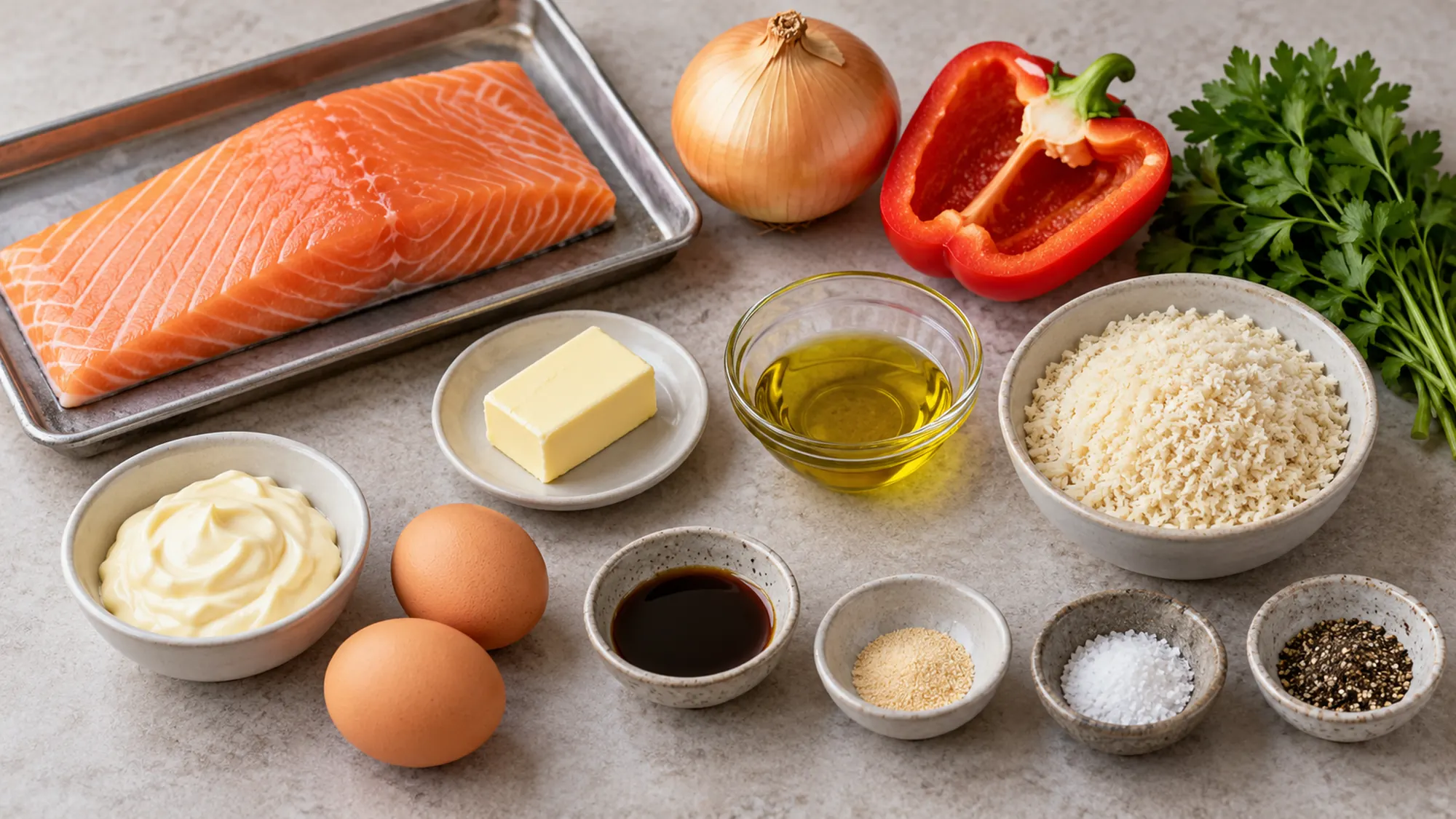
- 454 g raw boneless skinless Atlantic salmon
- 150 g onion finely diced
- 75 g red bell pepper finely diced
- 42 g unsalted butter divided
- 50 ml olive oil 5 ml roasting, 15 ml vegetables, 30 ml frying
- 60 g panko breadcrumbs
- 2 large eggs about 100 g without shells, beaten
- 45 g mayonnaise
- 5 ml Worcestershire sauce
- 4.5 g fine salt divided
- 1.5 g garlic powder divided
- 0.75 g black pepper divided
- 15 g fresh parsley finely chopped
- lemon wedges and tartar sauce optional serving additions, excluded from estimates
Equipment
- 1 Baking tray
- 1 Large skillet
- 1 Mixing bowl
- 1 Instant-read thermometer
Instructions
- Heat the oven to 425°F (220°C). Put the salmon on a lined baking tray, brush with 5 ml olive oil and season with 1.5 g salt, 0.5 g garlic powder and 0.25 g pepper. Bake for about 10–15 minutes, checking the thickest part reaches 145°F (63°C). Let it cool briefly until comfortable to handle, then flake and check carefully for bones.
- Heat 15 ml olive oil and 14 g butter in a skillet over medium heat. Cook the onion and red pepper for 7–9 minutes until softened, then remove from the heat and allow to cool slightly.
- Gently combine flaked salmon, cooked vegetables, panko, eggs, mayonnaise, Worcestershire, parsley and remaining salt, garlic powder and pepper. Shape into 14 small patties about 1 cm thick, keeping the mixture loosely packed.
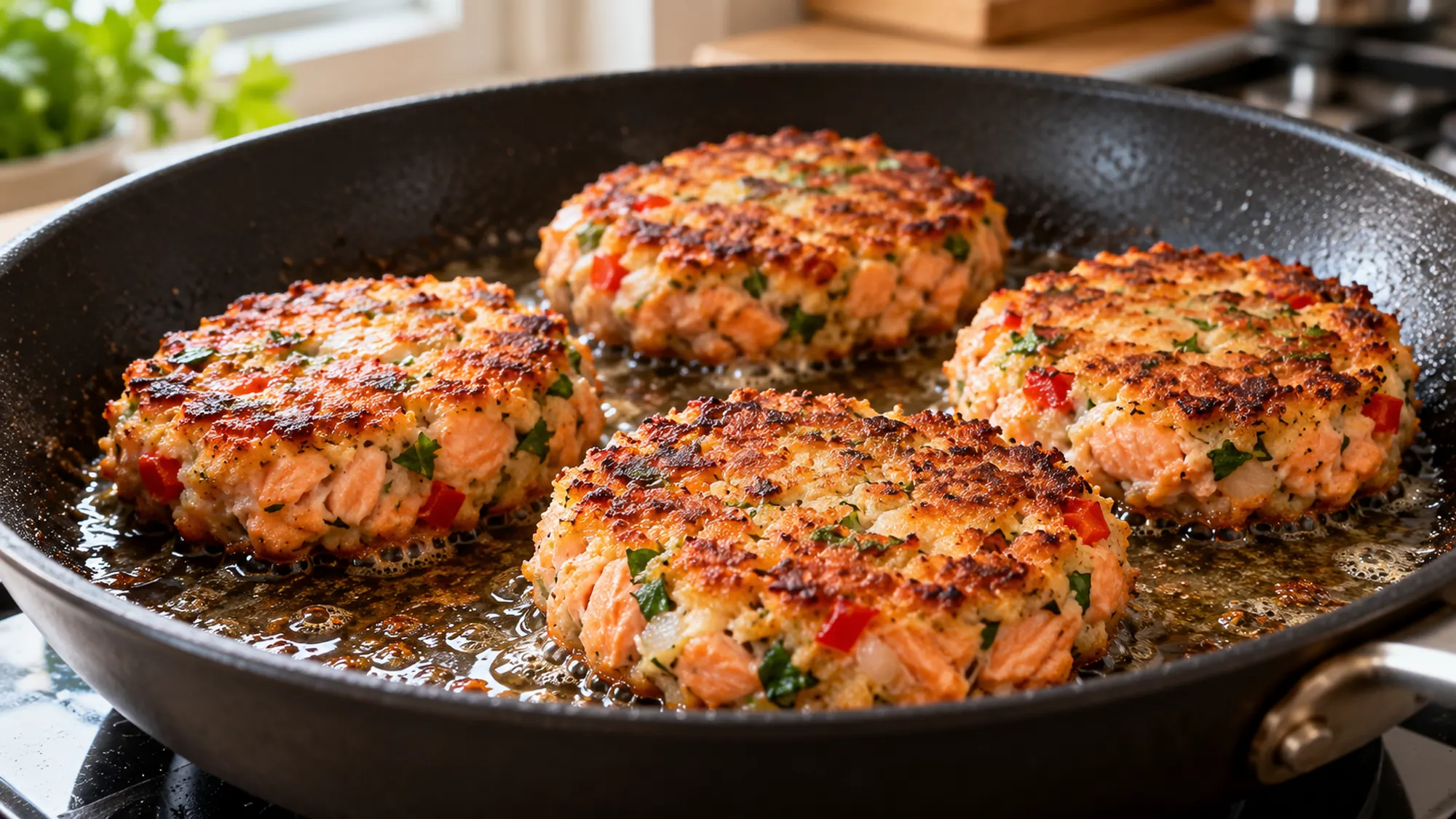
- Heat 15 ml oil and 14 g butter in a large skillet over medium heat. Cook half the patties for about 3–4 minutes per side until browned and thoroughly hot; reduce heat if they brown too quickly. Repeat with the remaining oil, butter and patties. Check the centers reach 165°F (74°C).
- Serve two patties per portion, with optional lemon or tartar sauce. The recipe begins with 454 g raw skinless salmon; it does not require the same weight of cooked fish. All measured cooking fat is included in the estimates.
Nutrition
Video
Notes
Tried this recipe?
Let us know how it turned out!Hi, I’m Laura, the voice behind Tastiva. I’ve always believed that eating well should feel enjoyable, comforting, and realistic—not like another complicated rule to follow. I love creating recipes that fit into everyday life, sharing simple nutrition ideas, and finding small ways to make meals feel a little better without losing the pleasure of good food.