
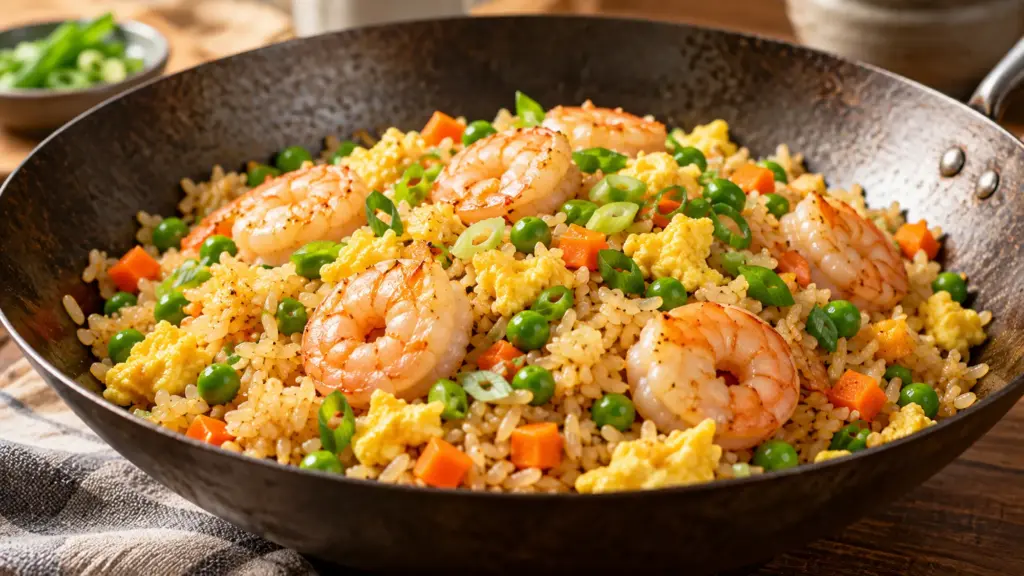
The rice should sizzle, not disappear under a cloud of steam. Shrimp fried rice is easier to get right when the ingredients are ready before the pan heats and the cooked rice is properly chilled. Shrimp, eggs and vegetables then come together quickly, without asking one crowded skillet to cook everything from raw at once.
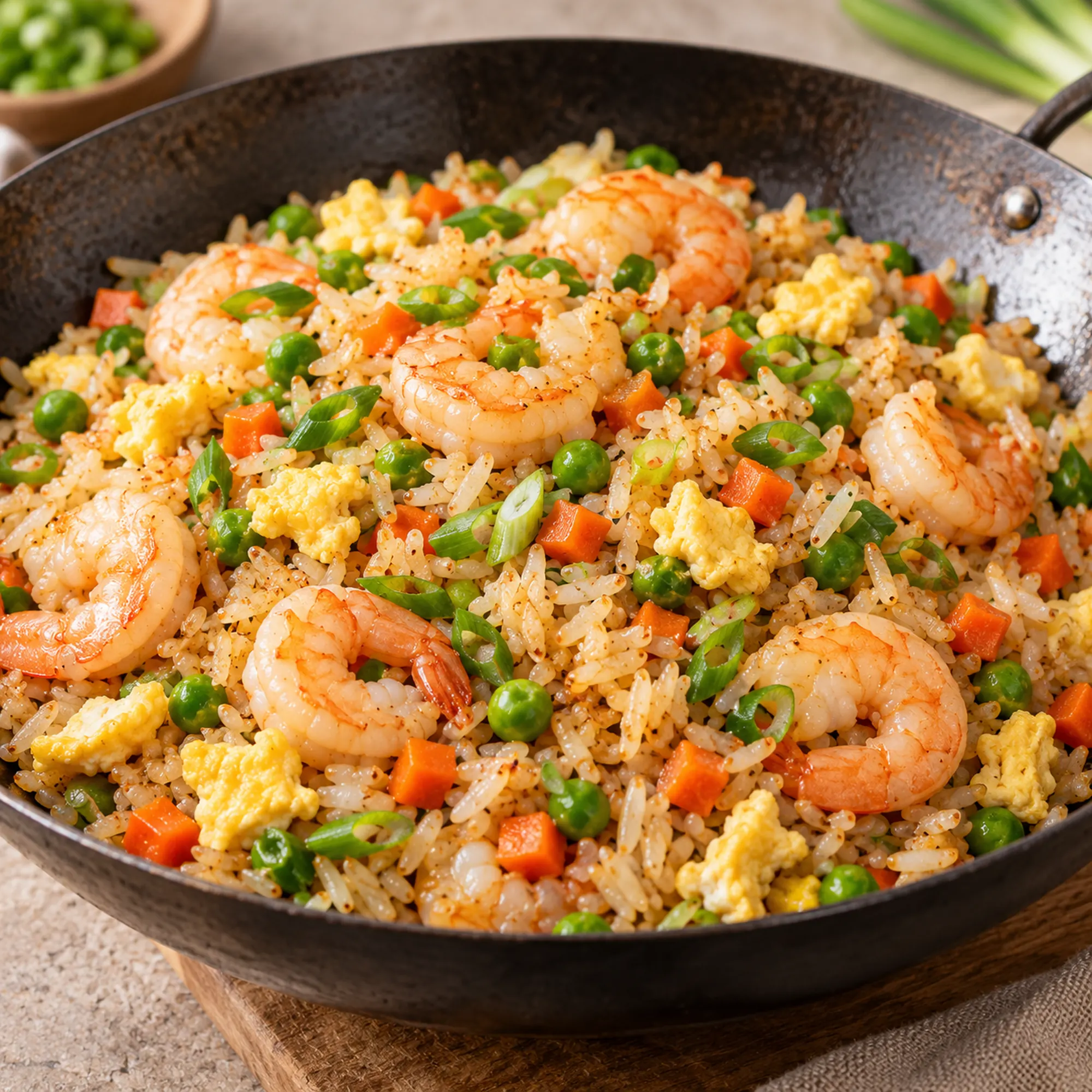
For shrimp fried rice, cook the shrimp and eggs separately, fry chilled rice with the seasonings and vegetables, then return the cooked ingredients just long enough to heat everything through.
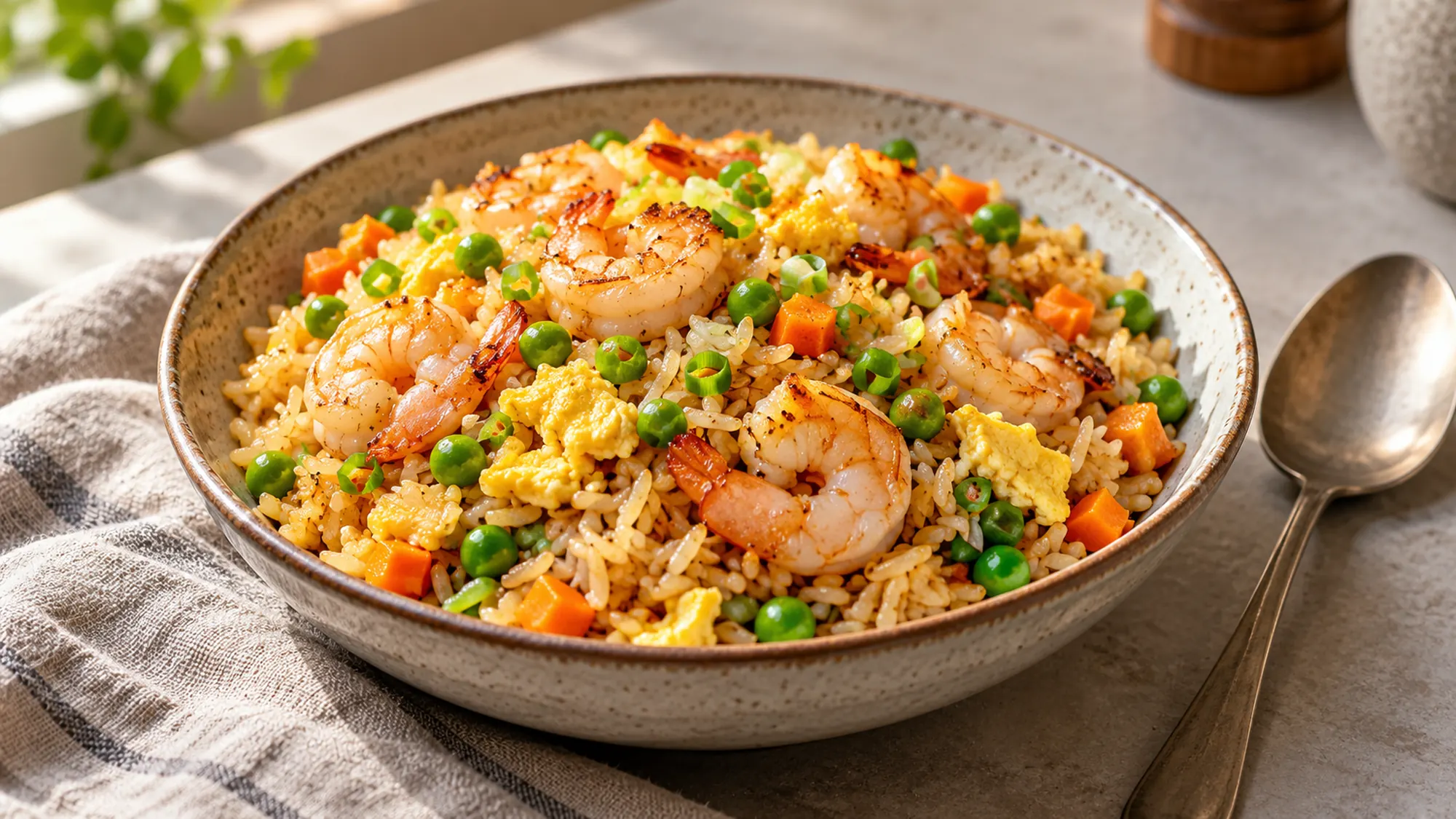
I like being able to see the different parts of a bowl of fried rice: pink shrimp, yellow egg, green peas and distinct grains. That does not require elaborate knife work. A bag of peas and carrots and a little sliced green onion provide plenty of color while keeping the preparation straightforward.
Serving Shrimp Fried Rice
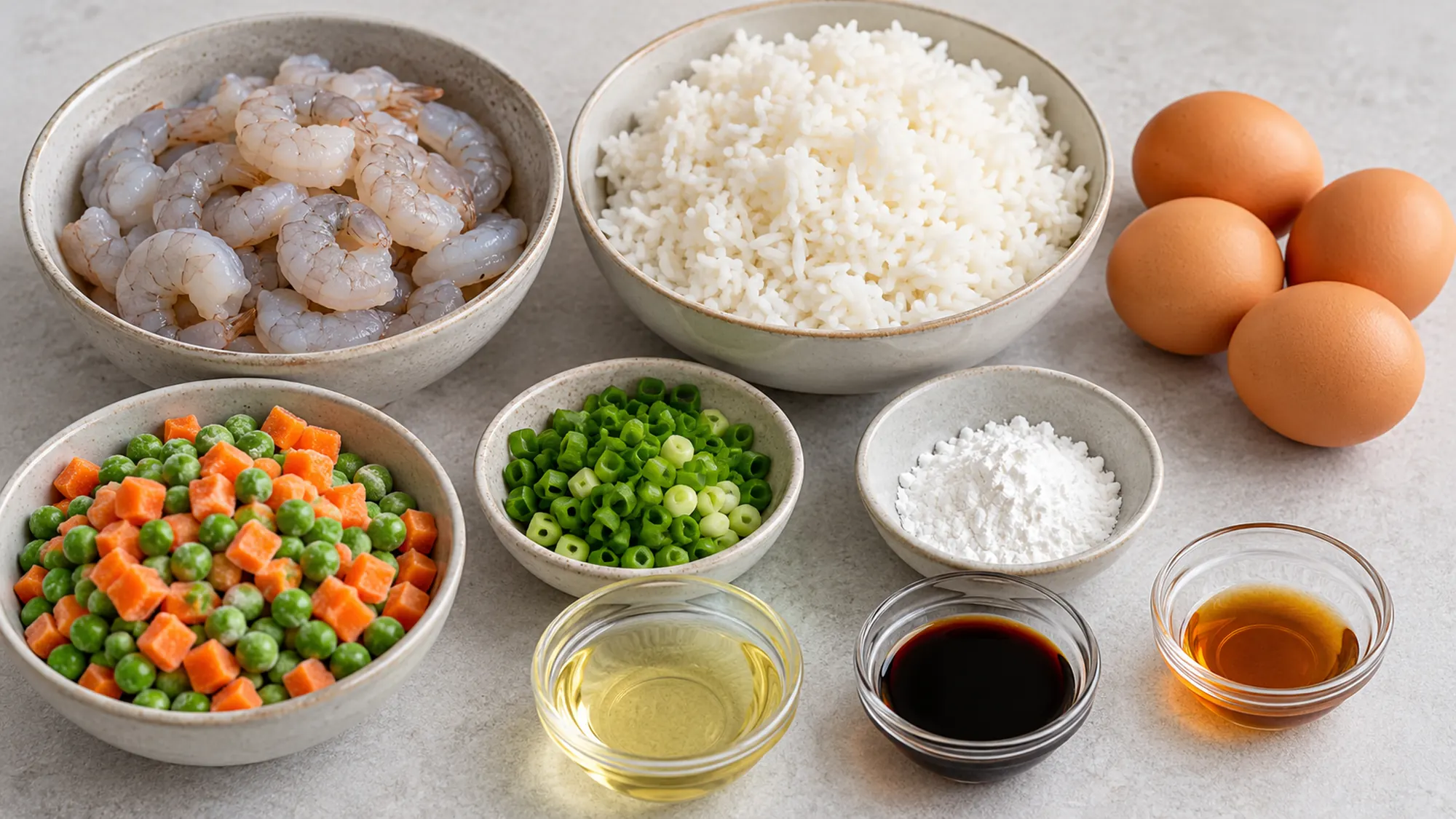
Divide the finished rice into six portions and serve while hot. It already includes a starch, protein and vegetables, so another large side is not essential. If you want something fresh alongside, a few cucumber slices or a simple salad give a different temperature and texture.
Tastiva’s rice cooking guide is useful for preparing the base ahead. Make room in the refrigerator for shallow containers before you cook a new batch. Chilling rice safely is part of the preparation, not something to improvise after dinner has already started.
- Set out bowls before the last stir so the hot rice does not sit in the skillet unnecessarily.
- Taste a spoonful before offering extra soy sauce; the measured amount is already included.
- Keep optional chili sauce separate so each person can choose the heat level.
| Rice condition | What it means for the pan |
|---|---|
| Cold, separated grains | Easy to distribute |
| Large chilled clumps | Break apart before frying |
| Fresh, steaming rice | More moisture to manage |
Have the bowls and optional extras ready before returning the shrimp to the rice.
Shrimp Fried Rice Variations
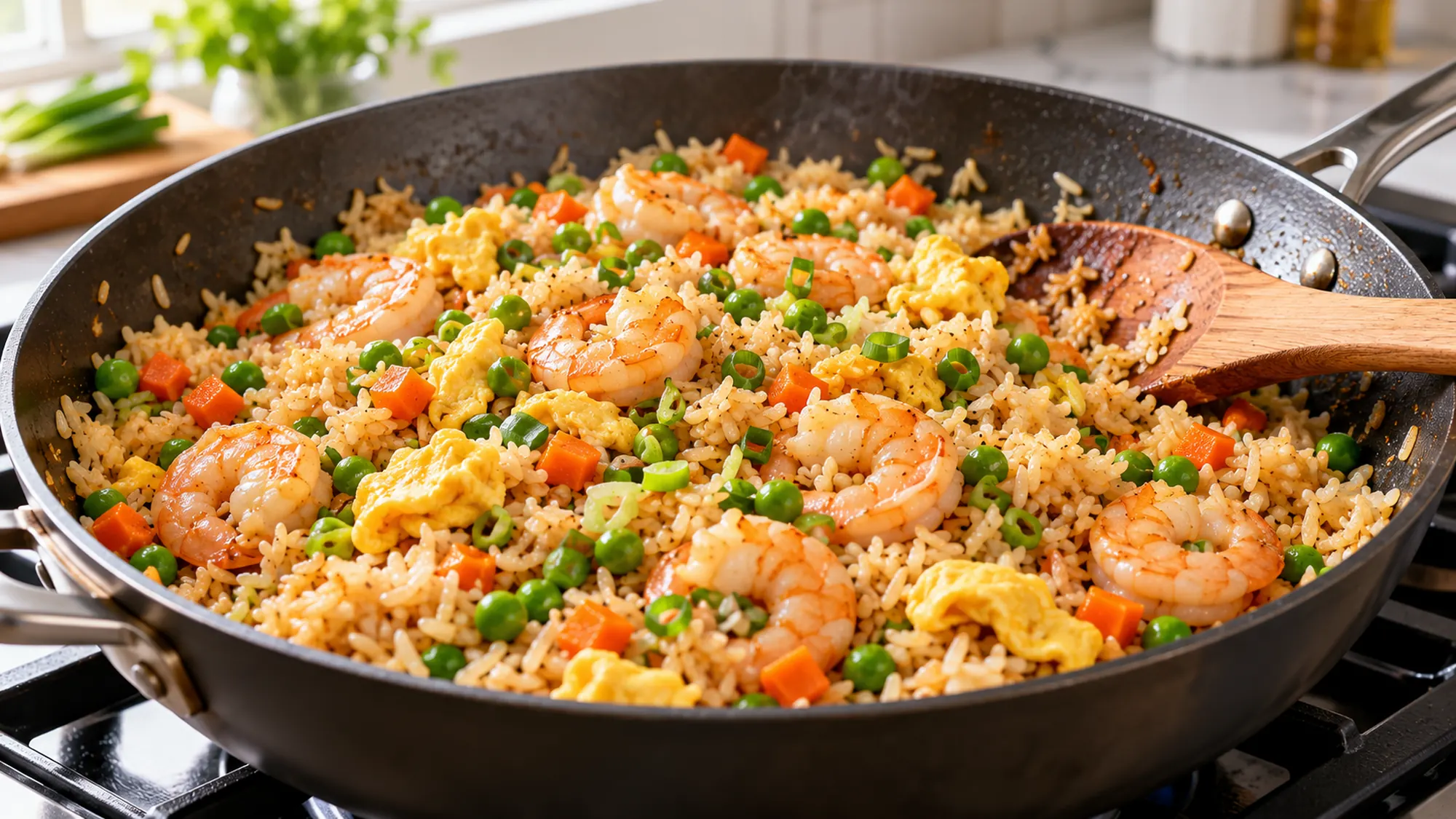
The recipe follows Natasha’s Kitchen’s shrimp fried rice, using the current written recipe’s cornstarch coating. Cornstarch is the ingredient specified here, not baking soda. Sunflower oil and reduced-sodium soy sauce are measured explicitly so the seasoning and estimate have a clear starting point.
I would choose a wide skillet over a small, deep pan for this amount. Surface area helps the rice contact the heat. If your pan is too small, working in batches is more useful than turning the burner higher and hoping the extra moisture will vanish without scorching the bottom.
- Use thawed shrimp that have been patted dry so excess water does not flood the pan.
- Break up chilled rice clumps gently before adding them, rather than crushing them with the spatula during cooking.
- Frozen peas and carrots are convenient; thaw and handle them according to the package directions.
- Cook the eggs until set before removing them, then return them near the end.
- Other vegetables can work, but account for their cooking time and moisture rather than adding every substitute at the same stage.
Keep the pan uncrowded and the ingredients ready; the final stir-fry moves too quickly for last-minute chopping.
Nutrition and Safe Cooking
Shrimp and eggs contribute protein, while rice supplies much of the meal’s carbohydrate. Peas and carrots add vegetables and texture, but their presence does not make the added oil or soy sauce irrelevant. The measured oil is included in the estimate, and extra sauce at the table changes the sodium content.
The calculation uses cooked jasmine rice, raw shrimp composition and a frozen peas-and-carrots mixture. It covers one sixth of the complete dish, not a separate serving of plain rice. Brands, shrimp preparation and the actual portion size can change the result, especially when extra oil or condiments are added.
- Cool freshly cooked rice promptly in shallow containers and refrigerate it; do not leave it out overnight to dry.
- Cook shrimp until the flesh is pearly or white and opaque, and keep raw-shrimp utensils separate from cooked food.
- Heat the rice mixture thoroughly throughout, checking leftover rice reaches 165°F (74°C).
- Refrigerate leftovers promptly and reheat only the portion you plan to eat.
Good fried rice begins with safely chilled rice, not rice left at room temperature for hours.
Bottom Line
Shrimp fried rice rewards a little organization more than complicated technique. Break up the cold rice, dry the shrimp and keep the cooked eggs aside until the pan is ready for them. Give the grains room to heat, then bring everything together for a colorful bowl that can stand comfortably as dinner on its own.
Prepare first, cook in stages and finish only when every part of the rice is thoroughly hot.
Shrimp Fried Rice Recipe

Ingredients
- 454 g raw peeled and deveined shrimp
- 4 g cornstarch
- 1.5 g fine salt
- 0.5 g black pepper
- 45 ml sunflower oil divided
- 4 large eggs about 200 g without shells, beaten
- 25 g green onions finely sliced
- 800 g cooked jasmine rice promptly cooled and refrigerated
- 340 g frozen peas and carrots thawed according to package
- 30 ml reduced-sodium soy sauce
- 7.5 ml sesame oil
Equipment
- 1 Wide skillet or wok
- 1 Mixing bowls
- 1 Instant-read thermometer
Instructions
- Toss the shrimp with cornstarch, salt and pepper and refrigerate while preparing the remaining ingredients, about 10 minutes. Break up cold rice clumps and have the beaten eggs, vegetables and sauces ready.
- Heat 30 ml sunflower oil in a wide skillet over medium-high heat. Cook the shrimp in a single layer until pearly or white and opaque throughout, about 1–2 minutes per side depending on size. Transfer to a clean bowl.
- Reduce the heat to medium and scramble the eggs in the skillet until set. Transfer them to a separate bowl. Add the remaining oil and green onions and stir for about 30 seconds.
- Add the rice, spreading it across the pan. Let it sizzle for 1–2 minutes, stir and repeat. Add soy sauce, sesame oil and thawed peas and carrots. Cook, stirring, until the rice and vegetables are thoroughly hot; work in batches if the skillet is crowded.
- Return the cooked shrimp and eggs and stir just until evenly hot. Check the rice mixture reaches 165°F (74°C). Divide into six portions and serve immediately. Cornstarch follows the creator’s current written recipe; it is not baking soda.
Nutrition
Video
Notes
Tried this recipe?
Let us know how it turned out!Hi, I’m Laura, the voice behind Tastiva. I’ve always believed that eating well should feel enjoyable, comforting, and realistic—not like another complicated rule to follow. I love creating recipes that fit into everyday life, sharing simple nutrition ideas, and finding small ways to make meals feel a little better without losing the pleasure of good food.