
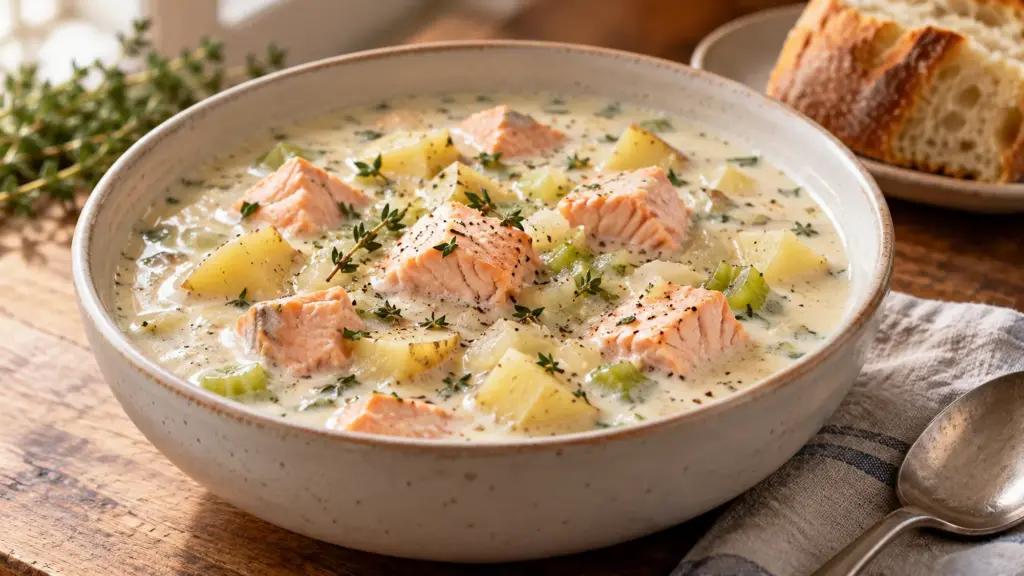
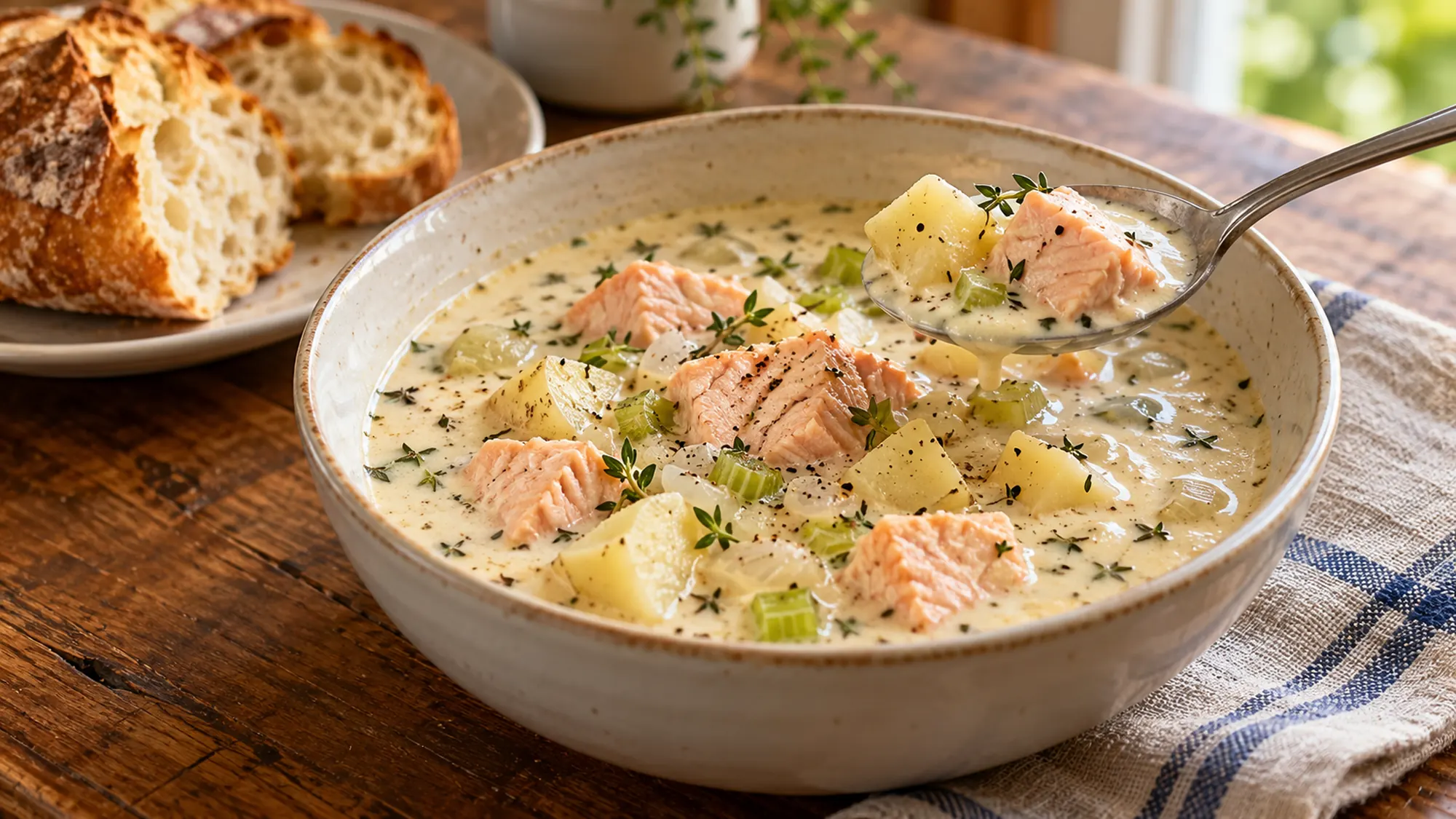
The potatoes need time in the pot; the salmon does not need the same long simmer. That difference is the small detail that makes salmon chowder easier to manage. Onion, celery and thyme build the base, while pieces of fish are added near the end so they remain recognizable in the creamy broth.
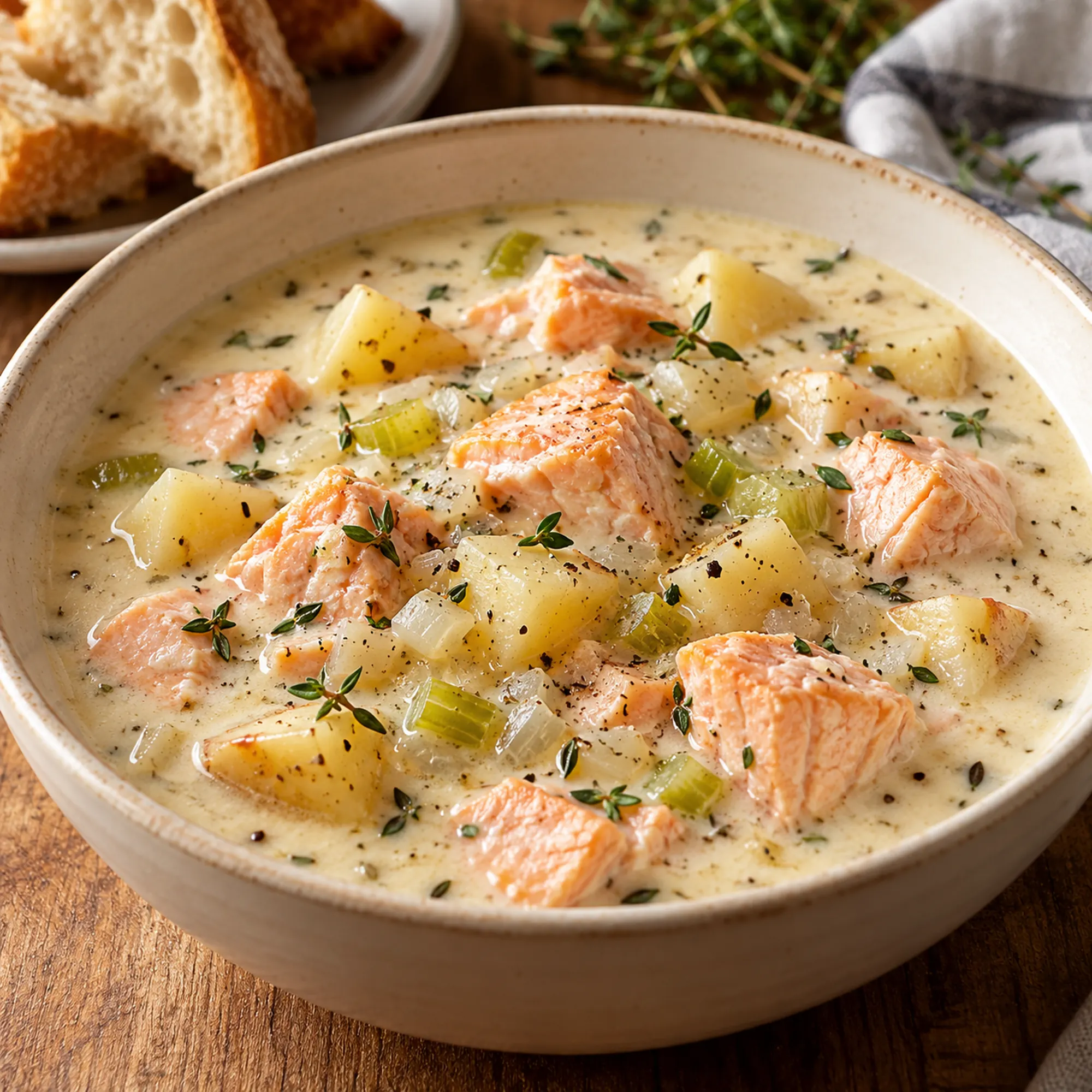
For salmon chowder with tender fish, simmer the potatoes until soft, adjust the broth’s thickness and add the salmon only for the final gentle cooking stage.
I like a chowder with enough broth to move around the spoon. A few softened potato pieces can help thicken it, but there is no need to mash the whole pot into a smooth soup. Leaving some cubes intact gives each bowl a little variety alongside the flakes of salmon.
Serving Salmon Chowder
Ladle the chowder into warm bowls, distributing the salmon and potatoes rather than pouring mostly broth into the first serving. A piece of bread is useful for the last spoonfuls, but the soup already includes potatoes, so a large bread bowl is a choice rather than a requirement.
A crisp salad can make a pleasant partner when you want something cool beside the warm soup. Keep its dressing light enough that it does not compete with the chowder. The fish, dairy and clam juice already give the bowl plenty of character without a heavy topping.
- Serve a small piece of crusty bread on the side rather than soaking it in advance.
- Try a modest portion of chickpea cucumber salad for a contrasting side.
- Offer extra black pepper separately so each person can season their bowl to taste.
| If the chowder is… | Try this | Why |
|---|---|---|
| Too thick | Stir in a little hot water | Loosens it without adding more salt |
| Too thin | Mash a few cooked potatoes | Adds body while keeping some chunks |
| Ready before serving | Keep the heat gentle | Avoids a vigorous boil around the fish |
Share the fish and potatoes evenly, and keep bread or salad as a simple accompaniment.
Salmon Chowder Variations
This version is adapted from Kevin Is Cooking’s salmon chowder, using the source’s suggested half-and-half option instead of heavy cream. It keeps the clam juice, potato and late-added salmon method. The result is still creamy, but it is not intended to have the richness of the heavy-cream version.
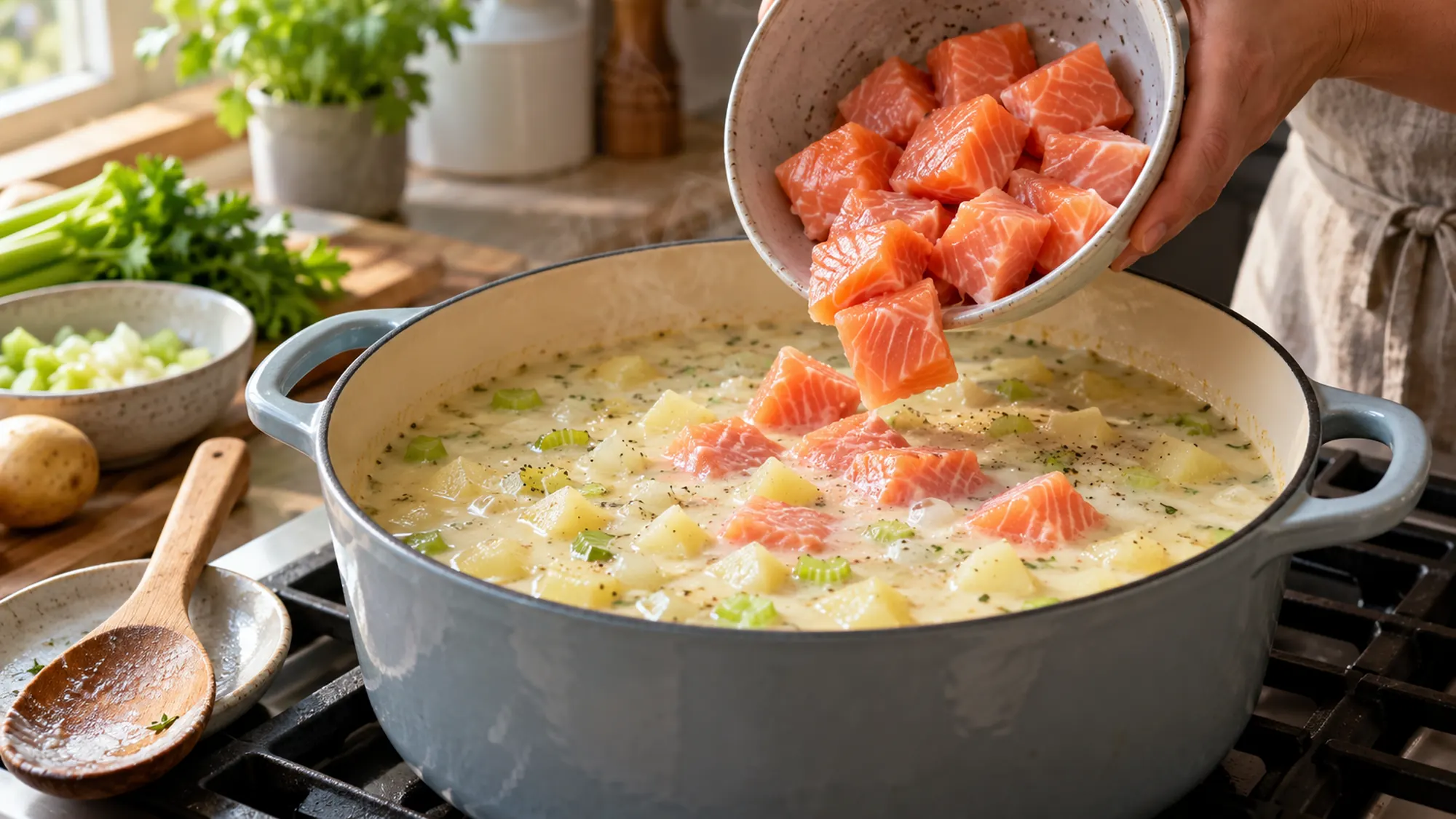
I would keep the salmon in reasonably even pieces instead of adding one large fillet and breaking it apart in the pot. Even pieces are easier to check and divide between bowls. They also need less stirring, which helps keep the fish from dissolving into the broth before serving.
- Use thawed frozen salmon if fresh fish is not convenient; check carefully for bones and remove the skin.
- Scrub thin-skinned potatoes well and peel them if you prefer a smoother bite.
- Fish stock can replace clam juice, but its flavor and sodium level differ; taste before adding extra seasoning.
Keep the late-added fish technique even when you change the dairy or stock.
Nutrition and Safe Cooking
Salmon contributes protein, while potatoes provide much of the bowl’s carbohydrate. Half-and-half adds dairy fat and energy, even though this variation uses less-rich dairy than heavy cream. The celery and onion are useful parts of the soup, not a reason to treat portion size or added salt as irrelevant.
The estimate covers one sixth of the pot and excludes bread and extra toppings. It uses raw farmed Atlantic salmon composition, potato composition and product-label data for the dairy and clam juice. Labels are rounded, and different fish, brands or amounts of thinning liquid can change the result.
- Cook the salmon until its thickest pieces reach 145°F (63°C).
- Keep the raw-fish plate and utensils separate from the finished soup.
- Divide leftovers into shallow containers and refrigerate promptly; do not wait for a full heavy pot to cool on the counter.
- Reheat leftovers thoroughly while stirring gently, adding a little water if the potatoes have thickened the broth.
Add fish late for texture, but still check that it is safely cooked through.
Bottom Line
Salmon chowder is a useful lesson in giving ingredients the time they actually need. Let the potatoes soften first, use a few of them to adjust the broth and finish with gently cooked salmon. The bowl can be creamy and satisfying without losing the distinct pieces of fish and vegetables that make it worth eating slowly.
Soften the potatoes first, then finish the salmon gently at the end.
Salmon Chowder Recipe

Ingredients
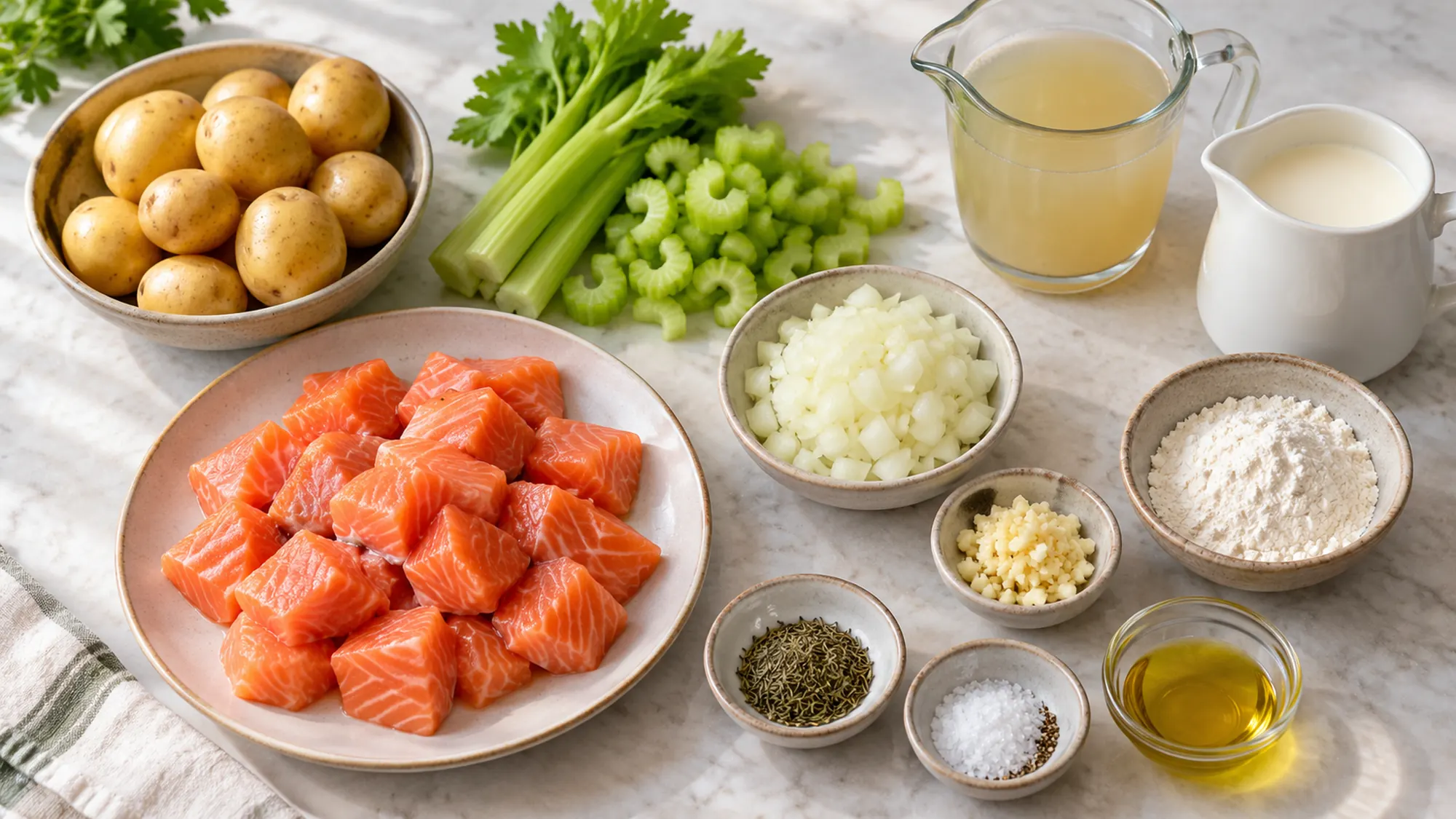
- 454 g raw boneless skinless Atlantic salmon cut into 2.5 cm cubes
- 45 ml olive oil
- 150 g onion chopped
- 100 g celery diced
- 6 g garlic minced
- 30 g all-purpose flour
- 240 ml clam juice
- 480 ml half-and-half
- 450 g Yukon Gold potatoes scrubbed and cut into small cubes; peel if desired
- 4 g fine salt
- 1 g black pepper
- 0.5 g dried thyme
- water as needed to loosen
- crusty bread optional, excluded from estimates
Equipment
- 1 Heavy soup pot
- 1 potato masher
- 1 Instant-read thermometer
Instructions
- Cut the salmon into even 2.5 cm pieces, check for bones and refrigerate while starting the soup. Heat olive oil in a heavy pot over medium heat. Cook onion and celery for about 5 minutes, then add garlic and flour and stir for 2 minutes.
- Gradually add clam juice, then half-and-half, potatoes, salt, pepper and thyme. Bring just to a simmer, scraping the bottom of the pot, then cover and cook gently for about 25–30 minutes until the potatoes are tender. Stir occasionally to prevent sticking.
- Mash a few potatoes against the side of the pot if you want a thicker broth. Add a little hot water if it is too thick; keep some potato pieces intact.
- Add salmon and simmer gently, covered, for about 5 minutes or until the thickest pieces reach 145°F (63°C). Stir carefully to avoid breaking up the fish.
- Divide into six bowls and serve with optional bread. Half-and-half is the source’s suggested alternative to heavy cream. Bread and additional toppings are excluded from estimates.
Nutrition
Video
Notes
Tried this recipe?
Let us know how it turned out!Hi, I’m Laura, the voice behind Tastiva. I’ve always believed that eating well should feel enjoyable, comforting, and realistic—not like another complicated rule to follow. I love creating recipes that fit into everyday life, sharing simple nutrition ideas, and finding small ways to make meals feel a little better without losing the pleasure of good food.