
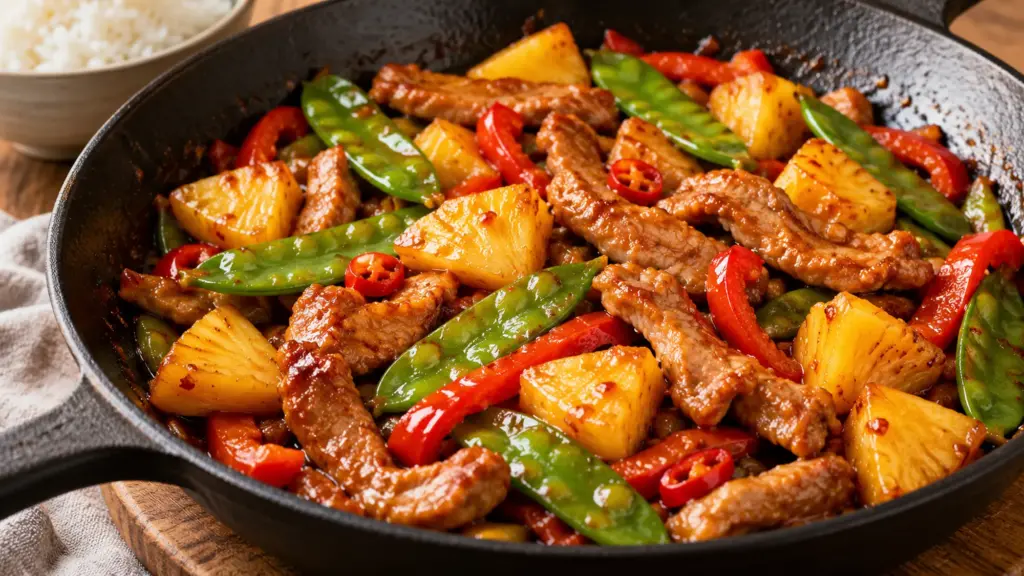
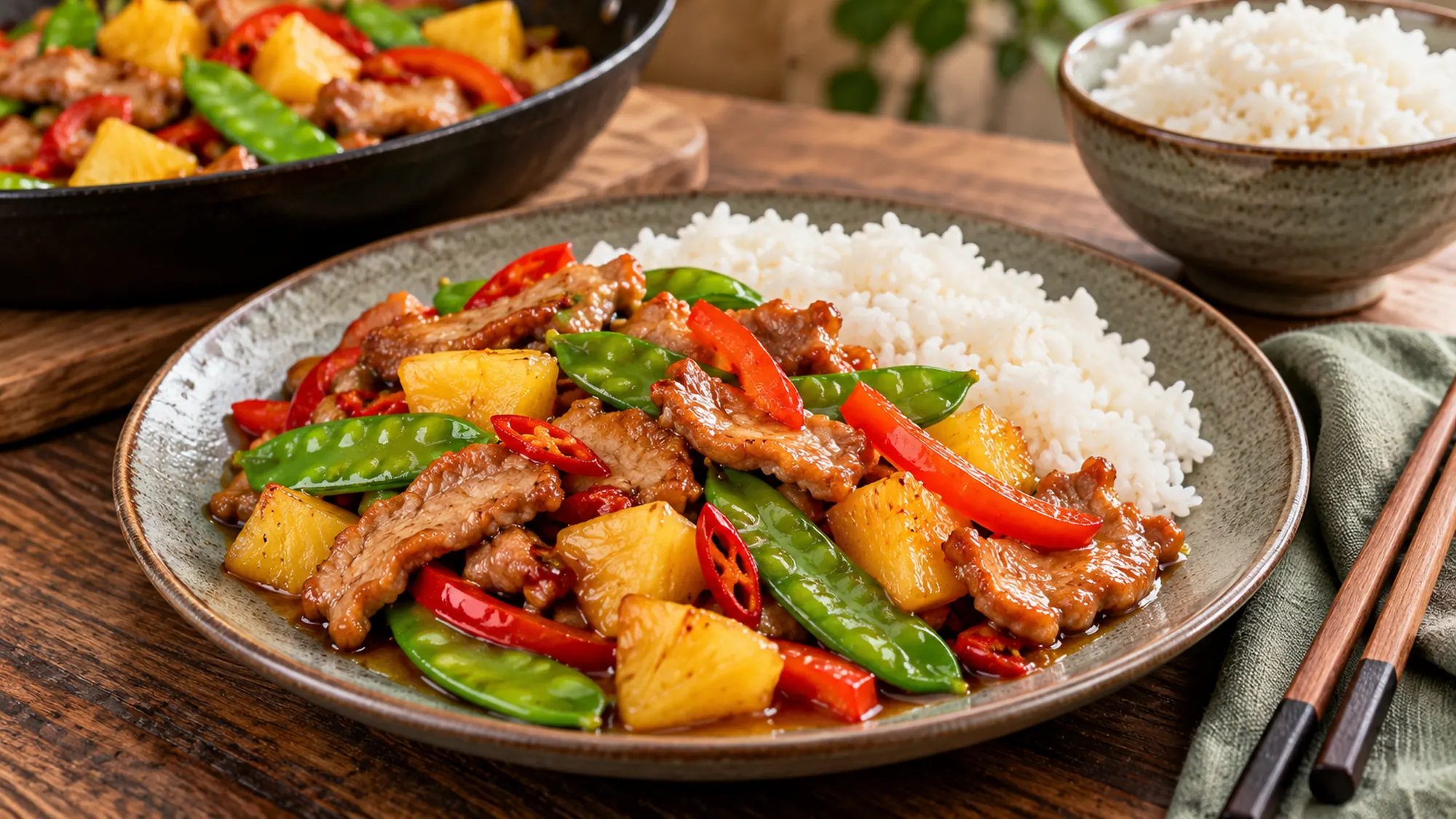
A stir-fry moves quickly once the pan is hot, which is why the quiet preparation matters. This pork stir fry uses thin tenderloin strips, pineapple chunks and crisp vegetables in a glossy sauce. The pineapple juice goes into the sauce rather than down the sink, bringing sweetness alongside vinegar, soy and a little chile heat.
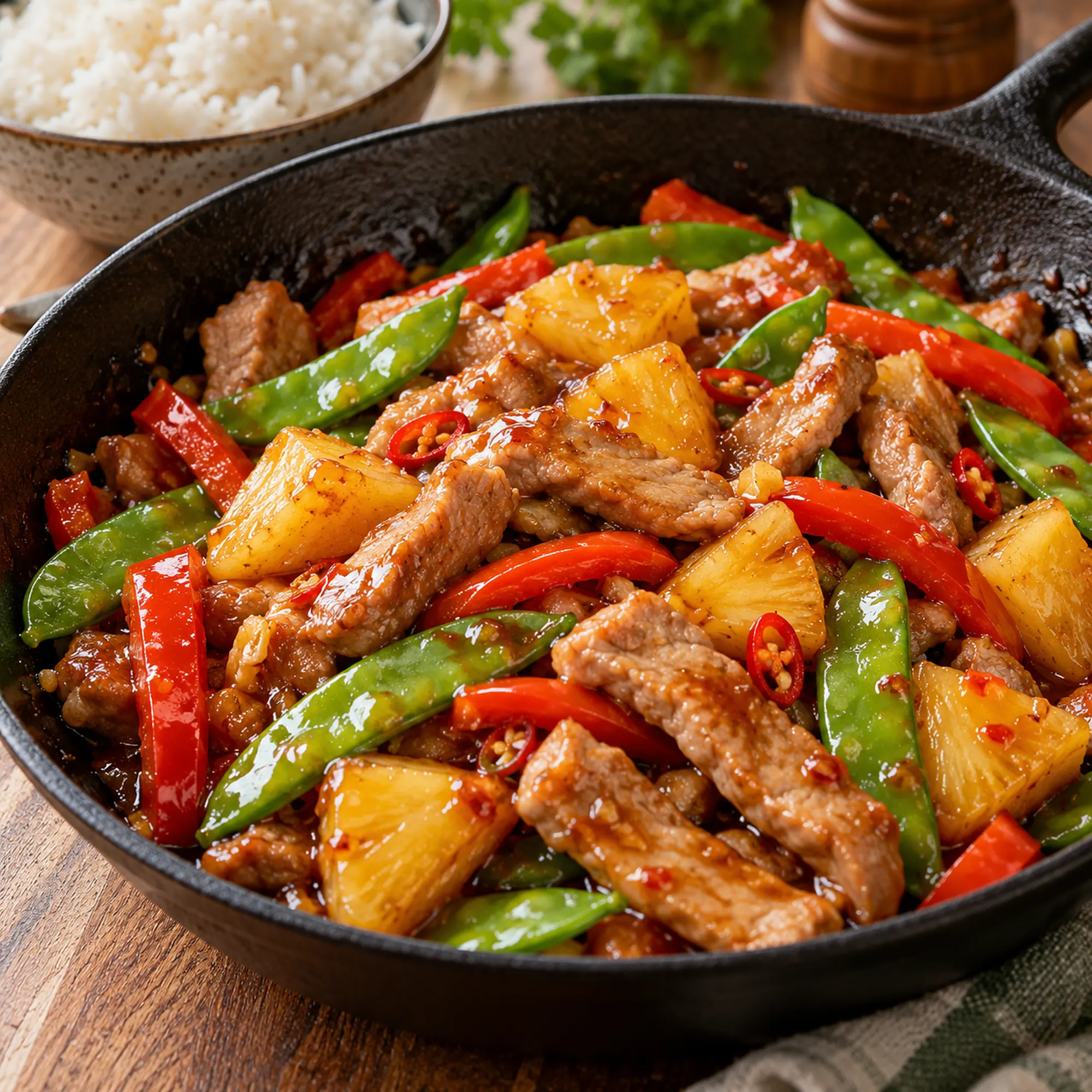
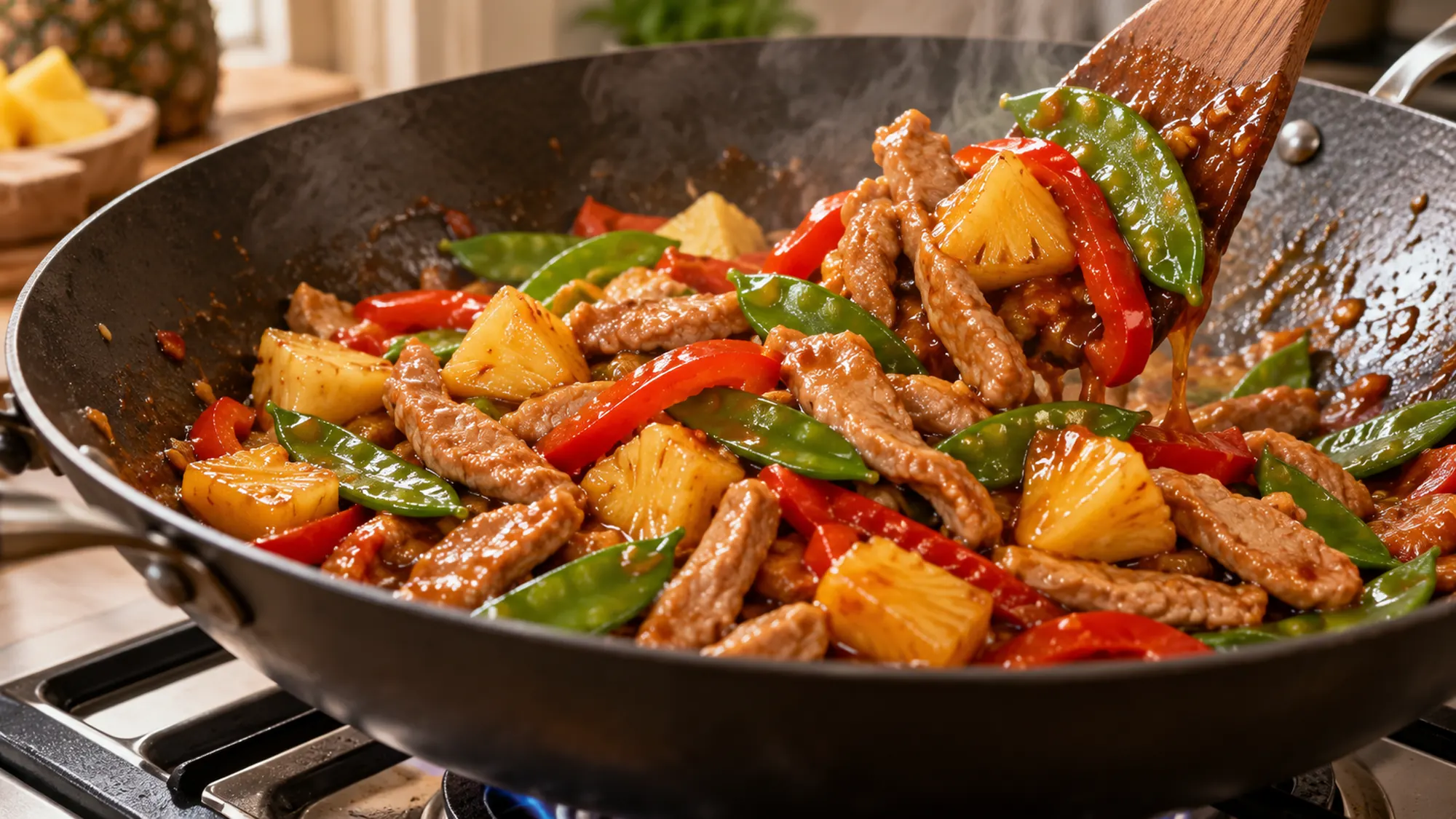
For pork stir fry, slice and measure everything before heating the wok, sear the pork, then add the vegetables and sauce in quick stages so they keep their texture.
I like the pineapple in distinct pieces rather than chopped so small that it disappears. A juicy chunk beside a strip of pork gives the dish its sweet-savory contrast. The snow peas and peppers should still look like vegetables, too, not soft scraps hiding under a thick blanket of sauce.
Serving Pork Stir Fry
Serve the stir-fry as soon as the sauce has thickened and the pork is safely cooked. A wide platter makes it easier to distribute the vegetables and pineapple evenly, while a deep bowl keeps the sauce close to the food. Either works better than leaving everything over a hot burner while setting the table.
Plain rice is a useful base because the sauce is already lively. Noodles can work as well, but choose an unseasoned or lightly seasoned accompaniment rather than adding another strong sauce. The recipe estimate covers the stir-fry alone, leaving the starch choice up to you.
- Use plain rice to catch the sweet-savory sauce.
- Warm the serving plates before cooking if the kitchen is cool.
- For a separate vegetable side, keep green beans lightly dressed rather than heavily sauced.
| Before cooking | Why it helps | Keep in mind |
|---|---|---|
| Slice pork evenly | Promotes more even cooking | Cut across the grain |
| Mix the sauce | Avoids measuring over a hot wok | Stir again before pouring |
| Set out vegetables | Keeps the cooking sequence moving | Do not crowd a small pan |
Have the rice and table ready before the stir-fry reaches its final glossy stage.
Pork Stir Fry Variations
The combination is adapted from Kitchen Sanctuary’s pineapple pork stir fry. This version uses freshly grated ginger instead of paste, reduced-sodium soy sauce and explicitly measured pineapple and juice. Tenderloin is used without an additional tenderizing treatment, keeping the preparation straightforward.
I would start with the measured chile amount and offer extra heat at the table. Adding more Sriracha changes sweetness and saltiness as well as heat, so it is not a neutral adjustment. A little less chile still leaves pineapple, ginger and vinegar to give the sauce plenty of interest.
- Omit the fresh chile or reduce Sriracha for a milder version; the flavor balance will become sweeter.
- Use pineapple packed in juice rather than syrup, and measure the reserved liquid separately.
- If the wok is small, cook in batches rather than piling in more food than the pan can comfortably hold.
Adjust the heat gradually and keep the pineapple juice measured rather than pouring in the whole can.
Nutrition and Safe Cooking
Pork provides protein, and the snow peas and pepper add vegetables to the dish. Pineapple contributes fruit, but the sauce also contains added sugar and salty condiments. Those ingredients are part of the flavor, not something to ignore when describing the meal as a whole.
The estimate includes all measured oil, pineapple, juice and sauce, divided into four portions. Rice, noodles and optional garnish are excluded. Canned-fruit packing liquid and condiment brands vary, so the calculation uses stated ingredient and label estimates rather than pretending every can or serving is identical.
- Keep the raw-pork board and utensils separate from the cooked stir-fry.
- Check pork reaches 145°F (63°C), with a three-minute rest before eating.
- Stir the sauce thoroughly so the cornstarch does not remain at the bottom of the jug.
- Refrigerate leftovers promptly and reheat thoroughly, accepting that the vegetables will be softer the next time.
Count the sauce in the estimate and check the pork rather than relying only on browned edges.
Bottom Line
Pork stir fry is less rushed when the work happens in the right order. Prepare the sauce and vegetables first, give the tenderloin room in the pan and stop before the vegetables lose their bite. Pineapple brings the juicy contrast, while a measured sauce coats the food instead of taking over the whole plate.
Prepare first, cook in quick stages and keep the vegetables pleasantly crisp.
Pork Stir Fry Recipe

Ingredients
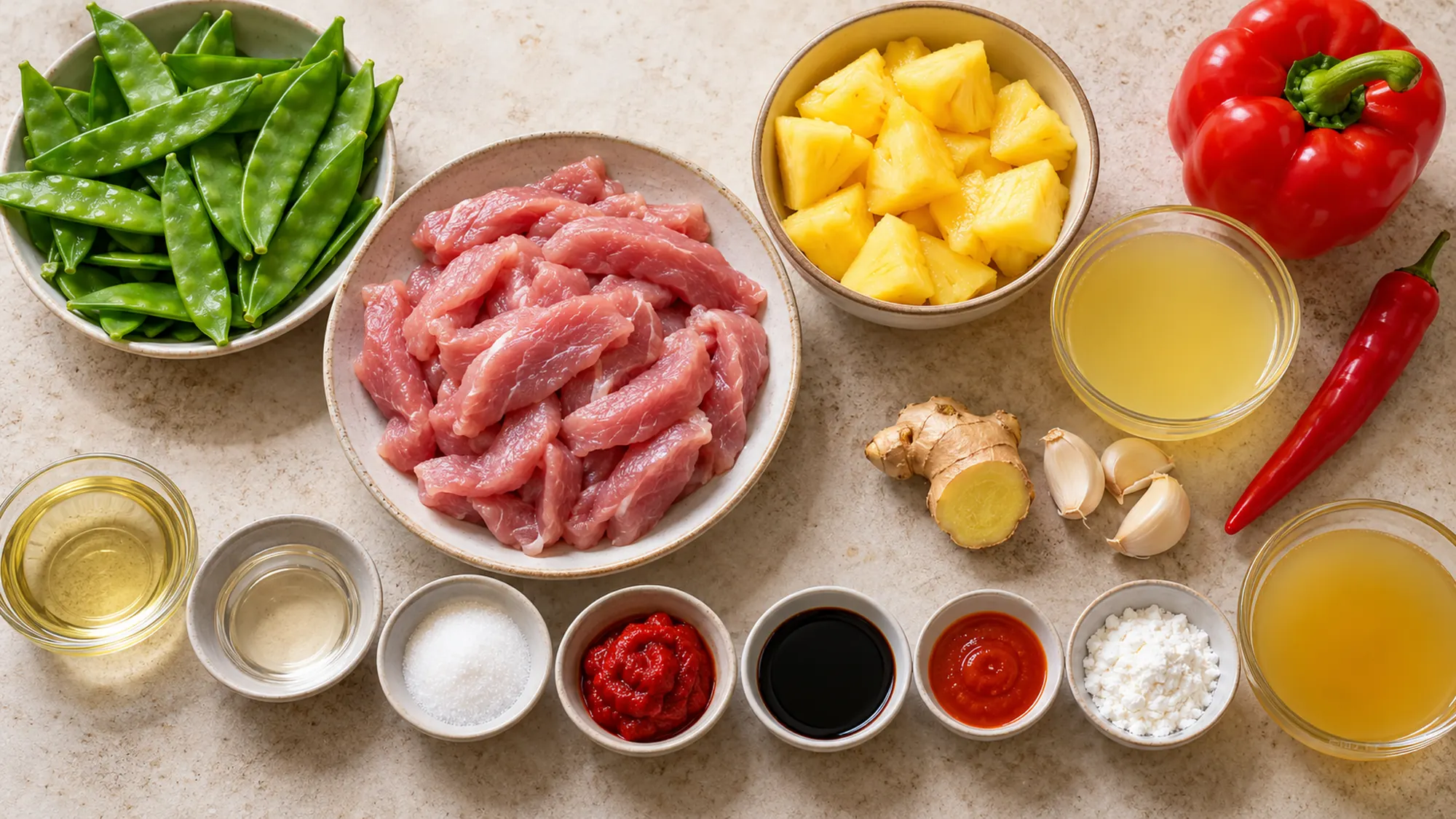
- 500 g pork tenderloin thin strips cut across the grain
- 30 ml sunflower oil
- 1.5 g fine salt
- 0.5 g black pepper
- 6 g garlic minced
- 10 g fresh ginger finely grated
- 200 g snow peas trimmed
- 150 g red bell pepper sliced
- 10 g red chile sliced
- 300 g canned pineapple chunks in juice drained; reserve juice
- 120 ml pineapple juice reserved from can or separately measured
- 15 ml white wine vinegar
- 25 g white sugar
- 30 g tomato paste
- 30 ml reduced-sodium soy sauce
- 15 g Sriracha
- 8 g cornstarch
- 180 ml unsalted chicken stock
- rice, scallions and chile flakes optional serving additions, excluded from estimates
Equipment
- 1 Wok or large skillet
- 1 small mixing bowl
- 1 Instant-read thermometer
Instructions
- Mix pineapple juice, vinegar, sugar, tomato paste, soy sauce, Sriracha and cornstarch until smooth, then stir in chicken stock. Prepare all vegetables before heating the pan.
- Season pork with salt and pepper. Heat sunflower oil in a wide wok or skillet over medium-high to high heat. Stir-fry the pork for about 3–4 minutes until lightly browned, working in batches if crowded.
- Add garlic, ginger, snow peas, red pepper, chile and drained pineapple. Stir-fry for about 3 minutes, keeping the vegetables moving so they heat while retaining some bite.
- Stir the sauce again and pour it into the pan. Bring to a simmer and stir for about 2–3 minutes until glossy and lightly thickened. Check the thickest pork pieces reach at least 145°F (63°C), then remove from heat and allow a three-minute rest before eating.
- Divide into four portions with optional rice or noodles. Fresh ginger and reduced-sodium soy sauce are measured variations from the accompanying source; no baking-soda tenderizing treatment is used.
Nutrition
Video
Notes
Tried this recipe?
Let us know how it turned out!Hi, I’m Laura, the voice behind Tastiva. I’ve always believed that eating well should feel enjoyable, comforting, and realistic—not like another complicated rule to follow. I love creating recipes that fit into everyday life, sharing simple nutrition ideas, and finding small ways to make meals feel a little better without losing the pleasure of good food.