
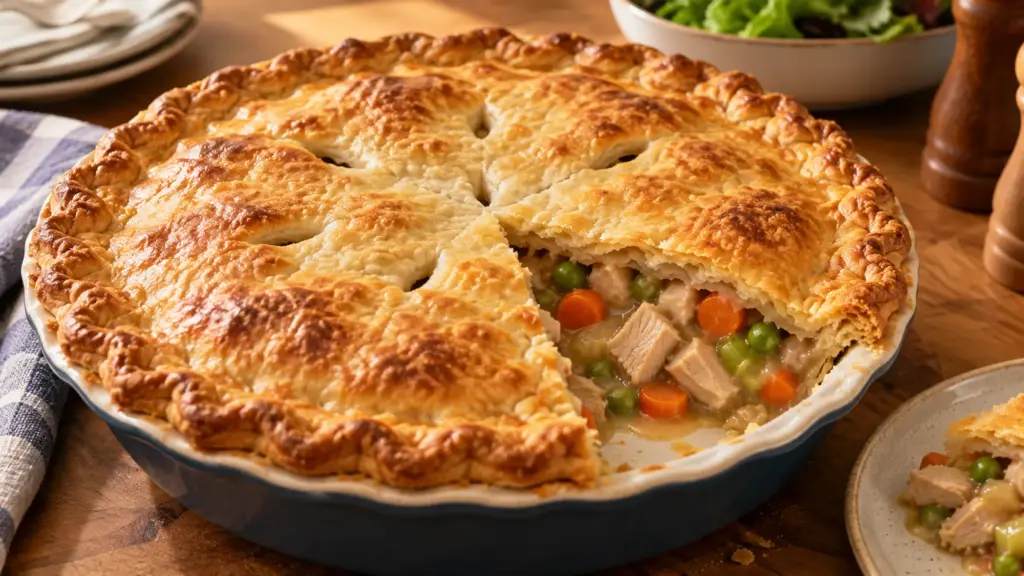
Cooked turkey can feel like the beginning of another sandwich, but a pie dish gives it a different direction. This turkey pot pie combines the meat with carrots, celery and peas in a stock-based gravy, then encloses it in a double crust. There is no cream in the filling; the body comes from butter and flour.
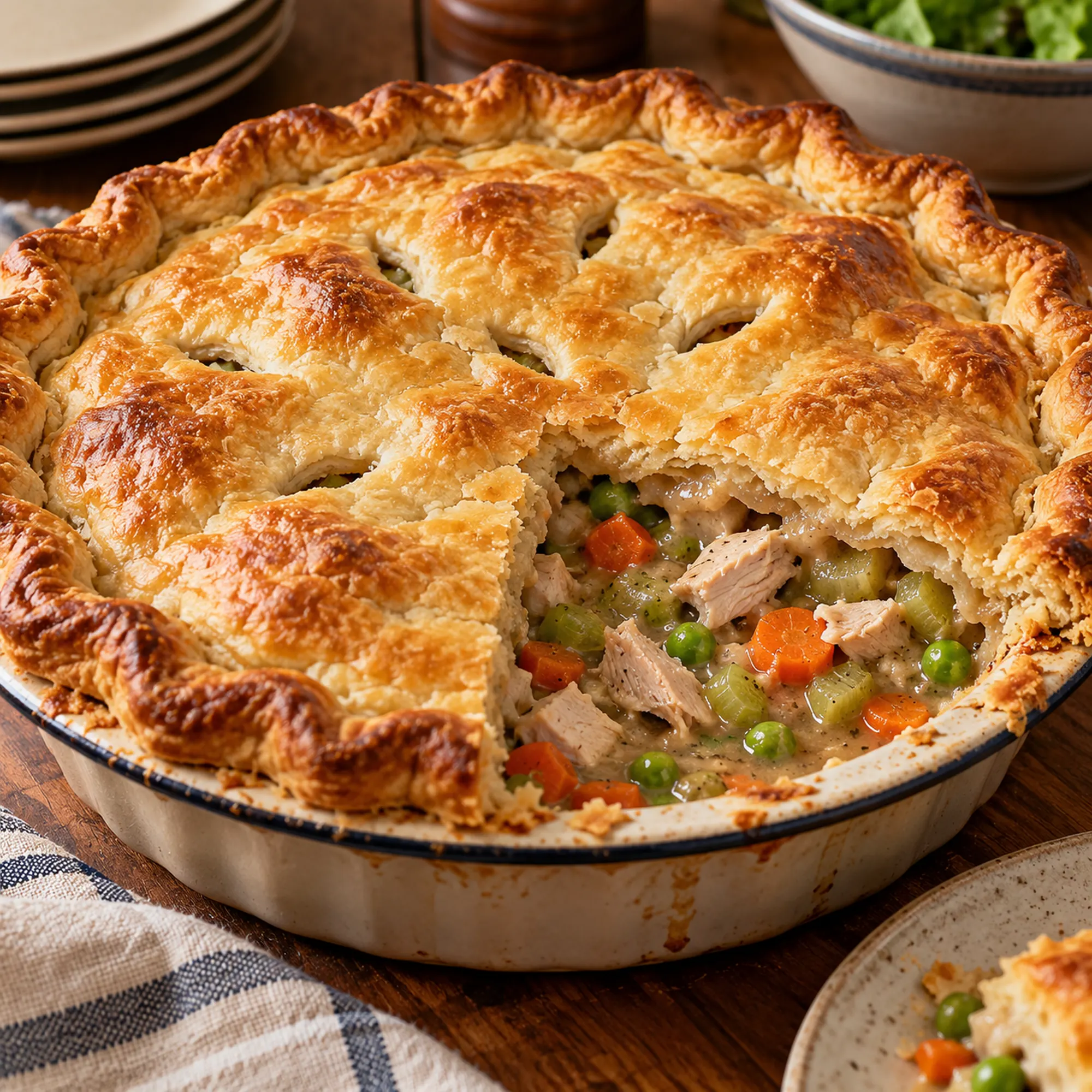
For turkey pot pie, cook the vegetables and thicken the gravy before filling the crust, cut steam vents in the top and bake until the pastry is golden and the center is hot.
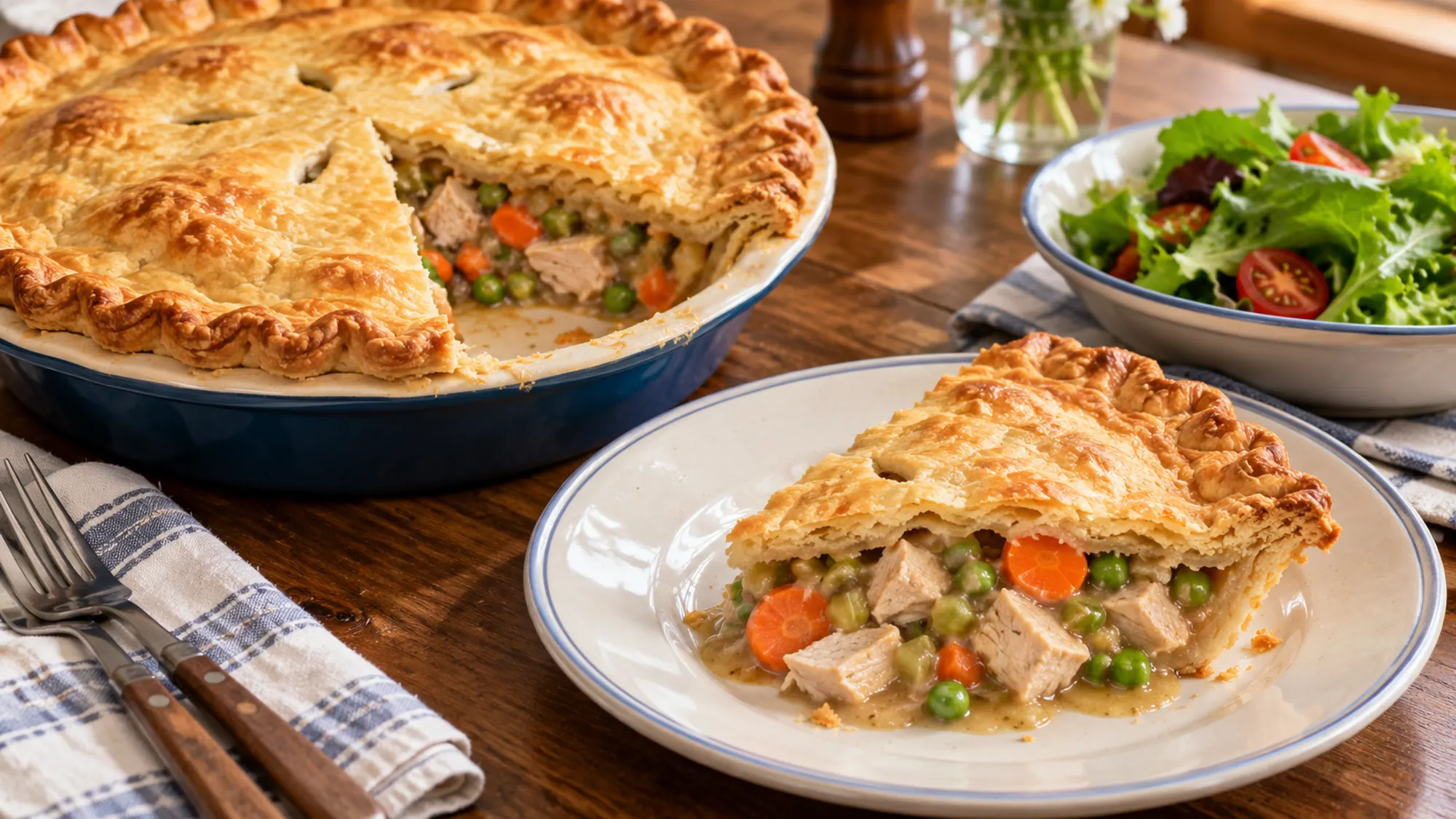
I like a filling that holds together on the spoon without becoming a solid paste. It should settle around the turkey and vegetables rather than flood the pie dish. A short rest after baking helps with serving, even if the first slice is a little less tidy than the ones that follow.
Serving Turkey Pot Pie
Set the pie on a stable surface and use a sharp knife to cut through both crusts. A broad pie server helps support the bottom as the slice moves to a plate. The recipe is divided into eight portions for its estimate; use appetite and the rest of the meal to decide how much to serve.
A crisp salad or green vegetable is usually enough alongside a pie that already contains pastry, meat and gravy. Extra potatoes or bread are not required to make it feel complete. If you do add them, remember that the card’s nutrition describes the pie itself rather than the whole plate.
- Serve with garlic-lemon green beans for a contrasting side.
- Keep salad dressing separate until serving so the greens remain crisp.
- Let the pie rest before cutting, but refrigerate leftovers promptly after the meal.
| Pie detail | What to look for | Practical response |
|---|---|---|
| Filling | Thick enough to coat the vegetables | Let the roux-based gravy finish thickening |
| Top crust | Small open steam vents | Cut them before the pie goes in the oven |
| Finished center | Thoroughly hot, not merely warm | Check temperature through a vent |
Support each slice from underneath and pair the rich pie with a simple green side.
Turkey Pot Pie Variations
The method is adapted from The Stay At Home Chef’s turkey pot pie. This version specifies cooked turkey breast, measured vegetable weights and unsalted stock. Prepared refrigerated crusts keep the pastry step straightforward; their composition is included in the estimate rather than assuming a homemade butter crust.
I would keep the first version close to the measured filling before adding several extra vegetables. Different vegetables release different amounts of moisture, and a crowded pie dish is not easier to bake. A modest substitution is more predictable than treating the crust as a container for every remaining leftover.
- Cooked chicken can replace turkey, provided it has been stored safely; the flavor and nutrition will differ.
- Peas can be replaced with a similar amount of small cooked green-bean pieces.
- A homemade crust is welcome, but use enough for a deep nine-inch double-crust pie and recalculate the pastry estimate.
Change the filling thoughtfully, and do not assume every crust or leftover has the same composition.
Nutrition and Safe Cooking
Turkey supplies protein, while carrots, celery and peas add vegetables to the filling. The double crust contributes a substantial part of the pie’s energy and fat, so a vegetable-filled center does not make the whole dish equivalent to a bowl of plain turkey soup. A moderate slice with a fresh side can be a satisfying meal.
The estimate includes both prepared crusts, all measured gravy and the specified cooked turkey, divided into eight portions. It uses the package label for the crust and ingredient composition data for the filling. Different pastry, dark meat, salted stock or extra gravy can change the result.
- Use cooked turkey that has been refrigerated promptly and is still within its safe storage period.
- Bake until the filling reaches 165°F (74°C) in the center.
- Do not rely on a golden top alone to judge whether a chilled filling is hot throughout.
- Refrigerate leftover portions promptly and reheat thoroughly; making a pie does not reset the storage history of the turkey.
Check the filling as well as the crust, and keep the turkey’s original storage history in mind.
Bottom Line
Turkey pot pie turns a familiar cooked ingredient into a different kind of dinner. Tender vegetables, a properly thickened gravy and a vented double crust do most of the work. Give the center time to heat through, let the pie settle briefly and serve it with something fresh enough to contrast with the flaky pastry.
Thicken the filling, vent the crust and check the hot center before serving.
Turkey Pot Pie Recipe

Ingredients
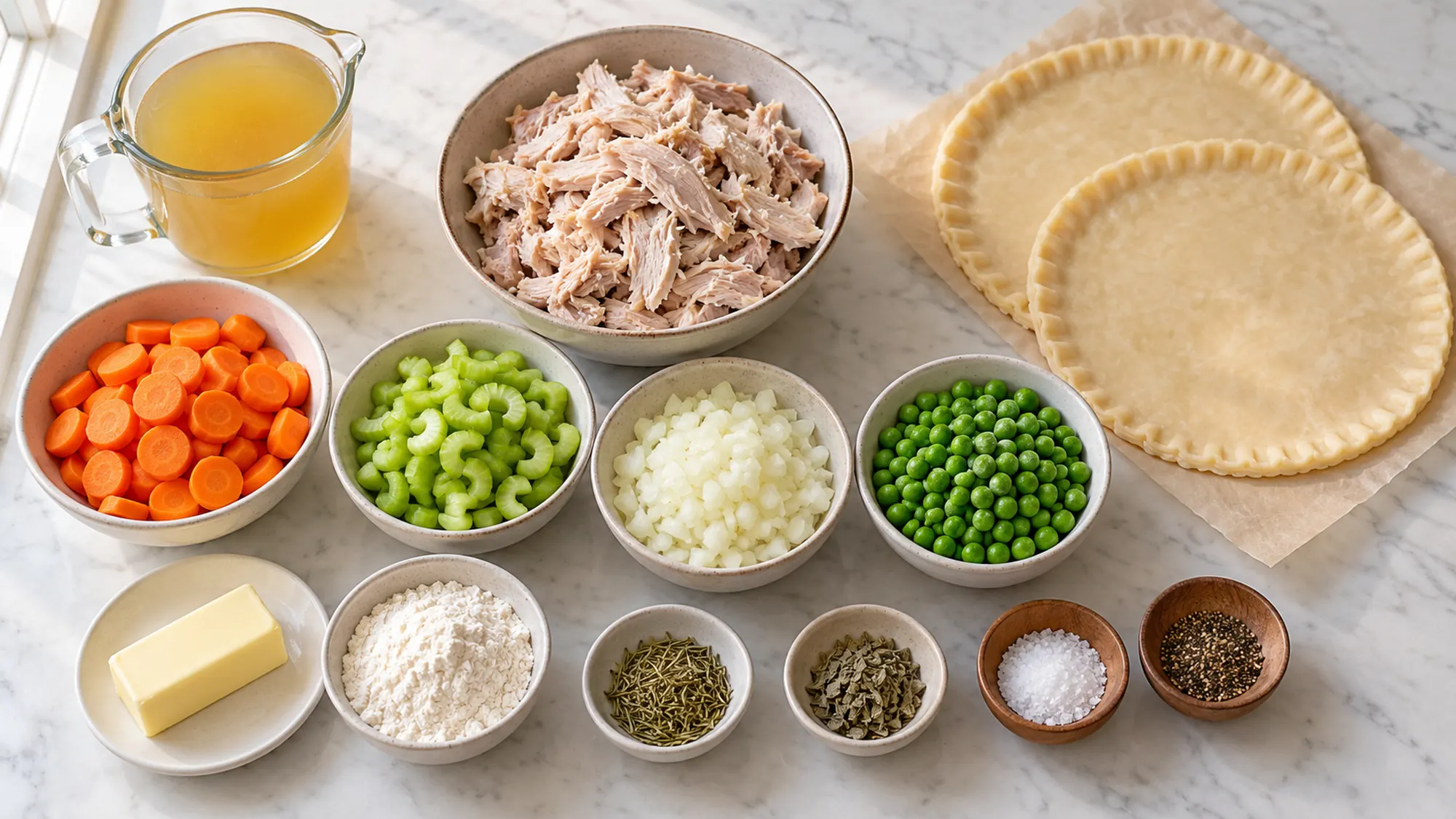
- 2 prepared pie crust rounds one 14.1 oz (about 400 g) package, such as Pillsbury; top and bottom
- 200 g carrots peeled and thinly sliced
- 100 g celery thinly sliced
- 480 ml unsalted chicken stock divided during cooking
- 3 g fine salt
- 1 g black pepper
- 0.5 g dried rosemary
- 0.5 g dried sage
- 300 g cooked turkey breast shredded or diced
- 75 g frozen peas
- 28 g unsalted butter
- 100 g onion diced
- 30 g all-purpose flour
Equipment
- 1 9-inch pie plate
- 1 Saucepan
- 1 Skillet
- 1 Instant-read thermometer
Instructions
- Put carrots and celery in a saucepan with chicken stock, salt, pepper, rosemary and sage. Bring to a boil, reduce heat and simmer for about 8 minutes until beginning to soften.
- Meanwhile, melt butter in another saucepan. Cook onion for about 5 minutes until softened, then stir in flour and cook for 1–2 minutes. Gradually whisk in about 180 ml hot stock taken from the vegetable pan until smooth.
- Stir the thickened onion mixture back into the vegetables and remaining stock. Simmer for 3–5 minutes, then stir in cooked turkey and frozen peas. Remove from heat and let stand briefly while preparing the crust; do not leave the filling out for an extended cooling period.
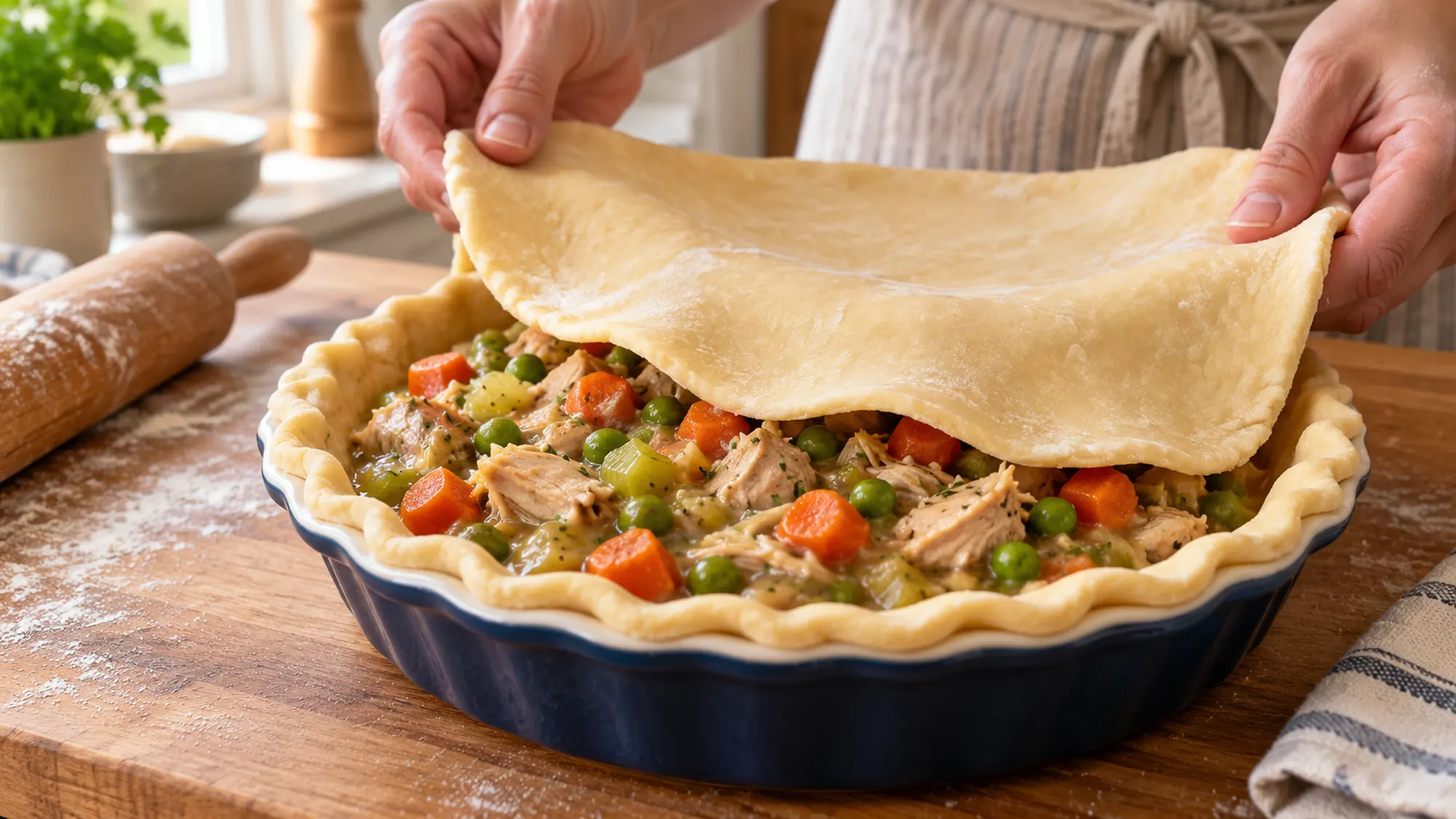
- Heat oven to 425°F (220°C). Fit one prepared crust into a deep 9-inch pie dish. Add the filling, cover with the second crust and seal the edges. Cut several small steam vents in the top and place the dish on a rimmed baking sheet.
- Bake for about 30–35 minutes until the crust is golden and the center of the filling reaches 165°F (74°C), extending time if needed and shielding the edges if they brown too quickly. Rest for 10 minutes, then divide into eight portions. The filling contains no cream; prepared crust composition is included in the estimate.
Nutrition
Video
Notes
Tried this recipe?
Let us know how it turned out!Hi, I’m Laura, the voice behind Tastiva. I’ve always believed that eating well should feel enjoyable, comforting, and realistic—not like another complicated rule to follow. I love creating recipes that fit into everyday life, sharing simple nutrition ideas, and finding small ways to make meals feel a little better without losing the pleasure of good food.