
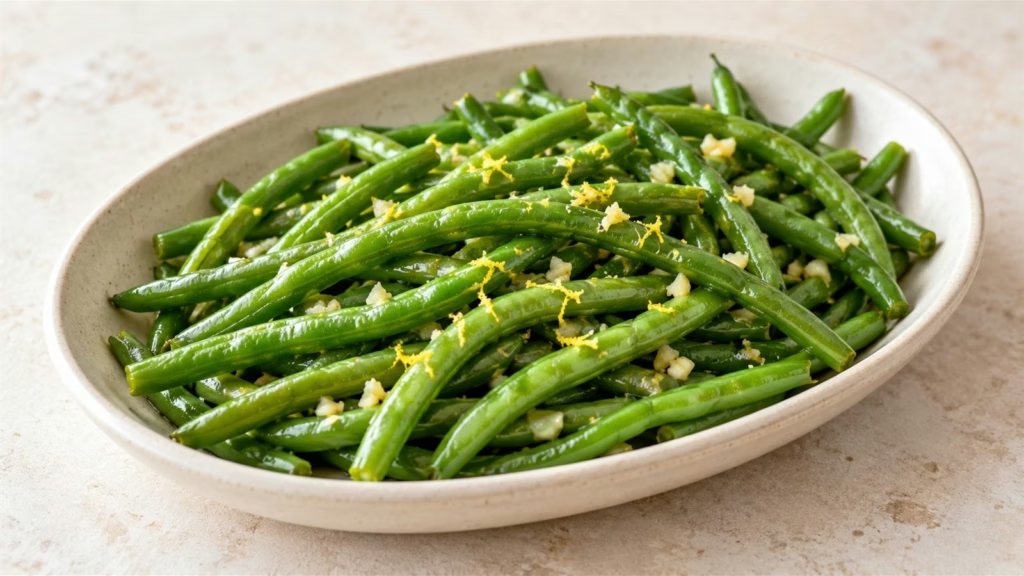
A pan of green beans can look ready while the thickest ones still resist the fork. This green beans recipe starts with a little water under a lid, then finishes uncovered with olive oil, garlic, and lemon. You get a practical way to control tenderness without asking delicate garlic to survive the beans’ entire cooking time.
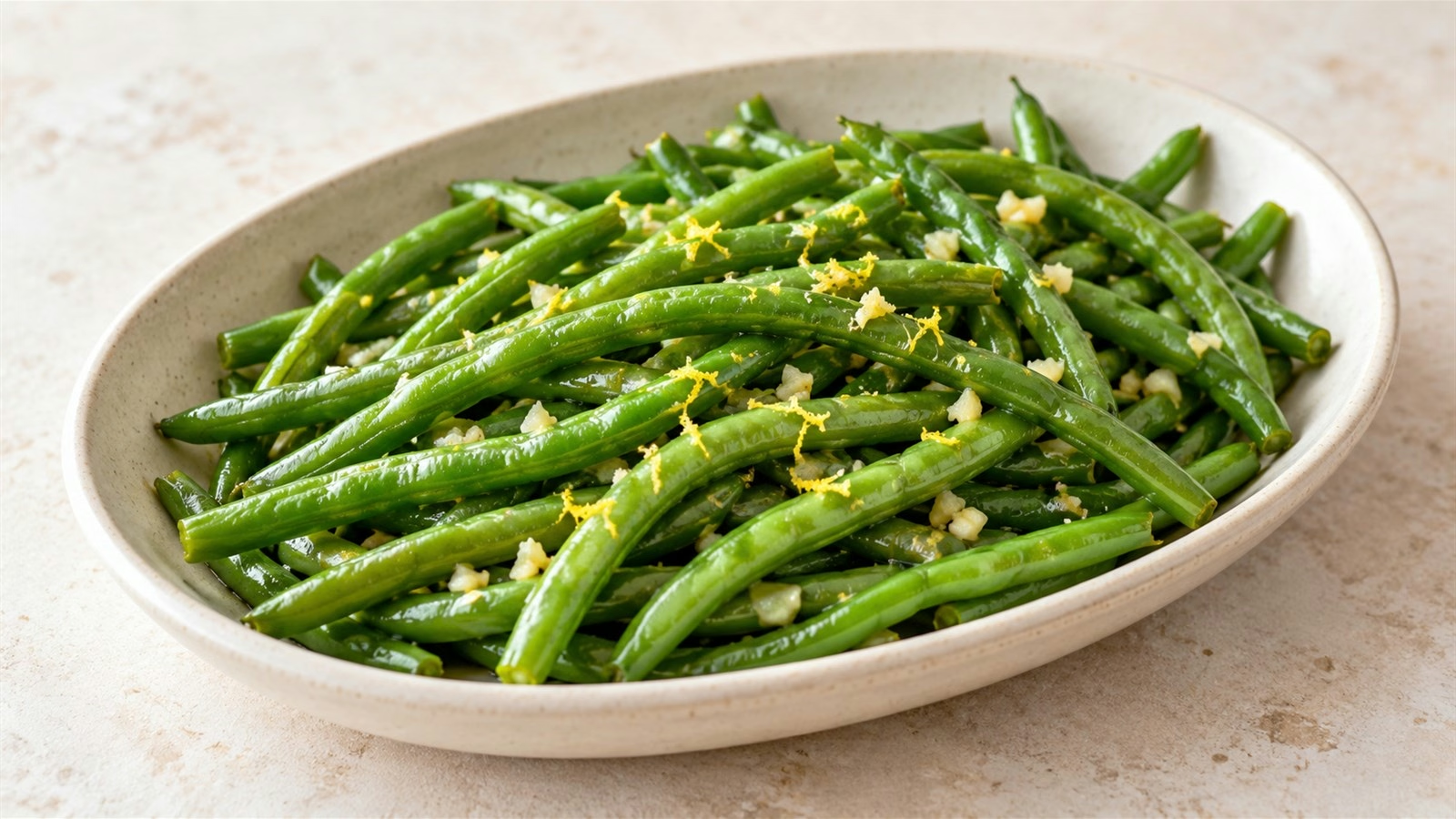
Let the beans reach the texture you like before adding the garlic and lemon.
Choose beans that cook at a similar pace
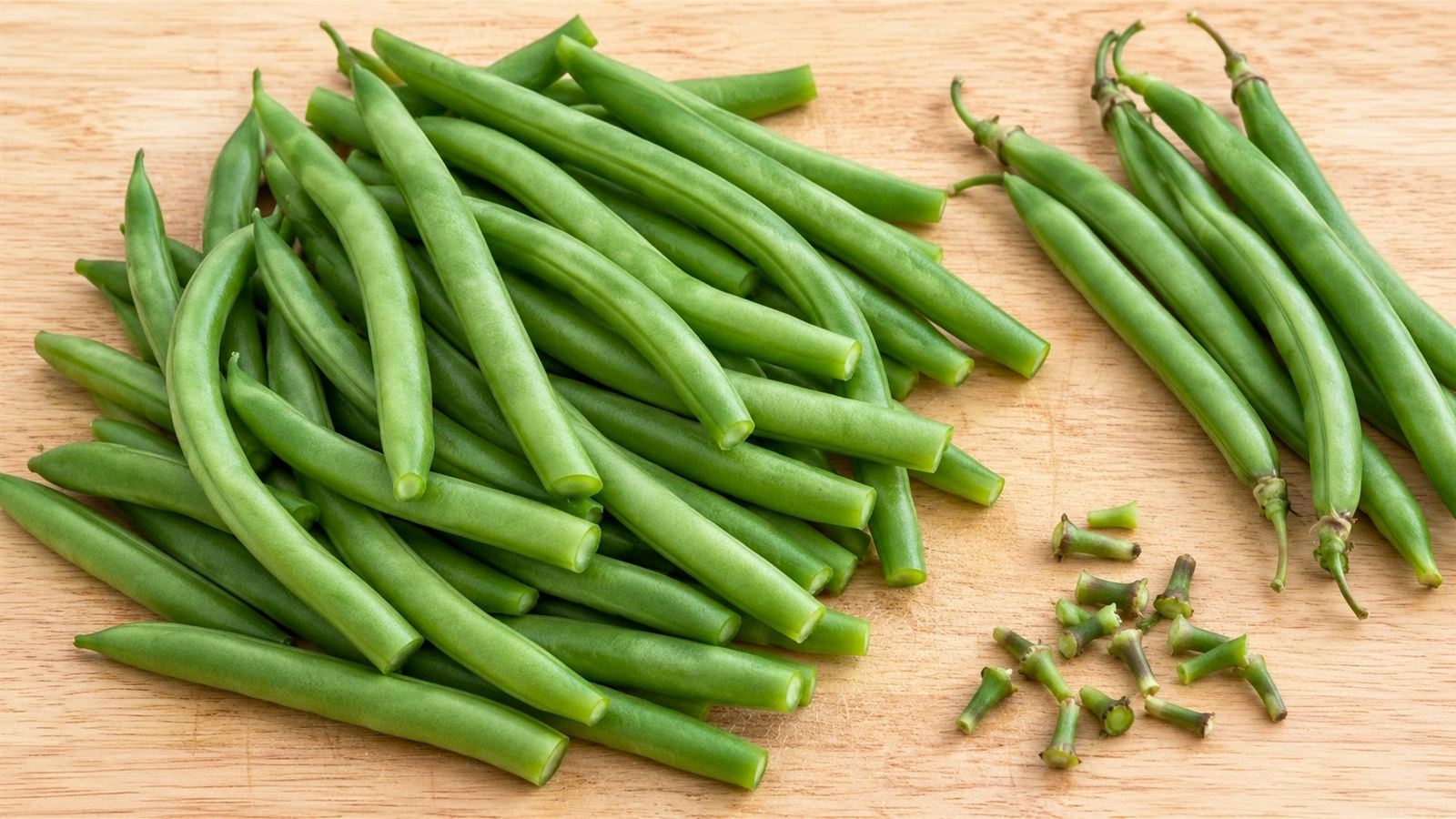
I’d pay more attention to the beans’ thickness than to an exact minute on the timer. Slender beans and substantial garden beans can share a grocery bag, but they don’t necessarily finish together. For this recipe, use fresh green beans with similar widths; the card provides quantities for four side-dish servings.
- Look for firm pods. Choose beans that feel firm rather than limp, and set aside any with obvious mold or deterioration.
- Rinse before preparing. Wash under running water, then remove the stem ends. Cut especially long beans in half if that makes them easier to turn and serve.
- Sort a mixed batch. Put thicker beans in the pan first, or reserve particularly slender ones for another meal. Matching thickness is more useful than matching length.
- Keep the curved tips if you like. Removing the stem is the useful job; every bean doesn’t need a haircut at both ends.
The aim is a bean that bends and yields when you bite it, with a little resistance if that’s your preference. If you prefer softer vegetables, extend the covered cooking stage instead of trying to force that texture during the garlic finish.
What the small ingredient list contributes
Olive oil coats the beans and carries the garlic through the pan. Lemon juice adds acidity at the end, while zest brings lemon aroma without adding more liquid. I prefer that two-part finish to pouring in extra juice and ending up with a puddle beneath the vegetables.
- Fresh garlic: Mince it finely enough to distribute, then keep it moving during its brief cooking stage. Dark, bitter garlic is a reason to lower the heat, not an invitation to add more lemon.
- Lemon: Wash the fruit, grate only the yellow peel, and avoid the bitter white layer underneath. Add the measured juice first and taste before increasing it.
- Salt: The card uses fine salt for a reproducible measurement. Coarse salts vary by brand and crystal size, so don’t assume the same spoonful weighs the same.
- Black pepper: Add a little at the finish. It should support the garlic and lemon rather than dominate the beans.
For an oil choice, Tastiva’s guide to olive oil and extra virgin olive oil explains the distinction. Butter can change the flavor of this dish, but replacing the oil also changes its dairy-free status; that substitution needs its own nutrition estimate.
Make this green beans recipe without scorching the garlic
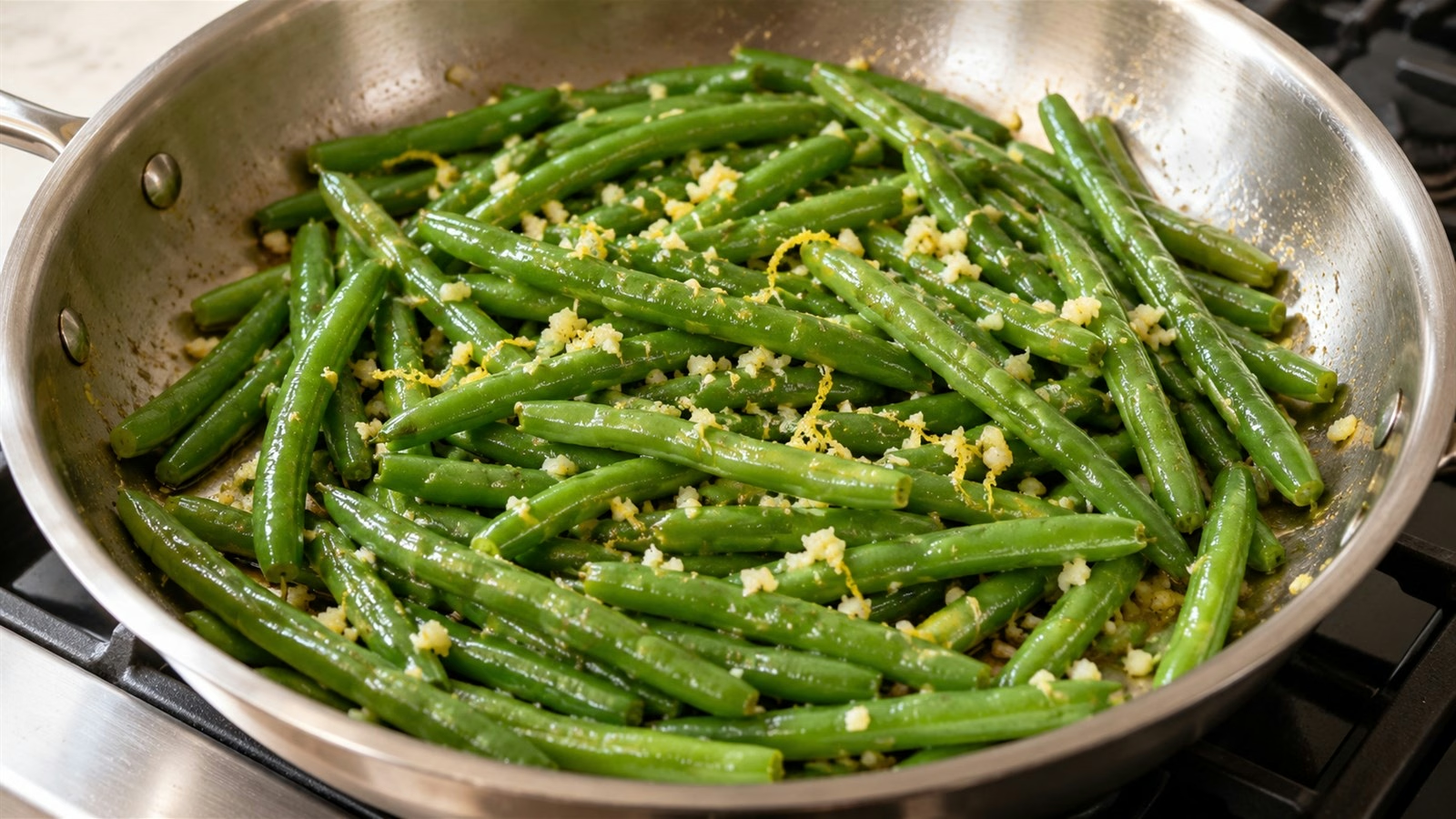
The card below has the complete method. The useful distinction is between cooking the beans and seasoning them: water and a lid handle the first job, and an uncovered pan handles the finish. A wide skillet lets you turn the beans without sending half of dinner onto the stovetop.
- Watch the covered stage. Start checking a thick bean after several minutes. If the water evaporates before the bean becomes tender, add another tablespoon of water and cover again.
- Let remaining water disappear. Uncover and give the liquid time to evaporate before adding the oil and garlic. A shallow pool means the finishing ingredients will dilute rather than coat.
- Use a gentler finish. Reduce the heat before the garlic goes in. Stir until fragrant, then take the pan off the heat for the lemon.
- Taste a bean, not just the pan juices. Check tenderness, salt, and acidity together. Adjust the seasoning in small amounts.
If you’re doubling the recipe, use two pans or cook in batches. A deeper heap changes how the beans heat and makes the finishing stage harder to control. Frozen or canned beans also have different starting textures; neither is a timing-equivalent substitute for the fresh beans in this card.
Serving, leftovers, and useful fixes
These beans fit alongside oven-roasted salmon, chicken, or a lentil-and-grain dinner. I’d finish them shortly before serving, especially when the rest of the meal already has a sauce. Lemon and garlic give this side enough direction without another topping.
- Still too firm: Add a little water and cover briefly before the finishing ingredients. Use texture rather than a fixed extra minute as your guide.
- Too watery: Uncover and evaporate the liquid before seasoning. Don’t keep adding oil to conceal excess water.
- Too sharp: Stop adding lemon. Serve with the other components of the meal rather than chasing acidity with more salt.
- Saving leftovers: Refrigerate in a shallow covered container within two hours, or within one hour above 90°F (32°C). Keep the refrigerator at 40°F (4°C) or below and use within three to four days, following FoodSafety.gov’s leftovers guidance.
Reheat leftovers to 165°F (74°C), using a food thermometer; FoodSafety.gov provides that guidance. Expect reheated beans to soften further. A small fresh squeeze of lemon after reheating can refresh the seasoning, but it doesn’t extend the safe storage window.
Green Beans Recipe

Ingredients
- 1 lb fresh green beans trimmed; 454 g
- 1/4 cup water 60 ml, plus more as needed
- 1 tbsp olive oil 15 ml
- 2 cloves garlic minced; about 6 g
- 1 tsp finely grated lemon zest
- 1 tbsp fresh lemon juice 15 ml
- 1/4 tsp fine salt
- 1/8 tsp ground black pepper
Equipment
- 1 12-inch skillet with lid
- 1 Tongs or spatula
- 1 Microplane or fine grater
- 1 Measuring spoons
Instructions
- Rinse and trim the beans. Place them in a 12-inch skillet with 1/4 cup water. Bring to a simmer over medium-high heat, cover, and cook for 5 to 7 minutes. Check a thick bean; if still too firm, add a tablespoon of water as needed, cover again, and cook until it reaches your preferred tenderness.
- Uncover and cook for 2 to 3 minutes, turning occasionally, until the remaining water evaporates. Timing depends on the beans and pan; do not let the empty skillet scorch.
- Reduce heat to medium-low. Add the olive oil and garlic, and stir for 30 to 60 seconds, until fragrant but not browned.
- Remove from heat. Add the lemon zest, lemon juice, salt, and black pepper. Toss, taste a bean, and adjust seasoning if needed. Serve promptly.
Nutrition
Video
Video: Inspired Taste demonstrates green beans cooked in one skillet with a small amount of water, followed by evaporation and a garlic-lemon finish. Their variation blisters the beans before steaming and adds butter. Follow the recipe above for this version’s steam-first sequence, olive oil and lemon-juice finish.
Notes
Tried this recipe?
Let us know how it turned out!Sources
- FoodSafety.gov: Food Safety and Eating Out — refrigeration timing and leftover storage.
- FoodSafety.gov: Game Day Food Safety Tips — shallow containers, refrigerator temperature, and reheating.
Hi, I’m Laura, the voice behind Tastiva. I’ve always believed that eating well should feel enjoyable, comforting, and realistic—not like another complicated rule to follow. I love creating recipes that fit into everyday life, sharing simple nutrition ideas, and finding small ways to make meals feel a little better without losing the pleasure of good food.