
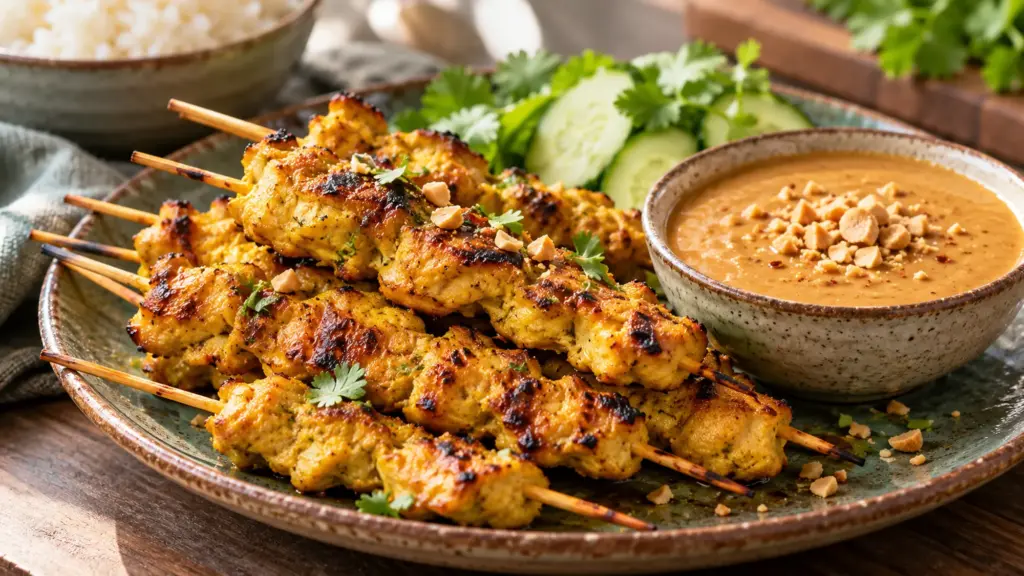
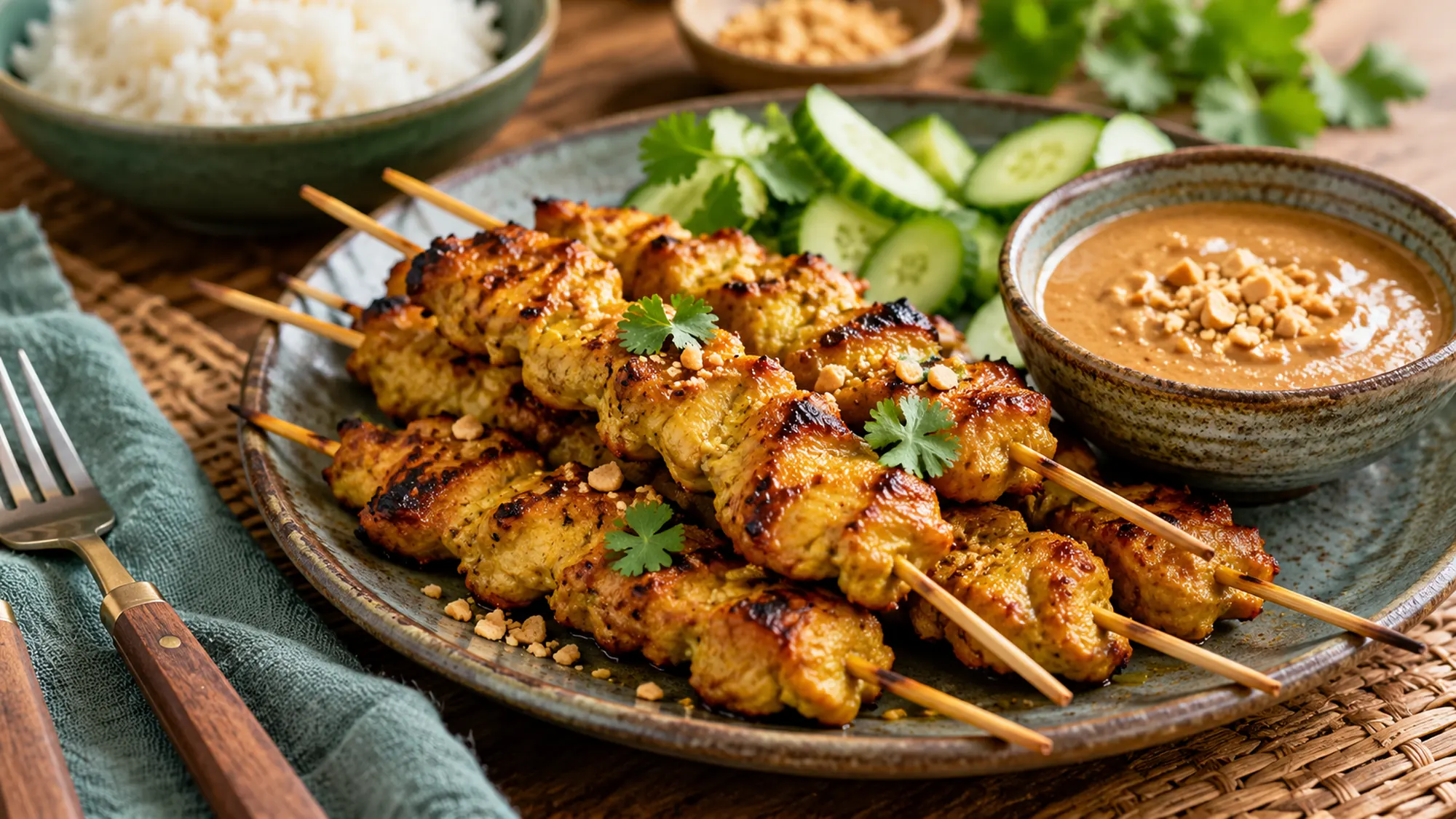
A plate of small skewers has a way of making dinner feel more sociable. Chicken satay brings that easy, pass-the-platter feeling, with browned curry-seasoned chicken and a separate bowl of peanut sauce. The contrast matters: a lightly charred surface, tender meat and a sauce that clings without swallowing every bite.
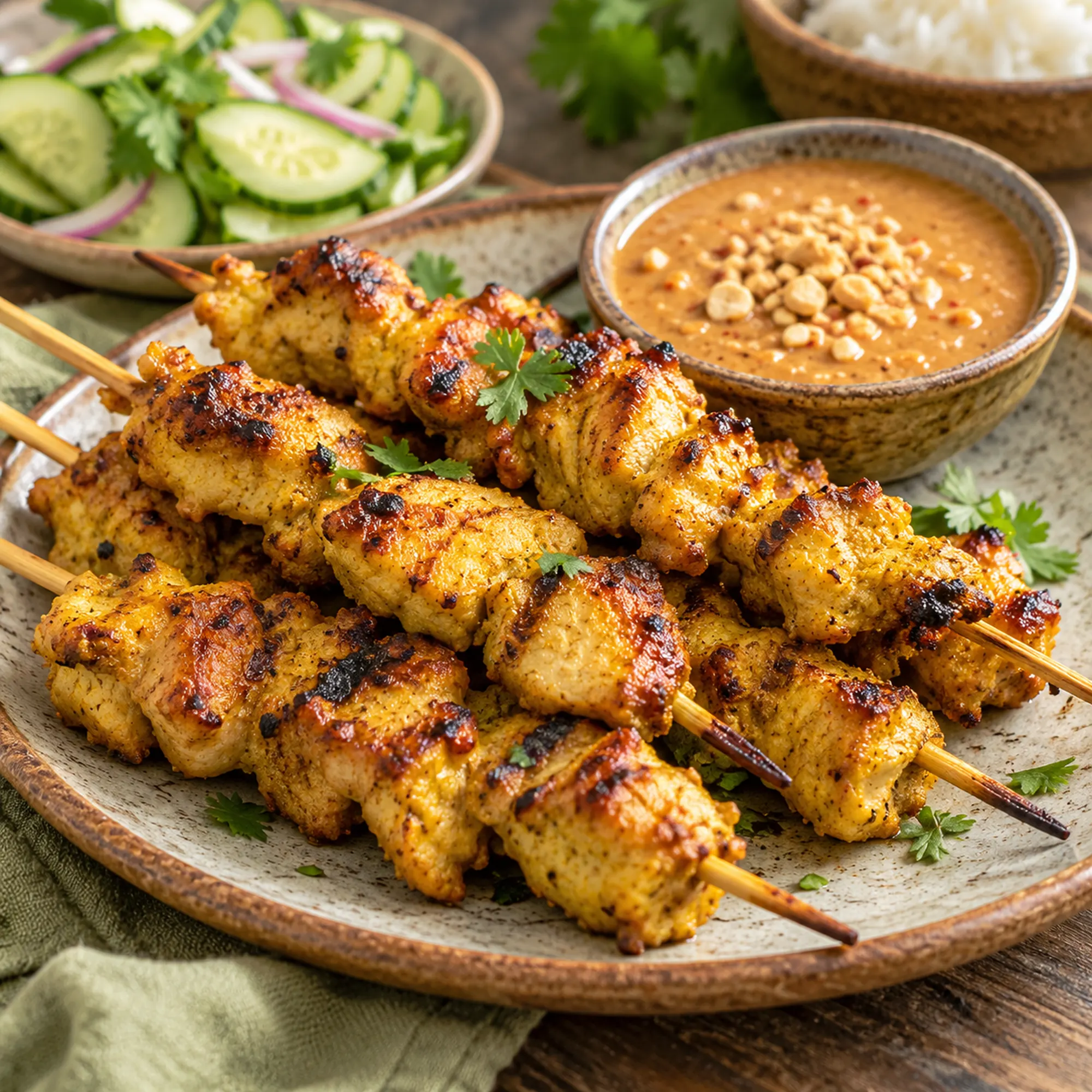
For chicken satay, marinate evenly cut thigh pieces, brown the skewers in batches and serve the warm peanut sauce separately so everyone can choose how much to add.
I prefer a dipping bowl to a blanket of sauce over the entire platter. You can still see the golden edges, and the last skewer gets the same treatment as the first. Short wooden skewers also make practical sense in an ordinary skillet; dinner should not require negotiating with a stick longer than the pan.
Serving Chicken Satay
This version makes four main-dish portions of chicken, with a generous quantity of sauce. Rice and cucumber are optional accompaniments rather than part of the ingredient estimate. If you are serving other dishes too, put out smaller plates and let the skewers function as one part of the meal.
The sauce is rich and there may be more than you need at the table. Offer a modest amount first and keep the remainder separate from anything that has touched raw chicken. Tastiva’s rice cooking guide is useful if you want a straightforward base alongside the skewers.
- Use a clean platter for cooked chicken, never the tray that held it raw.
- Keep the dipping bowl within easy reach instead of balancing it on the skewers.
- Add cucumber for a cool, crisp contrast rather than another creamy side.
| Serving choice | What it adds |
|---|---|
| Plain rice | A mild base for the sauce |
| Sliced cucumber | Cool crunch between bites |
| Lime wedge | Optional sharpness at the table |
Serve the skewers hot, but let each person control the amount of sauce on the plate.
Chicken Satay Variations
The flavor combination follows RecipeTin Eats’ Thai-style chicken satay. Curry powder and red curry paste season the chicken, while coconut milk and peanut butter give the sauce its body. This is a skewer recipe, not a pan of chicken simmered in satay curry.
I would keep the thigh meat for this version rather than automatically switching to breast. Both can work, but breast needs especially careful attention to doneness. The natural peanut butter used here contains peanuts and salt, with no added oil or sugar; stir it thoroughly before measuring so the sauce is consistent.
- Check the curry paste label: heat, salt and allergens vary between brands.
- Thin a stiff sauce a little at a time with water rather than pouring in a large splash.
- Keep the sauce warm over gentle heat and stir to prevent a thick layer forming underneath.
- For a smaller appetite, save clean surplus sauce separately rather than forcing it all onto the chicken.
Adjust the sauce’s consistency patiently; the goal is a thick dip that still moves easily from spoon to bowl.
Nutrition and Safe Cooking
Chicken supplies protein, while peanuts and coconut milk contribute substantial fat and energy. Those ingredients create the appealing texture, but they do not make the dish automatically light. Vegetables and rice can help build a varied plate, with portions chosen to suit the people eating.
The nutrition estimate counts all measured sauce and cooking oil, even though some sauce may remain. It is therefore a conservative estimate for dividing the complete batch into four, not a measurement of how much a person actually dips. Optional rice, cucumber and garnishes are excluded.
- Peanuts are central to this recipe; a different nut or seed sauce is not automatically safe for someone with an allergy.
- Keep marinating chicken covered in the refrigerator.
- Check thick pieces reach 165°F (74°C), even when the outside looks beautifully browned.
- Use clean utensils for sauce that will be saved, and refrigerate leftovers promptly.
Treat the sauce as a flavorful choice, not a required quantity, and check the chicken’s center rather than its color alone.
Bottom Line
Chicken satay is at its best when the separate elements keep their character. Give the chicken room to brown, use skewers that fit your equipment and keep the peanut sauce pourable but substantial. A simple plate of rice and cucumber leaves plenty of room for the warm spices and golden edges to do their work.
Small skewers, careful browning and a separate dipping bowl make this a practical dinner to share.
Chicken Satay Recipe

Ingredients
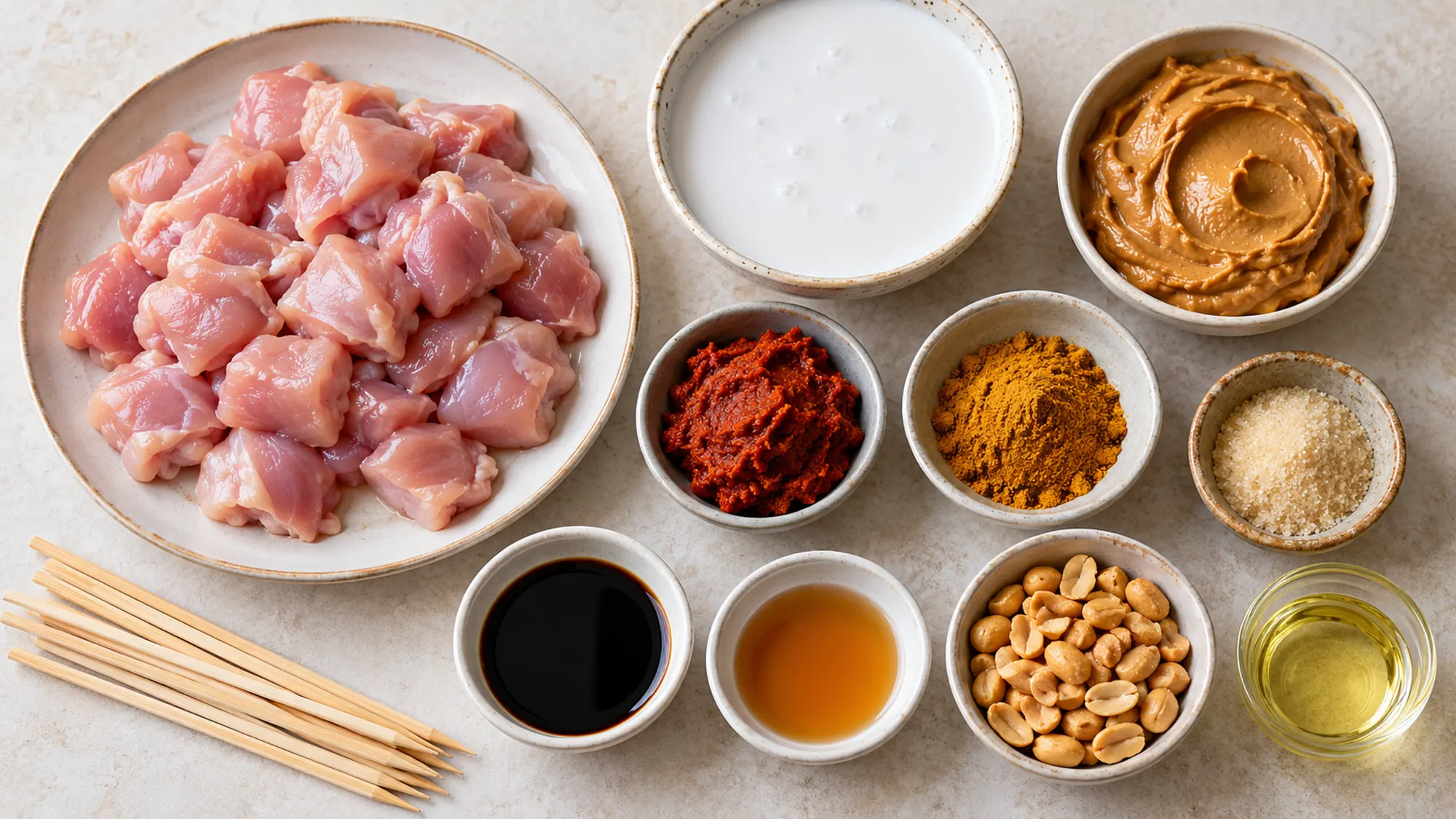
- 600 g boneless skinless chicken thighs cut into 2 cm pieces
- 400 g full-fat coconut milk 60 g marinade, 340 g sauce; stir before measuring
- 6 g curry powder
- 54 g white sugar 4 g marinade, 50 g sauce
- 40 g Thai red curry paste 10 g marinade, 30 g sauce
- 6 g fine salt 3 g marinade, 3 g sauce
- 190 g smooth natural peanut butter peanuts and salt only; no added oil or sugar
- 10 ml dark soy sauce
- 30 ml apple cider vinegar
- 180 ml water plus more to thin sauce
- 22.5 ml sunflower oil
- 18 g unsalted roasted peanuts chopped
- rice, cucumber, lime and cilantro optional, excluded from estimates
Equipment
- 1 Skewers
- 1 Large skillet
- 1 small saucepan
- 1 Instant-read thermometer
Instructions
- Stir the coconut milk until uniform. Combine the chicken with 60 g coconut milk, curry powder, 4 g sugar, 10 g red curry paste and 3 g salt. Cover and refrigerate for at least 20 minutes; keep chilled if marinating longer.
- Thread the chicken onto about 12–16 short skewers that fit your skillet, leaving a small space between pieces. If grilling over flame instead, soak wooden skewers beforehand and protect exposed ends.
- In a small saucepan, whisk the remaining coconut milk, sugar, curry paste and salt with the peanut butter, dark soy, vinegar and water. Simmer gently for about 5 minutes, stirring. Add small splashes of water if needed for a thick, pourable dipping sauce.
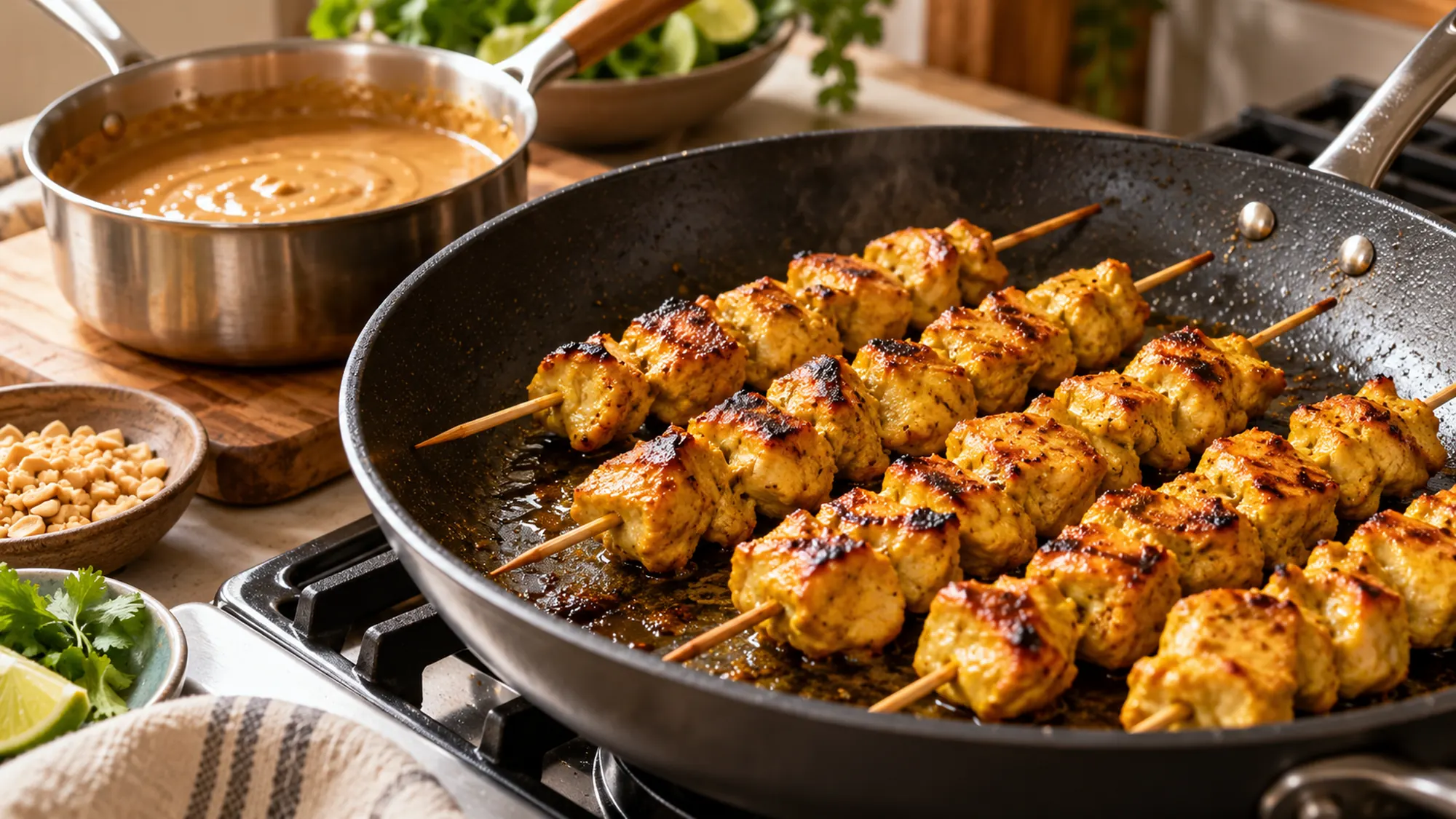
- Heat the sunflower oil in a wide skillet over medium-high heat. Cook the skewers in batches, turning to brown all sides, about 6–10 minutes depending on thickness. Check several thick pieces reach 165°F (74°C). Transfer to a clean platter.
- Scatter over chopped peanuts and serve with the sauce separately. Divide the chicken into four main-dish portions. The estimate counts all sauce and oil, although surplus sauce is likely; optional rice and vegetables are not included.
Nutrition
Video
Notes
Tried this recipe?
Let us know how it turned out!Hi, I’m Laura, the voice behind Tastiva. I’ve always believed that eating well should feel enjoyable, comforting, and realistic—not like another complicated rule to follow. I love creating recipes that fit into everyday life, sharing simple nutrition ideas, and finding small ways to make meals feel a little better without losing the pleasure of good food.