
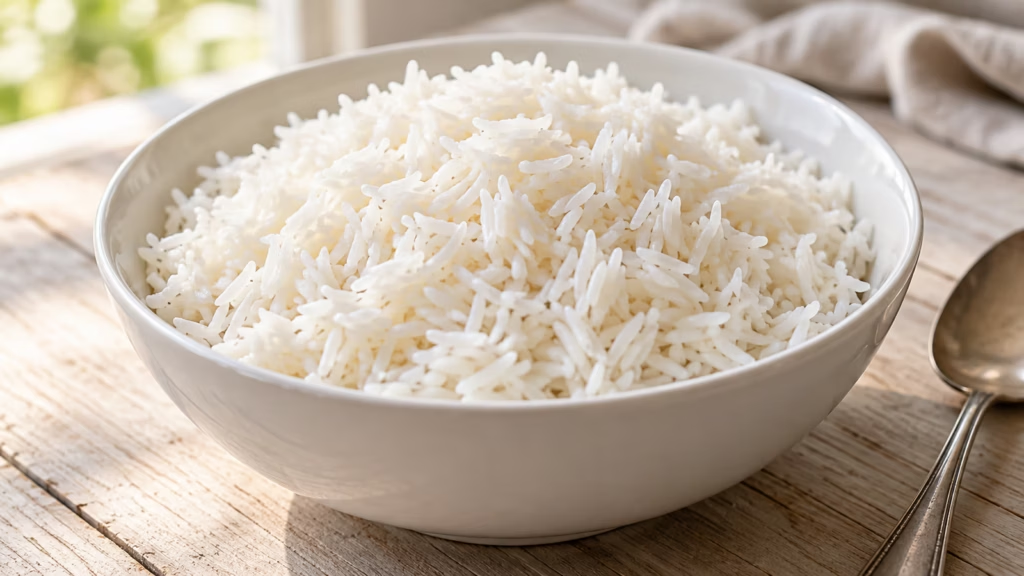
The lid comes off, dinner is almost ready, and the rice is either fluffy or a small surprise. Learning how to cook rice gets easier when you name the rice first. For regular long-grain white rice, a covered stovetop simmer followed by a short rest is a practical starting point; the package’s water ratio should lead when it is available.
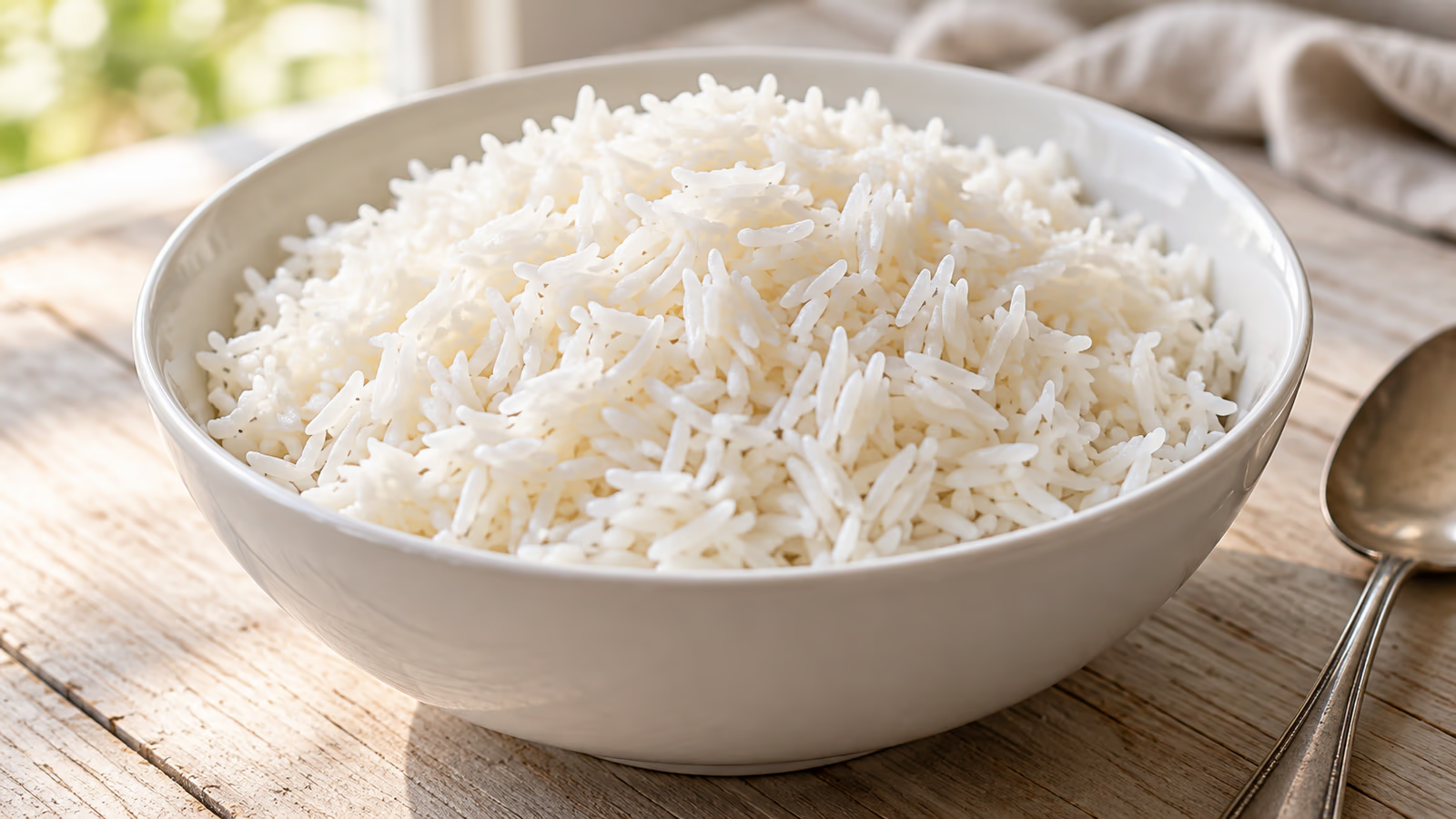
Measure the rice, keep the simmer gentle, and give the covered pot its quiet finish.
How to cook rice depends on the bag
This guide is for ordinary uncooked long-grain white rice. It is not a universal timing chart for jasmine, basmati, sushi rice, brown rice or instant rice. Those differences are useful information, not a test of whether you are good at dinner.
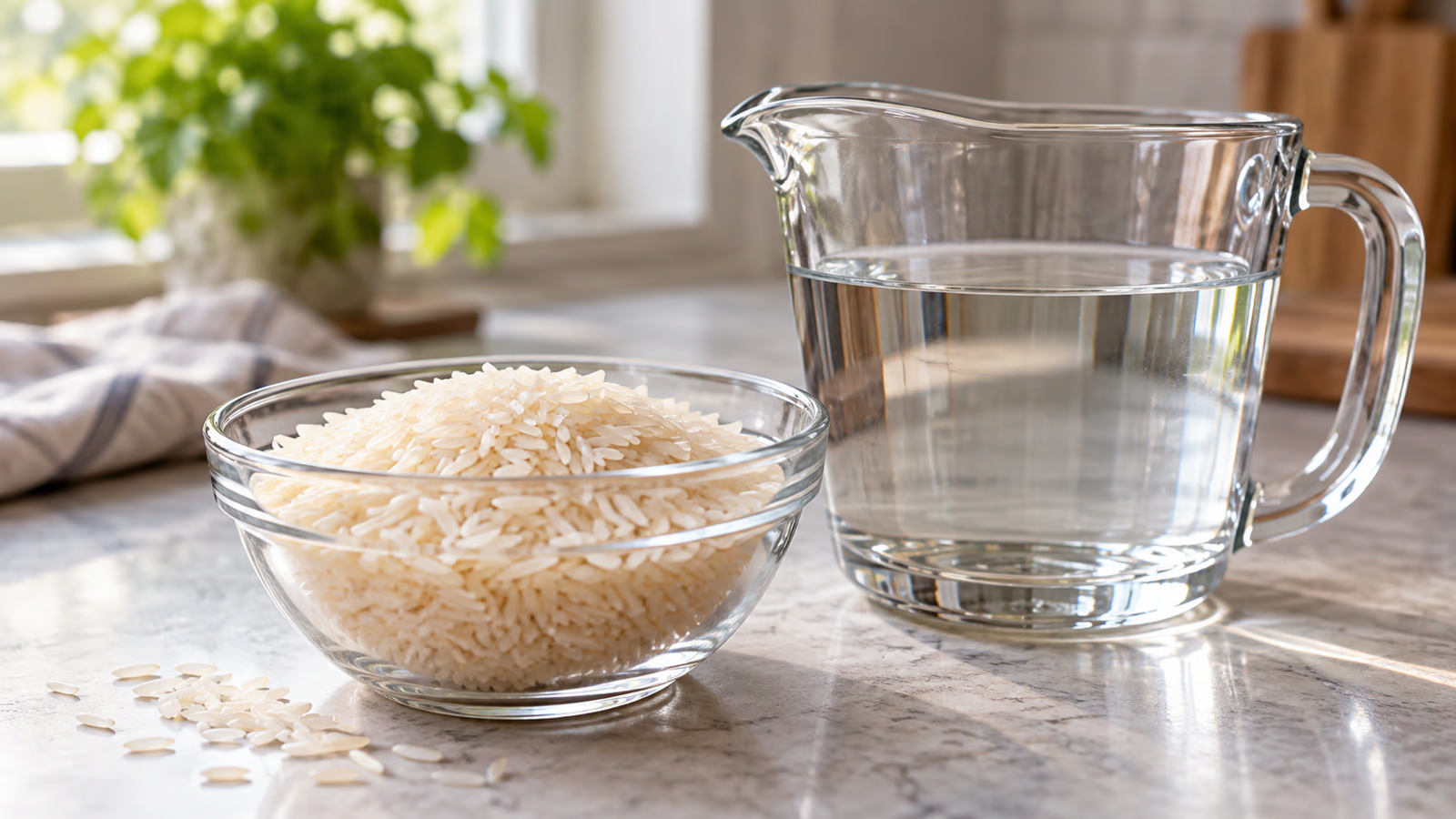
The card uses 1 cup dry rice with 2 cups water, a ratio listed for regular long-grain white rice by Carolina. Some other products need less liquid, so keep the directions when you decant a bag into a storage jar. I would trust that label before copying a ratio intended for a different variety.
- Check the grain: Look for regular long-grain white rice, rather than parboiled, instant or a seasoned mix. Names that sound similar can call for different methods.
- Measure before rinsing: Use a level standard cup for the dry grains, then measure the liquid separately. A rice-cooker cup may be smaller.
- Read the enrichment note: Some enriched rice packages advise against rinsing. Our guide to rinsing rice explains the choice by product and dish.
- Using brown rice? Follow the separate brown rice method. Its firmer outer layers need different timing.
Give the saucepan a lid that fits
Choose a heavy-bottomed saucepan with enough room for the rice to expand and a snug lid. The absorption method depends on a measured amount of water staying in the pot. A wide uncovered skillet loses water differently and makes the same ratio less dependable.
Bring the water to a boil, stir in the rice once, then cover and turn the heat down. You want a gentle simmer underneath that lid. I would move the pot to a smaller burner if the lowest setting on a large one still makes it boil hard.
- Keep the lid seated: Frequent peeks let steam escape. Check near the expected finish instead of every few minutes.
- Leave the spoon out: Stirring repeatedly can break softened grains and release more starch. This is not the technique for risotto.
- Watch the first minute: If starchy water pushes at the lid, reduce the heat. A pot that keeps boiling over is asking for an adjustment.
- Be careful opening: Tilt the lid away from your face and hands. Escaping steam can burn even when the burner is low.
Use the grain and the bottom of the pot as clues
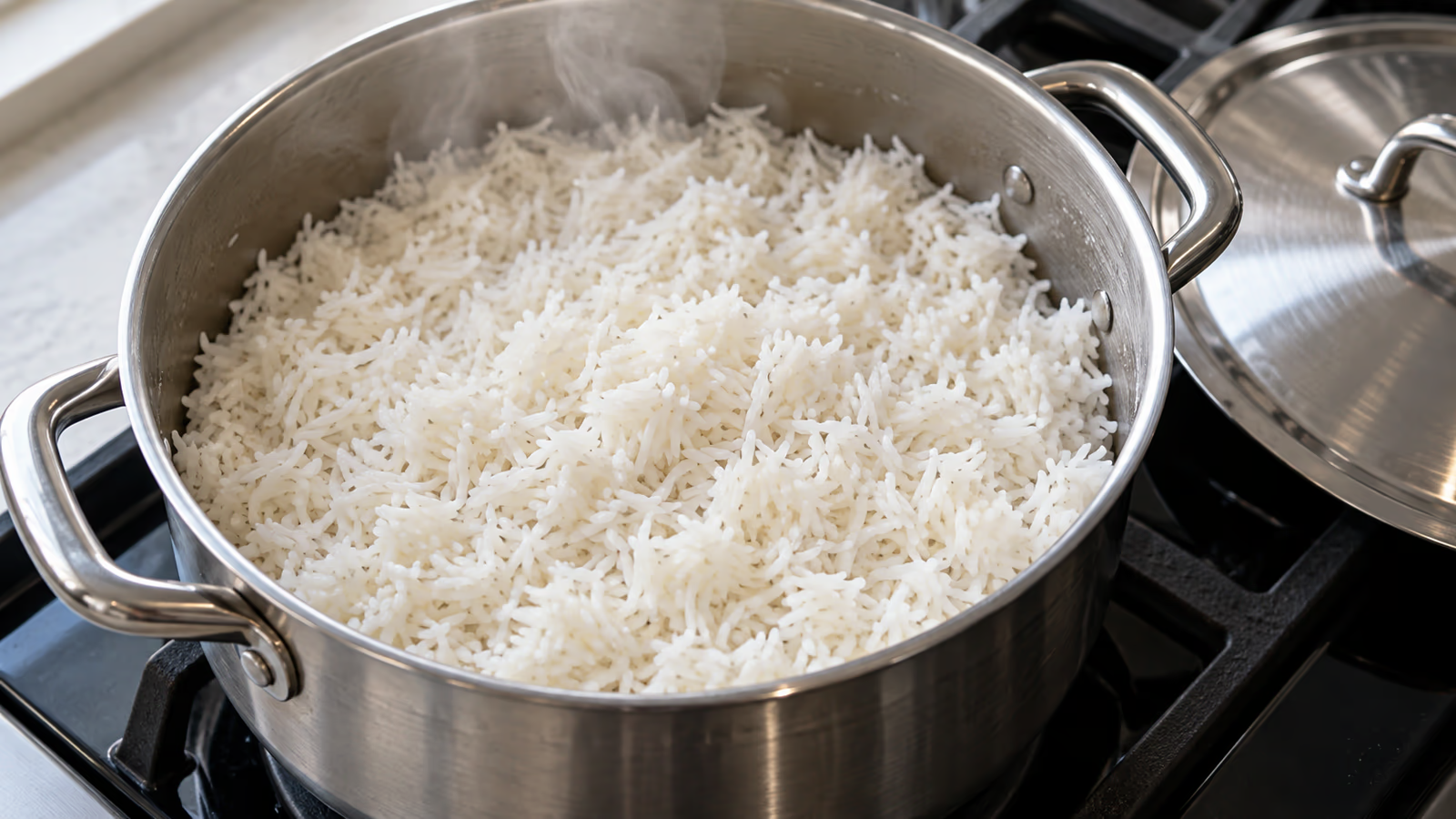
Start checking around 18–20 minutes, or at the time printed on your package. The grains should be tender and the free water absorbed. Then remove the saucepan from the heat and let it stand covered for about five minutes before gently lifting the rice with a fork.
Rice can be stubborn in a very specific way: the top looks done while the center of a grain still has a firm point. Taste a cooled grain and look for liquid before making the next move. Changing one thing at a time gives you a better chance of understanding the next batch.
- Firm rice, water left: Put the lid back on and continue over low heat for a few minutes. More water is not needed yet.
- Firm rice, dry pot: Add a small splash of hot water, cover and cook briefly. Check again rather than adding a whole extra cup.
- Tender rice, slight surface moisture: The covered rest can help it settle. Avoid prolonged cooking just to make every grain look dry immediately.
- Very soft rice: More heat will not rebuild the grains. Serve it as a softer bowl and reduce excess liquid or cooking next time.
- Scorched bottom: Lift the unburned rice out without scraping. Check burner strength, pan thickness and the lid fit before repeating the method.
Serve the rice, then make a plan for leftovers
Plain white rice works beside beans, stir-fried vegetables, fish or a saucy main. Season the rest of the meal before deciding the rice needs extra salt or butter. The simple base makes it easier to change direction without cooking another pot.
- Portion promptly: Move leftovers into shallow containers and refrigerate within two hours, or one hour above 90°F (32°C). Do not leave a deep pot cooling on the counter.
- Keep it cold: Refrigerate at 40°F (4°C) or below. A conservative plan is to use cooked rice within three days.
- Reheat thoroughly: Add a small splash of water, cover and heat to 165°F (74°C) throughout. Stir microwave portions to reduce cold spots.
- Use the correct starting point: A casserole calling for dry rice needs its own liquid. Cooked rice cannot replace it without changing the recipe.
- Read the estimate: Nutrition uses 185 g dry unenriched rice divided into four servings, plus the measured salt. Enriched brands and added fats change those values.
Rice Recipe

Ingredients
- 1 cup regular long-grain white rice 185 g; not instant or parboiled
- 2 cups water 480 ml; follow the rice package if its ratio differs
- 1/4 teaspoon fine salt 1.5 g
Equipment
- 1 2-quart heavy saucepan with a tight-fitting lid
- 1 measuring cup
- 1 Fork
- 1 Food thermometer for reheating
Instructions
- Check the rice package first. This method is for regular long-grain white rice. If the label calls for a different liquid ratio or preparation, follow it. Rinse only as appropriate for your product; drain well if rinsed.
- Bring the measured water and salt to a boil in a 2-quart heavy saucepan. Stir in the rice once. Cover and reduce to a gentle low simmer.
- Cook covered for about 18–20 minutes, or the package time, until the rice is tender and the water is absorbed. Avoid repeated stirring or lifting the lid. If firm and dry, add a small splash of hot water and cook covered briefly; if liquid remains and grains are firm, continue without adding water.
- Remove from the heat and rest, still covered, for 5 minutes. Open away from your face, fluff gently with a fork, and divide into four portions.
Nutrition
Video
Notes
Tried this recipe?
Let us know how it turned out!Sources
- Carolina Rice: regular long-grain white rice directions
- USA Rice: cooking methods and troubleshooting
- USA Rice: storage and reheating
- USDA: safe leftover handling
- USDA FoodData Central: ingredient-composition data
Hi, I’m Laura, the voice behind Tastiva. I’ve always believed that eating well should feel enjoyable, comforting, and realistic—not like another complicated rule to follow. I love creating recipes that fit into everyday life, sharing simple nutrition ideas, and finding small ways to make meals feel a little better without losing the pleasure of good food.