
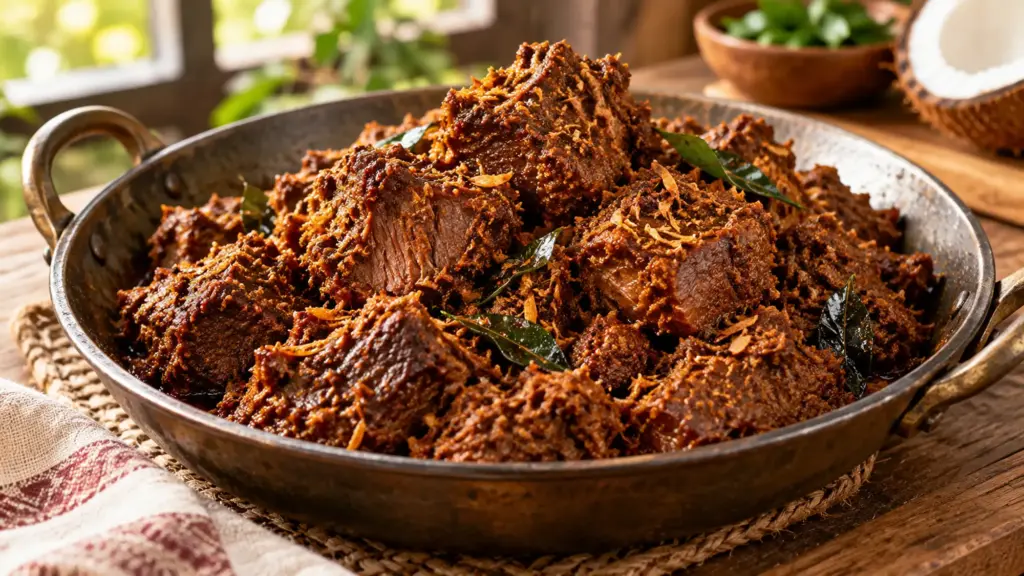
A pot of beef rendang changes character as it cooks. What begins as a loose coconut mixture gradually becomes a thick, dark coating around tender beef, with lemongrass and warm spices coming forward as the liquid reduces. The final stage needs attention, not a rush to get dinner out of the pot.
This beef rendang browns large chuck cubes, simmers them with an aromatic paste and coconut milk, then reduces the sauce until it clings. Stir more often near the end, when the mixture is thick enough to catch on the bottom.
The approach follows RecipeTin Eats’ rendang, with measured aromatics and a stated six-serving yield. I prefer a simple rice accompaniment here; a second strongly flavored sauce would compete with the work already happening in the pot.
Serving Beef Rendang
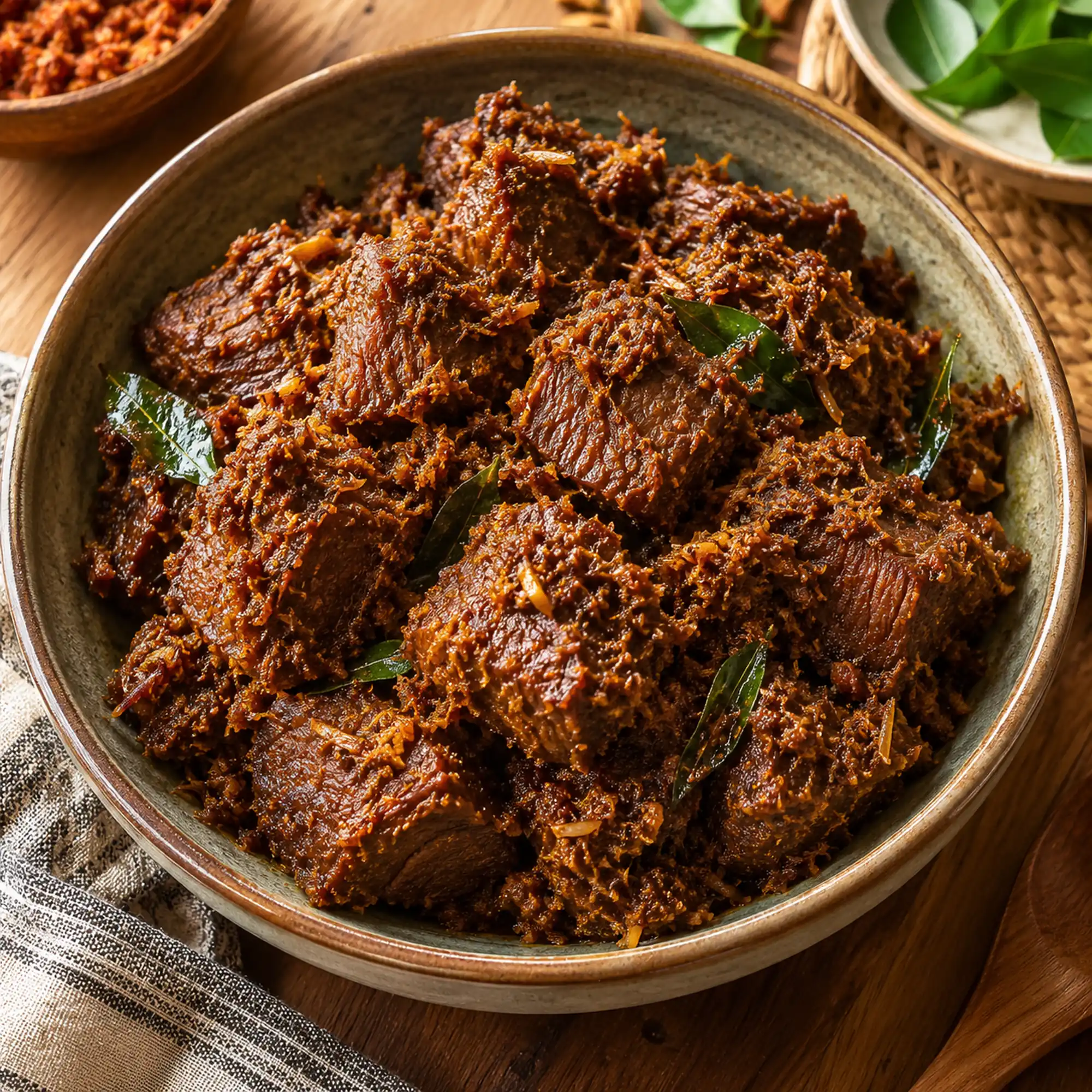
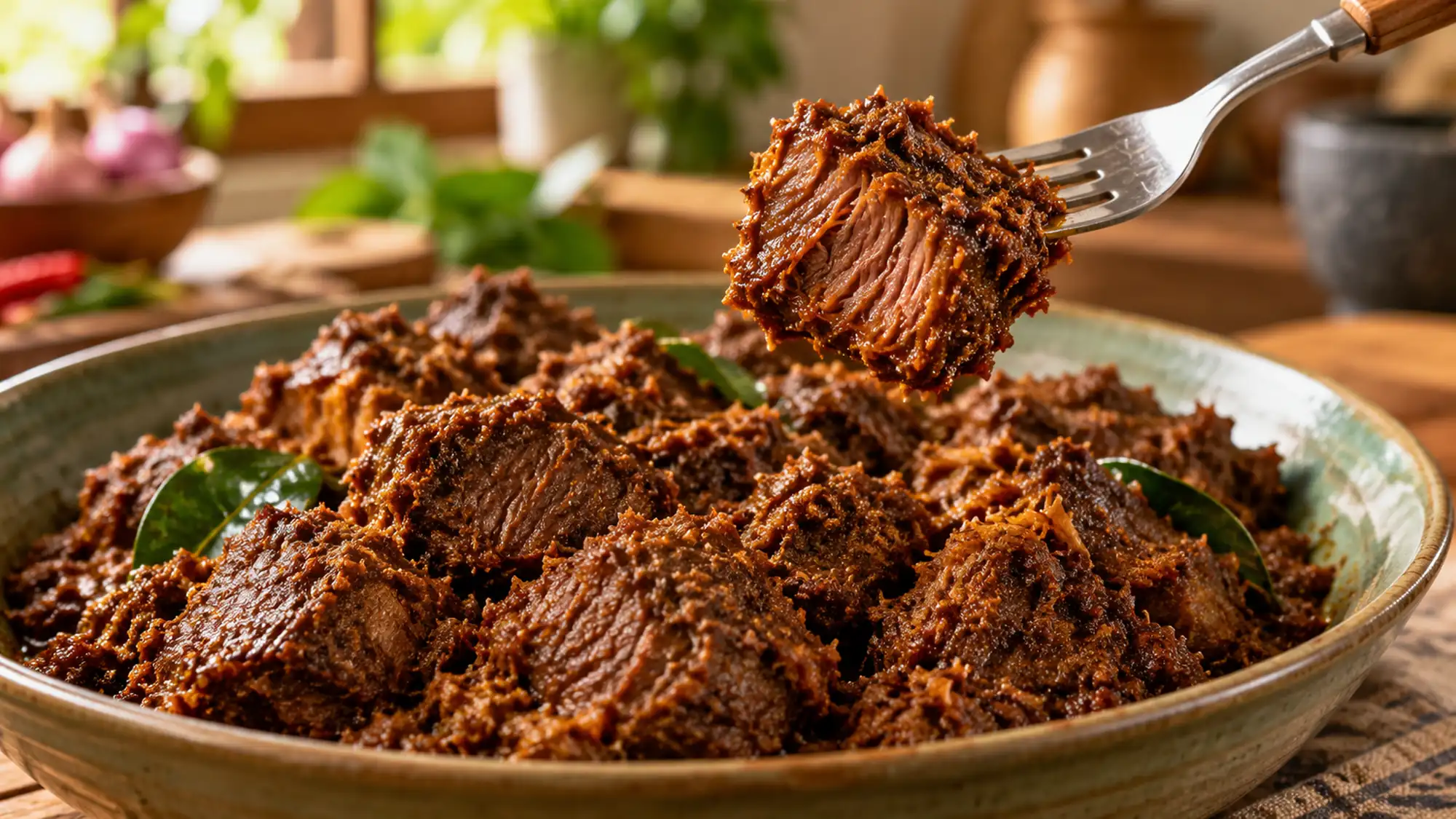
Spoon the beef onto a platter or into shallow bowls, keeping the thick coating with each piece. This is not intended to be a broth-heavy curry, so there may be less liquid than you expect. The concentrated paste is the point, and a modest amount can flavor a bite of plain rice.
A crisp vegetable accompaniment gives the meal a useful change in texture. Keep it cool or simply cooked, without another coconut dressing. If you add rice, remember that the recipe estimate covers the beef and its coating only, not the whole plate.
- For a mild base: use plain cooked rice.
- For vegetables: cucumber or plainly cooked greens provide contrast.
- For serving: remove the whole cinnamon, star anise and bruised lemongrass before plating.
| At the table | What it contributes | Useful detail |
|---|---|---|
| Plain rice | A neutral base for concentrated flavor | Serve separately |
| Crisp vegetables | A lighter texture beside tender beef | Keep the dressing restrained |
| Shallow platter | Shows the thick coating | Remove hard whole spices first |
Serve the coated beef with a quiet starch and a contrasting vegetable, not another rich sauce.
Beef Rendang Variations
Large pieces of chuck are easier to manage during the reduction than tiny cubes that fall apart quickly. Tenderness can vary with the particular cut, so do not force the finishing stage just because the clock says it is time. If the beef is still firm, a little water and more gentle cooking are useful.
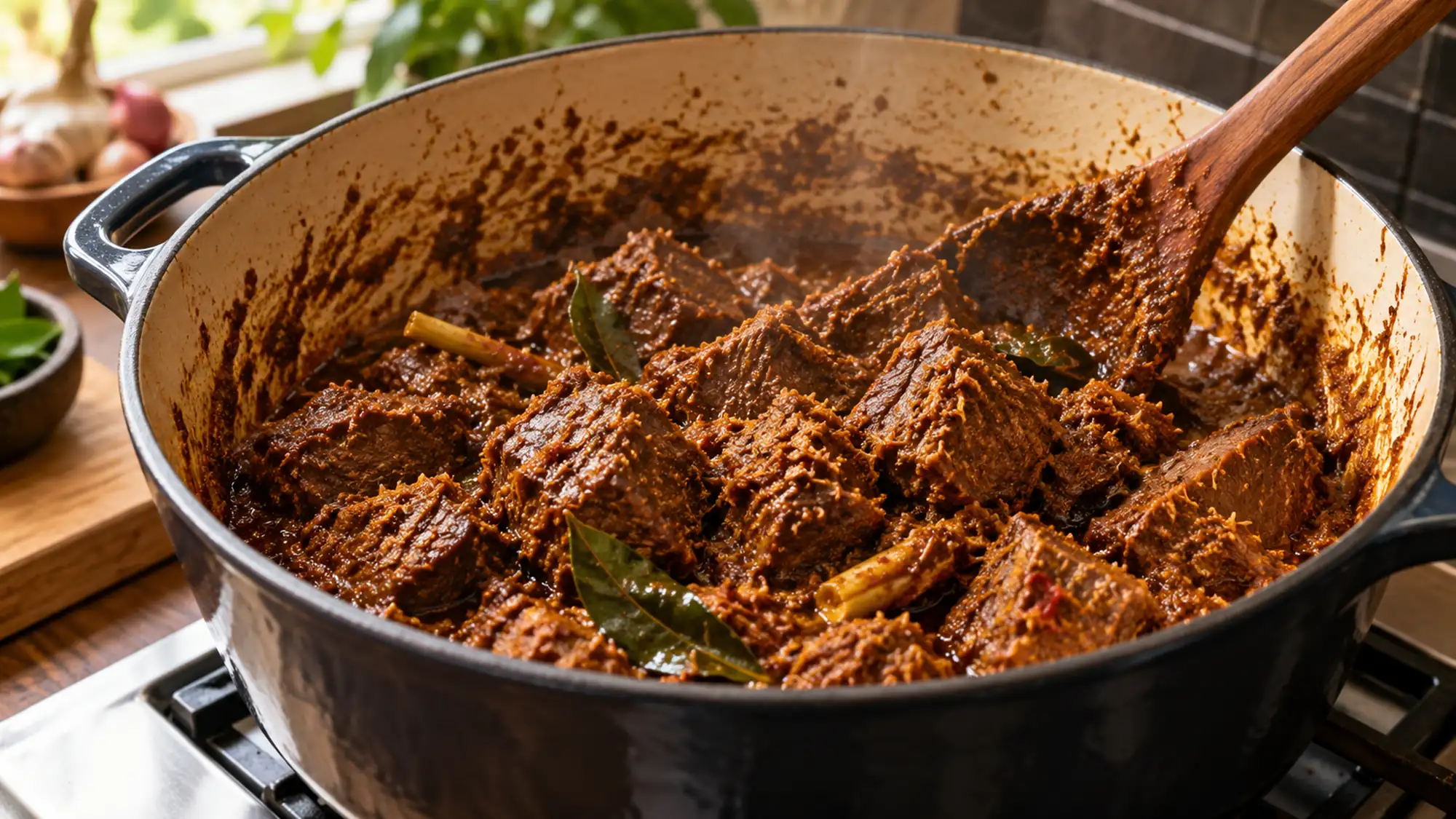
I would lower the heat as soon as the sauce begins sticking between stirs. Reduction should deepen the coating, not scorch it. A heavy pot helps spread the heat, but it cannot replace paying attention when the coconut mixture becomes thick and the beef is already tender.
- Less heat: reduce the dried chilies and remove their seeds; different chilies vary widely.
- No galangal: the source permits extra ginger, though the flavor is not identical.
- No tamarind: a small measured amount of lemon juice or vinegar is a source-listed alternative.
- Different beef: another slow-cooking cut may work, with a different time and texture.
Treat tenderness and reduction as separate checks, and protect the thickening paste from scorching.
Nutrition and Safe Cooking
Beef provides protein, while coconut milk, desiccated coconut and the cooking oil contribute considerable richness. A concentrated sauce is not a reason to ignore its ingredients. The six portions are a practical division of the batch, and the size of the rice serving will change the overall meal.
Ingredient-based nutrition is necessarily approximate for a dish with whole spices and specialty aromatics. Removed stalks and hard spices are not counted as if they were eaten whole. Where a small ingredient needs a composition proxy, that limitation is stated rather than hidden behind an overly precise total.
- Remove hard pieces: check for whole spices and the bruised stalk before serving.
- Handle raw beef carefully: keep its board and utensils separate from ready-to-eat sides.
- Cool efficiently: divide leftovers into shallow containers rather than leaving a deep pot warm.
- Reheat safely: follow 165°F guidance for leftovers, adding a little water if needed.
Enjoy the concentrated flavor in a considered portion, with clear estimates and careful leftover handling.
Bottom Line
Beef rendang is a good dish for letting texture guide the final decisions. The beef should be tender before the coating becomes too dry, and the thick paste should smell aromatic rather than scorched. Give that last reduction your attention, then serve simply enough to appreciate the result.
Tender beef and a thick, unscorched spice coating matter more than finishing at an exact minute.
Beef Rendang Recipe

Ingredients
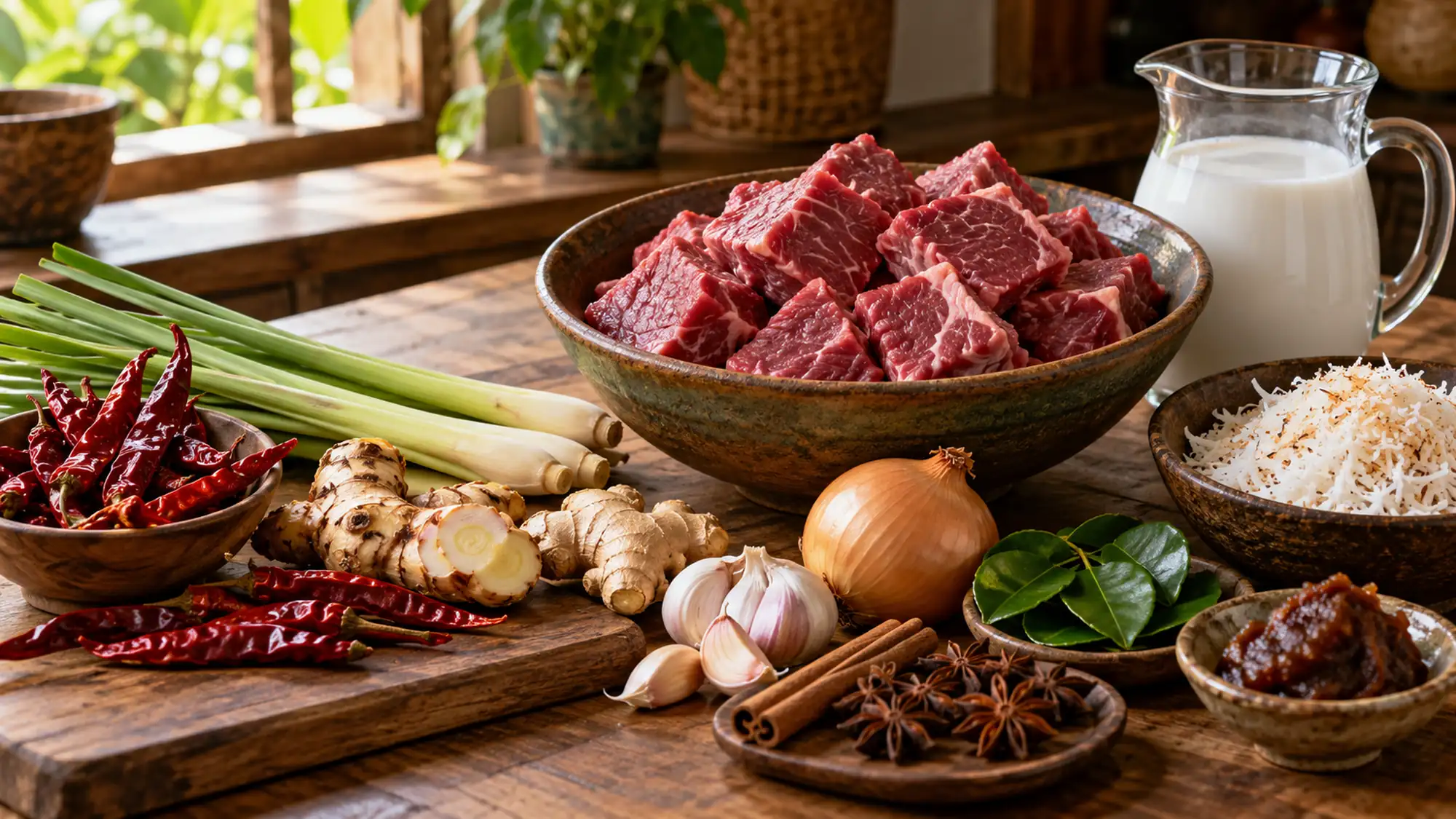
- 1000 g beef chuck cut into large cubes
- 12 g dried red chilies stemmed,seeded,rehydrated; adjust heat
- 150 g onion
- 15 g garlic
- 30 g tender white lemongrass finely sliced for paste
- 15 g fresh galangal
- 15 g fresh ginger
- 45 ml sunflower oil 30 ml paste,15 ml browning
- 1 cinnamon stick about2g,remove
- 0.5 g ground cloves
- 3 whole star anise about6g,remove
- 1 g ground cardamom
- 20 g lemongrass stalk bruised,remove
- 400 ml full-fat unsweetened coconut milk
- 10 g tamarind paste
- 2 g makrut lime leaves finely sliced,discard tough stems
- 30 g unsweetened desiccated coconut
- 12 g brown sugar
- 7 g fine salt
Equipment
- 1 Small food processor
- 1 Heavy lidded pot
- 1 wooden spoon
Instructions
- Drain rehydrated chilies. Blend with onion, garlic, sliced tender lemongrass, galangal, ginger and 30 ml oil into a fine paste.
- Brown beef in batches in the remaining 15 ml oil, then set aside. Cook the paste gently in the pot for 2–3 minutes, stirring.
- Return beef and add coconut milk, tamarind, sliced lime leaves, desiccated coconut, sugar, salt and remaining spices including the bruised stalk. Cover and simmer gently 75–100 minutes, until beef is nearly tender.
- Uncover and reduce gently 30–45 minutes, stirring increasingly often as the sauce thickens. If beef remains firm, add water and cook longer. Stop when tender beef is coated in thick paste, not when the bottom scorches. Remove whole cinnamon, star anise and bruised stalk; serve six portions.
Nutrition
Video
Notes
Tried this recipe?
Let us know how it turned out!Hi, I’m Laura, the voice behind Tastiva. I’ve always believed that eating well should feel enjoyable, comforting, and realistic—not like another complicated rule to follow. I love creating recipes that fit into everyday life, sharing simple nutrition ideas, and finding small ways to make meals feel a little better without losing the pleasure of good food.