
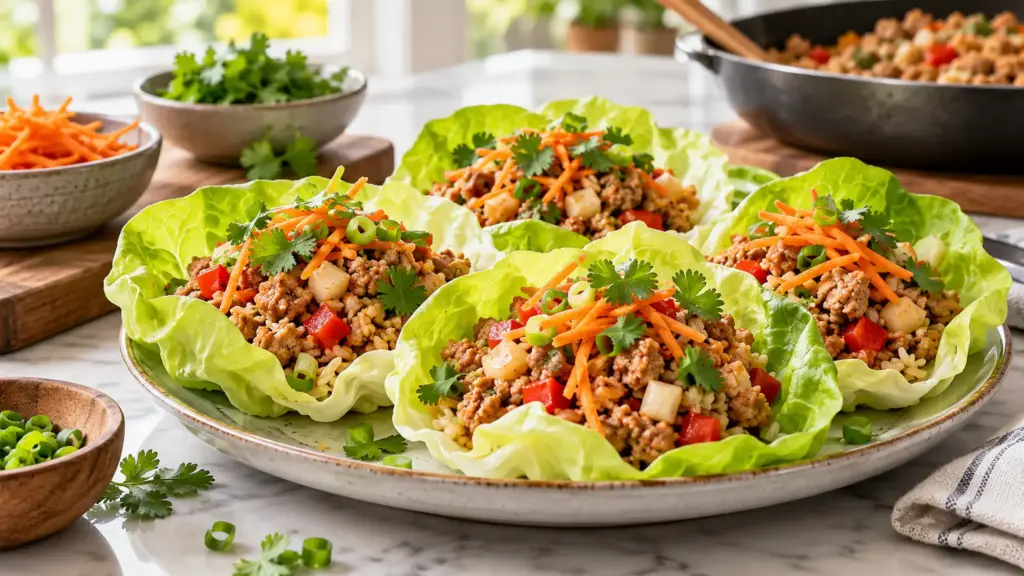
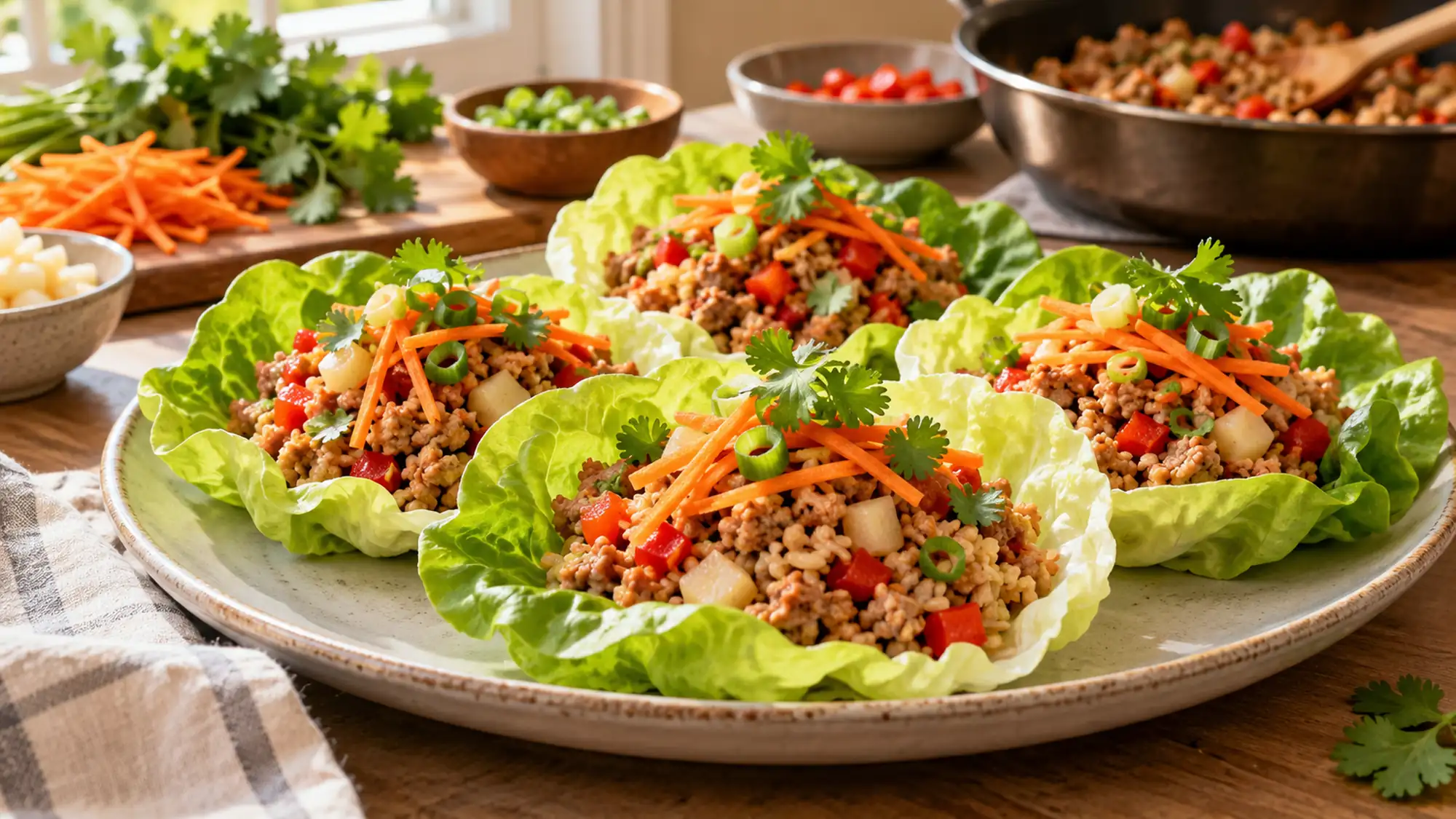
Lettuce wraps are most useful when the filling is flavorful enough to stand on its own and the leaves stay crisp enough to hold it. These turkey lettuce wraps combine warm ground turkey with rice, water chestnuts and diced pepper, then finish with fresh carrot and scallions.
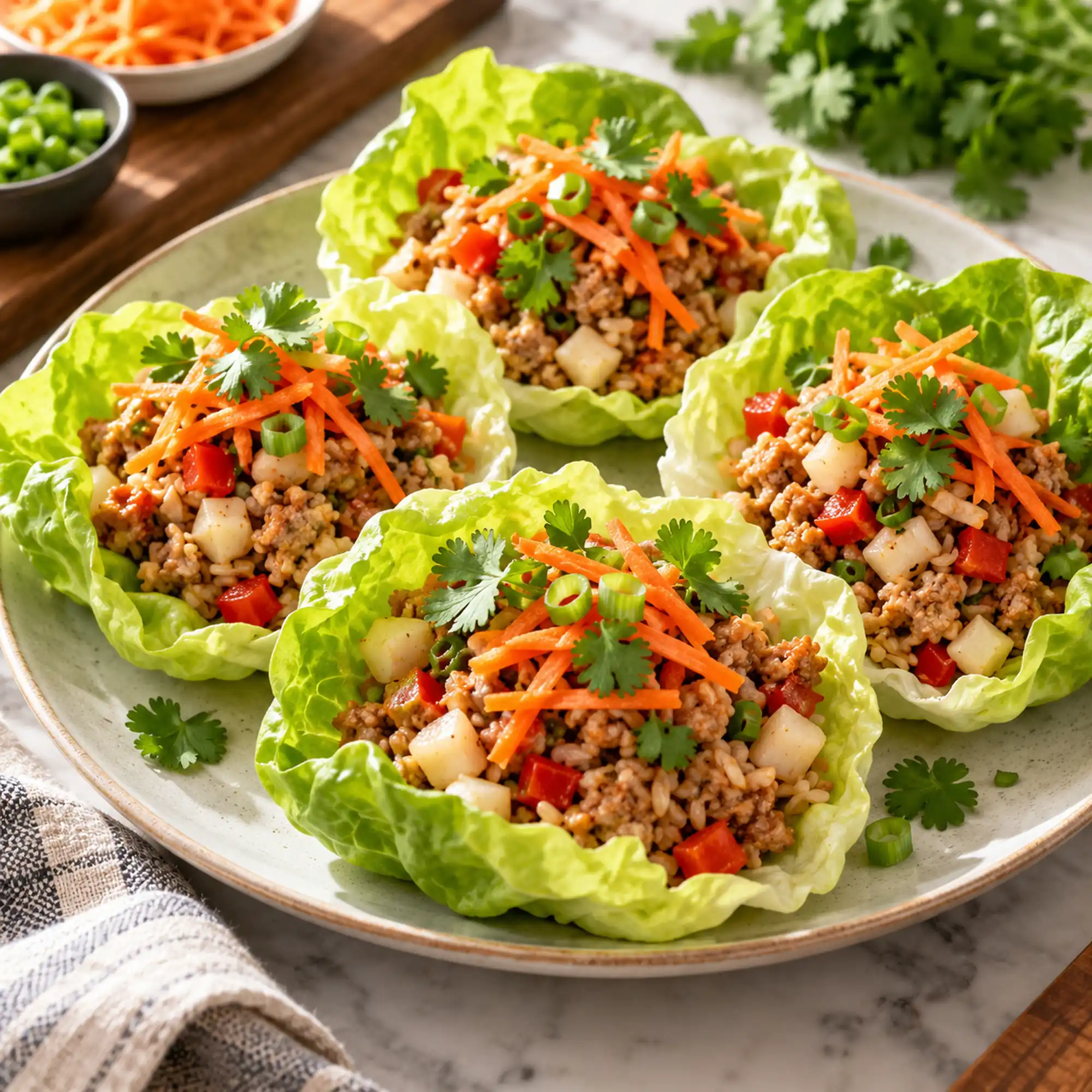
The filling uses already-cooked brown rice, a small amount of sesame oil and measured hoisin sauce. Cook the turkey safely, keep the vegetables distinct and spoon the mixture into dry lettuce leaves shortly before eating.
The approach is adapted from Foods101withDeronda’s turkey lettuce wraps, with standardized weights and four servings. I like leaving the carrot as a fresh topping rather than cooking every vegetable into the skillet; the cooler crunch makes the warm filling more interesting.
Serving Turkey Lettuce Wraps
Choose leaves that form a natural cup, then wash and dry them carefully. A wet leaf is slippery and can make the filling feel diluted. Use two smaller leaves together if one is too delicate, and avoid filling them so generously that they cannot be lifted comfortably.
Set the filling and toppings on the table separately when sharing. That keeps the lettuce from wilting while people decide how much they want. The estimate includes the cooked rice already mixed into the filling, along with the stated lettuce and toppings; extra rice would be additional.
- For easy handling: use several modest wraps rather than one overloaded leaf.
- For freshness: keep carrot, cilantro and scallions chilled until serving.
- For leftovers: store the filling separately so the leaves do not sit under warm sauce.
| Component | Helpful detail | Why it matters |
|---|---|---|
| Lettuce leaves | Wash and dry well | Better grip and crunch |
| Turkey filling | Serve hot, not watery | Easier to spoon |
| Fresh toppings | Add at the table | Preserves their texture |
Dry leaves, modest spoonfuls and fresh toppings make these wraps easier to eat.
Turkey Lettuce Wraps Variations
Ground turkey products vary in fat content, so the texture may change if you choose a much leaner package. A little stock helps loosen the filling, but it should not become a soup. Let excess liquid simmer away gently before moving the skillet to the table.
I would keep the water chestnuts when possible because their crunch survives heating better than many other vegetables. Drain them well and chop to a size that fits easily in a leaf. Large pieces can push the filling out when you fold the wrap.
- Less heat: omit the small pinch of red pepper flakes.
- Different herbs: use a preferred fresh herb if cilantro is not welcome.
- Different lettuce: tender butter lettuce is convenient, but sturdy leaves can also work.
- No extra rice: remember that the recipe already includes a measured cooked portion.
Adjust heat and herbs freely, but keep the filling moist rather than watery and the crunchy pieces small.
Nutrition and Safe Cooking
Turkey provides protein, and the vegetables contribute different textures and nutrients. Using lettuce instead of a bun does not make every version of a wrap automatically low in calories or sodium. Hoisin, stock and the turkey blend still affect the finished meal, so the whole ingredient list matters.
The card uses a specified turkey label and measured sauce amounts. Brown rice is counted at its cooked weight, not as dry grain, which would represent a much larger portion. Product labels and drained vegetable yields vary, so the figures remain useful estimates rather than exact values for every kitchen.
- Cook through: ground turkey needs the 165°F poultry temperature.
- Protect fresh leaves: keep lettuce and garnishes away from raw turkey utensils.
- Check sauces: hoisin and other packaged ingredients may contain soy or wheat.
- Cool promptly: refrigerate leftover filling in shallow containers and reheat thoroughly.
Measure cooked rice correctly and keep raw-poultry handling separate from ready-to-eat leaves.
Bottom Line
Turkey lettuce wraps are a practical way to put several textures on one plate without making the filling complicated. Keep the turkey well seasoned, the water chestnuts crisp and the leaves dry. The final assembly should feel relaxed: a spoonful of warm filling, a few fresh toppings and enough room to fold the leaf.
Warm filling and cool, crisp toppings are the contrast worth protecting.
Turkey Lettuce Wraps Recipe

Ingredients
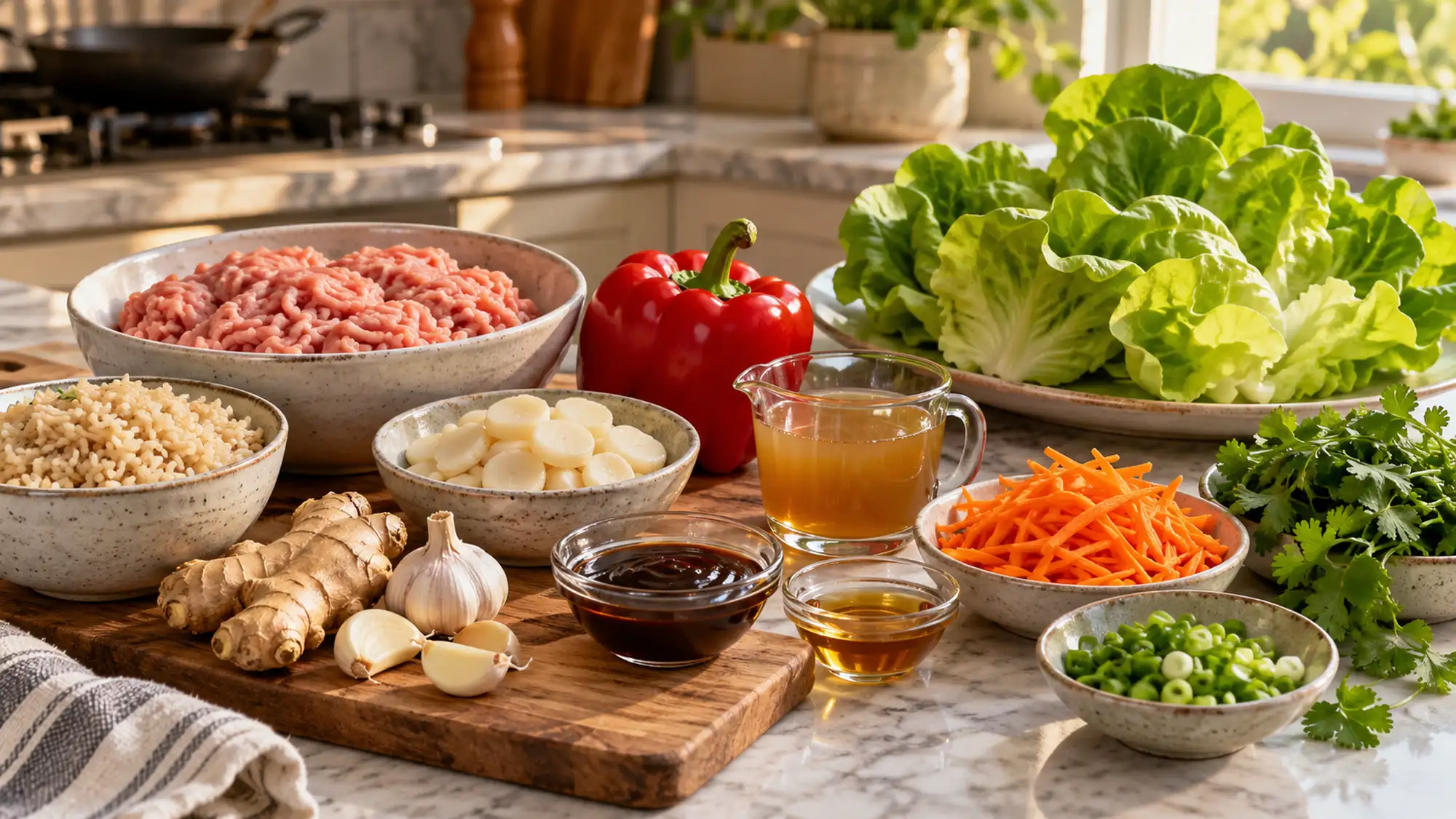
- 454 g 93% lean ground turkey
- 5 ml sesame oil
- 15 g fresh ginger minced
- 6 g garlic minced
- 150 g red bell pepper diced
- 120 g canned water chestnuts drained, diced
- 120 ml unsalted chicken stock
- 100 g cooked brown rice
- 30 g hoisin sauce
- 2 g fine salt
- 1 g ground cumin
- 1 g dried oregano
- 0.2 g red pepper flakes
- 15 g fresh cilantro
- 40 g scallions sliced
- 50 g carrot shredded
- 200 g butter lettuce leaves washed and dried
Equipment
- 1 Large skillet
- 1 Mixing bowl
- 1 Instant-read thermometer
Instructions
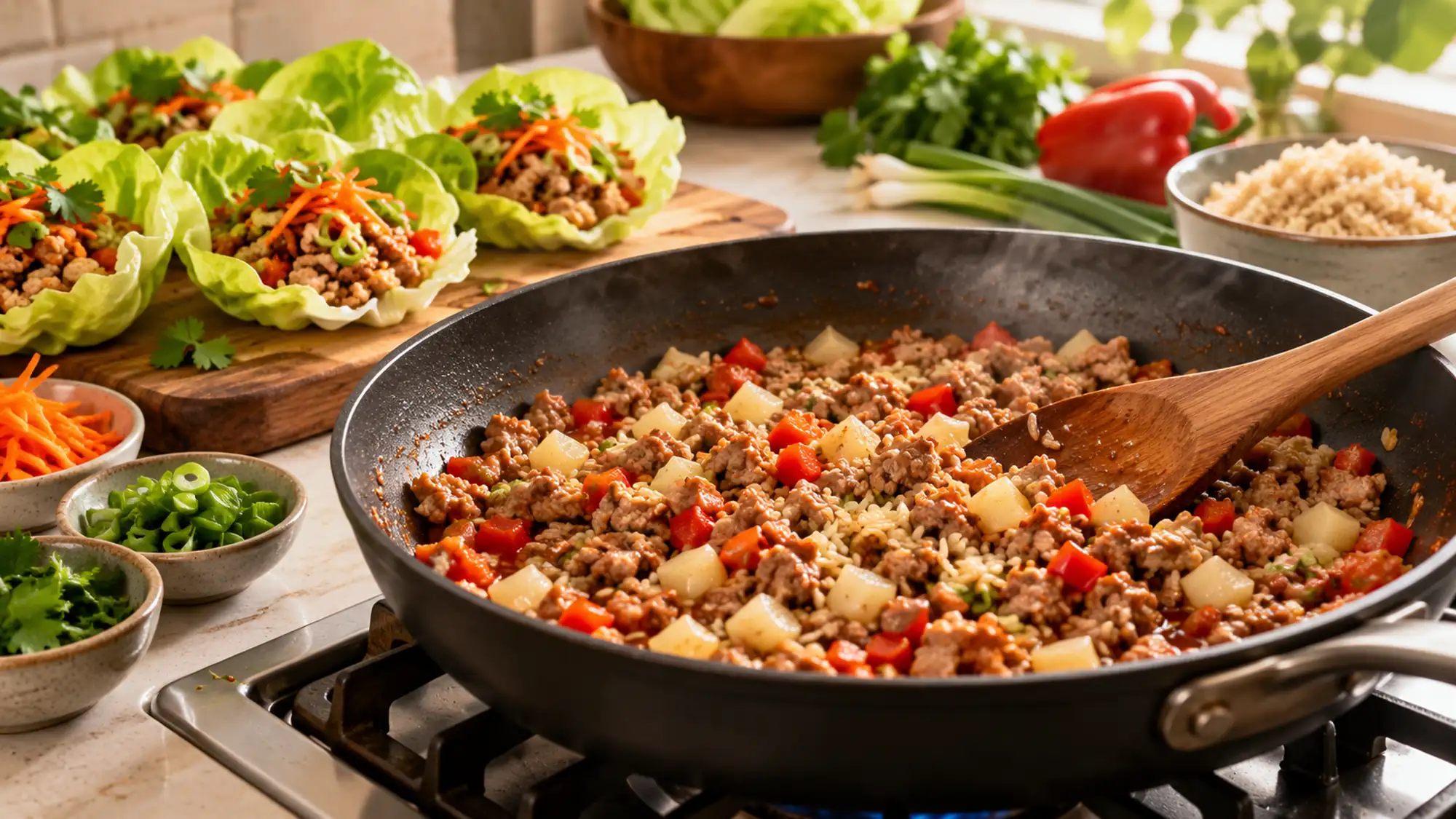
- Wash and dry lettuce leaves and keep ready-to-eat vegetables away from raw turkey. Heat sesame oil in a large skillet. Add ginger and garlic, stir briefly, then add turkey and break it into small pieces.
- Cook over medium heat, stirring, until turkey is no longer in large clumps. Add stock, already-cooked brown rice, salt, cumin, oregano and red pepper flakes. Stir in diced bell pepper, drained chopped water chestnuts and hoisin.
- Simmer briefly until pepper is tender-crisp and the filling is hot throughout, adding a splash of water only if needed. Confirm ground turkey reaches 165°F (74°C); color alone is not a reliable check.
- Divide filling among lettuce leaves and finish with cilantro, scallions and shredded carrot. Serve four portions. Store leftover filling separately from lettuce, cool promptly in shallow containers and reheat filling thoroughly before assembling fresh wraps.
Nutrition
Video
Notes
Tried this recipe?
Let us know how it turned out!Hi, I’m Laura, the voice behind Tastiva. I’ve always believed that eating well should feel enjoyable, comforting, and realistic—not like another complicated rule to follow. I love creating recipes that fit into everyday life, sharing simple nutrition ideas, and finding small ways to make meals feel a little better without losing the pleasure of good food.