
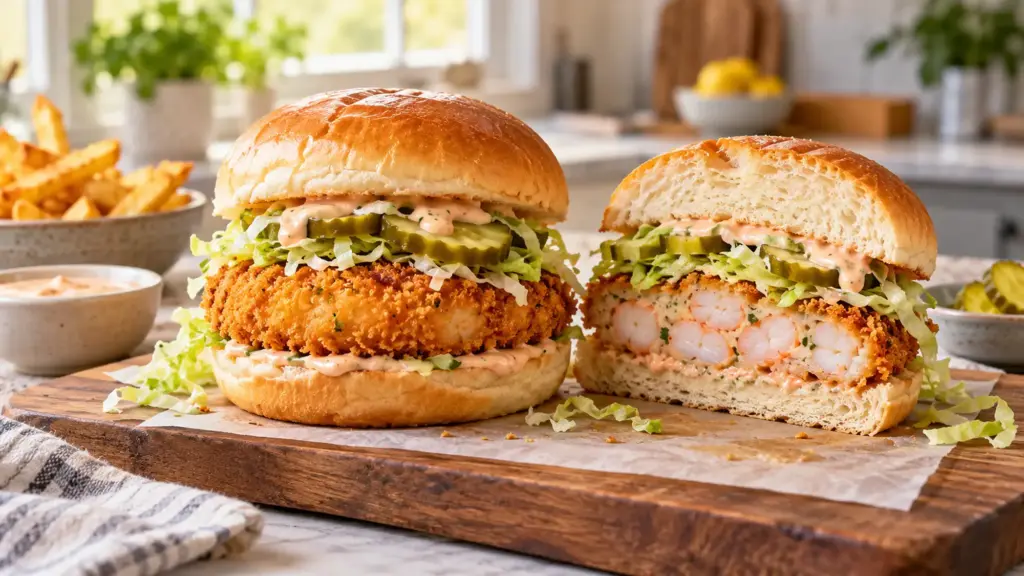
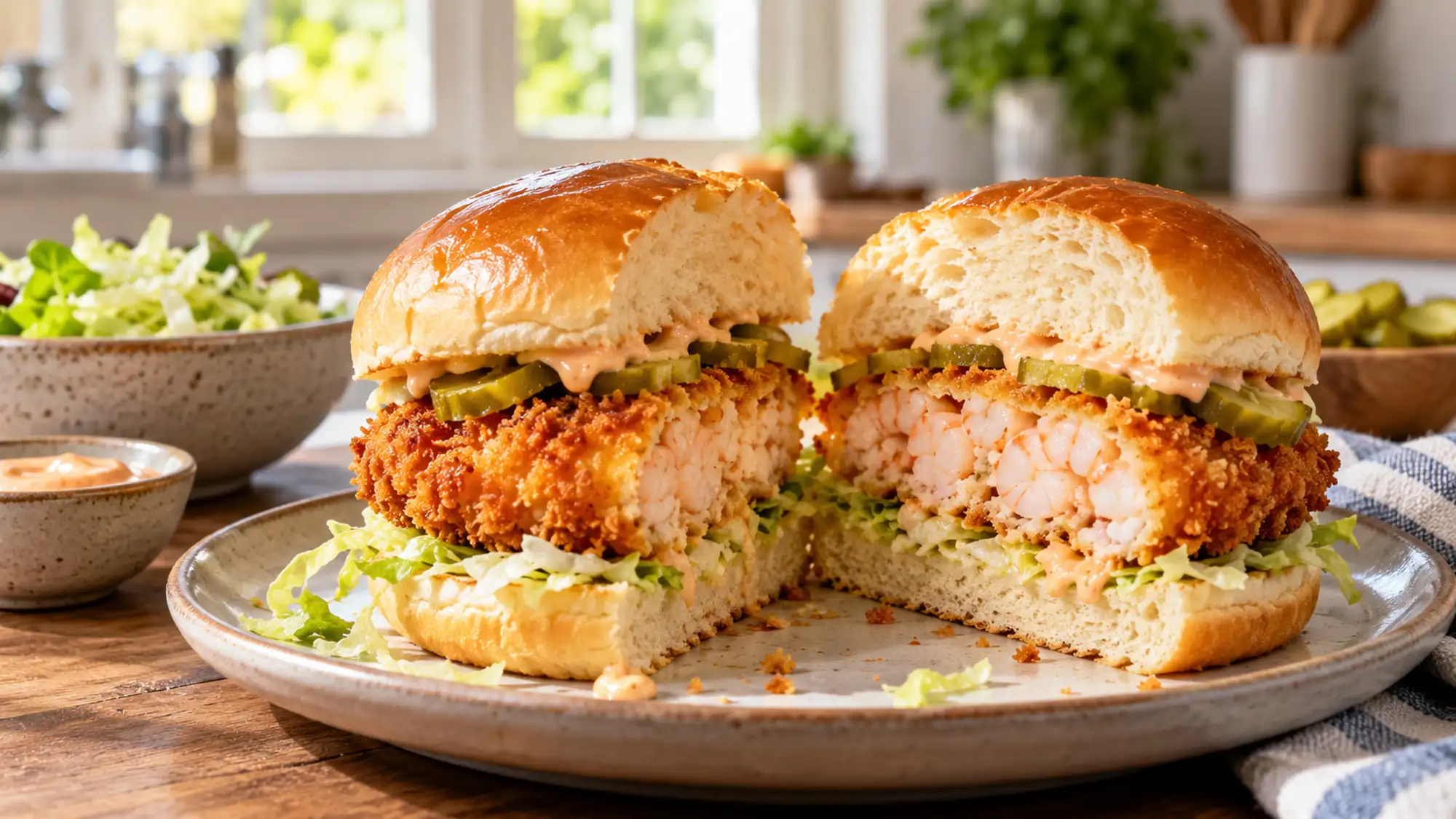
A shrimp burger should still feel like shrimp when you bite into it. These patties combine a finely processed portion that binds the mixture with larger chopped pieces for texture. The crisp coating adds contrast, but the center is not meant to resemble a smooth fish cake.
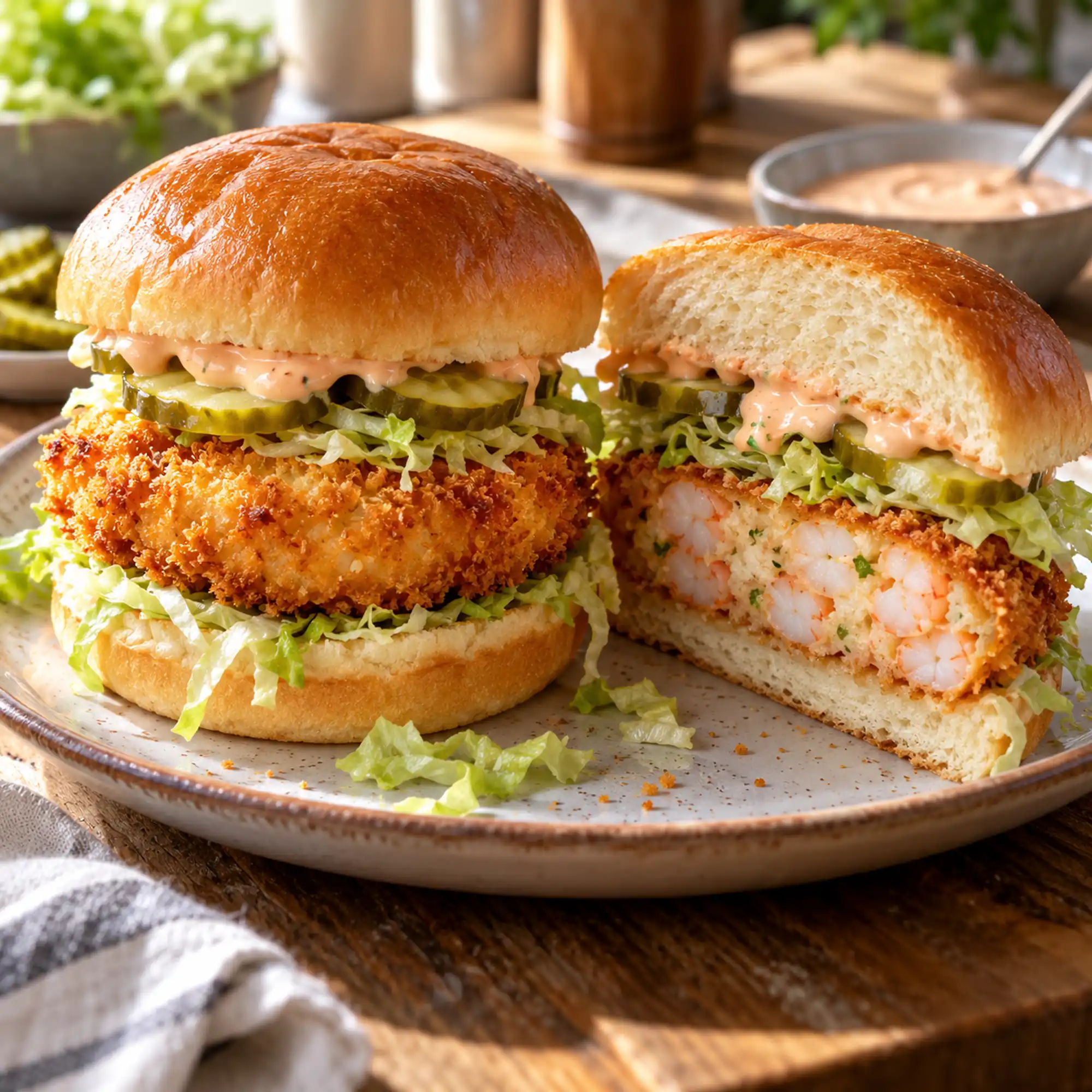
These shrimp burgers use a panko-coated patty, shallow frying and a simple chili mayonnaise. Start with shrimp weighed after peeling and draining, then keep the coating light enough that the seafood remains the main feature.
The method is adapted from RecipeTin Eats’ crispy prawn burgers. I like a soft bun here rather than a very crusty roll; it lets the crisp patty provide the crunch instead of making every bite a struggle through two firm layers.
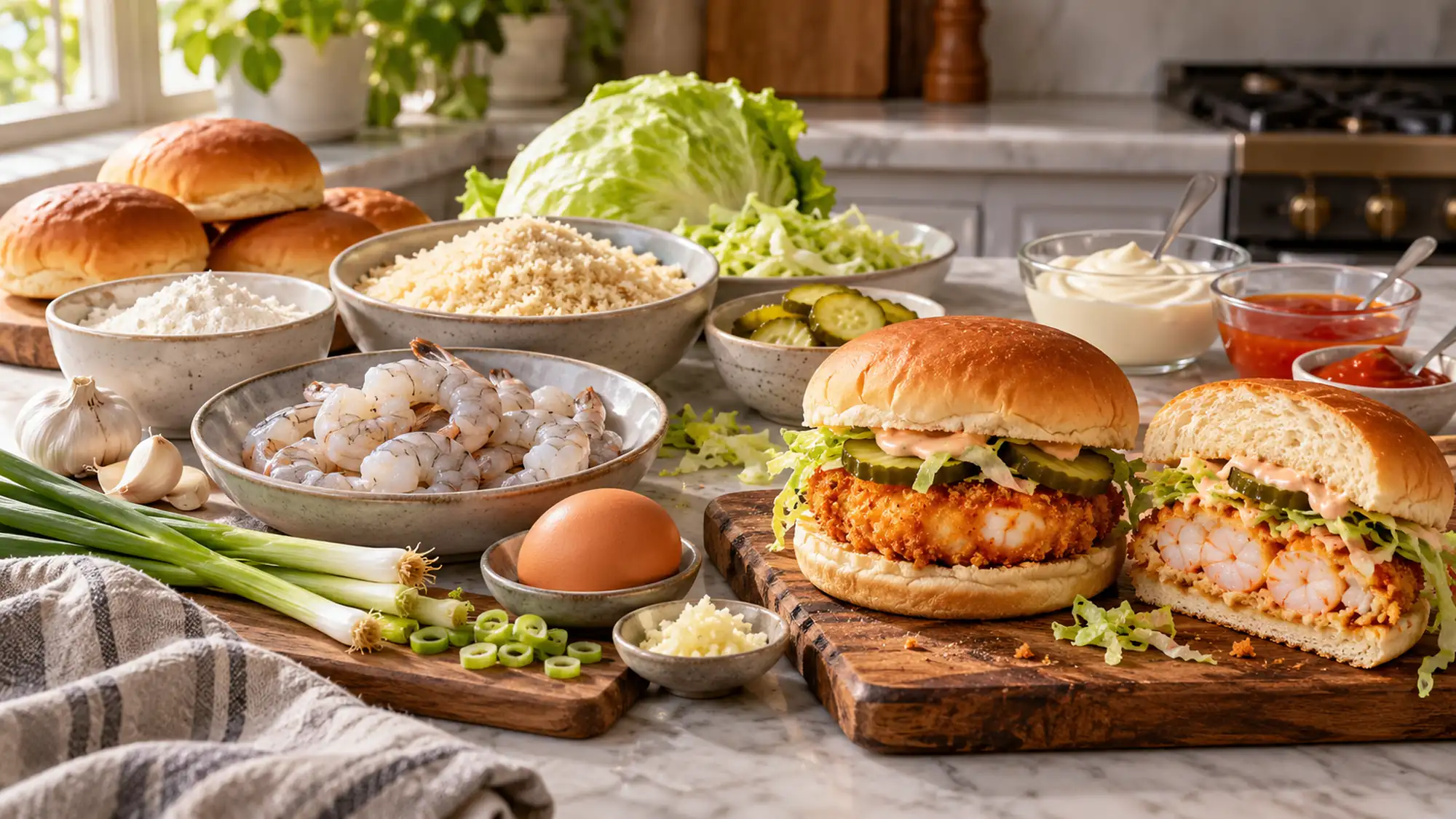
Serving Shrimp Burgers
Assemble the burgers close to serving time. A hot patty releases steam, and a long wait inside a closed bun can soften the coating. Dry lettuce well and drain the pickles so they add freshness without bringing a puddle of liquid to the bottom bun.
The card includes four buns, sauce, lettuce and pickles, but not fries or another side. A simple vegetable accompaniment can be enough. If you cut a burger in half, use a sharp knife and a gentle sawing motion rather than pressing down hard on the shrimp patty.
- For the bun: toast lightly if you want a little protection against sauce.
- For crunch: add dry shredded lettuce just before the patty.
- For sauce: spread a measured layer instead of pouring it over the entire burger.
| Detail | Why it matters | Useful approach |
|---|---|---|
| Dry shrimp | Helps the mixture bind | Pat after draining |
| Light coating | Keeps seafood noticeable | Shake off loose flour |
| Fresh assembly | Protects the crisp crust | Build just before eating |
Assemble promptly with dry lettuce and drained pickles so the coating keeps its contrast.
Shrimp Burgers Variations
The chopped and processed shrimp have different jobs. The paste helps hold the patty together, while the pieces keep the texture interesting. If everything is processed until smooth, the burger changes character; if nothing is processed, the mixture may be harder to shape securely.
I would chill the shaped patties while setting up the coating dishes rather than adding extra crumbs directly to the shrimp. That gives you a little more control without making the center bready. Handle each patty gently and use a wide spatula when moving it into the oil.
- Less heat: reduce Sriracha in the sauce while keeping the other ingredients measured.
- Different pickles: choose a crisp style and drain thoroughly.
- No bun: serve the patty with vegetables, but recognize that the card’s estimate includes the bun.
- Smaller batches: avoid crowding the skillet, which can lower the oil temperature.
Keep some shrimp chunky, chill for easier handling and avoid fixing every soft mixture with more breadcrumbs.
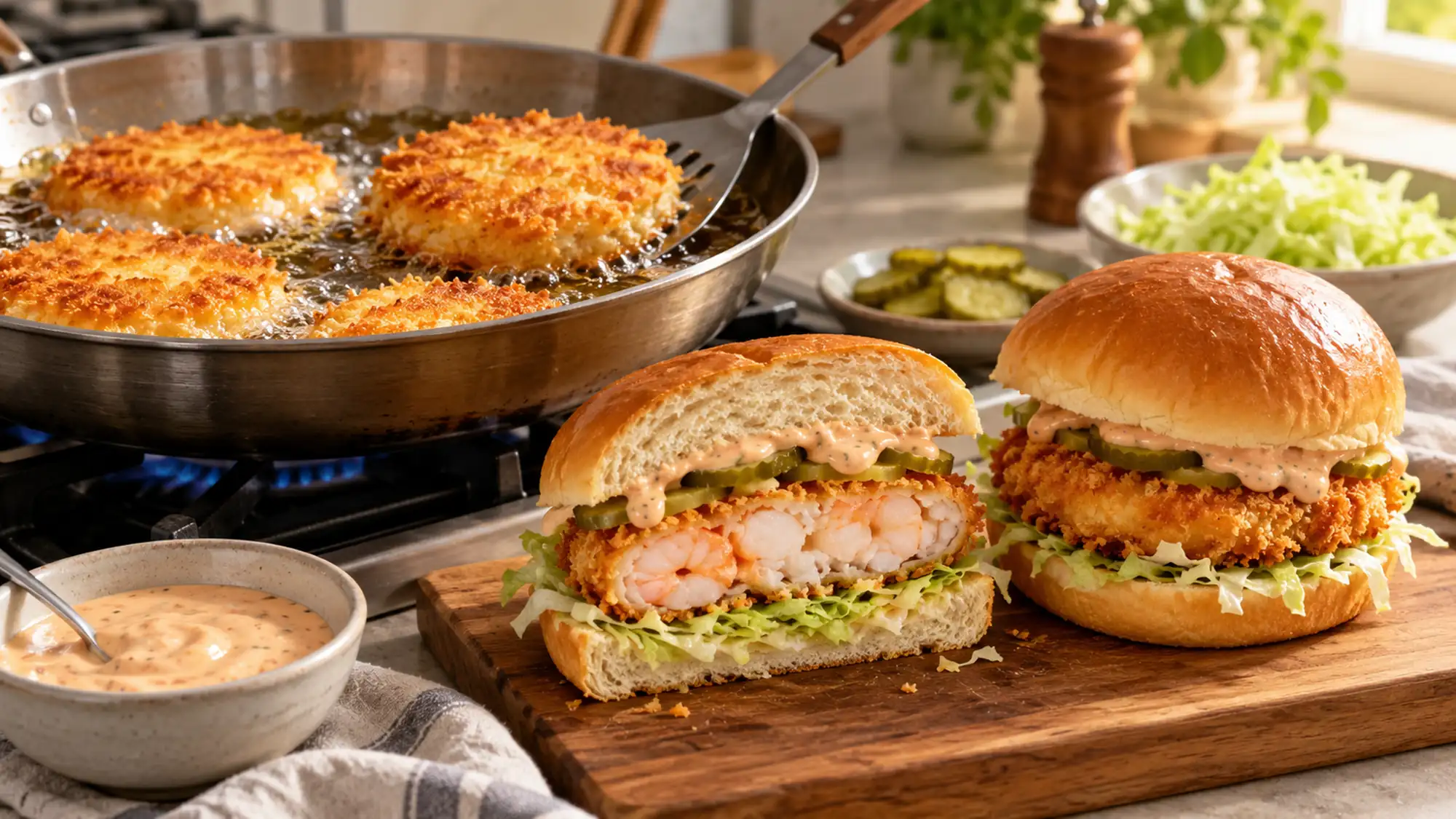
Nutrition and Safe Cooking
Shrimp contributes protein, but frying oil, breading, mayonnaise and the bun also belong in the meal’s overall picture. These are not automatically light burgers because the filling is seafood. The estimate is intended to support portion planning, not to turn a crispy sandwich into a health claim.
Oil and coating retention are especially variable in shallow frying. The card states assumed amounts for absorbed oil, egg, flour and panko rather than pretending the whole dredging bath is eaten. Your actual patties may retain more or less depending on size, handling and frying conditions.
- Check doneness: shrimp should be opaque, with the center reaching the 145°F seafood endpoint.
- Discard contaminated coating: do not reuse flour or egg that touched raw shrimp.
- Mind allergens: this version contains shellfish, egg and wheat.
- Handle hot oil carefully: lower patties away from you and never add wet shrimp directly to the pan.
Treat coating and oil figures as estimates, and use careful handling rather than appearance alone.
Bottom Line
Shrimp burgers work when the center stays chunky and the outside provides a clean, crisp contrast. Keep the sauce measured, the vegetables dry and the assembly quick. A soft bun and a few pickles are enough; piling on extra toppings can hide the seafood texture you worked to preserve.
A chunky shrimp center, a thin crisp coating and prompt serving make the biggest difference.
Shrimp Burgers Recipe

Ingredients
- 400 g raw peeled deveined shrimp prepared weight after thawing and draining
- 3 g garlic
- 25 g scallions
- 2 g fine salt
- 0.5 g black pepper
- 1 large egg beaten;25 g estimated retained
- 60 g all-purpose flour dredging bath;25 g estimated retained
- 90 g panko breadcrumbs coating bath;60 g estimated retained
- 120 ml sunflower oil shallow frying;40 g estimated absorbed
- 4 soft white burger buns 4 standard buns; nutrition uses the stated per-bun label
- 80 g shredded lettuce
- 60 g sliced pickled cucumbers drained
- 60 g mayonnaise
- 20 g sweet chili sauce
- 10 g sriracha
Equipment
- 1 Food processor
- 1 Shallow dishes
- 1 Heavy skillet
- 1 Instant-read thermometer
Instructions
- Pat the prepared shrimp very dry. Process half with garlic and salt into a sticky paste; chop the remaining half into small pieces. Mix both portions with scallions and pepper. Shape four equal patties and chill while preparing coating and sauce.
- Put flour, beaten egg and panko in separate dishes. Coat each patty lightly in flour, then egg, then panko, pressing gently so crumbs adhere. Discard any unused coating that contacted raw shrimp.
- Mix mayonnaise, sweet chili sauce and Sriracha. Heat the shallow frying oil in a heavy skillet over medium-high heat. Fry patties about 3–4 minutes per side, adjusting heat so the crumbs brown without burning, until the shrimp are opaque and the centers reach 145°F (63°C). Drain on a rack.
- Lightly toast buns if desired. Divide sauce, lettuce and drained pickles among four buns and add patties. Serve promptly. The estimate assumes 40 g oil absorbed across all patties; this is not a measured yield or an instruction to pour leftover oil onto the burgers.
Nutrition
Video
Notes
Tried this recipe?
Let us know how it turned out!Hi, I’m Laura, the voice behind Tastiva. I’ve always believed that eating well should feel enjoyable, comforting, and realistic—not like another complicated rule to follow. I love creating recipes that fit into everyday life, sharing simple nutrition ideas, and finding small ways to make meals feel a little better without losing the pleasure of good food.