
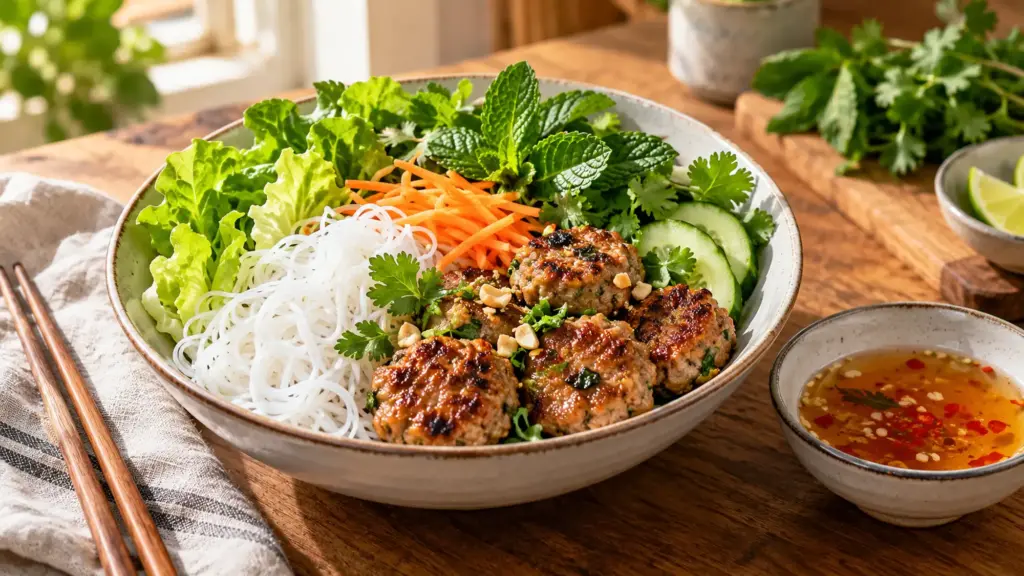
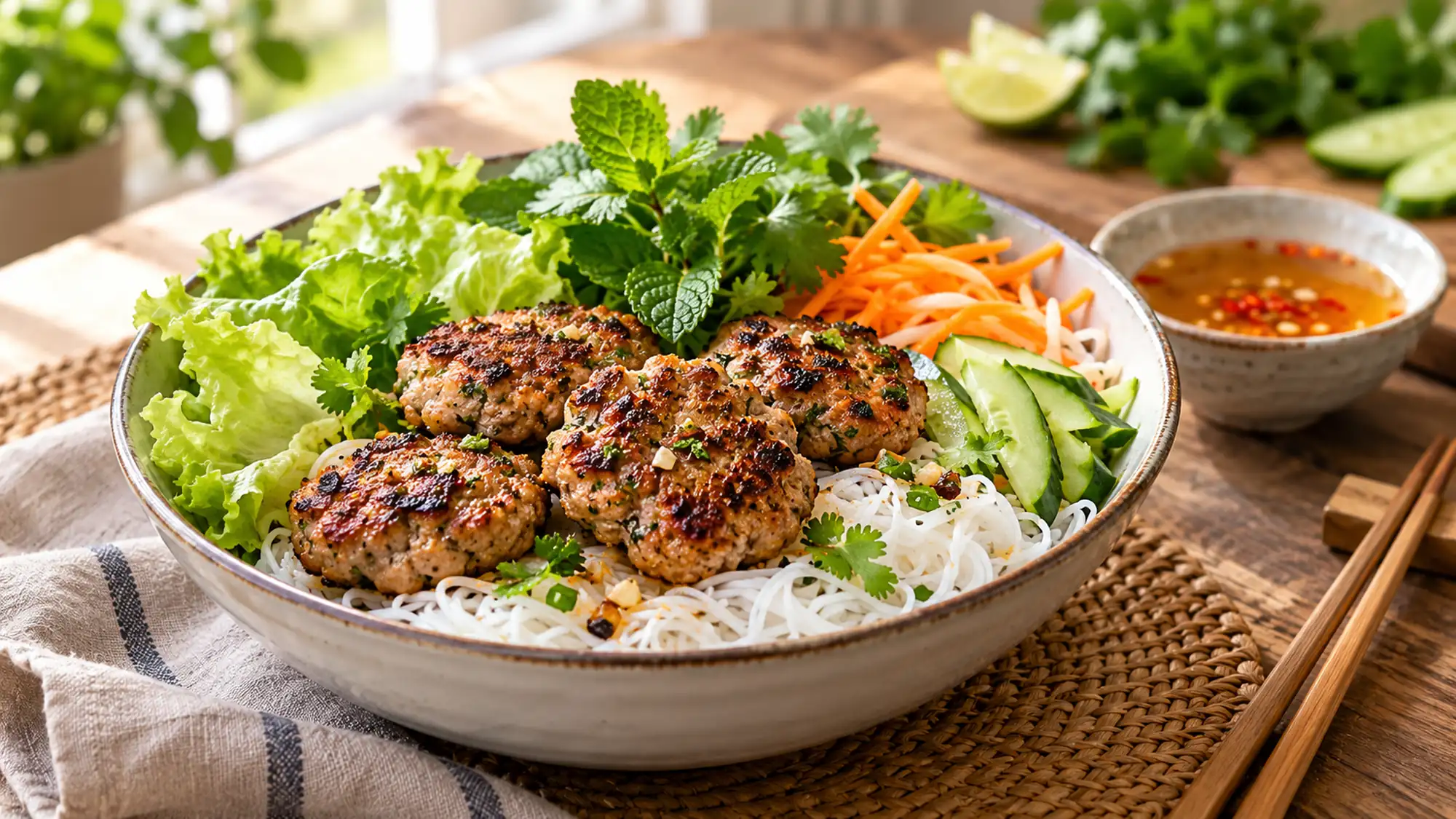
A bowl of noodles does not need a thick sauce to feel complete. Vietnamese pork meatballs bring browned edges and savory flavor, while lettuce, cucumber and herbs keep each bite different. The dipping sauce is served separately, so the bowl can stay lively rather than becoming uniformly soaked.
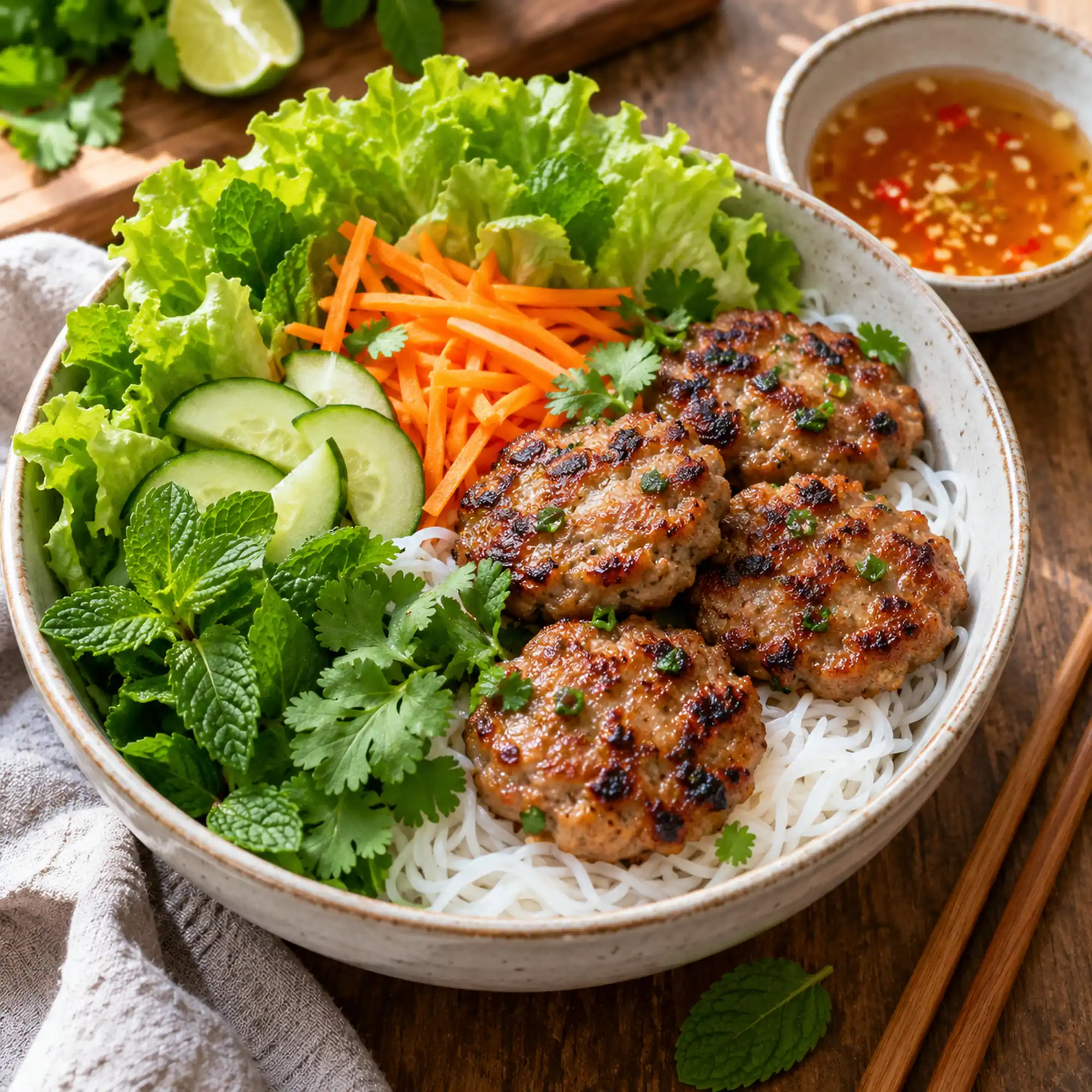
These bun-cha-inspired pork meatballs are shaped into small flattened patties and pan-seared, not baked as round balls. Serve them with rice vermicelli, measured vegetables and a sweet-tangy fish-sauce dressing that diners can add to taste.
The method is adapted from RecipeTin Eats’ bun cha, with standardized vegetable amounts. I like keeping the herbs in visible sprigs or roughly torn pieces rather than chopping everything into a fine green confetti; the fresh contrast is part of the point.
Serving Vietnamese Pork Meatballs
Build the bowls with room for each component rather than mixing everything in advance. A nest of noodles, a few lettuce leaves and a cluster of patties make it easy to choose the next bite. Put the sauce in small bowls or a shared jug with a clean spoon.
The sauce is intentionally a separate component, and you may not use all of it. The nutrition estimate counts the full prepared amount conservatively, along with the noodles and vegetables. If you prefer a drier bowl, spoon it on gradually instead of pouring it all over at once.
- For texture: keep cucumber slices and carrot shreds crisp and cold until serving.
- For herbs: offer mint and cilantro separately if preferences differ.
- For noodles: follow the package timing and drain well so extra water does not dilute the sauce.
| Component | Useful role | Serving tip |
|---|---|---|
| Pork patties | Savory browned center | Serve freshly cooked |
| Rice noodles | Mild base | Drain thoroughly |
| Herbs and vegetables | Fresh contrast | Keep separate until plating |
| Dipping sauce | Sweet, salty and tangy finish | Add gradually |
Keep noodles, herbs and sauce distinct until serving so each bite has a little contrast.
Vietnamese Pork Meatballs Variations
Small, flattened patties are easier to cook evenly than thick spheres. They also give more surface area for browning, which is useful with a mixture containing sugar. Watch the pan closely: a dark edge can develop before the middle is ready if the heat is too high.
I would cook one small test patty before shaping the rest when using a different brand of fish sauce. Taste only that fully cooked piece, never the raw mixture. Fish sauces vary in saltiness, and the separate dipping sauce adds another layer of seasoning.
- Less heat: reduce the fresh chili in the sauce without changing the patties.
- Different greens: use tender lettuce leaves that are easy to fold around a bite.
- No cilantro: use more mint or another preferred fresh herb, accepting a different flavor.
- A smaller skillet: cook in extra batches and keep finished patties warm briefly.
Shape small patties, manage the heat and taste only a safely cooked sample when adjusting seasoning.
Nutrition and Safe Cooking
Pork supplies protein, while noodles and the sweetened sauce also contribute to the meal. The fresh vegetables are useful parts of the bowl, but they do not cancel out salt or sugar elsewhere. A balanced description is more helpful than calling the dish automatically light or healthy.
The estimate uses a specified ground-pork label and includes all measured sauce, even though some often remains. Actual portions depend on how much dressing reaches each bowl. The stated vegetables and noodles are included, so do not add them a second time when using the card’s estimate. Fish sauce makes this full-sauce estimate high in sodium, so use the dressing thoughtfully.
- Cook the center: ground pork needs the 160°F endpoint.
- Keep sauce clean: never let a spoon touching raw pork return to the serving sauce.
- Check allergens: fish sauce contains fish, and brand ingredients can vary.
- Store separately: refrigerate patties and noodles promptly, keeping herbs dry and chilled.
Use a thermometer for the pork and remember that the full-sauce estimate may exceed what you actually serve.
Bottom Line
Vietnamese pork meatballs are most appealing when the bowl stays varied: warm browned pork, soft noodles, crisp vegetables and fresh herbs. Keep the patties small and the sauce adjustable. You do not need an elaborate garnish or another rich topping when those simple contrasts are already doing the work.
A few well-browned patties and a fresh, uncluttered bowl make a satisfying combination.
Vietnamese Pork Meatballs Recipe

Ingredients
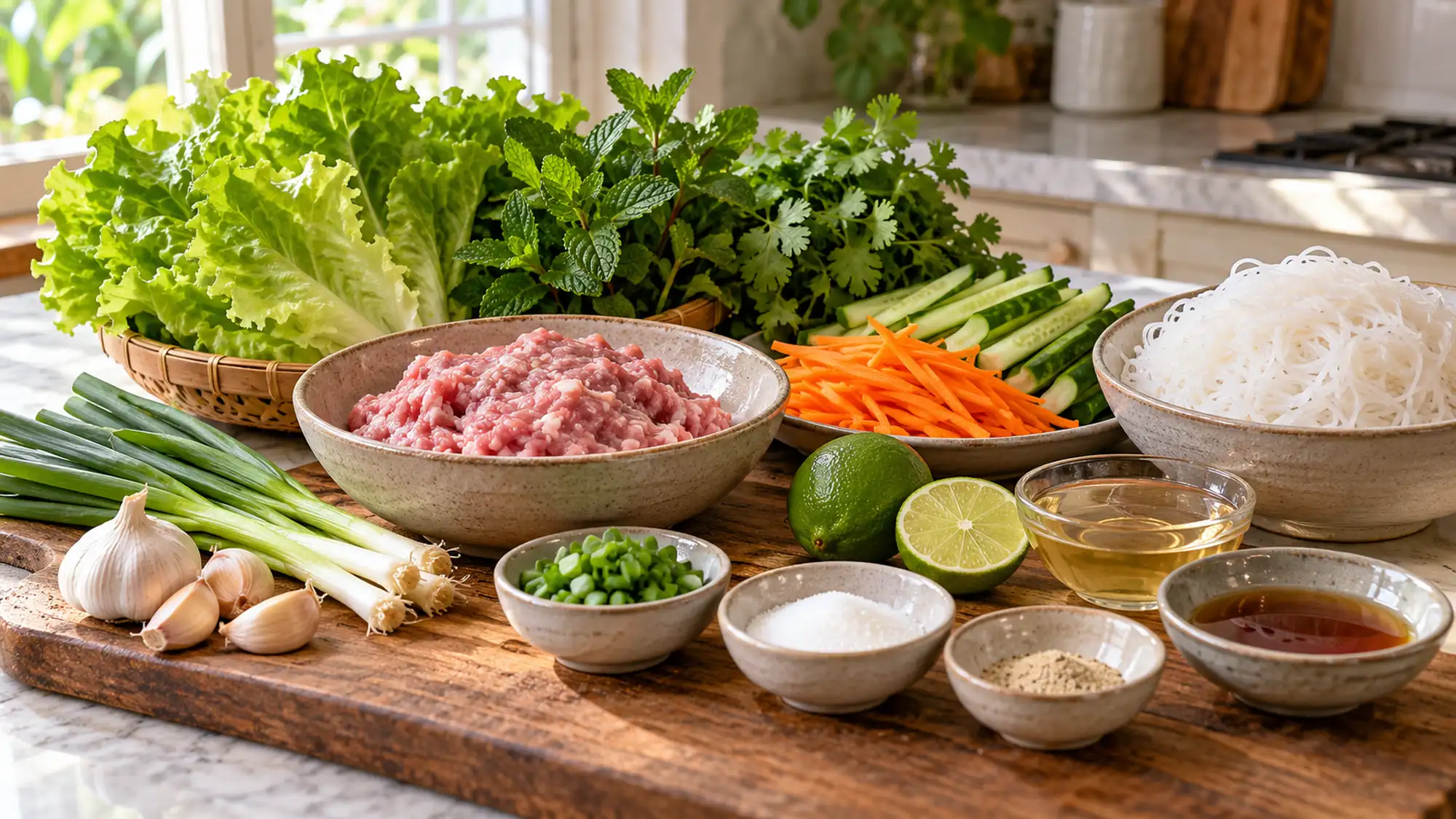
- 600 g 85% lean ground pork
- 120 ml fish sauce 30 ml meat, 90 ml dressing
- 88 g white sugar 16 g meat, 72 g dressing
- 60 g scallions finely sliced
- 24 g garlic 6 g meat, 18 g dressing
- 1 g white pepper
- 1 g fine salt
- 45 ml sunflower oil
- 60 ml unseasoned rice vinegar
- 60 ml lime juice
- 160 ml water
- 5 g red chili seeded, minced
- 200 g dry rice vermicelli
- 80 g lettuce
- 150 g cucumber sliced
- 100 g carrot shredded
- 10 g fresh mint
- 10 g fresh cilantro
Equipment
- 1 Mixing bowls
- 1 Large skillet
- 1 Instant-read thermometer
Instructions
- Mix the sauce: 90 ml fish sauce, 72 g sugar, rice vinegar, lime juice, water, chili and 18 g garlic. Stir until sugar dissolves and let stand at least 10 minutes. Keep separate from raw pork.
- Mix pork with remaining 30 ml fish sauce, 16 g sugar, scallions, 6 g garlic, white pepper and salt. Shape into 12 small, flattened patties rather than round balls. Prepare rice vermicelli according to its package, drain and divide among four bowls.
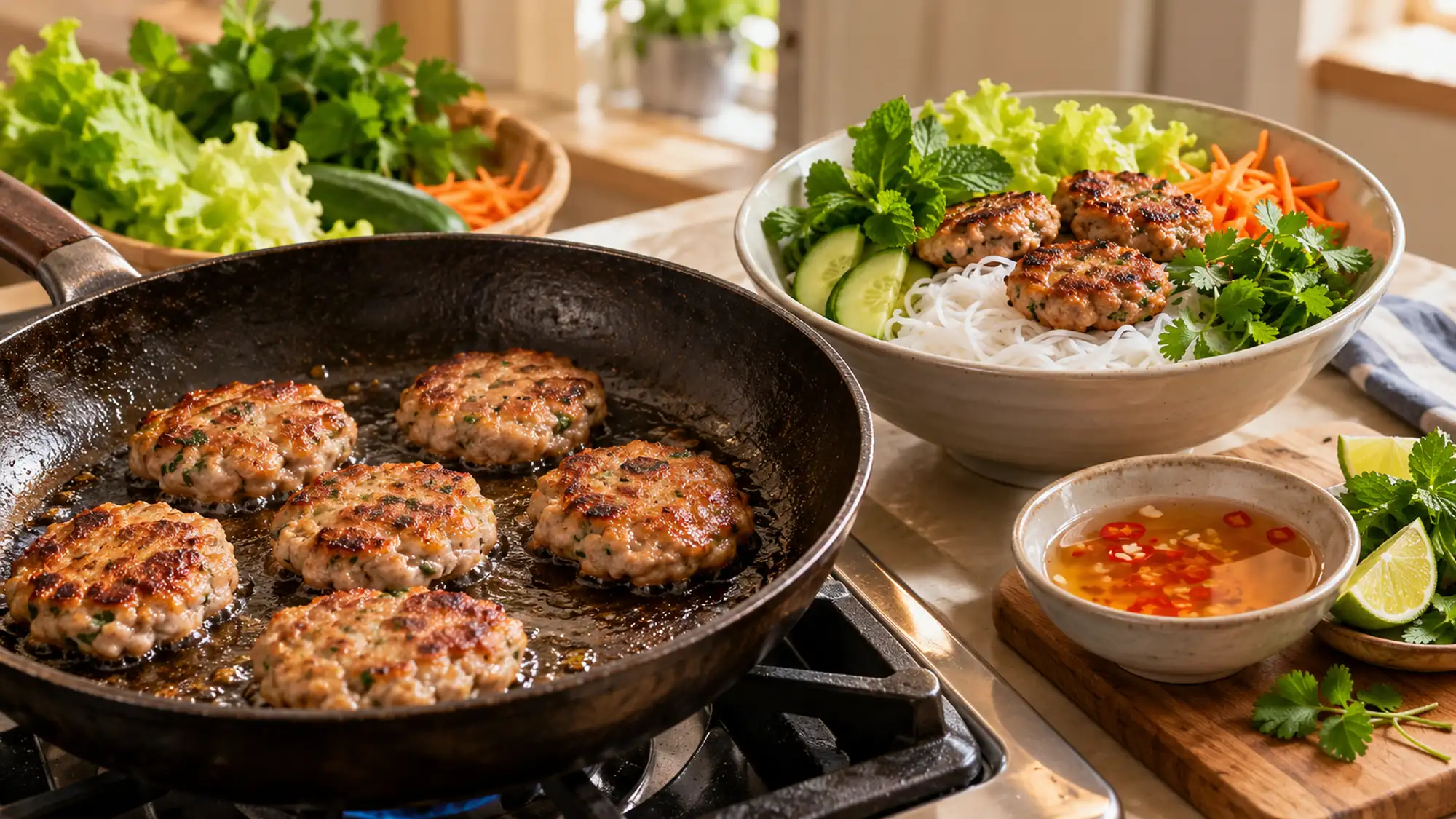
- Heat sunflower oil in a large skillet and pan-sear patties in batches about 2–3 minutes per side, adjusting heat to prevent sugary edges burning. Cook centers to 160°F (71°C); clean the thermometer between checks.
- Arrange lettuce, cucumber, carrot, mint and cilantro beside the noodles. Add cooked patties and serve sauce separately so diners can spoon it over their bowls. The estimate includes all prepared sauce, noodles and vegetables; actual sauce consumption may be lower.
Nutrition
Video
Notes
Tried this recipe?
Let us know how it turned out!Hi, I’m Laura, the voice behind Tastiva. I’ve always believed that eating well should feel enjoyable, comforting, and realistic—not like another complicated rule to follow. I love creating recipes that fit into everyday life, sharing simple nutrition ideas, and finding small ways to make meals feel a little better without losing the pleasure of good food.