
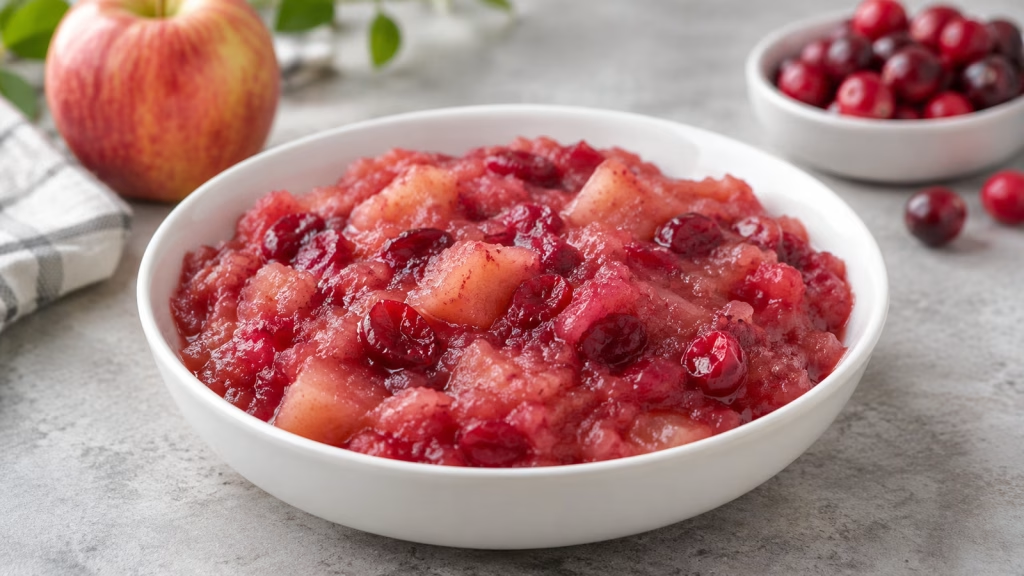
Plain applesauce can be comforting, but a handful of cranberries gives it a different job on the table. This cranberry applesauce is tart enough to sit beside a savory meal and soft enough to spoon over breakfast. Simmer peeled apples with the berries, cinnamon and a little brown sugar, then mash only as much as you like.
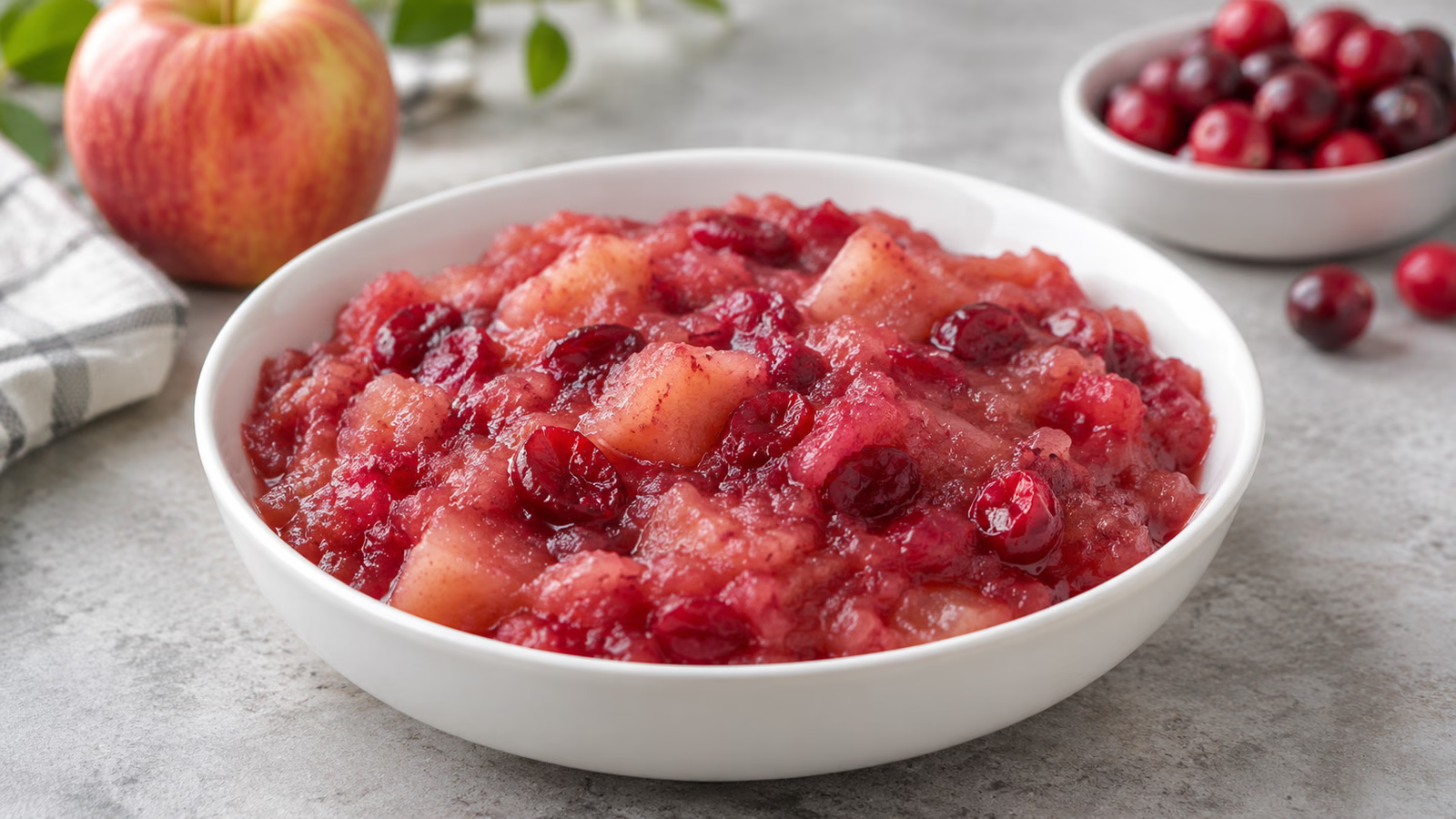
Let the apples become completely tender before mashing. The cranberries add tartness and color; you decide whether the finished sauce stays rustic or turns smooth.
Let the apples set the sweetness
I would choose apples you enjoy eating rather than shopping for the most expensive variety. Their sweetness matters because cranberries are assertively tart. A mixture of apples is perfectly reasonable, although the pieces may soften at different rates.
- Weigh before preparing: the recipe starts with 3½ pounds of apples. Peeling and removing cores reduces that weight; do not replace it with 3½ pounds of prepared pieces without expecting a larger batch.
- Cut fairly evenly: rough chunks are fine, but avoid mixing tiny dice with very large wedges. Similar sizes are easier to judge as they soften.
- Use fresh or frozen berries: both are suitable for this stovetop sauce. Pick through fresh cranberries and discard damaged fruit before rinsing.
- Keep the cinnamon modest: it should sit behind the fruit rather than turning the entire saucepan into spice paste.
Brown sugar adds sweetness and a slight molasses note, but it is still added sugar. The card’s nutrition includes the specified amount. If you change the sweetener or quantity, the flavor and estimated nutrition change too; there is no need to dress that up as a health claim.
A covered simmer does the quiet work
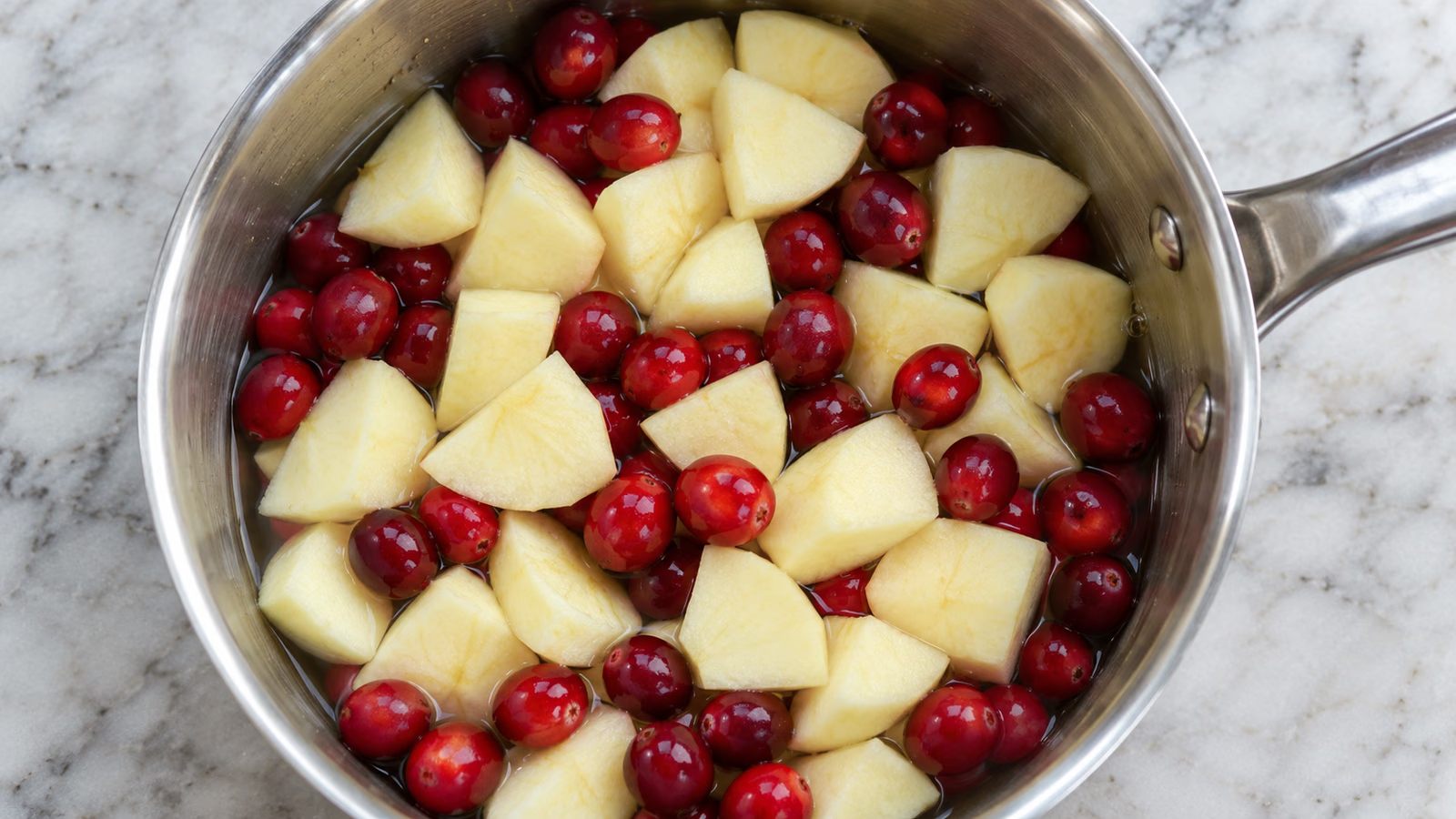
Use a large saucepan with enough headroom to stir without sending red juice over the edge. Bring the mixture up to a boil, then lower the heat to a gentle simmer and cover it. The goal is soft fruit, not rapidly evaporating every bit of water.
- Stir occasionally: move the fruit away from the bottom and check that it is not sticking. A thicker pot gives you more margin, but it still needs attention.
- Test an apple piece: press it with a fork against the side of the saucepan. If the center resists, give it more time before mashing.
- Watch the liquid: fruit releases water as it cooks. Do not judge the final thickness by the first few minutes in the pot.
- Keep the heat gentle: a vigorous boil can make a sticky mess without softening the middle of a large apple chunk any faster.
I like the idea of a sauce that does not demand constant stirring, but unattended is a different promise. Stay nearby and check the bottom, especially near the end when the fruit has broken down and the mixture is thicker.
Choose a texture that suits the meal
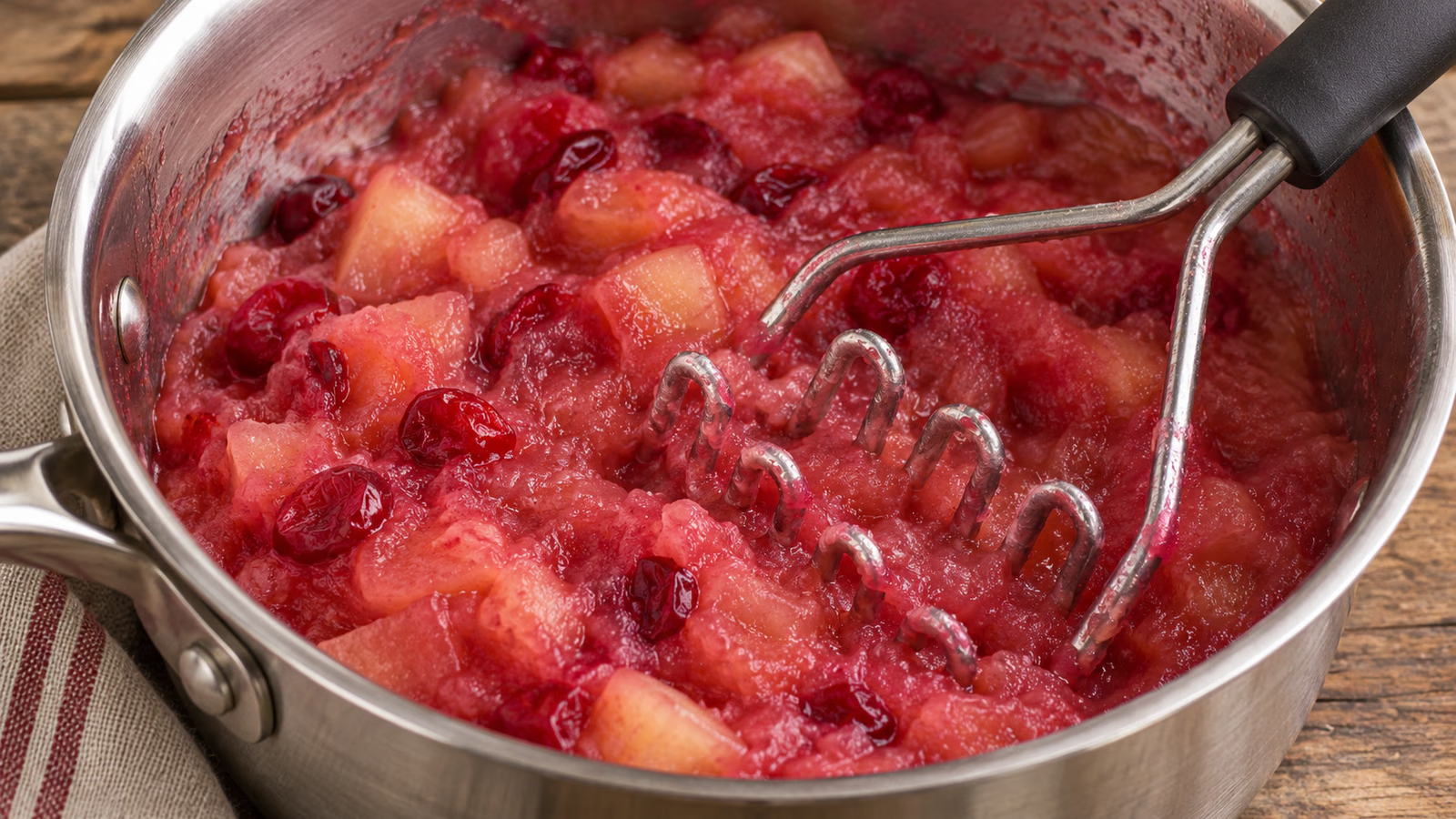
A potato masher gives you control without another appliance to wash. Stop early for soft apple pieces surrounded by pink sauce, or keep going for a more even texture. Cranberry skins remain visible in a rustic version; they are part of the fruit, not a sign that something went wrong.
- For a savory plate: leave some small apple pieces so the sauce feels like a side rather than a drinkable purée.
- For oatmeal or yogurt: mash more thoroughly so it spreads through a spoonful without a large chunk taking over.
- For a smoother finish: use a suitable blender only according to its hot-liquid instructions. Cool as directed, avoid overfilling and never trap steam in a sealed unsuitable container.
If the sauce seems loose while warm, let a spoonful cool before changing it. Do not keep cooking blindly toward a stiff cranberry jelly: this is applesauce, with a softer, spoonable character. The color varies with the apples and the way the berries break down.
Serve beyond the holiday plate
This sauce can accompany roast meat, a vegetable dinner or a sandwich, but I would also save a portion for breakfast. Pairing it with plain yogurt lets you adjust each spoonful instead of sweetening a whole container. Crisp toast or a handful of suitable nuts alongside adds a different texture.
- Portion before storing: shallow containers cool more efficiently than a single deep pot. Refrigerate within two hours, or one hour above 90°F (32°C).
- Use refrigerated portions promptly: follow USDA’s three-to-four-day leftover window, or freeze portions you will not eat in time.
- Do not treat it as canned food: this is a refrigerator recipe. A clean jar and a closed lid do not make it shelf-stable.
The half-cup serving in the card is a reference, not a rule about appetite. A spoonful beside dinner and a full portion at breakfast are different amounts. Nutrition follows the published Food Hero recipe, with normal variation from apple size, variety and the final cooked yield.
Cranberry Applesauce Recipe

Ingredients
- 3 1/2 lb apples peeled, cored and roughly chopped; about 8–9 medium
- 1 cup water
- 1 1/2 cups cranberries fresh or frozen
- 1/2 teaspoon ground cinnamon
- 1/2 teaspoon salt
- 1/3 cup packed brown sugar
- 2 tablespoons lemon juice optional
Equipment
- 1 Large saucepan with lid
- 1 potato masher
- 1 vegetable peeler
Instructions
- Wash your hands. Put the prepared apples, water, cranberries, cinnamon, salt, sugar and optional lemon juice in a large saucepan.
- Bring to a boil, reduce to a gentle simmer and cover. Cook for 20–30 minutes, stirring occasionally, until the apple pieces crush easily.
- Remove from the heat and cool slightly. Mash with a potato masher or fork to your preferred texture. Serve warm or chilled. Refrigerate leftovers promptly within 2 hours.
Nutrition
Notes
Tried this recipe?
Let us know how it turned out!Sources
- MedlinePlus and Food Hero: cranberry applesauce quantities and nutrition
- USDA FSIS: safe leftover handling
Hi, I’m Laura, the voice behind Tastiva. I’ve always believed that eating well should feel enjoyable, comforting, and realistic—not like another complicated rule to follow. I love creating recipes that fit into everyday life, sharing simple nutrition ideas, and finding small ways to make meals feel a little better without losing the pleasure of good food.