
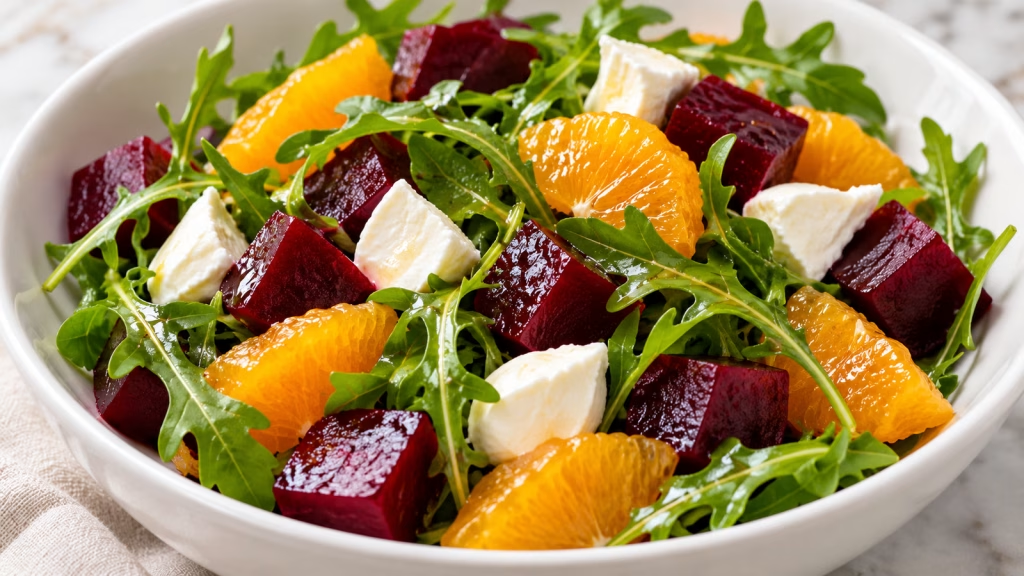
Beets can make a salad feel earthy and sweet before the dressing even arrives. In this beet orange salad, juicy citrus and peppery arugula provide the contrast, while fresh mozzarella softens the sharper edges. Start with cooked, cooled beets and the entire assembly takes about fifteen minutes; raw beets need a separate cooking step.
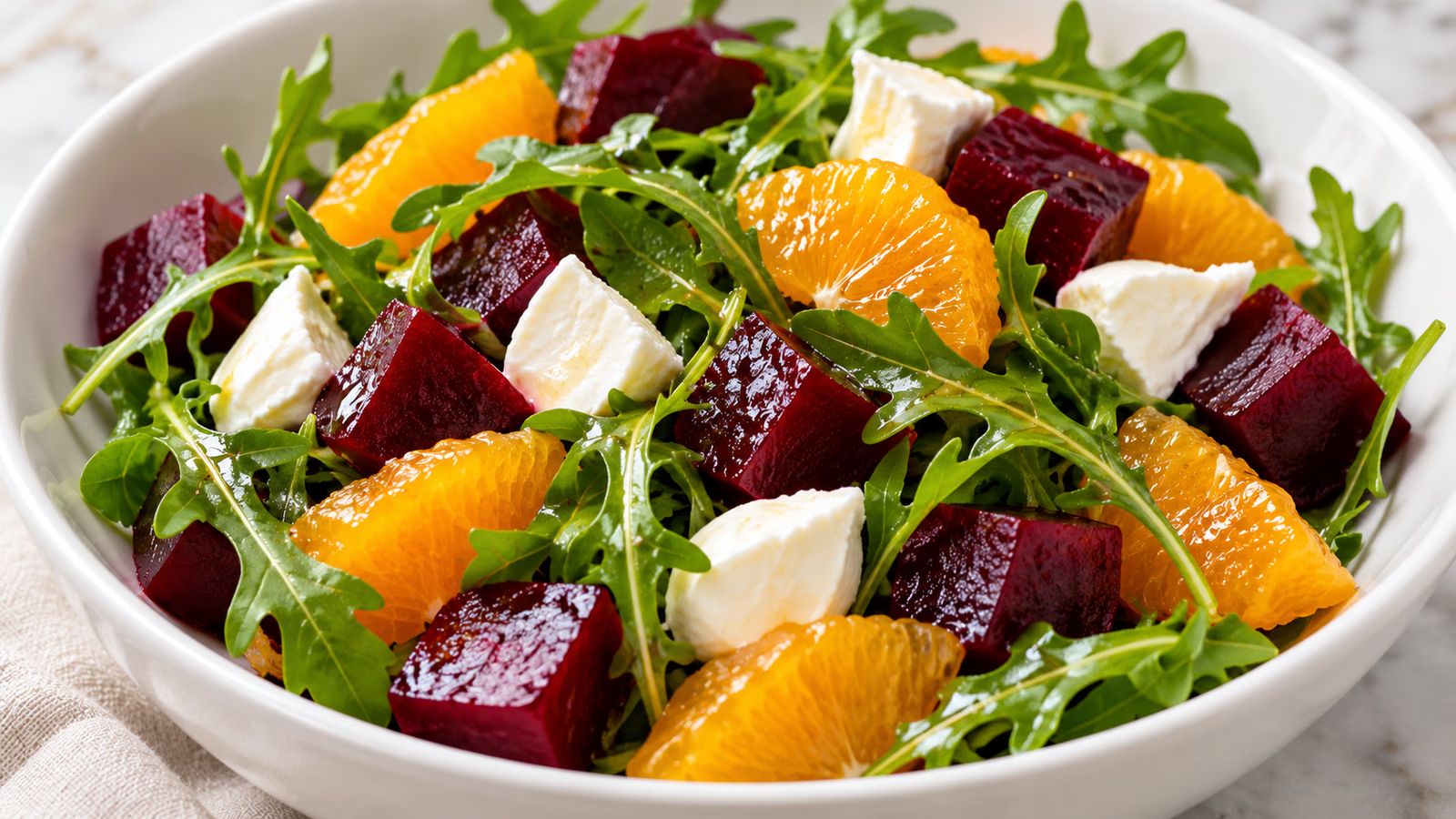
Keep the cooked beets cool, the greens dry and the dressing separate until serving. Those small choices make a bright salad instead of a soggy bowl.
Start with ready-to-eat beets
I would happily use plain packaged cooked beets here. This is an assembly recipe, not a test of how many pans you can wash before lunch. Check that the package contains cooked beets rather than raw roots or sweet pickled slices, which have a different flavor.
- Plain cooked beets: drain excess liquid and cut into bite-size pieces. Very wet beets dilute the dressing and color the greens more quickly.
- Home-cooked beets: cool them before mixing with arugula. Warm vegetables soften tender leaves, even when you are not trying to wilt a salad.
- Pickled beets: their vinegar and sugar change the balance. They are not a neutral swap for the plain beets in this recipe.
- Red or golden: either can work, but red beets produce the dramatic color and will tint the cheese when tossed.
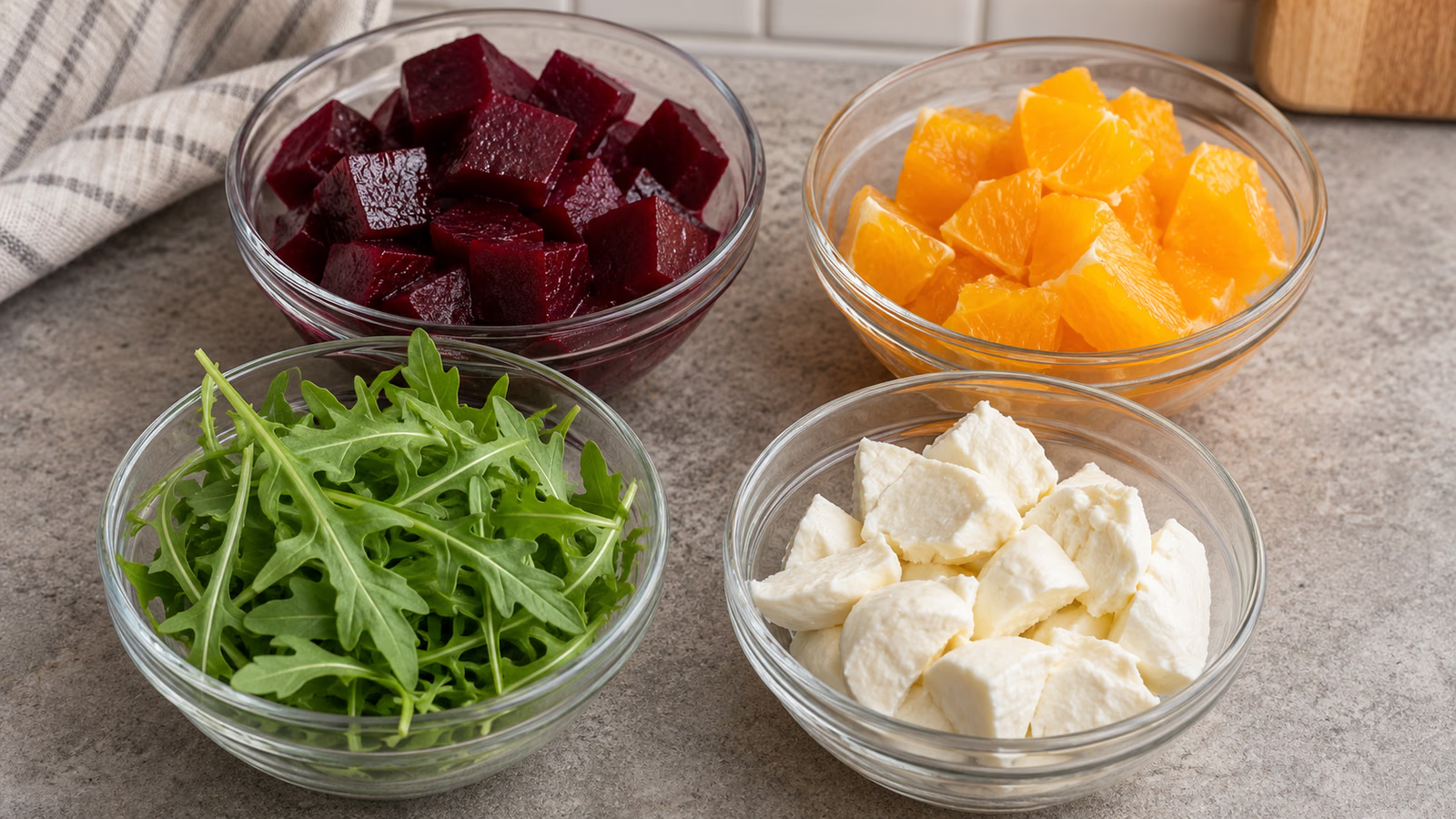
Make the pieces small enough that a forkful can include beet, orange and a leaf without a balancing act. They do not have to be identical cubes. A clean chopping board also makes it easier to keep beet juice away from the orange until you are ready to combine everything.
Choose citrus and greens that bring contrast
A juicy navel or Cara Cara orange brings sweetness and acidity in the same bite. Remove the peel, the thick white pith and any seeds, then cut the flesh into manageable pieces. You do not need restaurant-style citrus segments to make a useful everyday salad.
- Arugula: its peppery character stands up to the sweet beet and orange. Dry it well after any washing required by its packaging.
- Fresh mozzarella: drain and cut or tear it into small pieces. Its mild flavor differs from salty, crumbly feta.
- Feta or goat cheese: these give a tangier variation, but change both sodium and the overall flavor. They are not included in the card’s nutrition.
- Orange juice on the board: avoid pouring a large puddle into the bowl. The fruit already contributes juice as you toss.
I prefer to keep this combination short rather than adding every possible salad topping. The orange, beet and mozzarella already give three distinct textures. If you add nuts or another ingredient, consider allergies and remember that the nutrition estimate no longer describes the complete bowl.
Whisk the dressing before the salad meets it
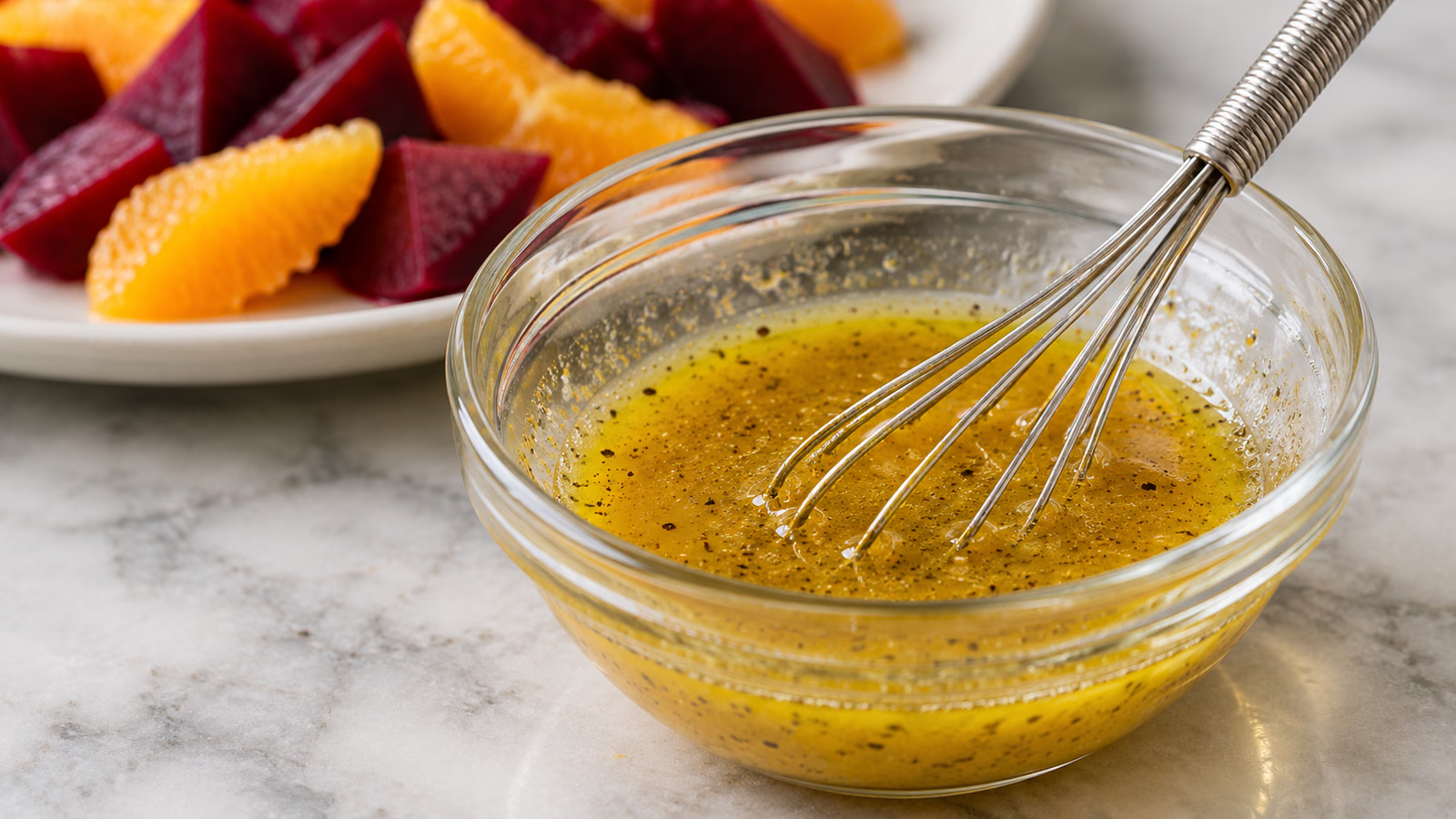
Oil, red wine vinegar and Dijon mustard make a small, sharp dressing that cuts through the sweet ingredients. Whisk them together first so you do not end up with one leaf tasting mainly of vinegar and another carrying all the mustard.
- Use a roomy bowl: tender leaves need space to turn over. An overfilled bowl encourages pressing and bruising instead of gentle tossing.
- Taste on a leaf: dressing alone can seem sharper than it does spread across fruit and greens. A dressed leaf gives a more useful preview.
- Toss briefly: lift and turn just until the components are lightly coated. Stop before the cheese and orange are mashed.
- Expect some pink: red beet juice naturally colors nearby food. If you want distinct colors for serving, arrange the components on plates and drizzle with the mixed dressing.
The recipe gives equal tablespoons of oil and vinegar, with orange providing some sweetness in the bowl. Do not assume every bottle of mustard or vinegar tastes identical. Adjusting to your ingredients is reasonable, but make a small change and taste again rather than doubling something immediately.
Make a light side into a satisfying meal
The two servings work as generous side salads. For a fuller lunch, add cooked chicken, beans, shrimp or tempeh alongside, and include bread or another accompaniment that suits your appetite. Those additions are separate from the recipe’s stated nutrition.
- Prepare ahead: keep the chopped beets, orange, greens, cheese and dressing in separate covered containers in the refrigerator.
- Assemble near serving: the dressed leaves are best eaten promptly; a fully mixed salad will soften as it sits.
- Keep it cold: refrigerate perishable ingredients promptly. Discard food left out more than two hours, or one hour above 90°F (32°C).
A prepared salad is only as fresh as its oldest ingredient. Follow the cooked-beet and mozzarella package directions, and do not use the act of mixing them as a reason to restart their storage clock. The card’s figures are estimates for the stated quantities, not a promise about every cheese or beet brand.
Beet Orange Salad Recipe

Ingredients
- 1 tablespoon extra-virgin olive oil
- 1 tablespoon red wine vinegar
- 1 teaspoon Dijon mustard
- 1 pinch salt
- 1 pinch ground black pepper
- 1 cup cooked beets cooled, chopped or sliced
- 1 large navel orange peeled and cut into bite-size pieces; about 1 cup
- 3 cups fresh arugula
- 2 oz fresh mozzarella cut into bite-size pieces
Equipment
- 1 Mixing bowl
- 1 Whisk
- 1 Cutting board and knife
Instructions
- Whisk oil, vinegar, Dijon, salt and pepper in a roomy mixing bowl.
- Add the cooled cooked beets, orange pieces, arugula and mozzarella. Gently lift and turn until lightly dressed.
- Divide between two plates and serve promptly. If preparing ahead, refrigerate components separately and combine shortly before serving.
Nutrition
Notes
Tried this recipe?
Let us know how it turned out!Sources
- U.S. Department of Veterans Affairs: beet and orange salad quantities and nutrition
- USDA FSIS: time limits for perishable food
Hi, I’m Laura, the voice behind Tastiva. I’ve always believed that eating well should feel enjoyable, comforting, and realistic—not like another complicated rule to follow. I love creating recipes that fit into everyday life, sharing simple nutrition ideas, and finding small ways to make meals feel a little better without losing the pleasure of good food.