
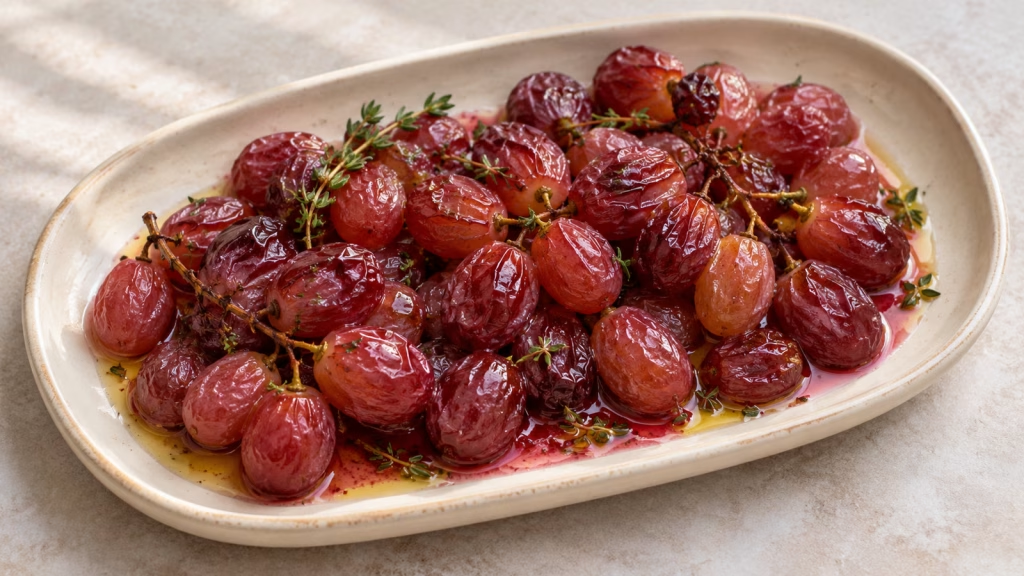
Roasted grapes turn a familiar snack into a warm, juicy topping with very little preparation. A hot oven softens the fruit, wrinkles the skins and leaves a small amount of concentrated juice on the tray. Olive oil, thyme and a pinch of salt keep the result useful for savory meals as well as simple snacks.
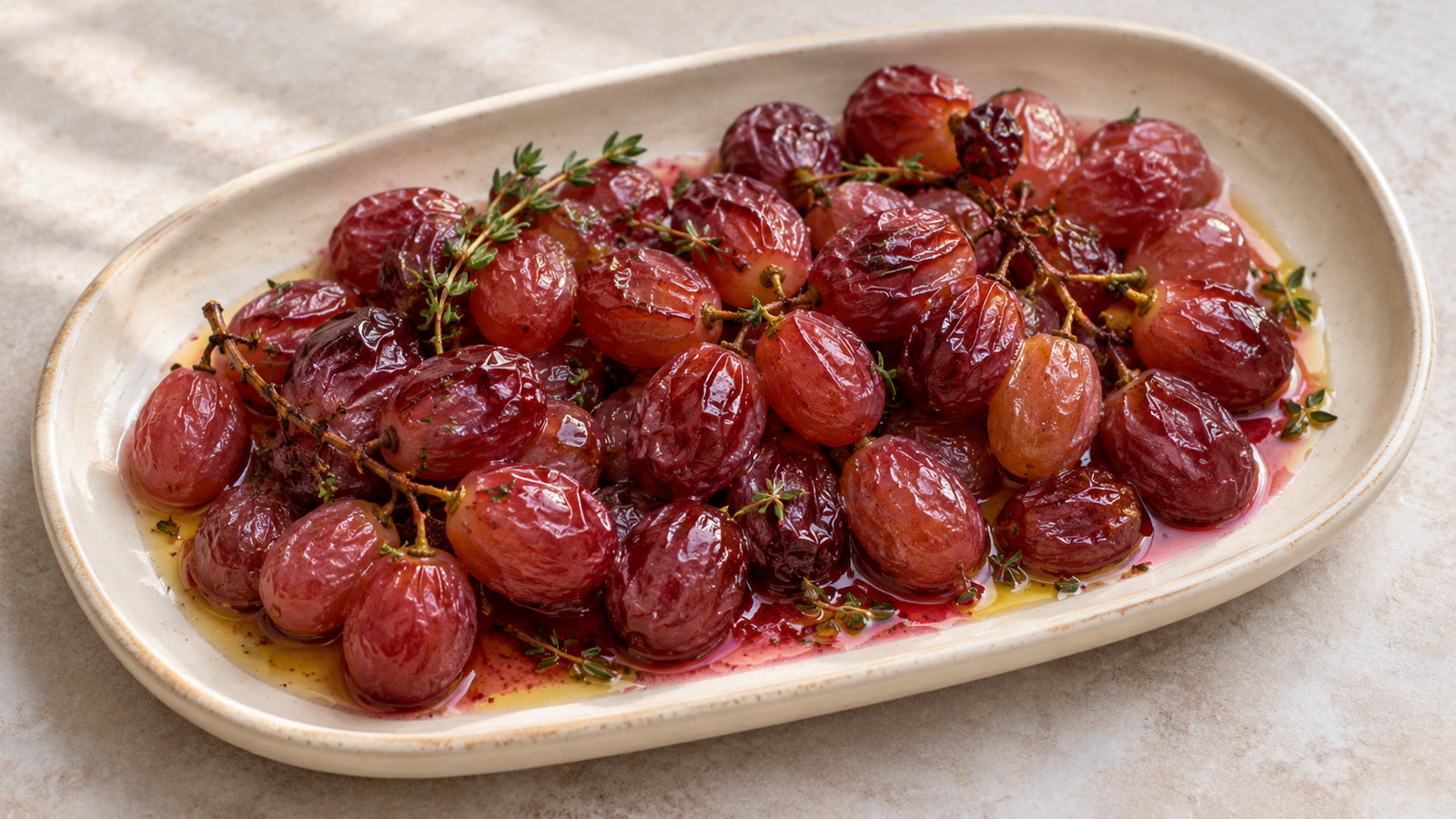
Give the grapes room on the tray so they roast instead of sitting in a deep layer of their own juice.
Start with firm, seedless grapes
Seedless red grapes are a straightforward choice because their color remains appealing after cooking and their sweetness works with savory ingredients. Black or green grapes can also be roasted, but their flavor and appearance differ. Taste one first so you know whether the batch is very sweet or noticeably tart.
Remove damaged or spoiled fruit and rinse the rest well. Dry the grapes before adding oil; water clinging to them slows the initial roasting and can dilute the juices. A clean towel is useful, especially when the grapes have just come out of the refrigerator and collect condensation quickly.
For easy serving, take the grapes off their stems before roasting. Small clusters look attractive, but guests then have to remove the fruit from hot, sticky stems. Loose grapes are simpler for toast, salads and bowls, which is the practical approach used in this recipe.
Use a shallow tray and a light hand
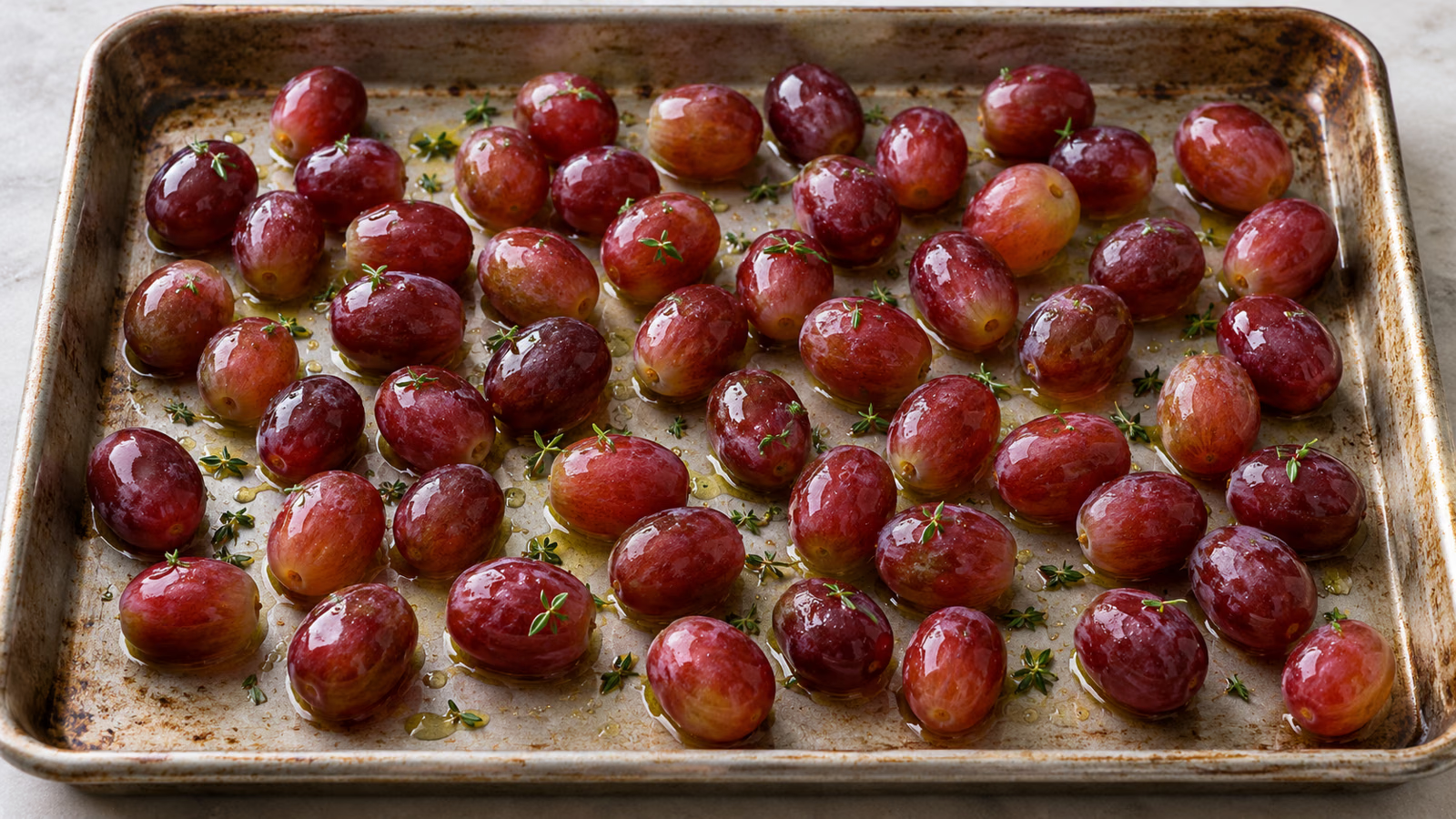
A rimmed metal baking sheet gives the fruit space while containing the juices. Avoid crowding the grapes into a small, deep dish. The same quantity can behave differently depending on the surface area: a shallow single layer encourages evaporation, while a tightly packed pile produces more liquid.
Toss the grapes with only enough oil to coat them lightly. They should look glossy, not sit in a pool. Add thyme leaves and a small pinch of salt, then spread everything into one layer. If using woody thyme sprigs, remove those stems before serving rather than leaving them mixed through the fruit.
Parchment can make cleanup easier if it is rated for the oven temperature you are using. It also helps collect the sticky juice after roasting. Do not use waxed paper. If you prefer a bare tray, loosen the grapes while the tray is still warm so the sugary edges do not set firmly against the metal.
Watch the grapes, not just the clock
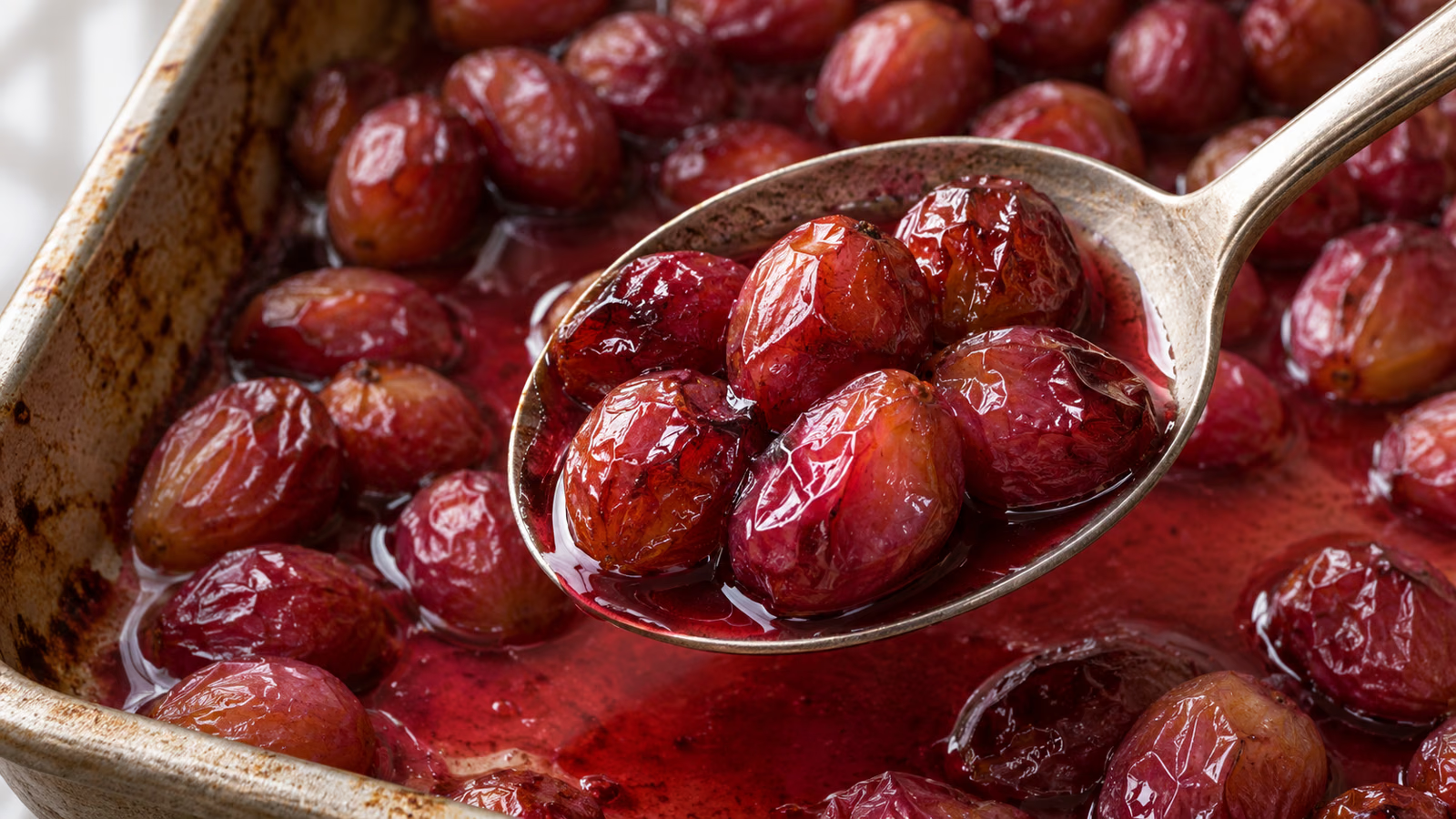
Roast until the skins wrinkle and some grapes begin to split. They should look softened and juicy without collapsing completely into sauce. Small grapes may finish earlier than large ones, and very ripe fruit can release more liquid, so start checking before the end of the suggested time.
Shake the tray gently or turn the fruit once during roasting. Move grapes from a hotter corner toward the center if your oven browns unevenly. There is no need to stir constantly; opening the oven repeatedly lets heat escape and makes the timing less predictable.
Let the tray stand for a few minutes before transferring the grapes. The juice will be very hot, and the fruit is delicate straight from the oven. Use a wide spoon to lift the grapes together with a little syrupy liquid. Those pan juices are part of the finished topping, not something to discard automatically.
Build a plate around sweet and savory
My preference is to pair the grapes with something tangy or salty rather than add more sweetness. Ricotta toast, a spoonful of plain yogurt or a crumbly cheese gives them contrast. For a dairy-free plate, try them with white bean spread and a few toasted nuts, keeping any allergies in mind.
They also work in a grain bowl with bitter leaves and a sharp vinaigrette. Add the grapes after the greens have been dressed so they stay intact. A little of the roasting juice can join the dressing, but taste it first and reduce any other sweetener you might normally use.
Serve the grapes warm or at room temperature soon after roasting, and refrigerate leftovers promptly. Store them with their juices in a covered container. The texture becomes softer after chilling, so use leftovers as a spoonable topping rather than expecting the original fresh-fruit snap. Warm gently if desired; a second long roast can dry the skins before the centers become hot. Keep toasted bread separate until you are ready to eat so it does not become soggy.
| Preparation | Cooking | Yield |
|---|---|---|
| 10 minutes | About 25 minutes | 4 servings |
Roasted Grapes Recipe

Ingredients
- 450 g seedless red grapes removed from stems, washed and dried
- 1 tablespoon olive oil
- 1 teaspoon fresh thyme leaves
- 1/8 teaspoon salt
- 1/8 teaspoon black pepper
Equipment
- 1 Rimmed baking sheet
Instructions
- Heat oven to 425°F (218°C). Line a rimmed baking sheet with parchment rated for this temperature, or use the tray bare.
- Toss dry grapes with oil, thyme, salt and pepper. Spread in a single layer.
- Roast 20–30 minutes, turning once, until wrinkled, softened and beginning to split.
- Rest for 5 minutes, then spoon into a serving bowl with the pan juices. Divide into four portions.
Notes
Tried this recipe?
Let us know how it turned out!For a savory centerpiece to build a meal around, try Tastiva’s spinach feta frittata.
Sources
Hi, I’m Laura, the voice behind Tastiva. I’ve always believed that eating well should feel enjoyable, comforting, and realistic—not like another complicated rule to follow. I love creating recipes that fit into everyday life, sharing simple nutrition ideas, and finding small ways to make meals feel a little better without losing the pleasure of good food.