
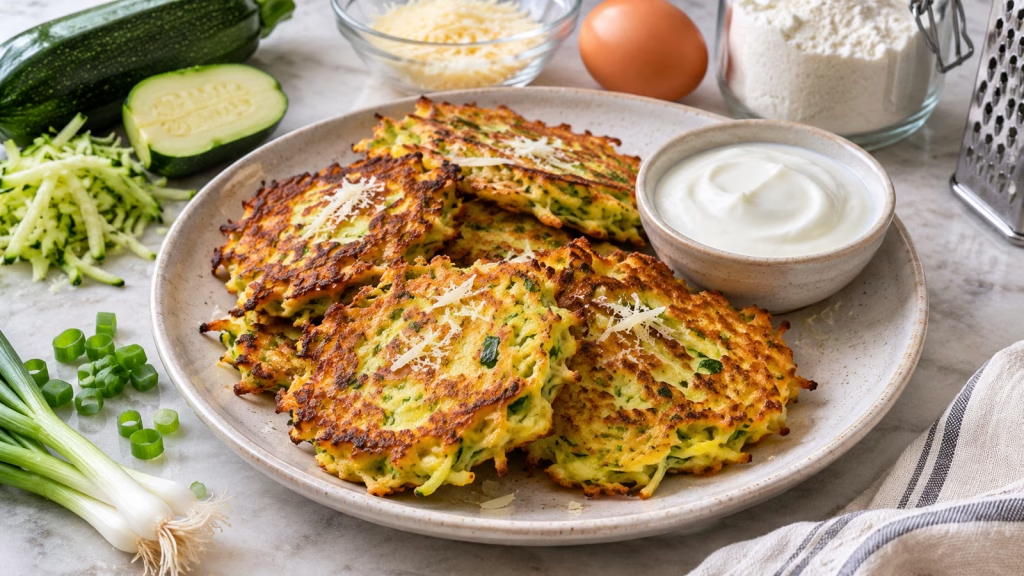
Zucchini fritters are at their best when the edges are golden and the middle tastes like zucchini rather than wet batter. The useful trick is simple: salt the grated vegetable, squeeze out the water, then mix it with egg, flour, scallions and a little Parmesan. A hot skillet and small, thin patties do the rest.
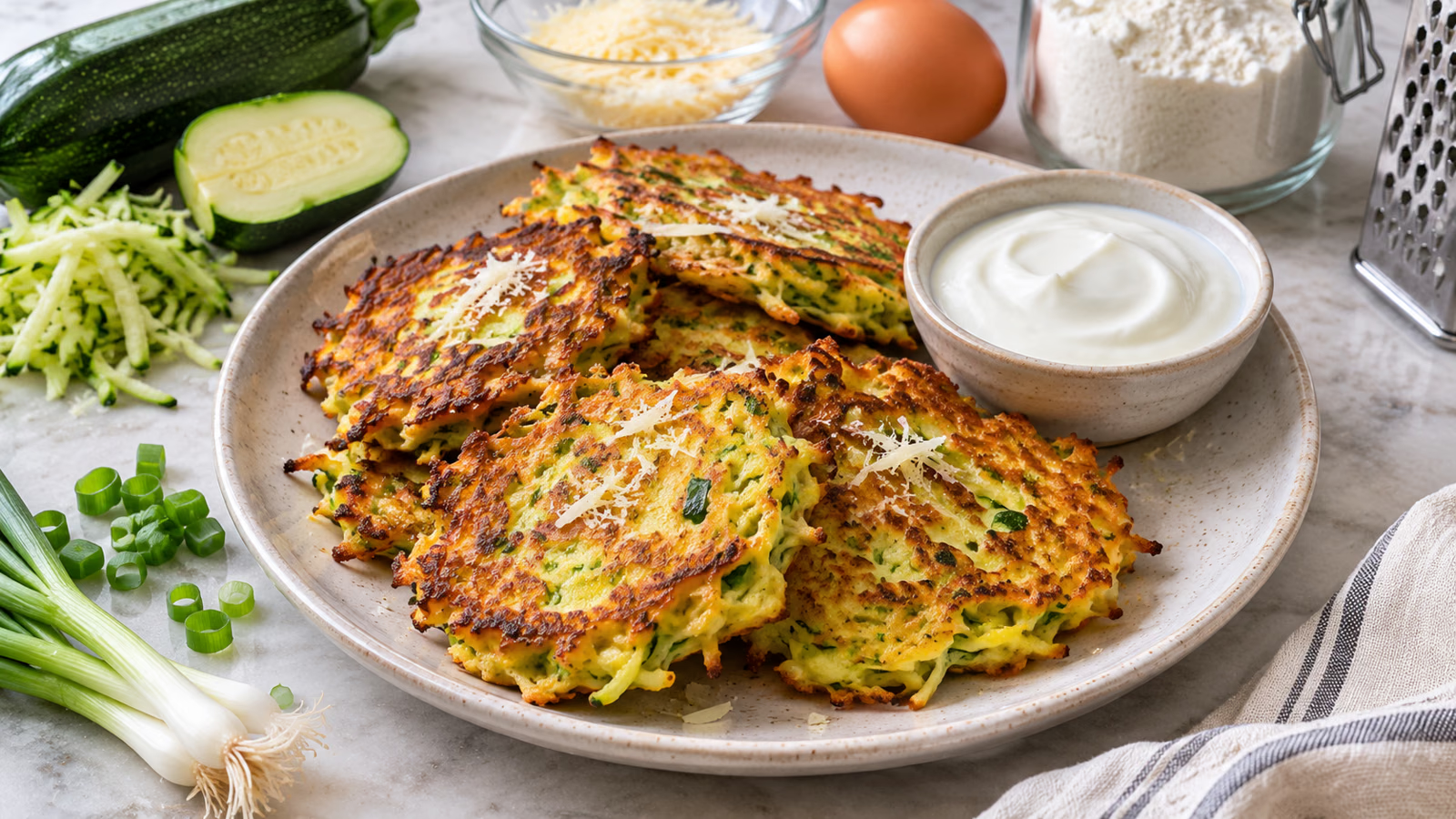
Squeezing the zucchini matters more than adding extra flour to rescue a watery bowl.
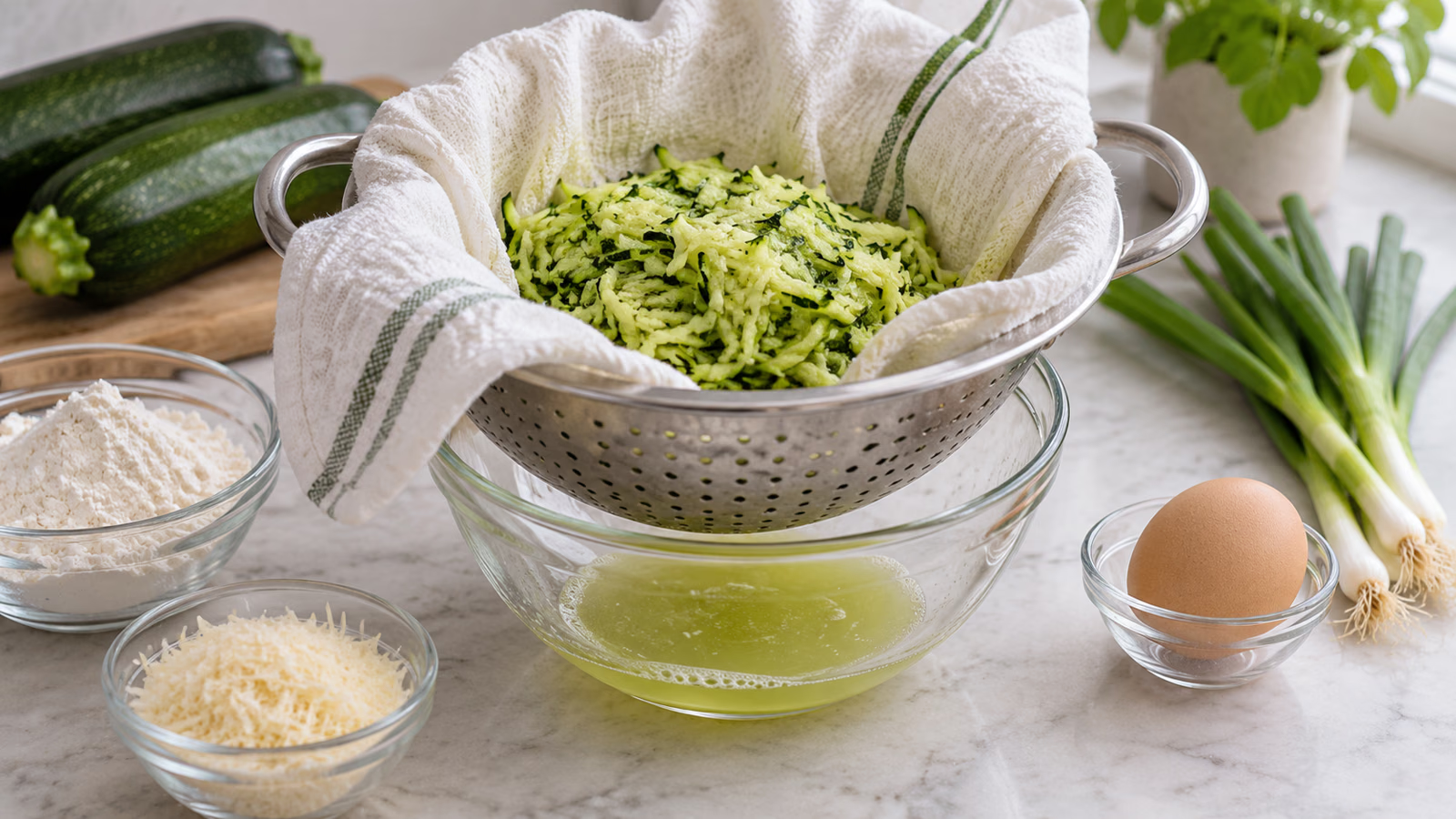
Get the water out before mixing
Use medium zucchini with firm skins and no soft, spoiled patches. Grate them on the coarse side of a box grater, keeping your fingers clear as you reach the end. There is no need to peel tender zucchini; the green flecks help the finished fritters look like the vegetable they are made from.
Toss the grated zucchini with the measured salt and let it stand in a colander. The salt draws out moisture, but draining alone is not enough. Gather the shreds in a clean kitchen towel and squeeze firmly over the sink. Work in two batches if the bundle is too large to grip securely.
The squeezed zucchini should feel damp rather than dripping. You do not need to make it completely dry, and a little moisture helps the mixture come together. What you want to avoid is liquid collecting at the bottom of the mixing bowl before the first fritter reaches the pan.
Make a batter that holds its shape
Mix the zucchini with the egg, scallions, garlic and Parmesan before folding in the flour and baking powder. This distributes the flavorful ingredients without overworking the flour. The mixture should hold together when scooped, but it should still look mostly like shredded vegetables rather than a smooth pancake batter.
Parmesan brings salt as well as flavor. Because the zucchini has already been salted, do not automatically add another large pinch. Cook a small test spoonful if you are unsure, then adjust the remaining mixture. This is more reliable than trying to judge seasoning from raw batter containing egg.
If the bowl becomes watery while you work, stir gently and check the next portion. A small extra spoonful of flour may help, but repeated additions can make the fritters heavy. For the next batch, squeeze the zucchini more thoroughly rather than treating flour as the main solution.
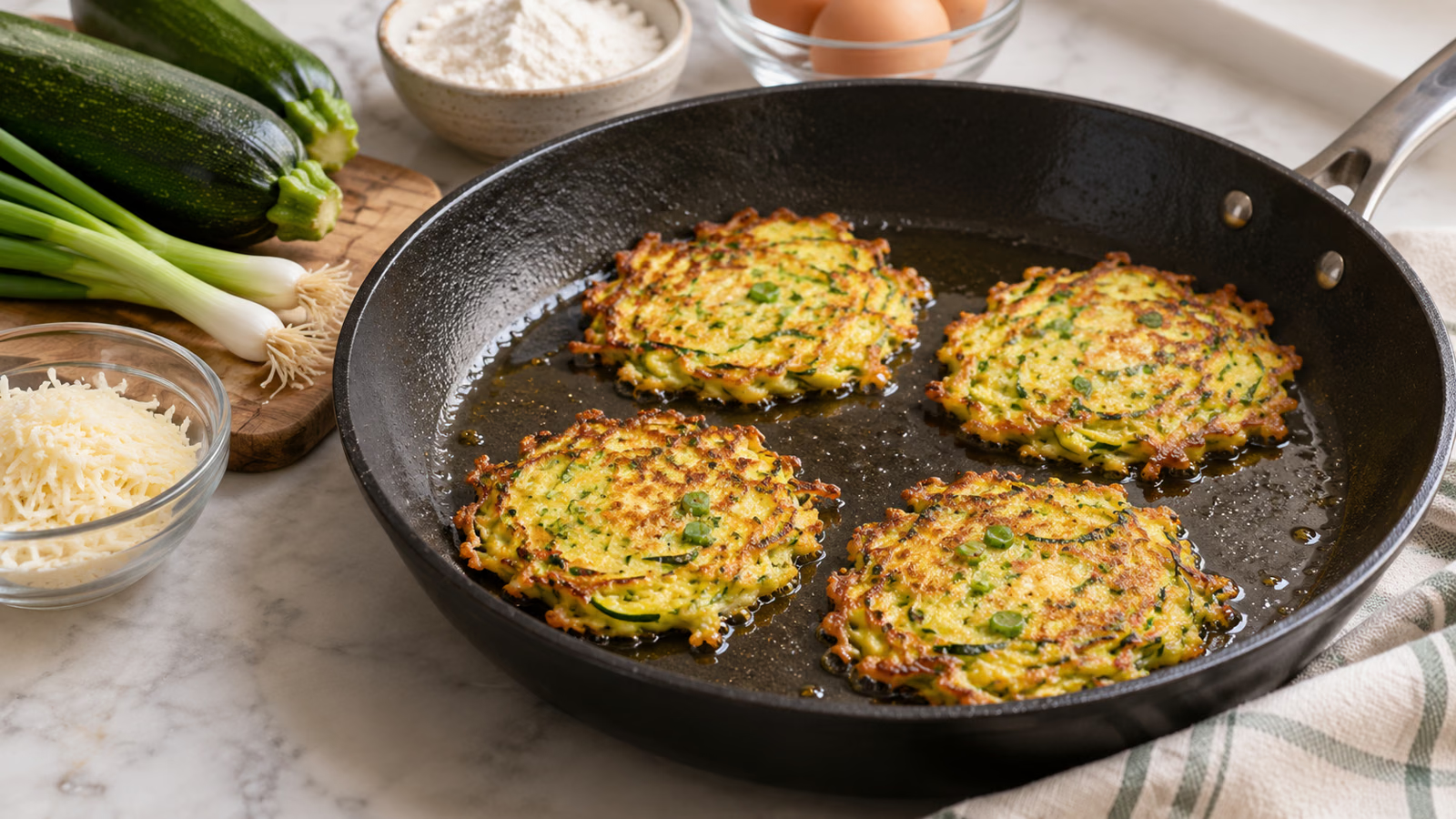
Fry small patties, not thick mounds
Heat a thin layer of oil in a wide skillet over medium heat. Add a small bit of mixture to test the pan: it should sizzle gently, not sit silently or turn dark immediately. A pan that is too cool produces pale, oily fritters, while excessive heat browns the outside before the center sets.
Scoop modest portions into the skillet and flatten each to about half an inch thick. Leave space between them so you can slide a spatula underneath without tearing a neighboring fritter. Cooking in batches is faster in practice than trying to rescue an overcrowded pan full of fragile patties.
Wait until the underside is golden and the edges look set before turning. Flip once, then cook the second side until the center feels firm rather than wet. If the first batch browns too quickly, lower the heat slightly for the next. Move cooked fritters to a rack instead of stacking them, which traps steam and softens their crisp edges.
Serve promptly and plan for leftovers
Plain yogurt with lemon is a simple serving option, and can be offered in a small bowl alongside the platter. Put it alongside rather than over the whole platter so the fritters keep their crisp surface. A tomato salad or a bowl of beans turns them into a more substantial meal without complicated extras.
These fritters are most appealing soon after cooking. If you need to hold a batch briefly, keep them in a single layer on an oven-safe rack in a low oven. Avoid covering them tightly with foil, because the steam that collects beneath it works against the texture you just created.
Cool leftovers promptly and refrigerate in a covered container. Reheat in a skillet or oven until hot throughout; the microwave is convenient but produces a softer result. Freeze cooled fritters in a single layer before transferring them to a container if you want to keep portions separate. Do not store raw egg batter for casual tasting, and wash the bowl and utensils after handling it. A fresh squeeze of lemon at serving helps reheated fritters feel brighter without adding more salt.
| Preparation | Cooking | Yield |
|---|---|---|
| 20 minutes | About 15 minutes | 4 servings |
Zucchini Fritters Recipe

Ingredients
- 680 g zucchini coarsely grated
- 1 teaspoon salt for drawing out moisture
- 1 large egg
- 60 g all-purpose flour
- 25 g Parmesan cheese finely grated
- 35 g scallions thinly sliced
- 2 garlic cloves minced
- 1/2 teaspoon baking powder
- 1/4 teaspoon black pepper
- 2 tablespoons olive oil for frying
Equipment
- 1 Wide skillet and clean kitchen towel
Instructions
- Toss grated zucchini with salt in a colander and stand for 10 minutes. Wrap in a clean towel and squeeze firmly to remove excess water.
- Combine squeezed zucchini with egg, Parmesan, scallions and garlic. Fold in flour, baking powder and pepper until evenly mixed.
- Heat some oil in a wide skillet over medium heat. Add about 1/4 cup mixture per fritter and flatten to 1/2 inch thick; cook in batches, adding remaining oil as needed.
- Cook 3–4 minutes per side until golden, set through the center and at least 160°F (71°C) in the center. Reduce heat if browning too fast.
- Transfer to a rack and serve promptly. Makes about eight fritters, two per serving.
Video
Notes
Tried this recipe?
Let us know how it turned out!For a savory centerpiece to build a meal around, try Tastiva’s spinach feta frittata.
Sources
Hi, I’m Laura, the voice behind Tastiva. I’ve always believed that eating well should feel enjoyable, comforting, and realistic—not like another complicated rule to follow. I love creating recipes that fit into everyday life, sharing simple nutrition ideas, and finding small ways to make meals feel a little better without losing the pleasure of good food.