
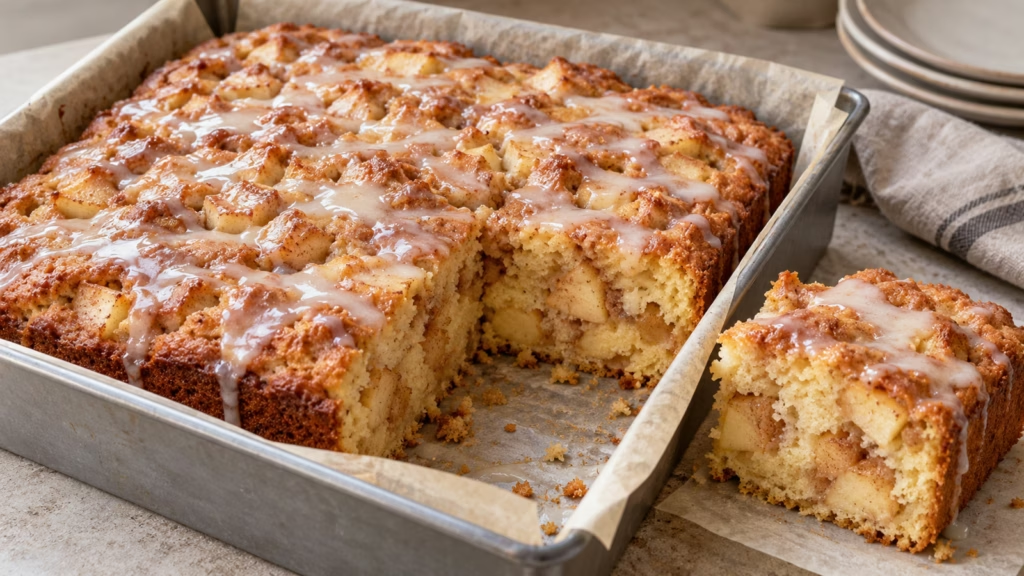
The apple pieces can make or break a slice of cake: too large, and you meet a firm chunk just as the crumb is ready. This apple fritter cake uses small dice layered through a vanilla butter batter, then finishes with a thin glaze. You get the cinnamon-apple idea of a fritter in a cake you can cut and share.
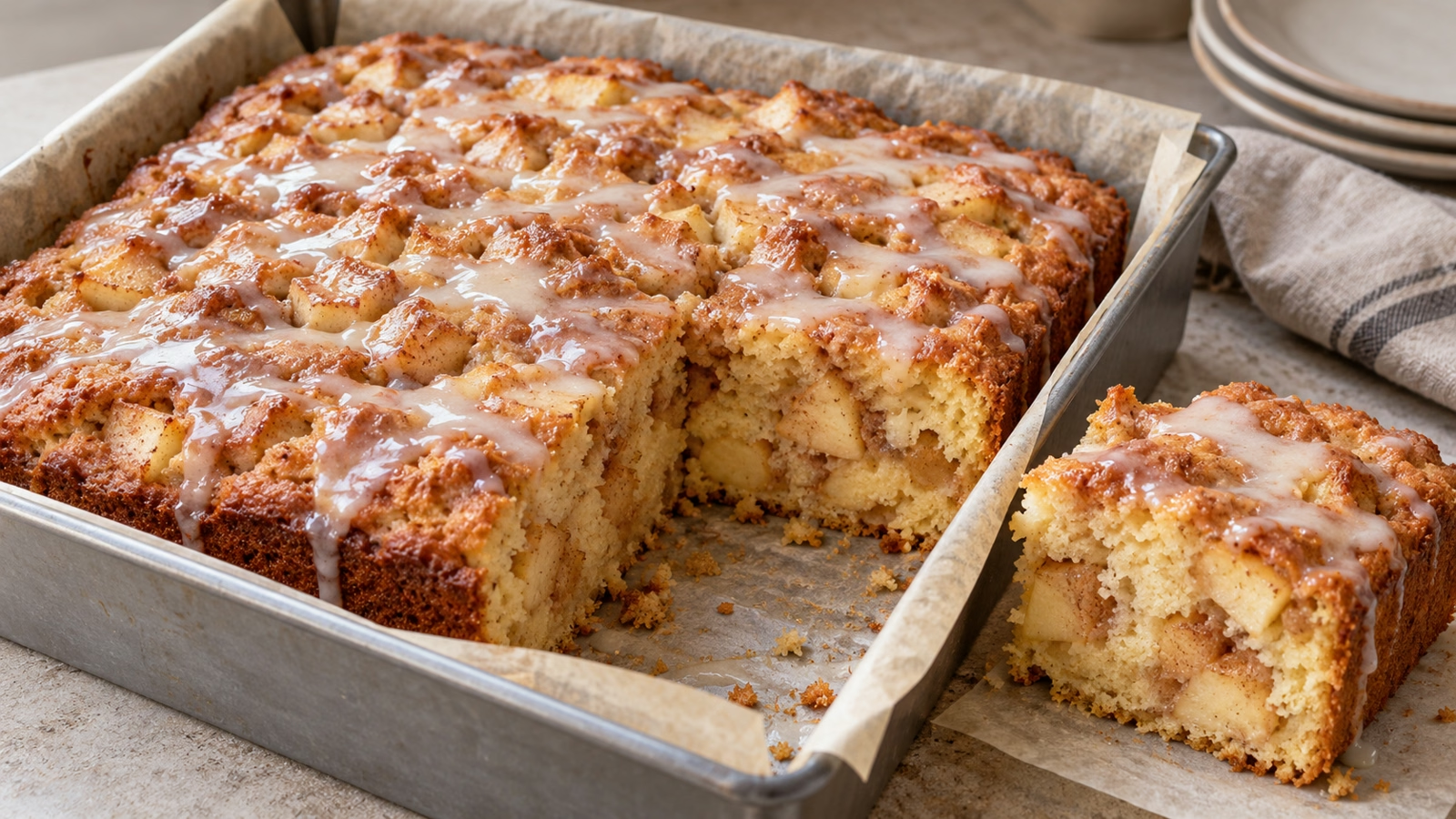
Keep the apples small and the glaze light so every slice has room for both tender cake and spiced fruit.
What gives apple fritter cake its character
This is a butter cake with apples and a glaze, rather than a fried doughnut baked in a different shape. Cinnamon-sugar pockets supply contrast within the crumb, while the uneven apple-studded surface catches the finishing drizzle.
- Apples add moisture and texture. Weigh them after peeling and coring. An extra apple can seem harmless, but it adds more fruit and liquid to a batter designed for a specific amount.
- Butter does more than add flavor. Beating softened butter with sugar incorporates air. Melted butter is not an interchangeable shortcut for this method.
- Milk loosens the batter. Add it alternately with the flour mixture so everything comes together without prolonged beating.
- The glaze stays light. A thin drizzle lets the apples show. I would rather see the top of the cake than bury it beneath a sheet of icing.
The recipe keeps cinnamon in the apple layer instead of tinting every bite of cake. That gives the vanilla crumb and spiced fruit their own moments, without requiring an elaborate filling.
Prepare the apples and pan before mixing
Choose a firm apple such as Granny Smith or Pink Lady, then cut it into small, fairly even cubes. Peeling takes another few minutes, but it removes the bits of skin that can interrupt a tender slice. Here, the fruit goes into the batter raw.
- Aim for ⅓-inch pieces. Small dice have a better chance of softening during the cake’s bake than thick chunks.
- Use a 9-inch square metal pan. The batter depth and baking range are written for that size. A loaf pan or smaller square pan needs a separately considered bake.
- Make a parchment sling. Leave enough paper above two opposite sides to lift the cooled cake. Grease the exposed pan surfaces lightly.
- Set out the milk and eggs briefly. Ingredients that are not refrigerator-cold combine more readily with softened butter. Do not leave perishable ingredients out for extended periods.
If you measure flour by volume, spoon it into the cup and level the top instead of pressing the cup into the bag.
Mix gently, then check the center
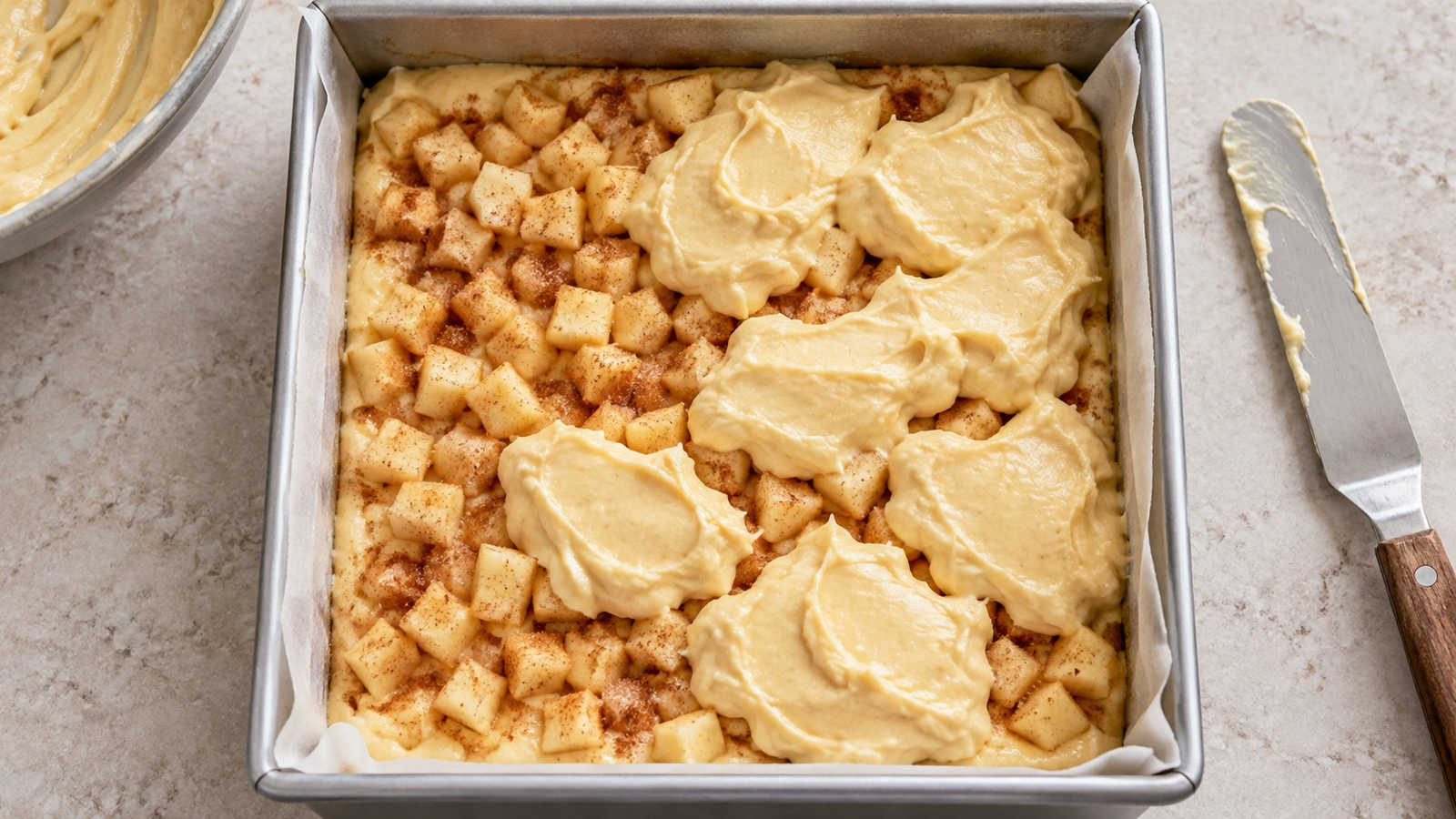
The batter should be thick enough to spread, not pour like pancake batter. Once the flour goes in, the goal is even mixing with as little extra beating as necessary. Scrape the bottom of the bowl so a pocket of dry flour does not survive the trip to the pan.
- Layer with a light hand. Spread half the batter first, scatter half the cinnamon apples over it, then add the remaining batter in small spoonfuls. Gently connect the spoonfuls before adding the last apples.
- Skip aggressive swirling. A few apples can peek through the surface. Stirring everything around in the pan can turn the distinct layers into one heavily handled mixture.
- Check cake, not just fruit. A tester pushed through an apple may come out damp. Test a nearby patch of crumb in the center as well; it should have moist crumbs but no raw batter.
- Protect a darkening top. If the surface colors before the middle is ready, loosely tent it with foil and continue baking.
I would not use the timer as the only judge. Ovens differ, and fruit carries variable moisture; the center’s condition matters more than matching a minute exactly.
Glaze, slice, and keep the leftovers
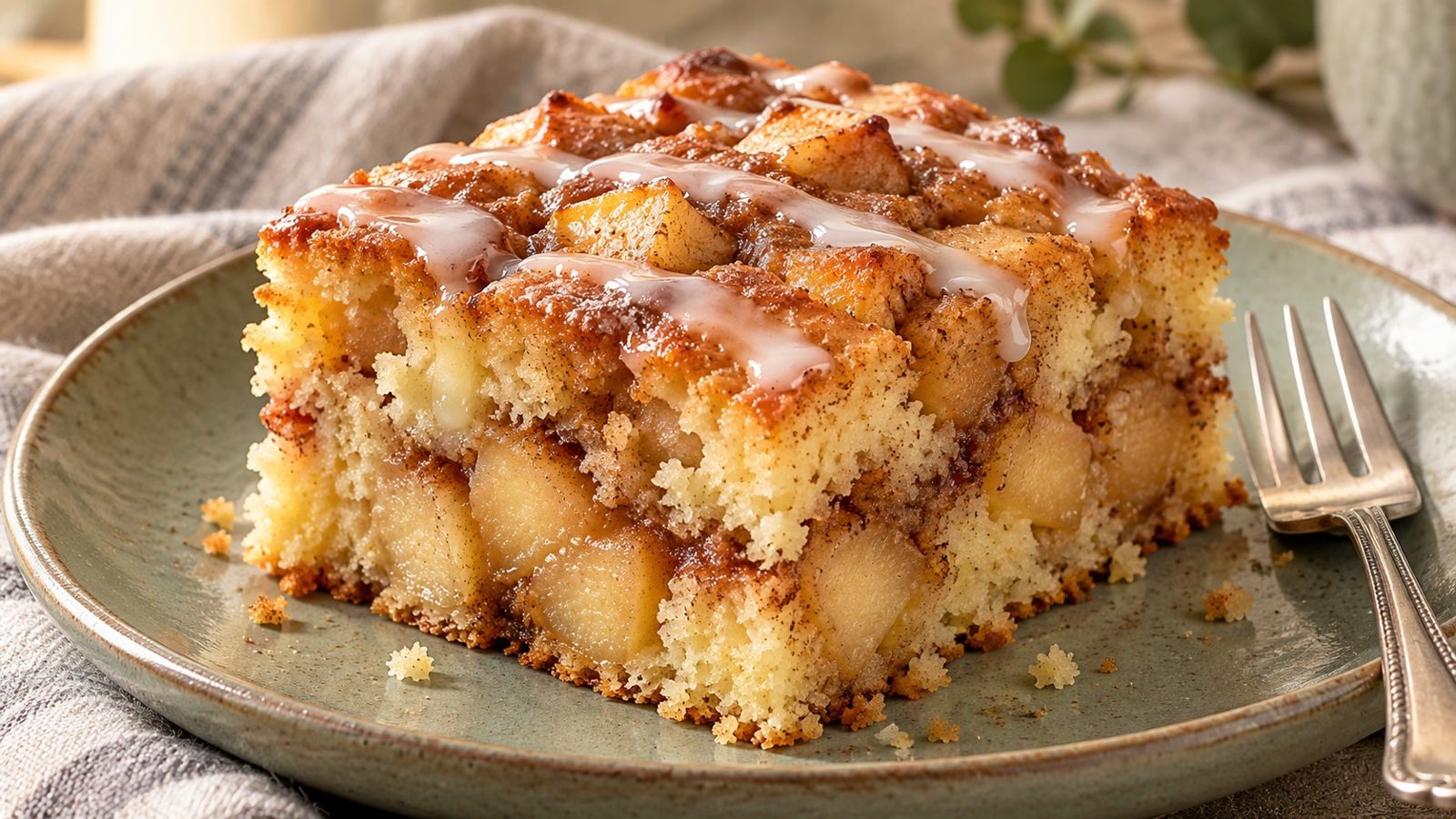
Let the cake cool before adding the glaze so the drizzle stays visible instead of disappearing into the hot crumb. If you prefer a slightly warmer serving, glaze and slice the cooled cake first, then gently warm an individual piece.
- Start with the measured glaze liquid. Whisk until smooth. If necessary, add water a few drops at a time; it is easy to thin icing and surprisingly tiresome to undo it.
- Wait for the surface to set. Give the glaze about ten minutes before cutting.
- Serve simply. Coffee or tea is plenty alongside. The card’s nutrition includes the glaze, with one serving defined as one of twelve equal pieces.
- Store conservatively. Once cooled, cover and refrigerate the cake within two hours. Use within three to four days, or freeze wrapped portions for up to two months for quality. Thaw in the refrigerator.
The refrigerator firms butter cakes, so let a serving lose its chill before eating if you prefer a softer crumb. Keep the remaining cake covered; leaving the whole pan out is unnecessary when you only want one square.
Recipe
This apple fritter cake uses a straightforward creamed-butter batter and two loose layers of cinnamon apples. Allow time for cooling as well as baking, especially if you want the glaze to sit neatly on top.
Apple Fritter Cake Recipe

Ingredients
- 3 cups apples 360 g prepared; peeled, cored, cut into 1/3-inch (8 mm) cubes
- 1/4 cup granulated sugar 50 g
- 2 teaspoons ground cinnamon 5 g
- 1 3/4 cups all-purpose flour spooned and leveled (210 g)
- 2 teaspoons baking powder 8 g
- 1/2 teaspoon fine table salt 3 g
- 1/2 cup unsalted butter softened (113 g)
- 2/3 cup granulated sugar 133 g
- 2 large eggs 100 g without shells
- 1 1/2 teaspoons vanilla extract 6 g
- 1/2 cup whole milk 120 ml; approximately 122 g
- 1 teaspoon unsalted butter for greasing (5 g)
- 3/4 cup confectioners’ sugar sifted (85 g)
- 1 tablespoon water 15 ml; 15 g
- 1/2 teaspoon vanilla extract 2 g
Equipment
- 9-inch (23 cm) square metal baking pan, at least 2 inches deep
- Parchment paper
- Electric hand mixer or stand mixer
- Three mixing bowls
- flexible spatula
- Knife and cutting board
- Kitchen scale and measuring spoons
- Wire cooling rack
- Cake tester or wooden skewer
Instructions
- Heat the oven to 350°F (175°C), middle rack. Grease a 9-inch square metal pan with the 1 teaspoon butter and line with a parchment sling.
- Toss the prepared apples with the 50 g sugar and cinnamon in a bowl. In another bowl, whisk flour, baking powder, and salt.
- Beat the softened butter and 133 g sugar with an electric mixer at medium speed for 2–3 minutes, until lighter and fluffy. Beat in eggs one at a time, then the 1 1/2 teaspoons vanilla, scraping the bowl as needed.
- At low speed, add half the flour mixture, then the milk, then the remaining flour mixture. Stop as soon as incorporated. Scrape the bowl and fold gently to remove any dry pockets.
- Spread half the batter in the pan. Scatter half the cinnamon apples over it. Add the remaining batter in small spoonfuls and gently spread; some apples may show. Scatter the remaining apples and any bowl juices evenly over the surface, pressing the fruit lightly into the batter.
- Bake 40–45 minutes, until the center springs back lightly and a tester in the cake crumb comes out with moist crumbs but no raw batter. If needed, continue in 3–5-minute increments. Tent loosely with foil if the top browns before the center is done.
- Cool in the pan on a rack for 20 minutes. Lift carefully using the parchment and cool about 40 minutes more, until no longer warm. Cooling may take longer in a warm kitchen.
- Whisk confectioners’ sugar, water, and the remaining 1/2 teaspoon vanilla until smooth. If too thick to drizzle, add water a few drops at a time. Drizzle across the cooled cake, allow 10 minutes to set, and cut into 12 equal pieces.
Nutrition
Video
Video: Divas Can Cook demonstrates a related apple fritter loaf cake with creamed butter, layers of raw cinnamon apples, and a glaze after cooling. The video uses a loaf pan, applesauce, buttermilk, and a cream glaze; follow the square-cake recipe above for its ingredients, 9-inch pan, layering, and baking time.
Notes
Tried this recipe?
Let us know how it turned out!Sources
- King Arthur Baking: apple fritter cake technique reference.
- USDA: safe handling and refrigerated storage of leftovers.
- USDA FoodData Central: ingredient data for estimated nutrition.
Hi, I’m Laura, the voice behind Tastiva. I’ve always believed that eating well should feel enjoyable, comforting, and realistic—not like another complicated rule to follow. I love creating recipes that fit into everyday life, sharing simple nutrition ideas, and finding small ways to make meals feel a little better without losing the pleasure of good food.