
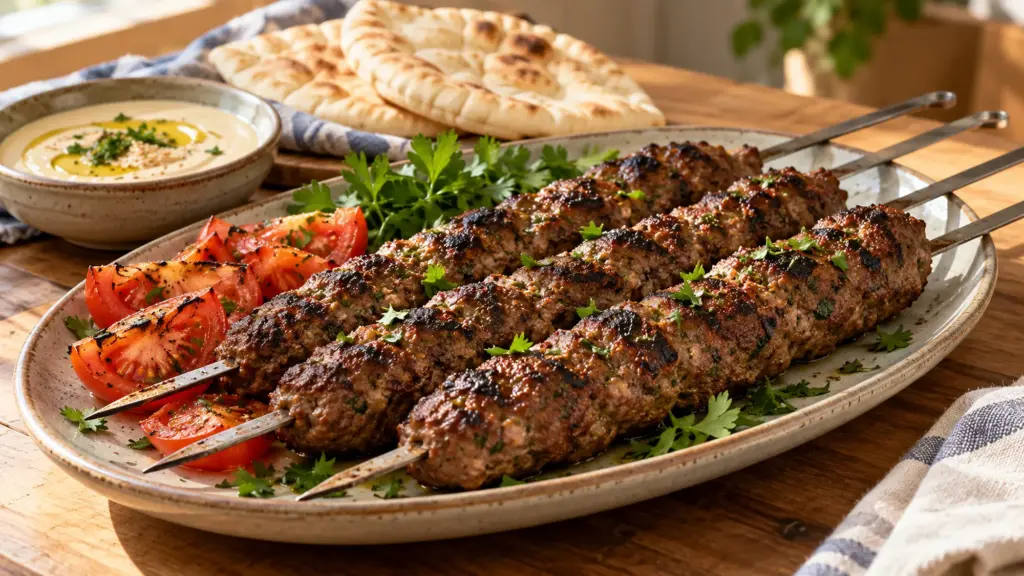
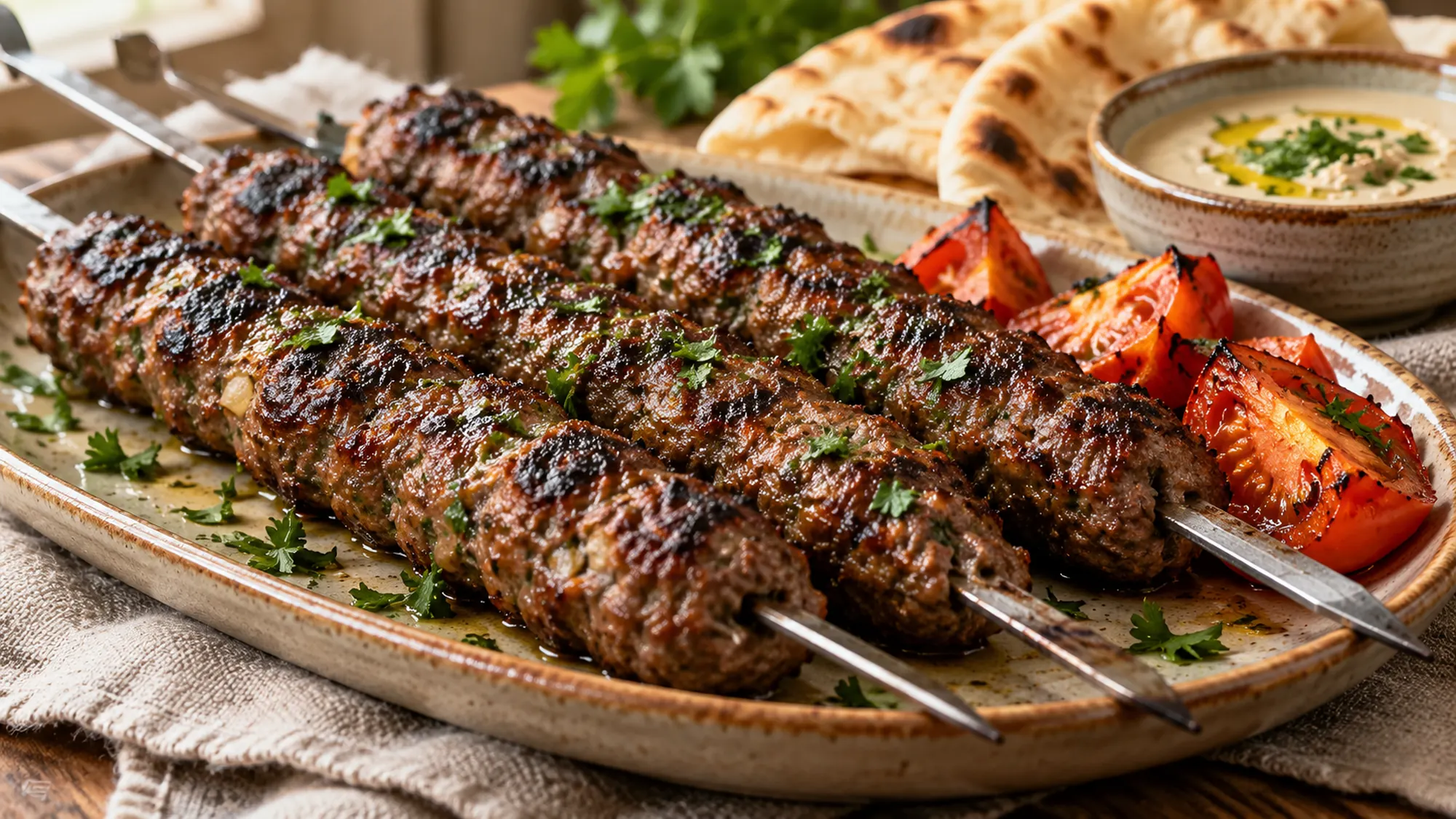
A platter of beef kofta makes dinner feel generous without requiring several different main dishes. The browned outside gives way to a tender, parsley-flecked center, and the warm spices are noticeable without hiding the flavor of the meat.
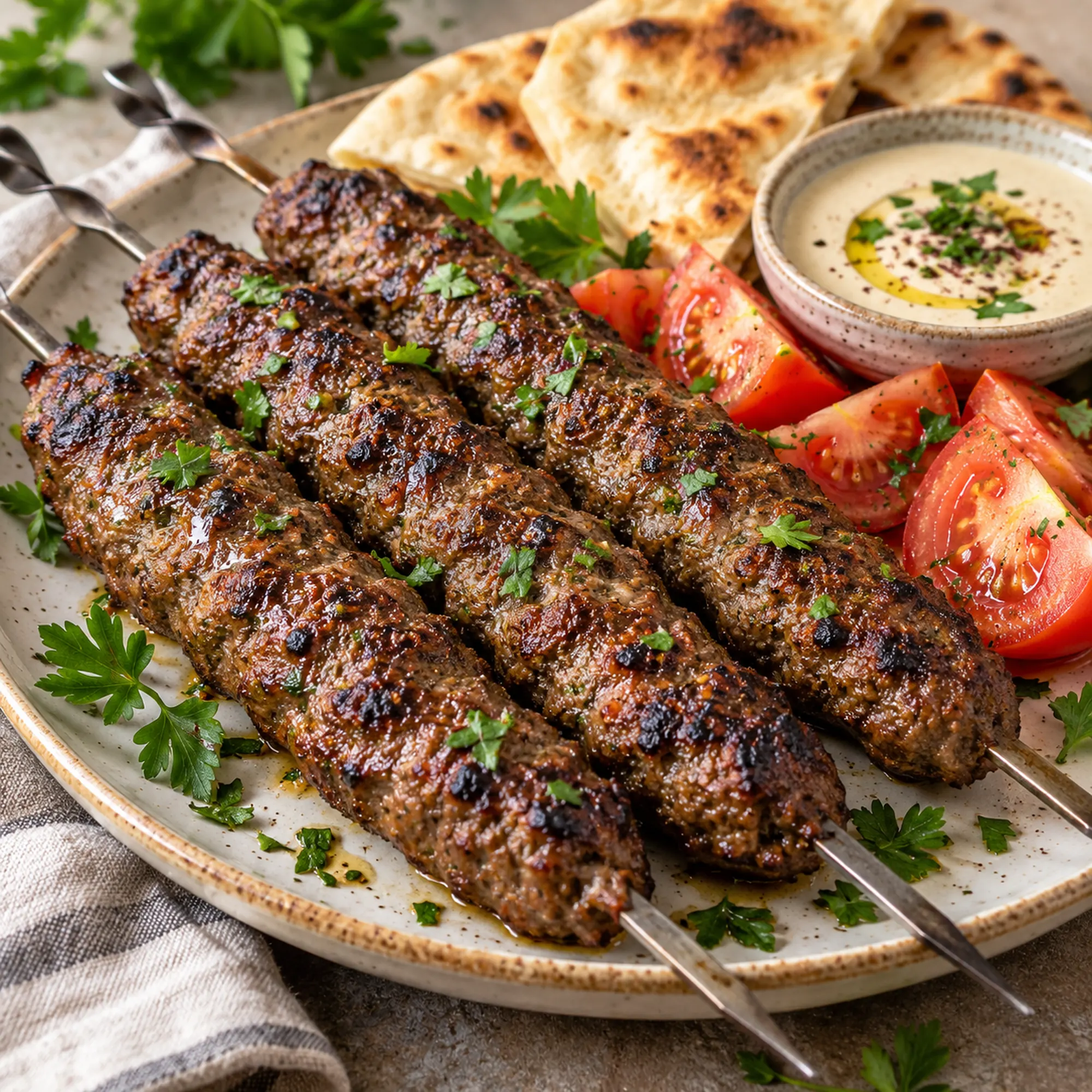
These beef kofta skewers use finely chopped onion, parsley and soaked bread to make a cohesive mixture. An indoor grill pan gives them browned edges, so an outdoor barbecue is optional.
This version follows The Mediterranean Dish’s kofta method, with its permitted all-beef variation instead of a beef-and-lamb blend. I like the practical distinction: you can keep the aromatic character without buying two kinds of ground meat.
Serving Beef Kofta
Plan on two skewers per person, then add the accompaniments you actually want. Warm pita is useful for gathering the meat and sauce, while chopped vegetables keep the plate from becoming all soft textures. Slip the kofta off hot metal skewers before handing a plate to children.
Tahini sauce is a natural partner, but it is not included in the recipe’s nutrition estimate. A spoonful of plain yogurt with lemon is another option, with a different flavor and allergen profile. Put sauces on the table rather than soaking the browned meat in advance.
- Make a wrap: tuck kofta, tomato and a little sauce into warmed pita.
- Build a plate: serve with chickpea cucumber salad and extra parsley.
- Skip the bread: pair the skewers with vegetables and a side of rice if that suits the meal.
| Serving style | Good companion | Practical advantage |
|---|---|---|
| Pita wrap | Tomato and tahini | Easy to assemble |
| Rice plate | Cucumber and yogurt | Keeps sauces separate |
| Salad plate | Chickpeas and herbs | Adds varied textures |
Keep the meat warm and the accompaniments separate so everyone can build a plate with contrast.
Beef Kofta Variations
The meat mixture needs to hold together, but that does not mean it should be packed into a rock. Chop the onion and parsley finely, squeeze the soaked bread well, and form even logs. A very wet mixture or uneven thickness makes the skewers more difficult to turn.
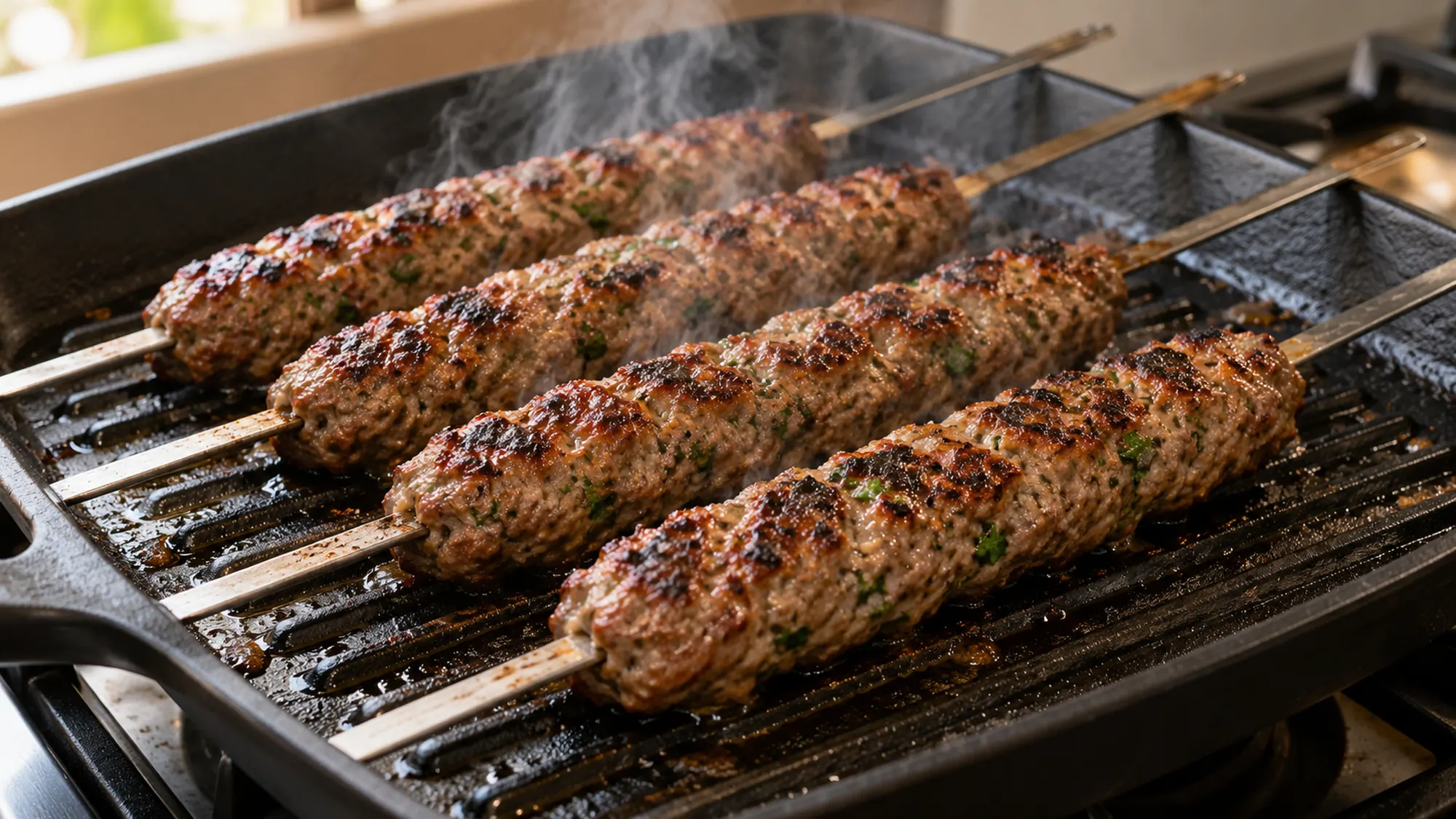
I prefer metal skewers for an indoor grill pan because they are reusable and do not need soaking. They also get hot, so use tongs and keep a clean platter ready. If the skewers are longer than the pan, shape shorter portions rather than balancing them awkwardly.
- Change the meat: the original blend includes lamb; swapping it back changes flavor and nutrition.
- Adjust the heat: reduce cayenne, not the entire spice mixture.
- Use patties: small, evenly thick ovals are practical if skewers do not fit your equipment.
- Gluten-free needs: the source permits omitting bread, but check every packaged ingredient and avoid cross-contact.
- Turn patiently: let the first surface brown before moving it. If a skewer feels fragile, support the meat with a thin spatula instead of lifting only by the metal handle.
A cohesive mixture and even thickness matter more than making every skewer look identical.
Nutrition and Safe Cooking
Beef provides protein, but the finished meal also reflects the meat’s fat content and whatever you serve alongside it. This version uses 85/15 beef; choosing much leaner meat can change both the estimate and the texture. A salad or vegetable side adds variety without needing to recast kofta as diet food.
The listed portion is two of ten skewers, with the measured pan oil included conservatively. Pita, tahini and other accompaniments are excluded. Salted sumac can also contribute seasoning, so look at your spice label before adding an extra pinch of salt.
- Cook ground beef safely: use a thermometer and reach 160°F (71°C), checking the meat rather than the hot skewer.
- Separate raw and cooked: use a fresh platter when the kofta leave the pan.
- Watch allergens: the bread contains wheat, and tahini contains sesame if you add it.
- Store promptly: refrigerate leftovers in shallow containers and reheat to 165°F (74°C).
Use the portion estimate as a guide, and let a thermometer settle the question of doneness.
Bottom Line
Beef kofta is a good reminder that ground meat does not have to become burgers or a pot of sauce. Parsley, onion and a measured spice mixture give it a different personality. Brown the outside, keep the shape manageable, and have the sides ready before the first batch leaves the pan.
Give these skewers a hot pan, a gentle turn and a fresh side, and dinner needs little else.
Beef Kofta Recipe

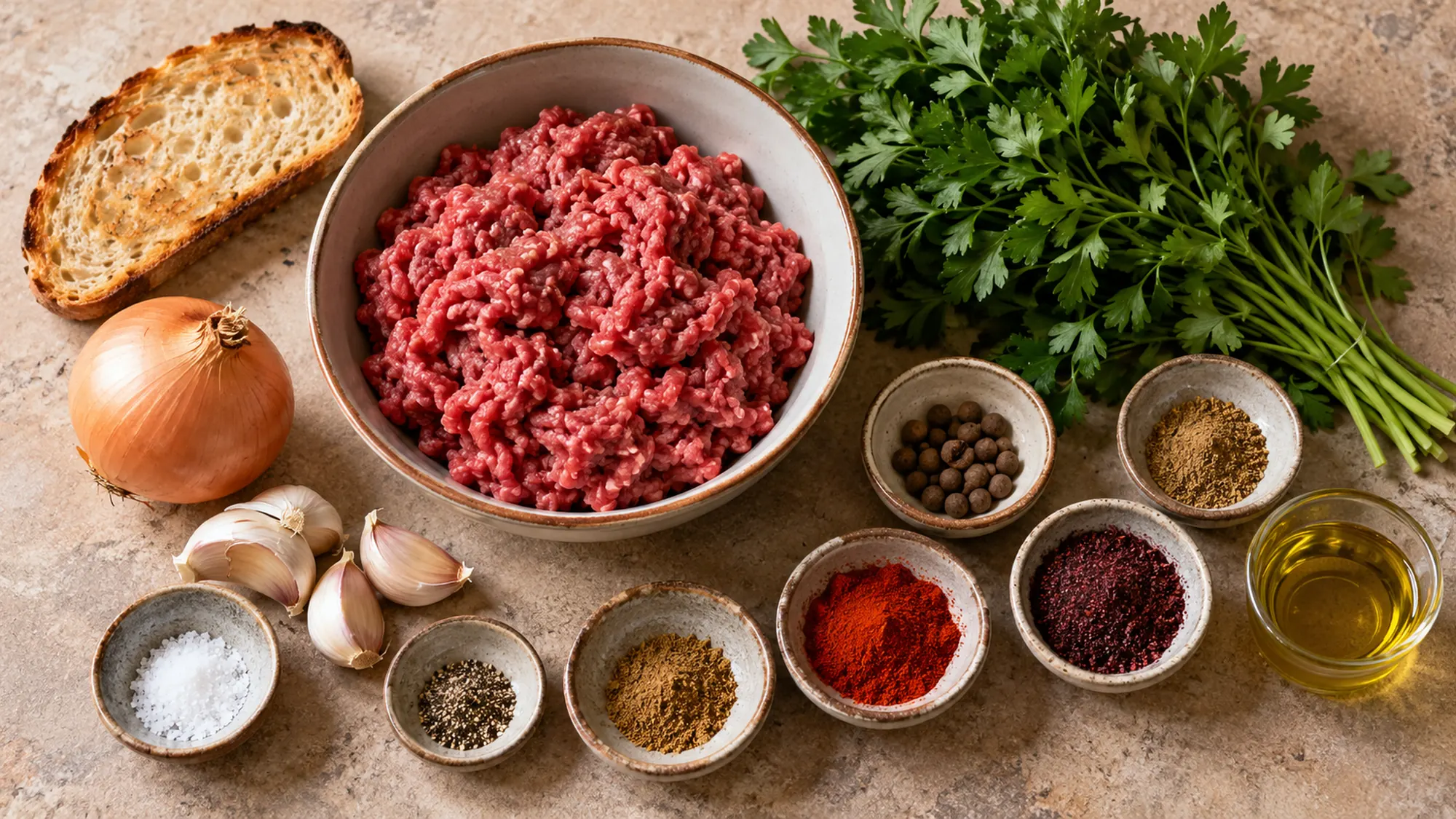
Ingredients
- 680 g ground beef 85% lean
- 150 g yellow onion quartered
- 6 g garlic
- 60 g flat-leaf parsley leaves and tender stems
- 30 g white bread toasted, soaked and squeezed
- 3 g ground allspice
- 1 g cayenne pepper
- 1 g ground cardamom
- 1 g ground sumac
- 1 g ground nutmeg
- 1 g sweet paprika
- 5 g fine salt
- 1 g black pepper
- 15 ml olive oil for grill pan
- pita, tomato wedges and tahini sauce optional, excluded from estimates
Equipment
- 1 Food processor
- 1 Metal skewers
- 1 Grill pan
- 1 Instant-read thermometer
Instructions
- Soak toasted bread briefly in water, then squeeze firmly. Pulse onion, garlic and parsley in a food processor until finely chopped. Add beef, squeezed bread, spices, salt and pepper; pulse just until cohesive.
- Divide into ten equal portions. With damp hands, shape each into an even log around a metal skewer, about 1 inch thick. Chill briefly if too soft to handle.
- Heat a grill pan over medium-high heat and brush with the measured olive oil. Lay the skewers in a single layer, working in batches if needed.
- Cook about 8–10 minutes, turning to brown each side, until the center reaches 160°F (71°C). Check temperature in the thickest meat without touching the skewer.
- Serve two skewers per portion. This all-beef version follows the source-permitted substitution for its beef-and-lamb mixture. Optional pita, tahini and vegetables are not included in estimates.
Nutrition
Video
Notes
Tried this recipe?
Let us know how it turned out!Hi, I’m Laura, the voice behind Tastiva. I’ve always believed that eating well should feel enjoyable, comforting, and realistic—not like another complicated rule to follow. I love creating recipes that fit into everyday life, sharing simple nutrition ideas, and finding small ways to make meals feel a little better without losing the pleasure of good food.