
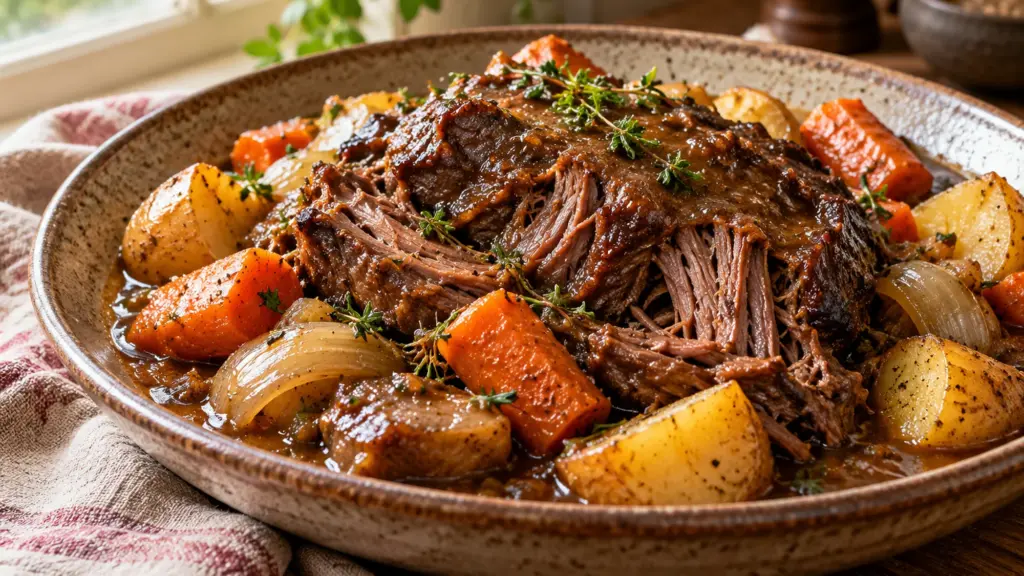
A roast can be fully cooked and still refuse to yield to a fork. Beef pot roast needs more than a safe temperature: it needs enough time in a covered pot for a tough, flavorful cut to become tender. This version braises chuck with onion, thyme and broth, adding carrots and potatoes later so they do not spend the entire afternoon in the oven.
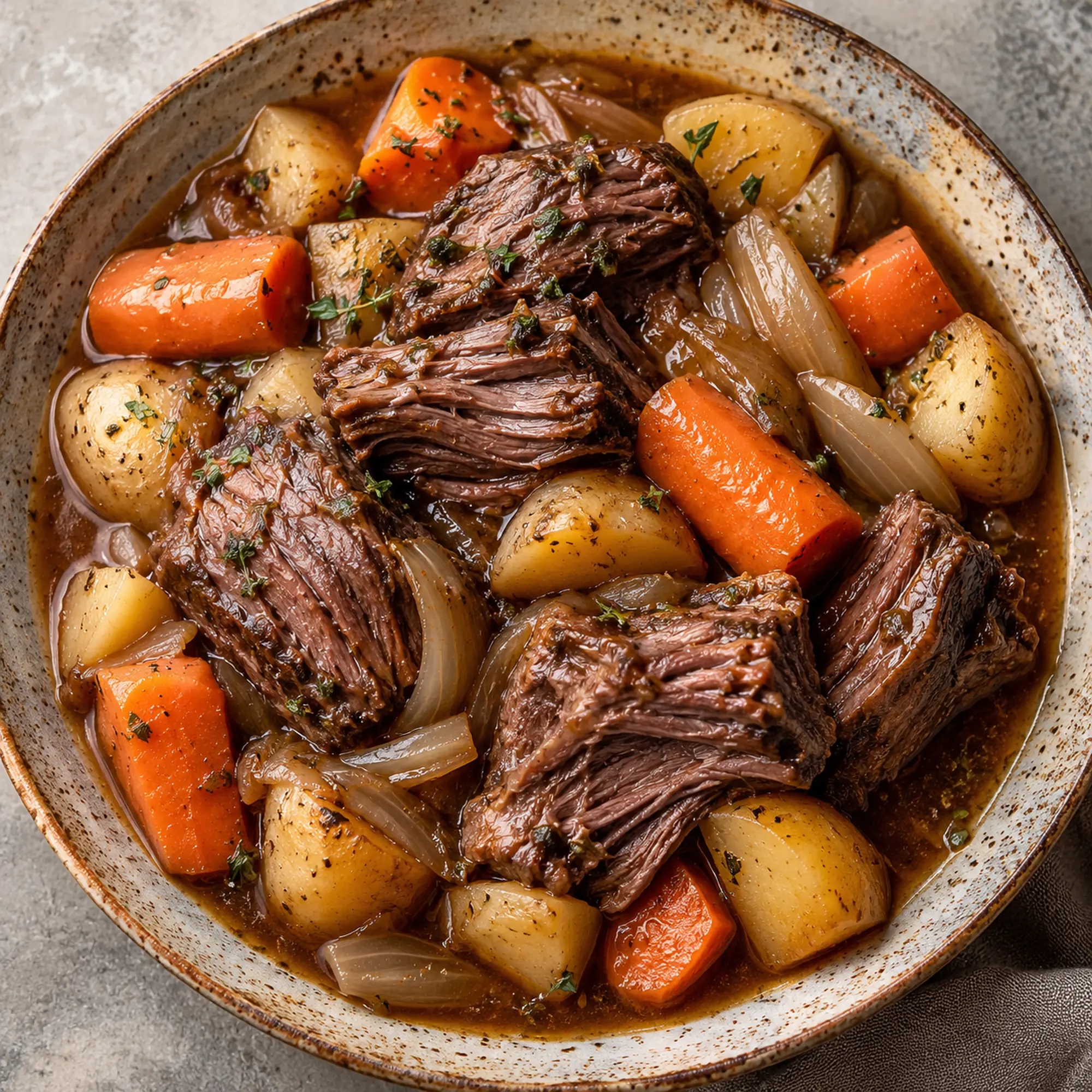
Judge pot roast by how easily the meat yields, not by the clock alone.
I would choose chuck for this job and save a lean, expensive roasting cut for another dinner. The long cooking time is part of the recipe, not a problem to solve by turning the oven up. Most of it is hands-off, but allow some flexibility before promising an exact serving time.
Serving Beef Pot Roast
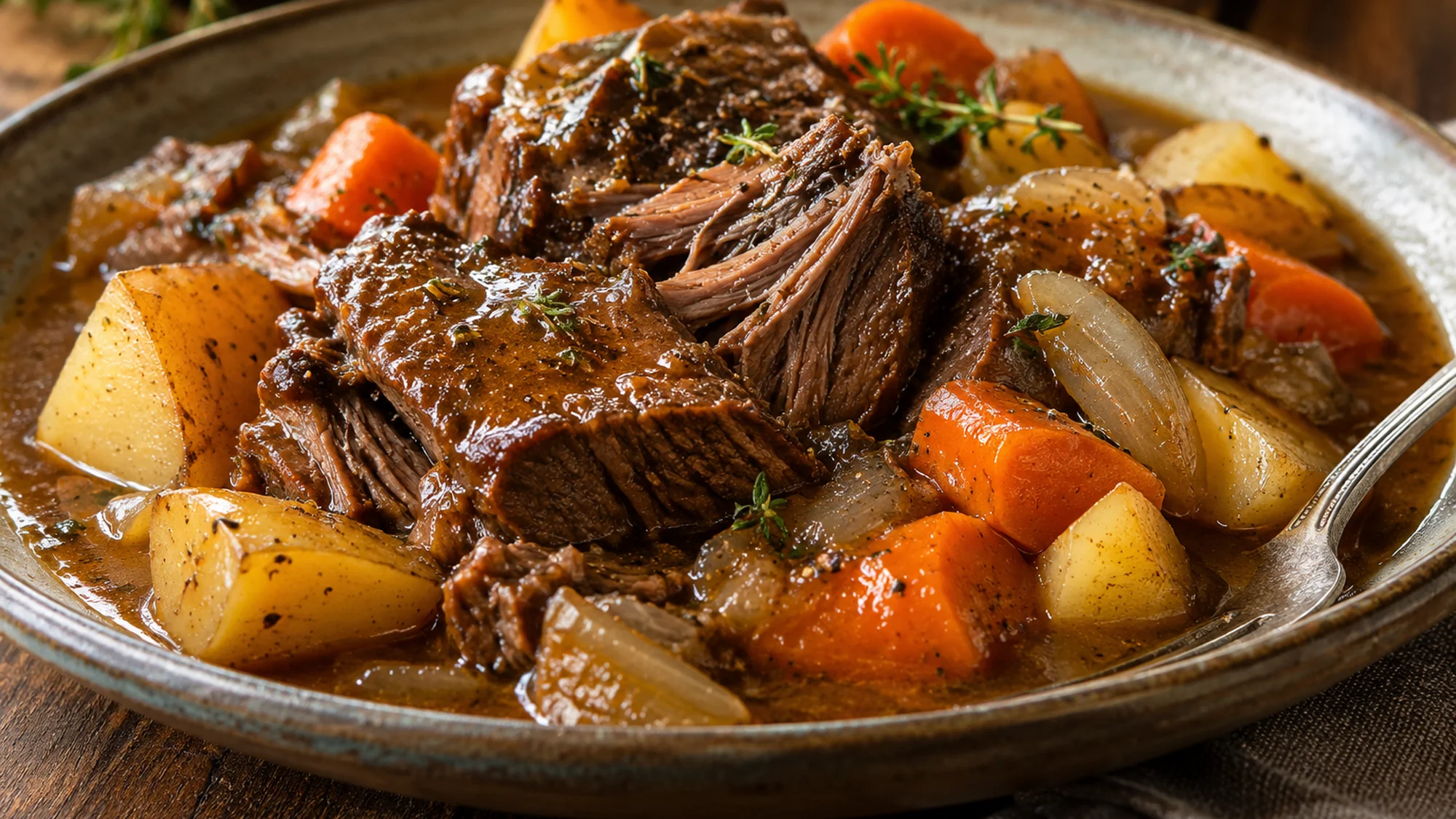
The potatoes and carrots already make this a substantial one-pot dinner. I would add something fresh and crisp at the table rather than another creamy side. Lift the roast out carefully; when it is ready, it may separate into large pieces instead of behaving like a neat carving-board centerpiece.
Skim visible pools of fat from the sauce, then taste before adding salt. Broth brands vary, and evaporation concentrates what is already there. If you prefer thicker gravy, simmer the liquid briefly after removing the meat and vegetables; there is no reason to keep cooking tender potatoes while you adjust the sauce.
- For a family-style meal, separate a few large pieces of beef before bringing the platter out so everyone can serve without carving at the table.
- Offer the vegetables with a spoonful of gravy, then pass the rest separately.
- This keeps portions visible and prevents the first plate from taking all the sauce.
Keep some braising liquid with the meat when you portion leftovers.
Cuts, liquid and vegetable changes
Chuck is the intended cut because it suits long, moist cooking. A very lean round roast will not necessarily become equally succulent with the same treatment. Brisket also needs a long braise, but its shape and thickness change the timing; it is not a minute-for-minute swap.
This version uses broth and tomato paste rather than wine. The Laura in the Kitchen demonstration linked in the recipe shows the same basic sear-and-braise approach with red wine, celery and rosemary. Those differences are worth noting so you can follow the written ingredient list without wondering where the wine went.
- Carrots and potatoes should be cut into pieces that suit the long finish, not tiny dice that disappear.
- Swapping in very soft vegetables needs a later addition.
- I would keep the original vegetables for a first attempt and experiment with one change later, using tenderness rather than color as the guide.
| Vegetable | Why it joins later |
|---|---|
| Carrot chunks | Adding during the last 60–90 minutes helps them hold their shape. |
| Potato chunks | Check with a knife; remove early if tender before the beef. |
Change the supporting flavors if you like, but keep the slow, covered cooking method.
Nutrition and safe leftover handling
Beef contributes protein, potatoes provide starch, and the vegetables bring more variety to the pot. The fat content depends heavily on the roast’s marbling and how much is trimmed or skimmed. The card estimate includes all ingredients and sauce divided into six servings, so it cannot precisely predict a heavily trimmed plate.
For whole beef roasts, 145°F (63°C) with a three-minute rest is the safe minimum, but chuck usually needs much longer cooking to become fork-tender. Divide leftovers into shallow containers and refrigerate promptly; USDA recommends three to four days refrigerated and reheating to 165°F (74°C). Do not leave the whole heavy pot cooling on the counter for hours.
- A smaller helping of beef with a generous share of the vegetables balances a particularly rich roast.
- Skimmed gravy, trimmed fat and added bread all change the estimate in different directions.
- The useful number is the one tied to the actual portion, not the size of the serving spoon.
Tenderness and food safety are different checks; this recipe needs both.
Bottom Line
A good pot roast is a lesson in leaving enough time and checking the right thing. Brown the chuck, keep the pot covered, and wait for the meat to relax into tender pieces. Add the vegetables later, save the gravy, and let the fork—not a rigid dinner timer—tell you when the braise has done its work.
This is a slow dinner by design, with the vegetables joining when their shorter cooking time makes sense.
Beef Pot Roast Recipe

Ingredients
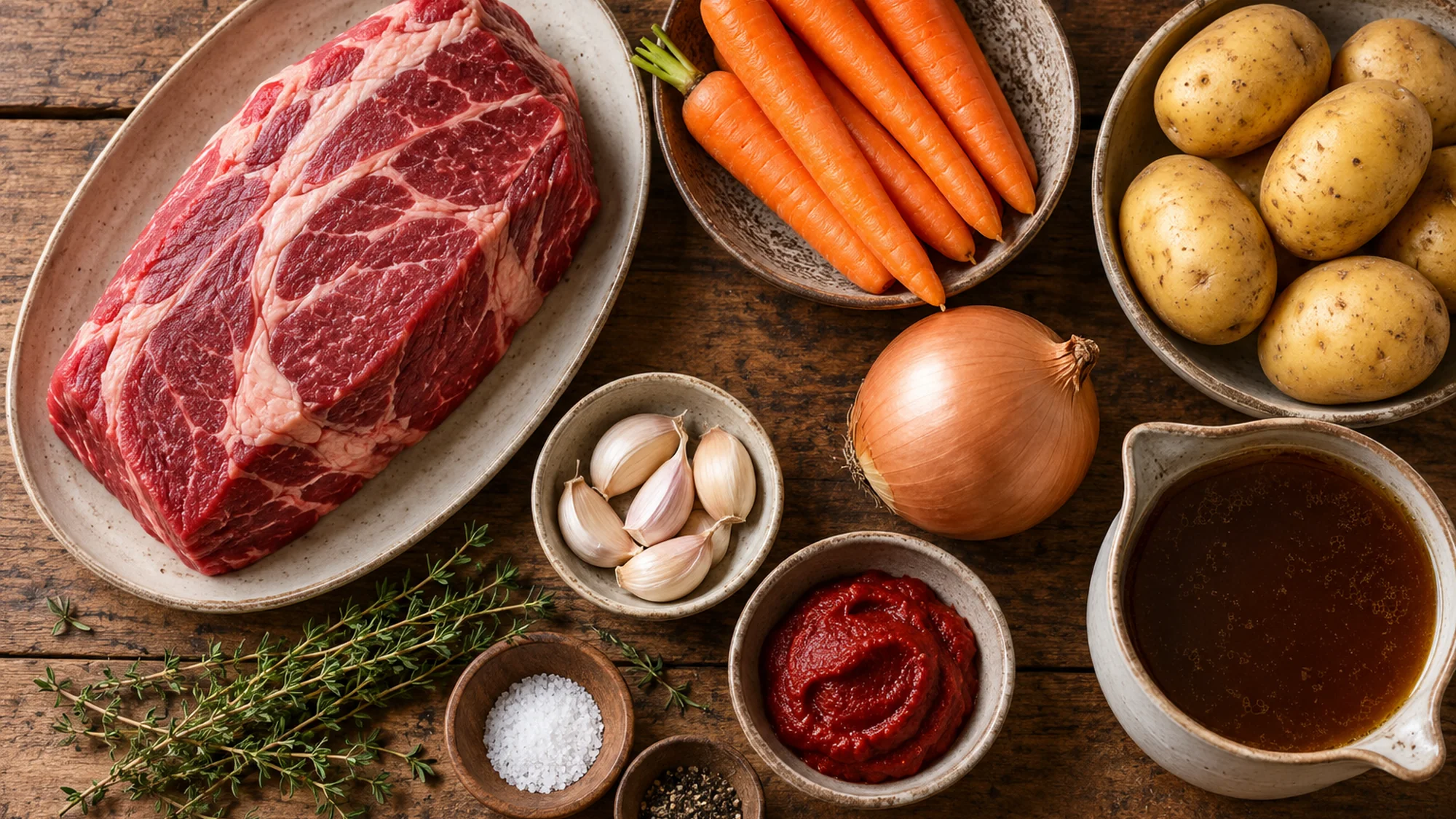
- 1.5 kg boneless beef chuck roast about 3.3 lb
- 2 tablespoons olive oil
- 6 g fine salt about 1 teaspoon
- 1 teaspoon black pepper
- 1 large onion cut into wedges, about 200 g
- 5 cloves garlic smashed
- 2 tablespoons tomato paste
- 2 tablespoons all-purpose flour 15 g
- 600 ml beef broth 2 1/2 cups, plus water if needed
- 1 teaspoon dried thyme
- 400 g carrots peeled, cut into large chunks
- 600 g potatoes peeled, cut into 4 cm / 1 1/2 inch chunks
Equipment
- 1 Large Dutch oven with tight-fitting lid
- 1 Tongs
- 1 Instant-read thermometer
Instructions
- Heat the oven to 325°F (165°C). Pat beef dry and season with salt and pepper. Heat oil in a large Dutch oven over medium-high heat. Brown the roast for 4–5 minutes on each broad side, then transfer to a plate.
- Lower heat to medium. Add onion and cook 4 minutes, stirring. Add garlic and tomato paste; cook 1 minute. Sprinkle in flour, stir for 1 minute, then gradually add broth, scraping the bottom. Add thyme.
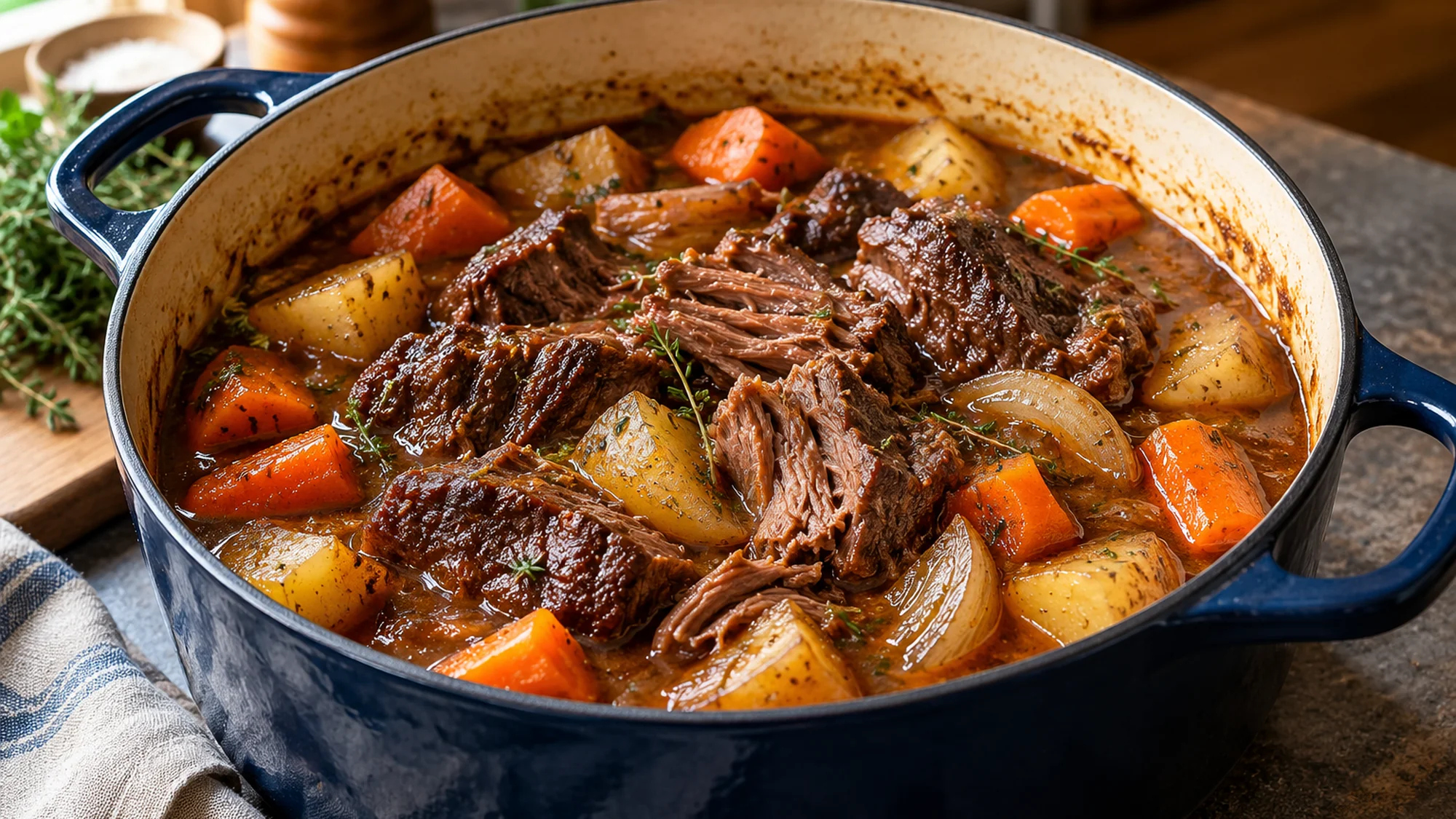
- Return the roast and its juices to the pot. The broth should come partway up the meat, not completely cover it. Bring to a gentle simmer, cover tightly and put in the oven for 2 1/2 hours.
- Carefully add carrots and potatoes around the beef. If liquid is very low, add hot water to restore a shallow pool. Cover and cook 60–90 minutes longer, until the vegetables are tender and the beef separates easily with a fork. If the beef still resists, keep cooking covered and check every 20–30 minutes; remove tender vegetables if needed.
- Transfer beef and vegetables to a platter. Rest the beef 10 minutes. Skim visible fat from the braising liquid; simmer it uncovered briefly if you want thicker gravy. Divide beef into large pieces or slice across the grain and serve with vegetables and gravy.
Nutrition
Video
Notes
Tried this recipe?
Let us know how it turned out!Hi, I’m Laura, the voice behind Tastiva. I’ve always believed that eating well should feel enjoyable, comforting, and realistic—not like another complicated rule to follow. I love creating recipes that fit into everyday life, sharing simple nutrition ideas, and finding small ways to make meals feel a little better without losing the pleasure of good food.