
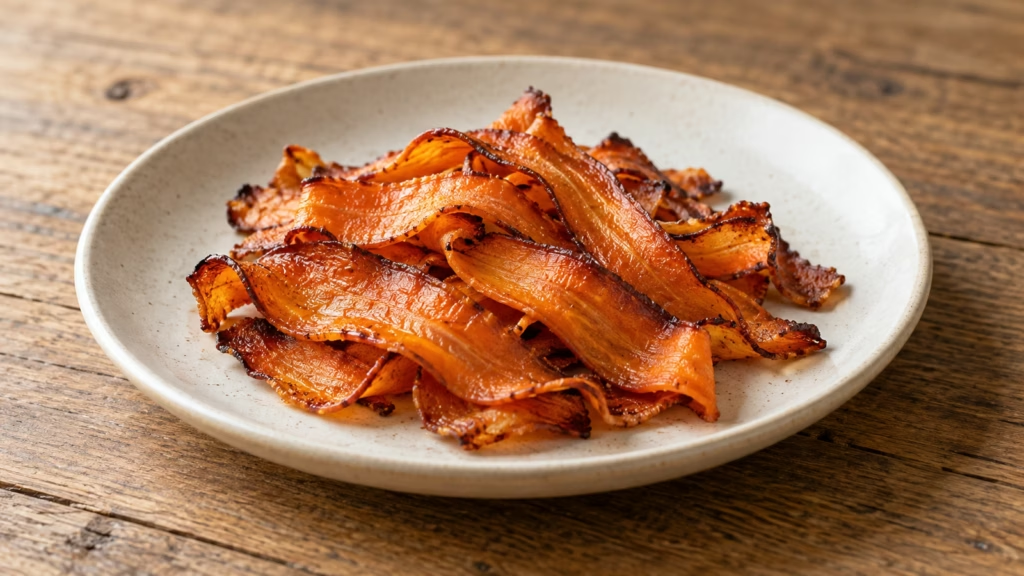
A carrot ribbon can brown at its tips while the middle is still soft. Carrot bacon works best when you lean into that delicate shape: peel thin, even strips, coat them lightly, and bake in a single layer while watching the edges. The result is smoky, sweet-salty carrot with some crispness, rather than an exact copy of pork bacon.
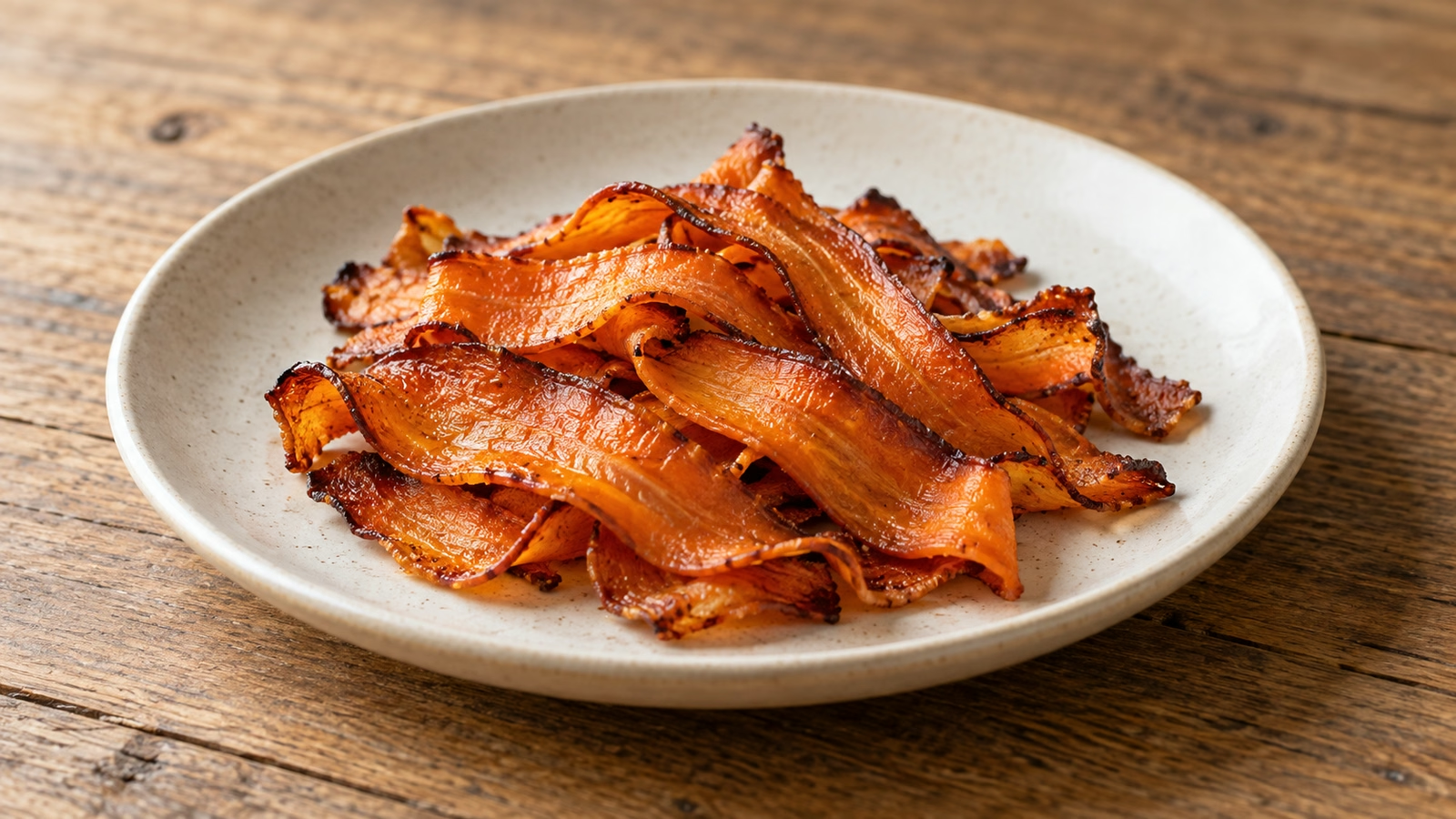
Thin ribbons and a light coating give carrot bacon a better chance to brown before the tips burn.
What carrot bacon can realistically deliver
The name describes the smoky seasoning and strip-like shape. Carrots keep their own sweetness and vegetable texture, especially through the thicker center. I would choose these ribbons as a savory accent for a sandwich or grain bowl, where a little browned edge and smoky flavor have a clear job.
The format was widely shared in 2020, including Parade’s coverage of carrot bacon, and appears again in its July 2026 viral-recipe roundup. There is no need to pretend it is a brand-new discovery. The useful question is how to make the thin pieces cook evenly in an ordinary oven.
- Expect variation: fine edges may become crisp while broader centers stay a little chewy. That is a realistic vegetable result.
- Serve as an accent: the recipe makes four small topping portions, not four substantial protein portions.
- Eat it soon: moisture softens the ribbons as they sit. A small batch is easier to enjoy at its best.
- Keep the flavor balanced: the carrots should remain recognizable beneath the soy sauce, maple and smoked paprika.
Peel wide, thin ribbons before mixing the glaze
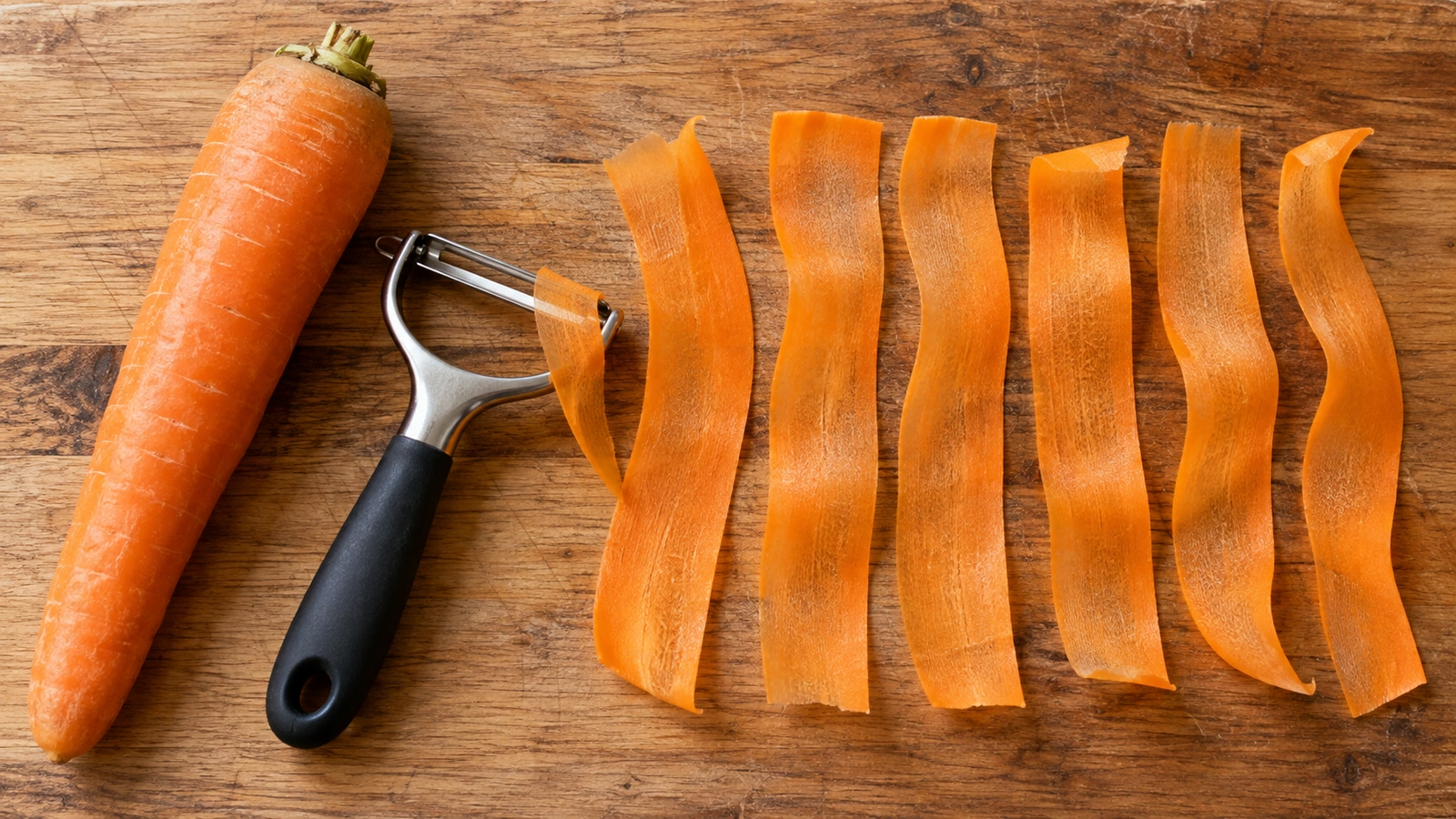
Choose large, fairly straight carrots with enough width for a vegetable peeler. Baby carrots and very narrow roots produce short scraps instead of ribbons. Trim and peel the outside, then rest each carrot firmly on a board and pull the peeler away from your hand. Rotate as needed, stopping before the remaining center becomes awkward to hold.
Weigh the ribbons after trimming and peeling: 200 grams is the amount the coating is designed to cover. Keep the unused carrot centers for another meal rather than forcing them into the same tray. They are thicker and would need a different cooking time.
- Similar thickness: use steady peeler pressure. Thick strips behave more like roasted carrot slices and take longer.
- Dry surface: blot excess rinse water before coating so the glaze is not diluted.
- Small scraps: bake them together at one end of the tray where you can remove them early.
- Other carrot plans: if you want substantial pieces rather than ribbons, our hot honey roasted carrots use a method designed for thicker batons.
Coat lightly and watch the color
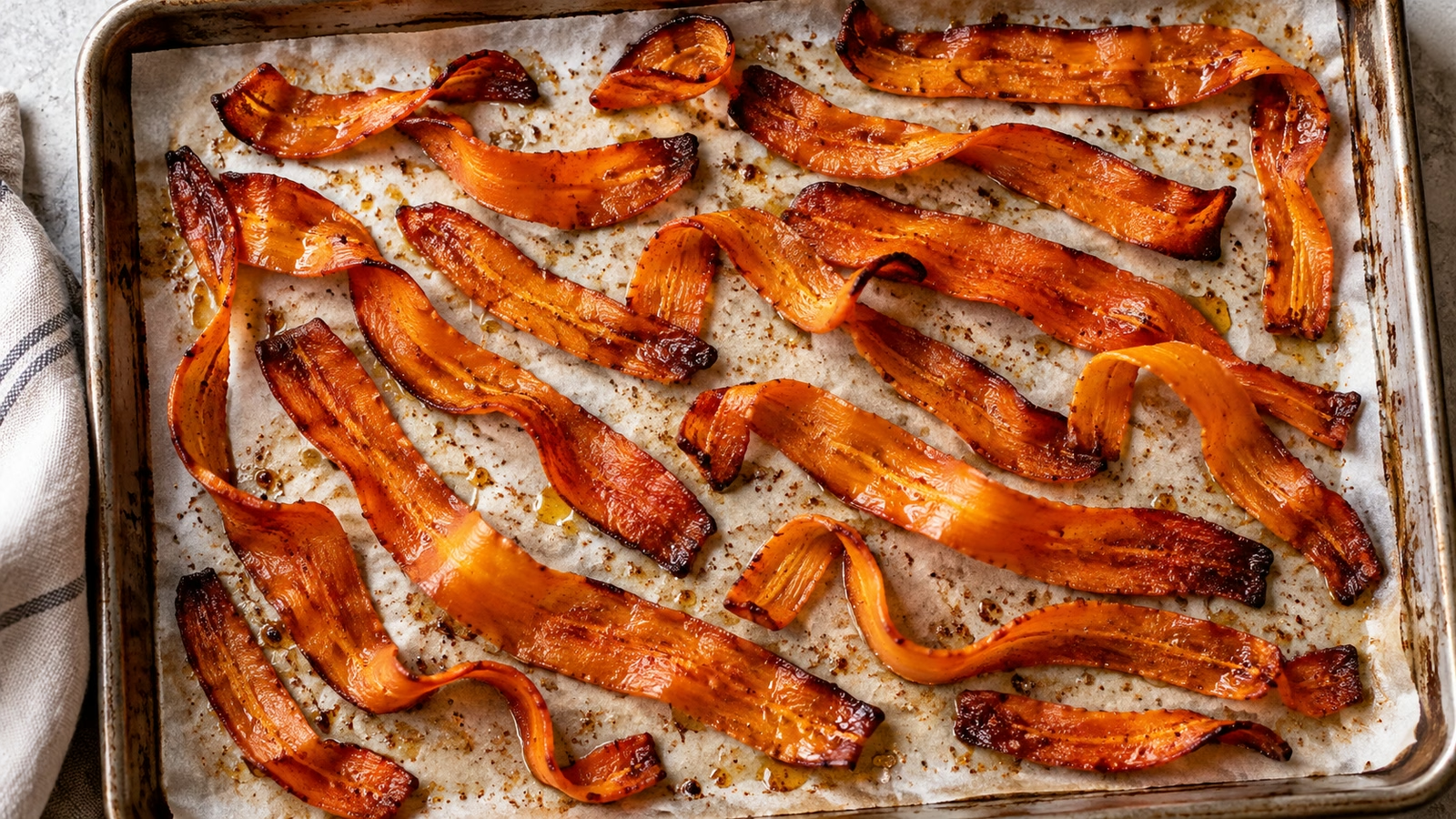
Soy sauce supplies salt and savory flavor, maple syrup adds sweetness, and smoked paprika brings the smoke note without liquid smoke. Stir the coating well before tossing so the paprika does not settle in one corner. The ribbons should look evenly moistened, not swim in a puddle.
The recipe uses a moderate 350°F (175°C) oven and asks you to check early. A thin carrot edge and a sugary coating can color quickly, and ovens differ. I prefer removing a few finished pieces ahead of the others to leaving the whole tray in until every strip looks equally dark.
- Overlap: separate ribbons before baking. Hidden surfaces stay wetter, and stuck pieces tear when you try to turn them.
- Wet middle: give that ribbon more time on its own, while taking the already browned pieces off the tray.
- Dark tips: check immediately rather than waiting for the timer. Deep brown is different from blackened and bitter.
- Cool briefly: the surface firms as the ribbons cool for a few minutes. Assess one after that pause before extending the bake.
- Doubling: use two trays and rotate them. Piling a double batch on one tray defeats the spacing that helps this method.
Use the ribbons where their texture helps
Add carrot bacon to a sandwich just before eating, tuck it into a wrap, or scatter it over a bowl after any wet dressing. Burying the pieces under sauce makes their crisp edges short-lived. I would use a few ribbons for contrast and let beans, tofu, eggs or another main ingredient provide the meal’s substance.
The estimate includes the full measured coating, even though a little may remain in the bowl or on the parchment. Soy sauce is the main sodium contributor here. A lower-sodium product changes both seasoning and the nutrition estimate; do not assume a different bottle has identical numbers.
- Storage: refrigerate leftovers promptly in a covered shallow container at 40°F (4°C) or below. Use within three to four days.
- Reheating: warm only what you need and bring leftovers to 165°F (74°C). Expect softer ribbons than the freshly baked batch.
- Time outside: keep cooked food unrefrigerated for no more than two hours, or one hour above 90°F (32°C).
- Allergens: standard soy sauce contains soy and wheat. For gluten-free needs, use a verified suitable sauce and check the other ingredients.
- Vegan ingredients: maple syrup keeps this version plant-based; honey would change that choice.
Carrot Bacon Recipe

Ingredients
- 200 g carrot ribbons prepared weight; peeled lengthwise from about 2 large carrots
- 1 tablespoon soy sauce 16 g
- 2 teaspoons pure maple syrup 13 g
- 2 teaspoons olive oil 9 g
- 1 teaspoon smoked paprika 2.3 g
- 1/4 teaspoon garlic powder 0.8 g
Equipment
- 1 vegetable peeler
- 1 Kitchen scale
- 1 large rimmed baking sheet
- 1 Parchment paper
- 1 Mixing bowl
- 1 Tongs
Instructions
- Heat the oven to 350°F (175°C). Line a large rimmed baking sheet with parchment. Peel thin, even ribbons from trimmed large carrots until you have 200 g; save thick centers for another use.
- Whisk soy sauce, maple syrup, olive oil, smoked paprika and garlic powder in a bowl. Add the ribbons and toss gently until lightly coated.
- Arrange ribbons separately in one layer on the tray. Use a second tray if needed. Avoid adding any pooled coating in thick puddles.
- Bake for 8 minutes, then turn the ribbons carefully. Continue for about 4–10 minutes, checking every 2 minutes and removing individual pieces when browned at the edges. Thickness and ovens change the timing; do not wait for every piece to become equally dark.
- Let cool for 3 minutes so the edges firm slightly. Divide into four small topping portions and serve promptly. Expect crisp edges with some chewy centers rather than an exact meat-bacon texture.
Nutrition
Notes
Tried this recipe?
Let us know how it turned out!Sources
- Parade: carrot bacon background and thin-ribbon technique
- Parade: July 2026 viral-recipe collection
- USDA FSIS: safe handling of cooked leftovers
- USDA FoodData Central: SR Legacy ingredient data
Hi, I’m Laura, the voice behind Tastiva. I’ve always believed that eating well should feel enjoyable, comforting, and realistic—not like another complicated rule to follow. I love creating recipes that fit into everyday life, sharing simple nutrition ideas, and finding small ways to make meals feel a little better without losing the pleasure of good food.