
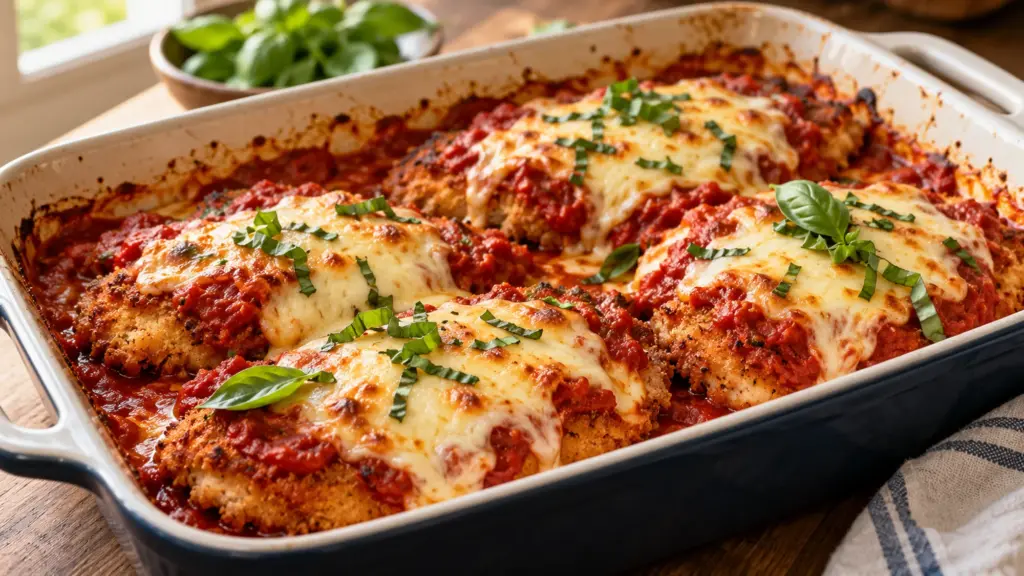
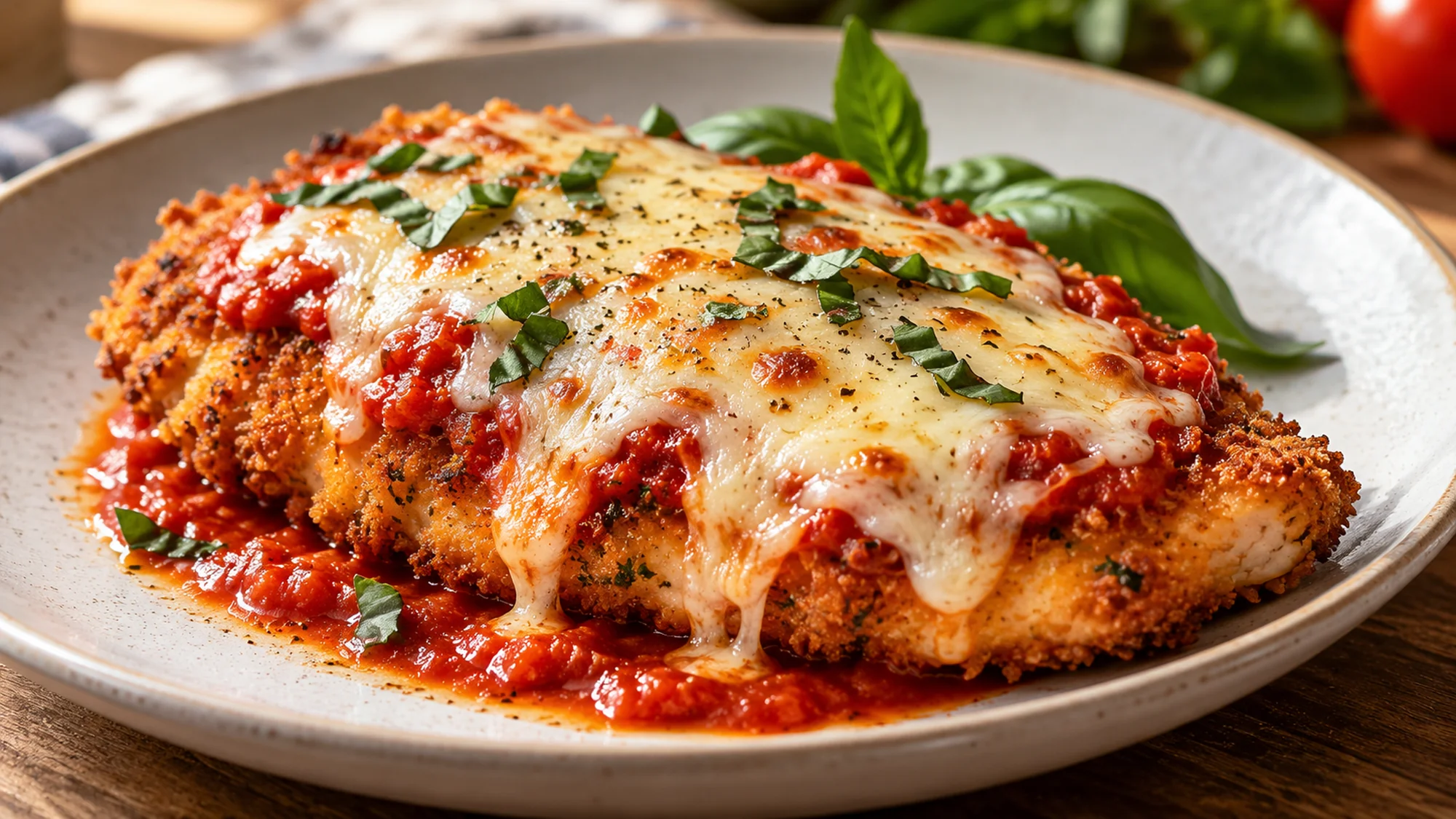
The cheese is melted, the tomato sauce is bubbling, and the chicken underneath should still have something to say. This chicken parmesan keeps a little breaded edge uncovered instead of burying every cutlet in sauce. Thin chicken pieces brown in a skillet first, then finish in the oven with marinara, mozzarella and Parmesan.
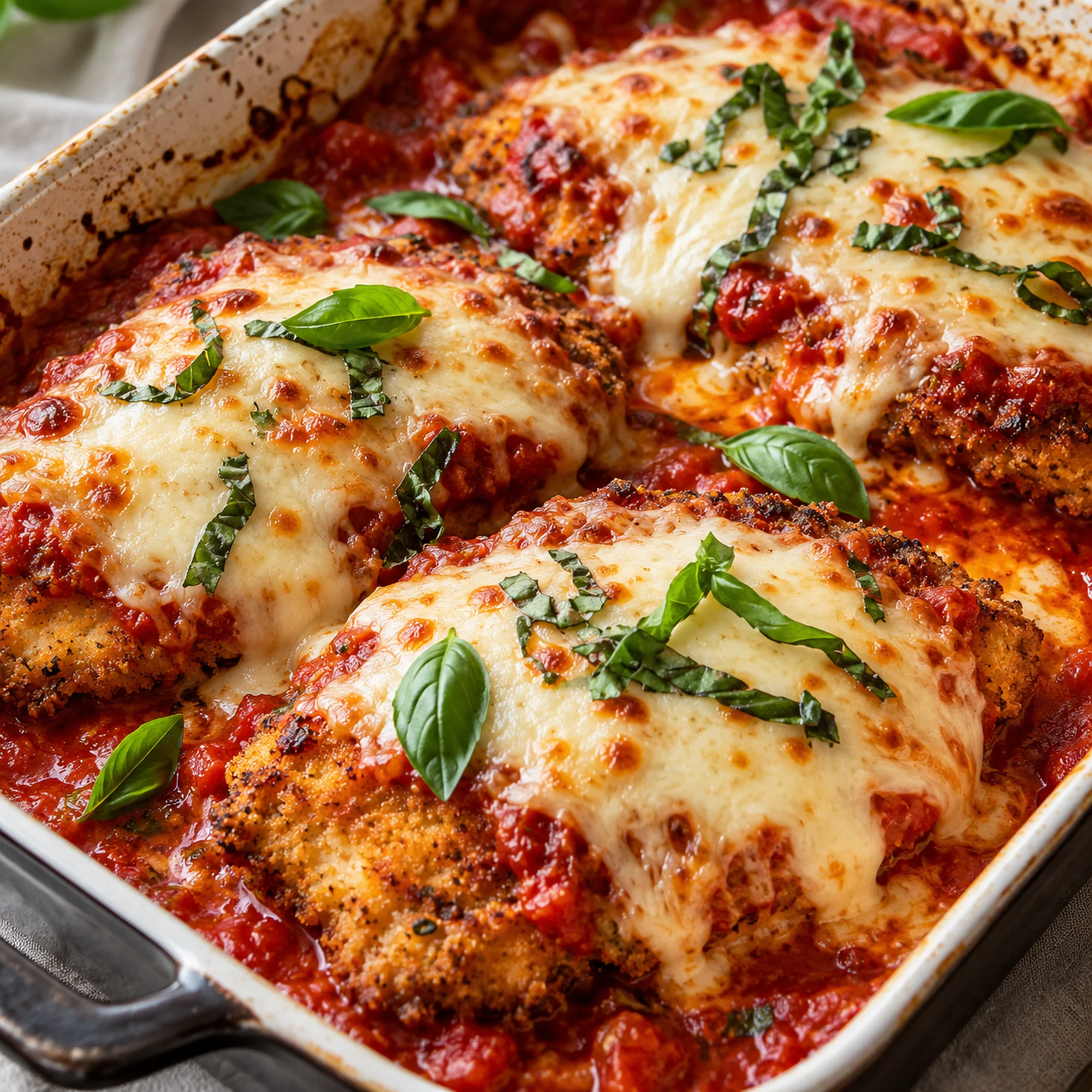
Put the sauce where you want softness, and leave some breaded edges exposed for contrast.
I would rather have a modest layer of cheese that melts evenly than a heavy pile that hides the whole cutlet. The pleasure here is the combination: savory crumbs, tangy tomato, tender chicken and a stretchy top. Each part needs a little space on the plate.
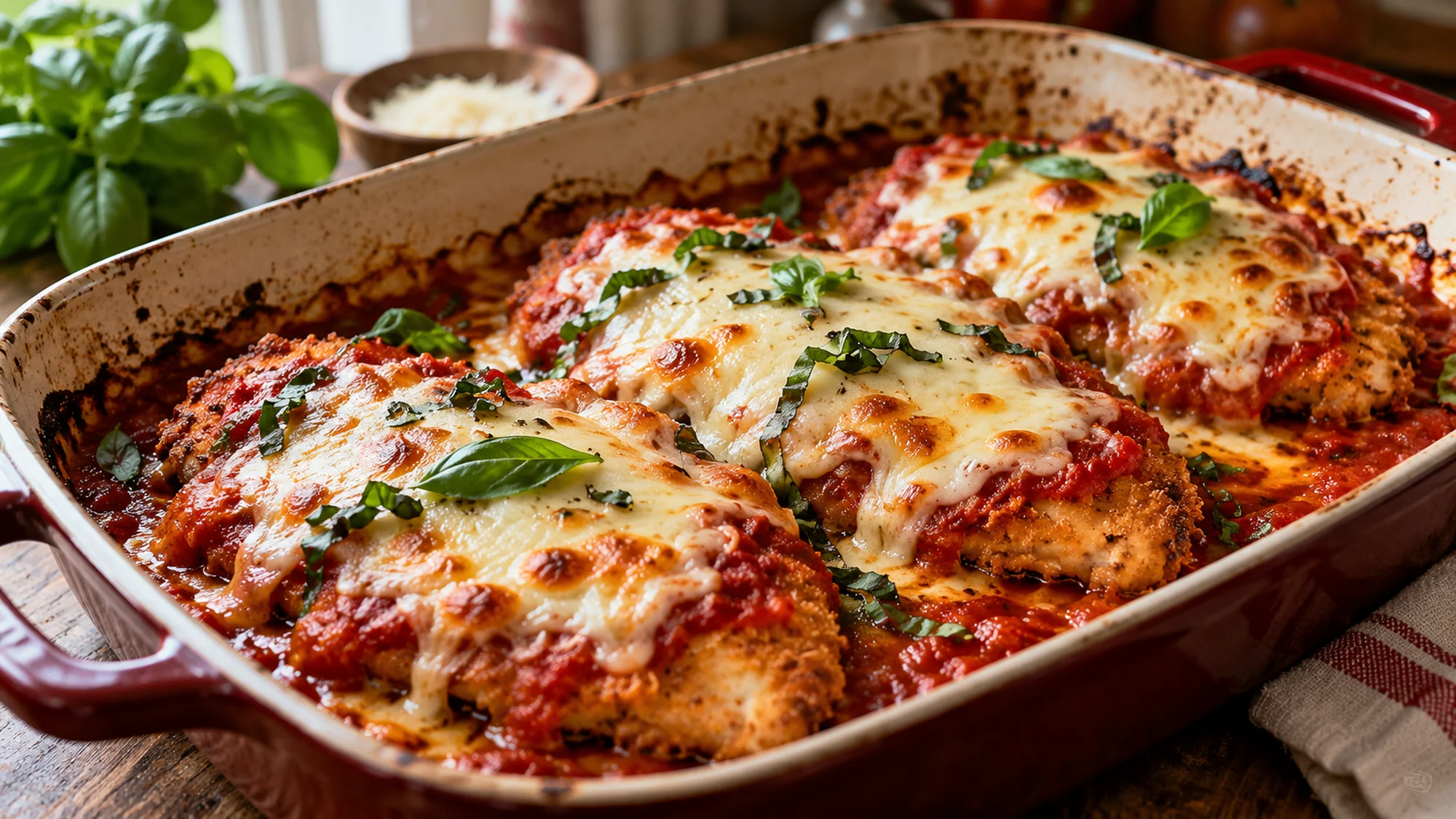
Serving Chicken Parmesan
A small portion of pasta is a familiar partner, but it is not compulsory. I would often choose a green salad or roasted broccoli to bring a different texture beside the chicken. If serving pasta, cook it separately and reserve some warm sauce rather than asking the cutlet’s topping to sauce the whole bowl.
Give the dish a few minutes out of the oven before lifting the cutlets. A wide spatula helps keep the coating underneath in place. Fresh basil belongs at the finish, where its aroma is more noticeable than if it spends the full baking time under the cheese.
- A smaller cutlet with salad can make a comfortable lunch, while a larger appetite may call for a modest pasta portion.
- Put extra marinara in a small jug rather than soaking the entire plate.
- That leaves the exposed breaded edges available for anyone who particularly enjoys their crisp texture.
Let the chicken remain the main event instead of stacking it on a mountain of pasta.
Choosing crumbs, sauce and mozzarella
Plain breadcrumbs mixed with Parmesan give you control over the seasoning. Panko makes a coarser coating, but it will not stay crisp wherever tomato sauce touches it. That is a normal trade-off, not a failed dinner; the exposed edges are there to provide contrast.
Low-moisture mozzarella is the straightforward choice for an even melted topping. Fresh mozzarella contains more water, so drain and blot it well if you use it. I would skip promises that every cheese swap behaves the same: the amount of moisture changes both the topping and the crumbs below.
- For gluten-free needs, use suitable crumbs and flour and check the marinara label, with clean equipment if cross-contact matters.
- The coating’s texture may differ.
- Chicken thighs are not a simple substitute for evenly thin breast cutlets here; their shape and cooking needs require separate decisions rather than the same oven timer.
| Choice | What changes |
|---|---|
| Plain crumbs | Fine, even coating |
| Panko | Coarser exposed crunch |
| Fresh mozzarella | More moisture; drain well |
A thick marinara is easier to manage than a watery sauce that floods the baking dish.
Nutrition and safe leftovers
Chicken supplies protein, while breading, frying oil and cheese make this more substantial than a plain roasted cutlet. The card estimate includes all the measured coating and oil, although some may remain in the dishes or skillet. It does not include pasta, bread or extra sauce served alongside.
Use a thermometer to confirm the chicken reaches 165°F (74°C) in its thickest part. Refrigerate leftovers within two hours, or one hour above 90°F (32°C), and use within three to four days according to USDA guidance. Reheat to 165°F (74°C); the coating will be softer after storage, especially beneath the sauce.
- A crisp vegetable side provides contrast because the chicken already brings cheese and a breaded coating.
- The goal is contrast, not an apology for eating something rich.
- A smaller cheese layer changes the estimate, but removing cheese also changes the dish’s character and should be a deliberate choice.
Enjoy the breaded coating as part of the meal, with a clear idea of what the portion includes.
Bottom Line
Even cutlets, a tidy breading station and a restrained hand with the sauce make this dinner more manageable. Brown the coating first, finish the chicken safely in the oven, and keep a few golden edges visible. The result should feel like chicken with a flavorful topping, not cheese and sauce with a chicken-shaped surprise underneath.
The best balance comes from keeping the crisp, saucy and melted parts distinct enough to notice.
Chicken Parmesan Recipe

Ingredients
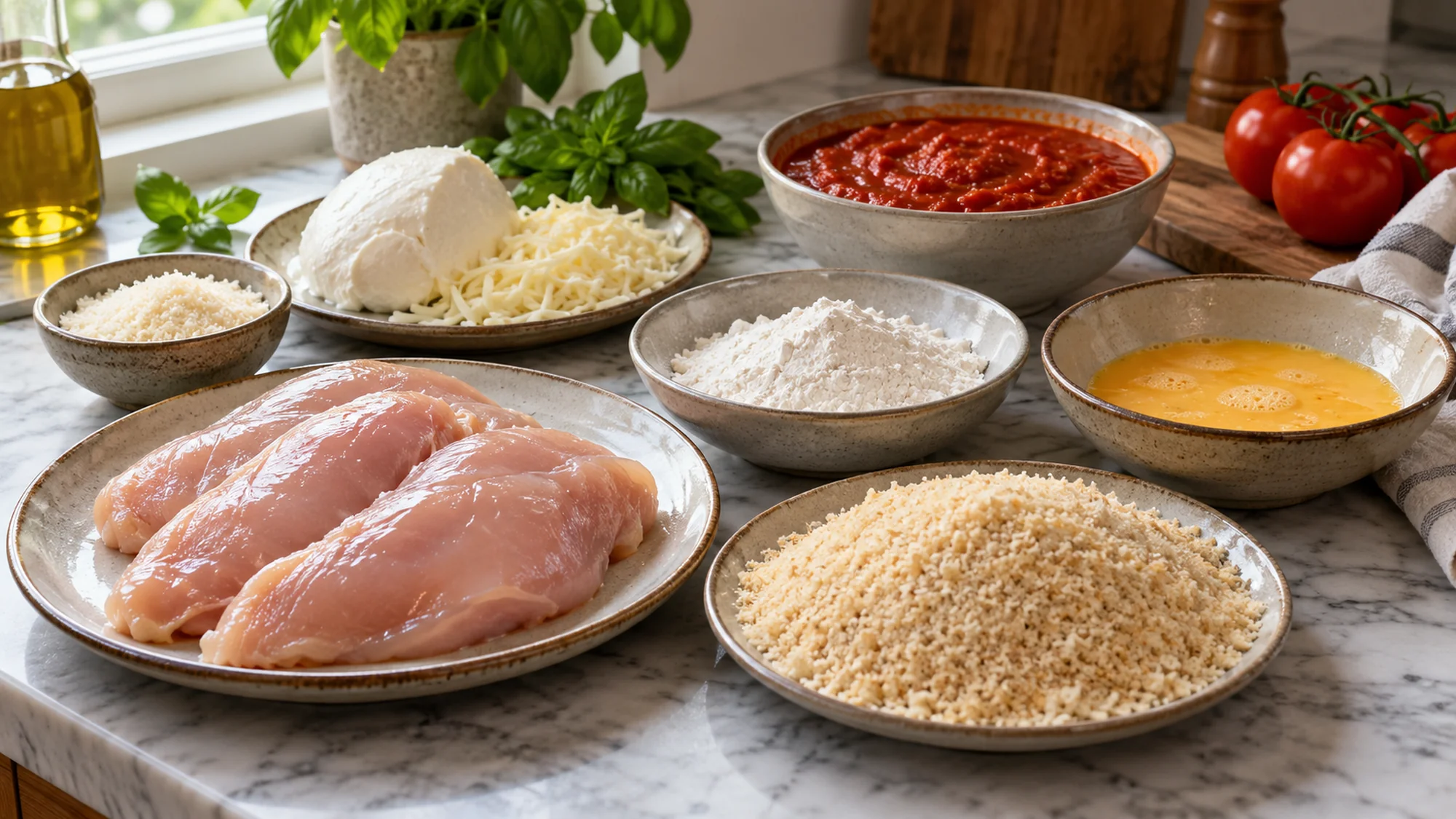
- 600 g boneless skinless chicken breasts 2 large breasts, sliced horizontally into 4 cutlets
- 40 g all-purpose flour about 1/3 cup
- 2 large eggs beaten, about 100 g without shells
- 100 g plain breadcrumbs about 1 cup
- 40 g finely grated Parmesan about 1/2 cup
- 2 g fine salt about 1/3 teaspoon
- 1/2 teaspoon black pepper about 1 g
- 4 tablespoons olive oil 54 g; divided for frying
- 400 g marinara sauce about 1 2/3 cups
- 120 g low-moisture mozzarella shredded, about 1 cup
- 2 tablespoons torn fresh basil about 4 g
Equipment
- 1 Large skillet
- 1 Baking dish
- 1 Three shallow breading bowls
- 1 Instant-read thermometer
Instructions
- Heat the oven to 425°F (220°C). Gently pound the chicken cutlets to an even 1/2-inch thickness. Set out flour in one bowl, beaten eggs in another, and breadcrumbs mixed with Parmesan, salt and pepper in a third.
- Coat each cutlet lightly in flour, shake off excess, dip in egg and press into the breadcrumb mixture. Discard unused coating that has touched raw chicken.
- Heat half the oil in a large skillet over medium to medium-high heat. Brown two cutlets for about 3 minutes per side, adjusting the heat so the crumbs do not burn. Transfer to a baking dish. Repeat with remaining oil and cutlets; the chicken will finish cooking in the oven.
- Spoon marinara along the center of each cutlet, leaving some breaded edges exposed. Divide the mozzarella over the sauced areas.
- Bake 10–15 minutes, until the cheese melts and the thickest part of each chicken cutlet reaches 165°F (74°C). If the cheese browns too quickly, loosely cover with foil. Rest 3 minutes and scatter basil over the top.
Nutrition
Video
Notes
Tried this recipe?
Let us know how it turned out!Hi, I’m Laura, the voice behind Tastiva. I’ve always believed that eating well should feel enjoyable, comforting, and realistic—not like another complicated rule to follow. I love creating recipes that fit into everyday life, sharing simple nutrition ideas, and finding small ways to make meals feel a little better without losing the pleasure of good food.