
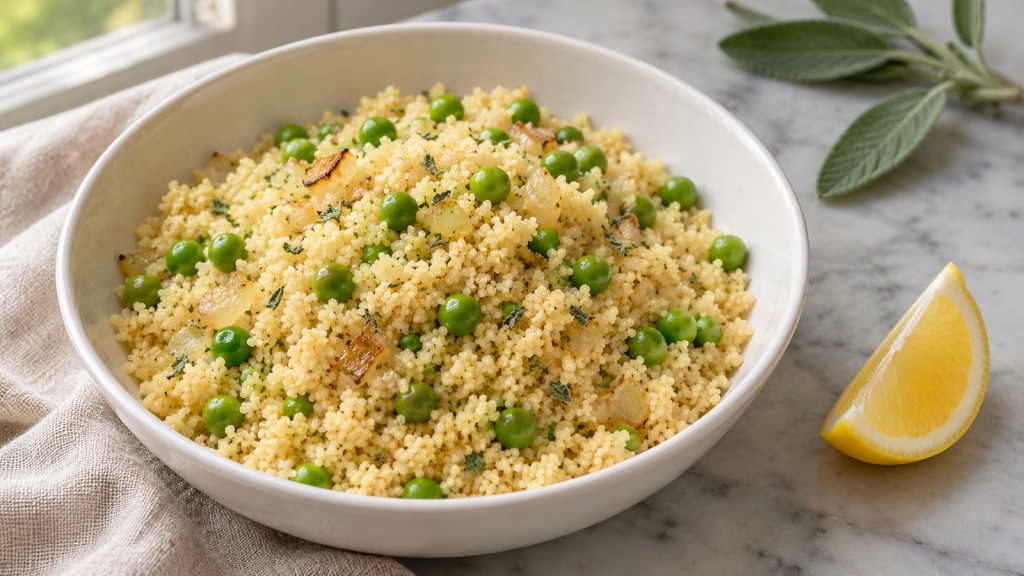
A bag of peas in the freezer and a half-used box of couscous can become a side dish with a little personality. This couscous with peas gets its savory backbone from onions softened until golden, then a small pinch of sage. The couscous cooks in the same pan, so those onion juices stay right where you want them.
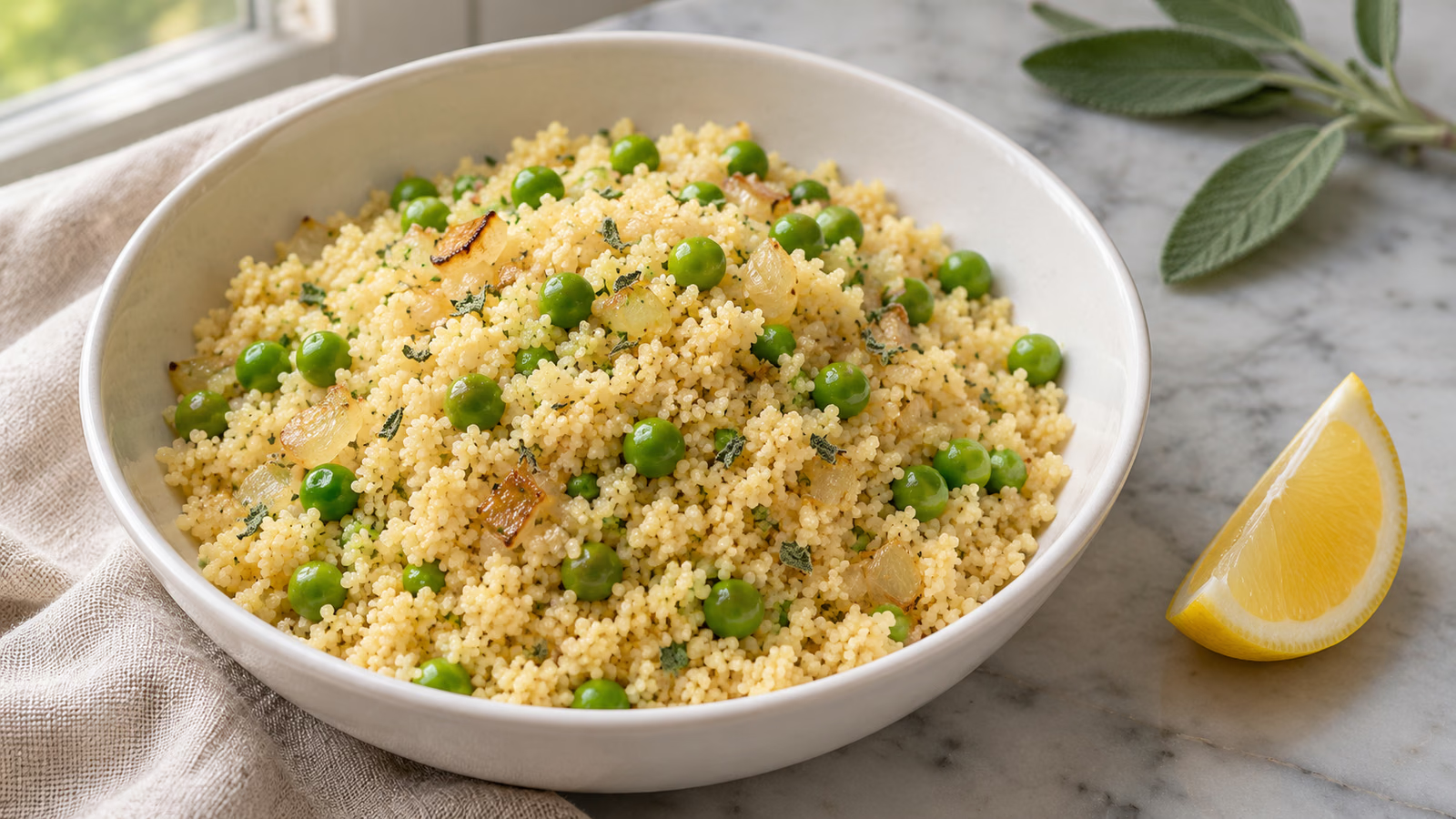
Give the onions their time, then keep the couscous light with a fork rather than packing it down with a spoon.
Choose the small couscous for this pan
The recipe uses regular, small-grained couscous, not the larger pearls sometimes labeled Israeli couscous. That distinction matters: pearl couscous needs a different amount of liquid and a longer cooking method. I would check the front of the package before reaching for the measuring cup; the two products are not a swap-and-forget situation.
- Use finely chopped onion so it softens in the time given. Large pieces can stay sharp while the edges darken.
- Frozen peas can go straight into the pan. They bring little green pops of sweetness without a separate thawing bowl.
- Ground sage is potent. Start with the measured half teaspoon rather than treating it like a handful of fresh leaves.
- Water lets the onion and sage lead. Broth is a possible variation, but it changes the seasoning and the nutrition estimate.
Couscous is a wheat product, so this is not a gluten-free side. If you need a different grain, cook that grain by its own instructions and add the peas and onions separately. Quinoa or rice would make a different dish, not a direct substitution for these measurements.
Build flavor before adding the water
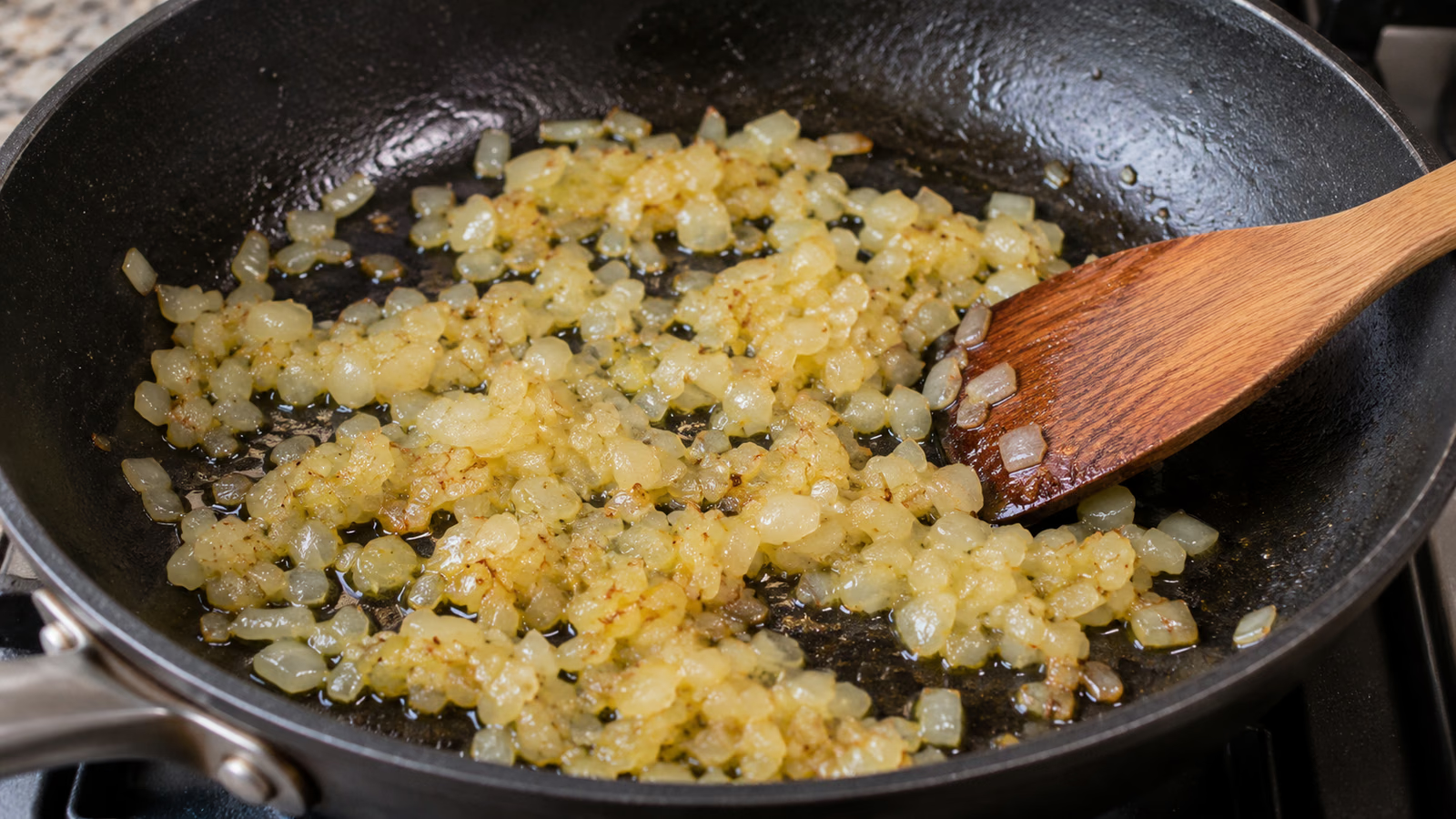
The onion stage does more work than its short ingredient list suggests. Keep the heat moderate and stir occasionally as the chopped pieces soften and take on a little color. You want a sweet-smelling, lightly golden base, not dark, bitter bits that will follow every spoonful around the bowl.
- Use a skillet or saucepan with a well-fitting lid. You will need it once the couscous and liquid go in.
- If the onion browns at the edges while remaining firm, lower the heat rather than racing ahead to the next step.
- Measure the water before adding the couscous. Once those little grains meet moisture, the cooking moves quickly.
- Stir the peas, sage, water and couscous together so the dry grains are evenly moistened before covering.
I like this approach for an uncomplicated dinner because it asks for attention at the beginning, then very little fuss. It is not a dish that benefits from constant stirring. Save that energy for whatever else is sharing the plate.
Couscous with peas should be fluffy, not packed
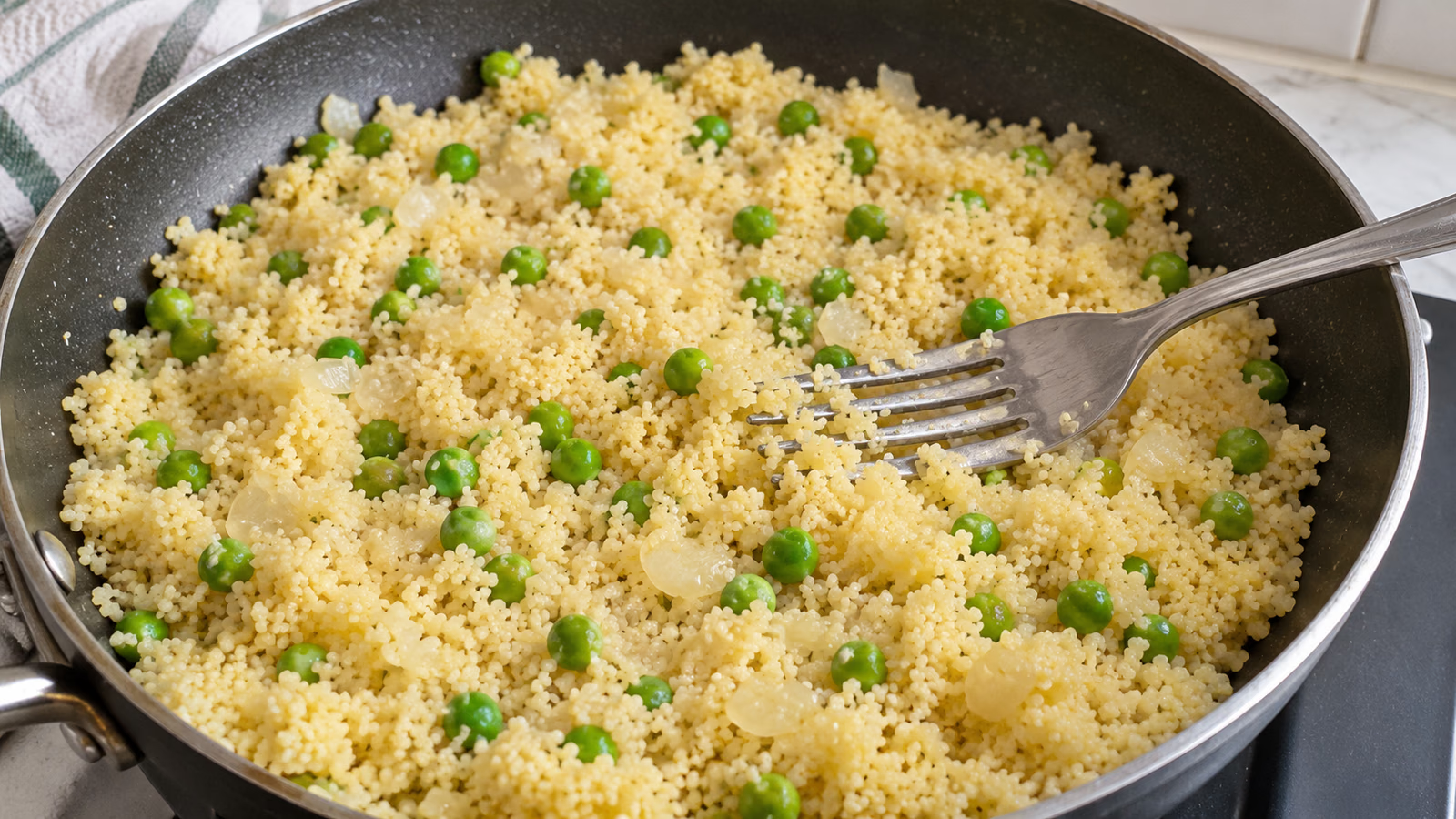
Check the pan after about five minutes of covered cooking. The peas should be hot and tender, and the visible liquid should be absorbed. Lift and separate the couscous gently with a fork. Pressing it down or stirring it vigorously with a heavy spoon makes it harder to keep the light texture you came for.
- Still wet? Allow a little more time over gentle heat, checking frequently so the bottom does not scorch.
- Dry before tender? Add a small splash of water and cover briefly. Different brands and lids can change evaporation.
- Clumped together? Loosen small sections with a fork instead of trying to break up the whole pan in one vigorous stir.
- Taste at the end. The base recipe omits added salt; season to your preference, particularly if it will accompany a salty main dish.
A lemon wedge on the side is my preferred finishing touch. It lets everyone add brightness without making the whole pan sour. Keep any extra dressing light: this is a warm, fluffy side, not a couscous salad that needs to soak in a vinaigrette.
Make it fit the rest of dinner
Serve a scoop next to roast chicken, fish, beans or roasted vegetables. For a larger mixed bowl, add a cooked protein and extra vegetables at serving time rather than crowding them into the small pan. The recipe makes about four one-cup portions; adjust the amount on each plate to suit the rest of the meal.
- For a softer herb profile, leave the sage out rather than adding several dried herbs at once.
- For another vegetable, cook it separately if it needs longer than the peas. Raw carrot chunks will not soften on this schedule.
- Refrigerate leftovers in a shallow, covered container within two hours, or one hour when the room is above 90°F (32°C).
- Use refrigerated leftovers within three to four days. Reheat with a splash of water until steaming throughout, reaching 165°F (74°C).
The nutrition estimate in the card is for the plain recipe without added salt, lemon or an extra topping. It is a side dish calculation, not a promise about a complete meal. Different couscous brands and a generous serving spoon can both change the numbers.
Couscous with Peas Recipe

Ingredients
- 1 teaspoon olive oil
- 1 cup onion finely chopped
- 1 cup frozen green peas
- 0.5 teaspoon ground sage
- 1.333 cups water
- 1 cup regular small-grained couscous not pearl couscous
Equipment
- 1 Skillet or saucepan with lid
- 1 Fork
Instructions
- Warm the oil in a skillet or saucepan over medium heat. Add onion and cook, stirring occasionally, for 5–10 minutes, until softened and lightly golden.
- Add peas, sage, water and couscous. Stir to moisten evenly. Cover and cook over medium heat for about 5 minutes, until the water is absorbed and the peas are hot and tender. Lower the heat if the bottom starts to catch.
- Remove from heat and gently fluff with a fork. Taste and add salt if desired. Serve warm, with optional lemon wedges on the side.
Nutrition
Notes
Tried this recipe?
Let us know how it turned out!Sources
Hi, I’m Laura, the voice behind Tastiva. I’ve always believed that eating well should feel enjoyable, comforting, and realistic—not like another complicated rule to follow. I love creating recipes that fit into everyday life, sharing simple nutrition ideas, and finding small ways to make meals feel a little better without losing the pleasure of good food.