
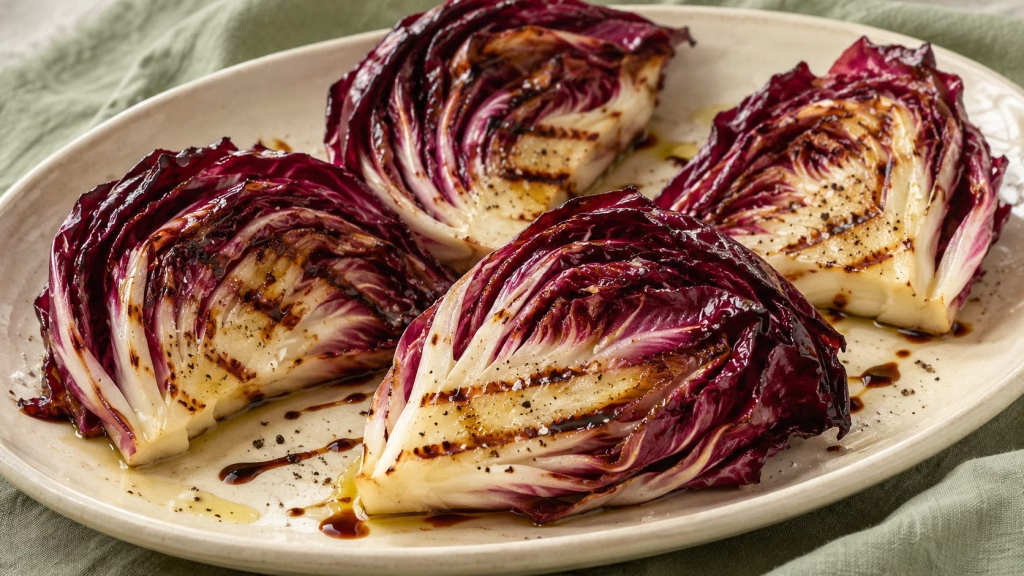
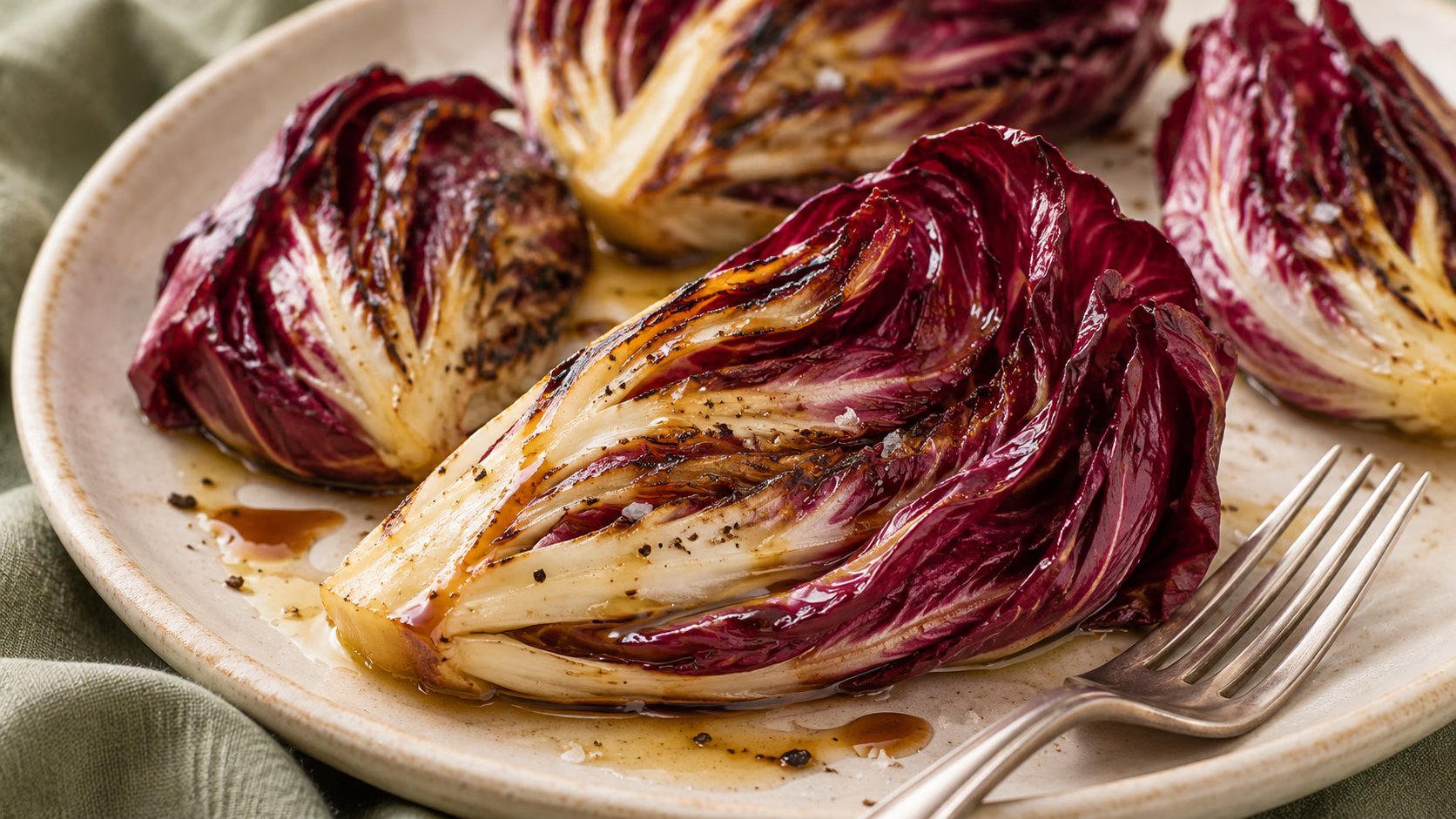
That small burgundy head beside the lettuce does not have to become another raw salad. Grilled radicchio keeps its pleasantly bitter character while the cut faces brown and the inner leaves soften. A little balsamic vinegar makes the finish brighter, without turning the vegetable into a sticky, sweet side dish.
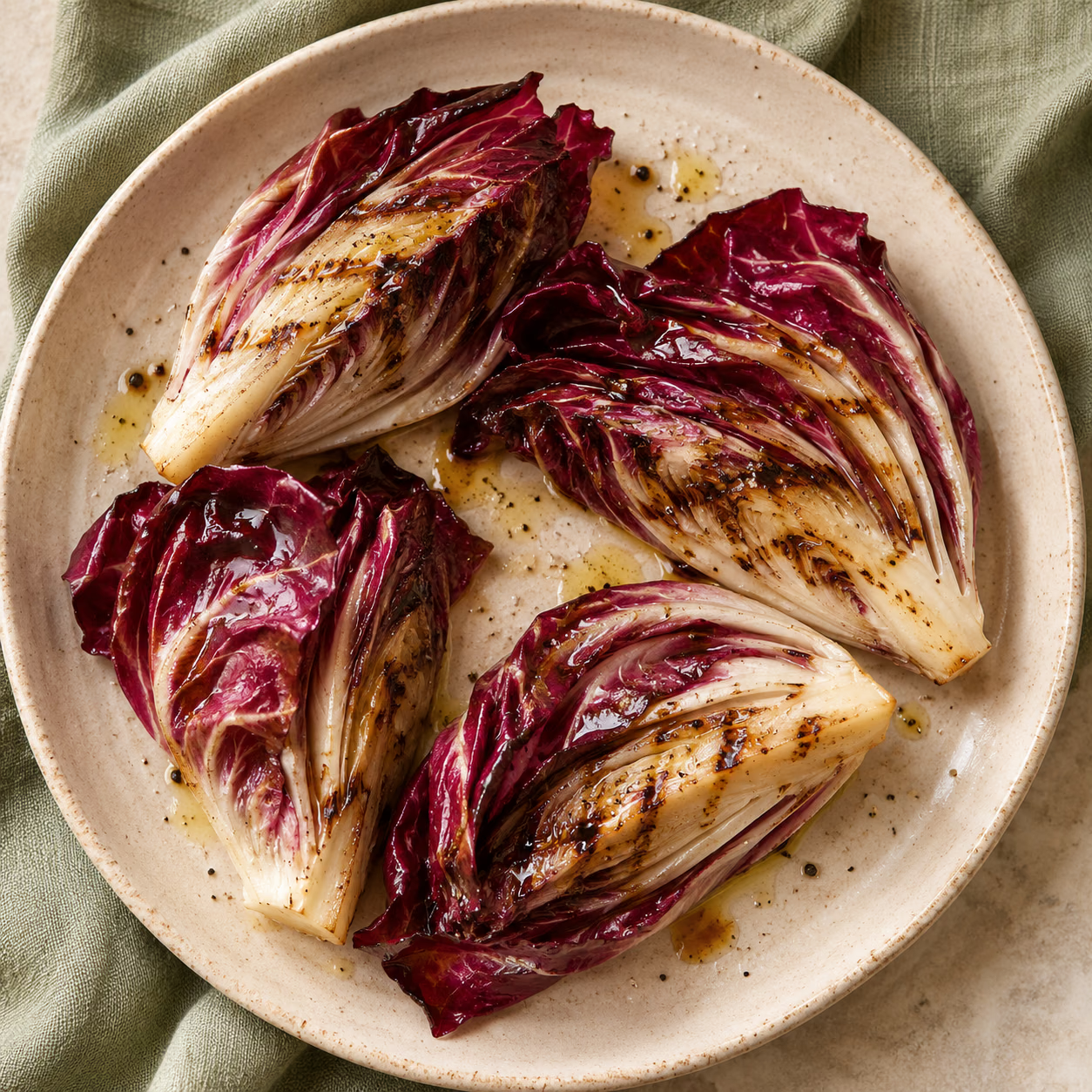
The useful trick is to keep a piece of the core in every wedge. It holds the leaves together when you turn them, giving you something substantial to lift from the pan rather than a scatter of scorched edges.
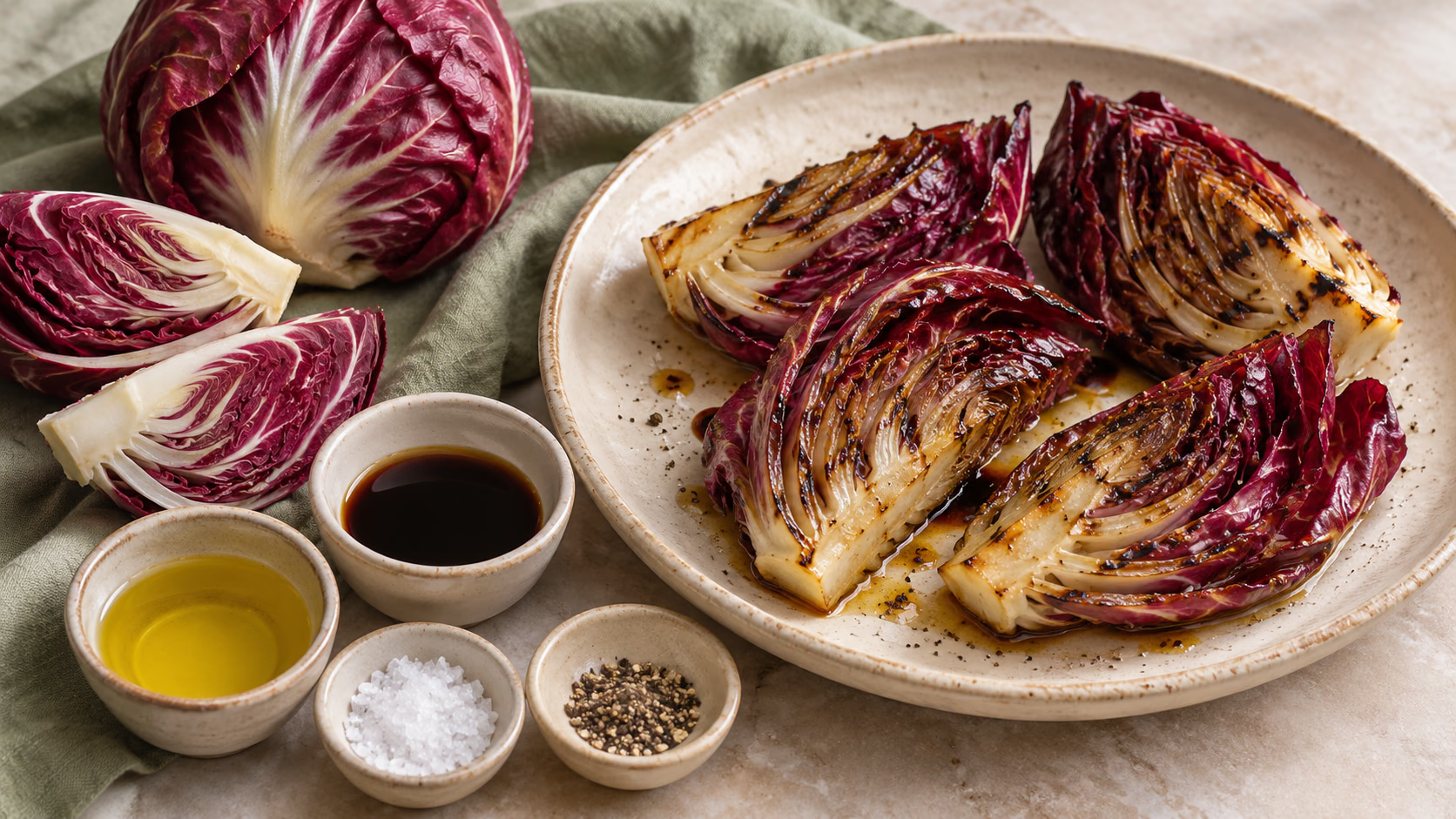
Serving Suggestions for Grilled Radicchio
I would serve these wedges beside creamy polenta, white beans or roast chicken. The bitterness is especially welcome next to something mild or rich; it gives the plate contrast rather than more of the same. Plain rice also works, particularly when there is a little balsamic dressing left to spoon over it.
Two small wedges make a modest side serving, not a main course. Put them on a shallow platter while they are warm, with a knife and fork rather than expecting everyone to balance a whole wedge on a spoon. The leaves soften, but the core should still give each portion a little structure.
If you are choosing between bitter greens and a sweeter vegetable, our roasted kohlrabi is a different direction. For this dish, I would keep the rest of the meal gently seasoned and let the radicchio be the lively part.
| Serve alongside | Why it works |
|---|---|
| Creamy polenta | Mild corn balances the bitter leaves |
| White beans | A soft, substantial partner |
| Roast chicken | Balsamic brings a bright contrast |
Variations That Keep the Bitter-Sweet Balance
Start with ordinary balsamic vinegar, not a thick bottled glaze. The two products do different jobs: vinegar brings acidity and a little sweetness, while glaze can turn the finish syrupy. If you enjoy bitter greens already, you may prefer a lighter drizzle rather than adding something sweet to hide them.
- Add finely grated orange zest to the finished platter for fragrance without extra liquid. Keep it optional so the basic recipe stays simple.
- Scatter a few chopped toasted walnuts over individual servings for crunch. This adds nuts and changes the nutrition estimate.
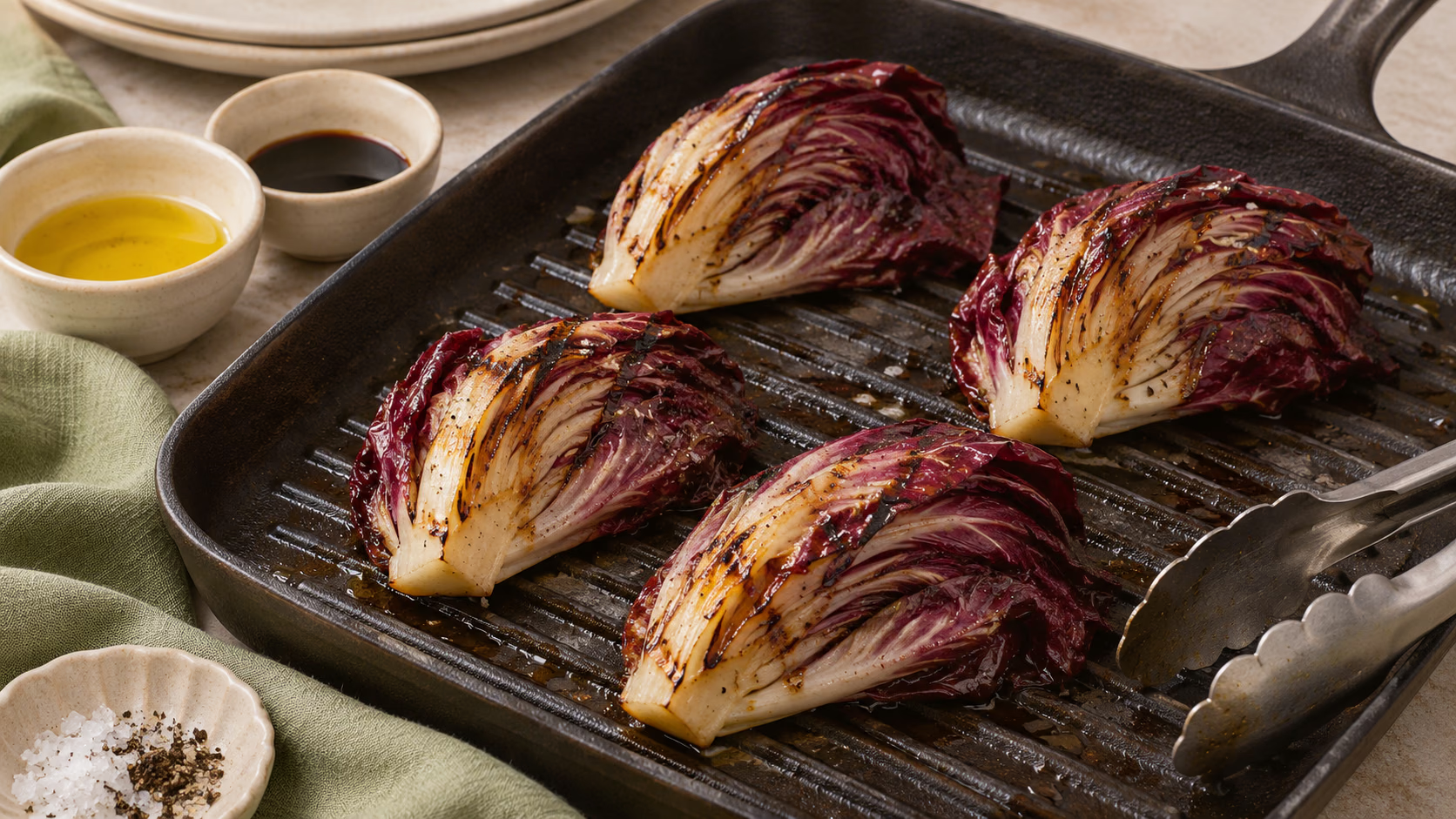
- Use a regular heavy skillet if you do not have a grill pan. You will get broader browned patches instead of stripes, which is perfectly fine.
A dark stripe is not the same thing as a tender center. If the edges are getting too dark before a knife enters the core easily, turn down the heat. The goal is browned leaves with a little resilience, not an ashy crust.
Health Benefits
Radicchio supplies potassium and small amounts of fiber, with very little fat before dressing. The University Hospitals raw-radicchio entry is the vegetable reference for the recipe estimate. A quarter of this preparation provides about 88 calories and 0.9 grams of fiber when all the measured oil and vinegar are included.
That makes it a vegetable side, not a complete meal or a special health remedy. Beans, tofu, fish or another protein source can help round out dinner. Olive oil contributes most of the recipe’s fat, so an extra freehand pour will change the numbers even when the plate still looks similar.
The calculation uses 400 grams of prepared raw radicchio divided among four servings. It counts the dressing and salt but does not model cooking losses. Different vinegar brands and differently sized heads will give slightly different results; the figures are estimates, not laboratory measurements.
Bottom Line
Look for crisp, fresh leaves rather than limp or damaged ones, as recommended by Wisconsin Extension’s radicchio guide. Round heads make manageable quarters for a grill pan. Drying the washed wedges well also keeps unnecessary water out of the hot pan.
My preference is to leave the balsamic until the vegetables are off the heat. You get its brightness without cooking it into the pan, and you can taste the leaves before deciding whether they need any more. The complete recipe below gives the quantities, timing and tenderness check.
If bitterness is new to you, start with one wedge alongside a familiar main rather than making a large bowl your entire dinner. Cooking changes the texture and brings browned flavor, but it does not erase radicchio’s character. That distinctive edge is part of the appeal, and there is no need to pretend it tastes like lettuce.
Grilled Radicchio Recipe

Ingredients
- 400 g round radicchio prepared weight, about 2 small heads
- 2 tablespoons olive oil divided: 1 1/2 tablespoons for brushing, 1/2 tablespoon to finish
- 2 tablespoons balsamic vinegar plain vinegar, not glaze; about 32 g
- 1/4 teaspoon fine salt
- 1/8 teaspoon black pepper
Equipment
- Ridged grill pan
- Tongs
- Knife and cutting board
- pastry brush
- Measuring spoons
- Kitchen scale
Instructions
- Remove damaged outer leaves. Rinse the radicchio and trim only the dry end of the base, keeping the core attached. Cut each small head lengthwise into quarters, so every wedge has some core. Dry thoroughly and weigh about 400 g prepared wedges.
- Preheat a ridged grill pan over medium-high heat. Brush the wedges with 1 1/2 tablespoons olive oil, including the cut faces, and season with the measured salt and pepper.
- Place the wedges on one cut face without crowding; cook in batches if needed. Cook for 3–4 minutes, then turn onto the other cut face for 3–4 minutes. Continue briefly as needed, about 8–12 minutes total, until the edges are browned and a small knife enters the core easily. Lower the heat if the leaves darken before the core softens.
- Transfer to a platter. Drizzle with the remaining 1/2 tablespoon olive oil and the balsamic vinegar off the heat. Serve warm, dividing the wedges among four side portions.
Nutrition
Video
Notes
Tried this recipe?
Let us know how it turned out!Sources
TOKITA SEED: Pan-Grilled Radicchio (Treviso), originally published December 25, 2022, demonstrates a related pan-cooked technique. This version uses round wedges and no wine. Norway’s Food Composition Table supplies the balsamic nutrition reference; radicchio data and selection guidance are linked above.
Hi, I’m Laura, the voice behind Tastiva. I’ve always believed that eating well should feel enjoyable, comforting, and realistic—not like another complicated rule to follow. I love creating recipes that fit into everyday life, sharing simple nutrition ideas, and finding small ways to make meals feel a little better without losing the pleasure of good food.