
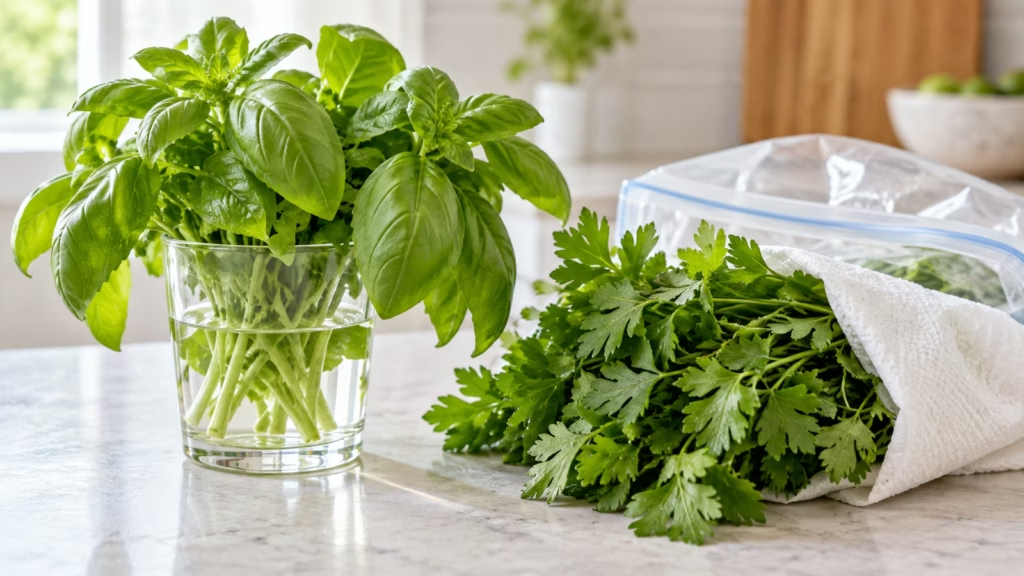
The recipe needs a handful of parsley, but the store sells an entire leafy bouquet. Here is how to store fresh herbs without turning the leftovers into a mystery bag: refrigerate most herbs with gentle moisture protection, keep basil out of the cold, and freeze the portion you already know you will not use soon.
The most useful storage method is the one that matches both the herb and its next meal.
How to store fresh herbs by the bunch
Start by identifying what you brought home, rather than choosing the fanciest container. Tender leaves need protection from crushing; woody sprigs are easier to bundle, but neither benefits from sitting in a puddle. I would rather use an ordinary bag carefully than buy a gadget that hides the herbs at the back of the refrigerator.
| Herb or situation | Practical starting point | What to watch |
|---|---|---|
| Parsley, cilantro, dill, mint | Refrigerator; loose damp-towel bundle in a bag | Leaves should not sit wet or compressed |
| Rosemary, thyme, sage | Refrigerator; loosely wrapped sprigs | Keep the bundle easy to inspect |
| Basil | Room-temperature jar with stems in water | Keep leaves above water; avoid refrigerator chill |
| More than you can use soon | Freeze a clean, chopped portion | Plan a cooked use rather than a crisp garnish |
These are starting points, not freshness guarantees. Health Canada recommends using refrigerated fresh herbs within about five days with its unwashed, damp-towel method; the condition at purchase matters too. Follow any shorter package instructions, and do not treat a calendar as proof that a deteriorating bunch is fine.
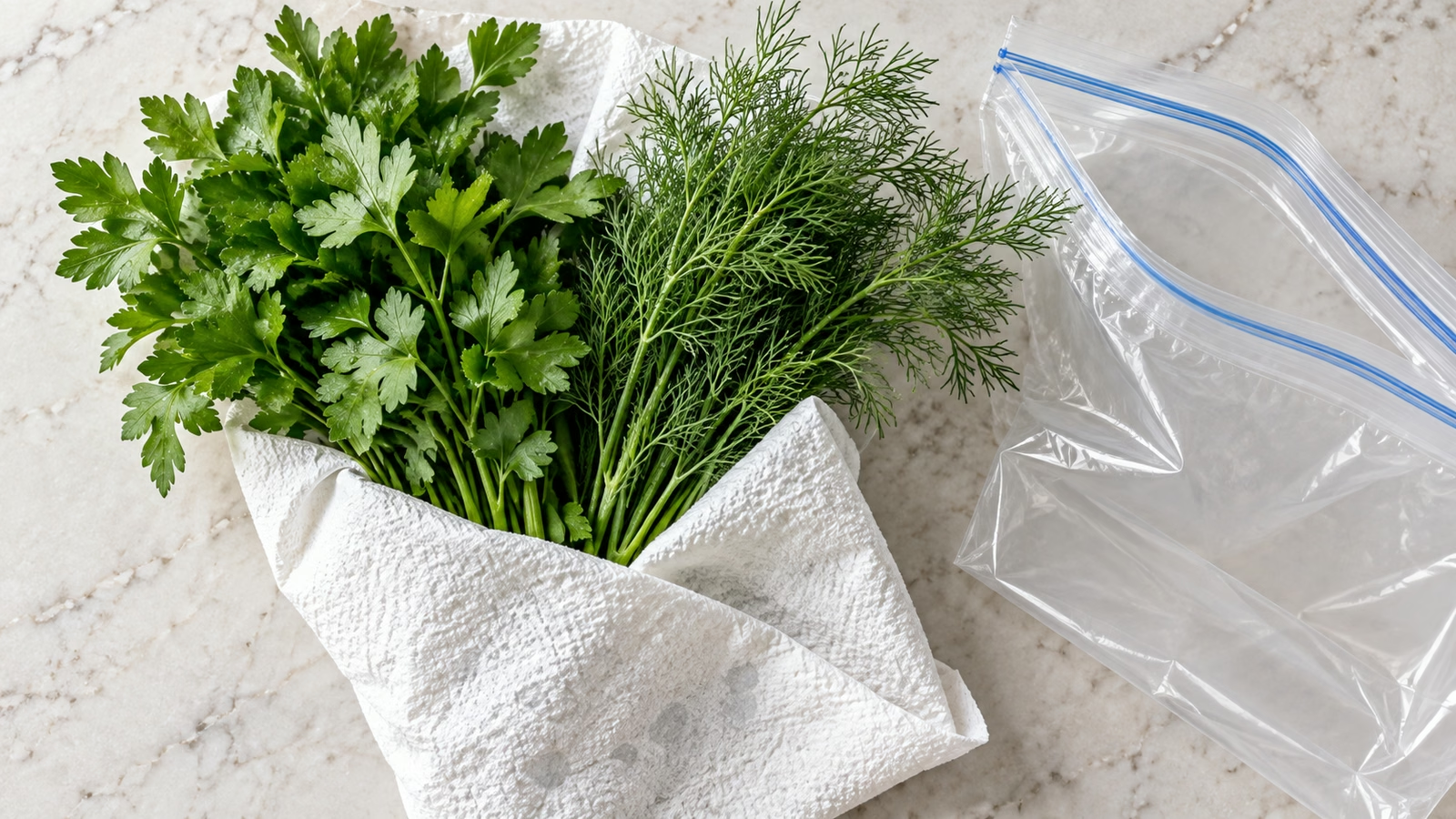
Control moisture without making a wet bundle
A damp towel means lightly moistened, not dripping. The point is to cushion the herbs and limit drying while keeping them easy to check. Wash herbs under cool running water before using them; clean hands, utensils, and counters matter just as much as the container.
- Sort first. Remove damaged, yellowing, black-spotted, or deteriorating leaves before they disappear inside the bundle. Start with bright leaves and crisp stems when shopping.
- Choose a wash schedule. Storing the bunch unwashed is a simple option. If you wash ahead, gently spin or pat it dry; water trapped between leaves is not the same as a damp wrapper.
- Wrap loosely. Give leaves room instead of folding them into a tight parcel. Place the bundle in a clean bag and keep it visible in the crisper.
- Check when you cook. Replace a saturated towel and remove the portion you need with clean hands. A quick glance while making dinner is more realistic than a complicated maintenance schedule.
For an already-washed bunch, University of Maine Extension describes a loose wrap and an open, perforated bag and suggests using it within roughly two to three days. The shorter window is useful when planning ahead: washed herbs are convenient, but they still need a near-term job.
Use a jar when the stems suit it
Long-stemmed herbs can also stand in a clean glass with a little water at the bottom. Keep the leaves above the waterline. Maine Extension suggests about an inch of water for cut herbs, changing it daily, with a loose bag over refrigerated bunches; basil stays at room temperature.
- Basil: Set the jar where you will notice it, away from a hot stove or harsh direct sun. Use it promptly rather than expecting a decorative countertop arrangement to last indefinitely.
- Parsley or cilantro: A refrigerator jar can make sense if there is upright space. A towel bundle is easier in a crowded drawer; there is no need to force every bunch into the same setup.
- Short, loose sprigs: Choose the towel method if the stems cannot stand securely. Tiny sprigs balancing on a glass rim are a kitchen puzzle you do not need.
- Visible deterioration: Discard slimy, moldy, or spoiled herbs. Storage and rinsing do not make spoiled food suitable to eat.
I prefer the method that leaves the next portion easy to grab. If every use requires rebuilding a leaning tower of jars, the herbs may still get forgotten, only in more impressive glassware.
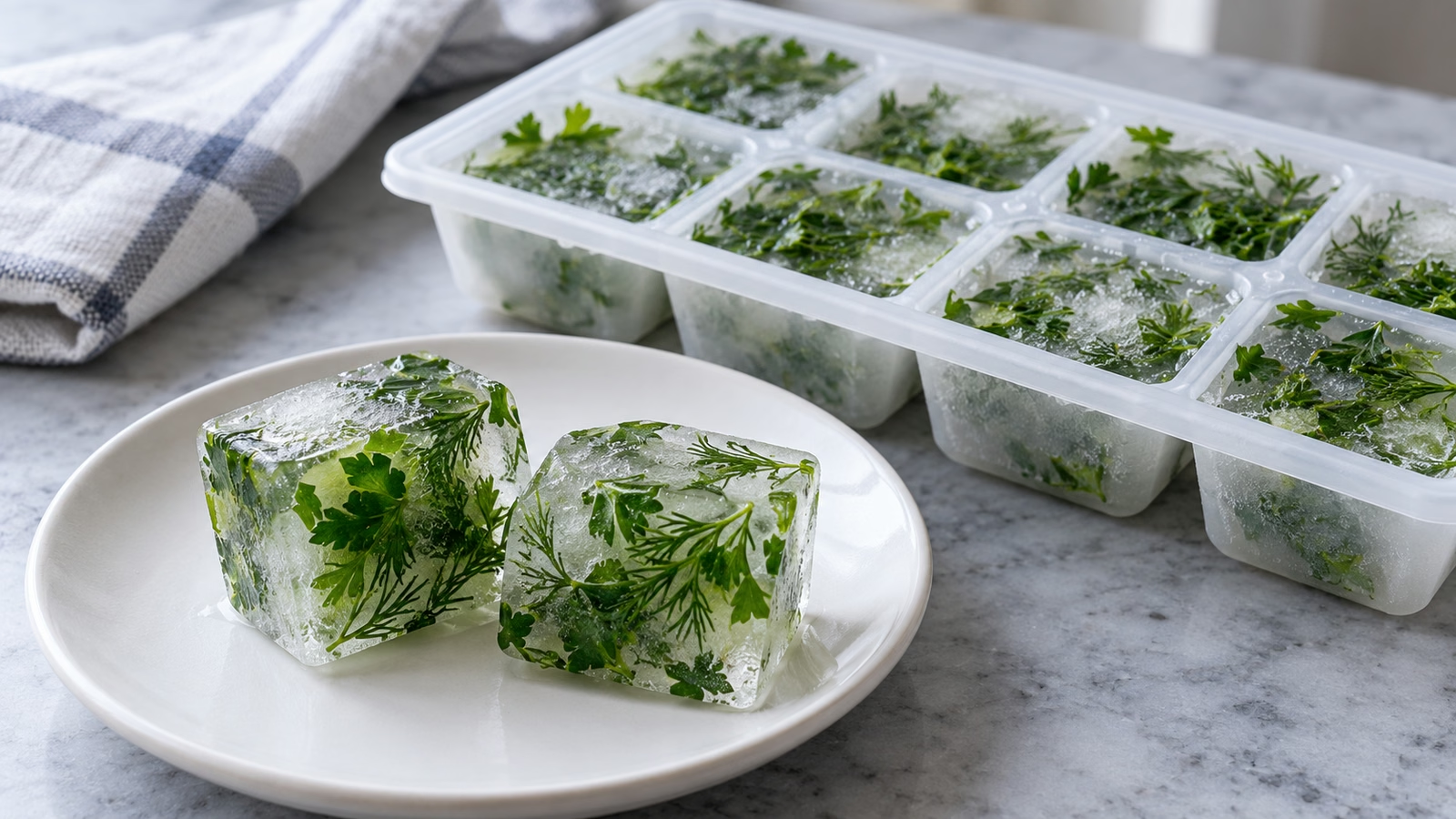
Freeze the extra while it still has a purpose
A bunch does not need to look tired before you freeze some. If your plan only calls for a few leaves twice this week, preserve the surplus now. Frozen herbs are most useful where their flavor matters more than a firm, fresh-looking leaf.
- Make small water cubes. Wash and chop the herbs, press them into an ice-cube tray, cover with water, and freeze. Transfer firm cubes to a labeled freezer container; Health Canada suggests using them within three months.
- Match the cube to the dish. Parsley or dill can finish a pot of soup; basil can go into a tomato sauce. Account for the little bit of water instead of dropping a cube into a dry garnish.
- Keep flavors separate. Label the herb and date. A mixed cube is useful only if that combination fits the meals you cook.
- Give the fresh remainder a second destination. Pair parsley with a bean salad, dill with potatoes, or basil with a tomato sandwich. Decide before putting the bag away.
My first choice is a small amount stored well and used with intention. You do not have to find a recipe that consumes the entire bunch tonight; you only need a believable next stop for what remains.
America’s Test Kitchen answers a fresh-herb storage question in this short kitchen tip. Match the method to your bunch and keep basil’s room-temperature exception in mind.
Sources
- Health Canada: Storing fresh herbs
- Health Canada: Food safety tips for fresh herbs
- University of Maine Extension: Using Fresh Herbs in Cooking
- Nebraska Extension: Fresh Herbs

Hi, I’m Laura, the voice behind Tastiva. I’ve always believed that eating well should feel enjoyable, comforting, and realistic—not like another complicated rule to follow. I love creating recipes that fit into everyday life, sharing simple nutrition ideas, and finding small ways to make meals feel a little better without losing the pleasure of good food.