
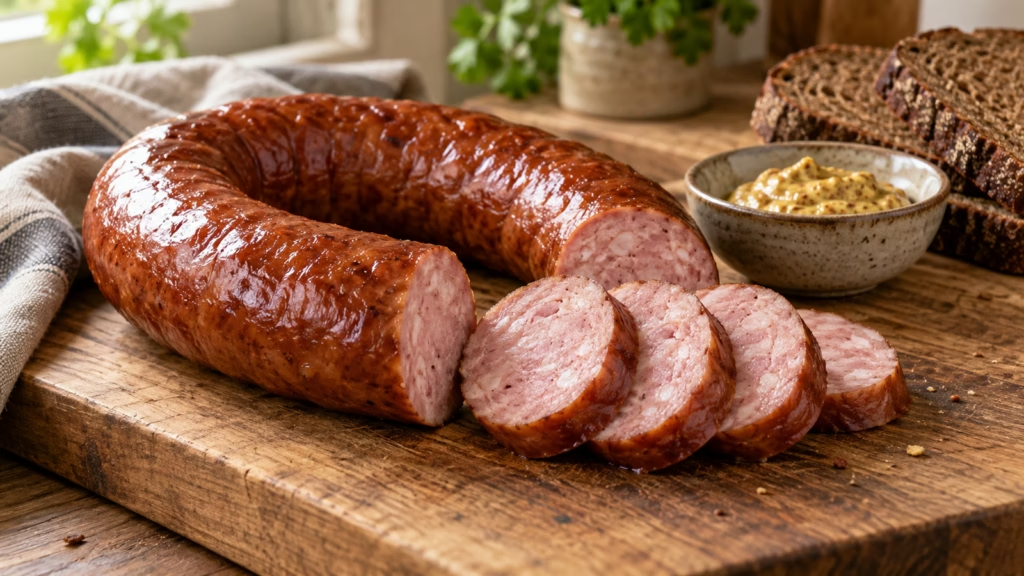
A browned ring of kielbasa can look ready for a quick skillet dinner, but the name alone doesn’t tell you whether it has already been cooked. Kielbasa means sausage in Polish. In American stores, it often refers to a smoked Polish-style sausage, while fresh, uncooked versions are also sold.
Before choosing the pan, answer one question: is this kielbasa raw or fully cooked? The label decides the next step.
I’d keep the package beside the cutting board until that is clear. Garlic, smoke, and a familiar curved shape can help describe the sausage, but none is a substitute for its handling instructions.
Kielbasa covers more than one sausage
Polish sausage traditions include fresh, smoked, dried, finely ground, and coarser styles. A grocery-store ring is one useful version, not a definition of the whole category. The Polish food specialist Polana distinguishes fresh biała kiełbasa from smoked country and homestyle sausages, among other varieties.
- Fresh or white kielbasa: Often associated with garlic, pepper, and marjoram. When sold raw, it needs thorough cooking.
- Smoked Polish-style kielbasa: Many packaged versions are fully cooked, but check the product rather than inferring that from the smoke flavor.
- Different meat blends: Pork, beef, poultry, or combinations can change the flavor and handling requirements. Read the ingredients.
- Different textures: A coarse sausage and a finely ground one will feel different in a sandwich or soup, even if both carry the kielbasa name.
Kowalski’s own product descriptions illustrate the distinction neatly: its Polish kielbasa is fully cooked, while its fresh kielbasa is unsmoked and requires cooking. Blue Seal also distinguishes its cooked kielbasa from its uncooked fresh version. Those are product-specific descriptions, not permission to assume that every brand follows the same pattern.
Read the package before you slice
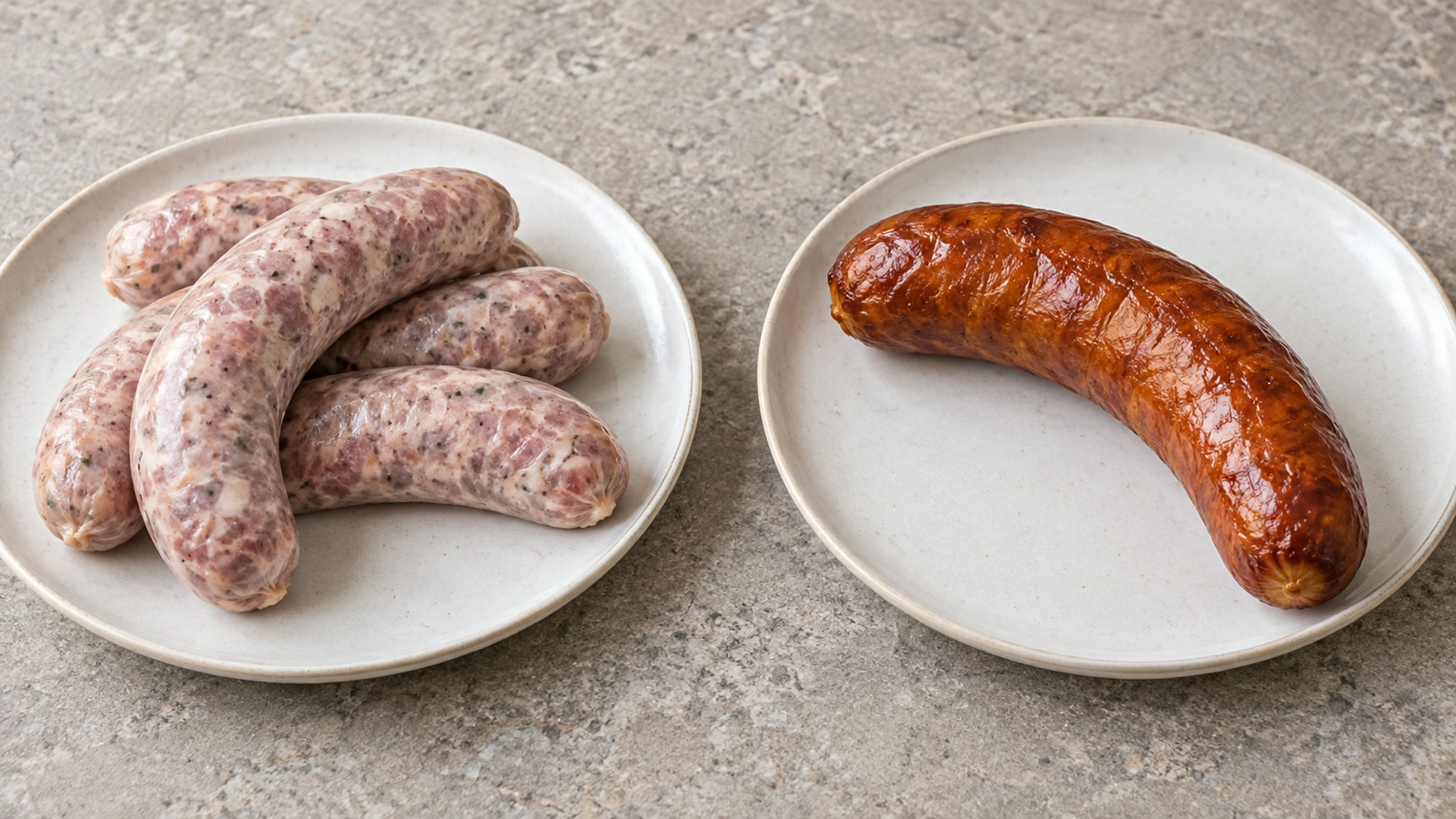
Look for explicit wording such as fully cooked, ready to eat, uncooked, or cook before eating. Smoked is not enough: USDA includes some smoked sausages in the uncooked category. If a deli portion has no clear directions, ask the seller whether it is raw and how it should be handled.
- Raw pork, beef, lamb, or veal sausage: USDA recommends cooking to an internal temperature of 160°F (71°C).
- Raw sausage containing chicken or turkey: Cook to 165°F (74°C).
- Fully cooked packaged sausage: Follow the manufacturer’s heating and serving directions.
- Use a food thermometer: Check the center rather than relying on a browned casing or a particular number of minutes.
This distinction also matters when swapping ingredients. A recipe written for a fully cooked smoked sausage may only warm and brown it. Replacing it with raw sausage changes the method, not just the flavor, so the original quick timing no longer tells you enough.
Choose the cut and method for the meal
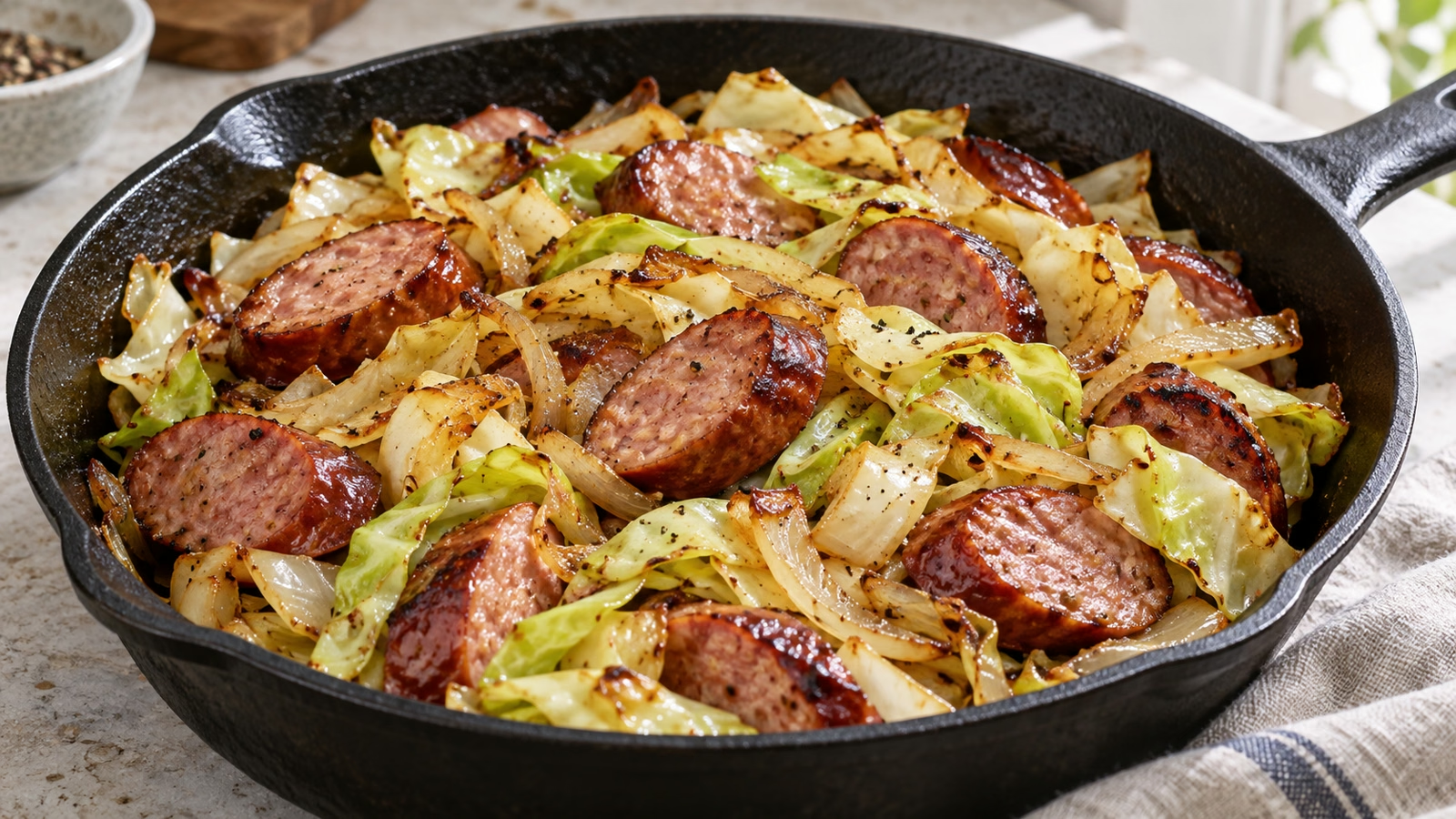
For fully cooked kielbasa, the next decision is how you want it to sit in the dish. Slices distribute sausage through a pan or soup; longer pieces make sense with bread and mustard. Think about the size of a comfortable bite and the other ingredients sharing the plate.
- In a skillet: Slices offer cut surfaces to brown. Give them space rather than piling them into a deep layer, then follow the package’s heating directions.
- With cabbage and onions: Let the vegetables reach the tenderness you want without assuming they will finish at the same moment as the sausage.
- In soup: Tastiva’s sausage, white bean, and kale soup specifically starts with fully cooked smoked sausage. A matching kielbasa can fit that role.
- With bread: Mustard, pickles, or horseradish bring a contrasting sharpness. Start modestly so the sausage remains part of the bite rather than disappearing under condiments.
- For a raw link: Use a method intended for uncooked sausage and verify the safe center temperature before serving.
I’d hold back on extra salt until the sausage and the rest of the dish are together. Kielbasa, broth, mustard, and sauerkraut can all bring seasoning. Tasting the whole bite, once everything is safely cooked, is more informative than tasting only the potatoes or cabbage.
Keep the storage plan with the package
Refrigerate perishable sausage promptly and keep the refrigerator at 40°F (4°C) or below. A sealed package does not make a refrigerated kielbasa shelf-stable. Follow its storage directions, and freeze it if you cannot use it within the recommended window.
- Raw fresh sausage: USDA’s refrigerator guidance is 1–2 days.
- Fresh sausage you have cooked: Use refrigerated leftovers within 3–4 days.
- Commercially cooked sausage: USDA lists up to two weeks unopened and seven days after opening, subject to the product’s instructions and date.
- A prepared meal: Follow the storage guidance for the finished dish. Don’t transfer the unopened sausage package’s window to a pot of soup.
- Make the date visible: Note when you opened or cooked the sausage, and keep the original handling information until it is used.
My practical preference is to portion before a large package becomes several half-planned meals. That makes it easier to choose what stays refrigerated and what gets frozen. The useful habit isn’t memorizing every Polish sausage name; it is keeping the product, cooking method, and storage window connected.
In the video below, Anna and Mark of Polish Your Kitchen compare several Polish sausages. Their tasting illustrates the variety behind the name; use the label and USDA guidance above for safe handling of your own purchase.
Sources
- USDA FSIS: Sausages and Food Safety.
- USDA FSIS: Refrigeration and Food Safety.
- Kowalski: Kielbasa Product Differences.
- Blue Seal: Cooked and Fresh Kielbasa FAQ.
- Polana: Kiełbasa Varieties.
- Polish Your Kitchen: Comparing Polish Sausages.

Hi, I’m Laura, the voice behind Tastiva. I’ve always believed that eating well should feel enjoyable, comforting, and realistic—not like another complicated rule to follow. I love creating recipes that fit into everyday life, sharing simple nutrition ideas, and finding small ways to make meals feel a little better without losing the pleasure of good food.