
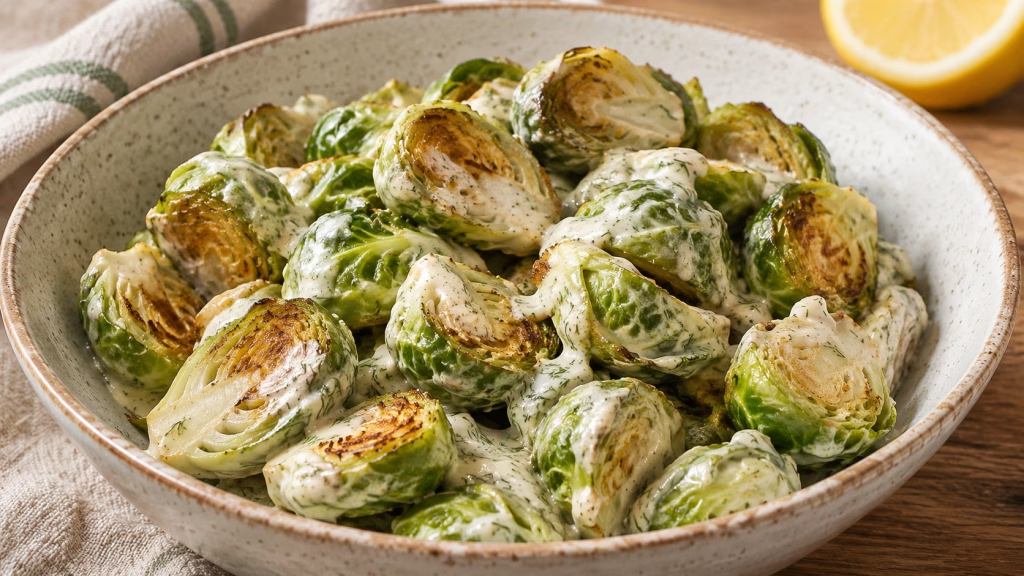
Lemon dill Brussels sprouts combine browned vegetable halves with a cool, tangy yogurt sauce. The sprouts cook in a skillet, first against the hot pan and then under a lid with a splash of water. Stir the sauce in after taking the pan off the heat so it coats the sprouts instead of boiling around them.
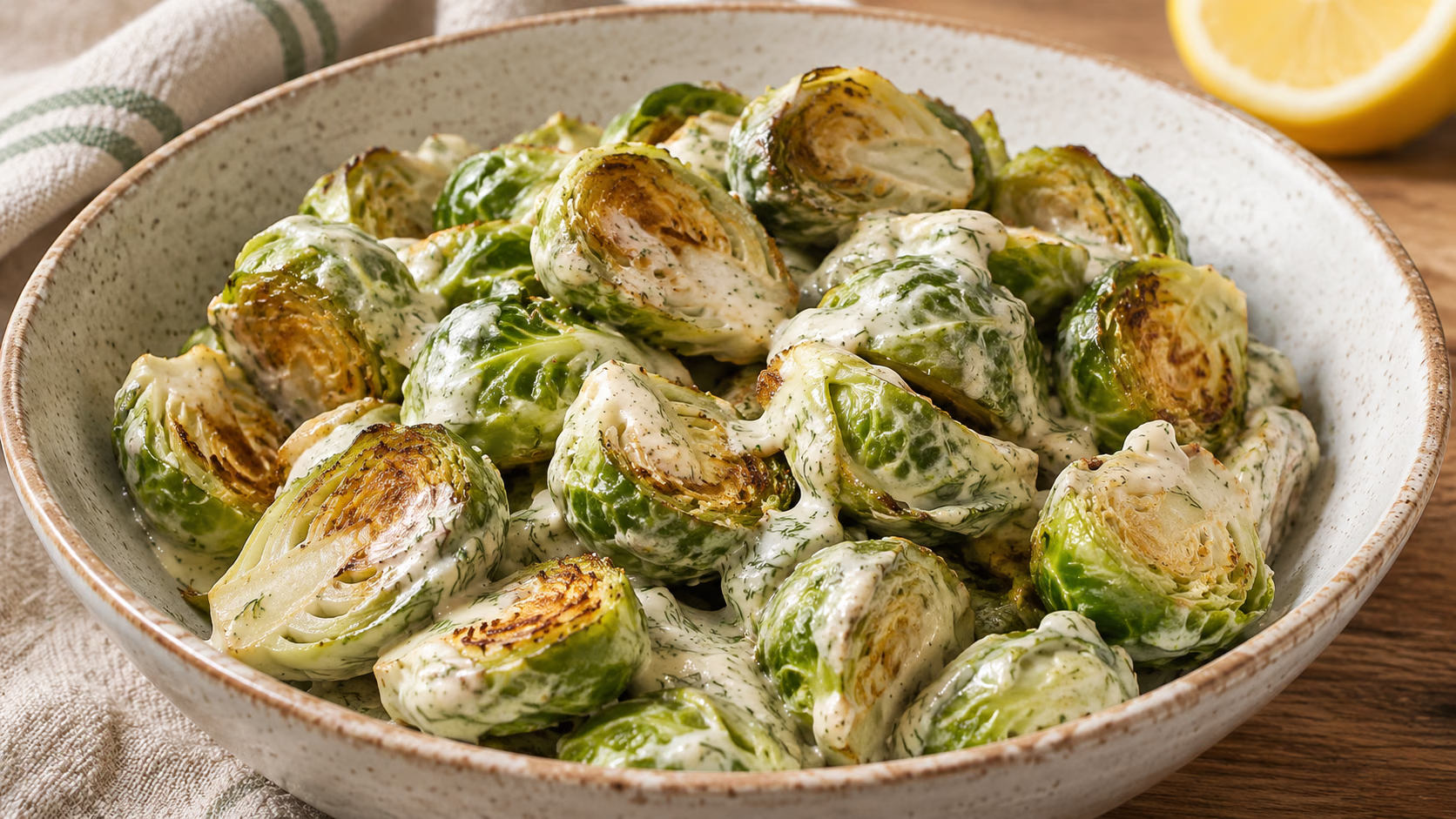
Brown first, steam briefly, then dress. Each part has a job, and the yogurt belongs at the finish.
Why lemon dill Brussels sprouts use two kinds of heat
A cut face gives each sprout a flat surface to brown. Water added later helps the center become tender without requiring a long stay in the oven. This is not the same dish as deeply roasted sprouts with a little dressing drizzled on top: the generous yogurt coating is part of the finished side.
The ingredient proportions come from Oregon State University Extension’s Food Hero recipe. I would serve this alongside a straightforward main, letting the lemon and dill supply the sharper flavor on the plate. The sauce is deliberately simple, so choose plain Greek yogurt rather than sweetened or vanilla yogurt.
- Sprouts: choose firm heads and remove damaged outer leaves. Trim only enough of the stem to tidy the base; cutting too much makes the layers fall apart.
- Yogurt: thick plain Greek yogurt clings better than a thin, pourable variety.
- Dill: dried dill weed goes into the sauce. A little fresh dill on top is optional, not essential to the recipe.
- Lemon: measure the juice before adding more. You can increase tartness at the table without making the whole batch sharper.
Give the cut surfaces room
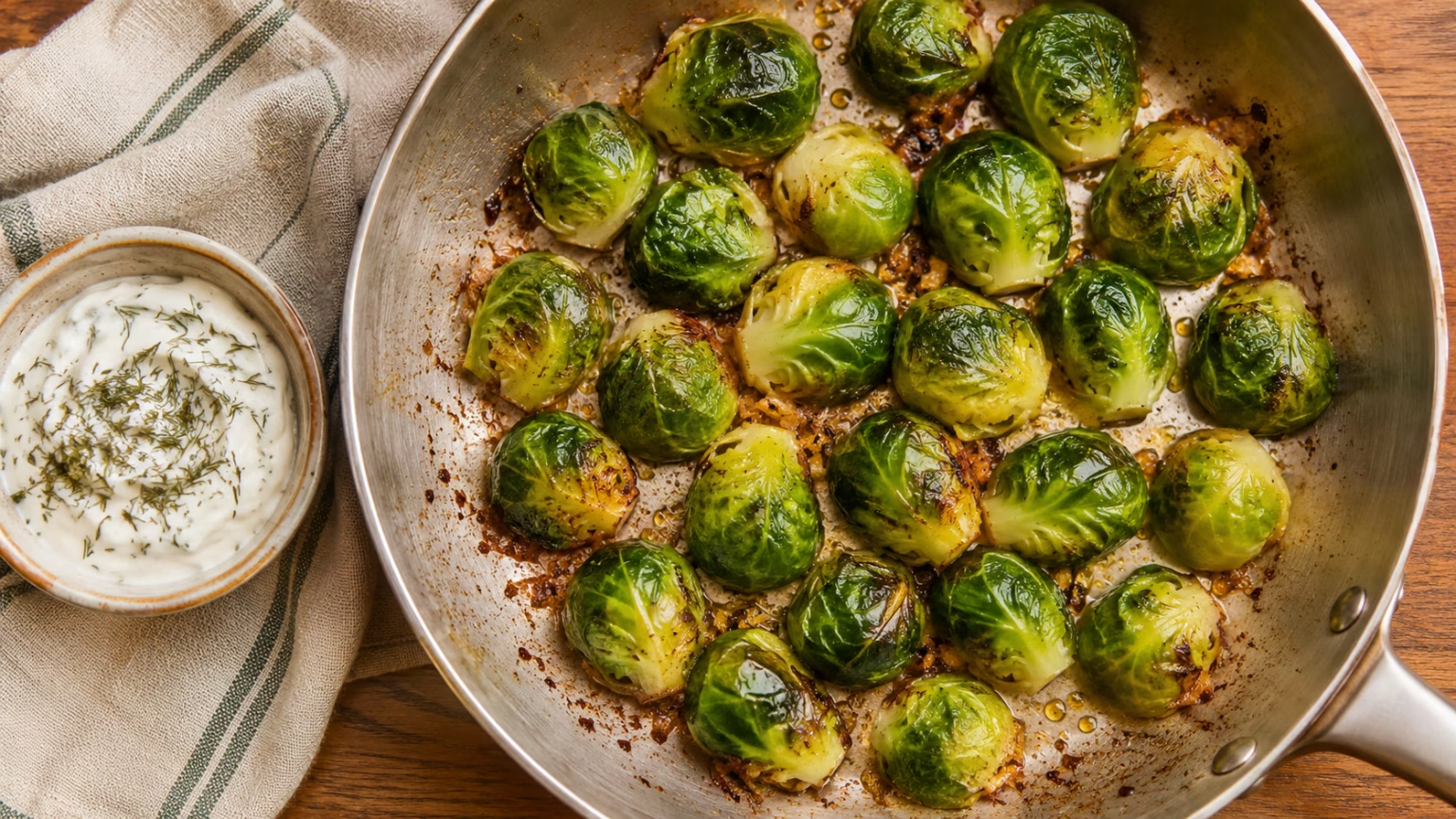
Choose a skillet wide enough that the halved sprouts fit reasonably close to one layer. Crowding traps steam before the cut faces have a chance to brown. If your sprouts vary dramatically in size, halve the small ones and quarter particularly large ones so the centers finish closer together.
| Pan cue | Useful response |
|---|---|
| Cut faces still pale | Leave them in contact with the pan rather than constantly stirring. |
| Butter darkening very quickly | Reduce the heat before the vegetables scorch. |
| Centers firm and water gone | Add a small splash of water and cover briefly again. |
| Water pooling when sprouts are tender | Uncover and let excess moisture evaporate before dressing. |
The table is a guide to the pan, not a reason to ignore the recipe. Different skillets and burners deliver heat differently, and the size of the sprouts matters. Check tenderness with a knife tip in a thicker piece: it should enter without forcing, while the sprout still holds its shape.
Add the yogurt away from the burner
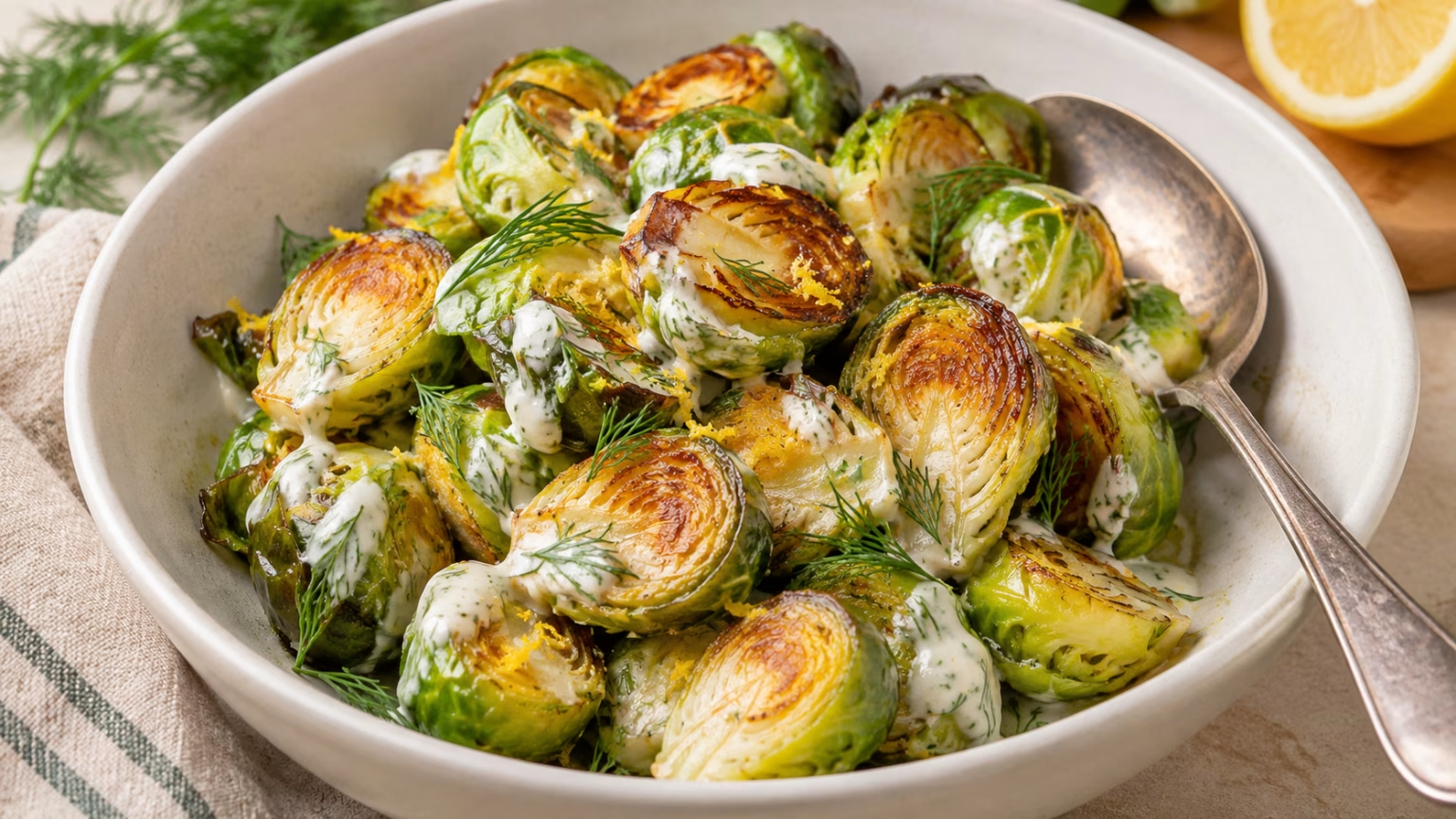
Stir the sauce while the sprouts cook so the dill and lemon are distributed before they touch the vegetables. Once the pan has left the heat, fold the sauce through gently. A fiercely hot skillet can still heat the yogurt aggressively, so let the immediate sizzling settle before combining.
- Do not add yogurt while a pool of water remains in the pan; the sauce will be thinner than intended.
- Use a broad spoon or spatula and fold rather than crush the tender sprouts.
- If serving later, keep sauce and vegetables separate until close to serving for a cleaner coating.
- Taste a dressed sprout before adding more salt; the sauce already contains a measured amount.
A few loose browned leaves are welcome, but blackened ones bring bitterness rather than useful contrast. Remove badly scorched pieces rather than trying to disguise them with extra yogurt. A squeeze of lemon can brighten flavor, but it cannot reverse burning.
Serve it as a side, not a heavy topping
Divide the finished batch into four portions. The sauce is generous, so use a shallow bowl that lets you lift both vegetable and yogurt together. A simple grain, baked fish or an egg dish gives it something mild to accompany, without needing a second creamy sauce on the same plate.
- For a lighter-looking presentation, spoon some sauce beneath the sprouts and the rest over them.
- Fresh dill or a little finely grated lemon zest is an optional finish; neither is required for the stated base recipe.
- Keep any extra yogurt mixture refrigerated rather than leaving it out beside the stove.
- The nutrition estimate is for one quarter of the original recipe, not for a separate main dish served with it.
Refrigerate leftovers in a covered shallow container within two hours, or one hour above 90°F (32°C), and use within three to four days. Reheating to 165°F (74°C) is the safety target, though the yogurt may lose its smooth texture. For planned leftovers, saving the sauce separately is the better texture choice; do not treat gentle warming as an alternative to safe reheating.
Lemon Dill Brussels Sprouts Recipe

Ingredients
- 1 cup plain Greek yogurt
- 1 teaspoon dried dill weed
- 1 teaspoon lemon juice
- 1/2 teaspoon salt
- 1 lb Brussels sprouts trimmed and halved (454 g)
- 2 teaspoons butter or margarine
- 1/4 cup water
Equipment
- 1 Large skillet with lid
- 1 small mixing bowl
- 1 Knife and cutting board
Instructions
- Stir yogurt, dill, lemon juice and salt together in a small bowl. Set aside briefly while cooking.
- Melt butter in a large skillet over medium-high heat. Add halved sprouts cut-side down and cook until the cut faces begin to brown.
- Add the water carefully and cover. Cook 3–5 minutes, until sprouts are tender-crisp and most water has evaporated. Uncover to evaporate excess water if needed.
- Remove the skillet from the heat. Let vigorous sizzling subside, then gently fold in the yogurt sauce. Do not boil the yogurt. Divide into four side portions.
Nutrition
Notes
Tried this recipe?
Let us know how it turned out!Sources
- Oregon State University Food Hero: Lemon Dill Brussels Sprouts
- USDA FSIS: safe leftover handling
- USDA FSIS: safe reheating methods
Hi, I’m Laura, the voice behind Tastiva. I’ve always believed that eating well should feel enjoyable, comforting, and realistic—not like another complicated rule to follow. I love creating recipes that fit into everyday life, sharing simple nutrition ideas, and finding small ways to make meals feel a little better without losing the pleasure of good food.