
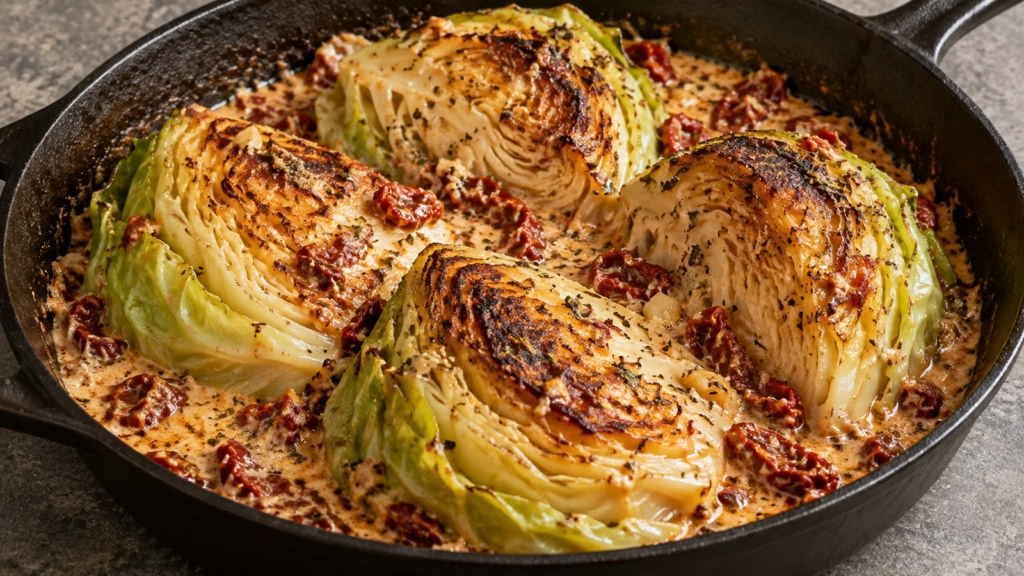
The outside of a cabbage wedge can look beautifully browned while the center still needs a knife and a determined attitude. Marry me melting cabbage solves that with two different jobs: sear the cut faces for flavor, then cover the pan so the thick leaves soften in a sun-dried tomato cream sauce. The result should yield to a fork.
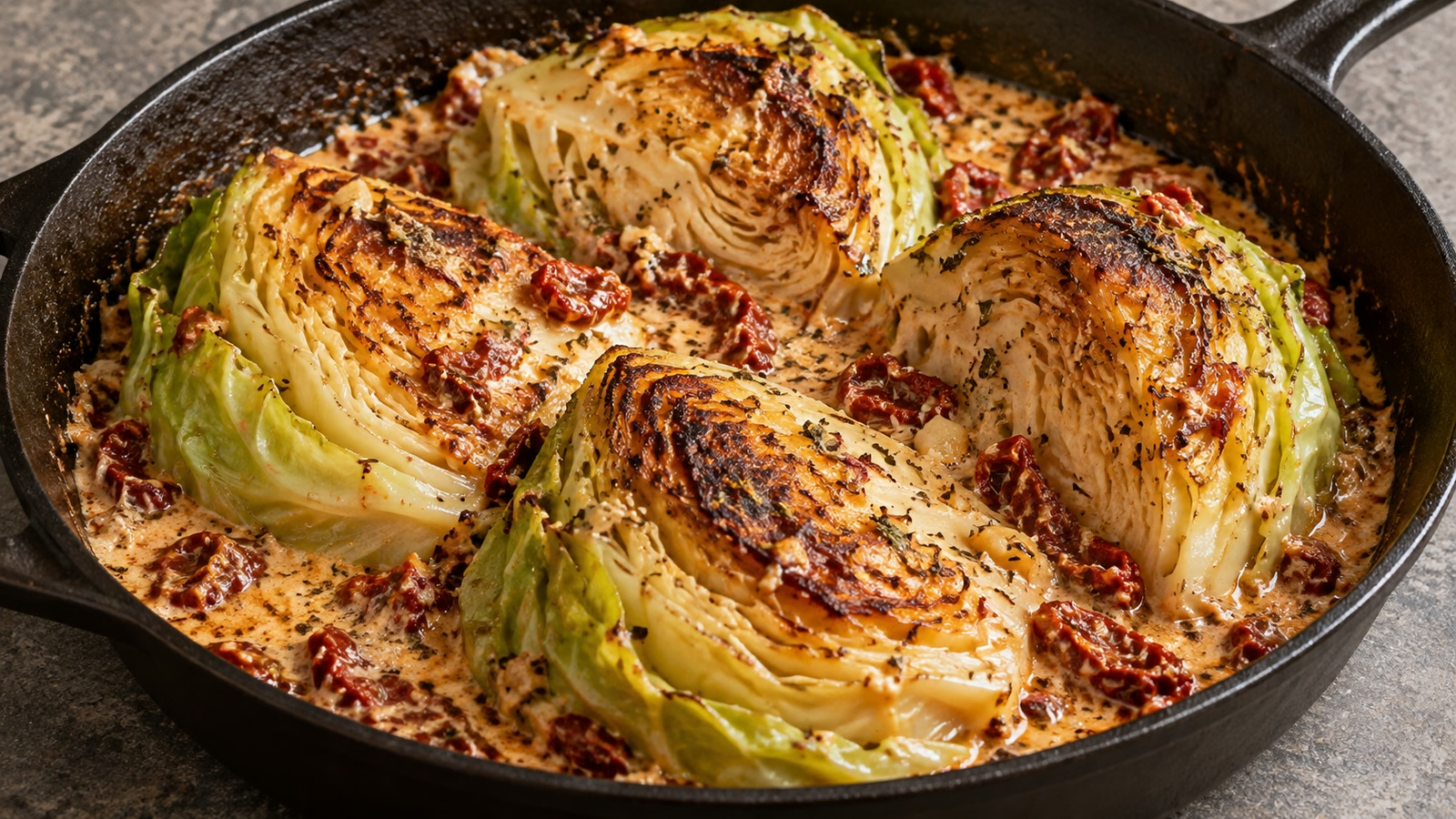
Brown the outside for flavor, then let a gentle covered braise soften the center.
Cut marry me melting cabbage so the wedges stay together
A compact head of ordinary green cabbage is useful here. Remove damaged outer leaves and trim the dry end of the stem, but leave a little core attached to every wedge. That small piece works like a hinge, keeping the leaves from sliding apart when you turn them.
- Cut through the stem into quarters, then halve each quarter for eight wedges. Try to keep their thickness similar so they finish together.
- Choose a pan that holds the wedges in a single layer. A crowded heap will soften unevenly and make turning needlessly awkward.
- Dry the cut faces after washing. Water on the surface delays browning and can make hot oil spit.
- If a wedge loses a few leaves, tuck them into the sauce later. There is no need to rebuild it like a cabbage puzzle.
Creamy cabbage variations have gained attention in 2026, including Herman Chan’s marry-me version and Sarah Bond’s September recipe. This preparation keeps the sauce relatively simple and lets the cabbage remain the main texture.
Sear in batches without cooking the garlic too soon
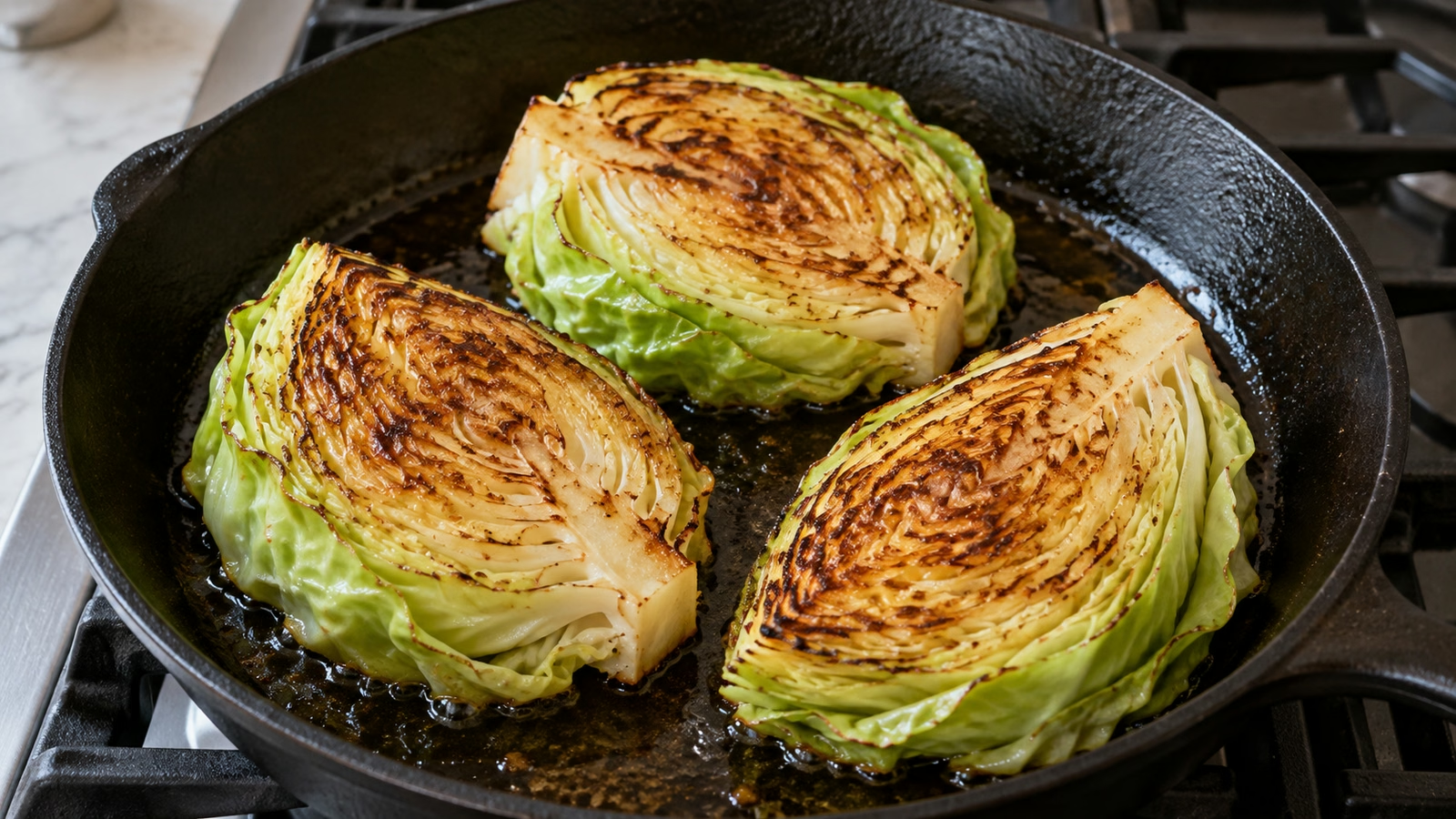
A golden cut face brings a savory edge that a covered braise alone cannot provide. Heat the oil, add only as many wedges as fit comfortably, and let them sit before checking underneath. Keep the heat controlled; blackened loose leaves will make the sauce taste bitter.
- Turn with a wide spatula and support the wedge near its core. Tongs alone can squeeze the softened outer leaves loose.
- Work in two batches if necessary. Add the remaining measured oil between batches rather than pouring in an unmeasured pool.
- Move browned wedges to a plate while you build the sauce. They are not expected to be tender yet.
- Lower the heat before adding garlic. It needs only a brief stir with the chopped tomatoes and oregano, not the same hard sear as the cabbage.
I would use an oven-safe skillet with a lid, but a skillet plus a baking dish also works. Transfer the sauce and wedges to the dish before covering tightly. Check that the handles and lid are rated for the oven temperature; a convenient pan is only convenient if it belongs in the oven.
Let the tomato cream stay a sauce, not a thick paste
Oil-packed sun-dried tomatoes provide concentrated flavor without needing a long simmer. Drain them before weighing, then chop them into small strips so they spread through the pan. Water loosens the cream in this version; Parmesan adds savory depth at the end.
- Choose heavy cream for the specified formula. Lower-fat milk is not a direct swap for the same texture under a long braise.
- Grate the Parmesan finely so it melts into the warm sauce. Stir it in gently after the cabbage is tender rather than boiling it aggressively.
- Keep enough liquid around the wedges during cooking. If the pan looks dry before the centers soften, add a small splash of hot water and re-cover.
- Use the fork test through the thickest part near the core. Tender outer leaves alone do not mean the whole wedge is ready.
You are aiming for a sauce that coats the leaves and gathers beneath them, not a dense cheese blanket. Cabbage releases moisture as it cooks, so uncover only near the end if the sauce needs to reduce. A few minutes of resting will thicken it further.
Make it a vegetable main or a smaller side
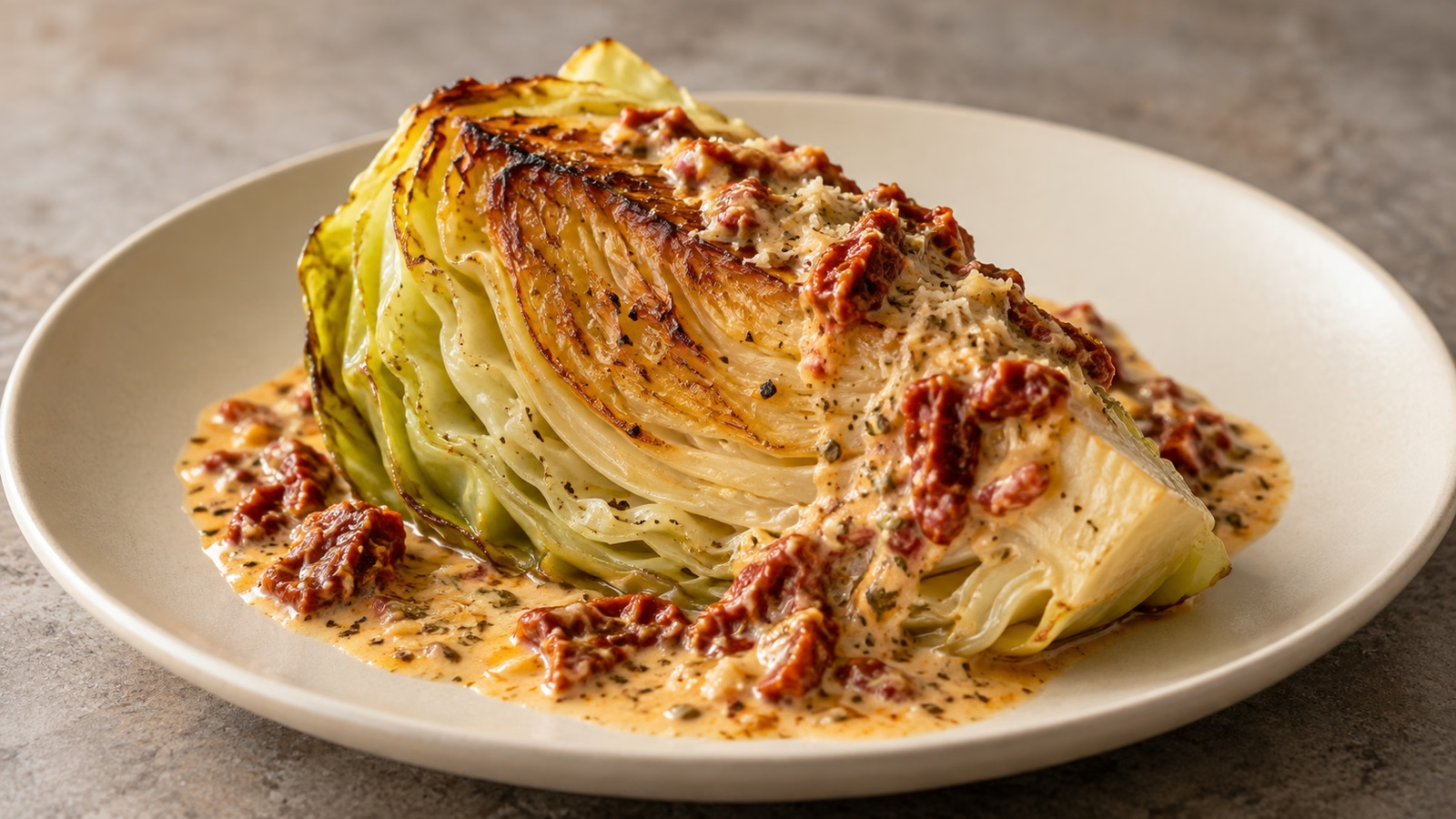
Two wedges make one of four generous portions; one wedge makes a smaller side. Serve with bread, beans, or another accompaniment suited to your appetite. The creamy sauce is rich, so a simple sharp salad can be a useful contrast without requiring another complicated recipe.
- For a vegetarian meal, check the Parmesan or hard-cheese label for vegetarian rennet. Not every Parmesan-style cheese is suitable.
- Keep leftovers in shallow covered containers and refrigerate within two hours, or one hour above 90°F (32°C).
- Use refrigerated leftovers within three to four days, keeping the refrigerator at 40°F (4°C) or colder.
- Reheat gently until the center reaches 165°F (74°C), adding a little water if needed. The sauce may separate slightly; that is a texture change, not a reason to promise it will look freshly made.
I would not choose freezing when presentation matters: softened cabbage becomes more delicate, and cream sauce can lose its smoothness. Make only as much as you want to serve and save a modest portion for lunch. The recipe contains milk; changing to plant-based cream and cheese changes the result and the nutrition.
Marry Me Melting Cabbage Recipe

Ingredients
- 1 kg green cabbage about 2 1/4 lb after trimming, cut into 8 wedges with some core attached
- 2 tablespoons olive oil 28 g
- 4 cloves garlic 12 g, minced
- 80 g oil-packed sun-dried tomatoes drained, cut into small strips
- 1 cup water 240 ml, plus a splash if needed
- 1/2 cup heavy cream 120 g
- 40 g Parmesan cheese finely grated
- 1 teaspoon dried oregano 1 g
- 1/2 teaspoon fine salt 3 g
- 1/4 teaspoon black pepper 0.5 g
Equipment
- 1 large oven-safe skillet with lid
- 1 Chef’s knife
- 1 Cutting board
- 1 wide spatula
- 1 Fine grater
Instructions
- Heat the oven to 375°F (190°C). Pat cabbage wedges dry. Heat half the oil in a large oven-safe skillet over medium-high heat.
- Sear cabbage in two batches, adding remaining oil for the second batch, about 3–4 minutes per cut side until golden. Transfer to a plate. Reduce heat to medium-low.
- Add garlic, sun-dried tomatoes and oregano to the skillet and stir for 30 seconds. Add water, scraping up browned bits, then stir in cream, salt and pepper. Return cabbage in a single layer. If your skillet is too small or not oven-safe, transfer everything to a large baking dish.
- Cover tightly and bake for 40–50 minutes, until a fork slides through the thickest leaves near the core. Check at 35 minutes; if the sauce looks dry, add a small splash of hot water and cover again.
- Remove from the oven, stir Parmesan gently into the sauce around the wedges, and spoon sauce over the cabbage. If too thin, simmer briefly on low heat or return uncovered to the oven for 5 minutes. Rest 5 minutes before serving.
Nutrition
Notes
Tried this recipe?
Let us know how it turned out!Sources
- Herman at Home: marry-me cabbage
- Live Eat Learn: September 2026 cabbage variation
- USDA: leftovers and food safety
- USDA FoodData Central
Hi, I’m Laura, the voice behind Tastiva. I’ve always believed that eating well should feel enjoyable, comforting, and realistic—not like another complicated rule to follow. I love creating recipes that fit into everyday life, sharing simple nutrition ideas, and finding small ways to make meals feel a little better without losing the pleasure of good food.