
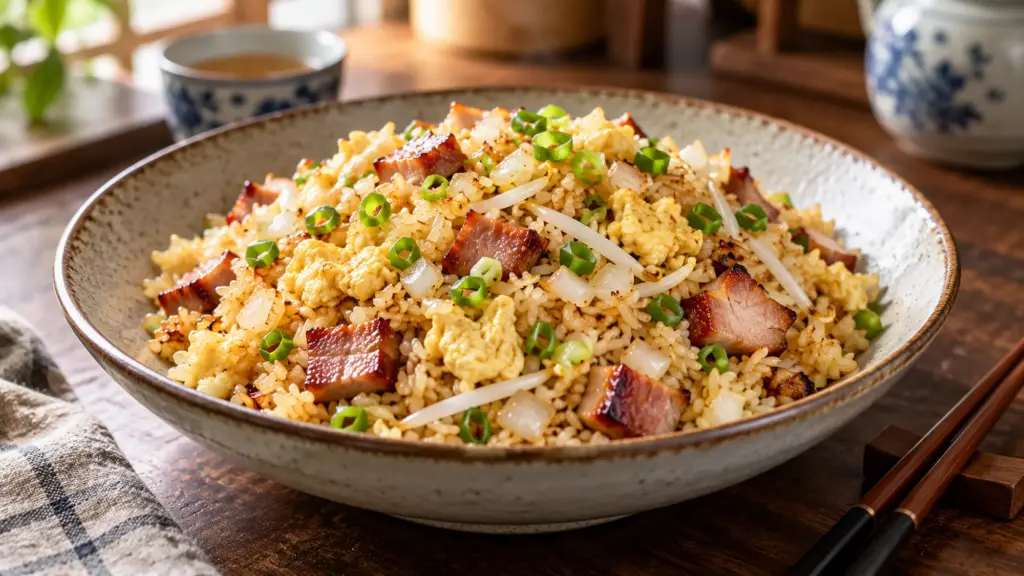
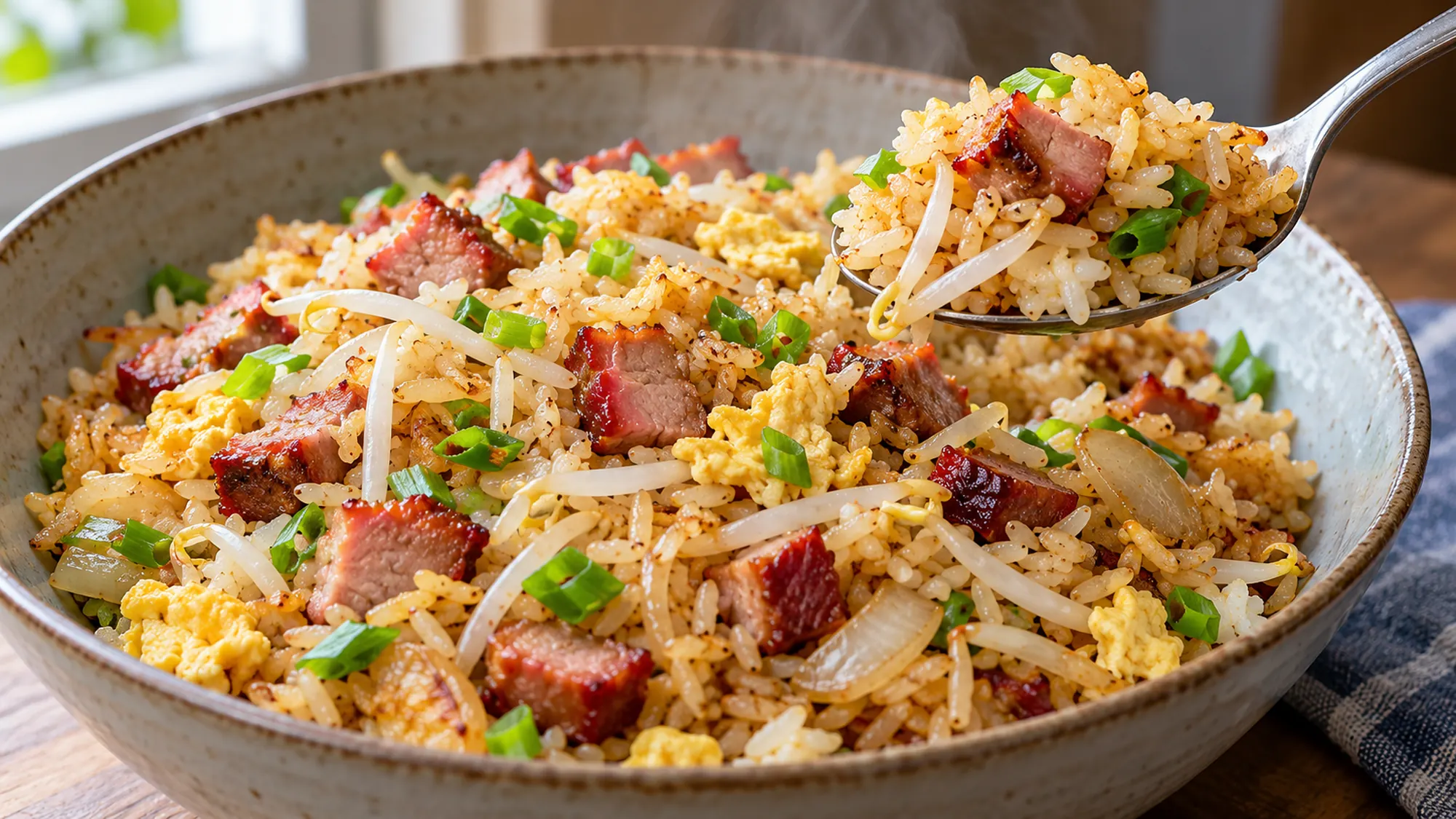
A container of cooked rice and a piece of barbecue pork can become a proper dinner rather than a hurried collection of leftovers. This pork fried rice combines char siu, soft scrambled egg, onion and scallions, with bean sprouts adding a different bite. The grains should stay distinct instead of disappearing into a sticky mound.
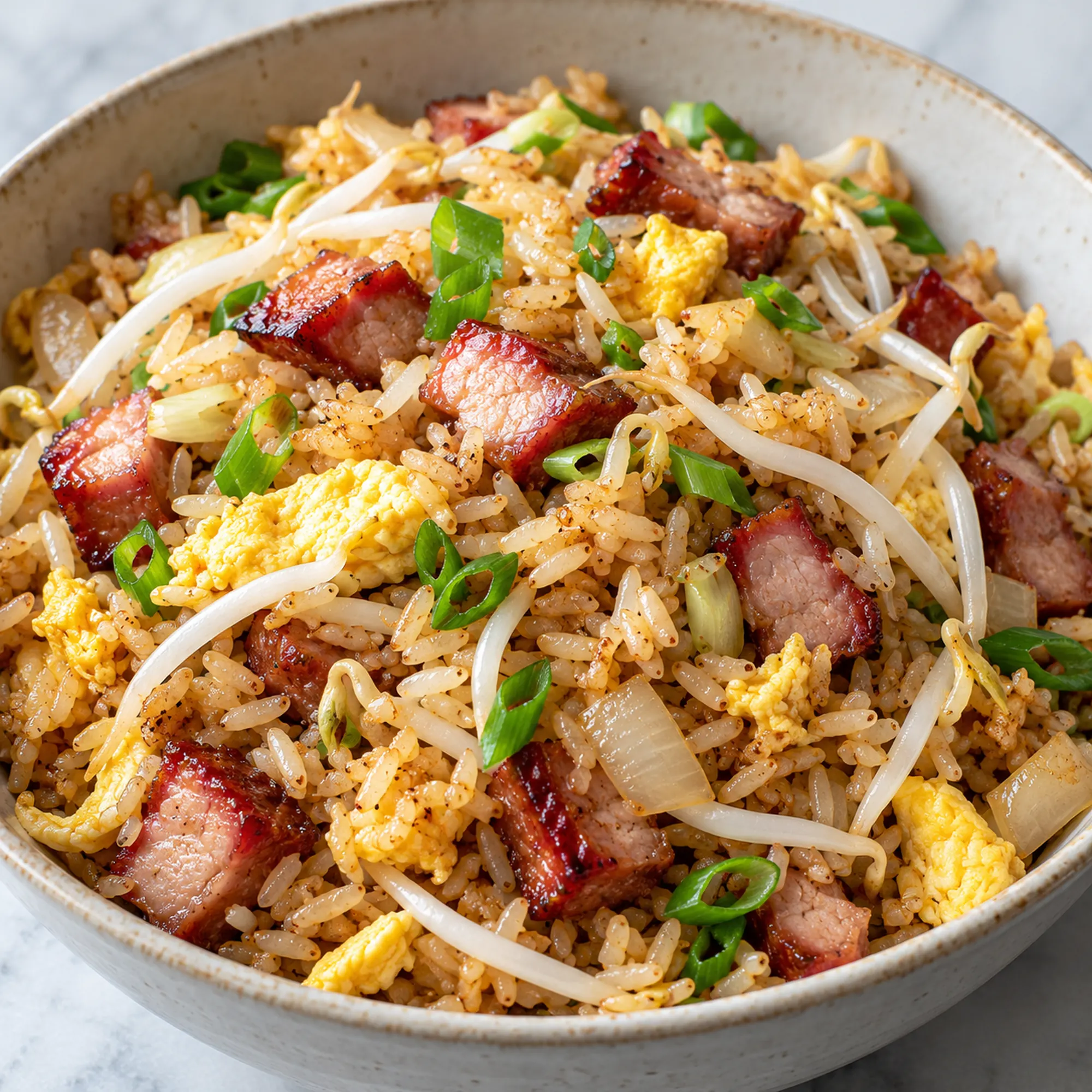
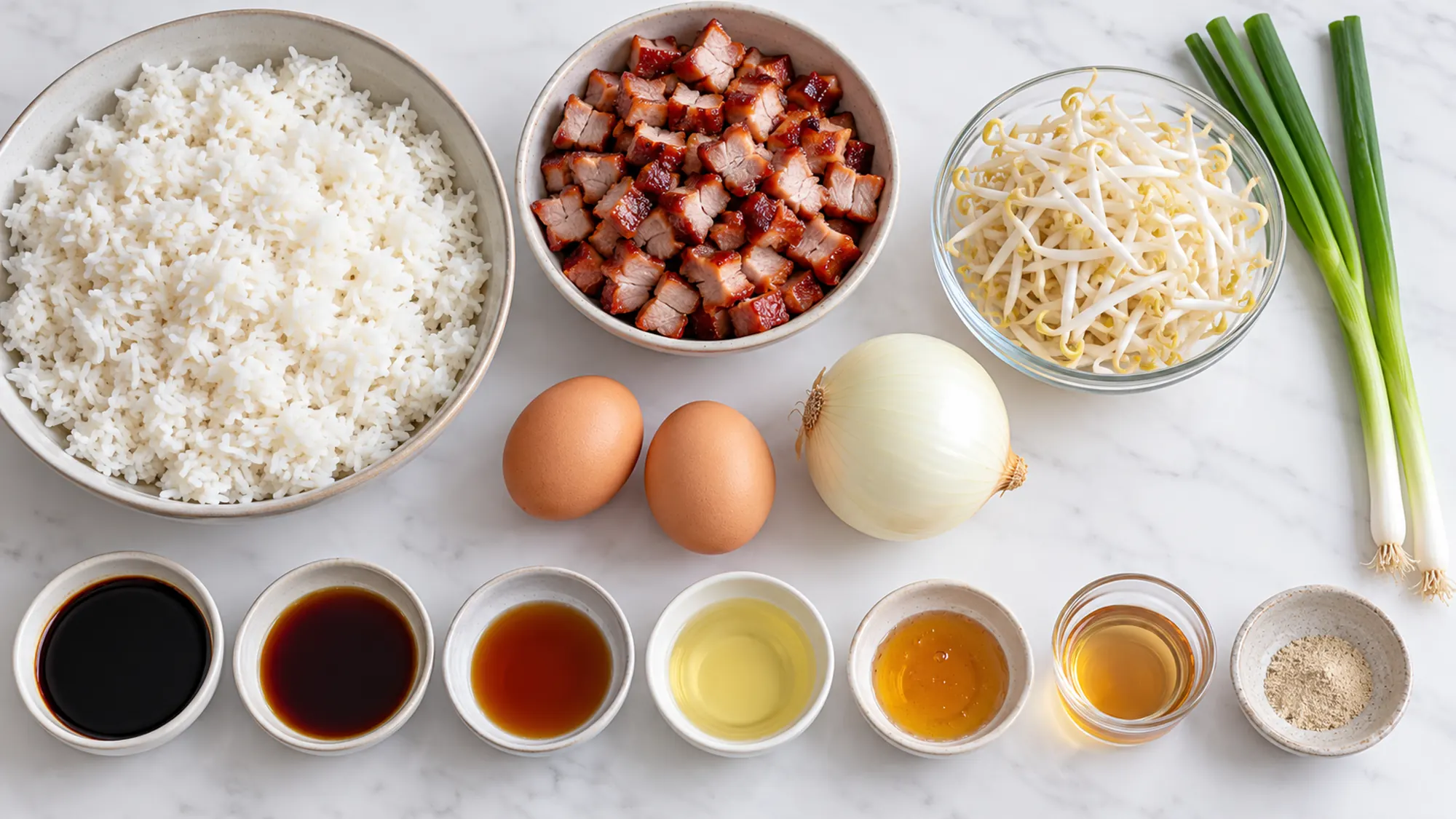
This pork fried rice uses cooked char siu, jasmine rice and a measured soy-sesame sauce; prepare everything first, then stir-fry in a roomy pan.
I like the pork cut small enough that several pieces land on the spoon with the rice. Large chunks may look generous, but they make the flavors less evenly distributed. The practical trick is organization: once the pan is hot, searching for the dark soy sauce is not the most relaxing part of dinner.
Serving Pork Fried Rice
Divide the finished rice among six bowls while it is hot. There is already pork and egg in the pan, so a second meat dish is optional rather than necessary. A vegetable side provides a useful contrast without competing with the sweet-savory barbecue flavor.
Tastiva’s soy-sesame cucumber salad brings a cool crunch, though its dressing also contributes sodium. For a simpler pairing, choose steamed greens with a squeeze of citrus and no extra soy sauce. Keep the side separate so the rice stays pleasantly dry.
- Set bowls and serving spoons out before the final toss.
- Taste the finished rice before offering more salty condiments.
- A large batch is easier to heat evenly in two smaller batches than in one overloaded skillet.
| Pan cue | What to do |
|---|---|
| Rice clumps | Break them apart gently |
| Heavy steaming | Work in smaller batches |
| Sauce pooling | Toss until distributed |
A roomy pan and restrained extra sauce help the rice stay distinct rather than wet.
Pork Fried Rice Variations
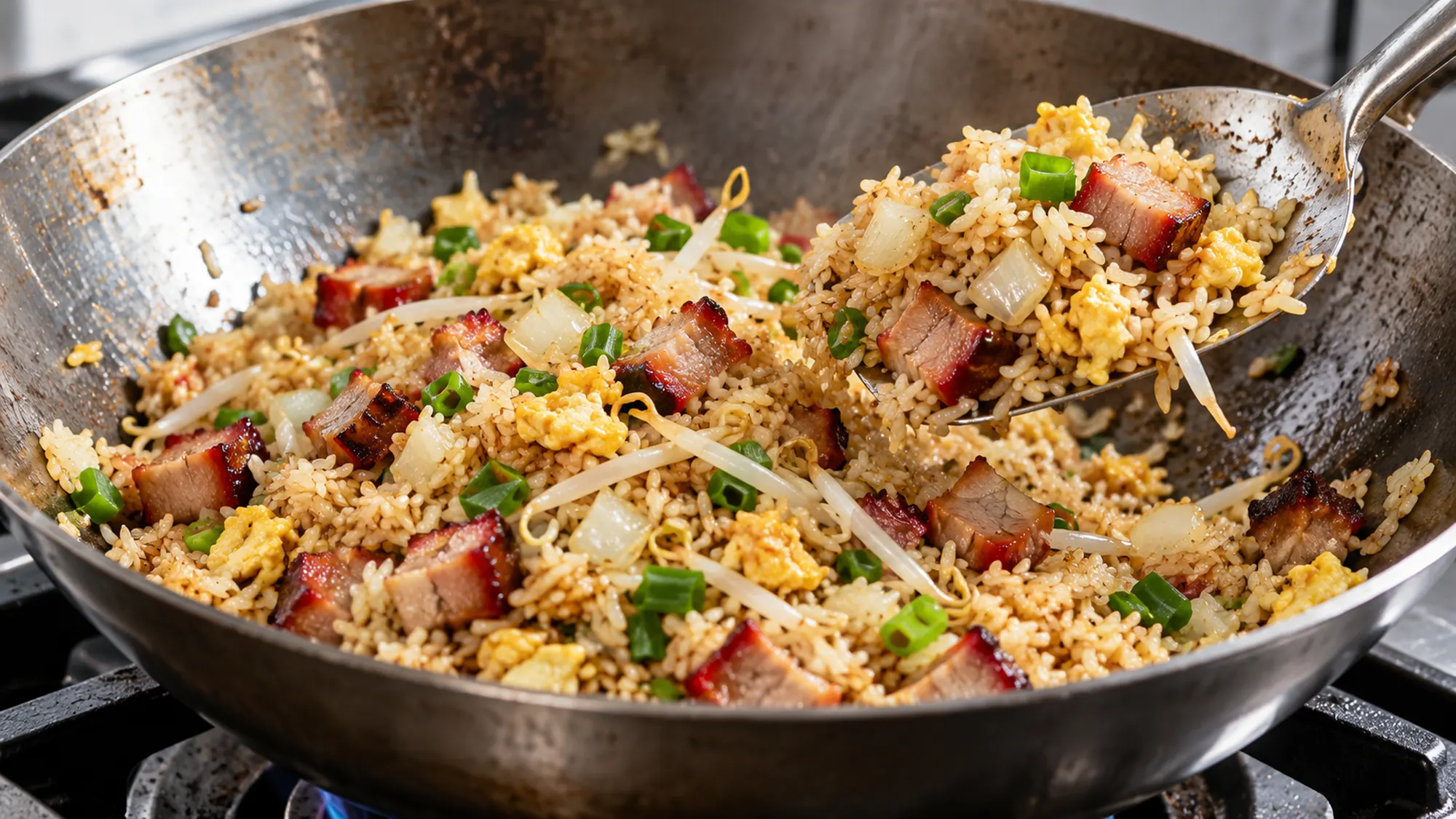
This version follows The Woks of Life’s char siu fried rice, with cooked barbecue pork as an essential flavor. Plain raw pork is not a direct substitute: it needs separate cooking and lacks the prepared meat’s seasoning. The accompanying video shows the same char siu, rice and stir-fry approach.
I would skip extra additions on the first attempt and notice how the onion, egg and pork work together. Peas or finely diced carrots can be a later variation, but they are not in this formula. More vegetables also mean more pan volume and potentially more moisture.
- Use reduced-sodium soy sauce for the measured light soy component; dark soy is a separate, stronger-color ingredient.
- The small amount of dry sherry is optional. Leave it out when avoiding alcohol rather than assuming brief frying removes it all.
- Another cooked rice can work, but grain size and moisture will change the texture.
- Prepared char siu varies considerably in sweetness and saltiness, so taste before adding anything beyond the written sauce.
Keep the cooked barbecue pork and the two soy-sauce roles clear before making substitutions.
Nutrition and Safe Cooking
Pork and egg contribute protein, while rice supplies the main starch. The estimated serving has about 25 grams of protein, but it also contains substantial sodium from the prepared pork and sauces. Using reduced-sodium soy sauce does not make the whole dish low in sodium.
The calculation uses a specified prepared-barbecue-pork label rather than treating char siu as unseasoned meat. Your brand may differ. Optional sherry and side dishes are excluded, and the recipe is divided into six portions; a larger bowl is more than one estimated serving.
- Start with cooked rice that was cooled promptly and kept refrigerated. Rice left sitting out is not rescued by adding it to a hot wok.
- Cook the bean sprouts thoroughly rather than scattering raw sprouts over the finished bowl.
- Heat the rice, pork and egg mixture throughout to 165°F (74°C), and refrigerate leftovers promptly in shallow containers.
Good fried rice starts with safely handled ingredients, not just a hot pan at the end.
Bottom Line
Pork fried rice is most satisfying when the separate grains carry little pieces of egg, onion and char siu together. Measure the sauce, prepare the ingredients before heating the pan and resist overcrowding. Those decisions matter more than a dramatic stir-fry flourish, and they make a familiar takeout-style bowl approachable in an ordinary kitchen.
Keep the rice distinct, the pork evenly distributed and the final seasoning measured.
Pork Fried Rice Recipe

Ingredients
- 800 g cooked jasmine rice cooled promptly and refrigerated; about 5 cups
- 450 g cooked char siu pork cut into small cubes
- 150 g onion diced
- 50 g fresh mung bean sprouts
- 30 g scallions chopped
- 2 large eggs beaten; about 100 g without shells
- 20 ml sunflower oil 5 ml for eggs, 15 ml for stir-frying
- 5 ml sesame oil
- 7 g honey
- 15 ml reduced-sodium soy sauce
- 5 g dark soy sauce about 1 tsp
- 15 ml hot water
- 3 g fine salt adjust after tasting the pork
- 0.5 g white pepper
- 5 ml dry sherry optional; omitted from estimates
Equipment
- 1 Large wok or skillet
- 1 Mixing bowl
- 1 Instant-read thermometer
Instructions
- Break up the safely refrigerated cooked rice with a spoon. Dice the cooked char siu and onion, rinse the sprouts, and slice the scallions. Mix the sesame oil, honey, reduced-sodium soy sauce, dark soy sauce, hot water, salt and white pepper in a small bowl.
- Heat 5 ml sunflower oil in a large wok or skillet over medium-high heat. Beat the eggs, add them and scramble until fully set. Transfer to a clean plate.
- Add the remaining 15 ml sunflower oil. Stir-fry the onion until softened, then add the cooked pork and rice. Toss and break up clumps until everything is hot; use two batches if the pan is crowded.
- Pour the sauce around the rice and toss thoroughly. Add the optional dry sherry if using. Add the sprouts and continue cooking until they are thoroughly heated, not merely warmed.
- Fold in the cooked eggs and scallions. Stir-fry until the mixture reaches 165°F (74°C) throughout, checking several spots. Serve immediately. Cool any leftovers promptly in shallow containers and refrigerate.
Nutrition
Video
Notes
Tried this recipe?
Let us know how it turned out!Hi, I’m Laura, the voice behind Tastiva. I’ve always believed that eating well should feel enjoyable, comforting, and realistic—not like another complicated rule to follow. I love creating recipes that fit into everyday life, sharing simple nutrition ideas, and finding small ways to make meals feel a little better without losing the pleasure of good food.