
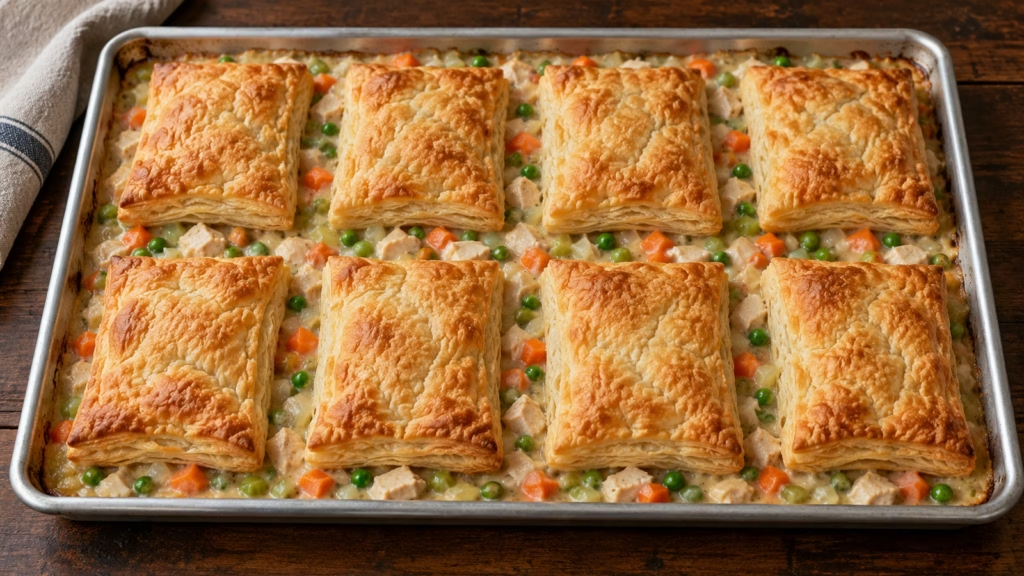
The best-looking piece of pot pie usually has a generous patch of golden pastry attached. Sheet pan chicken pot pie spreads that opportunity across a whole pan: creamy chicken and vegetables underneath, separate puff-pastry rectangles on top. This version uses cooked chicken, a milk-based sauce, and a full-size rimmed half sheet, with space between the pastry pieces for steam to escape.
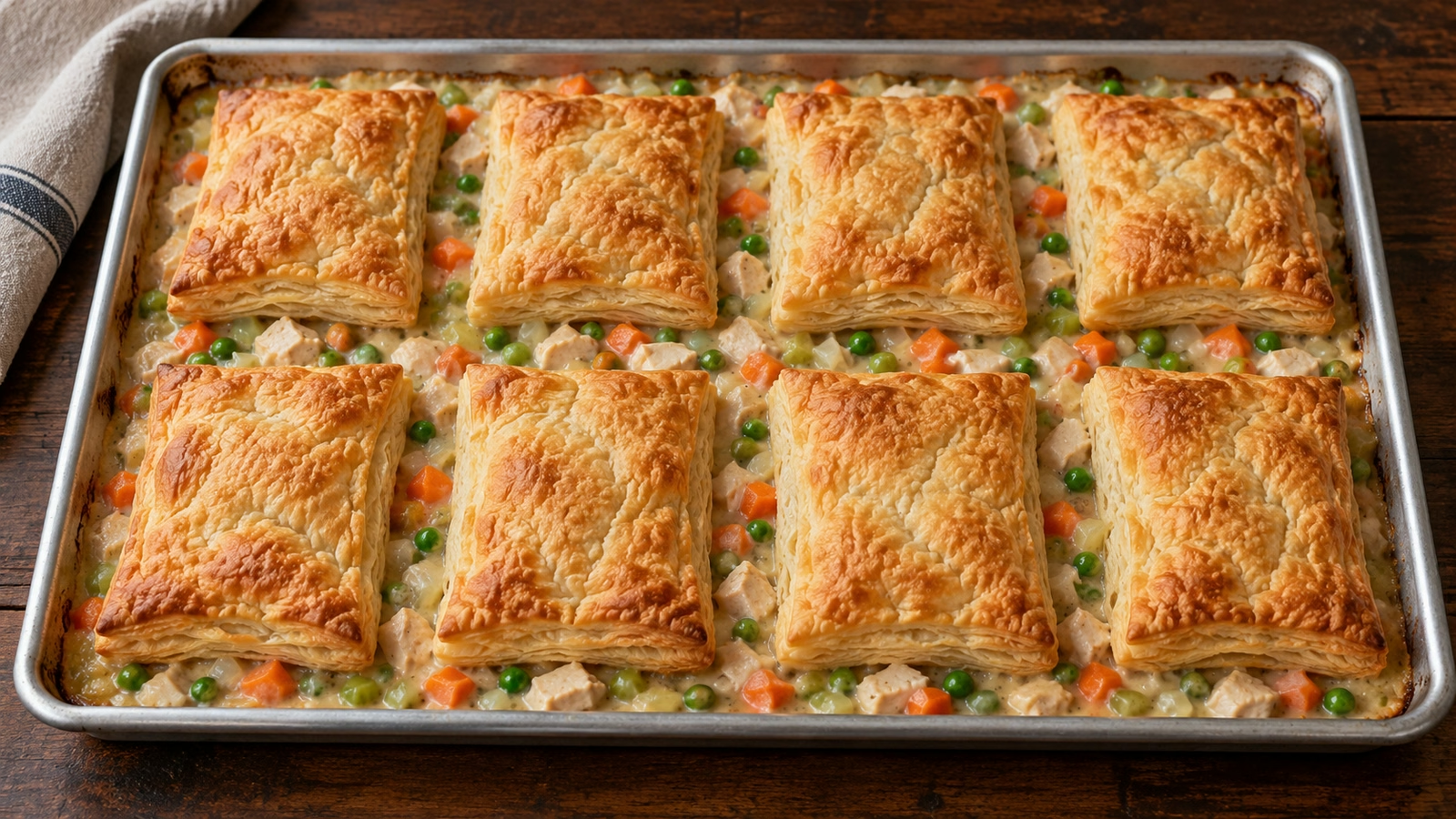
Give the filling a shallow pan and the pastry a little breathing room, so every serving gets its own golden lid.
Choose the pan before starting dinner
Here, sheet pan means an 18-by-13-inch metal half-sheet pan with a sturdy rim at least 1 inch high. A flat cookie sheet cannot hold the filling. A small toaster-oven tray is also a different proposition, even if it happens to be called a baking sheet.
- Check the fit. Make sure the pan sits level in your oven with air around its edges. Measure the interior if your pan has unusually thick or sloped sides.
- Leave headroom. The filling must stay at least ¼ inch below the rim. If your particular pan cannot hold it safely, put the excess in a separate oven-safe dish rather than overfilling.
- Set the pan down before filling. Work on a stable, heatproof surface. Use two oven mitts and carry the loaded pan level; warm sauce does not forgive a casual one-handed lift.
I would choose a sturdy metal pan over a flimsy disposable tray. This is a spoonable dinner, and the weight of the sauce matters before anyone gets to the flaky part. A deeper casserole can hold the ingredients, but it changes the filling depth and cooking time.
Make the filling creamy without heavy cream
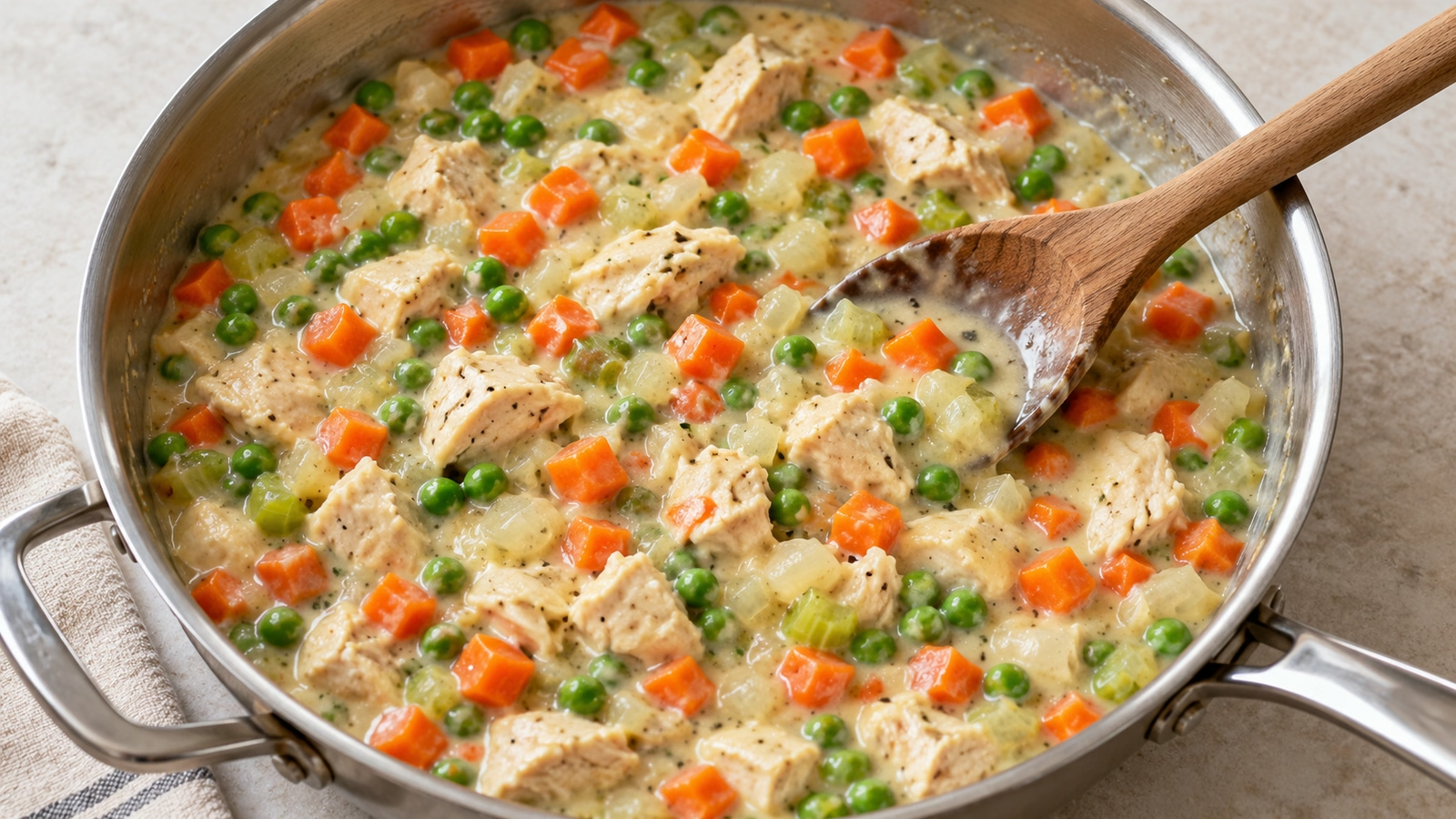
The sauce starts with butter and flour, then chicken stock and whole milk. Cooking the flour with the softened vegetables distributes it before the liquid goes in. Add the stock gradually, stirring well, so you can smooth out any floury clumps before the pan gets crowded.
- Cut carrots small. Aim for ¼-inch dice, not thick coins. They should be nearly tender before the filling goes into the oven.
- Use already-cooked chicken. Cut or shred it into bite-size pieces and remove skin and bones. Raw chicken needs a different method and is not a direct swap here.
- Look for a coating sauce. After simmering, it should cling to a spoon while still pouring easily. It will surround the chicken, not bind everything into a solid mass.
- Keep peas for the end. They only need to heat through in the filling before the whole pan bakes. There is no need to simmer them with the carrots.
For my taste, black pepper and garlic give this filling enough direction without a long seasoning list. Taste the sauce before the pastry goes on. Stock, seasoned rotisserie chicken, and pastry all contribute salt, so the brand choices can change how much adjustment you need.
Keep the puff pastry cool and separated
Thaw the pastry according to its package, then keep it refrigerated until you are ready to cut it. You want dough that unfolds without cracking but still feels cool. Soft, sticky pastry is a cue to pause and chill it, rather than keep stretching it across the counter.
- Make eight lids. Cut each sheet into four rectangles and arrange them in two rows of four over the filling, leaving gaps. There is no need to weave a lattice.
- Keep the edges clean. Use a sharp knife or pizza wheel without crushing the cut layers. Avoid stretching the pieces until they become thin and translucent.
- Judge more than color. Look for expanded layers and a baked, dry-looking underside on a lifted corner. A pale, gummy base needs more time even when the top is tempting.
- Skip the bottom crust. This recipe is designed for pastry above the sauce. Adding an uncooked sheet underneath introduces a different baking problem.
I like the practical fairness of individual pastry lids: fewer negotiations over who gets the big corner. They also make serving easier. Lift a rectangle onto each plate, spoon filling alongside or underneath, and keep the delicate layers from being crushed by the serving spoon.
Sheet pan chicken pot pie recipe
The times below assume the chicken is already cooked and the pastry has thawed. Those are real preparation steps, so plan for them before starting. The filling is made on the stove, transferred to the sheet pan, and baked until bubbling and thoroughly hot; this is not a raw dump-and-bake recipe.
Sheet Pan Chicken Pot Pie Recipe

Ingredients
- 4 tablespoons unsalted butter
- 0.75 cup chopped yellow onion
- 1 cup finely diced celery
- 1.5 cups finely diced carrots ¼-inch dice
- 2 cloves garlic minced
- 50 g all-purpose flour about 1/3 cup plus 1 tablespoon; weigh for accuracy
- 2.5 cups unsalted chicken stock
- 1 cup whole milk
- 3 cups cooked skinless chicken breast chopped; 420 g
- 1 cup frozen green peas
- 0.5 teaspoon fine salt
- 0.5 teaspoon ground black pepper
- 1 17.3-ounce package frozen puff pastry 2 sheets, thawed according to package but kept cool
Equipment
- 18-by-13-inch sturdy metal half-sheet pan with rim at least 1 inch high
- Large deep skillet or 5-quart saucepan
- Wooden spoon and whisk
- Knife or pizza wheel
- Instant-read thermometer
- Two oven mitts
Instructions
- Heat the oven to 400°F (200°C) with a rack in the middle. Set a sturdy 18-by-13-inch metal half-sheet pan with a rim at least 1 inch high on a heatproof surface.
- Melt the butter in a large deep skillet over medium heat. Add onion, celery, and carrots. Cook for 8–10 minutes, stirring, until the carrots are nearly tender. Add the garlic and cook for 30 seconds.
- Stir in the flour and cook for 1 minute. Gradually whisk in the stock, then milk. Bring to a gentle simmer, stirring; cook for 4–5 minutes, until the sauce coats a spoon. Fold in chicken, peas, salt, and pepper. Heat for 2 minutes and remove from the heat.
- Spread the warm filling evenly in the sheet pan, leaving at least ¼ inch below the rim. If needed, place excess filling in a separate oven-safe dish rather than overfilling the pan.
- Cut each cool pastry sheet into four equal rectangles, giving eight pieces total. Arrange on the filling in two rows of four, leaving small gaps between pieces. Do not stretch the dough or add a bottom crust.
- Bake for 25–35 minutes, until the pastry has risen and is golden, its underside looks baked rather than gummy, and the filling bubbles and reaches 165°F (74°C) in the center. If pastry darkens early, loosely shield it with foil and keep baking until the filling is hot.
- Rest for 5 minutes. Serve one pastry rectangle with one-eighth of the filling per person.
Nutrition
Video
Video: Food Network Kitchen demonstrates chicken pot pie baked on a rimmed half-sheet pan with puff pastry. Its version uses overlapping pastry strips and a broth-based gravy; this recipe uses eight separate pastry lids, milk and peas. Follow the pan, filling and baking instructions above.
Notes
Nutrition uses unseasoned cooked chicken breast, unsalted stock, and generic frozen puff pastry; pastry brands and seasoned rotisserie chicken can change the estimate.
The half-sheet dimensions and headroom are essential. Do not use a rimless cookie sheet or automatically substitute a small tray.
Ingredient-based estimate, not laboratory analysis. Uses specified gram weights and yield; all cooking fat and sauce counted, no optional toppings. Actual brands, cooking losses, and serving portions vary.
Tried this recipe?
Let us know how it turned out!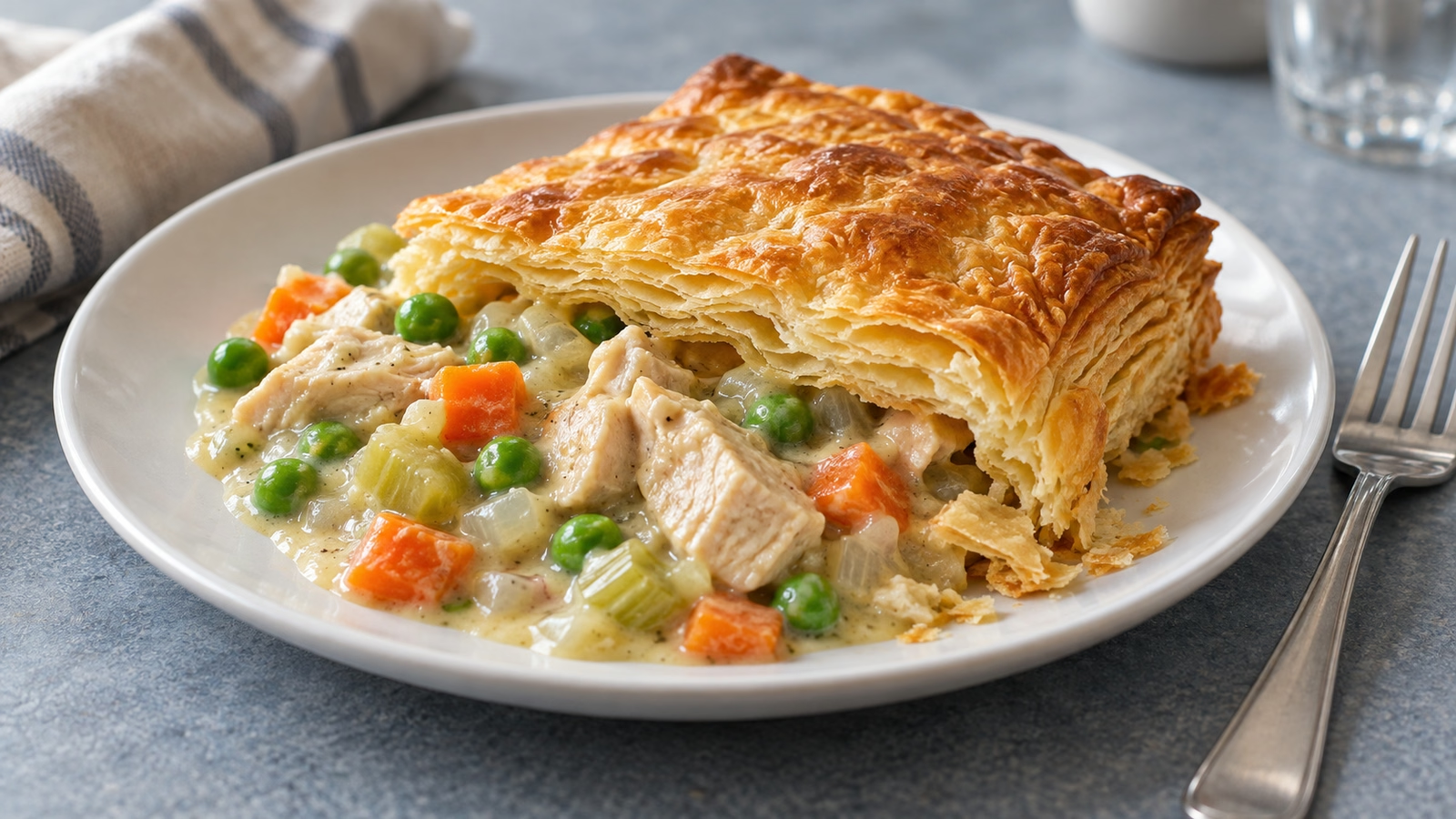
Serve now and store the rest safely
Let the pan stand for five minutes before serving. For leftovers, follow USDA guidance: refrigerate in shallow containers within two hours, or one hour above 90°F (32°C). Keep at 40°F (4°C) or below and eat within three to four days.
- Separate pastry when practical. Store it beside the filling rather than submerged in sauce. It will still soften, but this gives reheating a better starting point.
- Use the oven for texture. Reheat covered filling and uncovered pastry until the filling reaches 165°F (74°C), shielding the pastry if it darkens too quickly.
- Count the chicken’s earlier storage. Making a new dish does not make old ingredients fresh again. Use chicken that was safely stored and is still within its refrigerated storage window.
Sources
Hi, I’m Laura, the voice behind Tastiva. I’ve always believed that eating well should feel enjoyable, comforting, and realistic—not like another complicated rule to follow. I love creating recipes that fit into everyday life, sharing simple nutrition ideas, and finding small ways to make meals feel a little better without losing the pleasure of good food.