
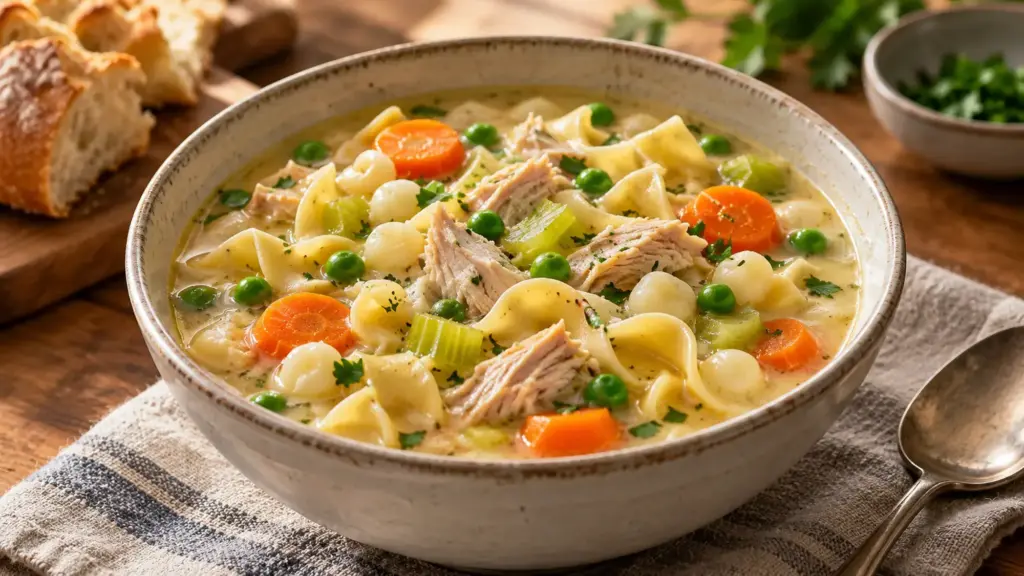
A pot of turkey noodle soup can look just right at dinner and surprisingly thick the next day. The noodles keep taking up liquid as they sit. Cooking them separately gives you more control, especially when the soup is meant to stretch beyond one meal.
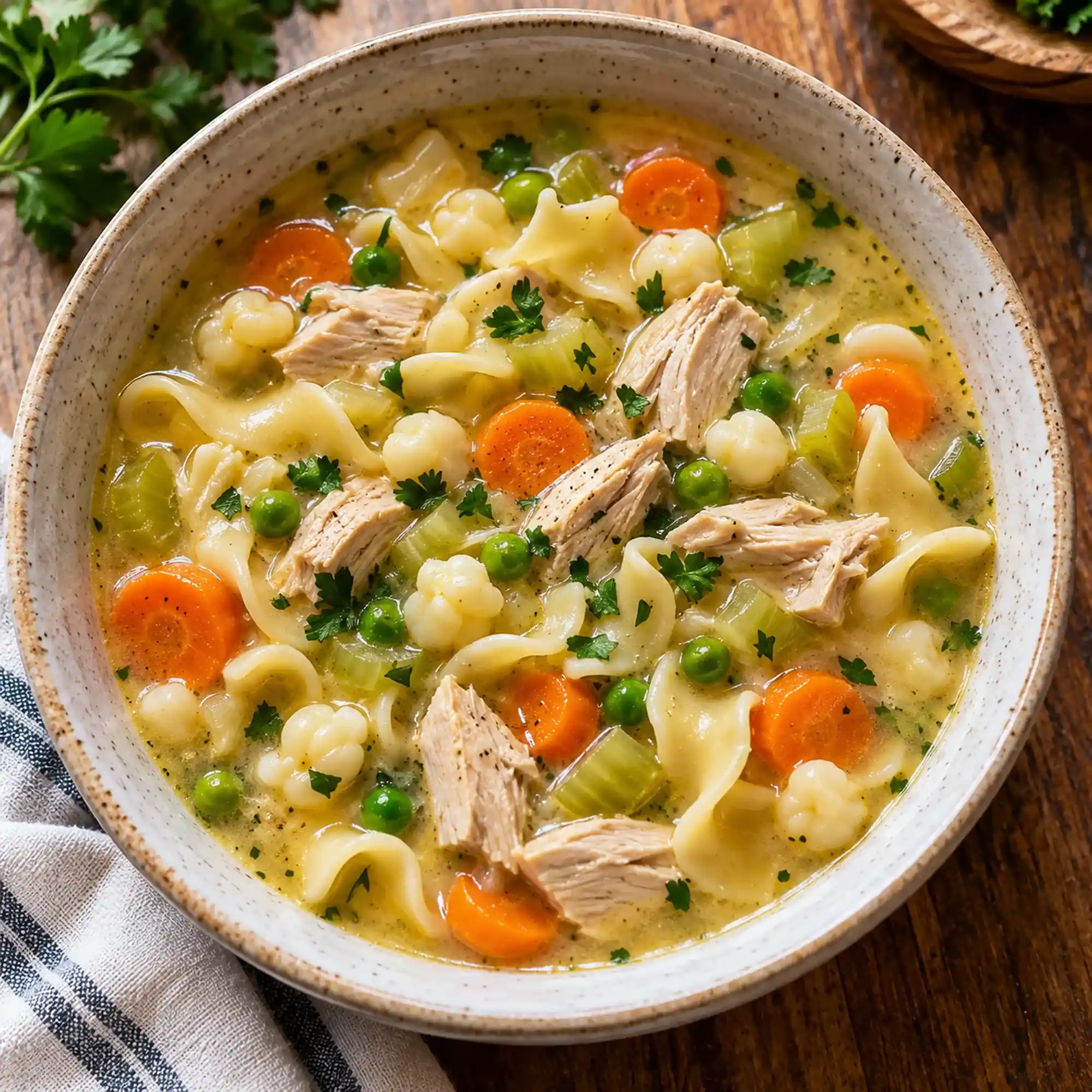
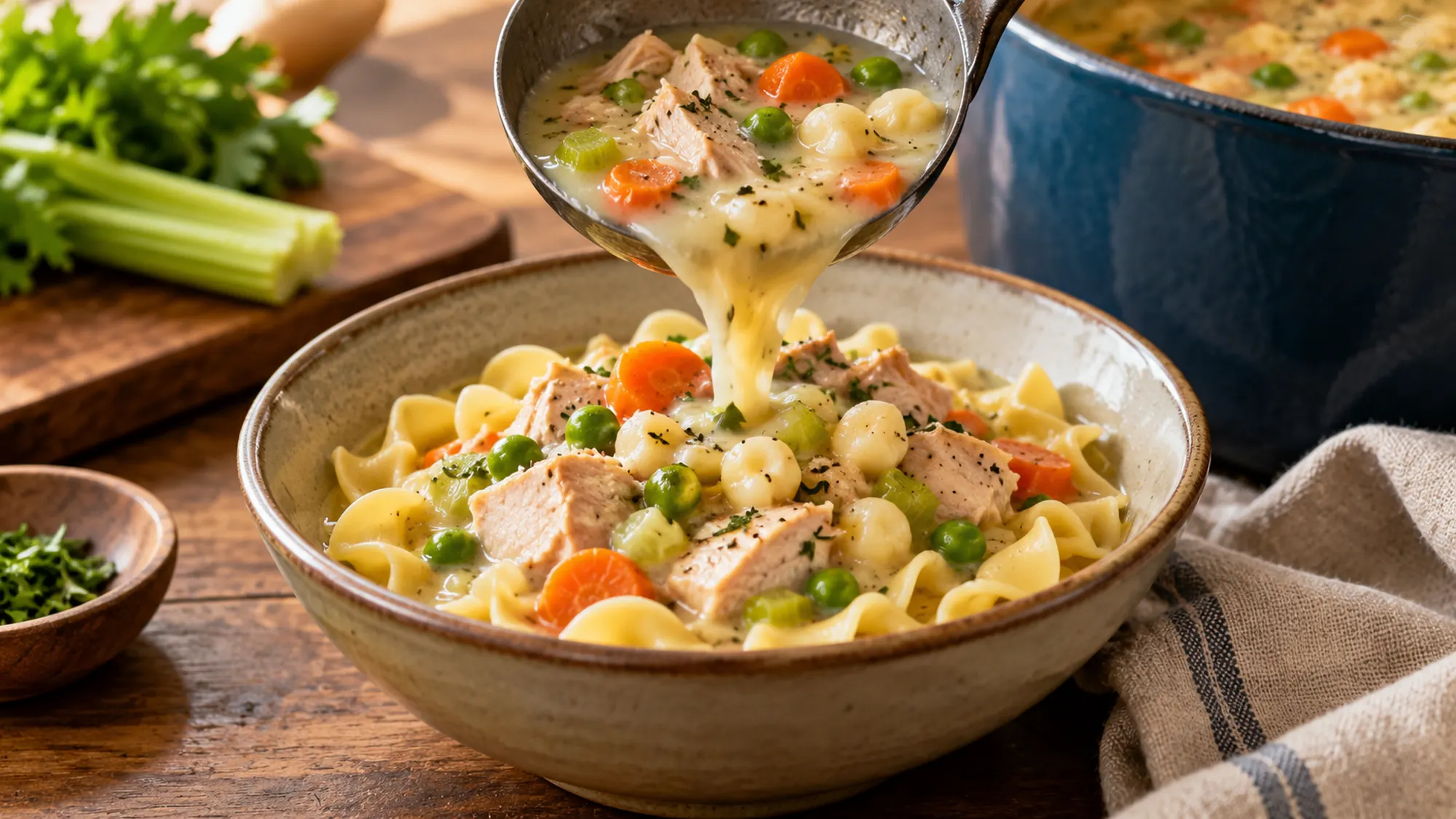
This turkey noodle soup combines cooked turkey, vegetables, hominy and a lightly thickened cream broth. Add separately cooked egg noodles to each bowl so the pot keeps its broth and the noodles keep their shape.
The creamy direction comes from Chef Billy Parisi’s turkey soup, with measured vegetable and turkey weights. I like the separate-noodle approach because it solves a real leftover problem without asking anyone to make a second soup.
Serving Turkey Noodle Soup
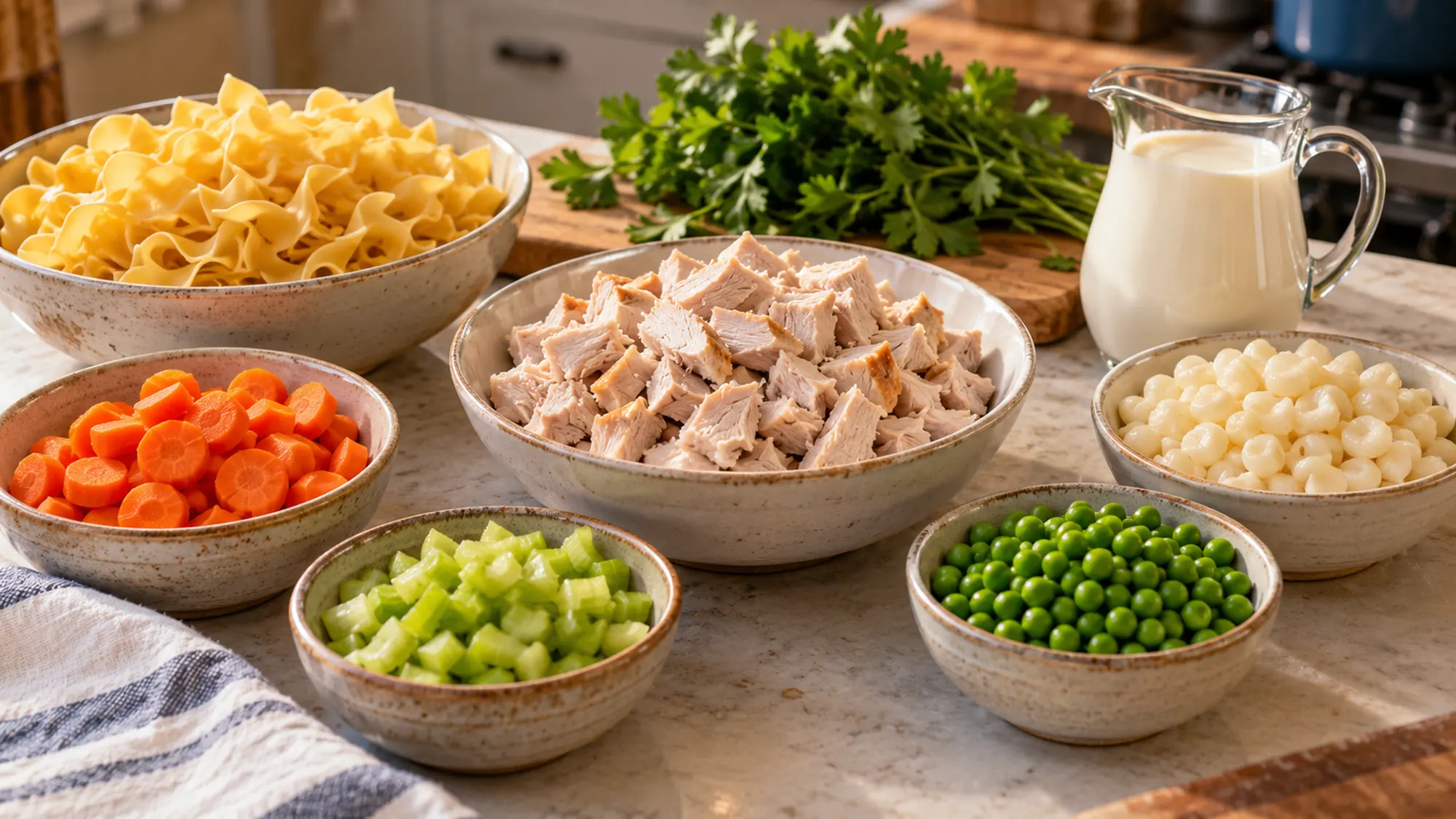
Spoon a portion of noodles into a warm bowl, then ladle the soup over them. This lets you adjust the balance for someone who wants more broth or fewer noodles. It also keeps the main pot easier to portion if everyone is eating at a slightly different time.
The soup contains turkey, noodles, vegetables and cream, so bread is optional rather than a necessary completion. If you offer it, keep the slices small and let people decide. A crisp salad can provide a different texture without competing with the bowl.
- For a lighter bowl: start with fewer noodles, then add more if wanted.
- For family service: keep noodles and soup in separate serving vessels.
- For a fresh side: a simple cucumber salad gives a cool contrast to the creamy broth.
| Plan | Keep separate | Benefit |
|---|---|---|
| Serving immediately | Noodles until bowls are ready | Easier portion control |
| Saving leftovers | Soup and noodles | Less absorbed broth |
| Reheating a portion | Only what you will eat | More predictable texture |
Let the noodles meet the broth in the bowl, especially when you expect leftovers.
Turkey Noodle Soup Variations
This is a creamy soup rather than a clear turkey broth. The small stock-vermouth reduction and the flour thickener are part of that character, so removing both changes the dish substantially. You can make a simpler variation, but it should not be described as the same finished soup.
I would adjust the thickness with a little stock or water before adding more cream. The noodles and flour already contribute body, and a soup that looks loose in the pot can feel fuller once it reaches the bowl. Add liquid gradually so the flavor does not become diluted.
- Different cooked poultry: plain cooked chicken can replace turkey, with a different estimate.
- No vermouth: use stock for an alcohol-free variation and expect less aromatic sharpness.
- Different noodles: cook the chosen shape separately according to its package.
- No hominy: another vegetable creates a different texture; hominy is not the same as sweetcorn.
- More vegetables: use similar-size pieces and check tenderness before adding the cream finish.
Keep the separate-noodle habit even when you change the vegetables or use another cooked poultry.
Nutrition and Safe Cooking
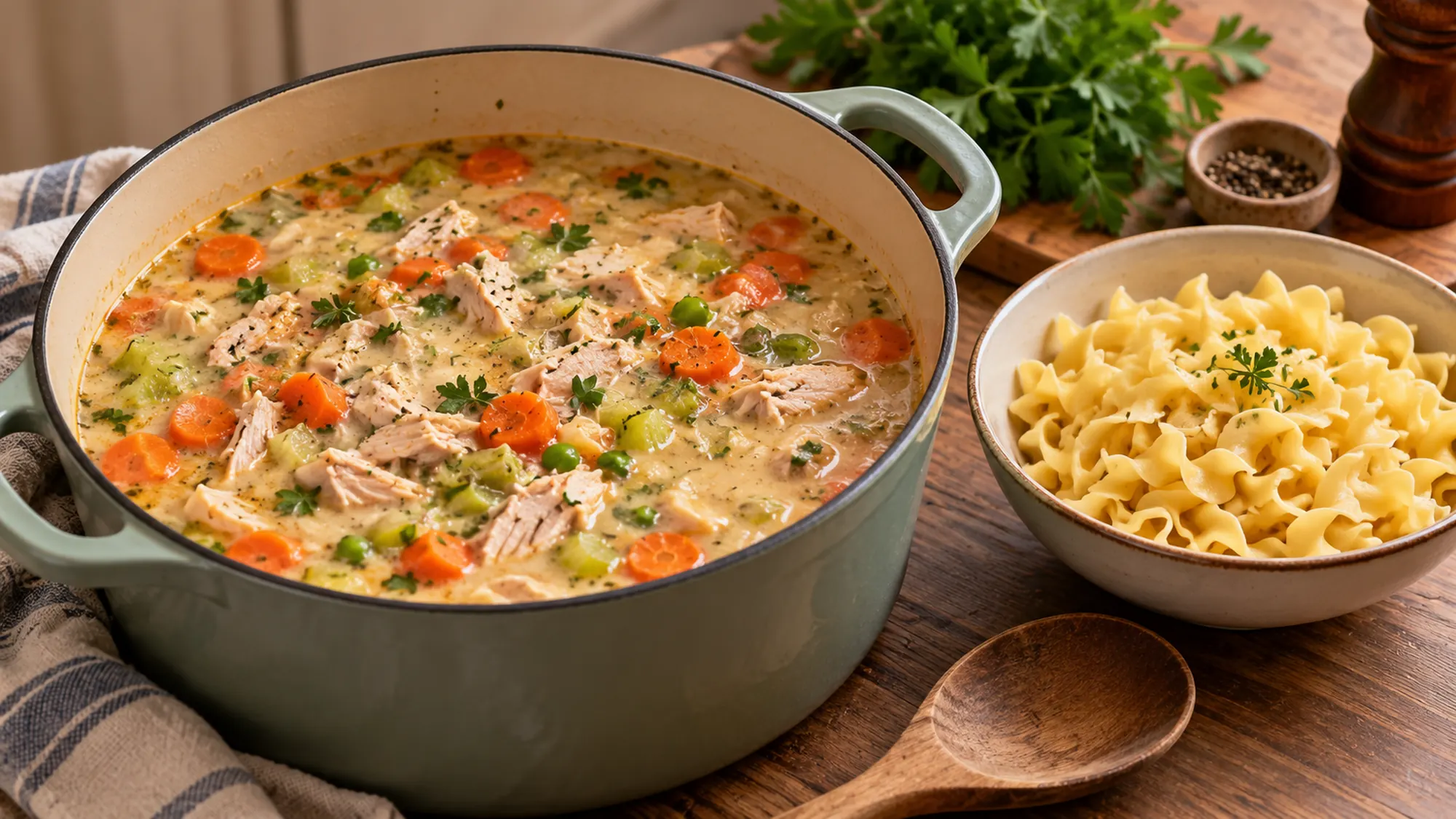
Turkey contributes protein, and the vegetables, peas and noodles make the soup more substantial than broth alone. Butter and cream also contribute richness. The eight-serving estimate includes all noodles and measured fat, not just the turkey and vegetables visible on top.
Leftover turkey brings an important timing detail: making soup does not reset the age of the meat. Use properly refrigerated turkey within its safe storage window, or thaw previously frozen turkey safely. The nutrition estimate uses a generic canned-hominy proxy and cannot describe every brand’s drained kernels exactly.
- Reheat thoroughly: bring the turkey and soup to the 165°F leftover temperature.
- Cool promptly: divide a large batch among shallow containers rather than leaving the full pot out.
- Label the containers: note the original turkey’s storage date as well as the soup-making date.
- Handle noodles separately: refrigerate them promptly too; separating them is a texture choice, not permission to leave them at room temperature.
Good leftovers depend on the turkey’s earlier storage as well as how quickly the new soup is cooled.
Bottom Line
Turkey noodle soup becomes easier to manage when the noodles are treated as their own component. The creamy broth can stay fluid, the vegetables remain visible and each bowl can be assembled to suit the person eating it. Keep the turkey’s history in mind, then enjoy a warm meal without sacrificing tomorrow’s texture.
A separate container of noodles is a small step with a useful payoff.
Turkey Noodle Soup Recipe

Ingredients
- 2880 ml unsalted chicken stock 240 ml for reduction, remainder for soup
- 60 ml dry vermouth
- 84 g unsalted butter 56 g reduction, 28 g vegetables
- 240 ml heavy whipping cream
- 454 g dry egg noodles
- 150 g onion diced
- 300 g carrots sliced
- 200 g celery sliced
- 9 g garlic minced
- 560 g cooked turkey breast diced
- 360 ml water
- 90 g all-purpose flour
- 220 g canned white hominy drained and rinsed
- 140 g frozen peas
- 15 g fresh parsley chopped
- 3 g fine salt adjust to stock
- 1 g ground black pepper
- 15 ml olive oil to coat cooked noodles
Equipment
- 1 large soup pot
- 1 small saucepan
- 1 Pasta pot
- 1 Whisk
Instructions
- In a small saucepan, simmer 240 ml stock, vermouth and 56 g butter until reduced to about 80 ml. Whisk in cream and set aside; reduction does not guarantee all alcohol has evaporated.
- Cook egg noodles just to al dente, drain and cool briefly if preparing ahead. Toss with 15 ml olive oil; keep separate from the soup so they do not absorb all the broth.
- In a large pot, soften onion in the remaining 28 g butter over medium-low heat 10–15 minutes. Add carrots, celery and garlic and cook another 3–4 minutes.
- Add cooked turkey and the remaining 2640 ml stock. Simmer gently until vegetables are tender. Whisk flour with 360 ml cold water until smooth; stir in a ladle of hot broth, then gradually whisk the mixture into the soup.
- Simmer gently at least 5–10 minutes while stirring so the flour cooks and the broth thickens. Stir in the cream reduction, hominy and peas; heat the turkey and soup to 165°F (74°C).
- Add parsley, salt and pepper to taste. Divide noodles among bowls and ladle soup over them. Refrigerate soup and noodles separately promptly; account for the turkey’s original storage time.
Nutrition
Video
Notes
Tried this recipe?
Let us know how it turned out!Hi, I’m Laura, the voice behind Tastiva. I’ve always believed that eating well should feel enjoyable, comforting, and realistic—not like another complicated rule to follow. I love creating recipes that fit into everyday life, sharing simple nutrition ideas, and finding small ways to make meals feel a little better without losing the pleasure of good food.