
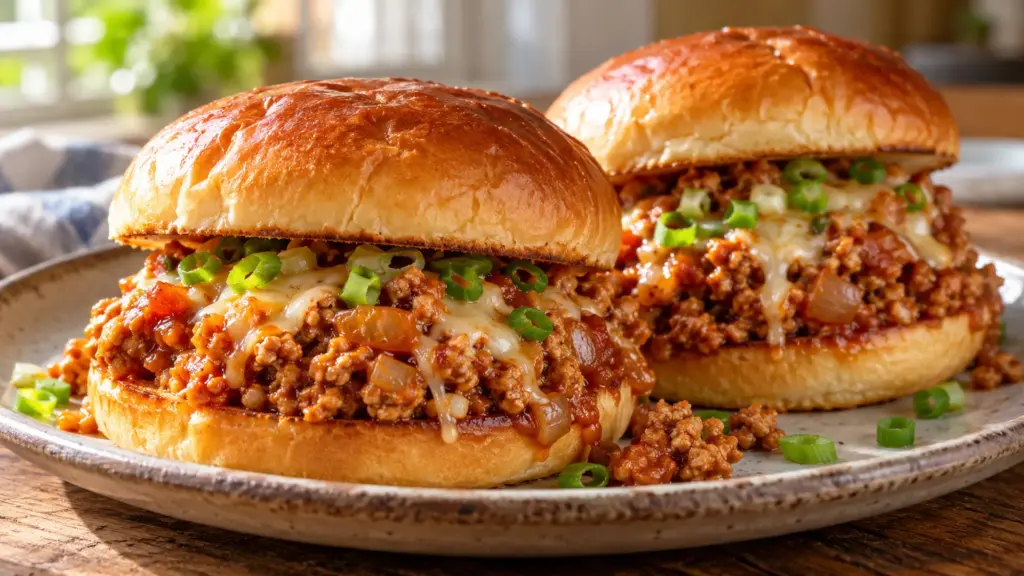
Turkey sloppy joes are not a tidy sandwich, and that is part of their appeal. The filling should be loose enough to settle into a toasted bun but thick enough that the first bite does not send a pool of sauce across the plate.
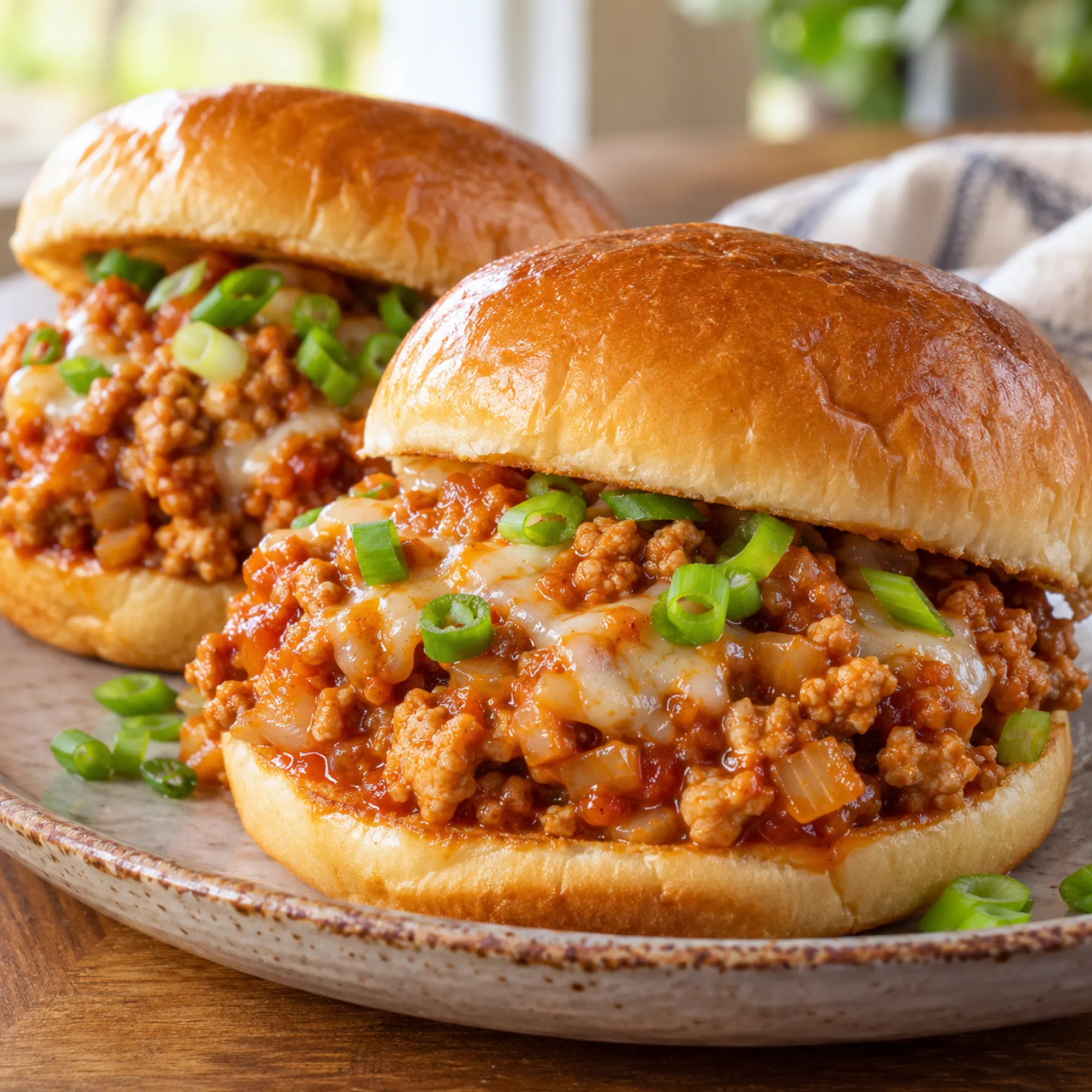
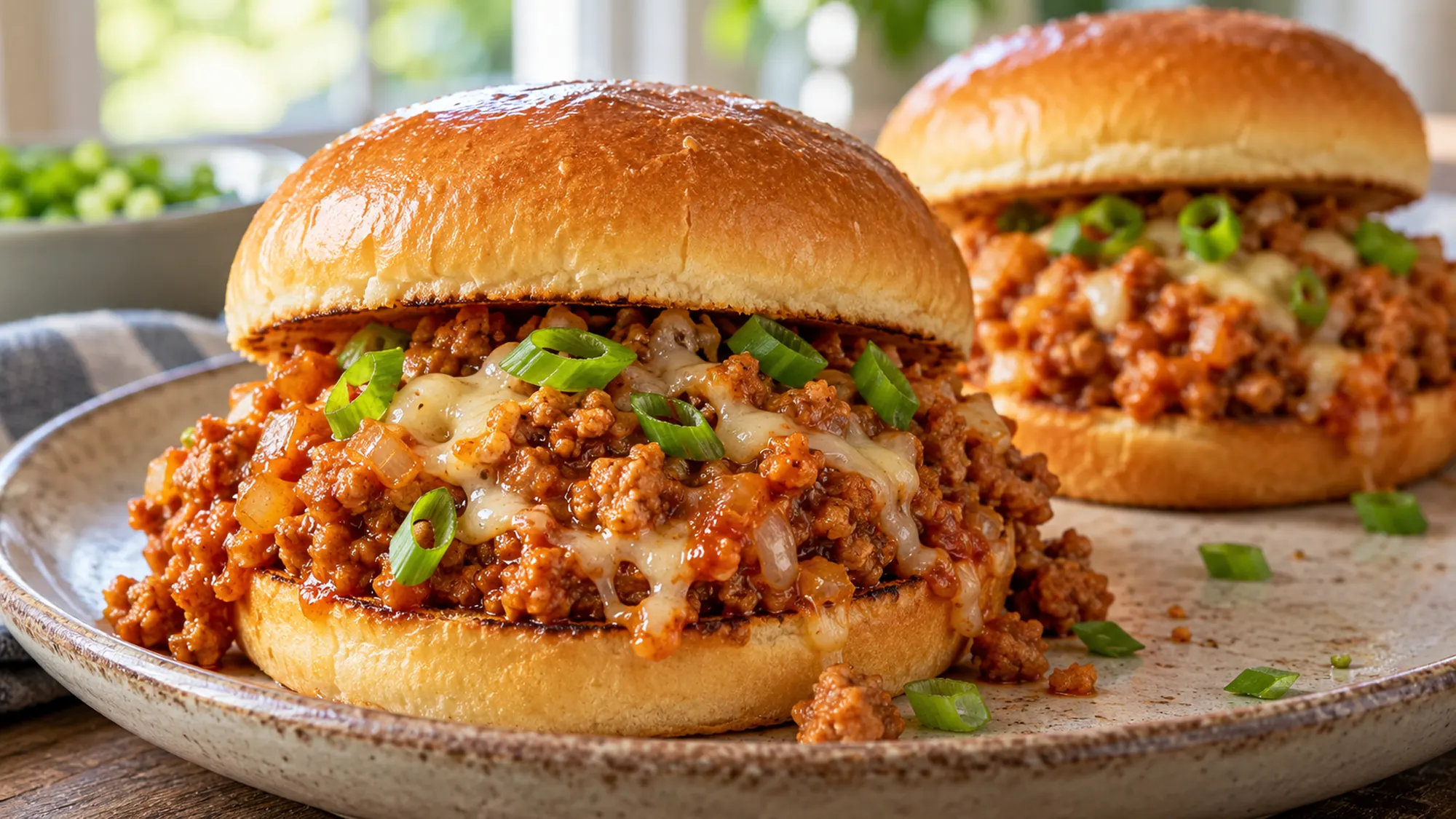
These turkey sloppy joes simmer finely crumbled turkey in a tangy sauce, then finish with white cheddar and green onions. Adjust the water gradually so the filling stays moist without becoming soupy.
The version follows Chef John’s Sloppy Toms, including a small amount of cocoa. I like the restrained cheese finish here: it blends into the filling instead of turning the sandwich into a separate layer of melted cheese.
Serving Turkey Sloppy Joes
Toast the cut sides of the buns so they have a little resistance to the sauce. That will not make a sloppy joe neat, but it buys some time before the bread softens. Spoon on the filling just before eating rather than assembling every sandwich far in advance.
The batch makes six portions of filling. Buns are serving items, not included in the nutrition or cost estimate, so a complete sandwich will have different totals. Smaller rolls are also possible; divide the filling according to the number of sandwiches rather than assuming every roll needs a full portion.
- For a classic plate: add crunchy vegetables or a simple salad.
- For a fresh side: a small chickpea cucumber salad adds a different texture.
- For easy serving: keep the warm filling in the skillet and let people build their own sandwiches.
| Serving decision | Why it helps | Practical detail |
|---|---|---|
| Toast the buns | Slows softening | Toast the cut surfaces |
| Fill at the table | Keeps bread fresher | Use a serving spoon |
| Add a crunchy side | Balances the soft filling | Keep it lightly dressed |
Toast first, fill last, and keep a fork nearby rather than expecting a perfectly tidy sandwich.
Turkey Sloppy Joes Variations
Ground turkey varies in fat content. This version uses 93% lean turkey, and a much leaner product can change the feel of the filling. Water helps separate the meat into small crumbles, but it does not replace fat or guarantee an identical result with every package.
I would adjust sweetness after the sauce has simmered rather than at the first taste. Ketchup already contains sweetness, and the flavor becomes more concentrated as water evaporates. Start with the measured sugar, then decide whether your particular ketchup needs anything different next time.
- Less heat: reduce or omit the small amount of cayenne.
- Cheese choice: white cheddar gives a savory finish; another melting cheese changes the flavor.
- Too wet: simmer uncovered briefly, stirring so the bottom does not catch.
- Too dry: add water a spoonful at a time rather than pouring in a large amount.
- Different serving format: spoon the filling over a baked potato or rice, making clear that those additions are outside the filling-only estimate.
Think of water as a consistency adjustment, not a fixed amount that must all go into the skillet.
Nutrition and Safe Cooking
Turkey supplies protein, but ketchup, butter, sugar and cheese also contribute to the meal. The recipe is not automatically low in sodium or sugar because the meat is turkey. A vegetable side and a portion that suits your appetite are more useful than a broad label.
The estimate covers the complete filling, including the cheese, and divides it into six equal portions. Actual sandwiches may hold more or less. Brand differences in ketchup and cheese can change the numbers, while the bun you choose adds its own ingredients and nutrients.
- Cook poultry thoroughly: follow ground-poultry guidance and reach 165°F (74°C).
- Use clean utensils: do not reuse a spoon that touched raw turkey without washing it.
- Store filling separately: refrigerate promptly in shallow containers and reheat to 165°F (74°C) before assembling fresh sandwiches.
Keep the filling estimate separate from the complete sandwich, and handle ground turkey as poultry throughout.
Bottom Line
Turkey sloppy joes reward a little attention to texture. Break the meat into fine crumbles, let the sauce simmer, and stop when it sits softly on a spoon. Stir in the cheese off the heat, toast the buns, and accept that this is a dinner best served with napkins.
Moist, spoonable filling and freshly toasted bread matter more than a perfectly neat presentation.
Turkey Sloppy Joes Recipe

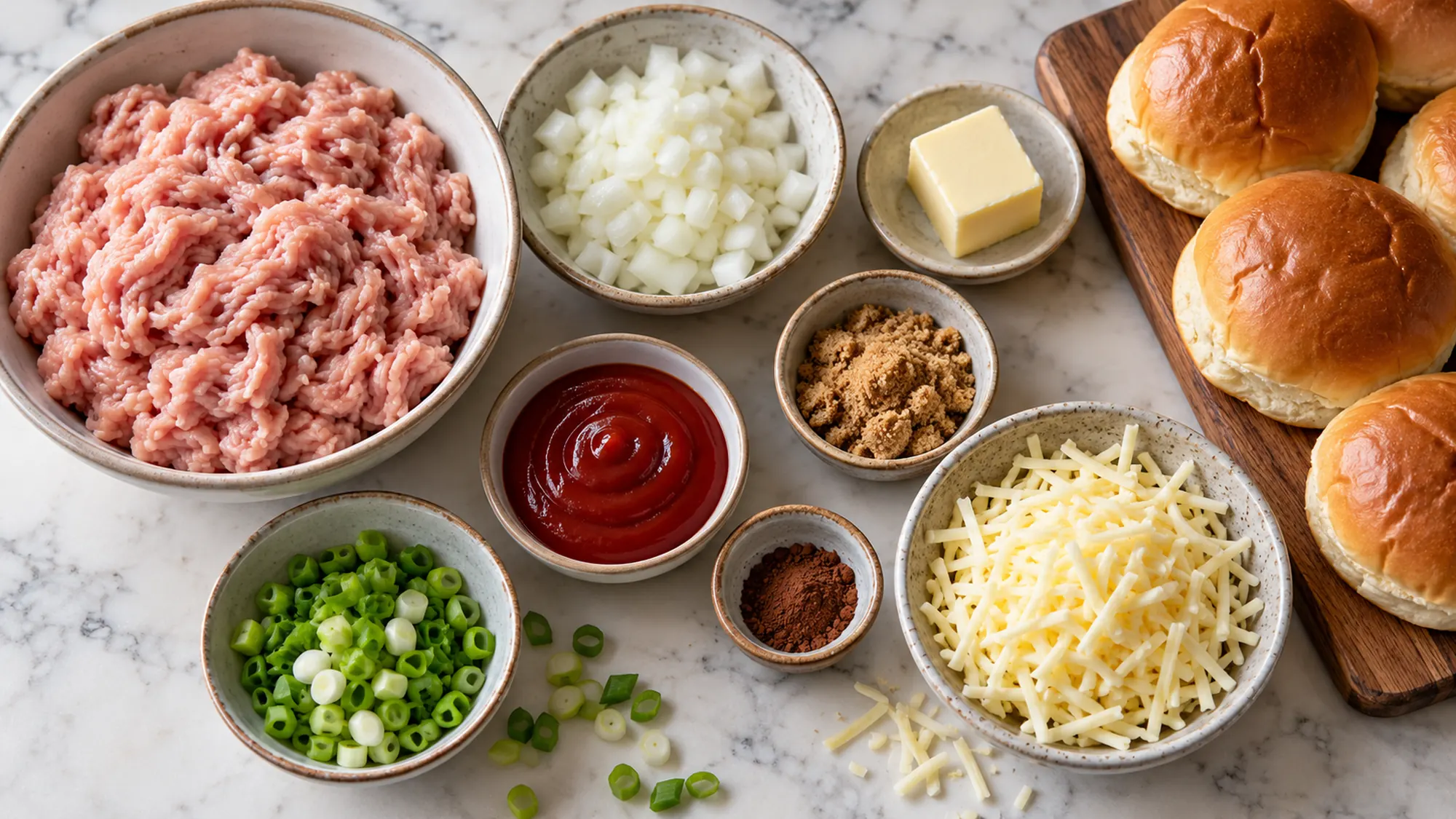
Ingredients
- 28 g unsalted butter
- 150 g onion finely diced
- 3 g fine salt
- 0.5 g ground black pepper
- 567 g 93% lean ground turkey
- 480 ml water 120 ml with turkey, up to 360 ml for simmering
- 180 g ketchup
- 18 g light brown sugar
- 0.25 g cayenne
- 2.5 ml Worcestershire sauce
- 1 g unsweetened cocoa powder
- 35 g green onions sliced
- 56 g white cheddar shredded
- 6 burger buns for serving; excluded from filling estimates
Equipment
- 1 Large skillet
- 1 wooden spoon
- 1 Instant-read thermometer
Instructions
- Melt butter in a wide skillet over medium heat. Cook onion with salt and pepper until softened and lightly golden, about 5–7 minutes.
- Add turkey and 120 ml water. Break the meat into fine crumbles with a spoon as it cooks; the water helps keep the texture loose rather than forming large chunks.
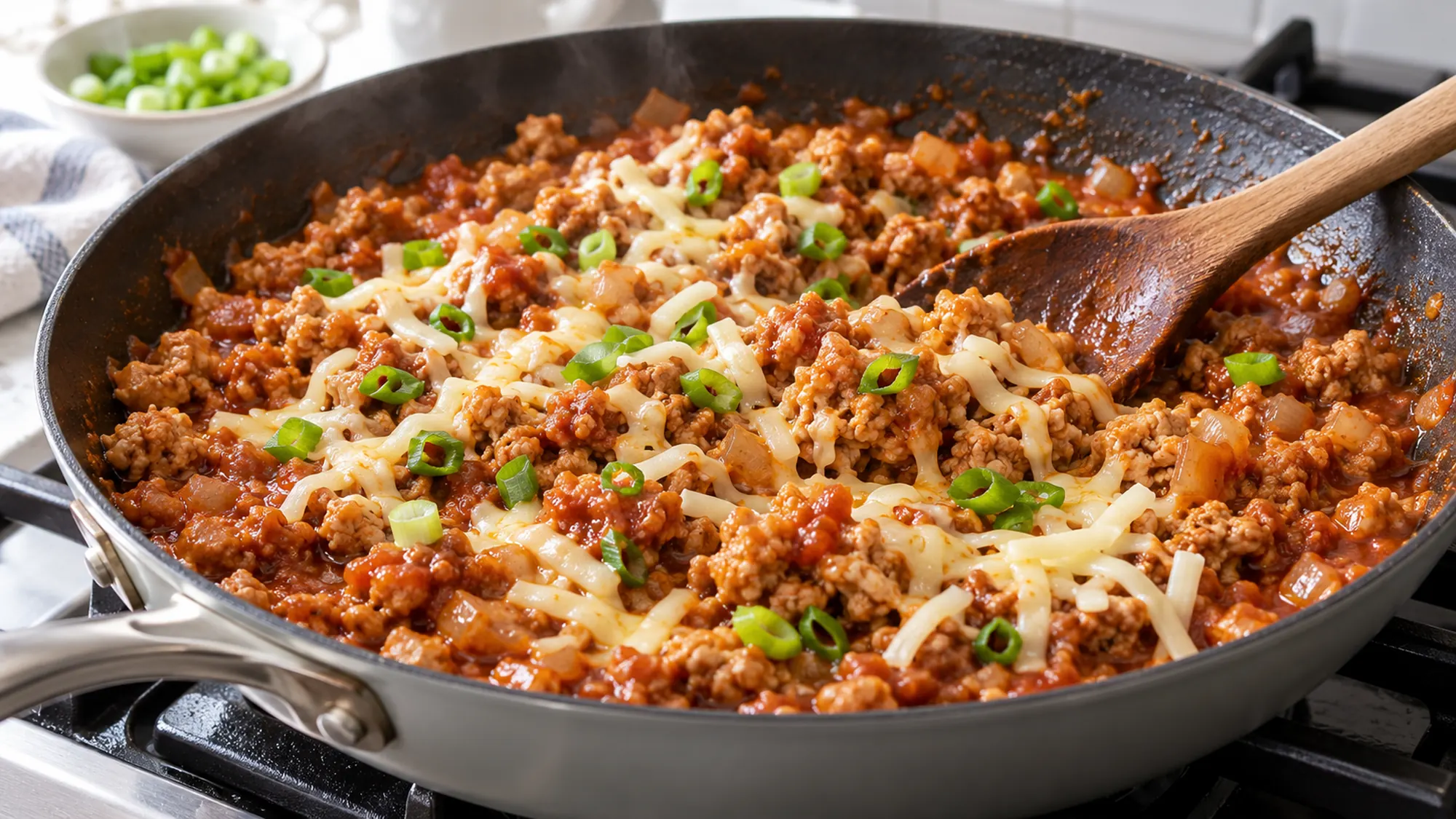
- Stir in ketchup, brown sugar and cayenne. Cook for about 5 minutes, then add Worcestershire and cocoa. Add some of the remaining water to keep the mixture moist.
- Simmer gently for 20–30 minutes, stirring and adding small amounts of water as needed, until turkey reaches 165°F (74°C) and the sauce is thick enough to mound on a spoon.
- Take off the heat and stir in green onions and white cheddar. Divide the filling into six portions and spoon into toasted buns to serve. Nutrition and cost cover filling only; buns are excluded.
Nutrition
Video
Notes
Tried this recipe?
Let us know how it turned out!Hi, I’m Laura, the voice behind Tastiva. I’ve always believed that eating well should feel enjoyable, comforting, and realistic—not like another complicated rule to follow. I love creating recipes that fit into everyday life, sharing simple nutrition ideas, and finding small ways to make meals feel a little better without losing the pleasure of good food.