
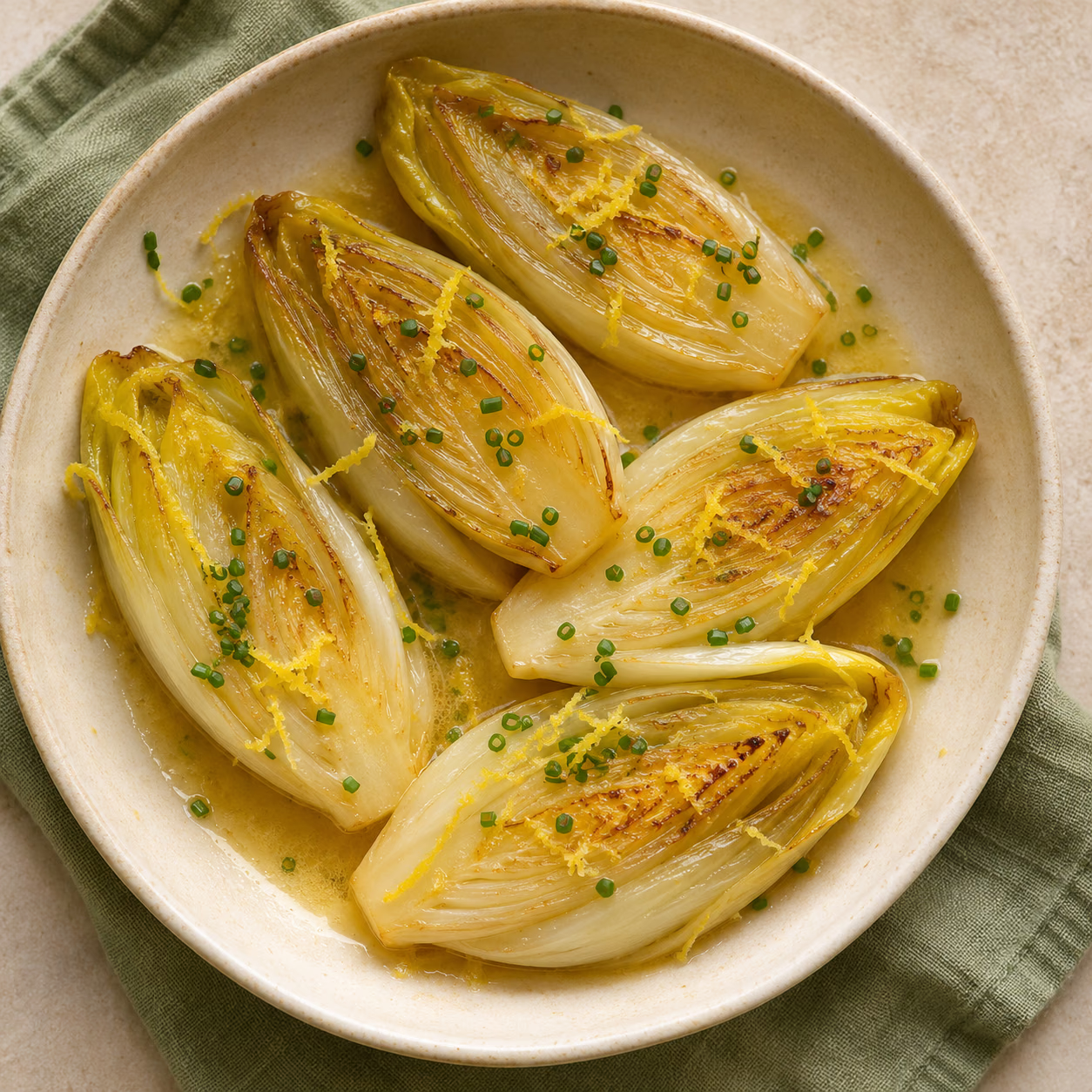
Ingredients
Endive and braising liquid
- 600 g Belgian endive about 4 medium heads; not curly endive
- 30 g unsalted butter
- 120 ml water plus a splash only if the pan dries
- 1/2 teaspoon sugar
- 1/4 teaspoon fine salt
- 1/8 teaspoon black pepper
- 1 teaspoon lemon zest finely grated
- 2 teaspoons lemon juice
- 1 tablespoon chives finely snipped
Equipment
- Wide skillet with lid
- Chef's knife
- Cutting board
- Tongs
- Fine zester
- Measuring spoons
Instructions
Braise and finish
- Rinse and dry the Belgian endives. Trim just the browned end of each base, leaving enough intact to hold the leaves together. Halve lengthwise through the base.
- Melt the butter in a wide skillet over medium heat. Set the endives cut-side down in one layer and cook for 4–5 minutes, until lightly golden. Lower the heat if the butter darkens quickly.
- Add the water carefully, then sprinkle in the sugar, salt and pepper. Cover and simmer gently over medium-low heat for 15–18 minutes, turning once, until the thick bases are tender when pierced. Add a small splash of water only if the pan dries before they soften.
- Uncover and simmer for 2–3 minutes to reduce the liquid to a thin buttery glaze. Gently turn the halves to coat. Remove from the heat and add the lemon zest, lemon juice and chives. Serve warm with the pan juices.
Nutrition
Calories: 87.3kcalCarbohydrates: 6.8gProtein: 1.9gFat: 6.2gSaturated Fat: 3.9gCholesterol: 16.1mgSodium: 151.4mgPotassium: 325.3mgFiber: 1.8gSugar: 4.2gCalcium: 32.1mgIron: 0.4mg
Video
Notes
Inspired by the butter-and-lemon braising approach demonstrated by Jacques Pépin for KQED, originally published August 28, 2024. Follow this card's quantities and doneness cues; they differ from the video.
Nutrition is an estimate per quarter of the entire batch, including all butter and sauce. Endive carbohydrate, fiber, sugar, energy and protein use Ciqual/Aprifel figures; remaining endive values use USDA witloof data. Total carbohydrate includes fiber. Butter, chives, pepper, lemon peel and juice use University Hospitals ingredient tables. Half a teaspoon sugar is estimated as 2 g and the salt contributes about 590 mg sodium to the batch. Produce and retained sauce vary.
Keep the base intact so the halves stay together. A little bitterness is characteristic; the aim is balance, not to disguise the vegetable with extra sugar. For larger heads, allow extra braising time and check the base rather than only the leaves.
