
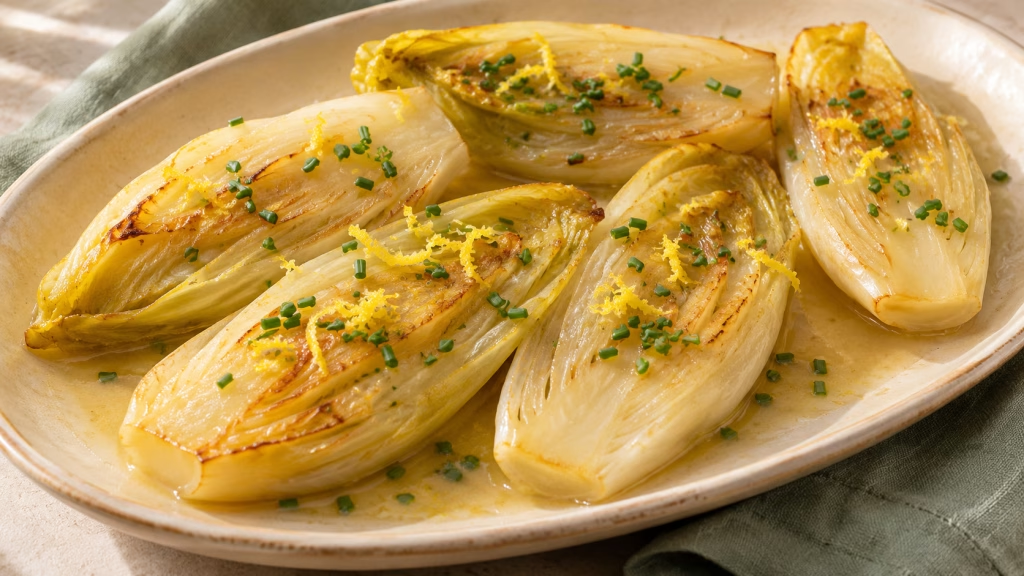
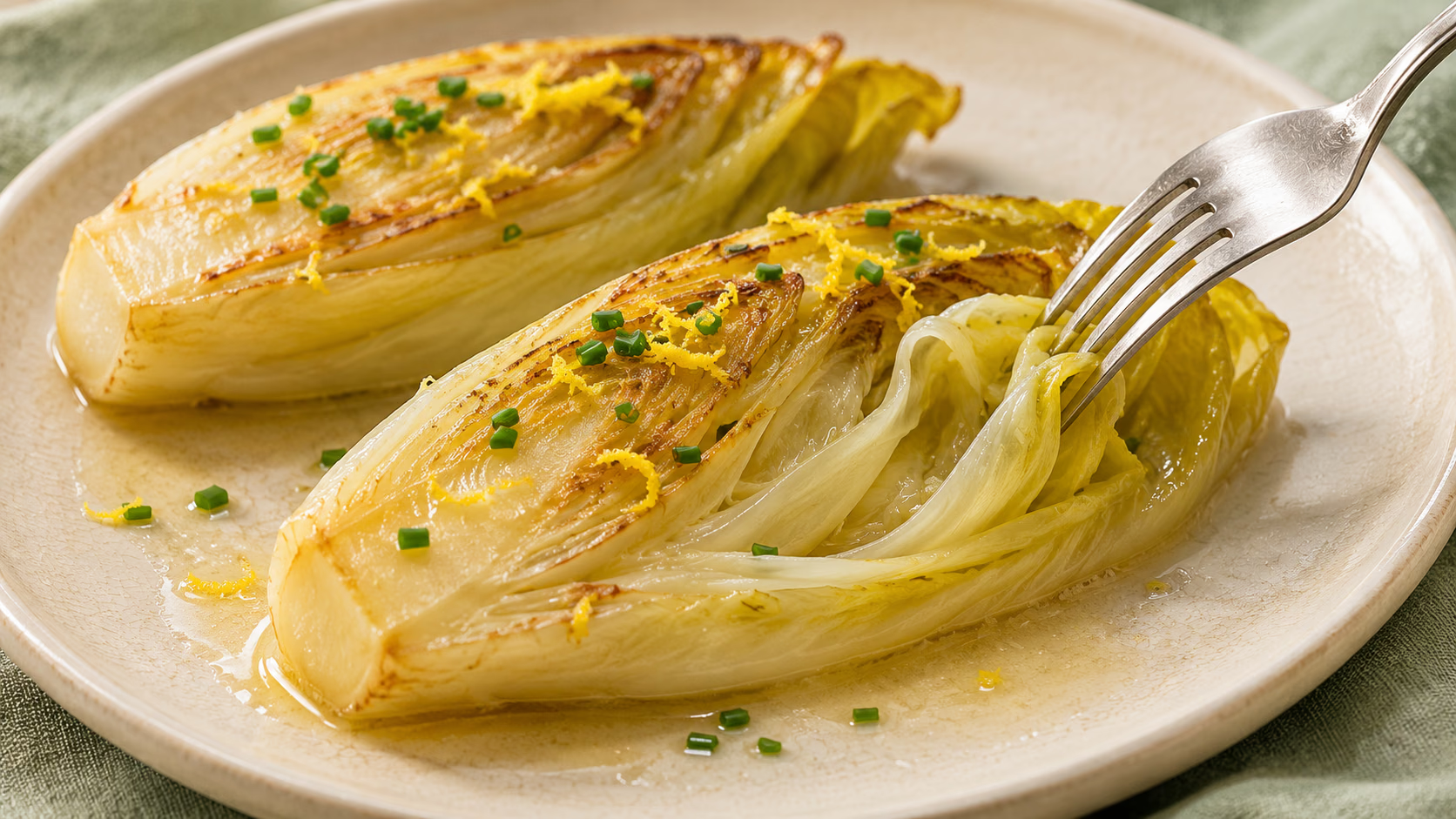
Braised endive is for the evenings when you want a vegetable side that feels a little more considered without adding much work. The tightly packed leaves relax in a covered skillet, the cut faces turn gently golden, and a small amount of butter becomes a sauce rather than disappearing into the pan.
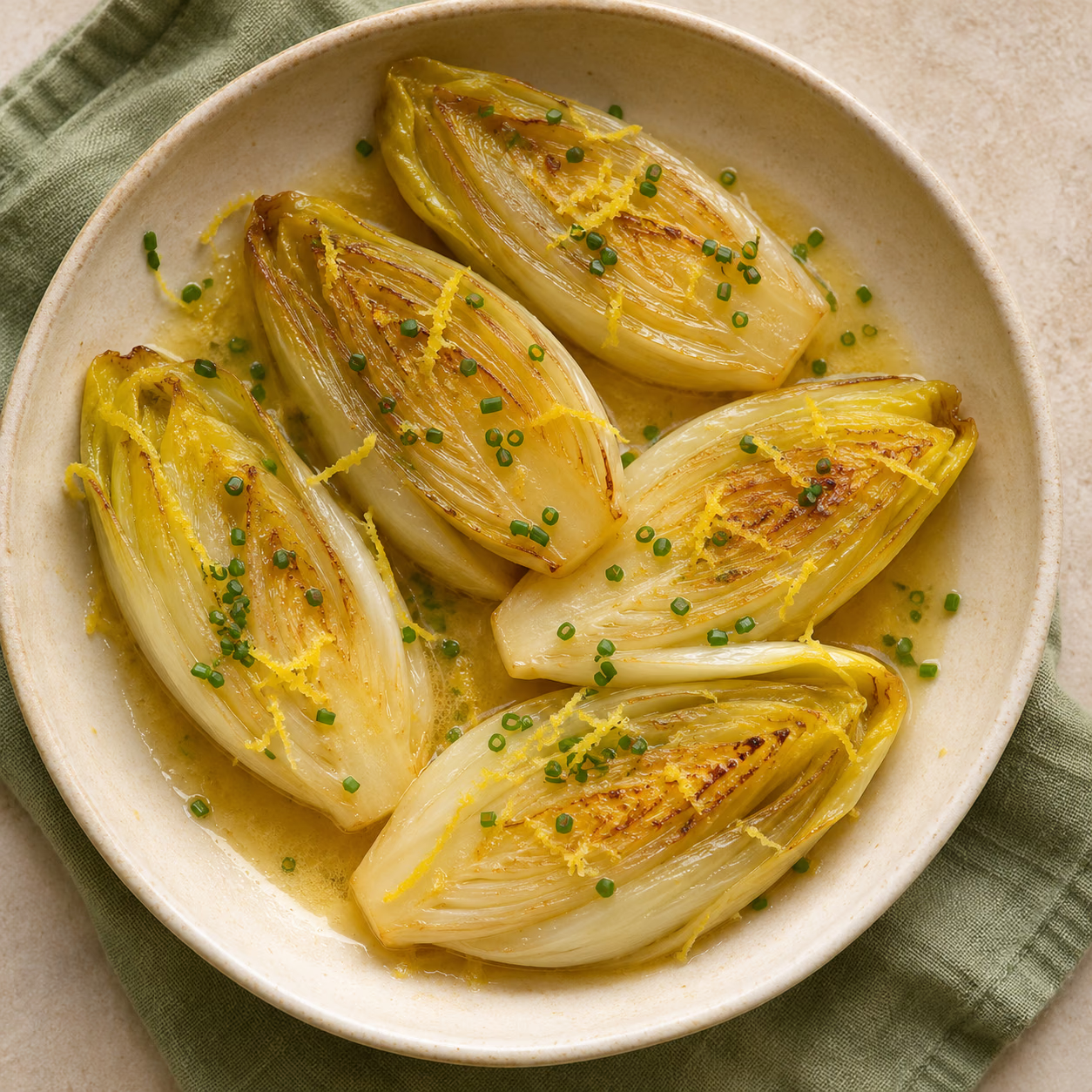
A little bitterness belongs here. Tender leaves and a bright finish bring it into balance.
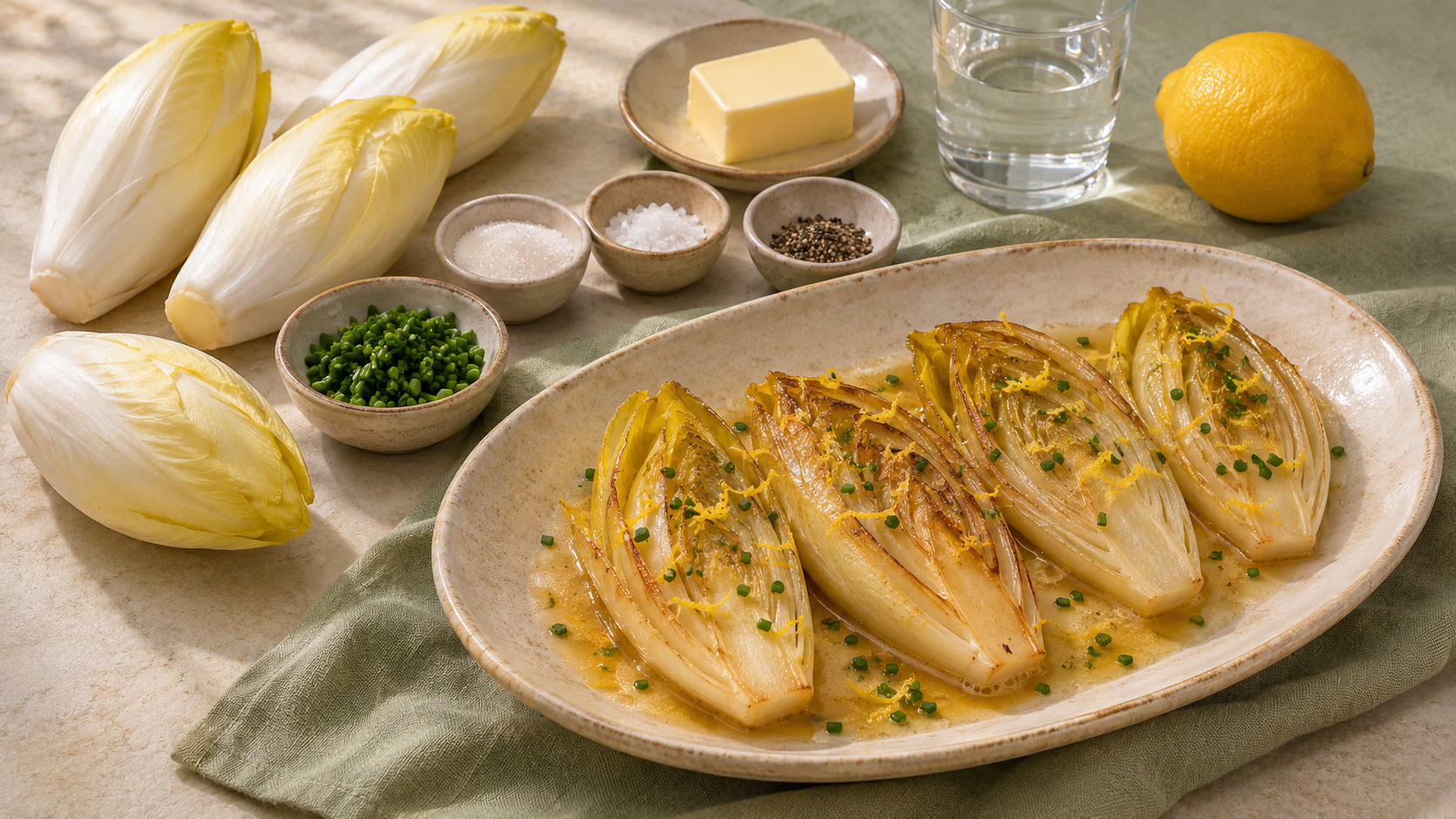
This version finishes with lemon zest, lemon juice and chives. It is not meant to taste like a sweet glaze or a heavy gratin. You get a buttery, softly bitter vegetable with enough freshness to sit comfortably beside fish, chicken or beans. The skillet does most of the work while you prepare the rest of dinner.
The Small Trim That Keeps Endive Together
Look for Belgian endive: the compact, elongated ivory heads with pale yellow tips, sometimes labeled witloof or chicory. Curly endive and escarole are different vegetables and will not hold this shape. Choose firm heads with closely packed leaves rather than loose, tired-looking ones.
Trim only the discolored edge of the base. That small solid section is what anchors the leaves after you halve the head lengthwise. If you cut the entire base away, you will have a pan of loose leaves instead of neat halves. They are still edible, but they are harder to turn and serve.
Dry the cut surfaces before putting them into the butter. Give them a few undisturbed minutes to pick up color, then add the measured water and cover. Gentle heat softens the thick center without reducing the outer leaves to mush. Test near the base with a small knife; it should slide in without a stubborn crunch.
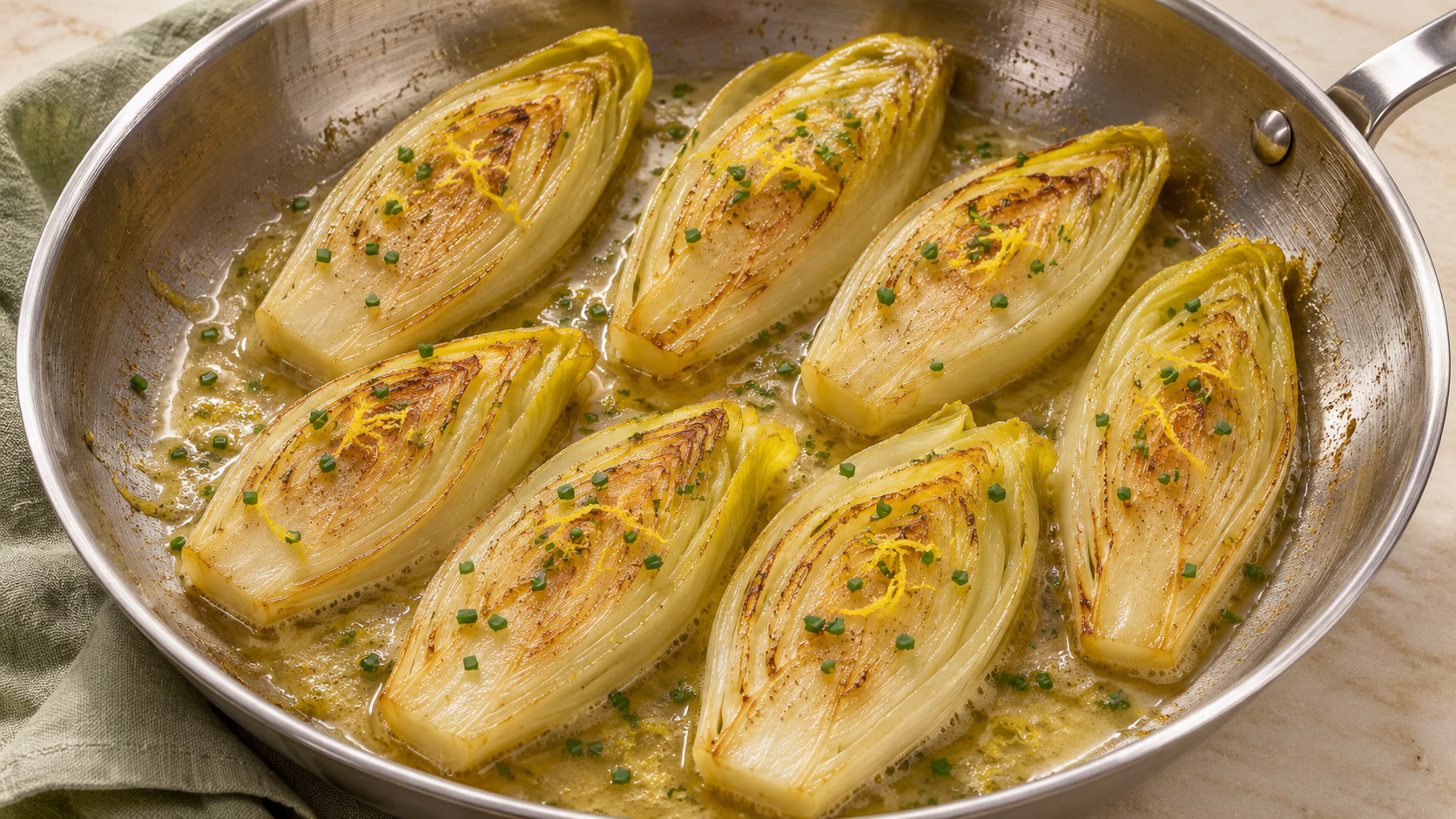
| Pan cue | Your next move |
|---|---|
| Butter darkens before the endive colors | Lower the heat. |
| Liquid disappears but bases are firm | Add a splash of water and cover again. |
| Leaves soften but the pan is watery | Uncover briefly to reduce. |
| Halves begin to loosen | Turn gently with tongs; avoid stirring. |
A wide pan makes this easier. Keep the halves in one layer so they cook at a similar pace and you can lift each one without disturbing its neighbors. If your skillet is small, cook a half batch rather than stacking the endive and hoping the lower pieces will brown.
Serving Suggestions
Spoon the pan juices over the endive just before serving. Baked white fish is an easy partner because its mild flavor leaves room for the vegetable’s slight bitterness. Roast chicken and a simple lentil dish work equally well. Add bread or potatoes if you want something to catch the sauce.
For a fuller vegetable plate, serve a couple of halves beside celeriac puree. The soft puree and layered endive offer different textures even though both are gentle sides. Prefer a drier, browned companion? Try roasted kohlrabi instead, keeping the portions modest.
Variations
Swap the chives for a small amount of chopped parsley if that is what you have. Orange zest can replace the lemon zest, though the result will taste rounder and sweeter. Keep the lemon juice initially, then taste before making another change.
For a dairy-free version, use olive oil in place of the butter and expect a different, less buttery sauce. The small pinch of sugar is optional if you enjoy a more assertively bitter finish. It balances the dish; it is not essential to making the leaves tender.
Health Benefits
Endive adds a vegetable serving, some fiber and potassium without needing a large portion. Aprifel’s composition guide also shows why nutrition estimates vary with the produce and data source. This recipe is about enjoying that vegetable, not treating it as a remedy.
Butter contributes most of the fat in this version. The recipe card counts all of it, along with the sauce and measured salt, across four side portions. Leaving sauce behind or changing the fat will change the numbers. Use the estimate as a guide rather than an exact measurement of your plate.
Bottom Line
Keep the base, use gentle heat, and check the thickest part before you call it done. Those three details make braised endive much less mysterious. Once the leaves are tender, the last squeeze of lemon and spoonful of juices are all you need to bring the skillet to the table.
Braised Endive Recipe

Ingredients
- 600 g Belgian endive about 4 medium heads; not curly endive
- 30 g unsalted butter
- 120 ml water plus a splash only if the pan dries
- 1/2 teaspoon sugar
- 1/4 teaspoon fine salt
- 1/8 teaspoon black pepper
- 1 teaspoon lemon zest finely grated
- 2 teaspoons lemon juice
- 1 tablespoon chives finely snipped
Equipment
- Wide skillet with lid
- Chef’s knife
- Cutting board
- Tongs
- Fine zester
- Measuring spoons
Instructions
- Rinse and dry the Belgian endives. Trim just the browned end of each base, leaving enough intact to hold the leaves together. Halve lengthwise through the base.
- Melt the butter in a wide skillet over medium heat. Set the endives cut-side down in one layer and cook for 4–5 minutes, until lightly golden. Lower the heat if the butter darkens quickly.
- Add the water carefully, then sprinkle in the sugar, salt and pepper. Cover and simmer gently over medium-low heat for 15–18 minutes, turning once, until the thick bases are tender when pierced. Add a small splash of water only if the pan dries before they soften.
- Uncover and simmer for 2–3 minutes to reduce the liquid to a thin buttery glaze. Gently turn the halves to coat. Remove from the heat and add the lemon zest, lemon juice and chives. Serve warm with the pan juices.
Nutrition
Video
Notes
Tried this recipe?
Let us know how it turned out!Sources
Aprifel: endive composition; USDA witloof nutrient data; University Hospitals: unsalted butter nutrients.
Hi, I’m Laura, the voice behind Tastiva. I’ve always believed that eating well should feel enjoyable, comforting, and realistic—not like another complicated rule to follow. I love creating recipes that fit into everyday life, sharing simple nutrition ideas, and finding small ways to make meals feel a little better without losing the pleasure of good food.