
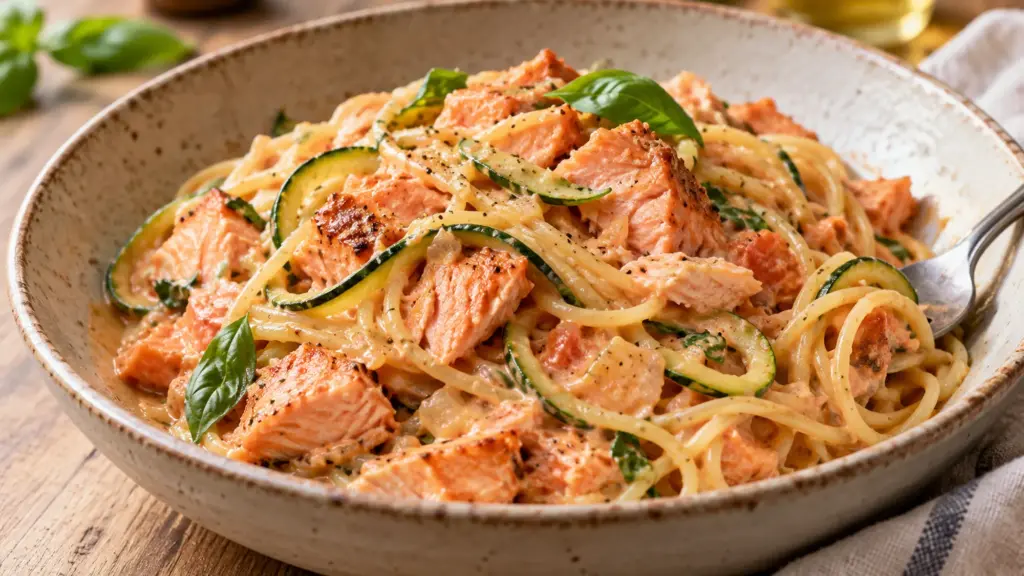
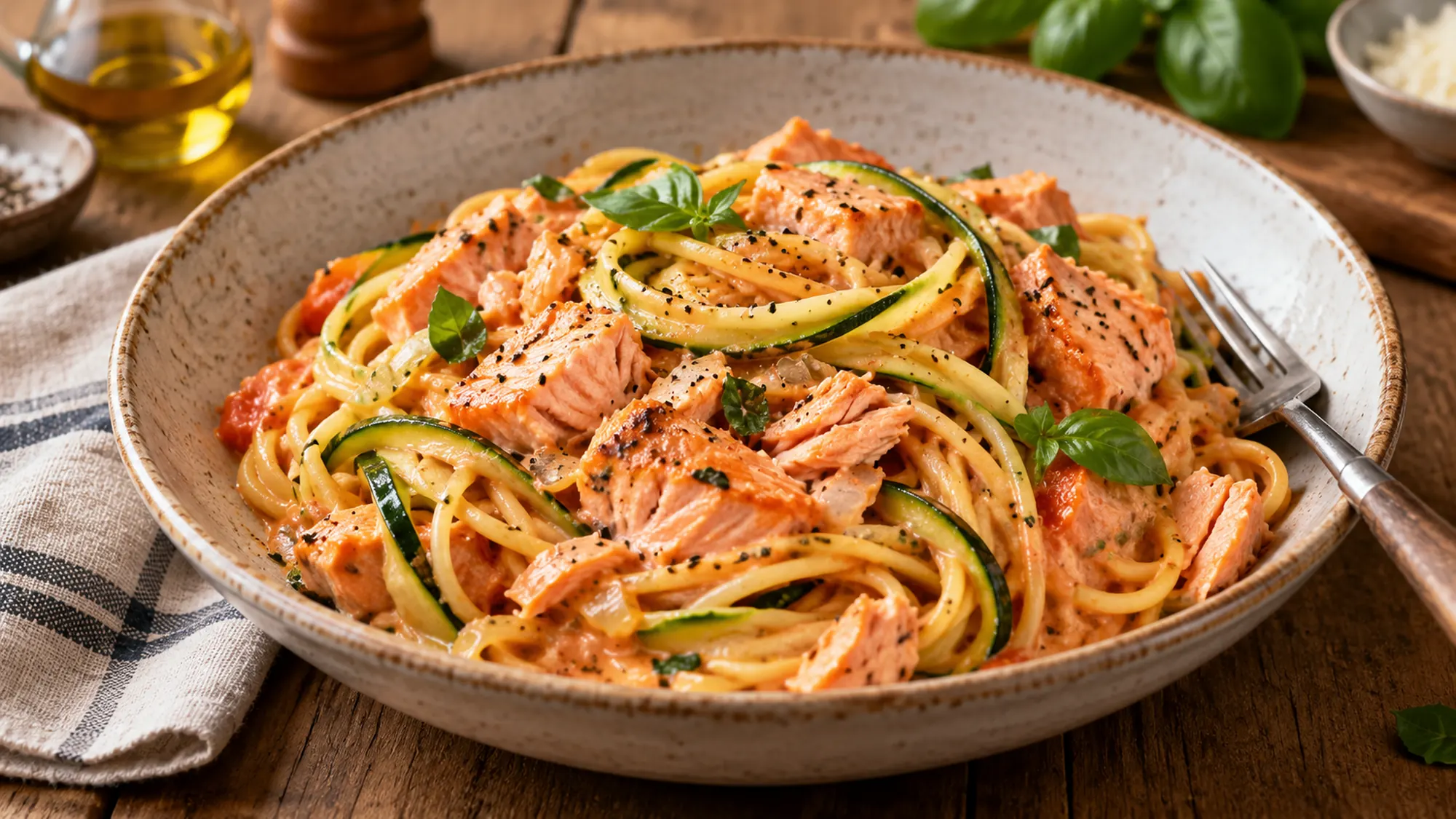
A few salmon portions can become a complete pasta dinner without disappearing into the sauce. Salmon pasta works best when the fish stays in generous flakes and the spaghetti has enough moisture to move freely. Thin zucchini strands join the pasta rather than trying to impersonate it, adding a different texture to the forkful.
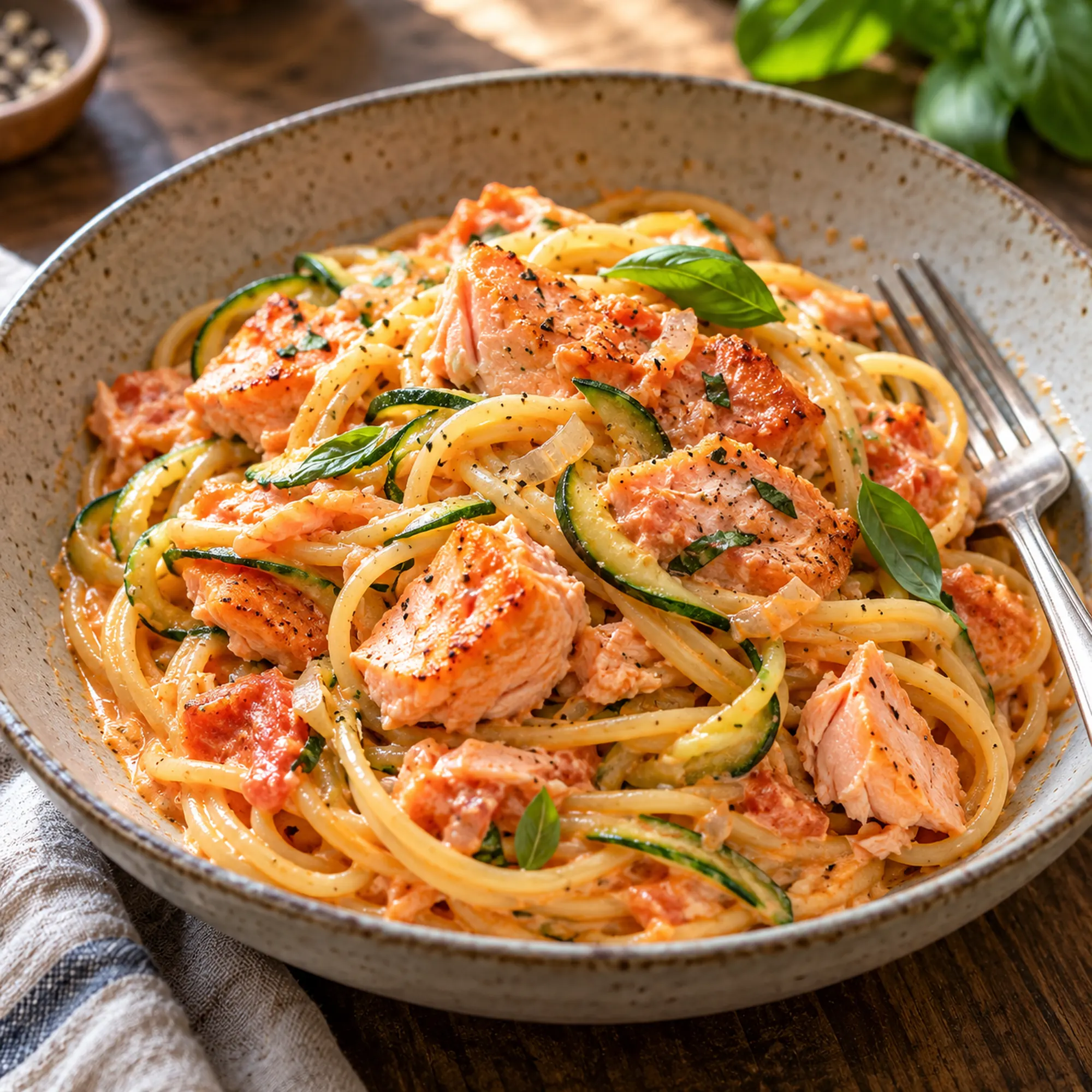
For salmon pasta, cook the fish gently in the tomato sauce, add the zucchini near the end of the pasta’s cooking time and toss everything together with a splash of reserved water.
I like this combination because it does not ask one ingredient to do another’s job. There is real spaghetti, visible salmon and a little cream to soften the tomato’s edge. The zucchini is welcome company, not a secret substitution that needs an announcement after dinner.
Serving Salmon Pasta
Divide the pan into four portions, distributing the salmon before adding optional Parmesan or basil. A shallow bowl helps contain the sauce while leaving room to turn the pasta with a fork. Serve promptly, since spaghetti continues taking up moisture as it sits.
The dish already includes fish, pasta and vegetables, so a second starch is not essential. If you want something alongside, keep it crisp and simple. Tastiva’s garlic-lemon green beans offer a separate vegetable option without adding another creamy sauce.
- Reserve a mug of pasta water before draining, even if the sauce initially looks loose.
- Add a little water to the pan at a time while tossing, then stop when the strands move easily.
- Use a broad utensil around the fish so the flakes do not break into tiny scraps.
| Component | Texture to aim for |
|---|---|
| Spaghetti | Tender with a little bite |
| Zucchini strands | Warm but not collapsing |
| Salmon | Opaque, moist-looking flakes |
Bring the pasta to the table while the sauce is still loose and the salmon pieces remain visible.
Salmon Pasta Variations
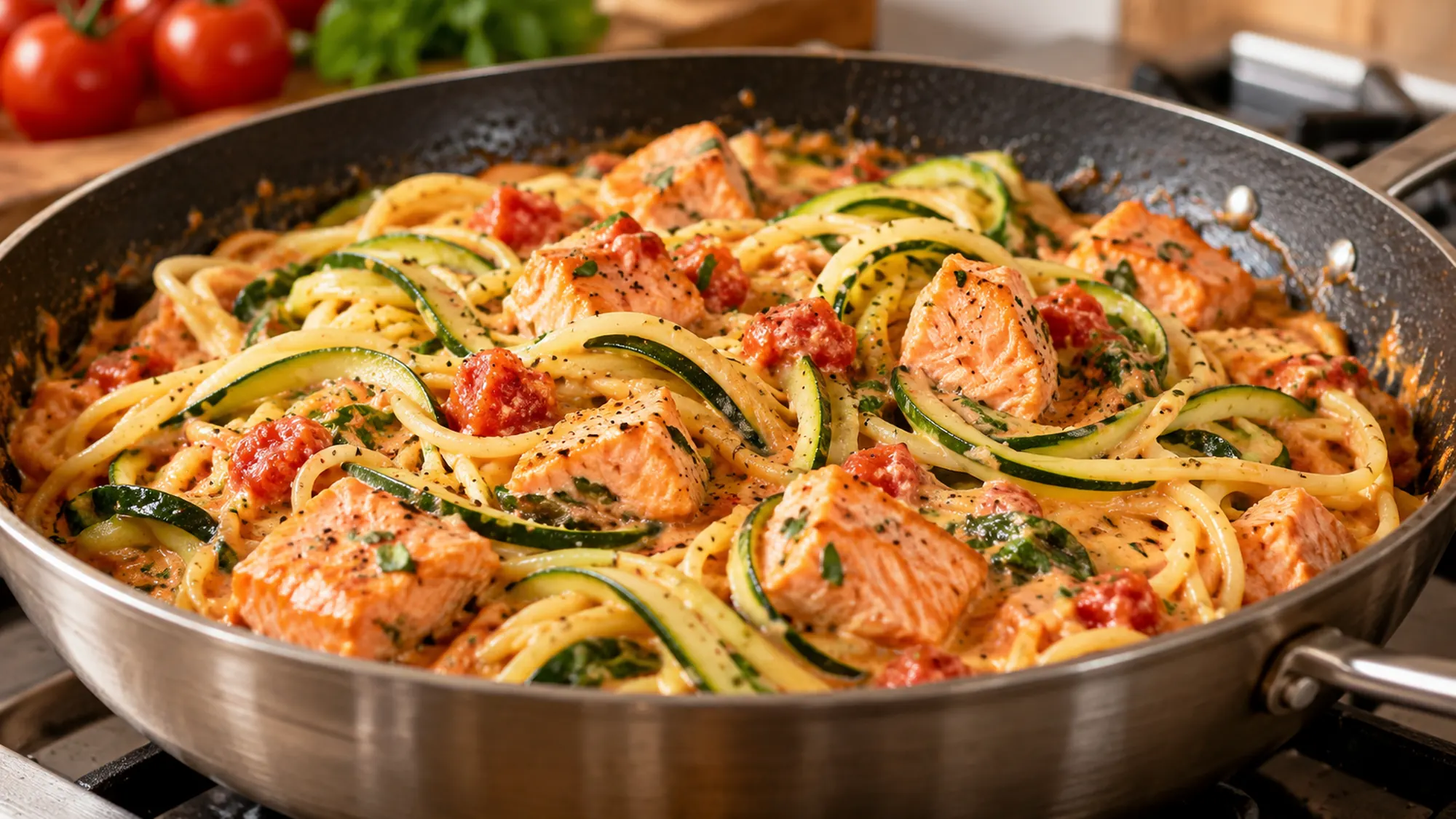
This recipe adapts Kitchen Sanctuary’s tomato salmon spaghetti. The fish is paired with passata, a little cream and zucchini strands. Skinless salmon simplifies this version; if using skin-on portions, remove the skin before breaking the fish into the finished sauce.
I would cut the zucchini into thin matchsticks if a spiralizer were not already in the cupboard. Buying a tool should not be the barrier to a pasta dinner. The important detail is thin, reasonably even pieces that warm quickly rather than large chunks that need a separate cooking schedule.
- Linguine is a practical alternative to spaghetti; follow its package timing.
- Use plain passata so the sauce is not unexpectedly flavored with extra herbs or sugar.
- Add chili flakes only if you want heat; they are not needed for the basic tomato-cream flavor.
- Keep optional cheese modest at first and taste before adding more salt.
- Avoid a vigorous boil after the cream goes in, and loosen the sauce with water rather than more cream by default.
Change the pasta shape or zucchini cut if needed, but preserve the gentle handling that keeps the salmon in flakes.
Nutrition and Safe Cooking
Salmon contributes protein and fat, while pasta provides carbohydrate and zucchini adds a vegetable component. The small quantity of cream changes the sauce’s texture without replacing the tomato base. These are ingredient roles, not a promise that one dinner will produce a particular health outcome.
The estimate includes the dry spaghetti, salmon, zucchini, measured oil and cream, divided into four portions. Optional cheese and garnish are excluded. Fish composition and packaged ingredients vary, so the values are an ingredient-based guide rather than a laboratory analysis of the finished bowl.
- Keep raw fish chilled until preparation and clean surfaces after handling it.
- Check the thickest salmon piece reaches 145°F (63°C).
- Do not use appearance alone if a thick piece is still cool in the center.
- Refrigerate leftovers promptly and reheat thoroughly, adding water to prevent a dry pasta mass.
Gentle cooking protects the texture, while a temperature check provides the more reliable doneness cue.
Bottom Line
Salmon pasta does not need a heavy sauce to feel complete. Keep the fish in useful-sized flakes, give the zucchini only the brief cooking it needs and save pasta water before draining. A careful final toss brings the tomato, cream and strands together without hiding the ingredients that make the dish appealing.
Visible fish, tender zucchini and a loose tomato-cream coating make the bowl feel balanced in texture.
Salmon Pasta Recipe

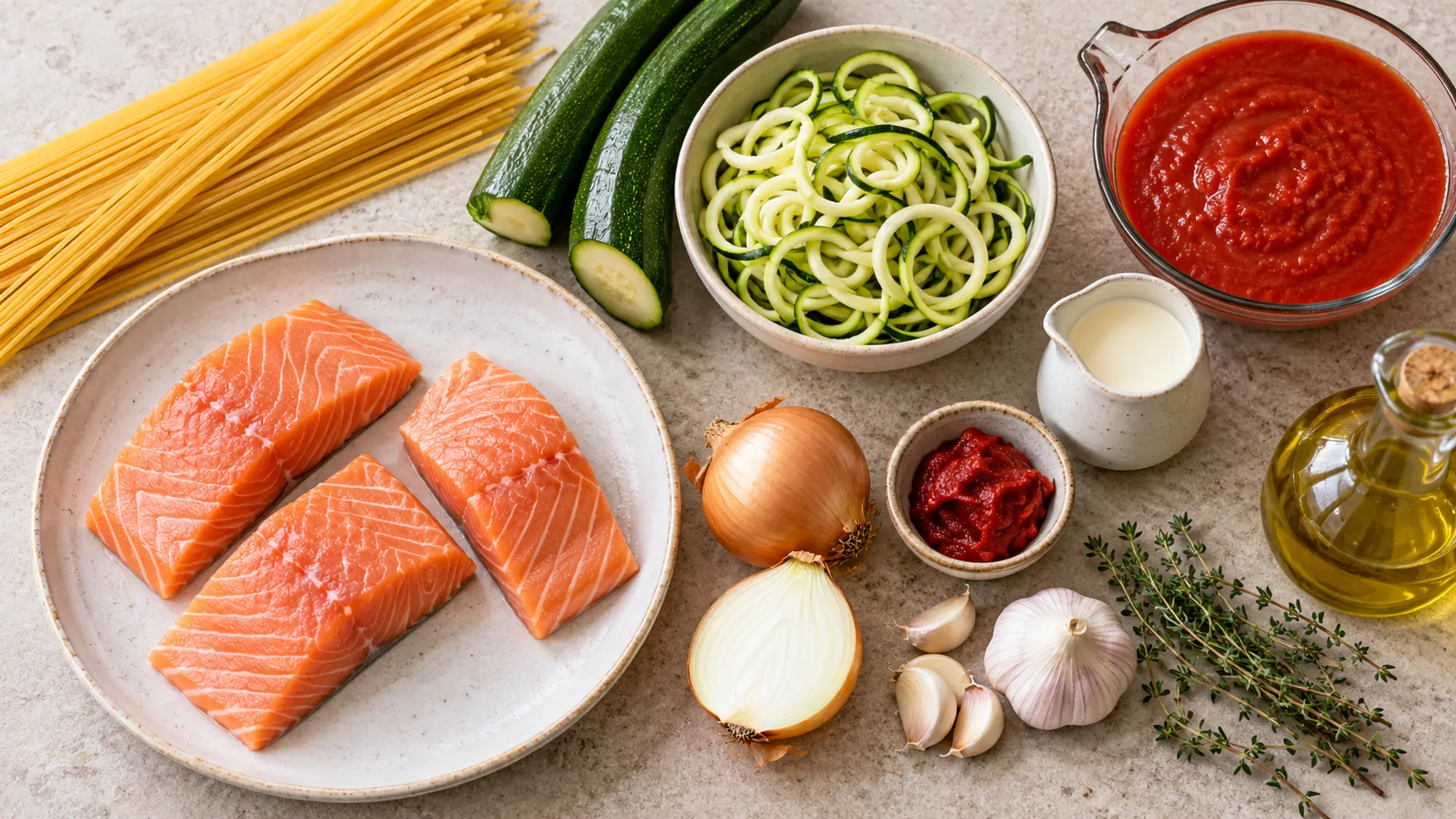
Ingredients
- 30 ml olive oil
- 400 g boneless skinless Atlantic salmon 3 pieces
- 1.5 g fine salt
- 0.5 g black pepper
- 150 g onion finely diced
- 6 g garlic minced
- 500 g plain tomato passata
- 15 g tomato paste
- 0.5 g dried thyme
- 4 g white sugar
- 45 ml cream, about 30% fat
- 300 g dry spaghetti
- 300 g zucchini spiralized or cut into thin matchsticks
- Parmesan and basil optional, excluded from estimates
Equipment
- 1 Large skillet
- 1 Pasta pot
- 1 Instant-read thermometer
Instructions
- Bring a large pot of water to a boil and cook spaghetti according to its package timing. Meanwhile, heat olive oil in a wide skillet. Season salmon with salt and pepper, then brown the first side for about 3 minutes.
- Turn the fish and move it to one side. Add onion to the available space and cook 3–4 minutes, then garlic for 30 seconds. Stir in passata, tomato paste, thyme and sugar.
- Simmer gently until the thickest fish portion reaches 145°F (63°C). Add zucchini strands to the pasta water for the last 30 seconds. Reserve a mug of water, then drain the pasta and zucchini.
- Break the salmon into generous flakes and stir the cream into the sauce. Add spaghetti, zucchini and a small splash of reserved water. Toss gently, adding more water only as needed to loosen the coating.
- Divide into four bowls and serve promptly with optional Parmesan and basil. This version uses skinless salmon and approximately 30%-fat cream rather than the source’s heavier cream; optional toppings are excluded from estimates.
Nutrition
Video
Notes
Tried this recipe?
Let us know how it turned out!Hi, I’m Laura, the voice behind Tastiva. I’ve always believed that eating well should feel enjoyable, comforting, and realistic—not like another complicated rule to follow. I love creating recipes that fit into everyday life, sharing simple nutrition ideas, and finding small ways to make meals feel a little better without losing the pleasure of good food.