
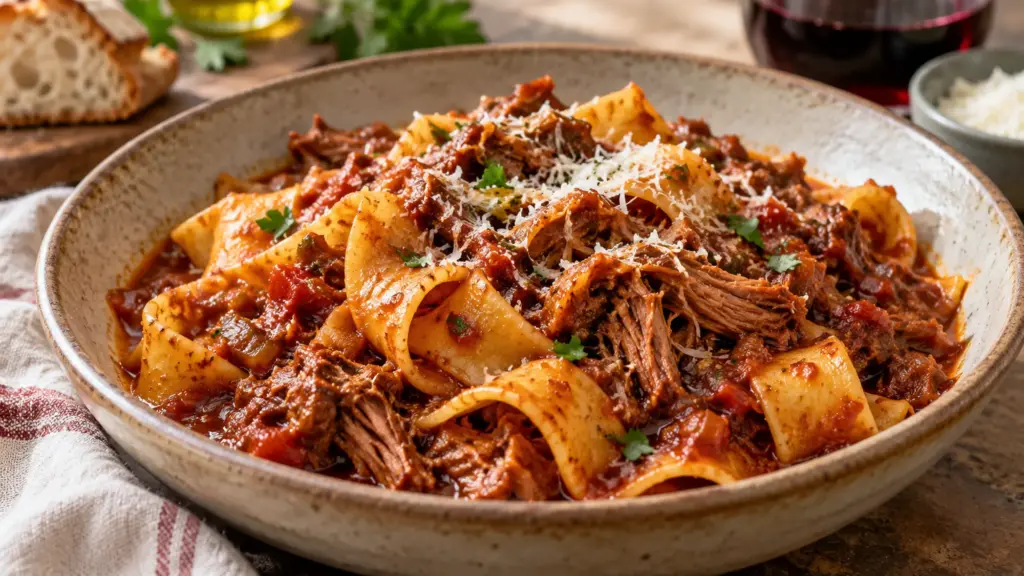
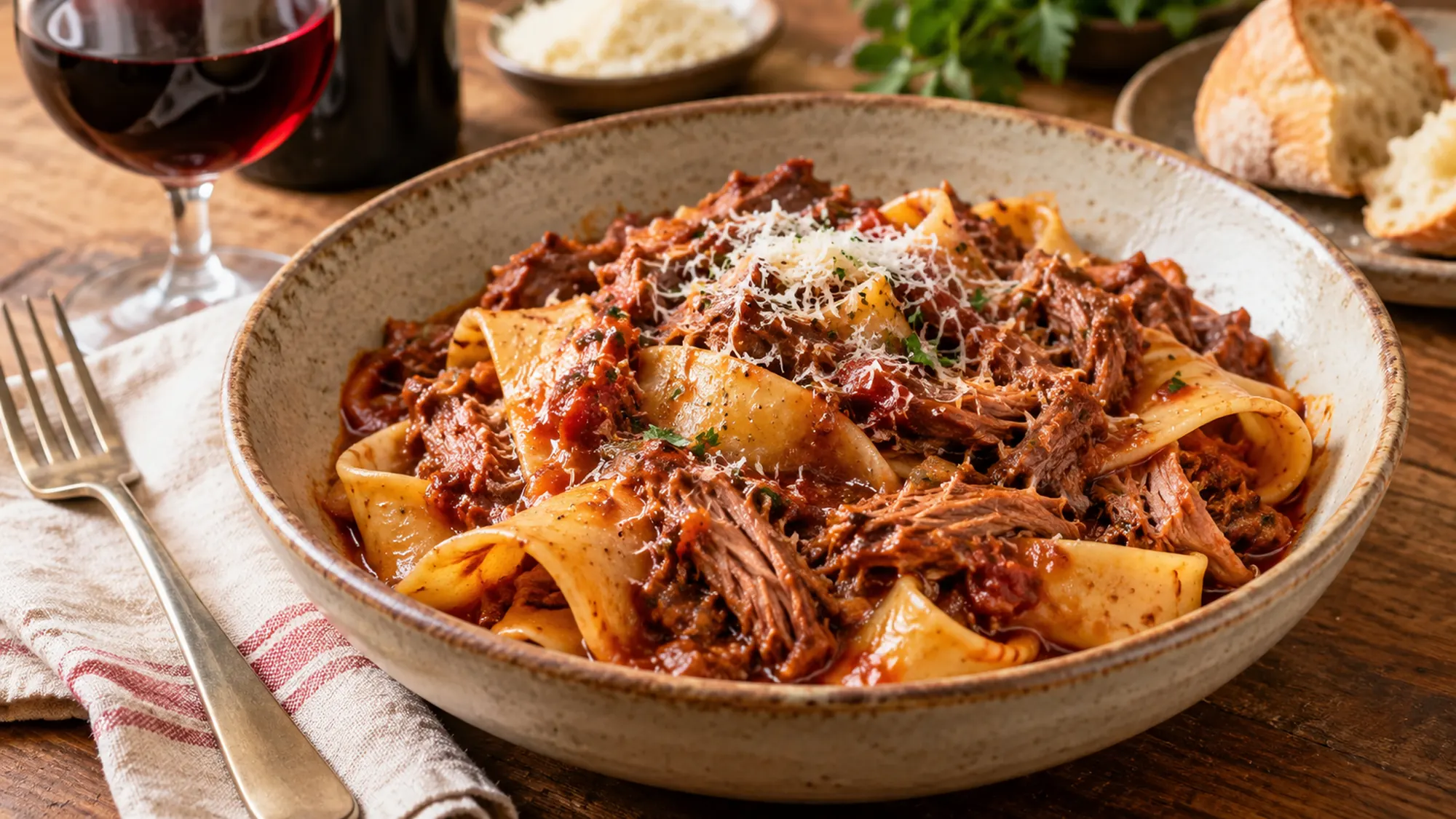
A heavy pot can do the patient work while the rest of dinner stays simple. Pork ragu starts with pieces of shoulder that need time, then turns them into soft shreds that catch on broad pasta ribbons. The sauce is dark and savory, with tomato and red wine carrying a restrained hint of cocoa and cinnamon.
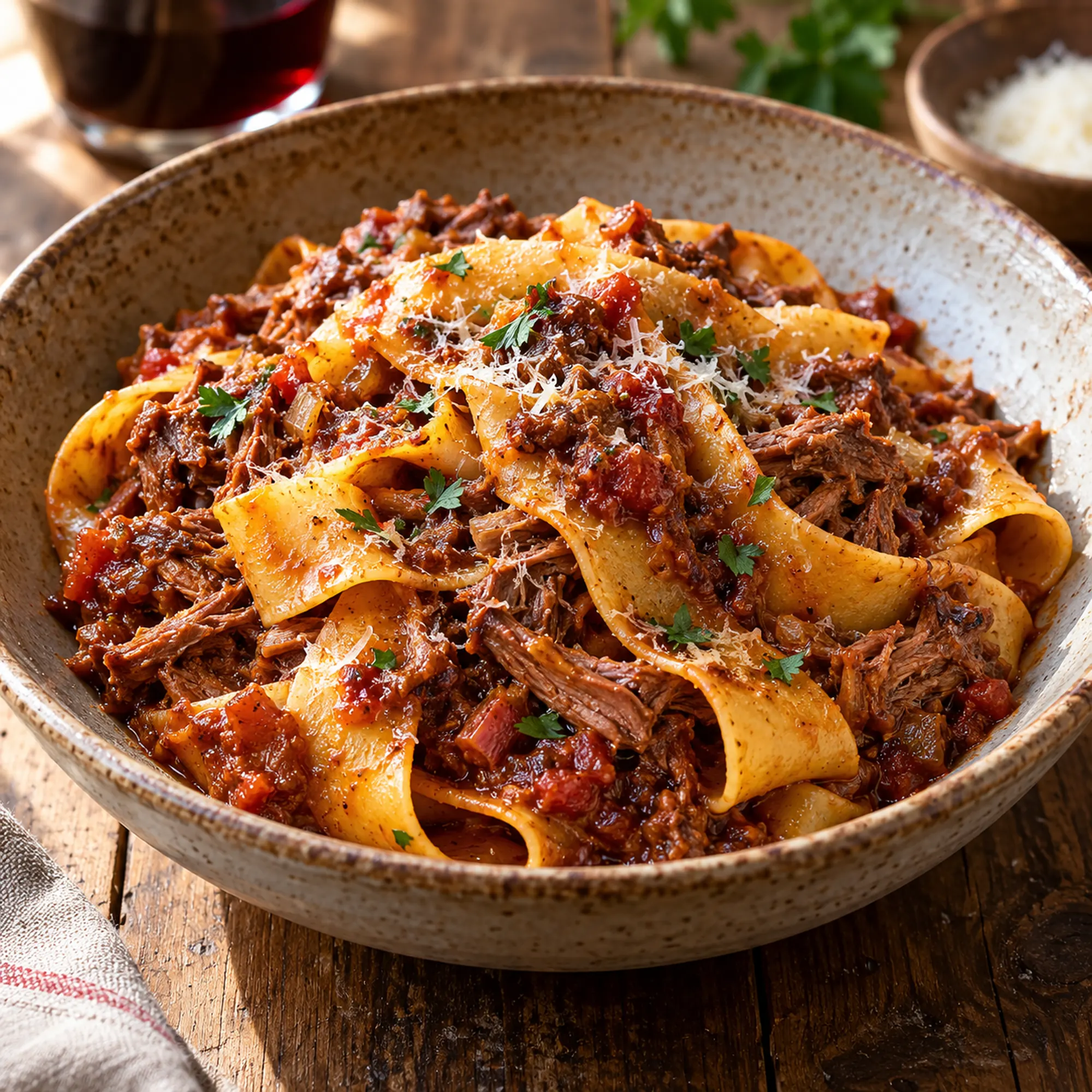
For pork ragu, braise the shoulder until it pulls apart easily, shred it into the sauce and finish the pasta with enough cooking water to keep everything loose and glossy.
I would rather give this dish a quiet afternoon than try to hurry it into a weeknight slot. The useful cue is tenderness, not a rigid timer. A piece that still resists a fork needs longer, even if the kitchen already smells as though dinner ought to be ready.
Serving Pork Ragu
Pappardelle’s broad ribbons provide a generous surface for the shredded pork. The recipe includes the dry pasta and divides the complete batch into six portions. Extra grated cheese is optional; taste a forkful first because the sauce already has a deep, concentrated flavor.
A crisp salad or a modest vegetable side is enough beside the pasta. Tastiva’s garlic-lemon green beans bring a brighter contrast if you want something warm. Keep the side separate so the pasta does not sit in a mixture of dressing and sauce.
- Use warmed shallow bowls when convenient so the pasta stays pleasant at the table.
- Reserve pasta water before draining; it is easier than trying to rescue a dry pan afterward.
- Serve any extra sauce alongside rather than burying every ribbon beneath a mound of meat.
| Pasta choice | How it handles the sauce |
|---|---|
| Pappardelle | Broad ribbons catch tender shreds |
| Tagliatelle | Narrower ribbons still work well |
| Rigatoni | A sturdy short-pasta alternative |
Keep the pasta coated rather than stiff; a little reserved water helps the sauce move between the ribbons.
Pork Ragu Variations
The cocoa-and-cinnamon combination follows Sip and Feast’s Sicilian pork ragu. These are supporting seasonings, not a signal to turn the dish into something sweet. Unsweetened cocoa belongs here; a sweetened drinking-chocolate mix brings different ingredients and a different result.
I prefer to keep optional cheese on the table rather than stir a large amount into the pot. That leaves the unusual seasoning easier to notice. Ground pork can make a quicker, different sauce, but it will not give the same long strands as braised shoulder.
- Use a dry red wine you would be comfortable cooking with, not a salted cooking-wine product.
- Keep the lid on during the braise and check that the sauce has not dried around the edges.
- Add small splashes of water if needed, without turning the sauce into soup.
- Start with the measured cocoa and cinnamon; adding more is easier than removing an overpowering flavor.
- If making the sauce ahead, cool it promptly in shallow containers rather than leaving a large covered pot on the counter.
The distinctive spices should deepen the sauce, while the tender pork remains the main flavor and texture.
Nutrition and Safe Cooking
Pork and pasta provide protein and energy, while tomato and onion contribute vegetables to the sauce. Shoulder also brings fat that helps its texture during a long braise. This is a substantial meal, so a serving estimate is more useful than calling the dish light or heavy without context.
The calculation includes all measured pork fat, oil, wine and pasta, even if some fat is skimmed from the finished sauce. That is a conservative ingredient estimate, not a measured retention result. Cooking reduces alcohol to varying degrees; the recipe should not be described as alcohol-free.
- Use separate utensils and surfaces for raw pork and cooked pasta.
- Tenderness requires more cooking than simply reaching the minimum safe temperature for pork.
- Reheat leftovers thoroughly to 165°F (74°C), adding a little water if needed.
- Optional cheese changes the estimate and introduces additional dairy.
Read the estimate as the complete measured batch, not proof of exactly how much fat or alcohol remains after cooking.
Bottom Line
Pork ragu is a good reason to let a sturdy pot and gentle heat do their work. Wait for the shoulder to become truly tender, keep the cocoa and cinnamon restrained and finish the pasta in the sauce. The result should feel cohesive and generous, with distinct ribbons rather than a dry pile under a ladle of meat.
Patient braising creates the shreds; a careful pasta finish brings the bowl together.
Pork Ragu Recipe

Ingredients
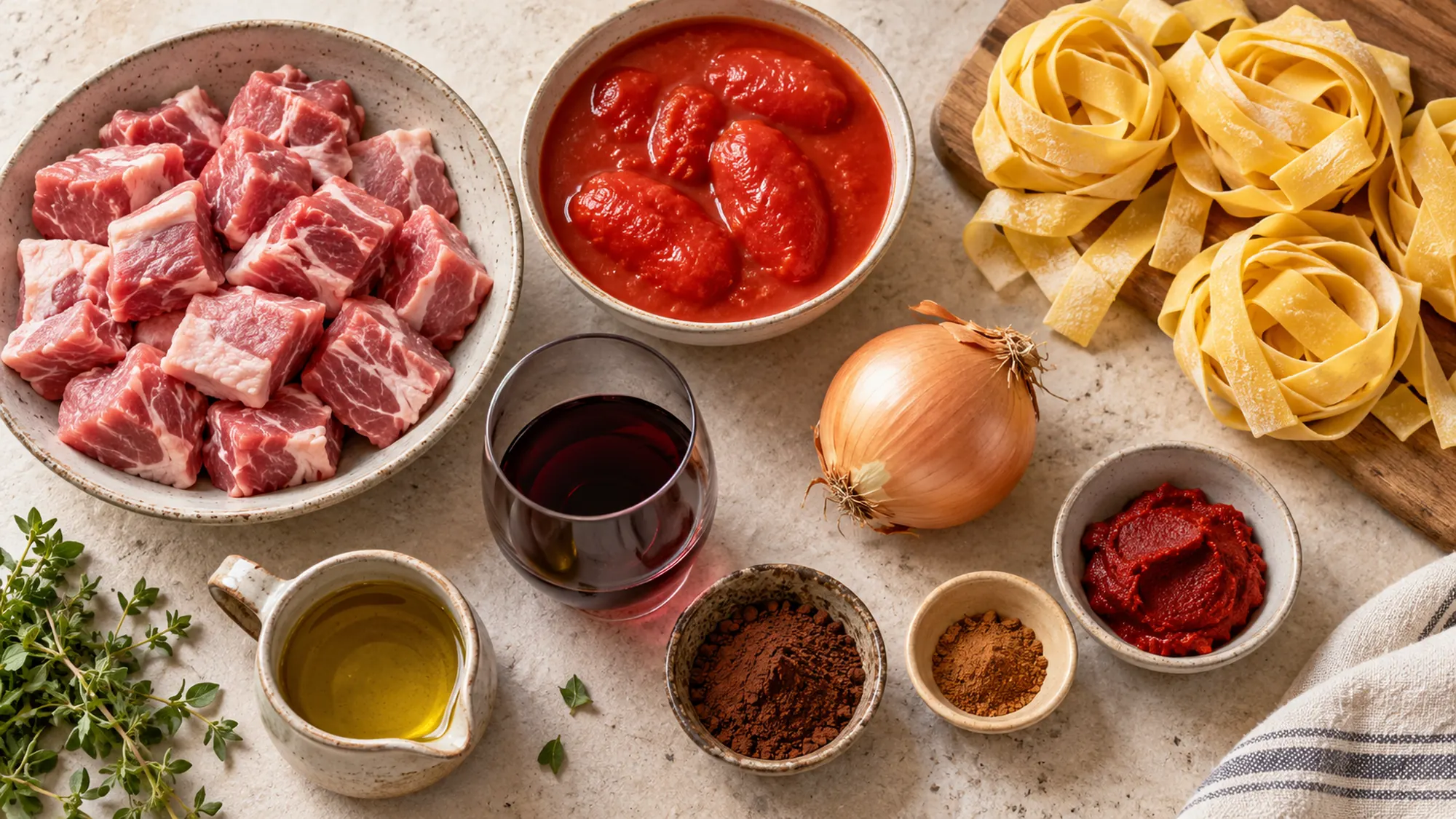
- 454 g dry pappardelle
- 45 ml olive oil
- 907 g boneless pork shoulder trimmed, cut into large chunks
- 150 g onion diced
- 45 g tomato paste
- 360 ml dry red wine
- 794 g canned whole plum tomatoes crushed with their juice
- 1.3 g ground cinnamon
- 5 g unsweetened cocoa powder
- 6 g fine salt
- 1 g black pepper
- water for pasta and loosening sauce
- grated Parmesan optional, excluded from estimates
Equipment
- 1 Dutch oven
- 1 Pasta pot
- 1 Tongs
Instructions
- Heat oven to 300°F (150°C). Pat pork dry and season with the measured salt and pepper. Heat oil in a Dutch oven and brown the pork in batches, then transfer to a plate.
- Soften onion in the same pot for about 5 minutes. Stir in tomato paste for another 3–5 minutes without scorching. Add wine, scrape up browned bits and simmer until reduced by about half. Stir in tomatoes and return the pork.
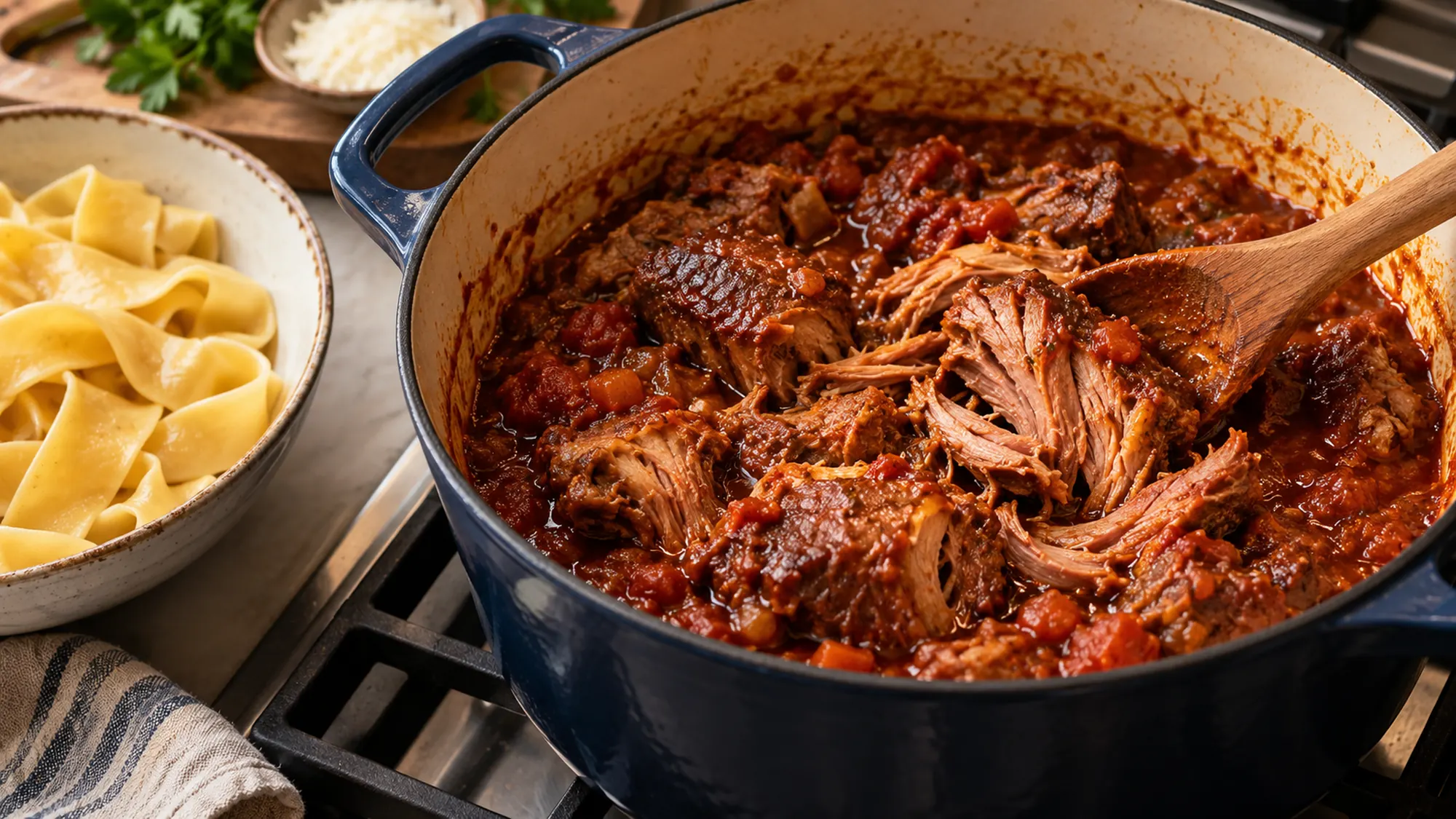
- Cover and braise in the oven for about 2–3 hours, checking after 2 hours. The pork is ready when a fork pulls it apart easily. Add a little water if the sauce dries before the meat becomes tender.
- Skim excess surface fat if desired, then shred the pork in the sauce and stir in cocoa and cinnamon. Cook the pappardelle in boiling water until just short of its package timing, reserving a mug of cooking water before draining.
- Toss the pasta with enough ragu to coat, adding cooking water a little at a time until glossy. Serve the remaining ragu alongside and divide the complete batch into six portions. Optional cheese is excluded; all measured fat and wine energy are counted conservatively even if some is removed or lost.
Nutrition
Video
Notes
Tried this recipe?
Let us know how it turned out!Hi, I’m Laura, the voice behind Tastiva. I’ve always believed that eating well should feel enjoyable, comforting, and realistic—not like another complicated rule to follow. I love creating recipes that fit into everyday life, sharing simple nutrition ideas, and finding small ways to make meals feel a little better without losing the pleasure of good food.