
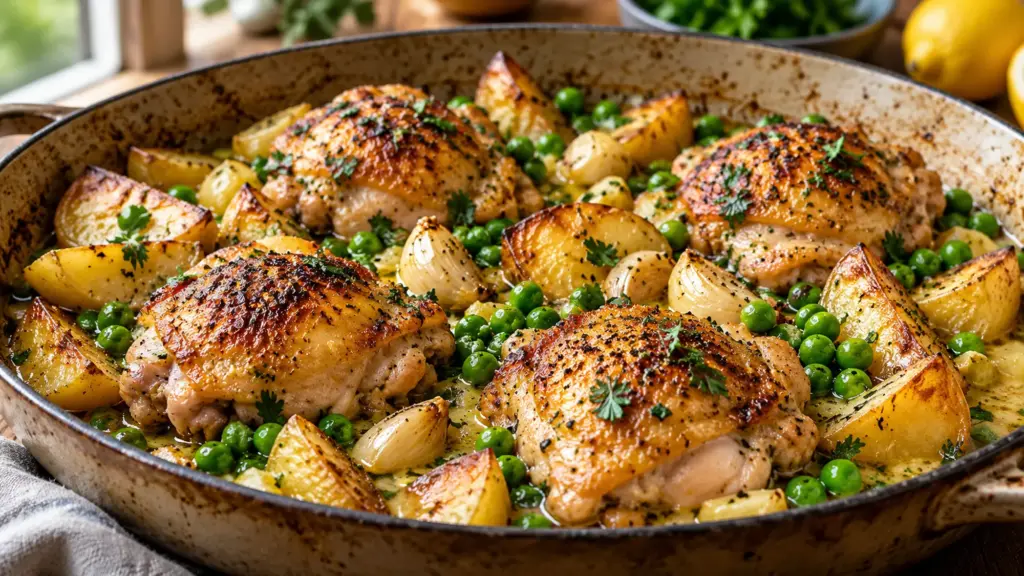
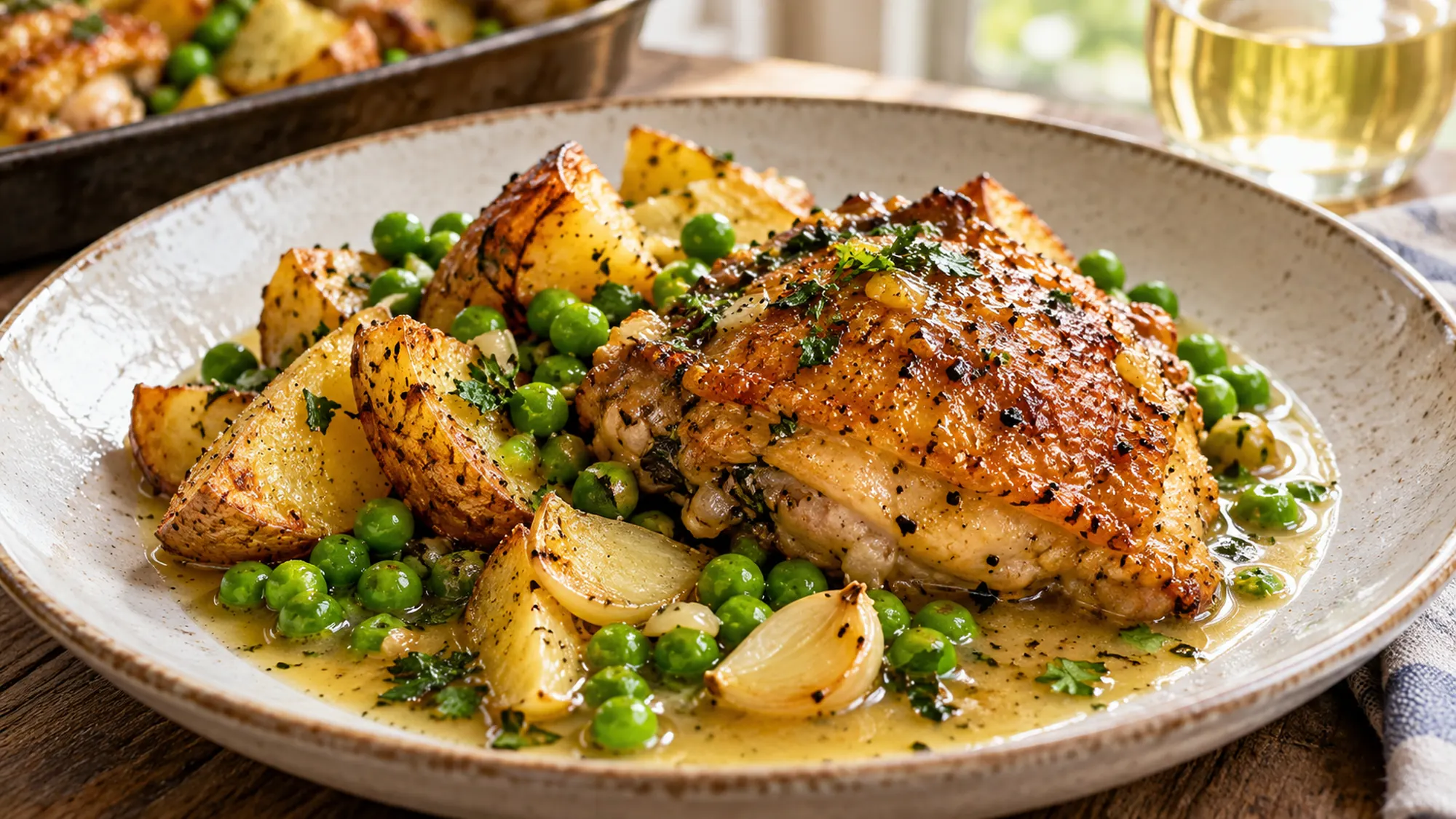
Chicken Vesuvio brings several good things to the same platter: deeply golden chicken, potato edges that catch the light, and peas tucked into a glossy lemon-garlic sauce. It feels generous without requiring a separate starch, a separate vegetable and three different finishing times.
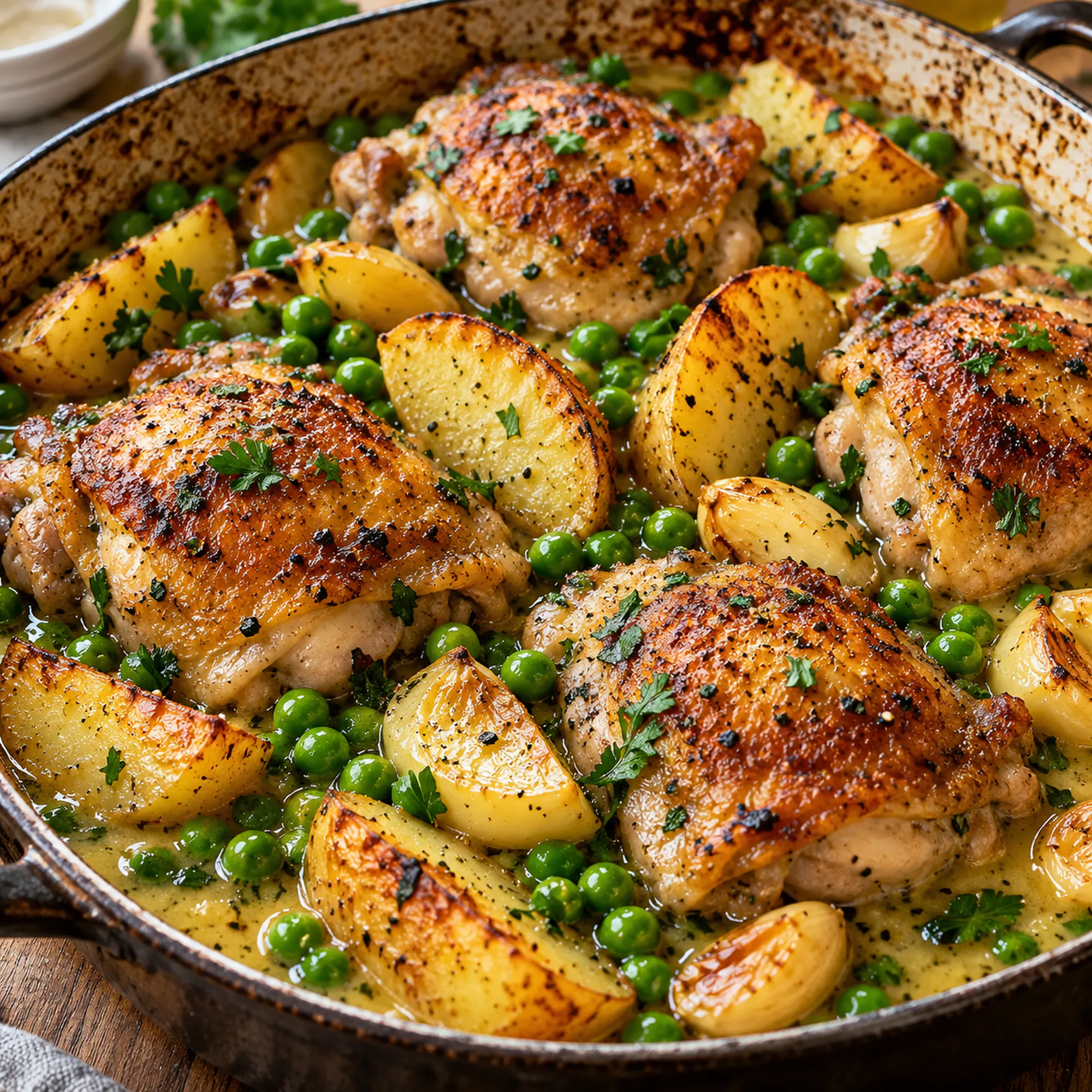
This chicken Vesuvio uses bone-in thighs and roasted potato wedges, then finishes with peas and butter in the pan sauce. Keep the sauce around the chicken rather than over every patch of skin.
The method follows Sip and Feast’s Chicago-style dish, with six portions and a clear 165°F poultry endpoint. I like the platter approach here: everyone can take a thigh, choose a few potatoes and spoon on as much sauce as they want.
Serving Chicken Vesuvio
Bring the platter to the table while the potatoes are still hot. Their exposed edges soften once they sit in sauce, which is pleasant but different from a freshly roasted surface. A shallow serving dish gives you room to keep some wedges above the liquid.
The peas and potatoes already make this a substantial meal. A crisp salad can add contrast, but bread is optional rather than compulsory. If you do offer it, put the basket near the sauce end of the platter and let people decide.
- Keep the skin visible: spoon peas and sauce between the thighs.
- Add something crisp: a simple cucumber salad balances the soft potatoes.
- Offer a green side: green beans work when you want more vegetables without another rich sauce.
| At the table | Why it works | Small detail |
|---|---|---|
| Shallow platter | Keeps some potato edges exposed | Warm it briefly |
| Crisp salad | Adds a cool contrast | Dress at the last moment |
| Bread, if wanted | Catches extra sauce | Serve separately |
Protect a few crisp edges, and keep the sauce available rather than flooding the entire platter.
Chicken Vesuvio Variations
Thighs are the chosen cut, not an invitation to mix several chicken pieces and expect them to finish together. Breast pieces and boneless thighs can be used in related versions, but their cooking time and edible yield differ. A thermometer is more useful than matching a photograph’s color.
I would adjust the lemon at the table before adding more butter. A little extra acidity changes how rich the sauce feels without making a larger quantity of it. Taste a spoonful with a potato, because the complete bite can seem less sharp than the sauce alone.
- Different potatoes: russets give a fluffier center; keep wedges similar in size.
- No wine: substitute stock and expect a different flavor, then adjust lemon carefully.
- Extra vegetables: source-suggested artichoke hearts can join the peas; account for their salt.
- Less butter: the sauce will be less rounded and glossy, but still usable.
- A crowded roasting pan: split the food between two dishes rather than stacking thighs. More exposed surface helps the potatoes roast instead of sitting entirely in liquid.
Keep the browned chicken, potatoes and bright sauce as the foundation; change one supporting element at a time.
Nutrition and Safe Cooking
Chicken contributes protein, and peas add fiber, but this is not a low-fat dish simply because it contains vegetables. Skin, measured oil and the butter finish are all included in the ingredient estimate. Six portions are a practical starting point, not a rule about anyone’s appetite.
Bone weight makes nutrition less exact than it would be with boneless meat. The estimate assumes a 75% edible chicken yield and counts the sauce conservatively. Some fat or sauce may remain in the pan, while actual portions may contain different amounts of chicken.
- Cook safely: the minimum poultry temperature is 165°F (74°C); measure away from bone.
- Handle raw chicken separately: use clean utensils and a clean platter for cooked pieces.
- Store promptly: divide leftovers into shallow containers and reheat to 165°F (74°C).
Enjoy the complete plate while keeping portion estimates and safe chicken handling separate from broad health claims.
Bottom Line
Chicken Vesuvio is at its best when each part keeps a little personality. Brown the thighs, give the potatoes space, and finish the sauce gently after the chicken is cooked. The peas bring color, the lemon keeps the butter from feeling heavy, and the platter takes care of dinner.
Golden surfaces first, a bright sauce last: that is the useful rhythm of this dish.
Chicken Vesuvio Recipe

Ingredients
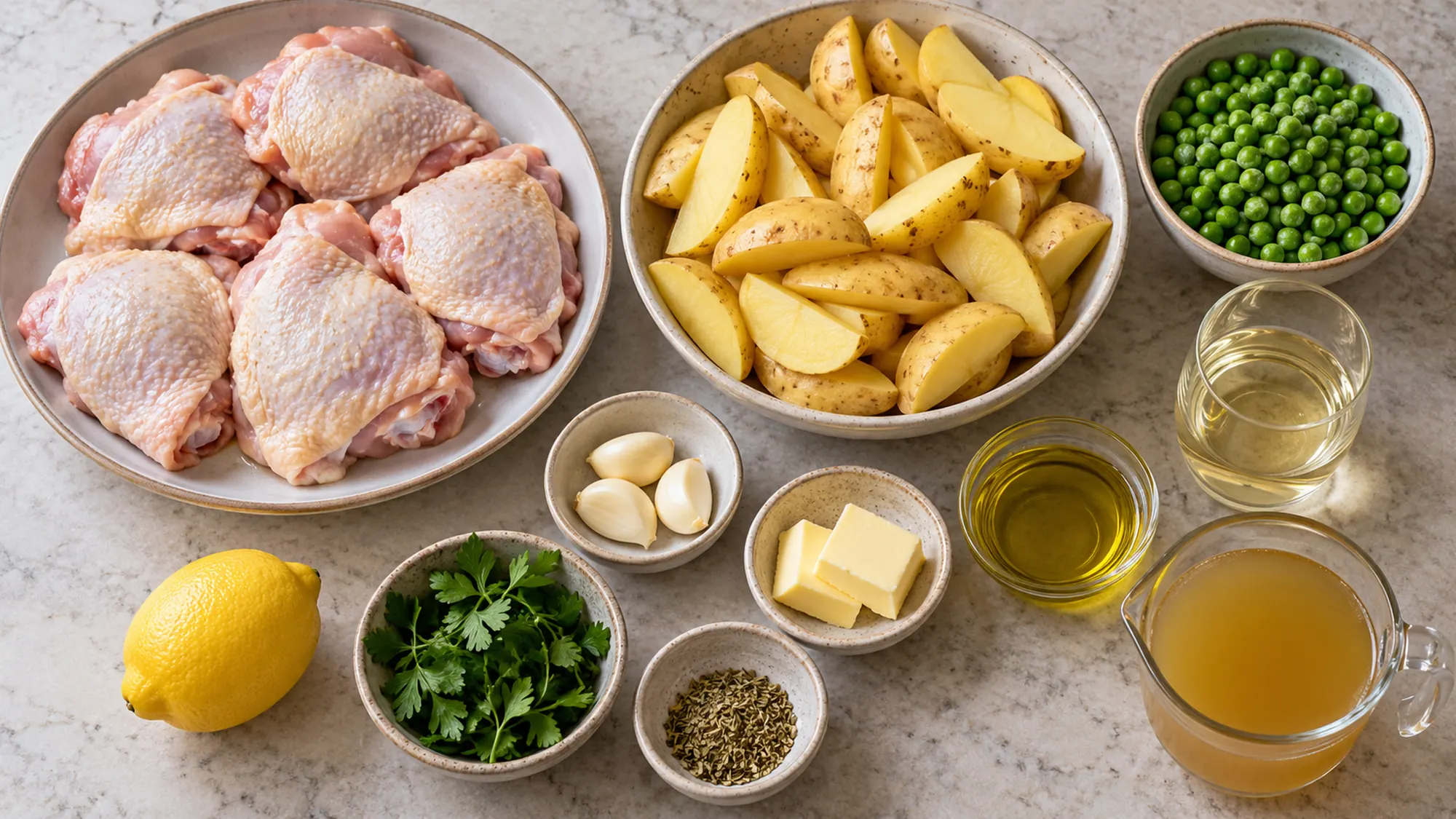
- 1800 g bone-in skin-on chicken thighs
- 900 g Yukon Gold potatoes cut into wedges
- 120 ml olive oil 60 ml potatoes, 30 ml chicken, 30 ml garlic
- 6 g fine salt divided
- 2 g ground black pepper divided
- 3 g dried oregano divided
- 30 g garlic roughly chopped
- 240 ml dry white wine
- 240 ml unsalted chicken stock
- 30 ml lemon juice
- 340 g frozen peas thawed
- 56 g unsalted butter cubed
- 12 g fresh parsley chopped
Equipment
- 1 Baking sheet
- 1 Large skillet
- 1 Roasting pan
- 1 Instant-read thermometer
Instructions
- Heat the oven to 450°F (230°C). Toss potato wedges with 60 ml oil, 3 g salt, 1 g oregano and 1 g pepper. Spread on a baking sheet and roast about 20–25 minutes until one side is golden; lower the oven to 375°F (190°C).
- Pat the thighs dry and season with the remaining salt and pepper and 1 g oregano. Heat 30 ml oil in a wide skillet. Brown the thighs in batches, skin down first, about 5 minutes per side. Transfer skin up to a roasting pan.
- Lower the skillet heat and add the remaining oil and garlic. Cook until lightly golden, then add wine and stock. Scrape up browned juices and simmer about 5 minutes. Stir in lemon juice and the remaining oregano.
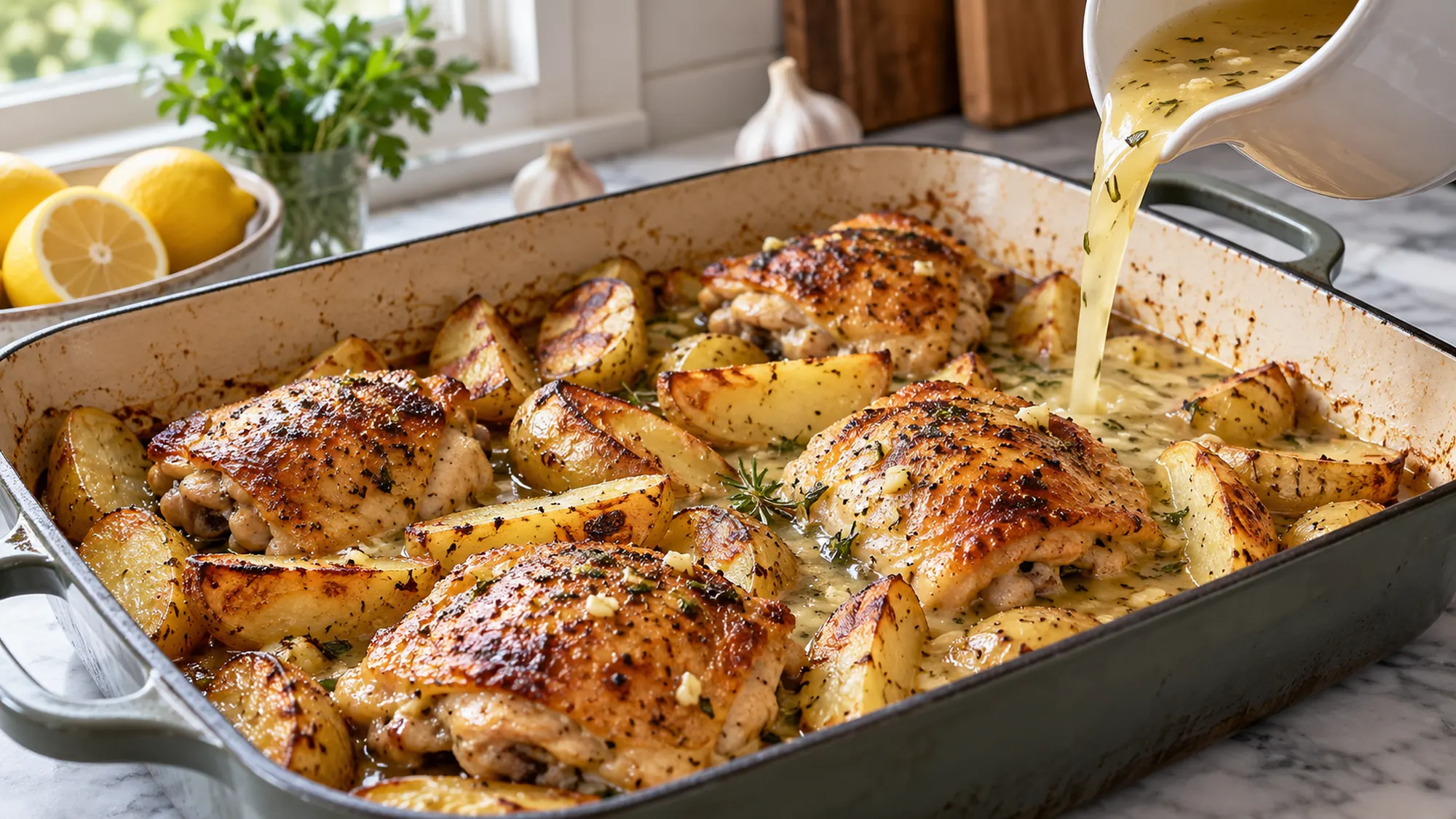
- Pour sauce around the chicken, keeping the skin exposed. Tuck in the potatoes and roast about 30–40 minutes, until every thigh reaches at least 165°F (74°C) away from bone and potatoes are tender.
- Transfer chicken and potatoes to a platter. Pour the pan liquid into a saucepan, add peas and simmer until hot. Off the heat, whisk in butter. Spoon the sauce around the chicken, scatter parsley and divide into six portions.
Nutrition
Video
Notes
Tried this recipe?
Let us know how it turned out!Hi, I’m Laura, the voice behind Tastiva. I’ve always believed that eating well should feel enjoyable, comforting, and realistic—not like another complicated rule to follow. I love creating recipes that fit into everyday life, sharing simple nutrition ideas, and finding small ways to make meals feel a little better without losing the pleasure of good food.