
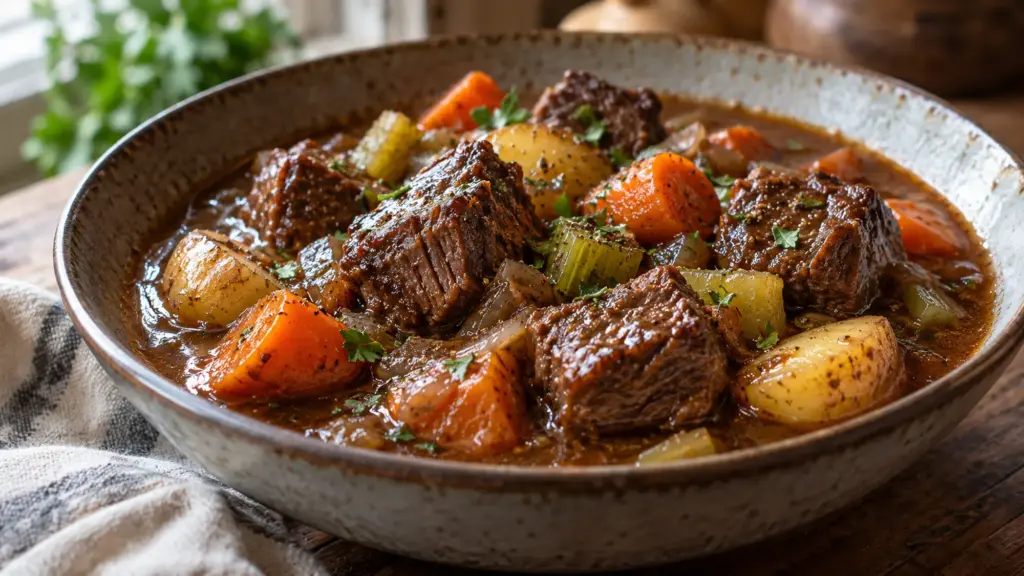
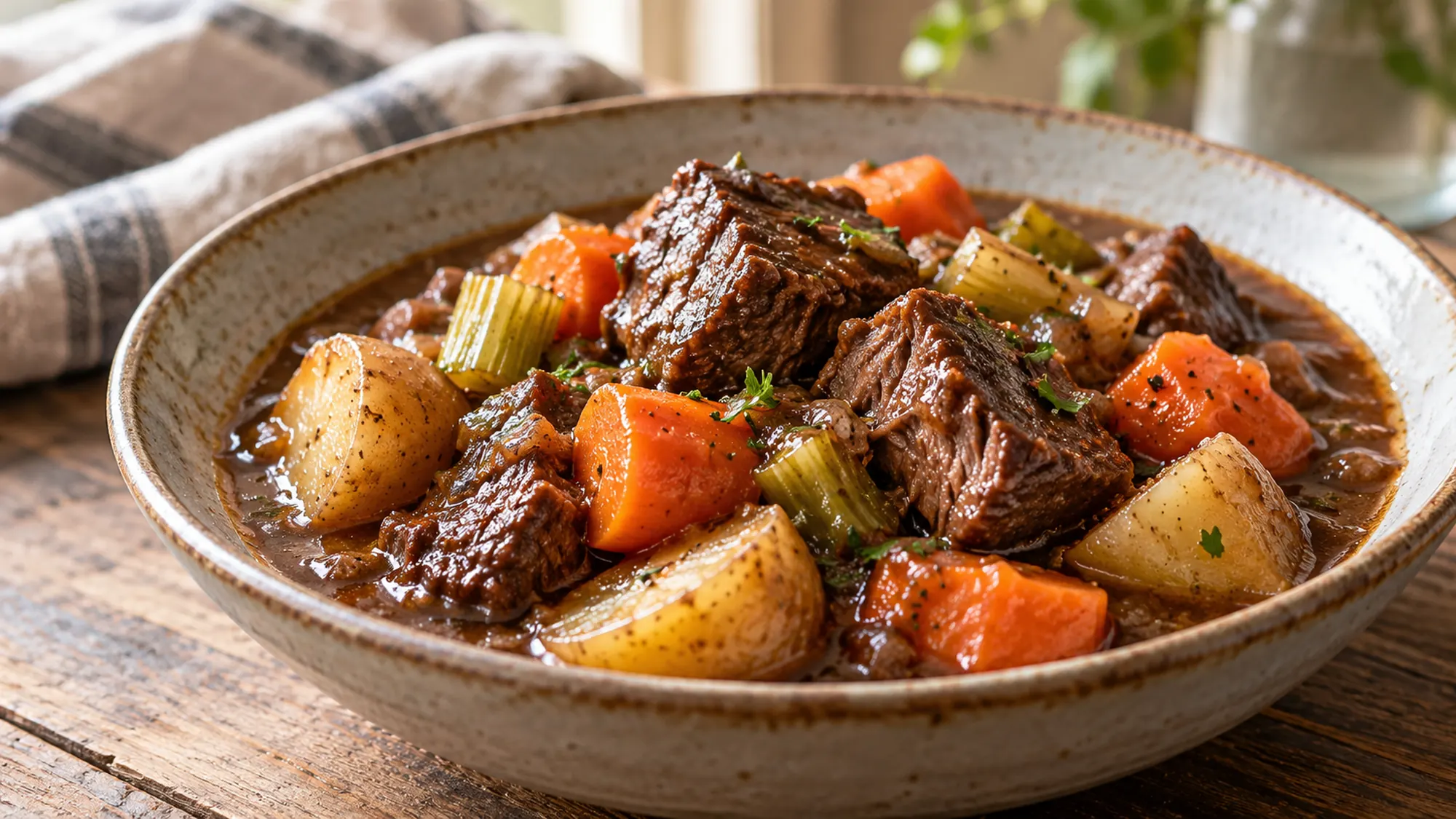
A good bowl of beef stew does not need a dramatic garnish. The appeal is right there in the spoon: a piece of beef that yields easily, a carrot with its shape intact, and gravy that settles around everything instead of disappearing into the bottom of the bowl.
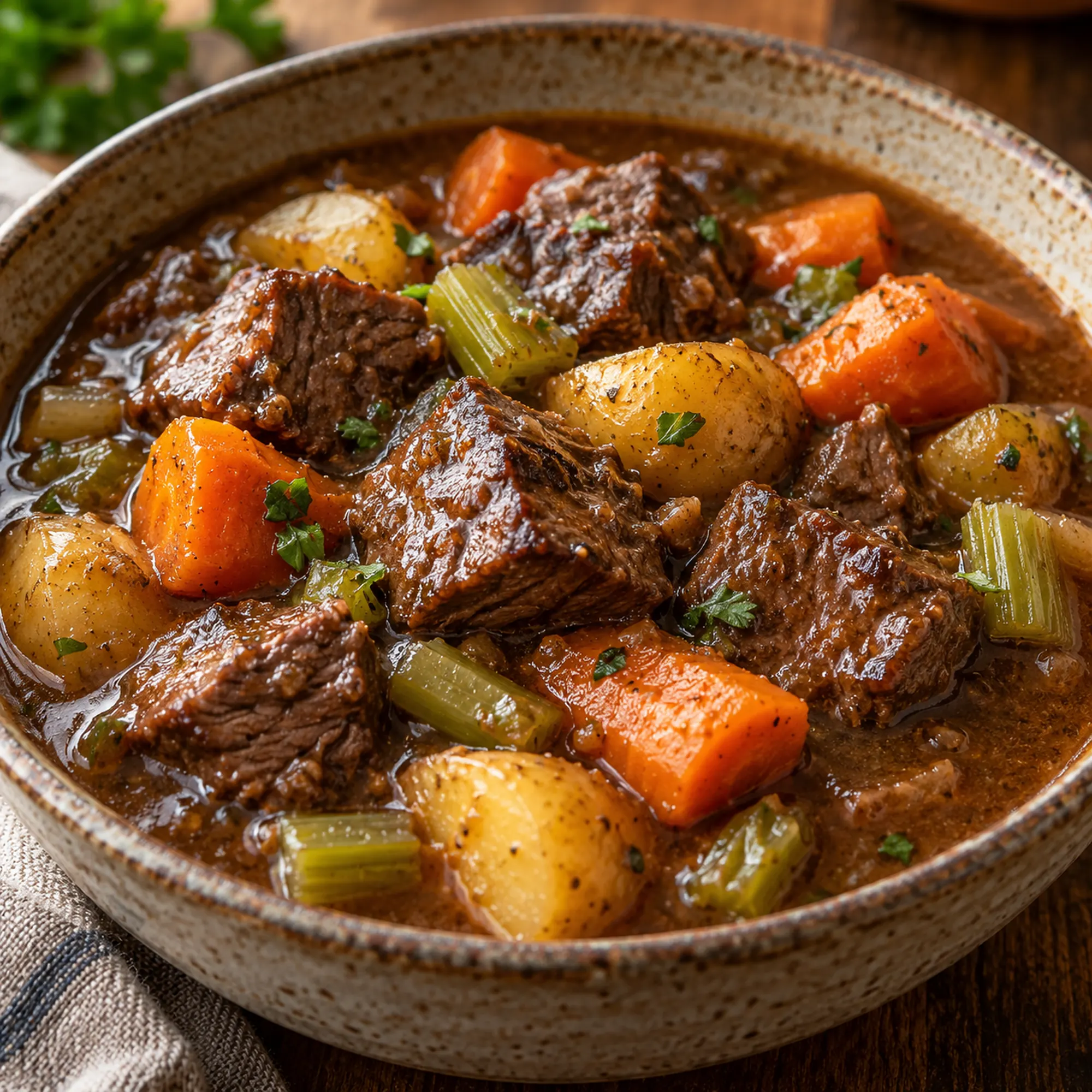
This beef stew browns chuck in batches before a gentle simmer with carrots, celery and potatoes. Give the meat enough time to become fork-tender, then reduce the sauce without boiling the vegetables apart.
The measured version adapts RecipeTin Eats’ stovetop stew. I prefer large, evenly cut pieces here; they make it easier to judge tenderness and keep the finished bowl from becoming a mixture of shreds and oversized chunks.
Serving Beef Stew
Use wide bowls so the meat and vegetables can sit in a shallow pool of gravy. There are potatoes already in the pot, so mashed potatoes underneath are an optional extra, not part of the recipe’s nutrition estimate. A smaller scoop of mash can still be lovely if that is the dinner you want.
Bread is useful for the last bit of sauce, but it does not need to be a second main attraction. Put a few slices on the table and add a green vegetable or simple salad if you want a fresher contrast to the long-cooked flavors.
- For a simple bowl: serve the stew exactly as it is, with its potatoes.
- For extra comfort: add a modest spoonful of smooth mashed potatoes.
- For contrast: choose steamed greens or a lightly dressed salad rather than another creamy side.
| Serving style | Best for | Remember |
|---|---|---|
| Stew alone | A straightforward meal | Potatoes are already included |
| Over a little mash | Extra-soft texture | Mash is an additional serving |
| With crusty bread | Catching the gravy | Offer at the table |
The pot already contains meat and vegetables; let any extra starch earn its place on the plate.
Beef Stew Variations
Chuck needs time because it is a slow-cooking cut. Replacing it with a lean steak does not turn the same recipe into a better stew; the meat may become dry before the sauce has developed. If you need dinner quickly, choose a recipe designed around a quick-cooking cut instead.
I would change the side before changing the stew’s thickener. The flour helps the liquid become a light gravy, and a different thickener needs its own timing. If you use cornstarch, add a slurry near the end rather than treating it like flour at the beginning.
- No wine: the source permits extra stock and a little brown sugar; expect a different depth of flavor.
- Potato choice: small waxy potatoes tend to hold their shape better than floury chunks.
- More liquid: add a little hot water if the pot becomes dry before the beef is tender.
- Too thin at the end: simmer uncovered gently, watching the vegetables.
- Oven cooking: use an oven-safe covered pot and the source’s separate oven timing rather than assuming the stovetop clock transfers exactly.
A slow-cooking cut and a gentle simmer matter more than an elaborate list of additions.
Nutrition and Safe Cooking
Beef supplies protein, while the vegetables contribute a range of textures and nutrients. The estimate includes the measured oil, wine and potatoes; it does not assume that all alcohol disappears during cooking. It also cannot predict how much visible fat you trim from your particular piece of chuck.
Long cooking does not make a large portion automatically light. Start with a bowl that suits your appetite, then add vegetables or bread as wanted. The main advantage of making a pot is flexibility: it can feed several people or provide smaller portions for another meal.
- Keep preparation separate: clean surfaces and utensils after handling raw beef.
- Cool efficiently: transfer leftovers to shallow containers rather than refrigerating one large hot pot.
- Reheat safely: follow leftover guidance and reach 165°F (74°C) throughout.
Treat the numbers as a portion estimate, and give a large pot of leftovers a practical cooling plan.
Bottom Line
Beef stew is a recipe to judge with a fork and spoon, not just a timer. When the meat yields easily and the gravy lightly coats the vegetables, the pot is ready. Brown patiently, simmer gently, and avoid stirring so enthusiastically that the potatoes lose their shape.
Tender beef and a spoonable gravy are the finish line, even when the clock needs a little longer.
Beef Stew Recipe

Ingredients
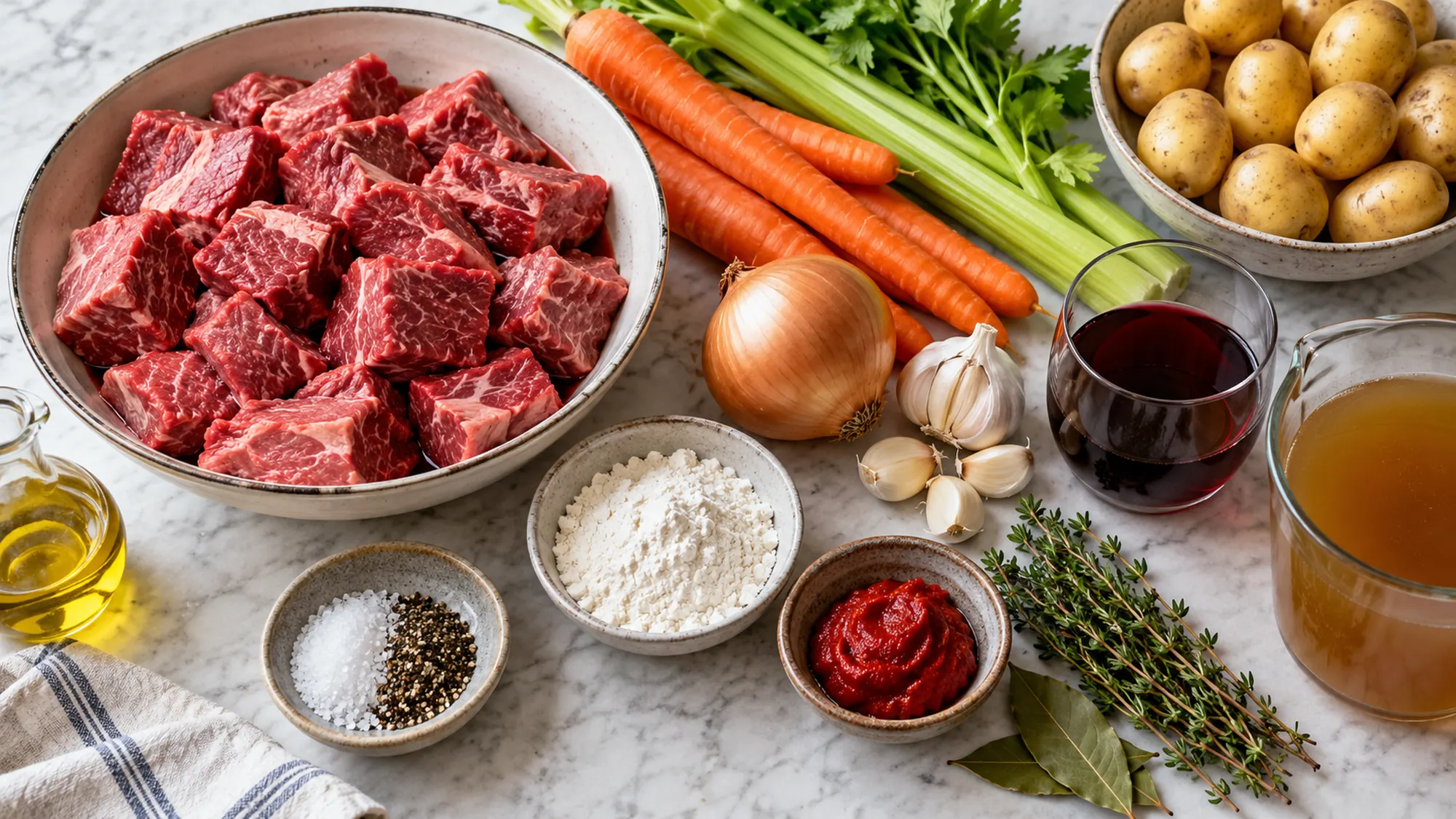
- 1200 g beef chuck trimmed, cut into 3.5 cm cubes
- 4 g fine salt
- 1 g ground black pepper
- 45 ml olive oil
- 200 g onion sliced
- 12 g garlic minced
- 300 g carrots chunked
- 120 g celery chunked
- 45 g all-purpose flour
- 720 ml unsalted beef stock
- 480 ml dry red wine
- 10 ml Worcestershire sauce
- 30 g tomato paste
- 0.4 g dried bay leaves 2 leaves, remove before serving
- 4 g fresh thyme leaves stripped from stems
- 400 g baby potatoes halved
- bread or mashed potatoes optional, excluded from estimates
Equipment
- 1 Heavy pot with lid
- 1 wooden spoon
Instructions
- Dry the beef and season with salt and pepper. Heat the oil in a heavy pot and brown the beef in three batches, transferring each batch to a bowl. Leave the browned coating in the pot, but reduce heat if it starts to burn.
- Cook onion and garlic in the same pot for 2–3 minutes. Stir in carrot and celery, then flour. Cook briefly, stirring so flour coats the vegetables.
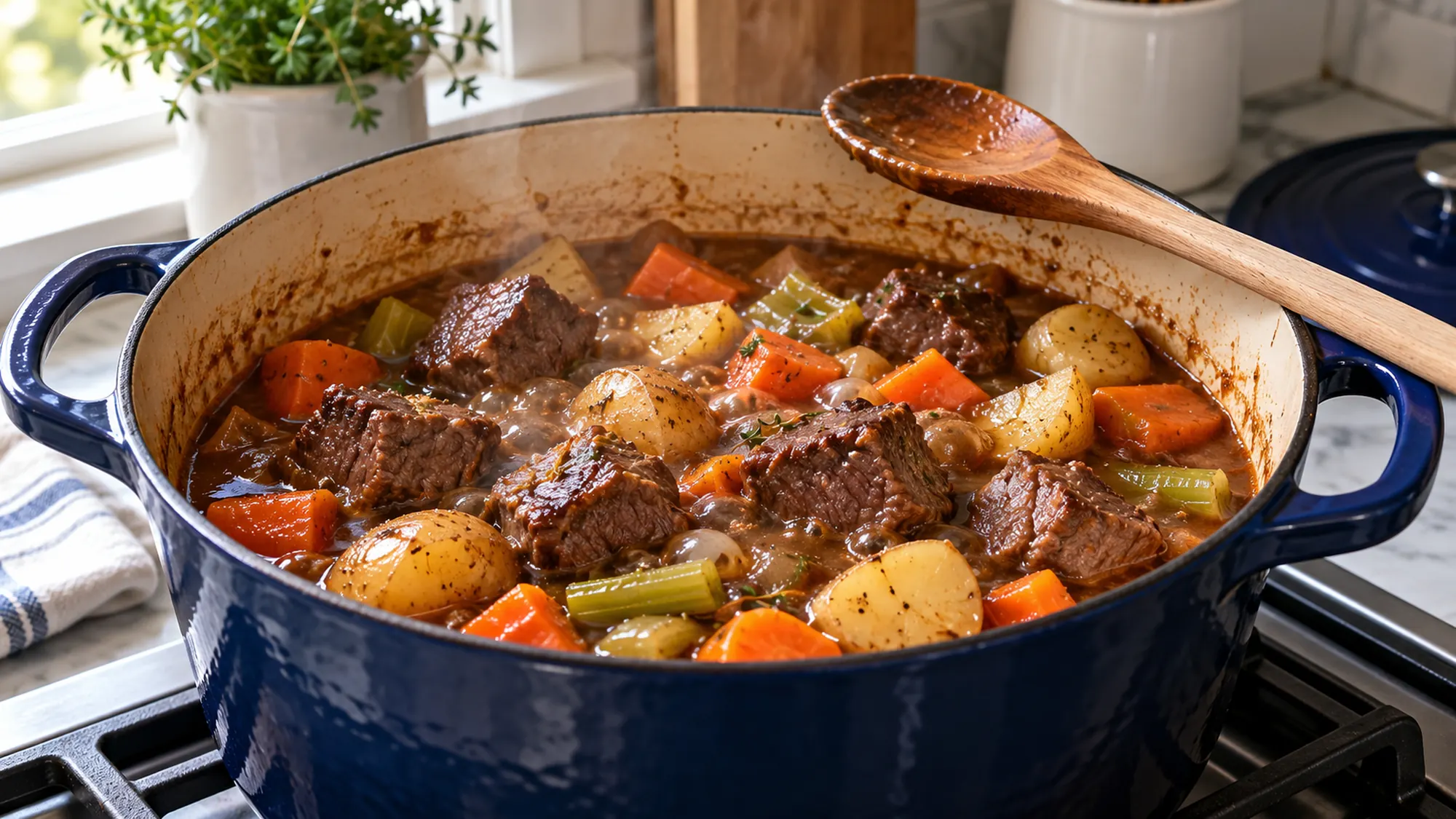
- Gradually stir in stock and wine, loosening browned juices. Add Worcestershire, tomato paste, beef and its juices, bay, thyme leaves and potatoes. Add a little water only if needed to nearly cover the solids.
- Bring to a gentle simmer, cover and cook on low for about 1 hour 45 minutes. Uncover and simmer another 30 minutes, or until beef separates easily with a fork and the sauce lightly coats a spoon. Stir gently to keep potatoes intact.
- Remove bay leaves. Divide into six bowls. Potatoes in the stew are included in the estimates; optional bread or extra mashed potatoes are not. Chill leftovers promptly in shallow containers.
Nutrition
Video
Notes
Tried this recipe?
Let us know how it turned out!Hi, I’m Laura, the voice behind Tastiva. I’ve always believed that eating well should feel enjoyable, comforting, and realistic—not like another complicated rule to follow. I love creating recipes that fit into everyday life, sharing simple nutrition ideas, and finding small ways to make meals feel a little better without losing the pleasure of good food.