
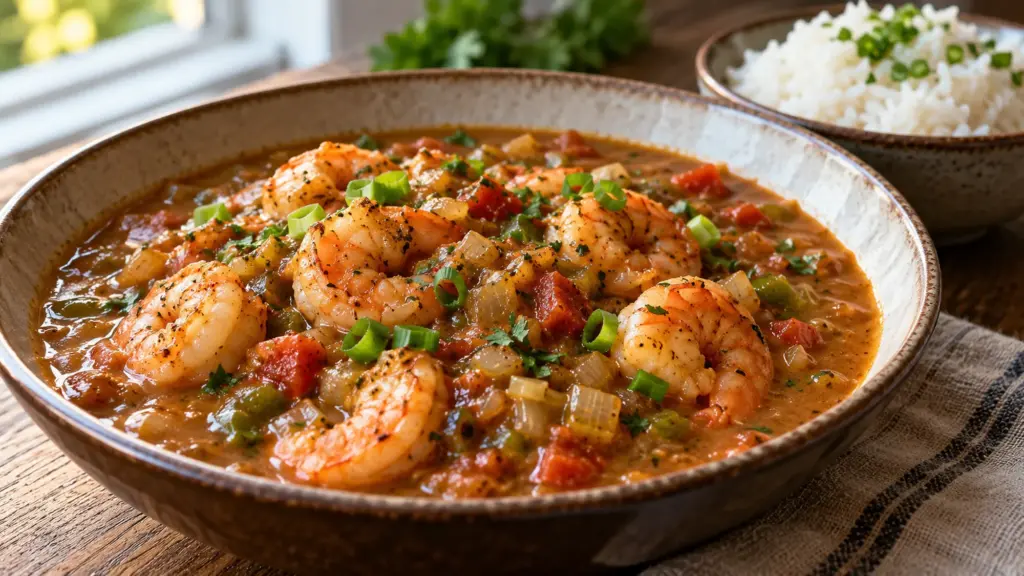
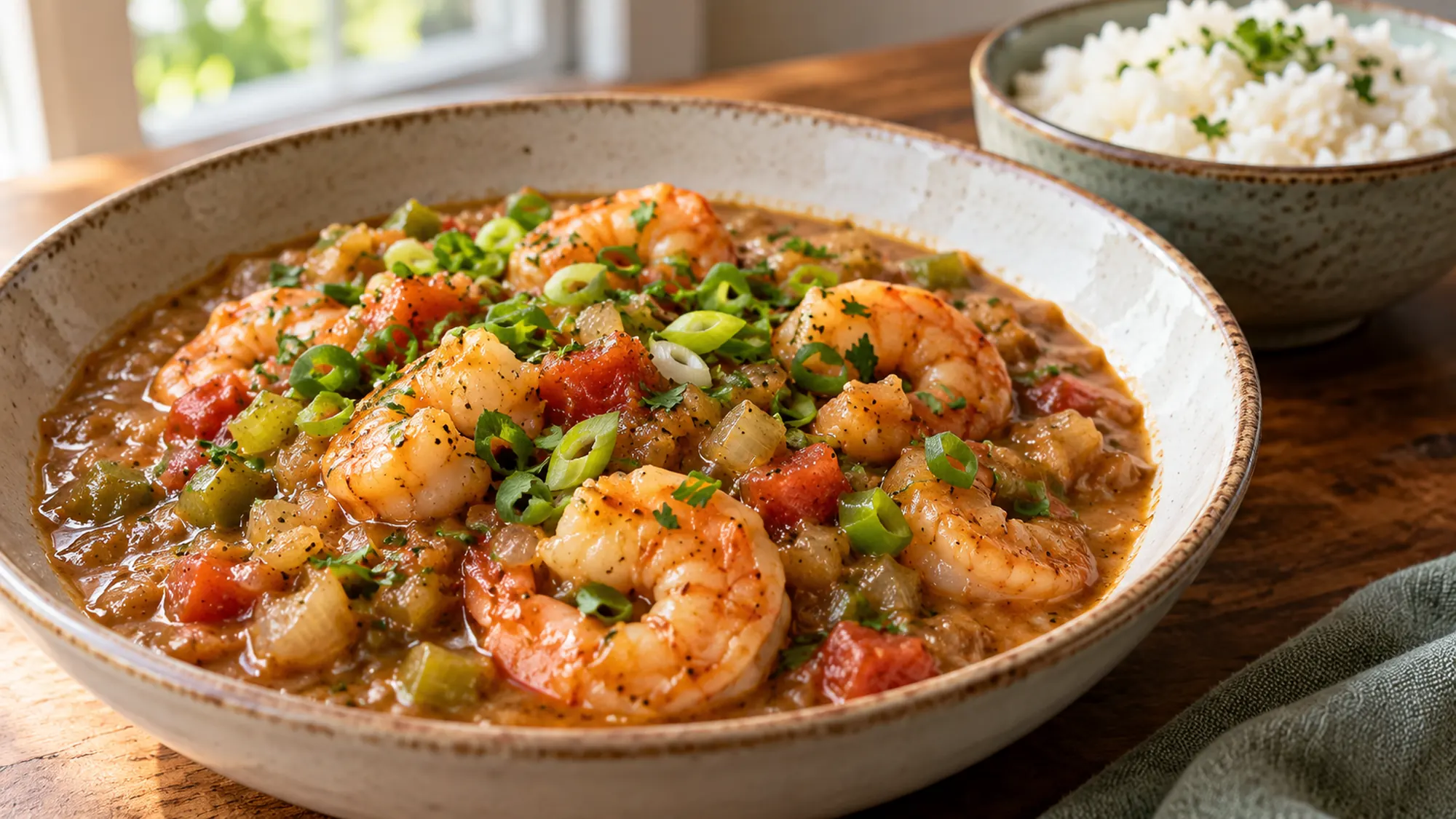
Shrimp etouffee is the kind of dish that asks for a spoon before anything else. The sauce carries finely chopped vegetables, warm spices and the sweetness of shrimp, with enough body to settle over rice rather than run straight through it.
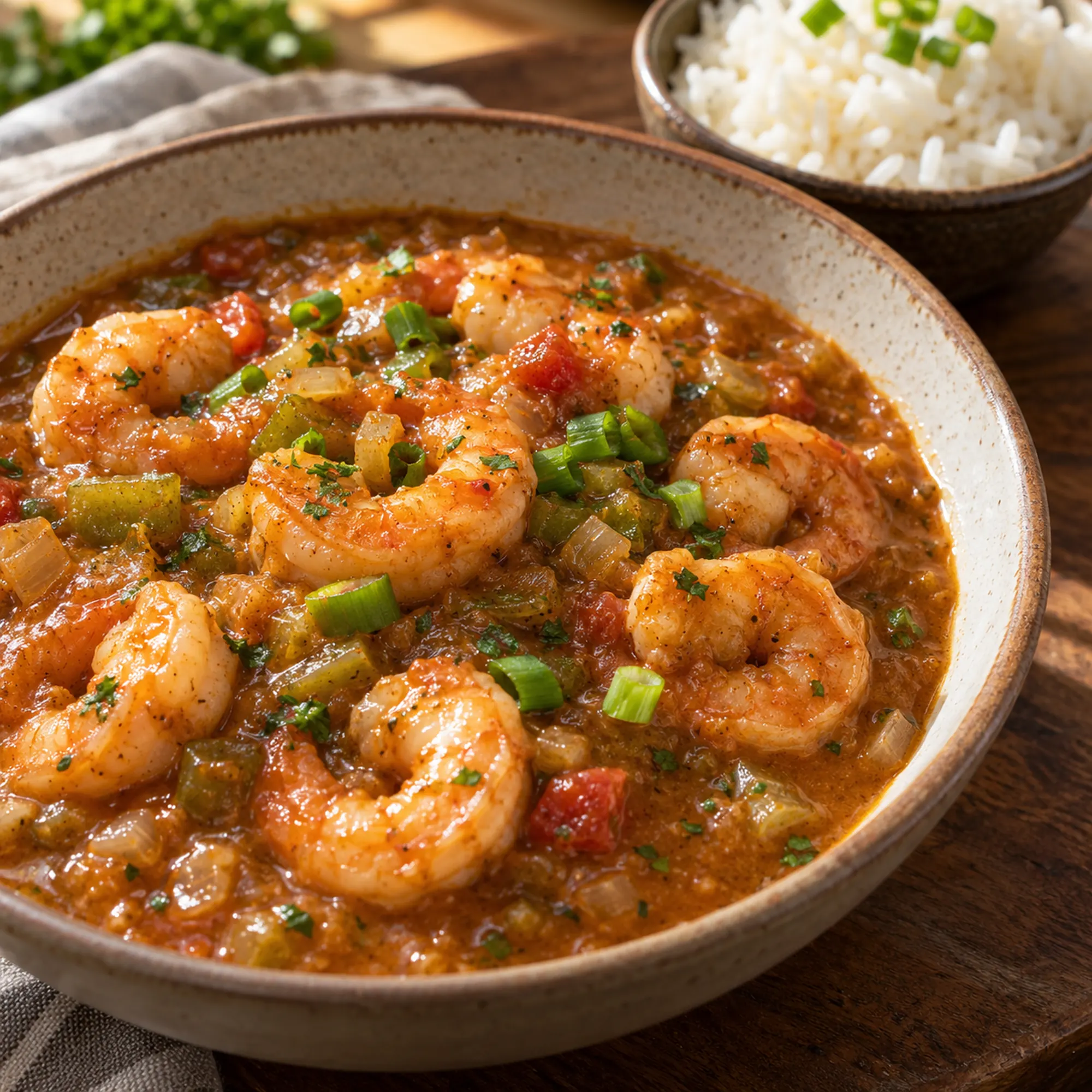
This shrimp etouffee uses a light-brown butter-and-flour roux and a measured spice blend. The shrimp return near the end, so the sauce has time to develop without leaving the seafood simmering for the whole cooking time.
The recipe adapts Chef John’s tomato-containing version. I like keeping the heat adjustable at the table; a little hot sauce lets each person change a bowl without making the entire pan equally fiery.
Serving Shrimp Etouffee
Rice is the familiar partner because its separate grains give the sauce somewhere to go. Put a modest mound in the bowl and spoon shrimp and sauce around it, or serve rice separately so everyone can choose the proportion. The recipe’s estimates cover the shrimp mixture, not rice.
This is a generous four-portion batch with plenty of shrimp. A crisp green salad can sit alongside, but the sauce already has a strong personality. Avoid pairing it with another heavily spiced main dish unless you deliberately want a much larger meal.
- Keep the rice simple: use plain well-cooked rice rather than adding another sauce.
- Finish with green onions: they add a fresher note to the long-cooked base.
- Offer heat separately: put hot sauce on the table instead of assuming everyone wants more.
| Serving element | What it contributes | Useful choice |
|---|---|---|
| White rice | A mild base for sauce | Serve separately if preferred |
| Green onions | Freshness and color | Add near the end |
| Simple salad | Cool contrast | Keep dressing restrained |
Let the rice support the sauce, and let diners decide how much additional heat belongs in their bowls.
Shrimp Etouffee Variations
There are different approaches to etouffee, including versions with and without tomato. This one keeps the tomato in the chosen source rather than claiming to be the only authentic version. Its small diced pieces become part of the sauce instead of turning it into a tomato-heavy stew.
I would change the cayenne before changing the aromatic vegetables. Onion, celery and green pepper build the base, while the pepper blend controls a different part of the experience. Reducing heat should not mean removing all the savory ingredients that make the sauce interesting.
- Less heat: reduce cayenne and offer hot sauce separately.
- Shrimp size: larger shrimp may need a little longer at the end; check doneness instead of using one fixed time.
- Shell-on shrimp: weigh the cleaned edible amount for this formula, not the gross purchase weight.
- Thicker sauce: simmer the base gently before returning the shrimp.
- Thinner sauce: add a small splash of stock or water. It should remain spoonable, not turn into a stiff paste as it waits on the stove.
Adjust heat and consistency separately, and protect the shrimp from an unnecessarily long simmer.
Nutrition and Safe Cooking
Shrimp contributes protein, while butter and oil supply part of the sauce’s richness. The roux is not a hidden ingredient: its measured flour and butter are included in the estimate. Rice, if served, adds to the complete meal and is not included in the card’s numbers.
The estimate uses cleaned shrimp and includes the measured stock conservatively. Shrimp can release different amounts of water, especially after freezing, so the finished yield and sauce concentration are not perfectly fixed. Brands of stock and hot sauce also affect sodium.
- Keep raw shrimp cold: thaw safely in the refrigerator and avoid leaving seafood on the counter.
- Cook until done: follow seafood guidance; shrimp should be pearly and opaque.
- Remember allergens: the dish contains shellfish, dairy and wheat, and Worcestershire may contain fish.
Use clear ingredients and careful seafood handling rather than treating a spicy dish as automatically light or healthy.
Bottom Line
Shrimp etouffee is mostly about managing two different clocks. The sauce benefits from time to soften vegetables and bring the roux together; the shrimp need only a short finish. Keep those jobs separate, and the bowl can have a full-flavored sauce without tough, overcooked seafood.
Develop the sauce first, then bring the shrimp back only long enough to finish cooking.
Shrimp Etouffee Recipe

Ingredients
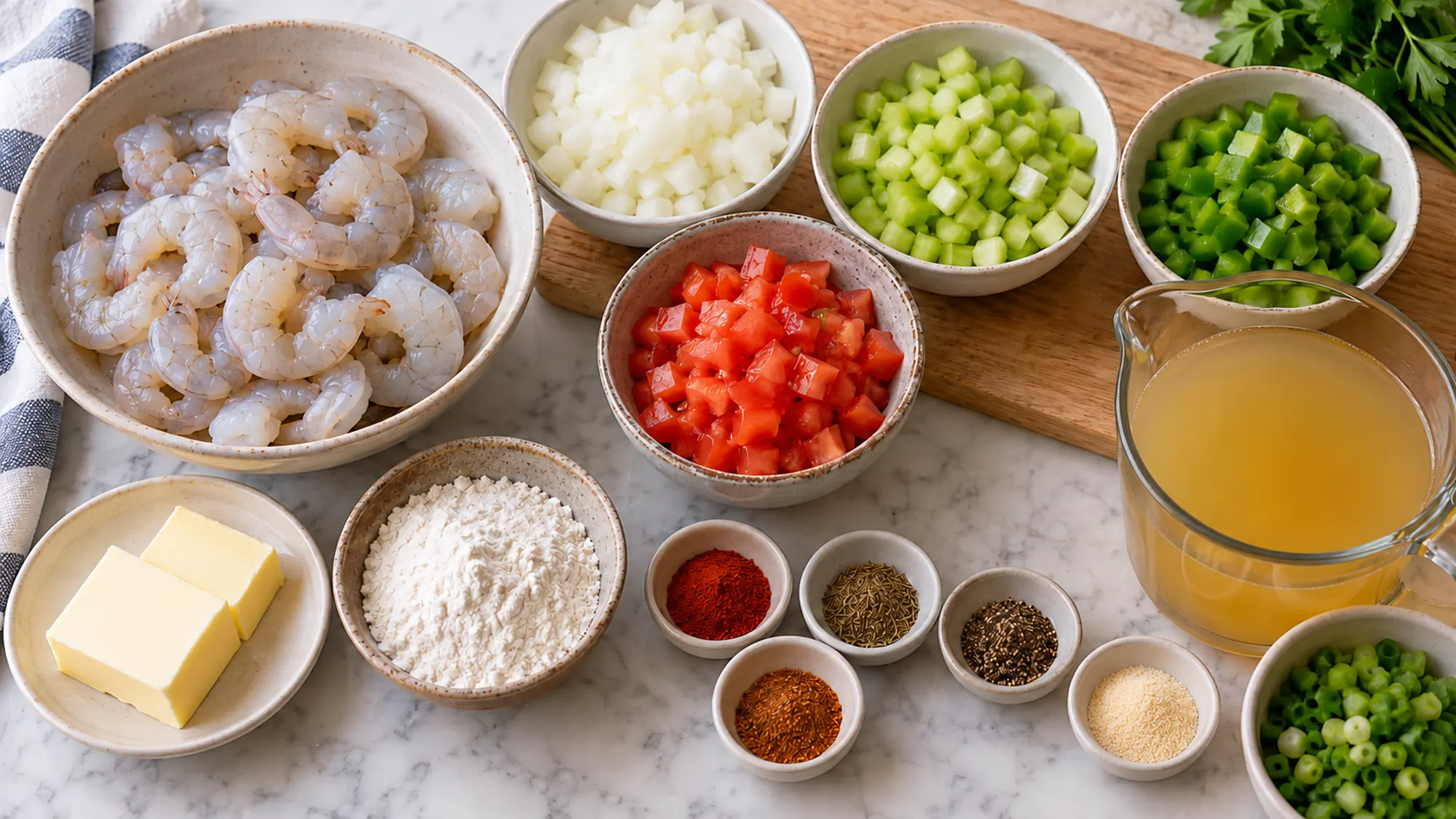
- 900 g raw peeled deveined shrimp thawed and drained
- 15 ml sunflower oil
- 3 g fine salt
- 0.25 g dried thyme
- 0.25 g dried oregano
- 0.5 g cayenne
- 0.75 g garlic powder
- 0.6 g onion powder
- 0.5 g white pepper
- 0.5 g black pepper
- 1.5 g paprika
- 42 g unsalted butter
- 55 g onion diced
- 40 g celery thinly sliced
- 50 g green bell pepper diced
- 20 g all-purpose flour
- 90 g tomato diced
- 480 ml unsalted chicken stock reduce by any reserved shrimp juices to total 480 ml liquid
- 2.5 ml Worcestershire sauce
- 5 ml hot sauce
- 25 g green onions sliced
- cooked white rice optional, excluded from estimates
Equipment
- 1 Large skillet
- 1 Whisk
- 1 wooden spoon
Instructions
- Combine thyme, oregano, cayenne, garlic powder, onion powder, both peppers and paprika. Pat shrimp dry; season with salt and about one-third of the spice blend.
- Heat oil in a skillet and briefly sear shrimp in batches, removing them while still underdone. Collect any juices; use them with enough stock to total 480 ml liquid.
- Melt butter in the pan. Stir in flour and cook over medium-low heat, stirring, until the roux becomes light brown. Add onion, celery and green pepper; cook until softened, then stir in remaining spices and tomato.
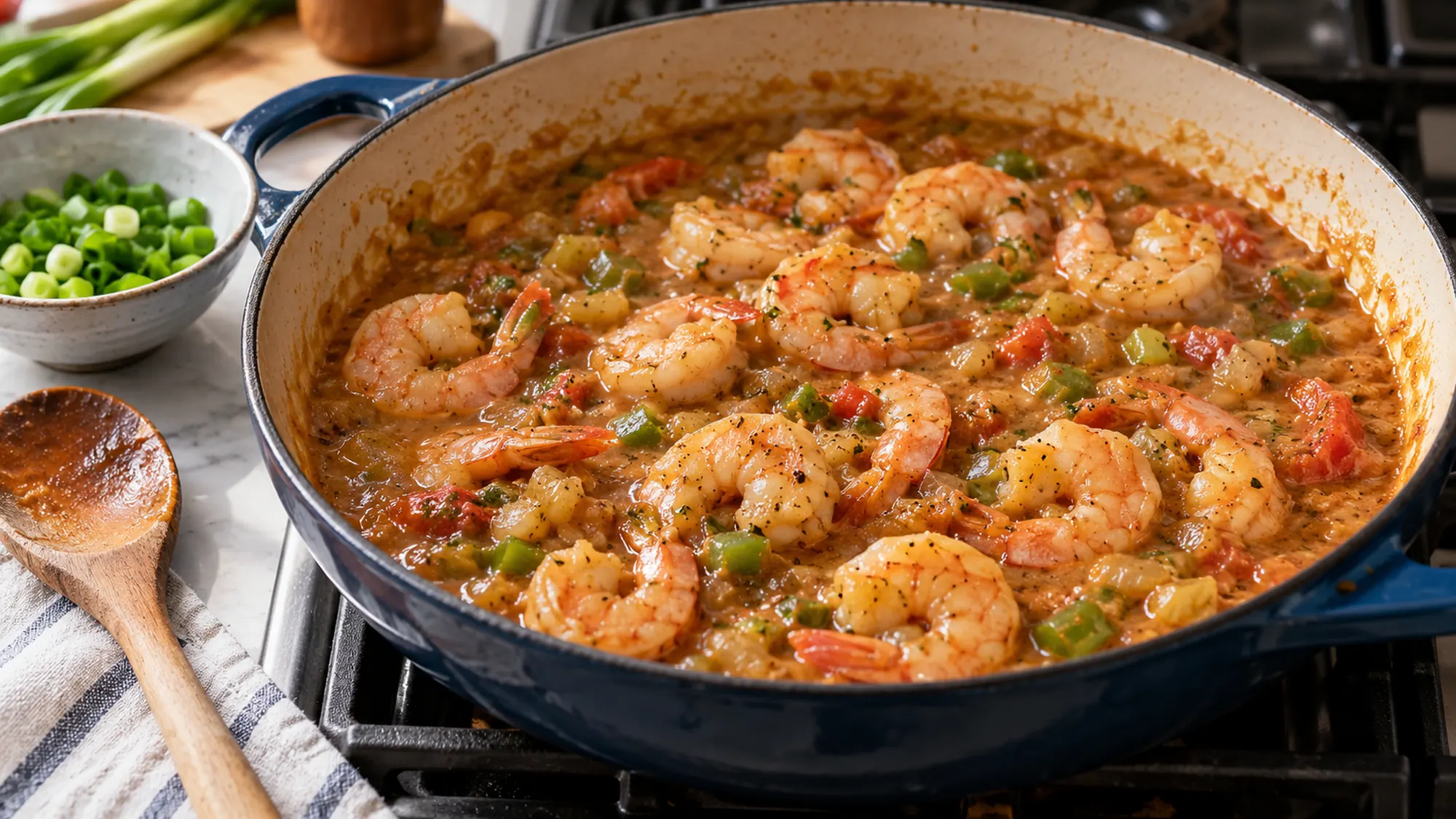
- Gradually add stock and shrimp juices while stirring. Add Worcestershire and hot sauce. Simmer gently about 10–15 minutes, stirring, until vegetables are tender and the sauce is thick but spoonable.
- Return shrimp and simmer only until opaque throughout, generally 2–4 minutes depending on size. Stir in green onions. Divide into four generous portions; optional cooked rice is excluded from estimates.
Nutrition
Video
Notes
Tried this recipe?
Let us know how it turned out!Hi, I’m Laura, the voice behind Tastiva. I’ve always believed that eating well should feel enjoyable, comforting, and realistic—not like another complicated rule to follow. I love creating recipes that fit into everyday life, sharing simple nutrition ideas, and finding small ways to make meals feel a little better without losing the pleasure of good food.