

Pork tenderloin medallions make a small amount of cream feel like a proper dinner sauce. The browned rounds leave flavor in the pan, a little wine lifts it back up, and Dijon gives the finished sauce enough sharpness to keep every bite interesting.
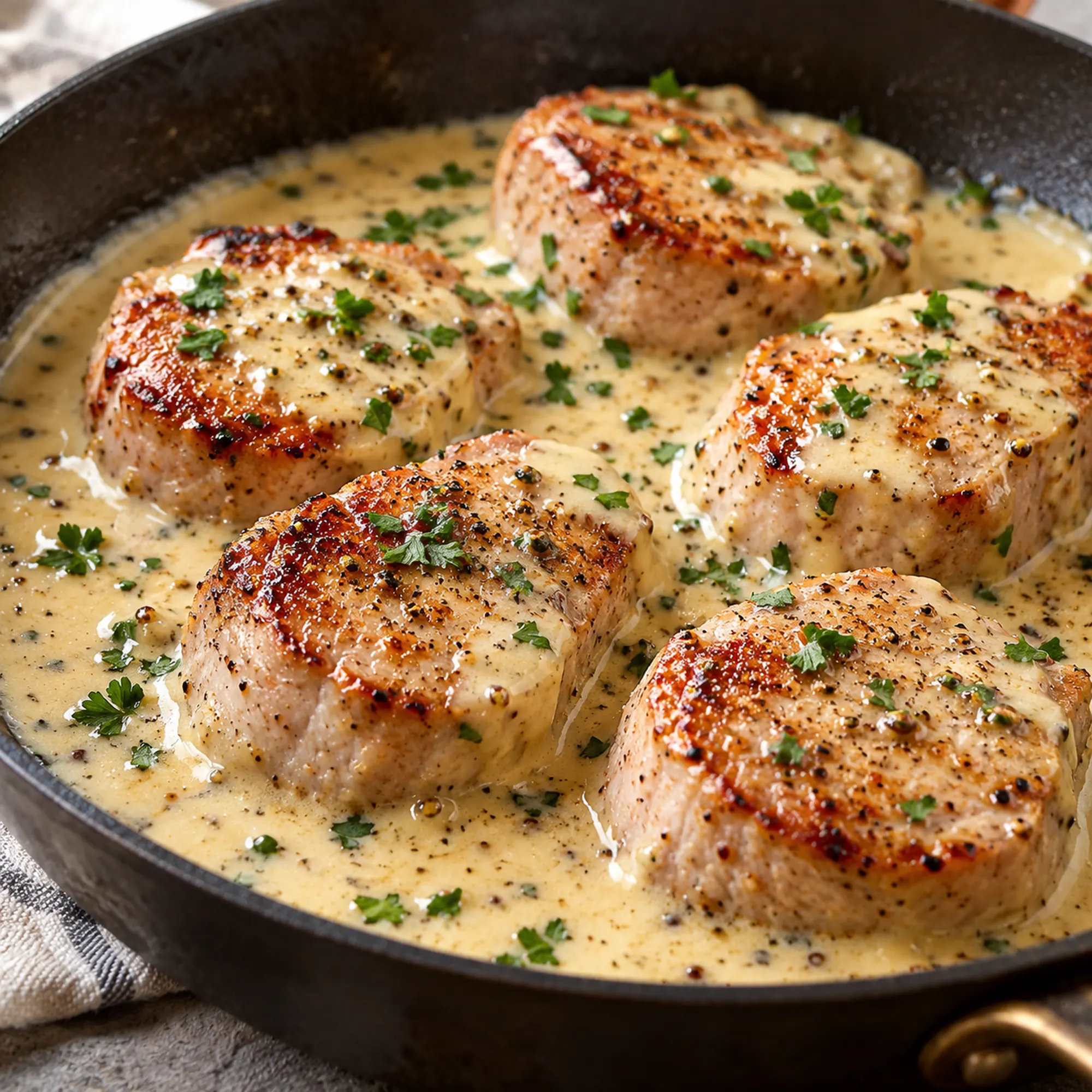
These pork tenderloin medallions are seared, then finished in a gentle Dijon cream sauce. Even slices and a thermometer help you stop cooking before the lean meat becomes dry.
This version adapts Kitchen Sanctuary’s creamy mustard pork, using measured 30% cream. I like this format when a whole roast feels unnecessary: the slices are easy to portion, and the sauce comes together in the same skillet.
Serving Pork Tenderloin Medallions
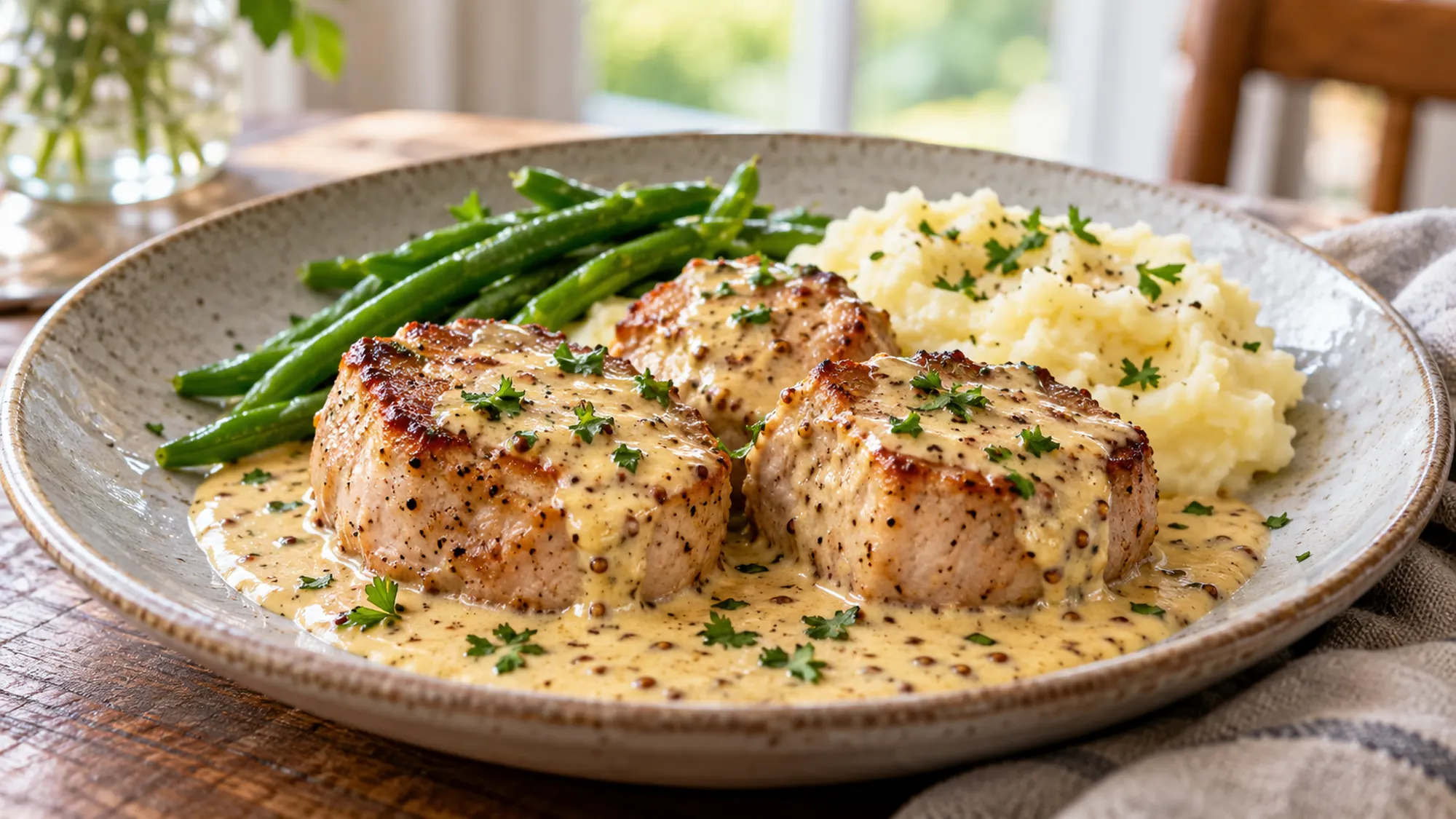
Arrange the medallions in a slight overlap rather than piling them into a mound. Spoon sauce partly over the meat and partly beside it, leaving some browned surface visible. The dish feels more balanced when the plate includes something that can catch the sauce and something that stays crisp.
Mashed potatoes are an obvious match, but rice or a small serving of pasta also works. Choose one starch rather than all three. The recipe estimate covers pork and sauce only, so your complete plate will depend on the accompaniments and their portions.
- For a soft base: serve with mashed potatoes.
- For a fresh contrast: add green beans, broccoli or a lightly dressed salad.
- For a smaller meal: divide the pork and sauce first, then add vegetables according to appetite.
| Side | Texture it adds | Serving tip |
|---|---|---|
| Mashed potatoes | Smooth and soft | Keep the portion modest |
| Green beans | A firmer bite | Avoid another creamy sauce |
| Rice | Separate grains | Spoon sauce over just before eating |
Let the mustard sauce connect the plate without making every component equally rich.
Pork Tenderloin Medallions Variations
Tenderloin and pork loin are not interchangeable names for the same cut. Tenderloin is the narrow, relatively small muscle used here; a thick slice from a large loin needs different handling. Check the package before you start, then trim any tough silver skin that remains.
I would vary the mustard before adding more cream. Dijon provides a smooth, direct tang, while wholegrain mustard adds a different texture. Either change alters the result, so begin with the measured amount and taste after the sauce has reduced.
- Wholegrain mustard: use it for a seedier sauce and adjust to taste.
- No wine: replace with stock, then add a small amount of lemon only if the sauce needs brightness.
- Heavier cream: it makes a richer sauce than the 30% cream specified here.
- Extra herbs: parsley is enough, but a little fresh thyme can fit the savory flavors.
- Uneven ends: the tapered end of a tenderloin can produce smaller pieces. Keep them together and check them earlier instead of overcooking them while the larger rounds finish.
Keep the lean cut and even thickness consistent; the mustard and herbs are easier places to experiment.
Nutrition and Safe Cooking
Pork supplies protein, and the measured cream contributes richness as well as fat. Calling the sauce homemade does not make its cream or oil nutritionally invisible. The estimate includes both, along with the wine, rather than assuming the pan loses a predictable amount during cooking.
A practical plate can include the pork, a portion of starch and plenty of vegetables without requiring a special label. If you change the cream, mustard or stock brand, the numbers may change too. The stated values are an ingredient-based estimate, not a measurement of your final plate.
- Check the center: follow safe pork guidance: 145°F (63°C), followed by a three-minute rest.
- Measure from the side: this helps place the thermometer in the center of a thin medallion.
- Handle leftovers gently: refrigerate promptly, then reheat thoroughly without a hard boil that splits the sauce.
Temperature and resting time are more reliable guides than guessing from the pork’s color.
Bottom Line
Pork tenderloin medallions are a useful reminder that a quick meal can still have a well-built sauce. Start with even slices, leave room for browning, and lower the heat once the cream goes in. The result should be tender pork with a sauce that coats, not a skillet of over-reduced cream.
A golden sear and a gentle finish give this lean cut its best chance to stay tender.
Pork Tenderloin Medallions Recipe

Ingredients
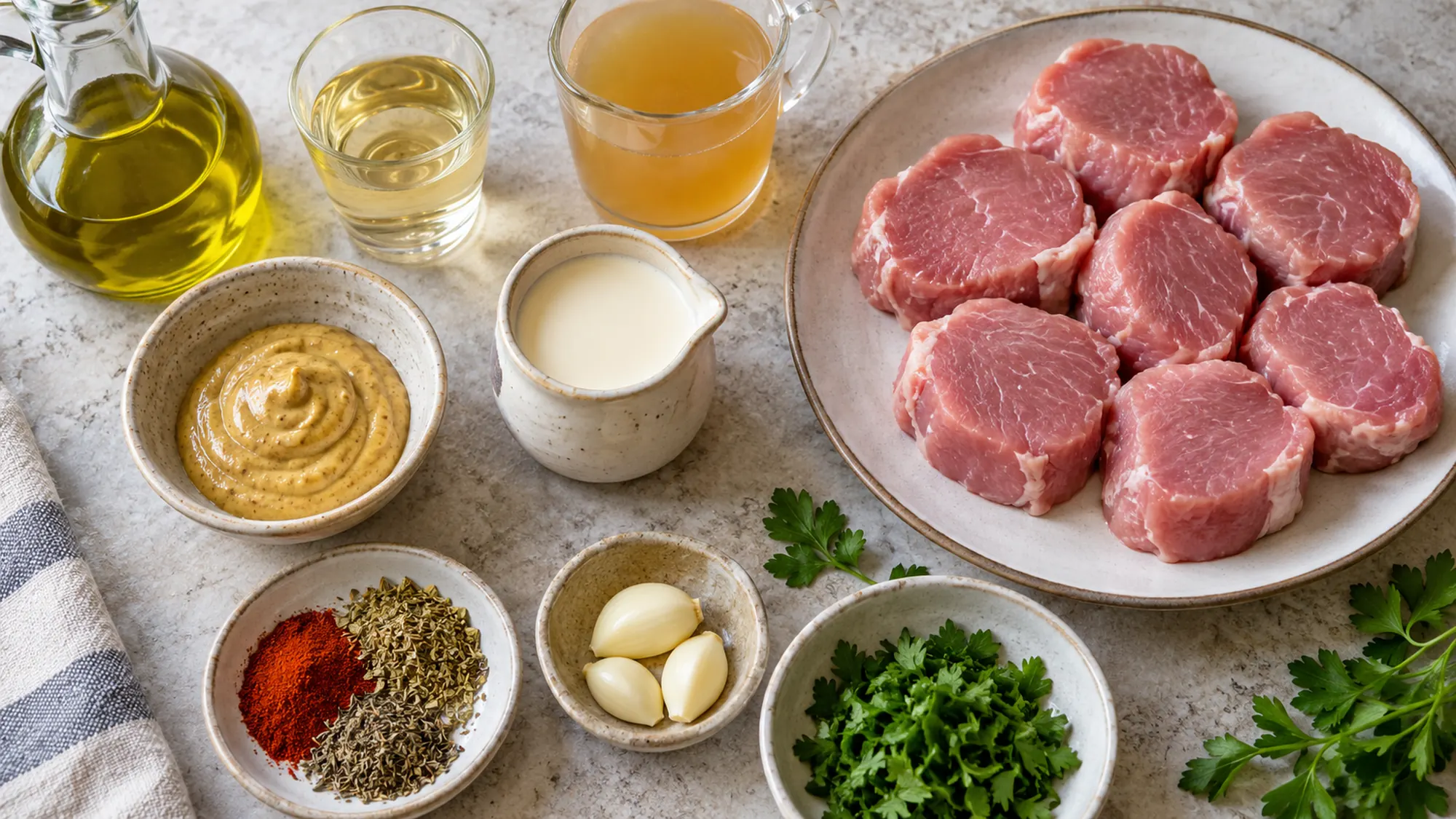
- 600 g pork tenderloin cut into 2.5 cm medallions
- 3 g fine salt
- 1 g ground black pepper
- 0.5 g dried oregano
- 1 g paprika
- 22.5 ml avocado oil
- 6 g garlic minced
- 120 ml dry white wine
- 120 ml unsalted chicken stock
- 15 g Dijon mustard
- 120 ml cream 30% fat; lighter than source heavy cream
- 1.25 ml Worcestershire sauce
- 8 g fresh parsley chopped
- mashed potatoes and green vegetables optional, excluded from estimates
Equipment
- 1 Large skillet
- 1 Instant-read thermometer
Instructions
- Pat medallions dry. Combine salt, pepper, oregano and paprika, then season both faces of the pork.
- Heat avocado oil in a wide skillet over medium-high heat. Sear pork about 2 minutes on each side, working in batches if necessary.
- Lower heat to medium. Add garlic and stir for 30 seconds, then pour in wine and loosen the browned bits. Simmer about 2 minutes. Add stock and simmer 3 minutes.
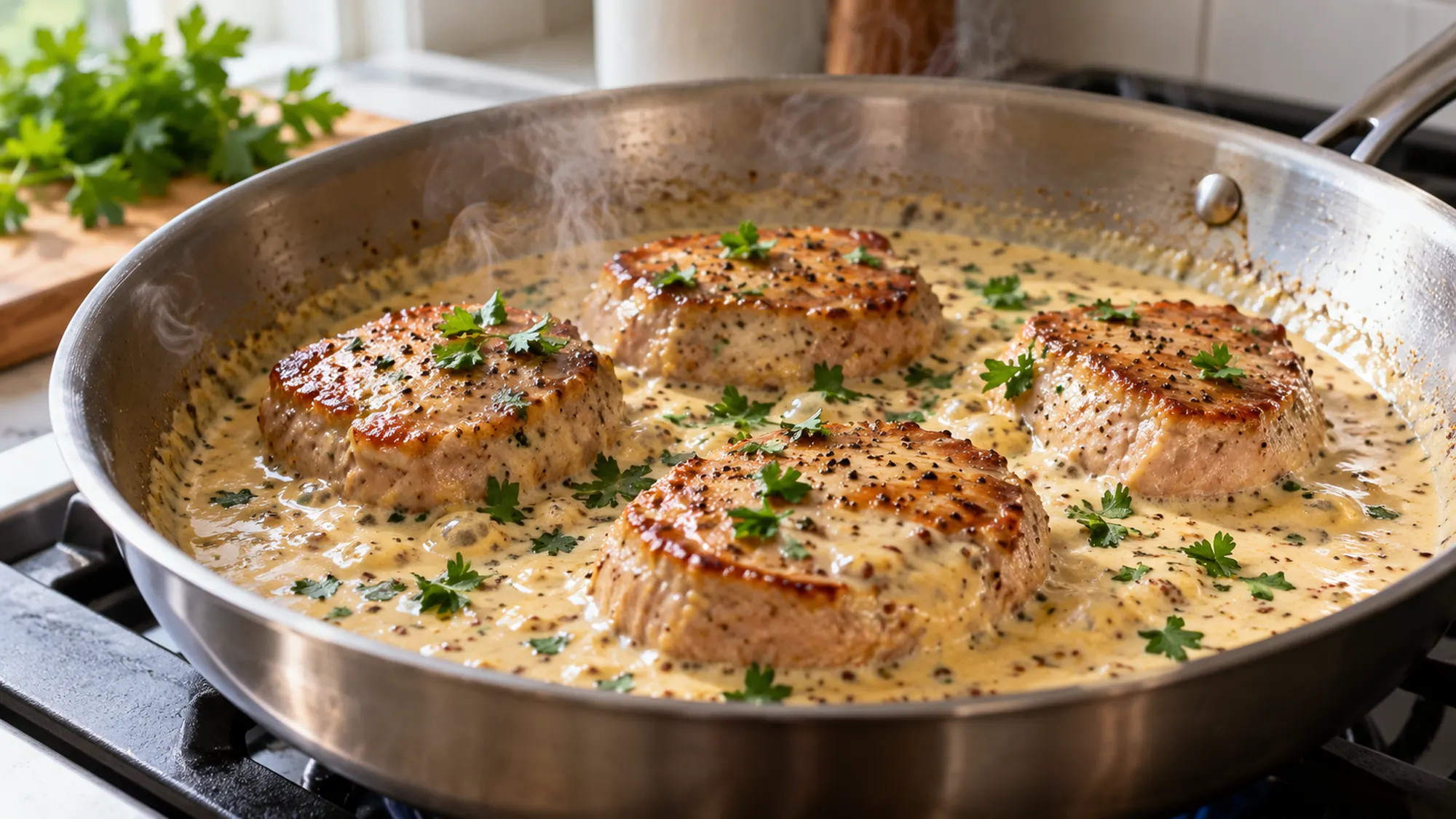
- Stir in Dijon, cream and Worcestershire. Simmer gently until the sauce lightly thickens and the thickest medallions reach 145°F (63°C). Check from the side with an instant-read thermometer; timing varies with thickness.
- Remove from heat and rest pork for at least 3 minutes. Sprinkle parsley and divide among four plates with the sauce. Optional mashed potatoes and vegetables are not included in the estimates.
Nutrition
Video
Notes
Tried this recipe?
Let us know how it turned out!Hi, I’m Laura, the voice behind Tastiva. I’ve always believed that eating well should feel enjoyable, comforting, and realistic—not like another complicated rule to follow. I love creating recipes that fit into everyday life, sharing simple nutrition ideas, and finding small ways to make meals feel a little better without losing the pleasure of good food.