
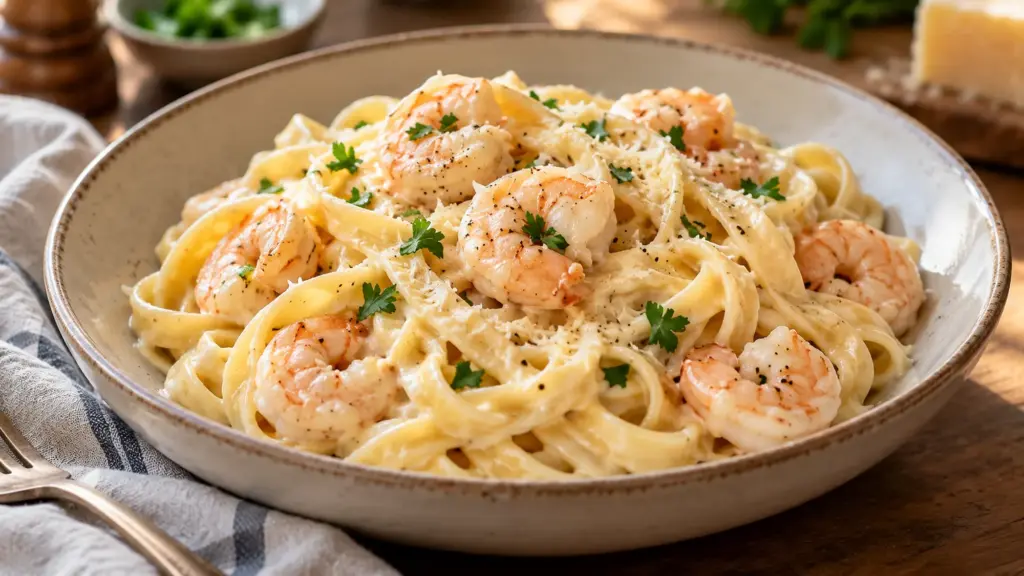
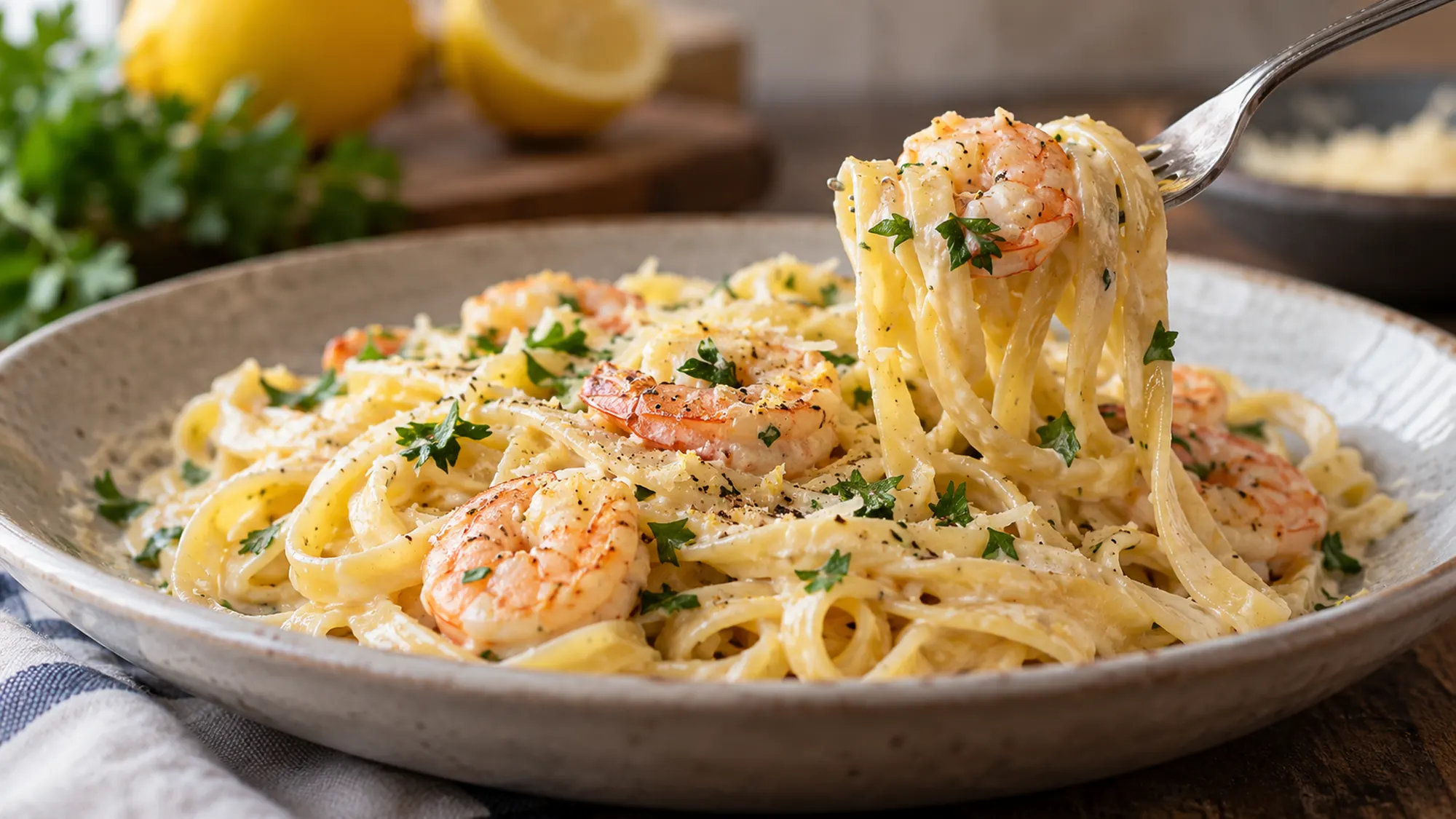
A creamy pasta can go from inviting to heavy surprisingly quickly. Shrimp alfredo works best when the sauce coats the ribbons rather than burying them, and the shrimp are warmed through without being cooked twice into tight little curls. The final few minutes deserve your attention.
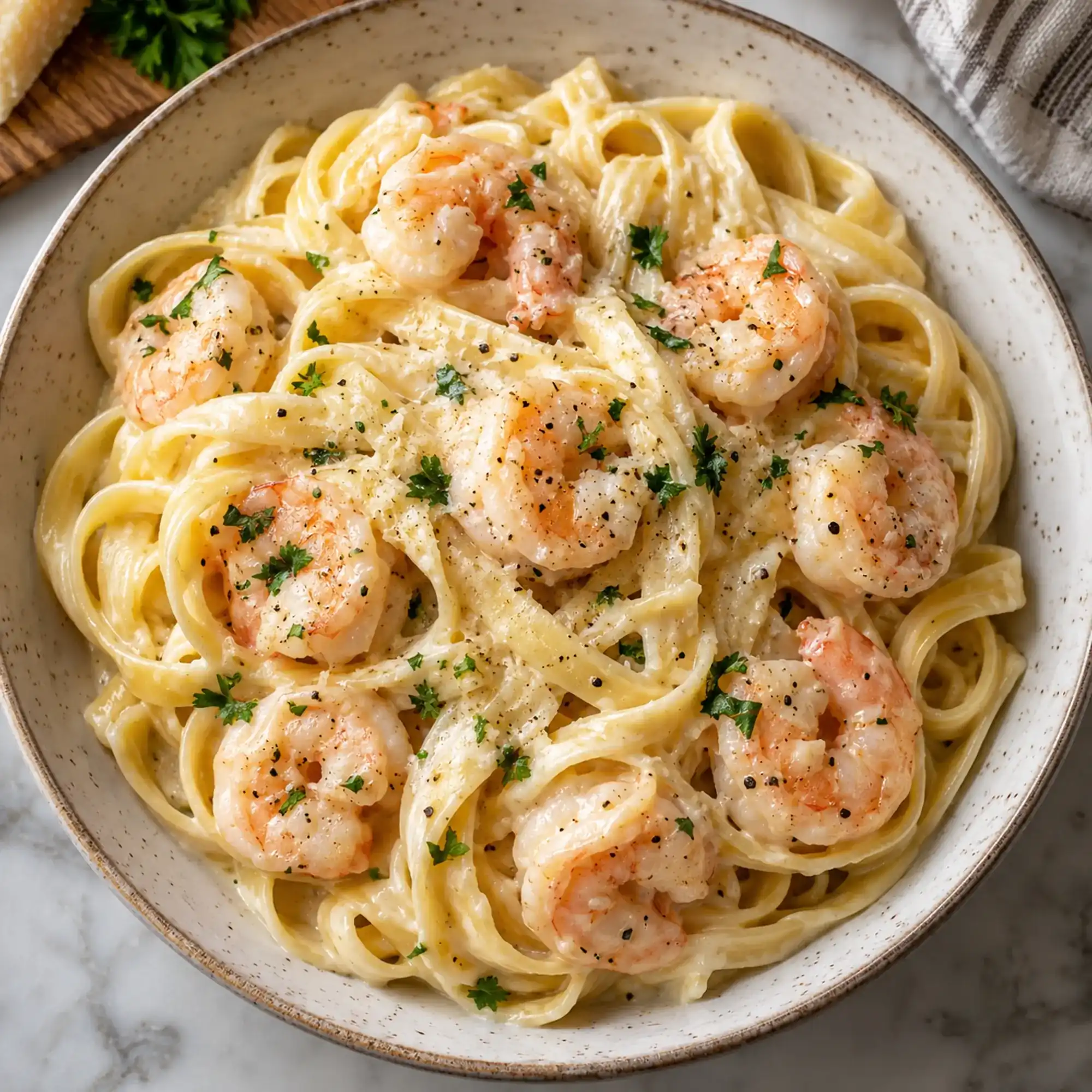
This shrimp alfredo combines fettuccine, briefly cooked shrimp and a cream-Parmesan sauce. Remove the shrimp while the sauce comes together, then return them only long enough to warm through with the pasta.
The formula is adapted from Natasha’s creamy shrimp pasta, with measured cheese and seasoning. I like a shallow bowl here: it gives the pasta room to spread slightly instead of sitting in a dense, cooling mound.
Serving Shrimp Alfredo
Have the plates ready before the pasta goes into the sauce. Creamy fettuccine thickens as it stands, so this is a dish to serve promptly rather than hold while several sides finish. A splash of reserved pasta water can loosen the sauce without adding another pour of cream.
The card makes six portions including the pasta and all the measured sauce. You can choose a smaller serving with vegetables or a larger one for a different appetite, but the estimate follows that six-way division. Extra Parmesan belongs on the table as an optional addition.
- For freshness: a crisp green salad gives contrast without another rich dressing.
- For vegetables: green beans can sit beside the pasta.
- For presentation: divide the shrimp evenly before adding optional parsley or cheese.
| At serving time | Helpful adjustment | Avoid |
|---|---|---|
| Sauce looks too tight | Add a little pasta water | Another large pour of cream |
| Shrimp are already cooked | Warm them briefly | A long second simmer |
| Plates are ready | Serve immediately | Holding the dressed pasta |
Finish the pasta last, and let a little reserved water—not extra cream—correct a sauce that has tightened.
Shrimp Alfredo Variations
Freshly grated Parmesan usually blends more readily than a coarse handful added all at once. Stir it in over low heat and avoid boiling the sauce afterward. More cheese can make the sauce thicker and saltier, so taste before deciding that it needs another generous shower.
I would change the pasta shape before adding several new vegetables to the skillet. A different noodle still lets the shrimp and sauce remain the focus. Vegetables with a lot of water can thin the sauce, while a crowded pan makes it harder to cook the shrimp evenly.
- No wine: the source allows stock instead, with a small splash of lemon added to taste.
- Different pasta: linguine or a sturdy short shape can work; follow its own cooking time.
- Smaller shrimp: shorten the cooking time and judge opacity rather than matching the clock.
- Less cream: a redesigned sauce needs different proportions; simply removing most of it will not produce the same coating.
- Extra heat: a little chile at the table is easier to control than heavily seasoning the whole pan.
Keep the sauce smooth and the shrimp tender before experimenting with extra ingredients.
Nutrition and Safe Cooking
Shrimp contributes protein, but cream, butter and Parmesan make this a rich dish. It is not a low-fat meal just because seafood is the main protein. A clear portion size and a simple vegetable side are more useful than attaching an overly broad healthy label.
The estimate includes all the cream and pasta, while optional pasta-water salt and extra cheese are excluded. Retail cream labels use rounded values, and the amount of salted cooking water retained by pasta varies. The numbers are therefore practical estimates rather than exact measurements of a finished bowl.
- Cook shrimp through: the food-safety guidance for shrimp calls for pearly, opaque flesh.
- Keep raw seafood separate: use a clean dish after cooking and wash utensils that touched raw shrimp.
- Store promptly: cool leftovers in shallow containers and reheat to165°F, adding a little water as needed.
Enjoy the richness honestly, with a portion that fits the meal and careful seafood handling.
Bottom Line
Shrimp alfredo does not need a long ingredient list to feel generous. The useful details are a gentle cheese finish, a little reserved pasta water and shrimp that spend as little extra time in the pan as possible. Serve while the sauce is loose and glossy, then let dinner be simple.
Tender shrimp and a sauce that coats the pasta are the goal—not the thickest possible cream sauce.
Shrimp Alfredo Recipe

Ingredients
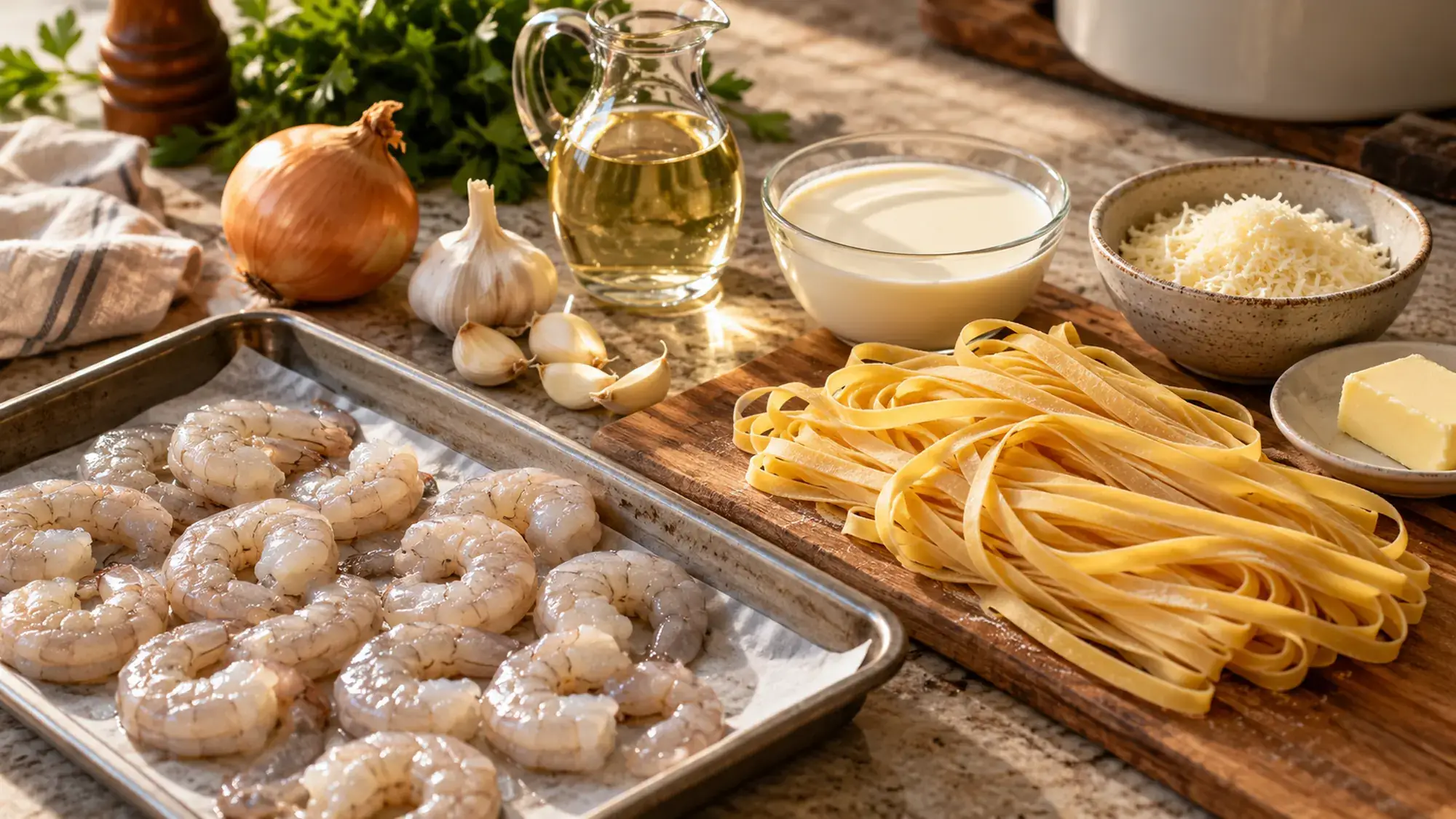
- 340 g dry fettuccine
- 454 g raw peeled deveined shrimp tails removed
- 15 ml olive oil
- 100 g onion finely chopped
- 28 g unsalted butter
- 3 g garlic minced
- 80 ml dry white wine
- 480 ml heavy whipping cream
- 30 g Parmesan finely grated
- 3 g fine salt plus optional pasta-water salt
- 0.5 g ground black pepper
- 0.5 g paprika
- 6 g fresh parsley chopped
Equipment
- 1 Pasta pot
- 1 Large skillet
- 1 Tongs
Instructions
- Cook fettuccine in boiling water until al dente according to its package. Reserve a cup of cooking water, then drain; optional pasta-water salt is not included in the estimate.
- Pat shrimp dry and season with salt, pepper and paprika. Heat oil in a wide skillet; cook shrimp in one layer just until pearly and opaque, usually 1–2 minutes per side depending on size. Transfer to a clean dish.
- Melt butter in the same pan and soften onion 3–5 minutes. Add garlic briefly, then wine. Simmer until only a small amount of wine remains.
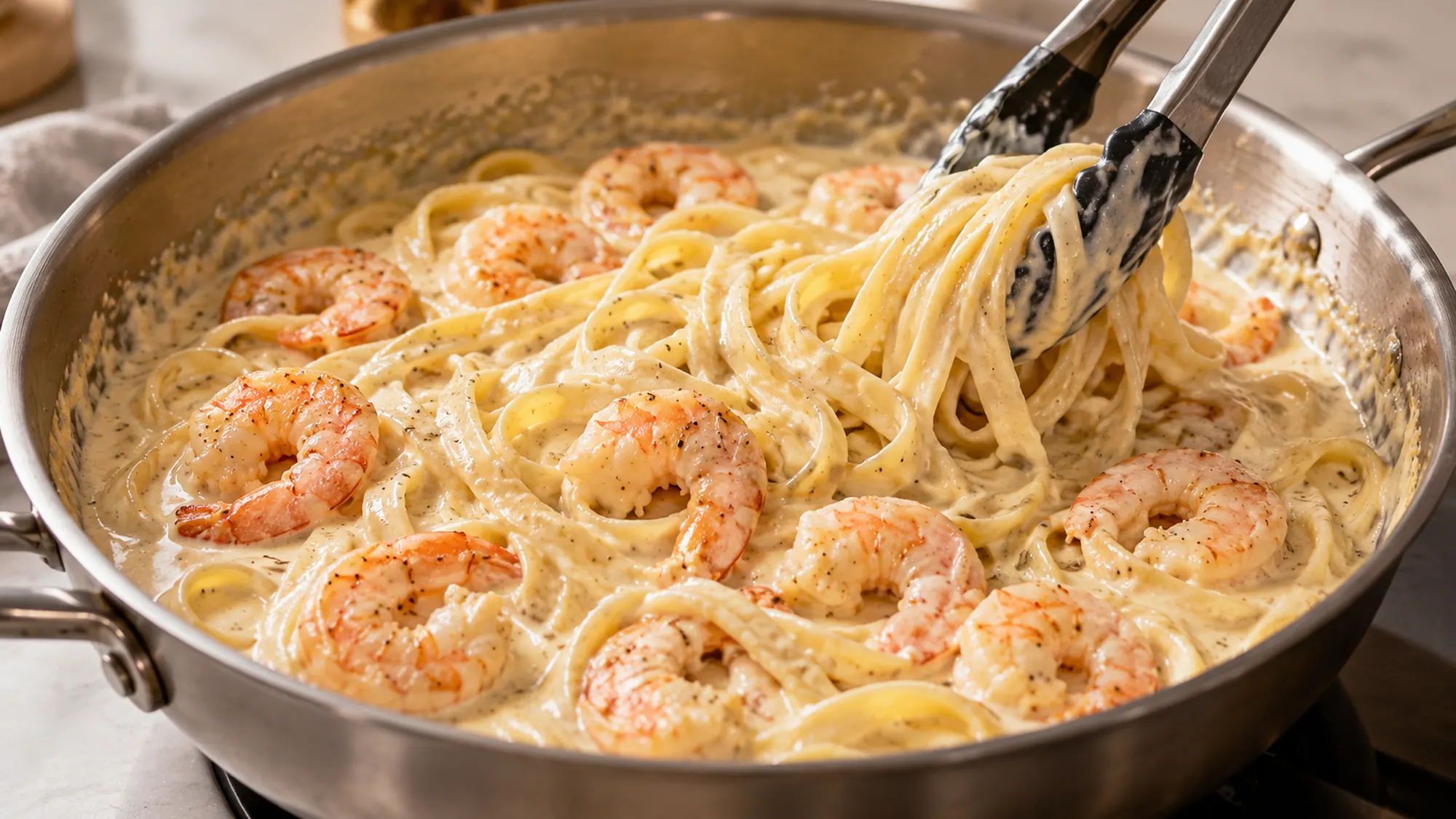
- Add cream and simmer gently about 2 minutes. Lower the heat, stir in Parmesan until smooth, then avoid boiling. Toss in pasta and shrimp, loosening with a little reserved water if needed.
- Warm through without overcooking shrimp. Sprinkle with the measured parsley and serve immediately; extra cheese is optional and changes the estimate.
Nutrition
Video
Notes
Tried this recipe?
Let us know how it turned out!Hi, I’m Laura, the voice behind Tastiva. I’ve always believed that eating well should feel enjoyable, comforting, and realistic—not like another complicated rule to follow. I love creating recipes that fit into everyday life, sharing simple nutrition ideas, and finding small ways to make meals feel a little better without losing the pleasure of good food.