
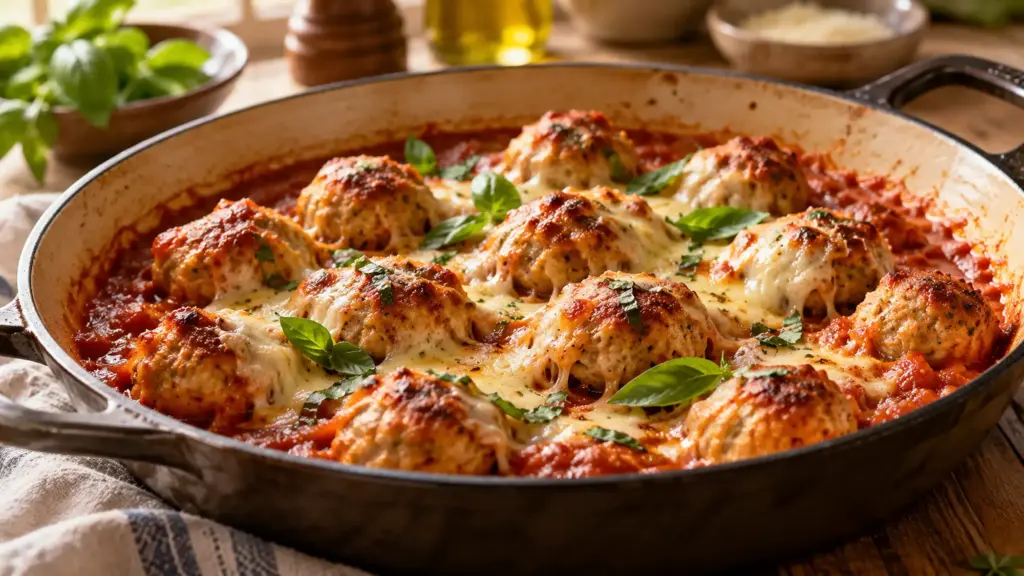
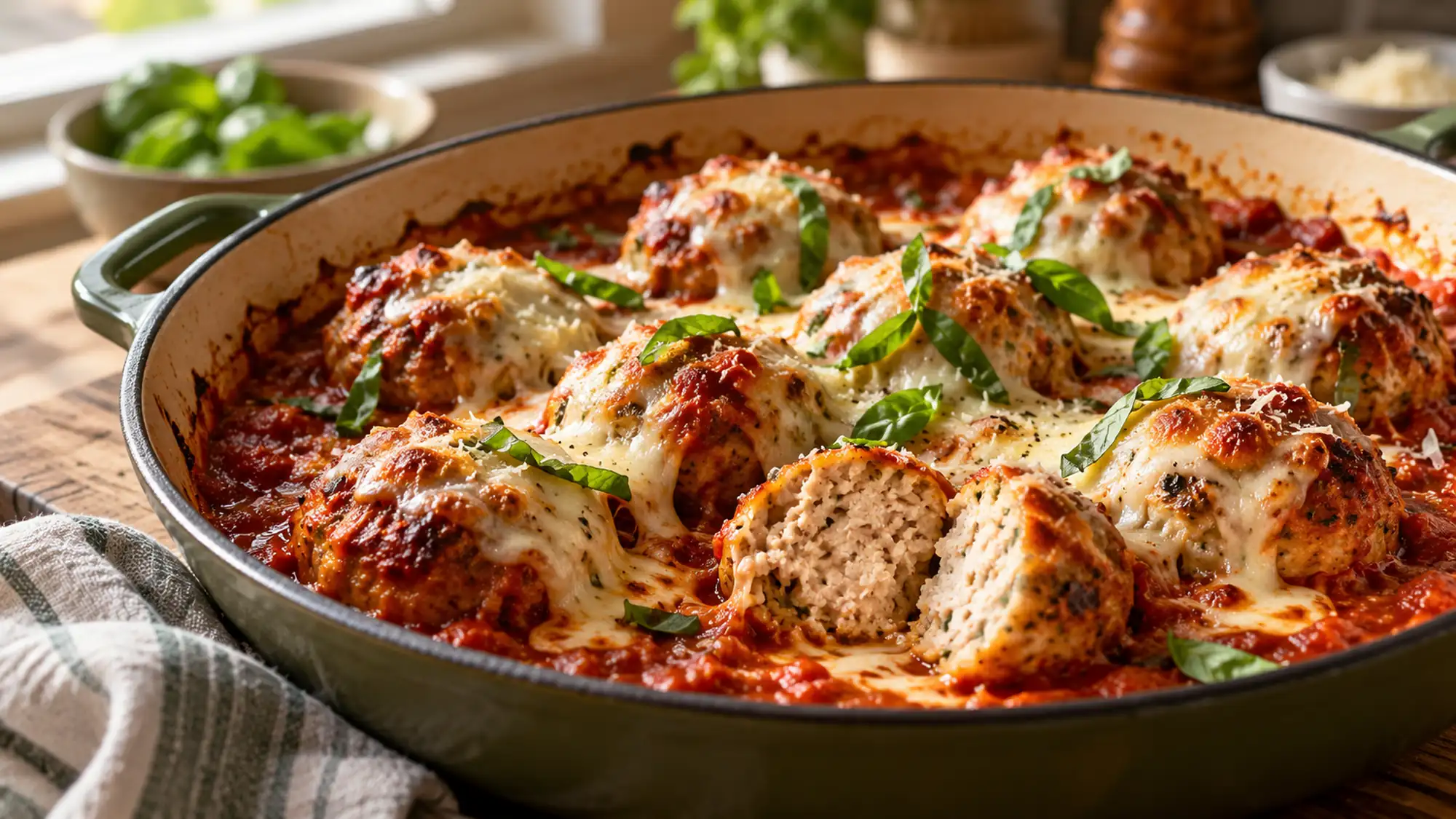
When chicken Parmesan sounds appealing but a pile of cutlets does not, meatballs offer a different route to the same tomato-and-cheese comfort. These chicken Parmesan meatballs have a lightly browned exterior before they meet the sauce, so the finished pan has more texture than a soft mixture simply dropped into simmering tomatoes.
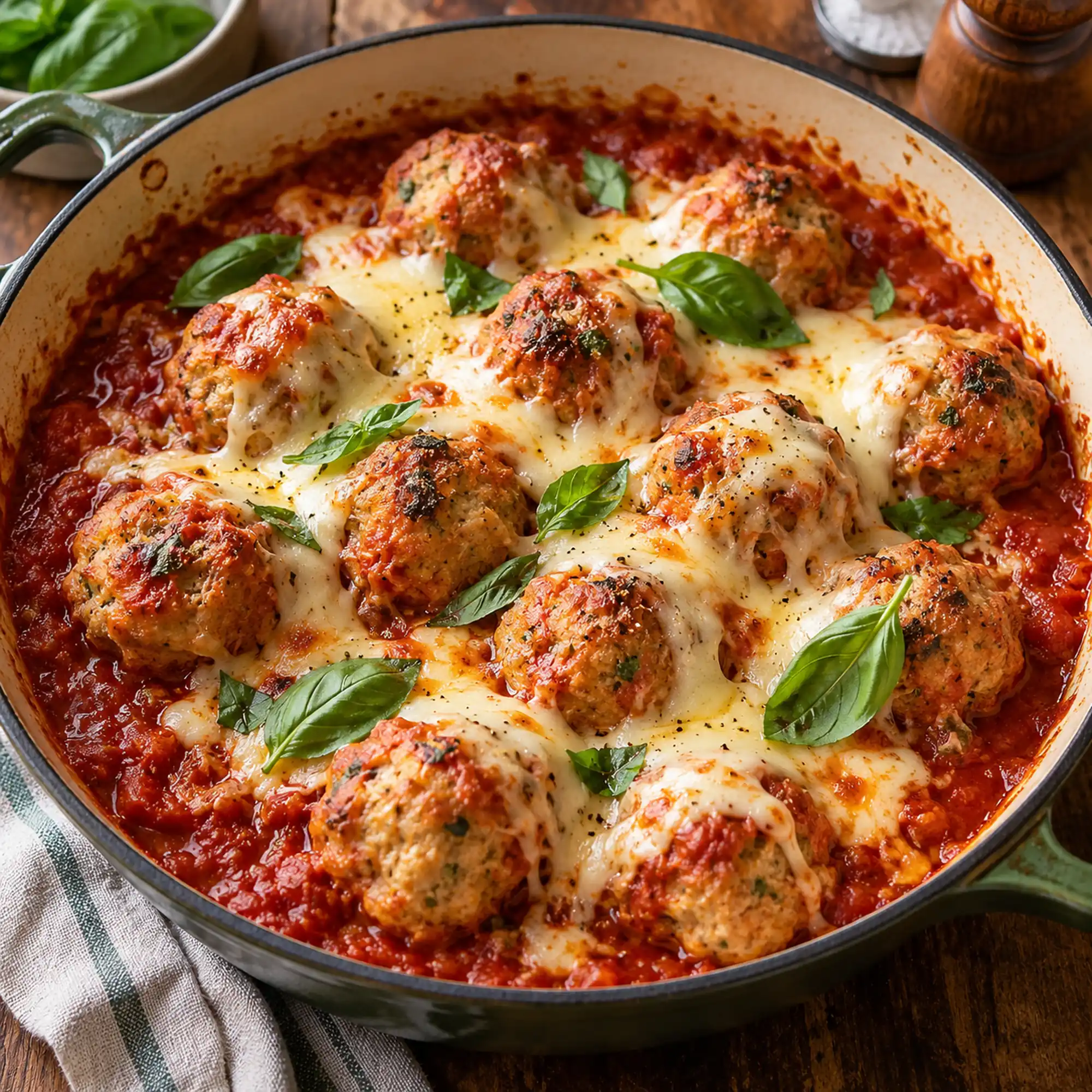
This version combines finely chopped thigh meat with Parmesan, bread and herbs, browns the shaped meatballs, then finishes them in tomato sauce beneath mozzarella and fontina. Keep the mixture cold and handle it lightly rather than compressing it into hard little balls.
The method is adapted from Alton Brown’s chicken meatballs, with a smaller sauce quantity and measured seasoning. I like the cheese to stay a topping rather than becoming the entire personality of the dish; the chicken and herbs should still be noticeable.
Serving Chicken Parmesan Meatballs
Bring the oven-safe pan to a heatproof surface and let it settle briefly before serving. The sauce holds heat well, and the melted cheese can stretch farther than expected. A spoon and a small spatula make it easier to lift a portion without dismantling every neighboring meatball.
Pasta, bread or vegetables can all fit, but you do not need all three. The four-serving estimate covers meatballs and sauce, not a separate starch. Choose the accompaniment that suits the table and give the sauce somewhere useful to go rather than adding another rich topping.
- With pasta: keep the portion plain so the tomato sauce does the work.
- With vegetables: green beans bring a firmer texture.
- With bread: use a sturdy slice or a roll that can hold sauce without immediately collapsing.
| Serving choice | Useful contrast | Keep in mind |
|---|---|---|
| Plain pasta | Soft base for the sauce | Count it separately |
| Green vegetables | Fresh texture beside cheese | Avoid another creamy topping |
| Sturdy bread | A practical way to catch sauce | Serve a modest portion |
Let the meatballs and sauce lead, with one straightforward side rather than an overloaded plate.
Chicken Parmesan Meatballs Variations
Thigh meat brings a different texture from very lean ground breast. If you use a packaged ground product, check what it contains and expect the mixture to behave differently. A food processor should chop the meat, not turn it into a smooth paste; short pulses give you more control.
I would shape one small meatball first to judge how the mixture holds together. If it feels very soft, chilling is a better first response than adding handfuls of extra bread. Keep your hands lightly moistened, and leave enough space in the skillet to turn each piece carefully.
- Different cheese: use mozzarella alone if fontina is unavailable, accepting a milder topping.
- No wine: loosen the pan with stock or water instead, with a different sauce flavor.
- Less heat: reduce the red pepper flakes without changing the main method.
- A smaller pan: brown in more batches rather than crowding the meatballs.
Keep the mixture cold and the handling gentle; fix softness with patience before adding more dry ingredients.
Nutrition and Safe Cooking
Chicken supplies protein, but Parmesan, the cheese topping and cooking oil also contribute to the meal. Calling these chicken meatballs does not make them automatically light. The useful question is how the portion fits with the side you choose, not whether one ingredient earns the whole dish a health label.
The estimate counts the measured bread-and-cheese coating and all the cooking oil conservatively. Some coating or sauce may remain in the pan, so actual servings vary. Anchovies are included in the sauce even though they dissolve and are not obvious on the finished plate.
- Check the center: ground chicken needs the 165°F poultry temperature.
- Keep raw meat separate: use clean utensils and plates after browning.
- Mind allergens: this version contains fish, dairy and wheat.
- Store promptly: cool leftovers in shallow containers and reheat thoroughly.
A browned surface and bubbling cheese are inviting, but the meatball center still needs a temperature check.
Bottom Line
Chicken Parmesan meatballs work best when each layer has a clear job: tender meat inside, a little browning outside and enough sauce to bring everything together. Keep the cheese measured and the side simple. The pan should feel generous without losing the small textures that make the meatballs interesting.
Gentle shaping, careful browning and a bubbling finish give these meatballs their character.
Chicken Parmesan Meatballs Recipe

Ingredients
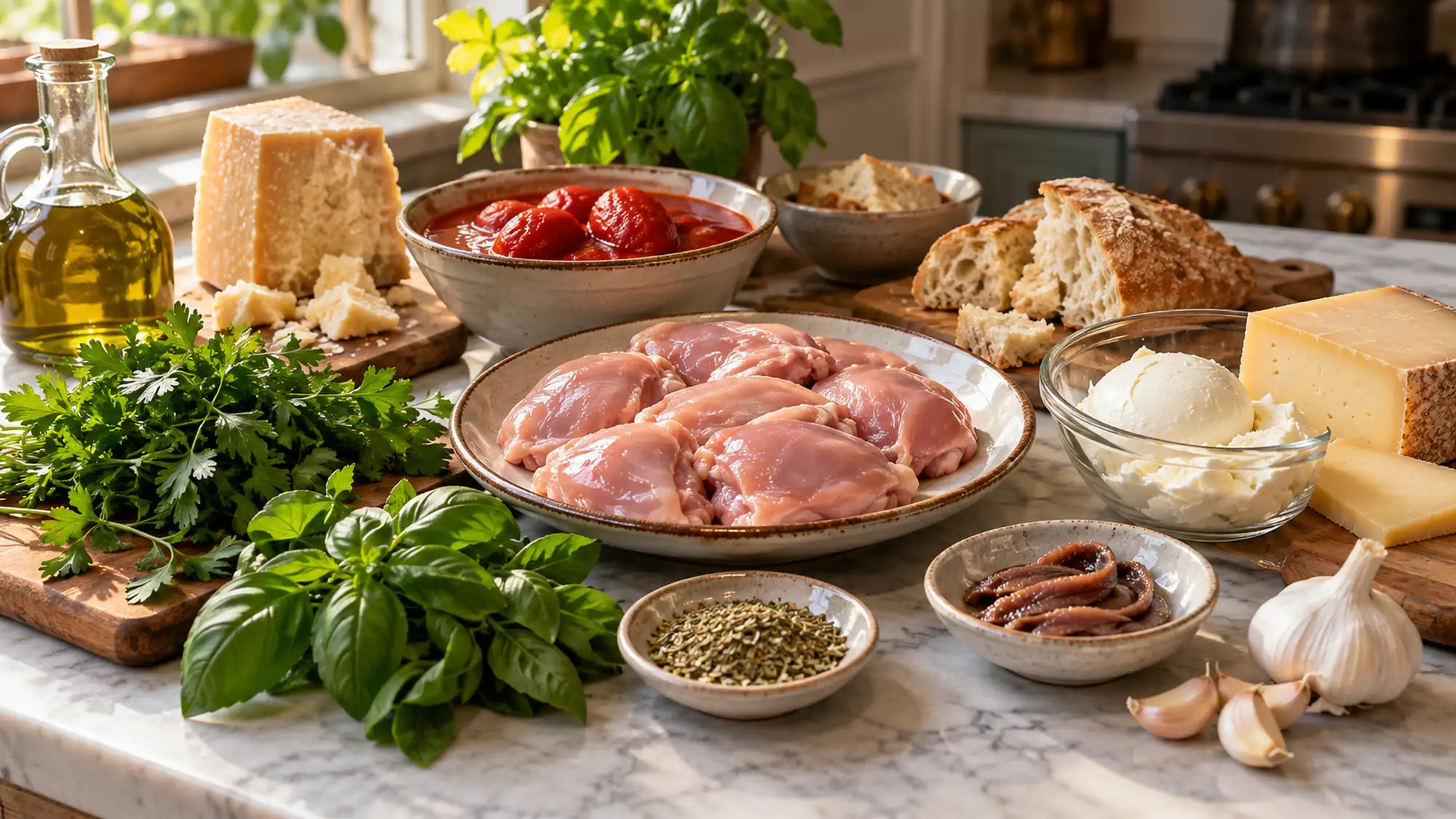
- 340 g boneless skinless chicken thighs
- 100 g Parmesan
- 85 g stale white Italian bread
- 15 g fresh parsley
- 8 g fresh basil
- 2 g fresh oregano
- 1 g black pepper
- 1 g lemon zest
- 0.25 g ground nutmeg
- 3 g garlic powder
- 5 g fine salt divided
- 60 ml olive oil 30 ml sauce,30 ml browning
- 120 ml dry red wine
- 800 g canned whole tomatoes with juice
- 12 g garlic minced
- 8 g anchovy fillets drained
- 0.5 g red pepper flakes
- 57 g low-moisture part-skim mozzarella
- 57 g fontina
- 120 ml water as needed to loosen reduced sauce
Equipment
- 1 Food processor
- 1 Oven-safe skillet
- 1 Saucepan
- 1 Instant-read thermometer
Instructions
- Simmer 30 ml oil, garlic, anchovies and pepper flakes briefly, then add all tomatoes, their juice and half the salt. Break up tomatoes and cook gently about 45–60 minutes, stirring, until thick.
- Chill chicken pieces 15 minutes. Pulse Parmesan and bread to crumbs; reserve 65 g for coating. Pulse herbs, pepper, zest and nutmeg into the remaining crumbs. Separately pulse chicken to a coarse mince, then combine gently with herb crumbs, garlic powder and remaining salt.
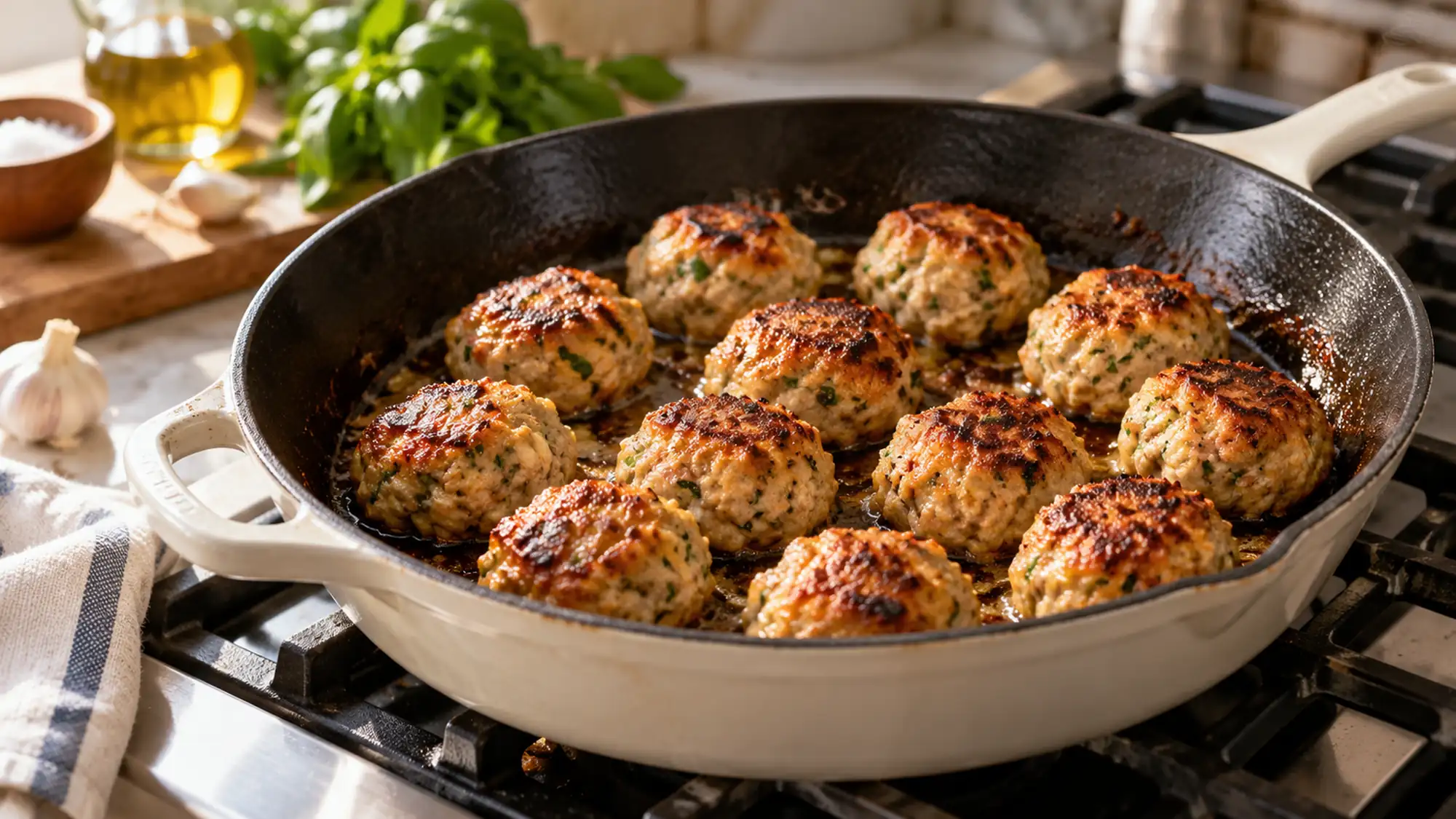
- Shape 18–20 small meatballs and roll in reserved crumbs. Brown in batches using the remaining 30 ml oil in an oven-safe skillet. Heat oven to 400°F (200°C).
- Remove meatballs temporarily. Simmer wine in the skillet, scraping the browned bits, then add tomato sauce and enough measured water to loosen. Return meatballs, top with mozzarella and fontina, and bake 12–15 minutes or until the centers reach 165°F (74°C). Rest 5 minutes; serve four portions.
Nutrition
Video
Notes
Tried this recipe?
Let us know how it turned out!Hi, I’m Laura, the voice behind Tastiva. I’ve always believed that eating well should feel enjoyable, comforting, and realistic—not like another complicated rule to follow. I love creating recipes that fit into everyday life, sharing simple nutrition ideas, and finding small ways to make meals feel a little better without losing the pleasure of good food.