
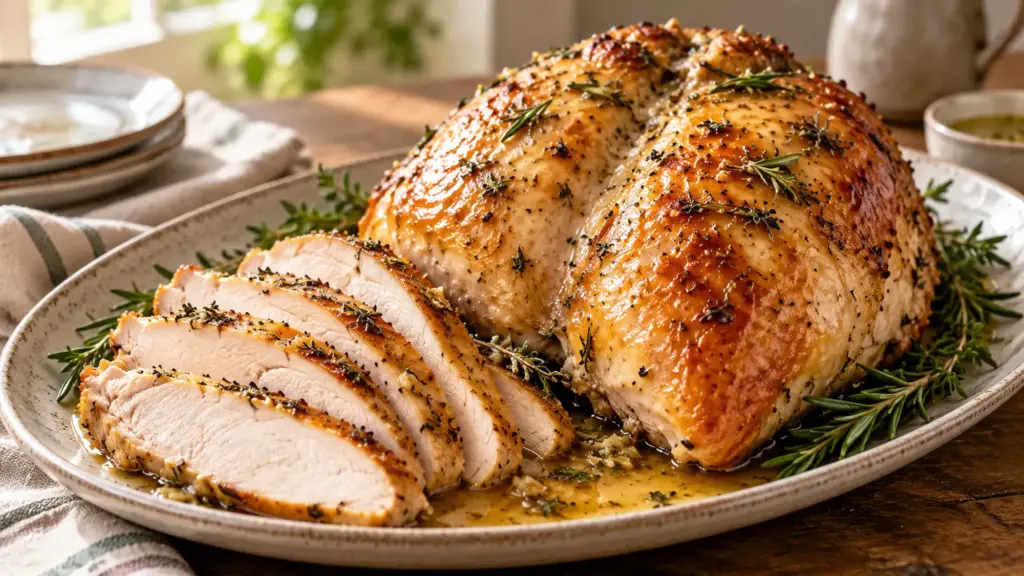
A whole turkey is not always the right size for the table. Roast turkey breast gives you the familiar aroma of garlic, rosemary and thyme without planning around legs, wings and a much larger bird. A bone-in breast still makes a generous centerpiece, especially when the skin turns golden.
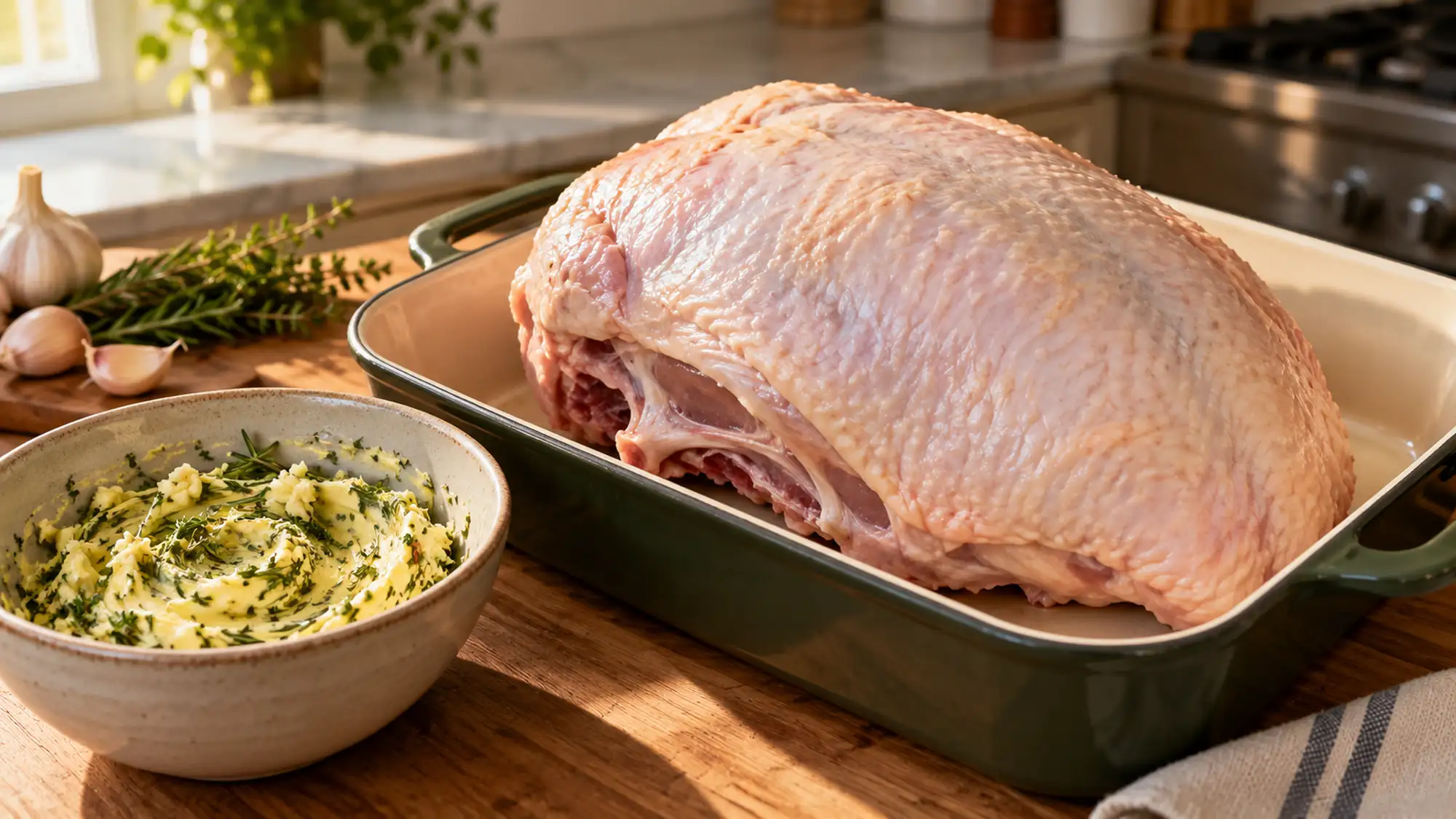
This roast turkey breast uses herb butter both under and over the skin, a moderate oven and a thermometer to confirm doneness. Rest it before carving, and check that the meat reaches 165°F rather than relying on color alone.
The method follows Downshiftology’s bone-in version, divided here into eight portions. I like the practicality of carving the breast away from the bone before slicing; it makes the serving platter easier to manage.
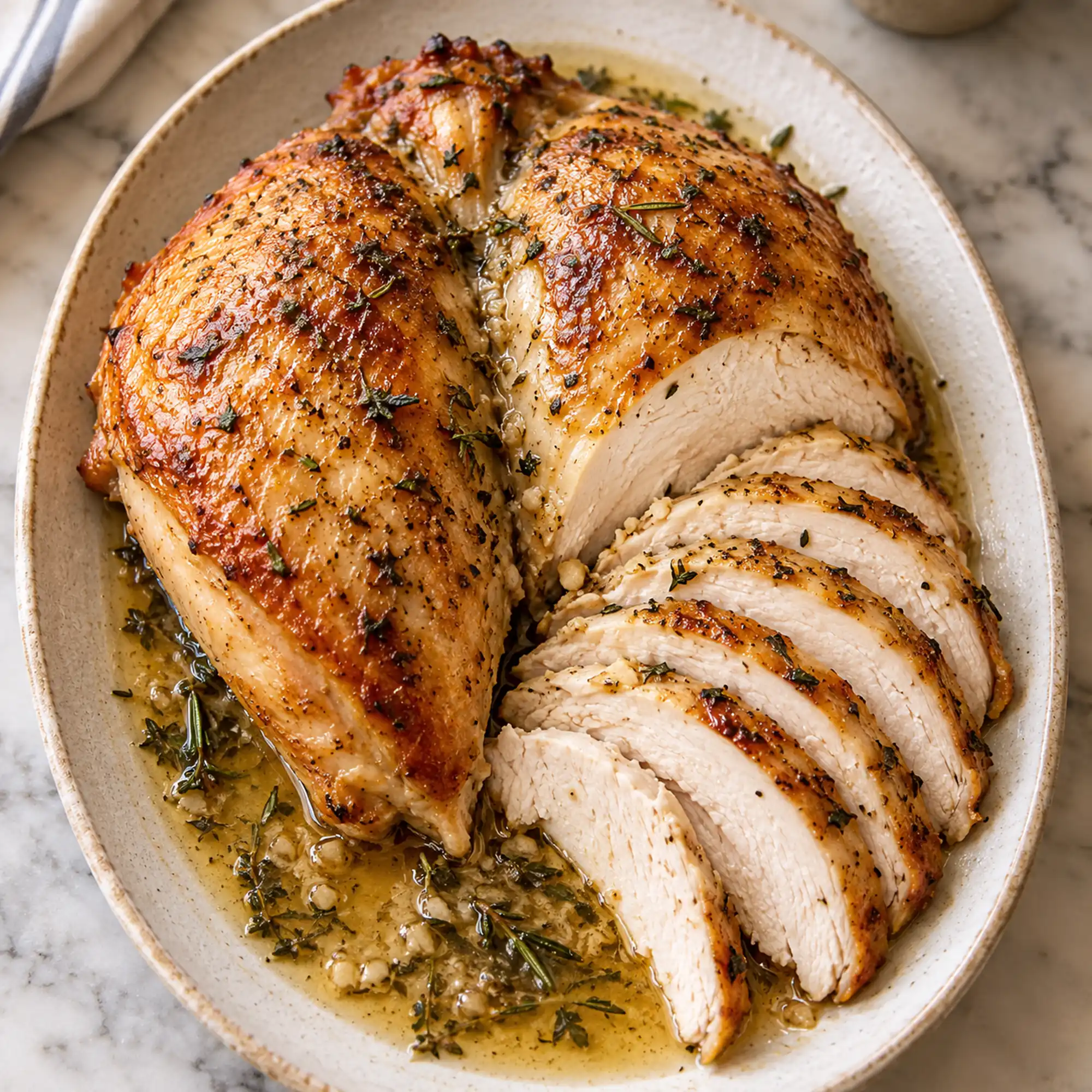
Serving Roast Turkey Breast
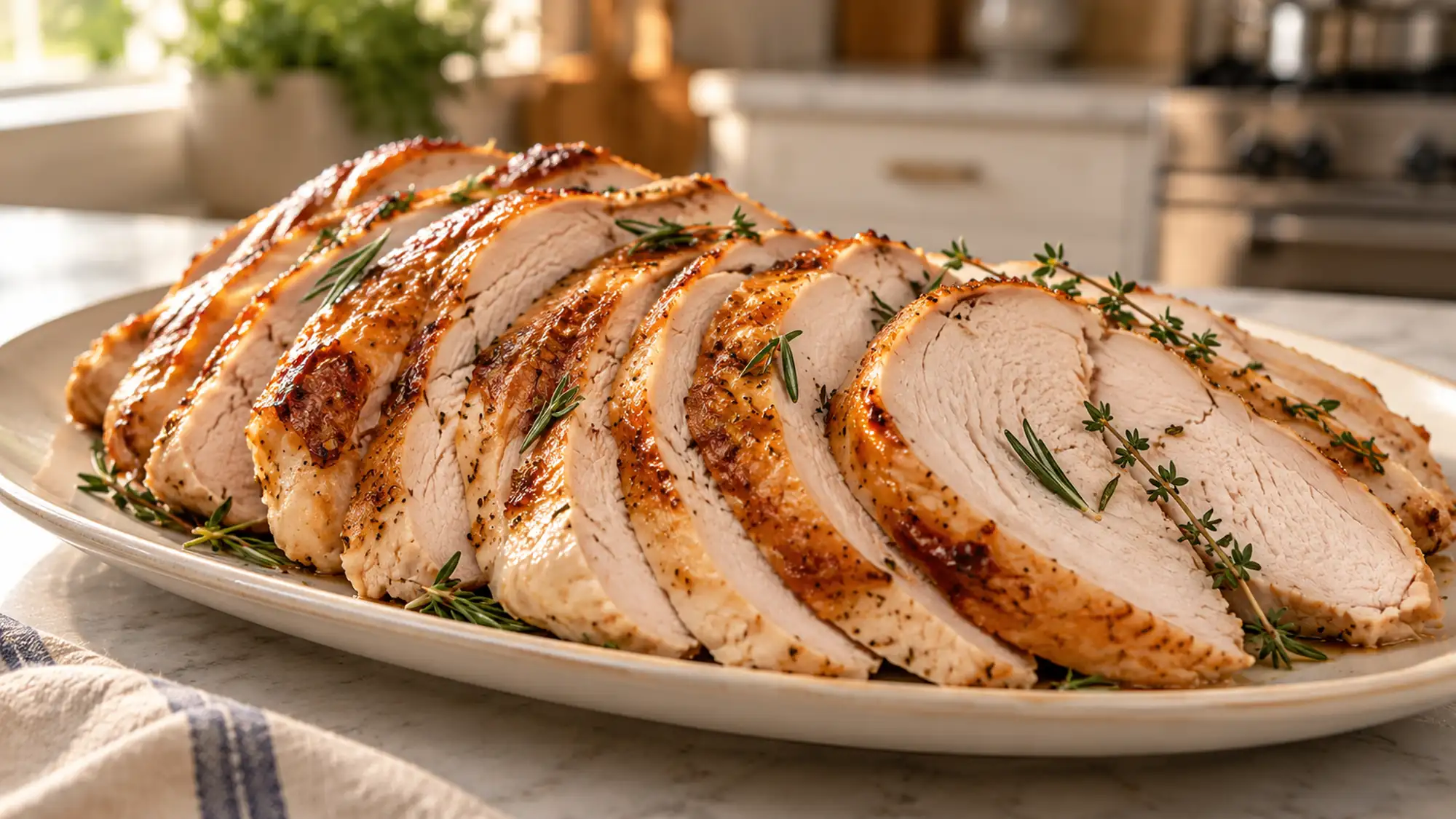
Place the carved slices on a warm platter and spoon over a little of the available pan juice if desired. Keep the skin facing upward where possible, because burying it under wet sides quickly changes its texture. The turkey can be the centerpiece without needing a crowded plate.
Choose one soft side and one vegetable for a balanced spread of textures. Potatoes are a familiar companion, but rice also works when you prefer something simpler. Gravy, stuffing and extra butter belong to their own recipes and are not included in this turkey’s estimate.
- For a classic plate: mashed potatoes make a soft accompaniment.
- For vegetables: green beans keep the plate from feeling uniformly rich.
- For a smaller gathering: carve only what is needed and refrigerate the remaining meat promptly.
| Serving choice | Why it works | Planning note |
|---|---|---|
| Mashed potatoes | Soft contrast to sliced turkey | Count their butter separately |
| Green vegetables | Color and a different texture | Keep the seasoning complementary |
| Pan juices | Adds moisture to the slices | Use a modest amount rather than flooding the skin |
Carve neatly, keep the skin uppermost and let a few well-chosen sides complete the meal.
Roast Turkey Breast Variations
A bone-in breast and a boneless roast are not interchangeable on the clock. Shape, weight and starting temperature affect how quickly the center heats, so treat the roasting time as a guide. Check the thickest meat without touching bone, and check more than one spot when the shape is uneven.
I would keep the herbs recognizable rather than adding every spice in the cupboard. Rosemary and thyme already have a clear presence, while garlic flavors the butter beneath the skin. A little restraint makes the turkey easier to pair with different side dishes.
- Different herbs: sage can replace some of the rosemary for a different aroma.
- Less butter: reduce the amount if preferred, but expect a less rich coating.
- Extra browning: watch closely if using a brief broiler finish; do not let color replace the temperature check.
- Different size: adjust the timing and rely on measured doneness, not a fixed minutes-per-pound promise.
Keep the method flexible around the actual breast size, while keeping the safe temperature nonnegotiable.
Nutrition and Safe Cooking
Turkey supplies protein, and the skin and herb butter contribute fat and energy. Leaving the skin off your portion changes the meal, but the recipe estimate includes it. The eight portions are a planning yield, not a guarantee that every slice or appetite will be identical.
Bone weight makes precise nutrition harder than it looks. The estimate assumes a stated edible yield and uses generic turkey meat-and-skin composition as a proxy, while counting all the butter conservatively. Actual carving losses and pan drippings will change what reaches each plate.
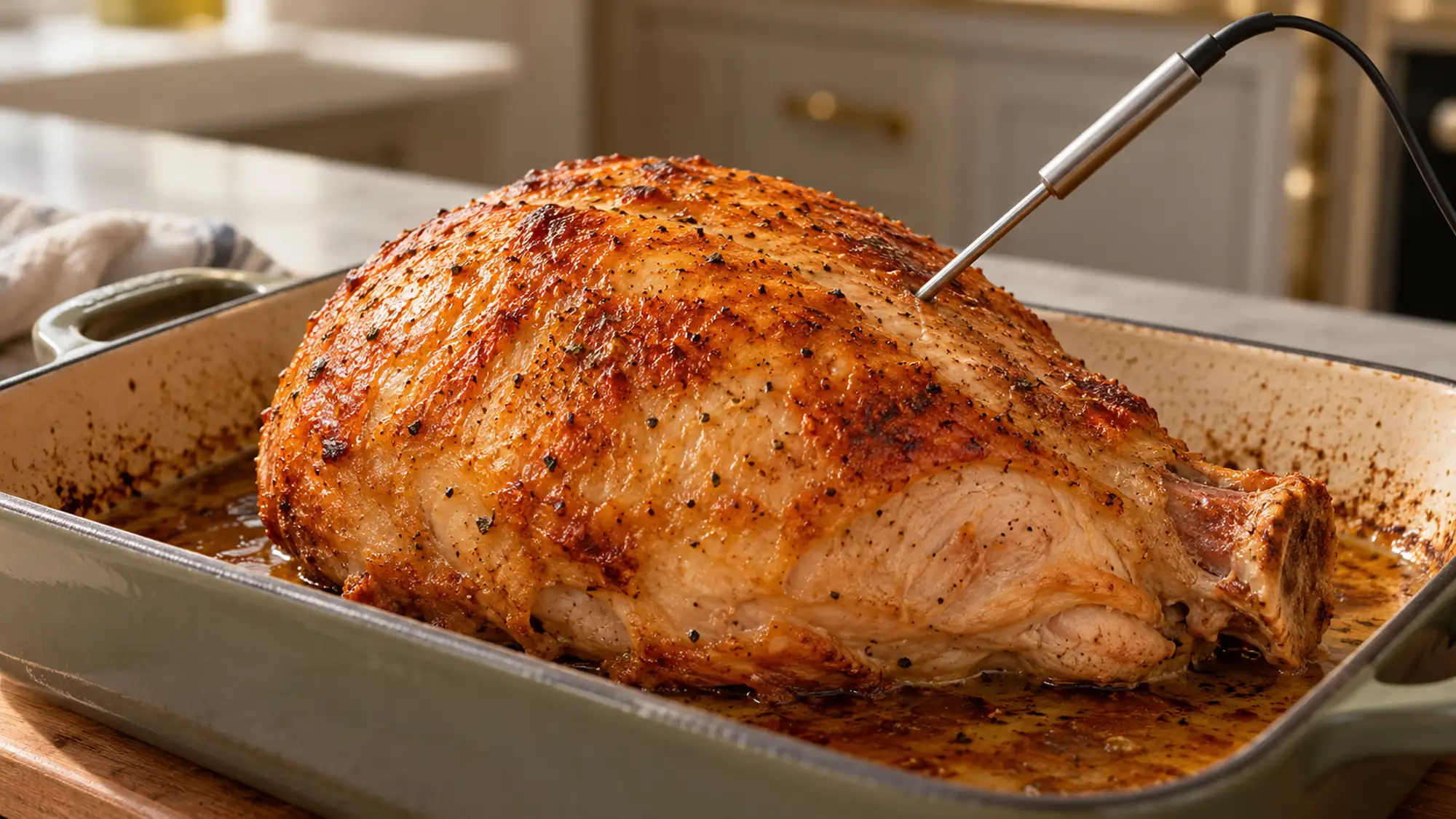
- Verify the center: follow the 165°F poultry temperature.
- Rest for carving: the resting period helps handling, but does not replace reaching a safe temperature.
- Separate equipment: keep raw-poultry boards and utensils away from ready-to-eat sides.
- Store promptly: refrigerate carved leftovers in shallow containers and reheat thoroughly.
Use the thermometer for safety and treat the yield-based nutrition as an estimate.
Bottom Line
Roast turkey breast is a practical way to bring a familiar centerpiece to a smaller table. Herb butter supplies the aroma, the oven develops the skin and a thermometer takes the guesswork out of the center. Rest, carve and serve with a few quiet sides rather than turning dinner into a complicated production.
Golden skin is inviting, but a verified temperature and careful carving make the meal dependable.
Roast Turkey Breast Recipe

Ingredients
- 2950 g whole bone-in skin-on turkey breast fully thawed
- 113 g unsalted butter softened
- 12 g garlic minced
- 4 g fresh rosemary finely chopped
- 4 g fresh thyme finely chopped
- 3 g fine salt reduce for pre-salted turkey
- 0.5 g ground black pepper
Equipment
- 1 9×13-inch roasting dish
- 1 Instant-read thermometer
- 1 Carving knife
Instructions
- Fully thaw the turkey breast in the refrigerator before starting. Heat the oven to 325°F (160°C). Mix softened butter with garlic, rosemary, thyme, salt and pepper; reduce added salt if the package is pre-salted.
- Pat the breast dry. Gently loosen skin without tearing it and spread half the butter underneath; spread the rest over the skin. Place breast-side up in a 9×13-inch roasting dish.
- Roast uncovered about 1.5–2 hours, longer if needed, until the thickest meat reaches 165°F (74°C) away from bone. Check both sides; tent loosely if skin browns too quickly. Check the temperature before removing it from the oven.
- Rest 15 minutes, then remove the breast meat from the bone and slice across the grain. Serve eight portions with optional sides. The estimate includes all butter, though some may remain in the dish.
Nutrition
Video
Notes
Tried this recipe?
Let us know how it turned out!Hi, I’m Laura, the voice behind Tastiva. I’ve always believed that eating well should feel enjoyable, comforting, and realistic—not like another complicated rule to follow. I love creating recipes that fit into everyday life, sharing simple nutrition ideas, and finding small ways to make meals feel a little better without losing the pleasure of good food.