
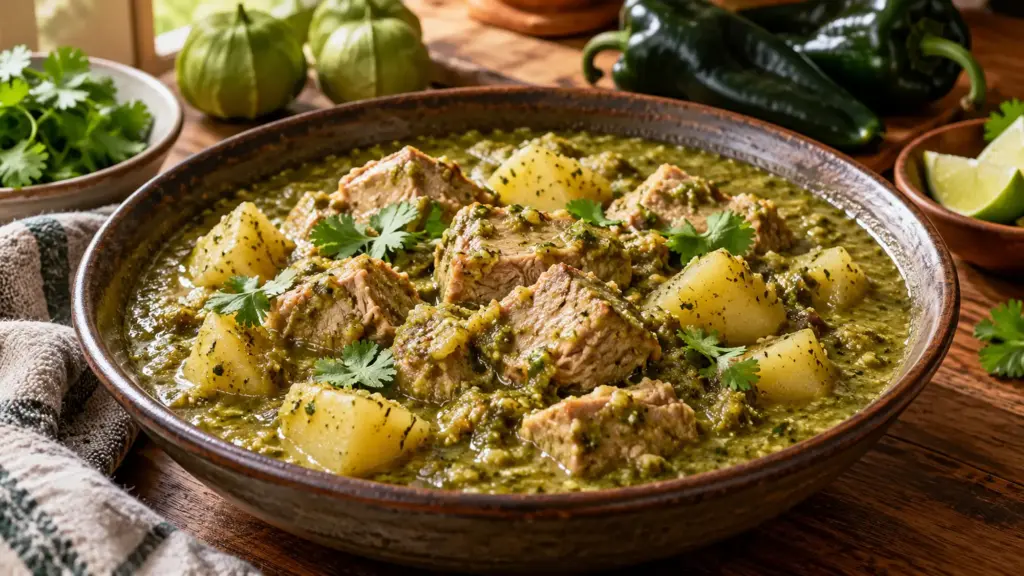
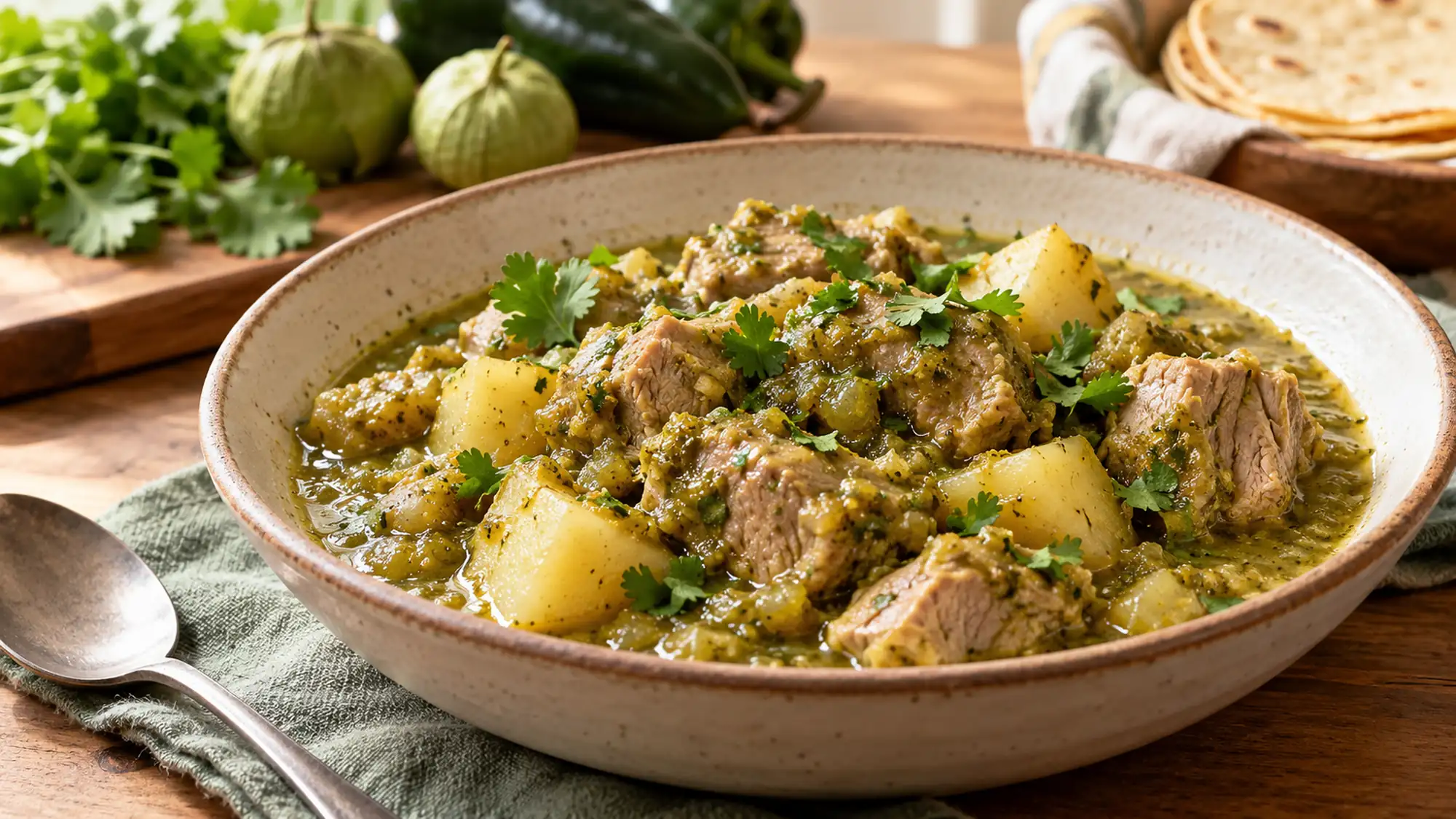
A bowl of pork chile verde has a different kind of comfort from a dark tomato stew. Tomatillos bring a tart green base, peppers add their own character and the pork gradually becomes tender enough to pull apart with a fork. Potatoes make the bowl substantial without needing a separate pile of rice.
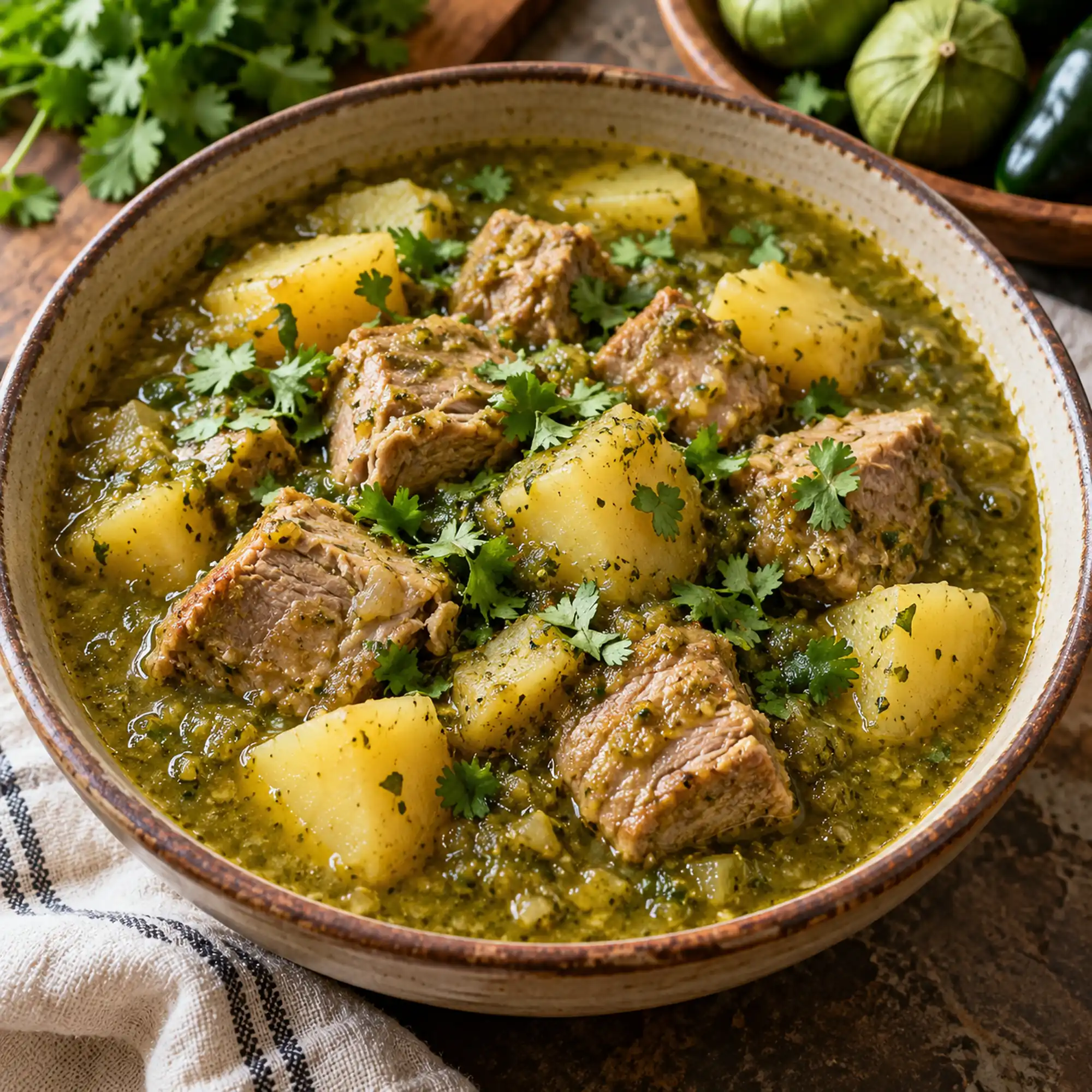
This pork chile verde blends the tomatillos and peppers raw, then simmers that sauce with browned shoulder before the potatoes are added. Give the meat time to soften, and add liquid only as needed to keep the sauce from catching.
The method is adapted from Chef John’s green pork chili, divided into six portions here. I like the potatoes in generous pieces so they remain recognizable rather than disappearing into the sauce.
Serving Pork Chile Verde
Serve in shallow bowls with pork, potatoes and sauce distributed evenly. The potatoes already provide a starch, so extra rice or bread is a choice rather than a requirement. A little fresh cilantro can brighten the surface, but the bowl does not need a crowded collection of toppings.
If you offer sour cream or pickled onions, keep them on the table so each person can decide. Their richness or acidity changes the balance noticeably. Taste the stew by itself first; the tart tomatillo base may already provide all the brightness you want.
- For an extra starch: a small portion of plain rice can catch the sauce.
- For toppings: offer optional sour cream separately, outside the recipe estimate.
- For vegetables: a simple cabbage salad or plain greens gives a different texture.
| Choice | What it changes | Useful detail |
|---|---|---|
| No extra starch | Keeps the potatoes central | A complete stew-style bowl |
| Plain rice | Adds a mild base | Serve a small amount |
| Optional sour cream | Softens the sharpness | Add at the table |
| Pickled onions | Adds more acidity and crunch | Taste the stew first |
Build each bowl around pork, potatoes and green sauce, then let people choose their extras.
Pork Chile Verde Variations
Tomatillos are not simply unripe tomatoes, so a red tomato substitution produces a different stew. Remove the papery husks and wash away the sticky surface before blending. The green sauce will change color during the long simmer; a cooked olive-green shade is normal and does not need artificial brightening.
I would adjust heat through the jalapenos rather than increasing every spice at once. Peppers differ, even when they look similar, so removing seeds and reducing the amount gives you more control. The poblano contributes its own flavor as well as a little heat.
- Milder bowls: use less jalapeno while keeping the tomatillo base.
- Different potatoes: choose a variety that holds its shape, and adjust for chunk size.
- A thicker sauce: uncover briefly near the end, stirring so the potatoes stay intact.
- A looser stew: add water in small amounts instead of diluting the whole pot at once.
Adjust heat and consistency gradually, while preserving the tomatillo character and tender potato pieces.
Nutrition and Safe Cooking
Pork contributes protein, and potatoes and vegetables add substance to the same pot. Shoulder also contains fat, so the green color is not a promise of a low-fat meal. The six-serving estimate is intended to help with planning rather than prescribe a portion for every appetite.
The calculation includes the measured oil, pork and sauce ingredients, with optional toppings excluded. Trimming, liquid left in the pot and the particular shoulder cut will affect the actual serving. A transparent estimate is more useful than treating every bowl as nutritionally identical.
- Cook for tenderness: shoulder needs extended gentle cooking beyond simply reaching a minimum safe temperature.
- Keep equipment clean: separate raw-pork utensils from ready-to-eat garnishes.
- Remove the bay leaf: check before portioning the stew.
- Handle leftovers carefully: cool promptly in shallow containers and follow 165°F reheating guidance.
Consider the full bowl and its toppings, while keeping cooling and reheating as deliberate as the cooking.
Bottom Line
Pork chile verde is at its best when the pork is tender, the potatoes still have shape and the sauce tastes clearly of tomatillos and peppers. Let the simmer do its work instead of forcing a short timetable. A simple bowl and a few optional toppings are enough.
Tender pork, intact potatoes and a balanced green sauce make the strongest version of this stew.
Pork Chile Verde Recipe

Ingredients
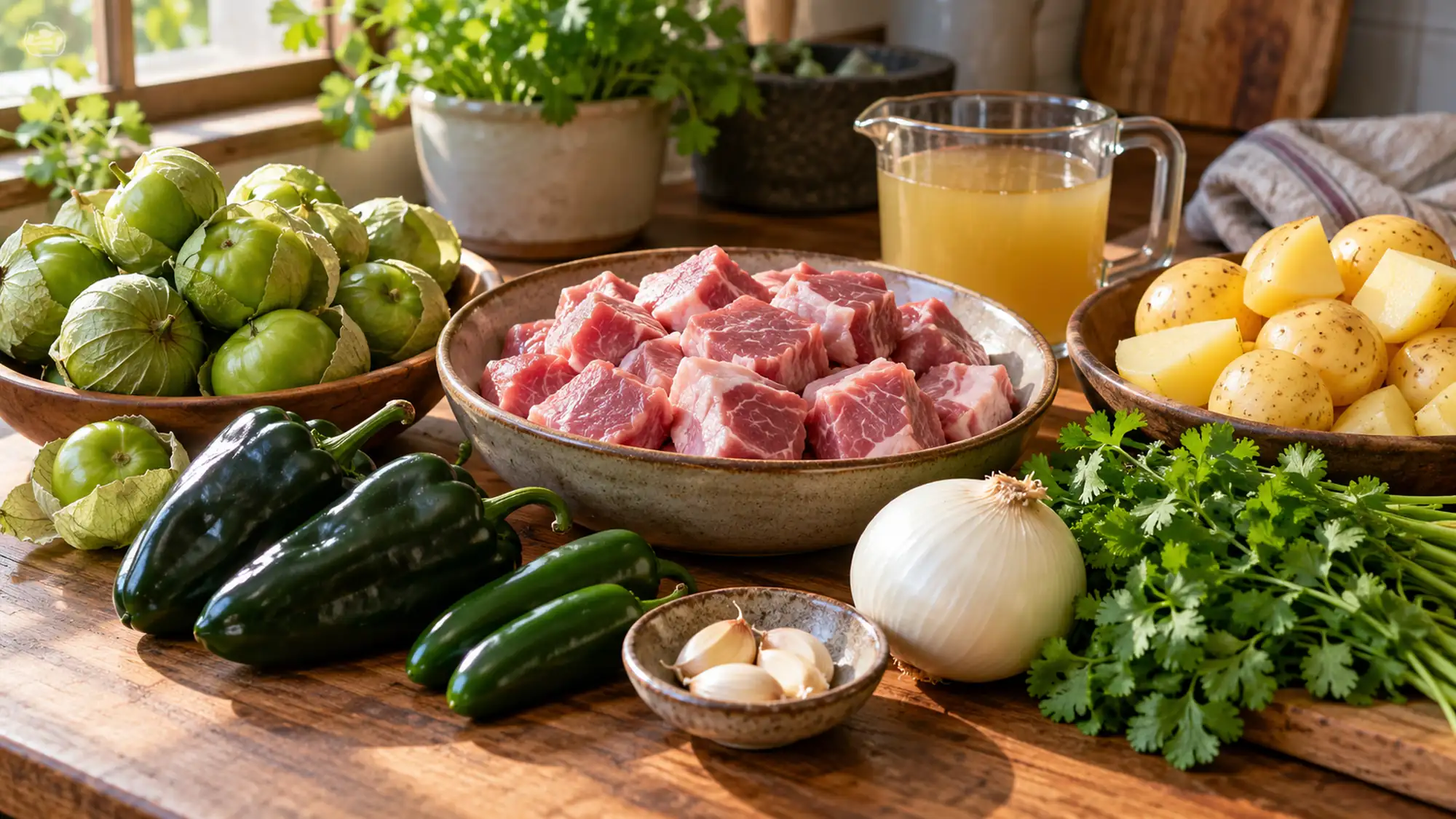
- 900 g boneless pork shoulder large cubes
- 30 ml sunflower oil
- 150 g onion diced
- 2 g dried oregano
- 4 g ground cumin
- 1 g ground coriander
- 0.5 g cayenne pepper
- 6 g fine salt
- 600 g tomatillos husks removed,washed,quartered
- 60 g jalapeno peppers seeded
- 120 g poblano pepper seeded
- 18 g garlic
- 25 g fresh cilantro
- 600 ml unsalted chicken stock
- 1 bay leaf remove
- 680 g Yukon Gold potatoes peeled,large chunks
- 1 g black pepper
Equipment
- 1 Blender
- 1 Heavy lidded pot
- 1 Cutting board
Instructions
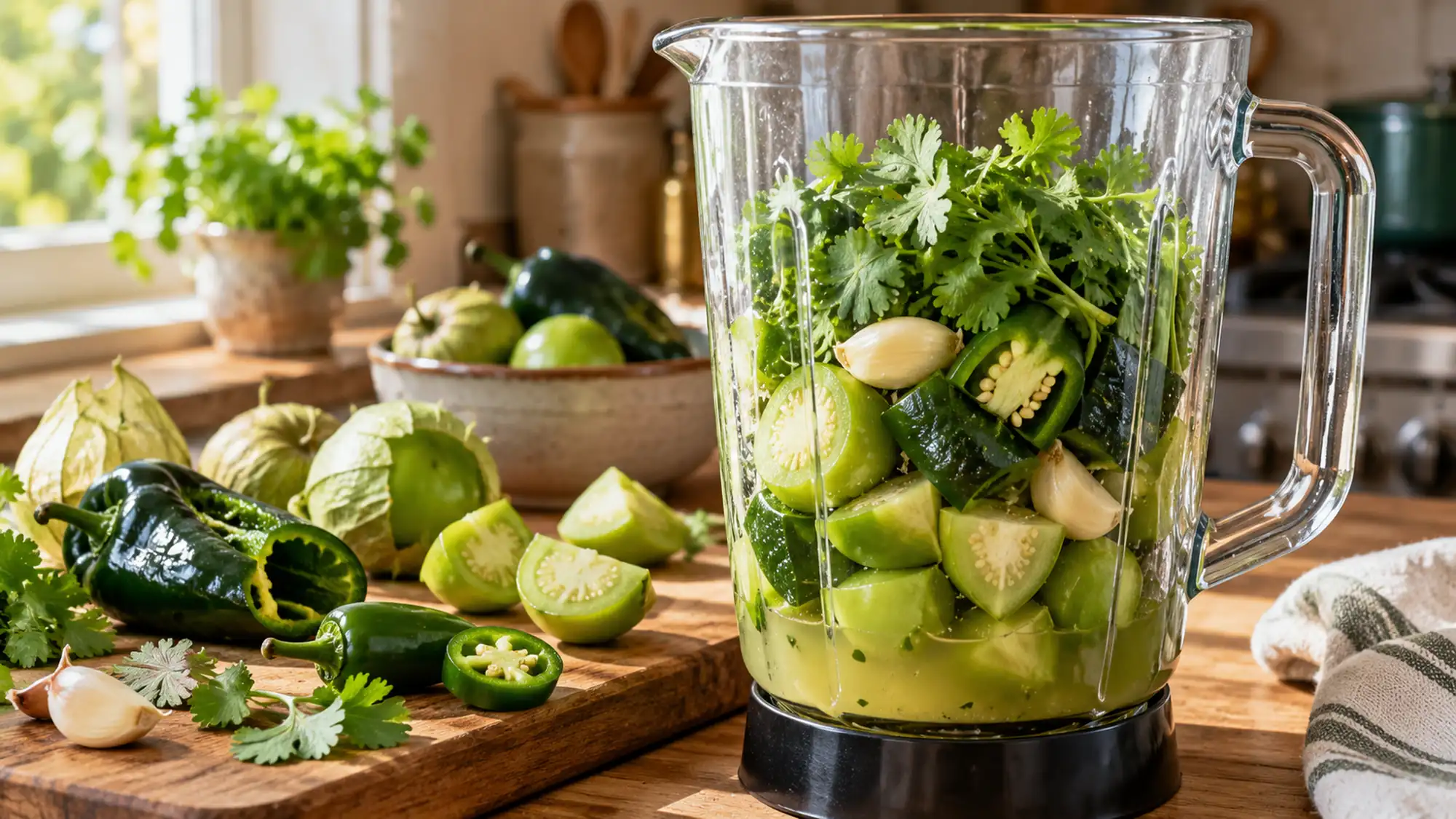
- Blend raw quartered tomatillos, seeded jalapeno and poblano, garlic, cilantro and stock until mostly smooth. Do not roast these ingredients for this version.
- Brown pork in batches in the oil. Add onion and cook until softened; stir in oregano, cumin, coriander, cayenne, salt and pepper.
- Add green sauce and bay leaf. Bring to a simmer, partly cover and cook gently about 1 hour, stirring occasionally.
- Add potatoes and continue simmering 45–60 minutes, or longer as needed, until pork yields easily to a fork and potatoes are tender. Add water if needed to prevent sticking. Remove bay leaf and serve six portions; sour cream or pickled onions are optional extras.
Nutrition
Video
Notes
Tried this recipe?
Let us know how it turned out!Hi, I’m Laura, the voice behind Tastiva. I’ve always believed that eating well should feel enjoyable, comforting, and realistic—not like another complicated rule to follow. I love creating recipes that fit into everyday life, sharing simple nutrition ideas, and finding small ways to make meals feel a little better without losing the pleasure of good food.