
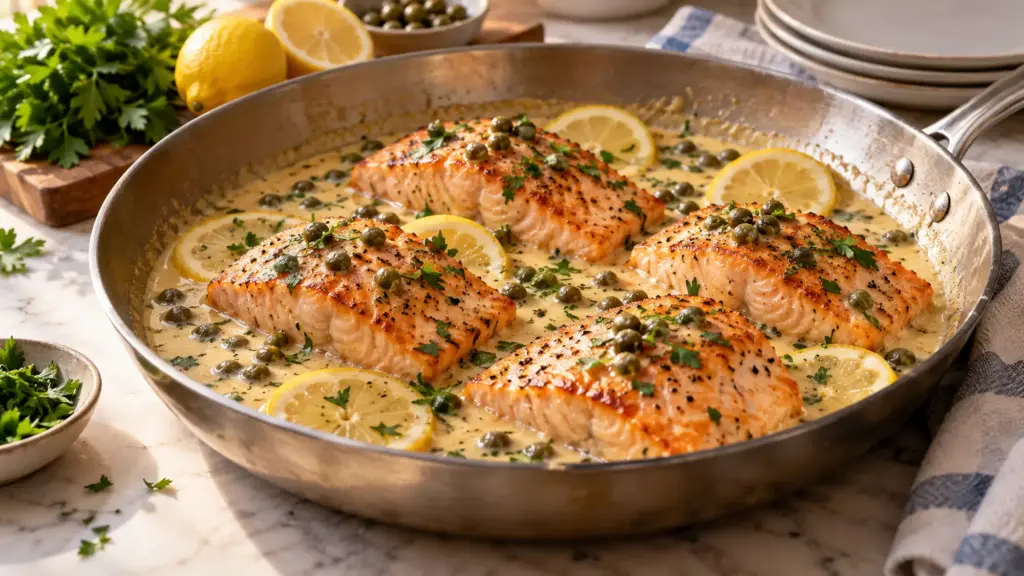
Lemon and capers can make a rich fish dinner feel lively, but they work best when neither takes over the pan. Salmon piccata brings those sharp, briny notes together with a creamy sauce and a lightly browned fillet. The useful balance is enough sauce to coat the fish without hiding its texture.
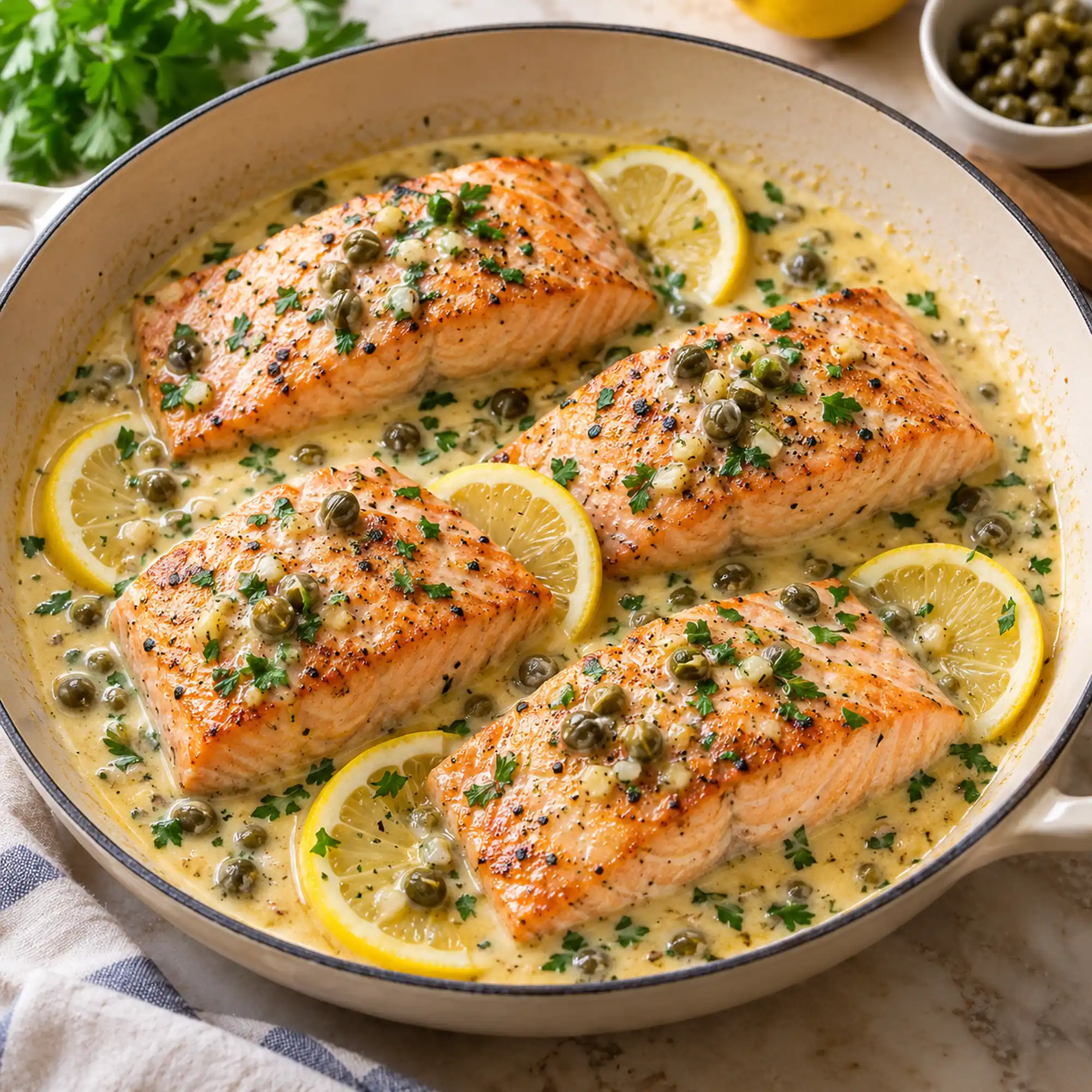
This salmon piccata sears lightly floured fillets, then builds a lemon-garlic pan sauce with stock, cream and capers. Return the cooked fish only briefly at the end so it warms in the sauce without another long simmer.
The recipe follows the creamy version from Cafe Delites, with measured fillet weights and seasoning. I prefer to taste the sauce with a small piece of salmon; a spoonful on its own can make the lemon seem sharper than it does in the complete bite.
Serving Salmon Piccata
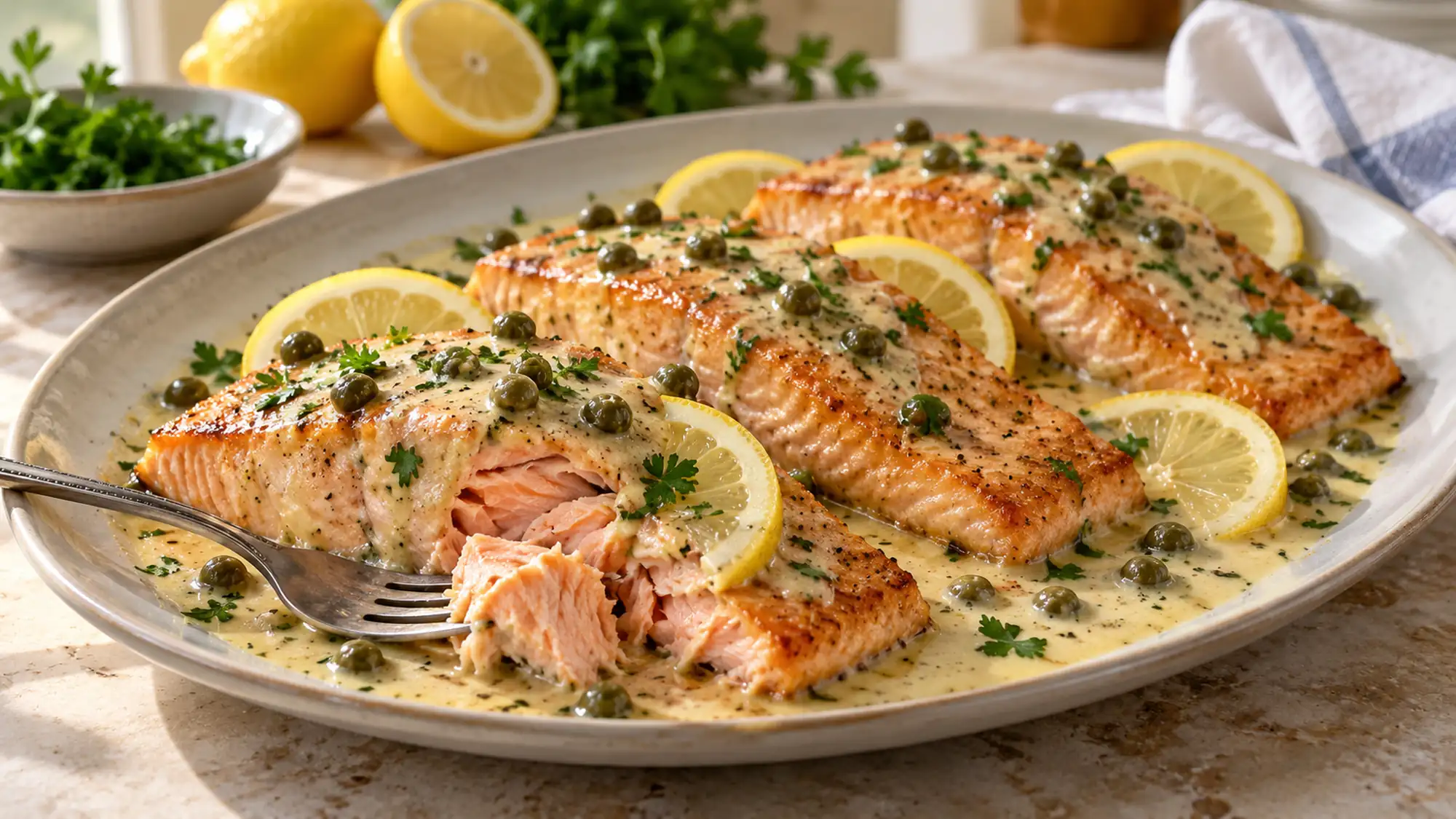
Put each fillet on a warm plate and spoon sauce around and partly over it. Leave some browned surface visible for contrast. Capers tend to collect in the pan, so distribute them deliberately rather than giving the first plate all the briny little bursts.
A plain side makes sense because the sauce already contains butter, cream and lemon. Rice or potatoes can catch it, while a green vegetable changes the texture of the meal. Avoid adding another creamy dish simply because the fish looks like a restaurant-style centerpiece.
- For a simple base: plain rice keeps the sauce in focus.
- For vegetables: green beans provide a firmer bite.
- For finishing: optional lemon slices are decorative and can add more acidity if squeezed.
| Accompaniment | Why it fits | Keep in mind |
|---|---|---|
| Plain rice | Catches the creamy sauce | Count it separately |
| Simple potatoes | Adds a mild starch | Avoid another rich topping |
| Green vegetables | Provides texture and color | Keep their dressing restrained |
Keep the plate simple and share the capers evenly, with some browned salmon still visible.
Salmon Piccata Variations
Capers vary in saltiness, especially if they have been packed in a strong brine. Rinsing and draining helps, but it does not turn them into a salt-free ingredient. Use unsalted stock and make the final seasoning decision after the capers join the sauce.
I would begin with the measured lemon juice and add more only after the cream is incorporated. A strong early splash is difficult to reverse. The finished sauce should taste bright beside the salmon, not so acidic that every bite needs a mouthful of rice to soften it.
- No wine: the source permits extra stock, with a different flavor.
- Less richness: half-and-half is a source-listed alternative; expect a thinner sauce.
- No flour: the source allows omitting it, changing the browned surface slightly.
- A thicker fillet: adjust the cooking time and check the center rather than following the clock blindly.
Balance the sauce after the capers and cream are in, and let fillet thickness guide the cooking.
Nutrition and Safe Cooking
Salmon provides protein, but the meal also includes butter, oil and cream. The presence of fish does not make a rich sauce nutritionally invisible. The card’s four-serving estimate includes the measured sauce and excludes optional rice or vegetables.
Only some dredging flour stays on the fillets, so the estimate uses a stated retained amount rather than the whole flour bath. Rinsed capers and brands of cream introduce further variation. Treat the numbers as a useful planning guide, not an exact measurement of your plate.
- Check the fish: follow the 145°F fish temperature.
- Separate raw coating: discard flour that touched uncooked salmon.
- Keep the finish gentle: avoid a prolonged hard boil after the fish returns.
- Store promptly: refrigerate leftovers in shallow containers and reheat thoroughly.
The safest check is the fish’s temperature, while the most useful nutrition view includes the whole sauce.
Bottom Line
Salmon piccata comes together through a few careful adjustments: a light coating, controlled cooking and a final taste after the sauce is complete. Keep the capers present but not overwhelming, and let the cream round out the lemon. A quiet side leaves those contrasts easy to appreciate. Warm plates are helpful when a thin fillet would otherwise cool while the sides are being served.
A bright, balanced sauce and briefly warmed salmon make a better plate than extra cooking or extra richness.
Salmon Piccata Recipe

Ingredients
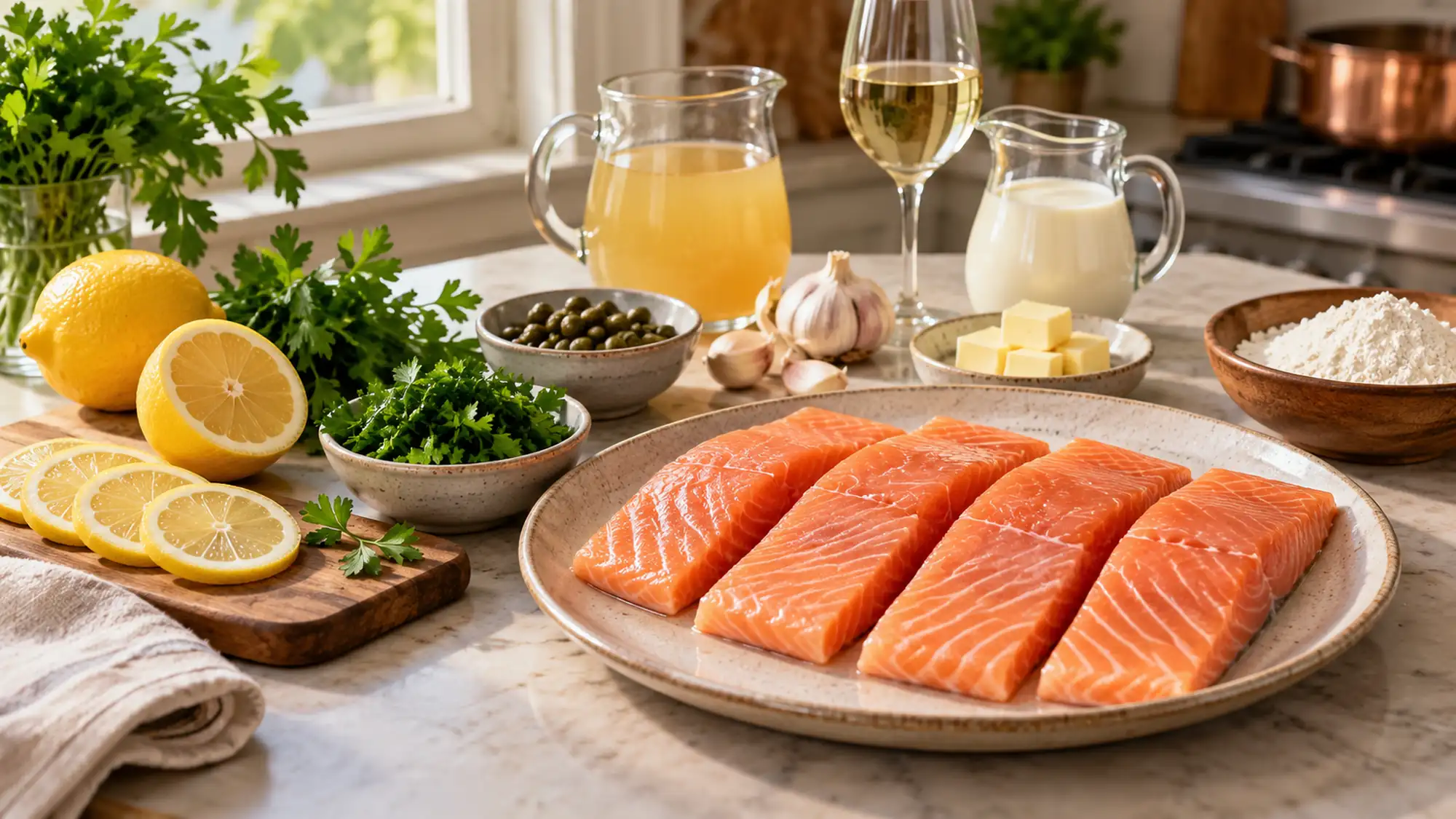
- 680 g skinless salmon fillets four portions
- 2 g fine salt
- 1 g black pepper
- 30 g all-purpose flour dredging bath;15g estimated retained
- 28 g unsalted butter divided
- 15 ml olive oil
- 12 g garlic minced
- 80 ml dry white wine
- 240 ml unsalted chicken stock
- 3 g cornstarch
- 45 ml lemon juice
- 40 g capers rinsed and drained
- 120 ml heavy whipping cream
- 8 g fresh parsley
- 4 lemon slices optional garnish,not included in nutrition
Equipment
- 1 Large nonstick skillet
- 1 Shallow dish
- 1 Instant-read thermometer
Instructions
- Pat salmon dry, season with salt and pepper and coat lightly in flour. Shake off excess and discard contaminated flour. The estimate assumes 15 g stays on the fish.
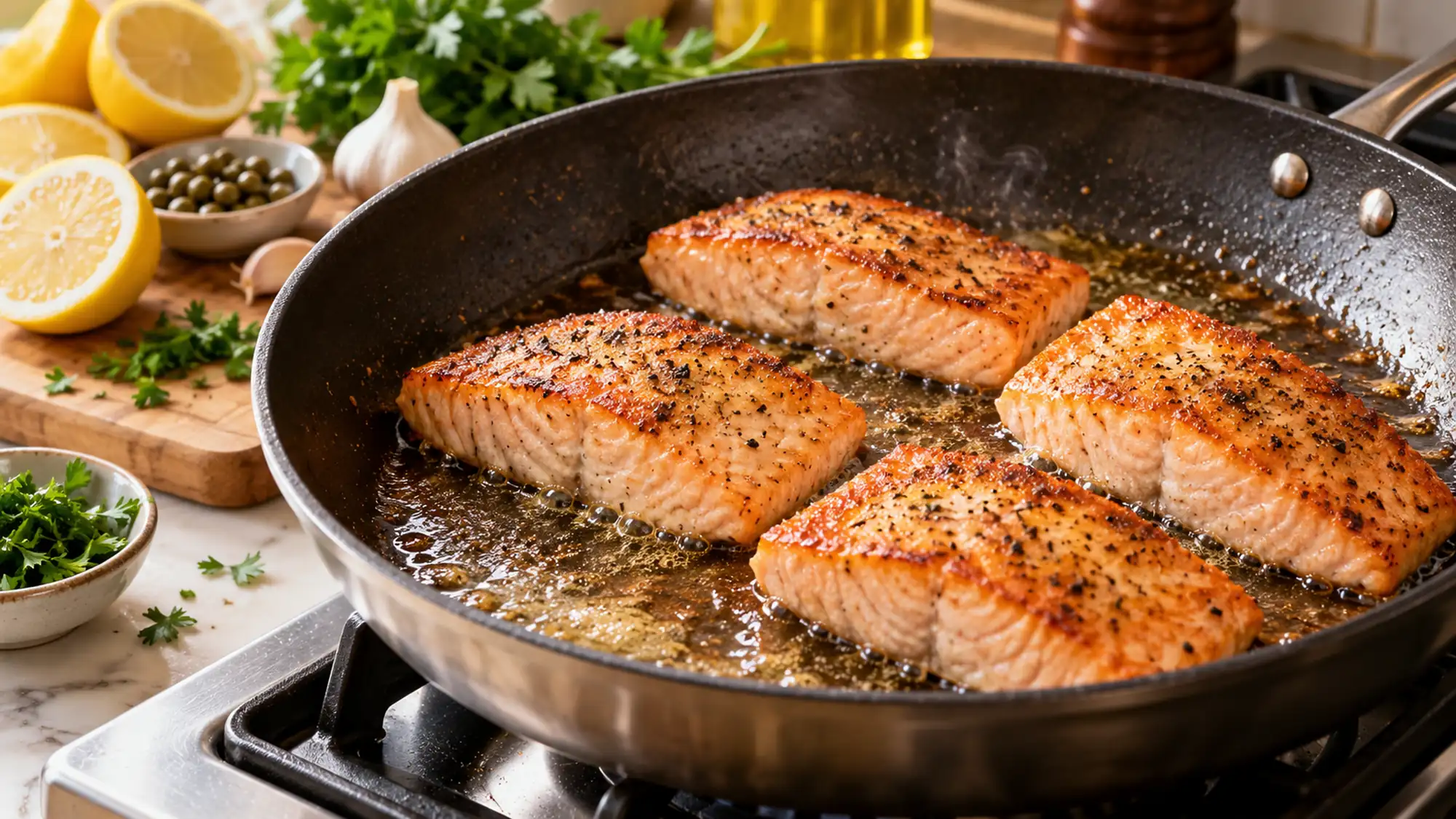
- Heat 14 g butter and oil in a skillet. Sear salmon about 4 minutes per side, adjusting for thickness, until the center reaches 145°F (63°C). Move to a clean warm plate.
- Melt remaining butter, soften garlic and add wine. Simmer briefly, then add most of the stock and lemon juice. Mix cornstarch with the reserved cool stock, whisk into the pan and simmer until lightly thickened.
- Lower heat, stir in cream and capers, then return salmon briefly to coat. Add parsley and optional lemon slices. Serve promptly; some alcohol may remain after cooking.
Nutrition
Video
Notes
Tried this recipe?
Let us know how it turned out!Hi, I’m Laura, the voice behind Tastiva. I’ve always believed that eating well should feel enjoyable, comforting, and realistic—not like another complicated rule to follow. I love creating recipes that fit into everyday life, sharing simple nutrition ideas, and finding small ways to make meals feel a little better without losing the pleasure of good food.